 Write to the booksellers
-
Type
Book (7247)
Disk (44)
Drawings (1)
Engraving (9)
Magazine (89)
Maps (4)
Music sheets (135)
New book (2)
Old papers (1)
Photographs (19)
Posters (1)
-
Latest
Last 24h (3)
Last 3 days (2)
Last month (971)
Last week (2)
-
Language
Czech (1)
Dutch (9)
English (156)
French (7373)
German (4)
Italian (2)
Latin (3)
Russian (4)
-
Century
16th (17)
17th (43)
18th (199)
19th (881)
20th (2478)
21st (1565)
-
Countries
Belgium (1156)
Canada (32)
China (56)
Côte d'Ivoire (7)
Denmark (1063)
France (4888)
Germany (1)
Netherlands (181)
Switzerland (155)
United Kingdom (9)
United States of America (4)
-
Syndicate
ALAC (25)
CLAM (25)
CLAQ (2)
ILAB (2234)
NVVA (15)
SLACES (15)
SLAM (1026)
SNCAO (4)
Alexander Hamilton: Writings (LOA #129) (Library of America Founders Collection Band 4)
Library of America 2001 1108 pages 12 954x3 302x20 066cm. 2001. Cartonné jaquette. 1108 pages.
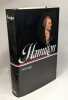
Comme neuf avec sa jaquette intérieur propre bonne tenue
HAMILTON, WILLIAM ROWAN. - THE GENERAL PRINCIPLE OF LEAST ACTION - HAMILTON' S PRINCIPLE.
Reference : 42329
(1834)
On a general Method in Dynamics" by which the Study of the Motions of all free Systems of attracting or repelling Points is reduced to the Search and Differentiation of one central Relation, or characteristic Function. Received April 1, - Read April 1...
London, Richard Taylor, 1834-35. 4to. No wrappers as extracted from ""Philosophical Transactions"" 1834 - Part II. and 1835 - Part I. Both titlepages to the volumes present.Pp. (2),247-308 a. (2),95-144. Both papers clean and fine.
First appearance of these two groundbreaking papers in which Hamilton carries further the dynamics of Lagrange by expressing the kinetic energy in terms of the momenta and the co-ordinates of a system, and discovers how to transform the Lagrangian equations into a set of differential equations of the first order for the determination of of the motion. The Hamilton principle is also called The Principle of ""Least Action"". The Hamilton Principle as stated in the papers offered here ""was the first of his two great ""discoveries"". he second was the quaternions, which he discovered...1843 nd towhich he devoted most of his efforts during the remaining 22 years of his life.""(DSB).Maupertouis, Euler, and Lagrange introduced the principle of ""Least Action"" covering the science of dynamics, and now Hamilton brought the principle into a form which was capable of expressing all the laws of Newtonian science in a representation as minimum-problems, that is, all gravitational, dynamical and electrical laws could be represented as minimum problems. In 1925 Heisenberg, Born and Jordan showed, that the Hamilton equations are still valid in quantum theoryAlthough formulated originally for classical mechanics, Hamilton's principle also applies to classical fields such as the electromagnetic and gravitational fields, and has even been extended to quantum mechanics, quantum field theory, relativity and criticality theories. Its influence is so profound and far reaching that many scientists regard it as the most powerful single principle in mathematocal physics and place it at the pinnacle of physical science.

Handel Anton Nanut The Ljubljana Symphony Orchestra
Reference : 300033862
ISBN : 5016022602424
Batman contre Man-Bat
2019 Ed. Eaglemoss - Coll. DC Comics, La légende de Batman Tome 41/14 - 2019 - In-4, cartonnage illustré en couleurs, sous blister d'origine - 197 planches illustrées en couleurs
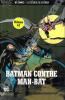
Bon état
Micromosaïcs : The Gilbert Collection
London Philipp Wilson Publishers 2000 In-4 310 pp, text in english ,
Bon Très Correcte Toile Éditeur Sous Jaquette
The People's Tribune Newspapers
Hankow, 5 issues of The People's Tribune, a daily newspaper published in Hankow. 5 newpapers published in Hankow, 1927. Good copies of this rare newspaper, each with 4 pages, illustrated with a front page cartoon.
The Central China Post - A Daily Newspaper
Hankow, october 1927. 1 set of 5 daily newspapers, published in Hankow, October 1927 ), large size (60*48 cm), all numbers in good condition. With many full page advertisements. Each issue offers various contents, such as political news, commercial news, shipping news, etc...Vol 17, Nos 4890-4891-4892-4893-4894.
An interesting set of 5 chinese daily newspapers, published in Hankow, in english language.
[Kandinsky] - Hans K. Roethel / Vivian Endicott Barnett
Reference : 005474
(2007)
ISBN : 0856676365
Kandinsky Drawings: Volume Two: Sketchbooks : Catalogue Raisonne
Kandinsky Philip Wilson Publishers 247,2 Jaquette en bon état Couverture rigide 2007 London United Kingdom 496 pages
Très bon
Civilian Pop Warsaw Uprising 1944
Cambridge University Press 1982 364 pages 15 2x2 6x22 4cm. 1982. Cartonné jaquette. 364 pages.
Bon état avec sa jaquette intérieur propre bonne tenue
The little book of Big Penis
2012 - cartonné - Editions Taschen - 2012 - In-12 (17 x 12,5 cm) cartonnage souple - 190 pages - Très nombreuses photographies en couleurs et en noir et blanc - ISBN : 9783836532150 - Texte en anglais, allemand et français - Ouvrage sous titré "The Compact Age of Rigid Tools"
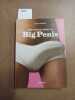
Bon état
Panamarenko Universum (English Version)
BE - , Graphic Matter / Ludion, 2014 Hardcover 200 pages , ills colour . fine. English edition. Fine !! ISBN 9789491819209.
Panamarenko's assemblages of flying machines, autos and vessels are objects designed to make adventure a reality, not intended as a quick escape from reality. One of the most original contemporary Belgian artists, he is an innovator in all respects. Although his works appeal to the imagination of the beholder, they are often underpinned by scientific calculations. Published on the occasion of an exhibition at the Museum of Modern Art in Antwerp, this book offers a comprehensive and inspired look at Panamarenko?s fanciful universe.
Panamarenko Universum NL.
BE - , Graphic Matter / Ludion, 2014 Hardcover 200 pages , ills colour and bw, 23 x 30 cm, hb, Dutch, *Tweedehands in goede staat. ISBN 9789491819193.
Panamarenko's assemblages van vliegende machines, auto's en schepen zijn objecten ontworpen om avontuur een realiteit, niet bedoeld als een snelle vlucht uit de werkelijkheid. Een van de meest originele hedendaagse Belgische kunstenaars, hij is een vernieuwer in alle opzichten. Hoewel zijn werken spreken tot de verbeelding van de toeschouwer, worden ze vaak ondersteund door wetenschappelijke berekeningen. Uitgegeven ter gelegenheid van een tentoonstelling in het Museum van Moderne Kunst in Antwerpen, biedt dit boek een uitgebreide en geinspireerde kijk op Panamarenko'S fantasievolle universum.
Panamarenko Universum NL.
BE - , Graphic Matter / Ludion, 2014 Softcover 200 pages , ills colour and bw, 23 x 30 cm, Dutch, nieuw ! ISBN 9789491819278.
Panamarenko's assemblages van vliegende machines, auto's en schepen zijn objecten ontworpen om avontuur een realiteit, niet bedoeld als een snelle vlucht uit de werkelijkheid. Een van de meest originele hedendaagse Belgische kunstenaars, hij is een vernieuwer in alle opzichten. Hoewel zijn werken spreken tot de verbeelding van de toeschouwer, worden ze vaak ondersteund door wetenschappelijke berekeningen. Uitgegeven ter gelegenheid van een tentoonstelling in het Museum van Moderne Kunst in Antwerpen, biedt dit boek een uitgebreide en geinspireerde kijk op Panamarenko'S fantasievolle universum.
Selected Poems
Penguin Classics 1993 272 pages 12 8x19 5x1 8cm. 1993. Broché. 272 pages. très bon état intérieur propre couvertures un peu sale
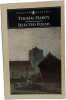
Bon état
[The Engineering Magazine] - HARRISON SUPLEE, Henry ; CUNTZ, J. H. ; BUXTON GOING, Charles
Reference : 57093
(1906)
The Engineering Index. Vol. IV : Five Years. 1901-1905
8vo, full editor's cloth, The Engineering Magazine, Copyright 1906, 1234 pages
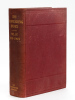
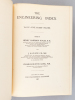
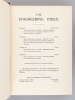
As explained in the preface, "this fourth volume of the Engineering Index represents the continuation of the work originally started by the late Professor J. B. Johnson in the Journal of the Association of Engineering Societies in 1884, and turned over by that Association to the Engineering Magazine, at the close of 1895. The previous volumes, published respectively in 1892, 1896 and 1901, covered with increasing fullness and thoroughness the field of technical engineering periodical literature, and in the present volume every care has been taken to maintain and advance the standard set by its predecessors". Good copy (binding slightly rubbed)
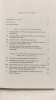
Essays on Ethics Social Behaviour and Scientific Explanation (Theory and Decision Library 12 Band 12)
Springer 1976 278 pages 15 6x1 91x23 39cm. 1976. Cartonné. 278 pages.
proche du neuf
The Royal Society. Its Origins and Founders.
London, The Royal Society, 1960. Lex. 8vo. In the original full cloth binding with gilt title to spine and the gilt crest of the Royal Society on front board. With the original dust jacket. Dust jacket with some wear and tears. Internally clean. (10), 275, (1) p. + 29 plates.
"HARTMANN, EDUARD VON [author] (+) MEMDUH SÜLEYMAN [translator and the author of the commentary].
Reference : 60003
(1913)
Darwinism [i.e. German: ""Wahrheit und Irrthum im Darwinismus""] - [FIRST EDITION OF THE FIRST BOOK ON DARWINISM, PRINTED IN ISTANBUL. ]
Istanbul, Nietzsche Hayatý ve Felsefesi, 1329 [1913]. 8vo. In later embossed full cloth binding with gilt lettering to spine. Last 10 leaves with a brown spot. Frontiespiece repaired with tape, otherwise a fine and clean copy. 127, (1) pp. + portrait of Darwin.
![Darwinism [i.e. German: ""Wahrheit und Irrthum im Darwinismus""] - [FIRST EDITION OF THE FIRST BOOK ON DARWINISM, PRINTED IN ISTANBUL. ]. "HARTMANN, ...](https://static.livre-rare-book.com/pictures/LLX/60003_1_thumb.jpg)
![Darwinism [i.e. German: ""Wahrheit und Irrthum im Darwinismus""] - [FIRST EDITION OF THE FIRST BOOK ON DARWINISM, PRINTED IN ISTANBUL. ]. "HARTMANN, ...](https://static.livre-rare-book.com/pictures/LLX/60003_2_thumb.jpg)
Rare first edition of the first book on Darwinism, printed in Istanbul. The work in Ottoman language is a translation of ""Wahrheit und Irrthum im Darwinismus"" (The Truths and Mistakes of Darwinism) by Eduard von Hartmann (1842 - 1906), first published in 1875. The translator Memduh Süleyman, who also commented the book, considered the natural evolution the biggest mistake of the Darwinism. Memduh Süleyman (1889?-1920) was an important author and translator of the last years of the Ottoman Empire. His most famous work is a book on Nietzsche, ""Nietzsche Hayat? ve Felsefesi"", from 1912, which he co-wrote in together with Ahmet Nebil-Baha Tevfik-Memduh.The book was published amidst the Ottoman debate on the Darwinism. The first mentioning of the term was made in 1863 in a magazine Mecmua-i Fünun by Münif Pasha, who was at the time serving as a minister of education and did not believe, that the development of science would or should affect the religion. In the time of the publication of the present work, Darwin's works were not yet translated into Ottoman. The first translation of On the Origin of Species in the Muslim world, was only issued in Arabic in 1918 in Cairo. Translated were only the first six chapters. For more chapters were subsequently added in 1928.OCLC list three institutional examples (Leiden University Library, Library of Congress, Huntington Library, Art Museum, & Botanical Gardens).
CACTI FOR THE AMATEUR. A COMPLETE GUIDE IN THE INTEREST OF CACTUS COLLECTORS,
, Pasadena, Abbey Garden Press, 1958, Bound, cloth with gold impression, 155 x 240mm., 132pp., profound b/w illustration.
In very good condition.
Roots of Revolution: A History of the Populist and Socialist Movements in 19th Century Russia: A History of the Populist and Socialist Movements in the Nineteenth-century Russia
Weidenfeld & Nicolson History 2001 850 pages in8. 2001. Broché. 850 pages.
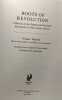
Bon état; tranche salie dos creusé intérieur propre
Geographisch-statistischer Abriß des Königreichs Holland.
Prag, Diesbachische Buchhandlung, 1809. (2), 232 S. Mit 8 Kupfertafeln, 2 gef. Kufpertafeln und 2 gef. Kupferkarten. Halblederband der Zeit.
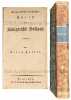
Aus der Reihe: "Neueste Länder- und Völkerkunde", Band 6. - Papier leicht gebräunt. Einband etwas berieben.
"HASSENFRATZ, (JEAN-HENRI). - THE LAGRANGE-HASSENFRATZ THEORY OF RESPIRATION.
Reference : 48147
(1791)
Mémoire sur la combinaison de l'oxigene avec le carbone & l'hydrogène du sang, sur la dissolution de l'oxigène dans le sang, & sur la maniere dont le calorique se dégage.
Paris, 1791. Contemp. hcalf. Gilt spine. Spine a bit rubbed. Wear to top of spine. A dampstain to lower right corners on the first 15 leaves of the volume. Stamps to verso of titlepage. In: ""Annales de Chimie, ou Recueil de Mémoires concernant la Chemie"" Tome 9. 355 pp. a. 1 engraved plate. (Entire volume offered). Hassenfratz's paper: pp. 261-274.
First printing of a classic paper in physiology.""Hassenfratz, a pupil of Lagrange, maintained that the oxidation of carbon and hydrogen took place in the blood, and not in the lungs as taught by others.""(Garrison & Morton: 926).
Sur la Nutrition des Vegétaux. Premier- Troisieme Mémoire. (all).
Paris, Rue et Hotel Serpente, 1792. 8vo. 2 contemp. hcalf. Spines gilt. Light wear to spines. In: ""Annales de Chimie"", tome 13 + 14. 336 pp. + 2 plates and pp. 335 + 2 plates. (2 entire volumes offered).Hassenfratz' papers: pp. 178-192, 318-330 (tome 13) and pp. 55-85 (tome 14). Stamps to verso of titlepages. Scattered brownspots, some leaves in vol. 13 with a faint dampstain to upper margins.
First printing of these 3 memoirs in which Hassenfratz set forth the ""Humus theory of vegetation"". From Hassenfratz' theory Thaer later derived his theoretical basis for plant nutrition.The volumes also contains Hassenfratz's importent paper on chemical affinities ""Explications de quelques Phénomenes qui paroissent contrarier les loix des affinités chimiques"", 1.-2. memoir, pp. 3-25 a. 25-38. Also papers by Pelletier, Vauquelin, van Mons, Berthollet, Fourcroy, Haüy etc.
Activités stickers - Chiffres Grande section: Maternelle Grande Section 5-6 ans
Hatier 2018 36 pages 23x23 4x2 8cm. 2018. Broché. 36 pages.
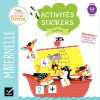
Très bon état
La magna Grecia nelle collezioni del Museo archeologico di Napoli (Napoli 1996). Ediz. illustrata (Electa Napoli. I greci in Occidente)
Mondadori Electa 1996 296 pages 20 828x5 588x27 432cm. 1996. Broché. 296 pages.
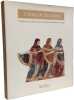
Bon état jaquette un peu jaunie intérieur propre bonne tenue

