 Write to the booksellers
-
Type
Book (8591)
Disk (44)
Drawings (1)
Engraving (9)
Magazine (89)
Maps (4)
Music sheets (135)
New book (2)
Old papers (1)
Photographs (19)
Posters (1)
-
Latest
Last 24h (3)
Last 3 days (2)
Last month (1655)
Last week (2)
-
Language
Czech (1)
Dutch (9)
English (156)
French (8717)
German (4)
Italian (2)
Latin (3)
Russian (4)
-
Century
16th (17)
17th (43)
18th (199)
19th (882)
20th (2616)
21st (2690)
-
Countries
Belgium (1156)
Canada (32)
China (56)
Côte d'Ivoire (7)
Denmark (1063)
France (6232)
Germany (1)
Netherlands (181)
Switzerland (155)
United Kingdom (9)
United States of America (4)
-
Syndicate
ALAC (25)
CLAM (25)
CLAQ (2)
ILAB (2234)
NVVA (15)
SLACES (15)
SLAM (1026)
SNCAO (4)
Poulette Crevette
Magnard 2006 32 pages 17 4x0 6x20 8cm. 2006. pocket_book. 32 pages.
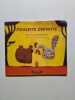
Etat correct
FRANSE MARMERPAPIEREN IN VORSTELIJKE BOEKBANDEN. UIT DE COLLECTIE VAN DE BIBLIOTHEQUE NATIONALE TE PARIJS,
Bavel, VBWPress, 1987 Paperback, geillustreerde kartonomslag in kleur, oblongformaat : 235 x 210mm., 52pp., uitgebreide illusratie in kleur en z/w.
Met catalogus van boekbanden waarin de behandelde marmerpapieren zich bevinden. In goede staat.
Guide des Antilles
Bordeaux, J. Graucher, 1979 - nbses photos et cartes n. & b. - in-16 : 184 pp. - br.
La Jeanne : Une aventure de 50 ans
Télégramme 2010 144 pages 25 7x1 6x29 2cm. 2010. Broché. 144 pages.
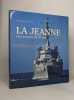
jaquette en bon état intérieur frais
Phonétique et enseignement de l'oral
Didier 2006 244 pages 15 4x0 8x22 8cm. 2006. Broché. 244 pages.
Bon état intérieur propre
LES MEMOIRES DE FEU MONSIEUR LE DUC DE GUISE
1668 un volume, reliure de l'époque plein veau brun raciné in-quarto (binding full calfskin) (19,3 x 25,6 cm), reliure d'époque, dos 4 nerfs (spine with raised bands) décoré or (gilt decoration) filets or (gilt line) et filets à froid (blind-stamping line decoration) - entre-nerfs - compartiments à fleuron au fer plein en losange et rinceaux aux angles avec des petits fers en remplissage (between the raised bands double gilt lines - floweret with hollowed out blocking stamp - with foliages executed in the curved lines in angles - with small blocking stamp in filling), titre frappé or (gilt title), important manque de cuir en bas du dos (lack of leather at the bottom on the spine) sur une surface de 3 cm2, coiffes supérieure et inférieure manquantes (is missing head and and tail of the spine), important manque de cuir en bas du premier plat, en longueur sur 3 cm2, coins fortement écornés, toutes tranches lisses jaspées rouges (all red marbled edges), cahiers légèrement déboités, La vignette de titre aux armes du Duc de Guise, Henri II de Lorraine MANQUE, sans illustrations (no illustrations), texte bien Complet (collationné), 795 pages, 1668 Paris Chez Edme Martin et Sébastien Larbre-Cramoisy Editeur,
Edition originale. .................Ces mémoires ont été publiées par le secrétaire du Duc, le sieur de Saint-Yon, lequel aurait demandé à Philippe Goibeau de les rédiger. On notera cependant que Augustin Calmet, (Bibl. lorraine 594) ne doute pas que ces mémoires sont de la main du duc.Les mémoires ne traitent que de l'expédition de Naples, où il essaye de faire accepter les prétentions de la maison de Lorraine sur le royaume des Deux-Siciles et où sa tentative se termine par une captivité chez les Espagnols..........TEXTE BIEN COMPLET.......dans son Jus (à restaurer). Henri II de Lorraine GUISE Duc deLes memoires de feu Monsieur le Duc de Guise. Chez Edme Martin et Sébastien Larbre-Cramoisy, A Paris, 1668, In 4 (18,8x25,5cm), (16) 795pp. (6) (1bc.), relié, tirage de tête. Edition originale. Une vignette de titre aux armes du Duc de Guise, Henri II de Lorraine (1614-1664). Ces mémoires ont été publiées par le secrétaire du Duc, le sieur de Saint-Yon, lequel aurait demandé à Philippe Goibeau de les rédiger. On notera cependant que Augustin Calmet, (Bibl. lorraine 594) ne doute pas que ces mémoires sont de la main du duc.Plein veau Granité d'époque. Dos à nerfs orné. Coiffes, mors et coins restaurés anciennement. Mors supérieur fendu. Intérieur frais."Ces Mémoires traitent de l'expédition de Naples, ou le duc de Guise essaye de faire accepter les prétentions de la maison de Lorraine sur le royaume des Deux-Siciles et ou sa tentative se termine par une captivité chez les espagnols"(Sources de l'histoire de France, 785). Voici ce qu'en dit l'abbé Gallois dans le Journal des Savants en 1668 : "Il faut avouer qu'il y a dans ces Mémoires je ne sais quoi, qu'on ne saurait exprimer et qui ne se trouve pas ordinairement dans les histoires, soit que cela vienne du génie particulier de M. de Guise, ou de naissance, ou peut-être de ce que ceux qui ont fait eux-mêmes de grands exploits, ont un particulier avantage pour les écrire".Deux ex libris aux armes du Comte de Poncin, avec une indication au crayon : 20 F. 1922. Ref : 28574 850 Ajouter au panier
Génie de Pascal.
Mayenne, Aubier, 1962 ; in-8, broché ; 184 pp. couverture blanche imprimée rouge et noir, jaquette illustrée en couleurs.
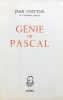
Moins de cinq annotations en marge au crayon noir. Sinon exemplaire en bon état.


POUR TOI, TERRE DES HOMMES - POEMES (ENVOI DE L'AUTEUR)
NON PRECISE. VERS 1954. In-8. Broché. Bon état, Couv. partiel. décollorée, Dos satisfaisant, Intérieur frais. 96 pages. Frontipsice monochrome. ENVOI DE L'AUTEUR à l'encre, en page de titre. EXEMPLAIRE N°182/300.. . . . Classification Dewey : 97.2-Dédicace, envoi
Classification Dewey : 97.2-Dédicace, envoi
DISQUE VINYLE MAXI 45 T A GUN LAW / BROTHER BROTHER / GIVING UP.
KITCHENWARE RECORDS. 1985. In-12. Broché. Bon état, Couv. convenable, Dos satisfaisant, Intérieur frais. Disque 3 titres. Photos du groupe sur la couverture et au dos de la pochette.. . . . Classification : 410-33 Tours

Classification : 410-33 Tours
Hallucinations (Les) télépathiques. Traduit et abrégé des "Phantasms of the living" par L. Marillier, avec une préface de M. Charles Richet.
Paris, Félix Alcan, 1891 ; in-8 ; demi-chagrin maroquiné havane, dos à nerfs soulignés d'un filet doré, pièces d'auteurs tête-de-nègre et de titre bronze, tête dorée, couverture et dos conservés, non rogné (Champs) ; XVI, 395, (3) pp.
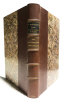
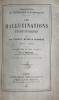
Edition originale de la traduction française par Léon Marillier, Secrétaire, pour la France, de la Society for Psychical Research. L'ouvrage est une tentative "de concilier ce qui est en apparence inconciliable, d'une part une précision rigoureuse dans la démonstration, d'autre part une audace extraordinaire dans l'hypothèse" (Caillet, 4875) ; "la partie consacrée aux hallucinations collectives est des plus intéressantes" (Dorbon, 2055).Très bel exemplaire, fort bien relié.
Antique Cufflinks 1860-1960, ouvrage de reference sur boutons de manchettes antique.
, private edition, 2011 Bound in luxe hardcover with slipcase, in very fine condition !! , Dans la couverture cartonnee luxe, 420pp, richement illustre en couleurs, - text in English - Le premier ouvrage de reference sur les boutons de manchettes historiques antiques. 402 pages, Hardcover, in leather slipcase, English
Ca fait des decennies deja que les boutons de manchettes constituent le bijou pre-eminant pour l?homme. Ce tome, comprenant toute l'histoire de cette petite merveille, est donc souhaite le bienvenue. Guy-David Lambrechts est bien connu pour sa collection la plus grande du monde. It's been decades now that the cufflinks are the jewel pre-eminant for Rights. This toms, including the history of this little wonder, therefore the desired welcome. Guy David Lambrechts is well known for its world's largest collection. For decades now, cufflinks have been the preeminent piece of jewelry by far, for the fashion-wary male. This anticipated book, tackling the complete history of the gem at hand, has been long overdue. Guy-David Lambrechts is known for years for his worlds largest collection of this trinket. You can be among the first in line to order your very own certified copy. A unique and original gift. The first historical reference book on antique cufflinks. Present the largest collection of cufflinks from 1860 till 1960. Luxury edition of numbered copies.
Flemish Tapestry in European and American Collections ,Studies in Honour of Guy Delmarcel
, brepols, 2003 232 p., 94 b/w ill. 28 colour ill., 245 x 297 mm, Languages: English,Hardback. ISBN 9782503521749.
Professor Dr Guy Delmarcel was Curator of Textiles at the Brussels Koninklijke Musea voor Kunst en Geschiedenis (1975-1990) and Professor of History of Art at the Catholic University of Leuven (1981-2002). He passionately devoted his career to the study of Flemish tapestry. His intensive research on the 'Mobile Frescoes of the North' resulted in numerous articles, books, lectures, and exhibitions, thereby unlocking tapestry to both scholars and the general public. Guy Delmarcel has now been given emeritus status. The Department of Archaeology, History of Art and Musicology decided to honour its former chairman by offering him a Festschrift entirely dedicated to his beloved field of research. Fourteen renowned tapestry scholars from all over the world willingly accepted the invitation to celebrate their esteemed colleague. Throughout the centuries Flemish tapestry has eagerly been collected. In the Middle Ages and Early Modern Times the European elite spent fortunes on these lavish works of art. A number of essays compiled in the present volume focus on the patronage and collections of European kings and noblemen. In the nineteenth and twentieth centuries European and American museums became important collectors of Flemish tapestry, as is demonstrated by some museological studies presented in Studies in Honour of Guy Delmarcel. This penetration by Flemish tapestry of the public realm has obviously necessitated iconographic and stylistic studies. A number of new analyses are gathered in the Festschrift. Contents : Rotraud Bauer, Zur Ikonographie der Tapisserienserie Die Sechs Weltzeitalter im Kunsthistorischen Museum in Wien; Maria Hennel-Bernasikowa, The Role of the Tapestries of Sigismund II Augustus in Polish Royal Ceremonies; Pascal-Francois Bertrand, Tapisseries de Flandres et autres tentures parmi les dessins d'archeologie de Roger de Gaignieres; Birgitt Borkopp-Restle and Andre Brutillot, L?Histoire de Saint Paul et ses additions. Une serie de tapisseries du Musee national de Baviere ; Iain Buchanan, The Tapestries Purchased by King Eric XIV of Sweden at Antwerp in 1560-1561. New Documentation; Thomas P. Campbell, The Story of Abraham tapestries at Hampton Court Palace; Ingrid De Meuter, Le peintre anversois Pieter Spierinckx (1635-1711), createur de cartons de tapisseries; Nello Forti Grazzini, Renaissance Tapestry and Italian Patronage; Wendy Hefford, Brussels Horsemanship tapestries owned by Charles I and Frederick Prince of Wales; Concha Herrero Carretero,Tapices flamencos en la coleccion de la Corona de Espana; Lucia Meoni, Gli arazzi fiamminghi nella collezione de'Medici ; Hillie Smit, New Data on the History of a Set of Scenes of Country Life "after Teniers" in the Rijksmuseum Amsterdam; Christa C. Mayer Thurman and Koenraad Brosens, Flemish Tapestries in the Collection of The Art Institute of Chicago.
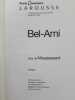
Bel-Ami (Petits Classiques Larousse Texte Integral)
LAROUSSE KINGFISHER CHAMBERS I 2015 398 pages 17 8x2 2x12 2cm. 2015. Broché. 398 pages.
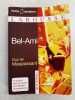
Bon état
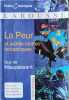
La Peur et autres contes fantastiques
Larousse 2009 127 pages 17 6x0 8x12 4cm. 2009. Broché. 127 pages.
Bon état
ARTS OF INDIA : 1550-1900.
, London, Victoria and Albert Museum, 1990, Pictorial softcover, decorated inner platters, 210 x 280mm., 240pp., beautiful color illustration. ISBN 1851770224.
Arts of Pre-Mughal India. The age of the Mughals. The sultanates of the Deccan. The Rajput courts. Europeans and the Textile Trade. The later Provincial Courts and British expansion. The Raj : India 1850 - 1900. In good condition.
Silent Idol et autres textes (But… Who has stolen the code?).
Genève, éditions La Margelle, 2012. In-8 broché de 181-[5] pages, couverture illustrée.
![Silent Idol et autres textes (But… Who has stolen the code?).. [GUYONNET Jacques] Jack of the Shadows:](https://static.livre-rare-book.com/pictures/KUA/20694_1_thumb.jpg)
Avec quelques illustrations refusées pour la couverture... Jacques Guyonnet est un compositeur, chef d'orchestre et écrivain né à Genève en mars 1933 et décédé le 18 mai 2018. Il a laissé une oeuvre abondante.
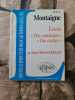
Montaigne Essais (I 31 et III 6) (Résonances)
Ellipses 1994 64 pages 14 2x0 6x18 6cm. 1994. Broché. 64 pages.
Bon état
architectural network of the Van Neurenberg family in the Low Countries (1480-1640)
, Brepols, 2006 Paperback. 250 p., 94 b/w ill., 220 x 280 mm, Languages: English. fine condition !! . ISBN 9782503518473.
Stone traders initially based in the Meuse valley, the Van Neurenberg family expanded northwards to Nijmegen and Dordrecht from 1530 on, becoming an international trading company in the process. Their subsequent activities reflect the huge changes the Dutch building sector underwent during the 17th century. They cooperated with the most famous artists of their time, such as Hendrick de Keyser in Amsterdam, and were involved in the most modern building projects of the Dutch Golden Age, such as Frederik Hendrik of Orange's Honselaarsdijk Palace. This study offers new insights into a relatively neglected aspect of Netherlandish building history in the 16th and 17th century.
architectural network of the Van Neurenberg family in the Low Countries (1480-1640),
Turnhout, Brepols, 2006 Paperback, IX+250 p., 94 b/w ill., 220 x 280 mm.AS NEW. ISBN 9782503518473.
Stone traders initially based in the Meuse valley, the Van Neurenberg family expanded northwards to Nijmegen and Dordrecht from 1530 on, becoming an international trading company in the process. Their subsequent activities reflect the huge changes the Dutch building sector underwent during the 17th century. They cooperated with the most famous artists of their time, such as Hendrick de Keyser in Amsterdam, and were involved in the most modern building projects of the Dutch Golden Age, such as Frederik Hendrik of Orange's Honselaarsdijk Palace. This study offers new insights into a relatively neglected aspect of Netherlandish building history in the 16th and 17th century. New.
Concours AMP et AVS - Écrit et oral - Admis - L'essentiel en fiches: Aide médico-psychologique et Auxiliaire de vie sociale
Vuibert 2013 176 pages 13 8x1x18 8cm. 2013. Broché. 176 pages.
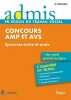
Très bon état - L'ouvrage qui n'a jamais été lu peut présenter de légères traces de stockage mais est du reste en très bon état. envoi rapide et soigné dans un emballage adapté depuis France
Défibrevet Maths - Brevet 3e
Bordas Editions 2012 256 pages 14 2x1 8x17 2cm. 2012. Relié. 256 pages.
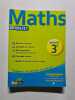
Etat correct
La guerre de Vendée.
Centre vendéen de recherches historiques, 2006 24 x 13 x 0 cm., 123 pp, Broché

- - VENTE PAR CORRESPONDANCE UNIQUEMENT - LIEN DE PAIEMENT, NOUS CONSULTER.
La Vendée 1789-1793.
Editions Champ Vallon, 1992 24 x 15,4 x 2,7 cm., 330 pp, Broché

Editeur : Champ Vallon Date de parution : 1993 Description : In-8, 330 pages, broché, occasion, couverture défraîchie. Envois quotidiens du mardi au samedi. Les commandes sont adressées sous enveloppes bulles. Photos supplémentaires de l'ouvrage sur simple demande. Réponses aux questions dans les 12h00. Librairie Le Piano-Livre. Merci. Please let us know if you have any questions. Thanks - - VENTE PAR CORRESPONDANCE UNIQUEMENT - LIEN DE PAIEMENT, NOUS CONSULTER.
"Par principe d'humanité-- " la Terreur et la Vendée.
Fayard, 1999 23,5 x 15,3 x 2,8 cm., 589 pp, Broché
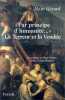
- - VENTE PAR CORRESPONDANCE UNIQUEMENT - LIEN DE PAIEMENT, NOUS CONSULTER.

