 Write to the booksellers
-
Type
Book (7172)
Disk (1)
Drawings (1)
Engraving (9)
Magazine (89)
Maps (4)
Music sheets (136)
New book (4)
Old papers (1)
Photographs (7)
-
Latest
Last 24h (3)
Last 3 days (6)
Last month (116)
Last week (20)
-
Language
Czech (1)
Dutch (9)
English (158)
French (7242)
German (4)
Italian (2)
Japanese (1)
Latin (3)
Russian (4)
-
Century
16th (10)
17th (43)
18th (197)
19th (882)
20th (2425)
21st (1548)
-
Countries
Belgium (1156)
Canada (34)
China (56)
Côte d'Ivoire (7)
Denmark (1063)
France (4755)
Germany (1)
Netherlands (181)
Switzerland (155)
United Kingdom (12)
United States of America (4)
-
Syndicate
ALAC (27)
CLAM (25)
CLAQ (2)
ILAB (2251)
NVVA (15)
SLACES (15)
SLAM (1038)
SNCAO (4)
Werner Adriaenssens, Daniel Alcouffe, Francoise Aubry, Odile Nouvel-Kammerer, Leon Lock, Guido Giovannini-Torelli,
Reference : 32428
Roberto Polo the eye. art collecting
, Frances Lincoln Publishers, London, 2011 Hardback with dusjacket in full color, 688 pages, Format: 325mm x 245mm, Over 400 colour photographs, very fine printed ! ***TRES BON ETAT/NEUF!!! ISBN 9780711232525.
This book explores the visual evolution of the legendary connoisseur and philanthropist Roberto Polo through a selection of over three hundred masterpieces and magnificent gemstones from the extraordinary collections which he has formed. At an early age, Roberto Polo revealed a powerful talent as a visual artist, exhibiting his work in major art museums and galleries. Thanks to his profound knowledge of art history and theory, he also revealed an astonishing talent for identifying exceptional art and gemstones from many periods and origins. Roberto Polo was educated at the Corcoran School of Art, where he was appointed professor at the precocious age of sixteen, and at Columbia University. At the age of twenty-four, he conceived and organized the now landmark exhibition Fashion as Fantasy, featuring works especially created by fifty-four exhibitors, including David Hockney, Robert Motherwell and Andy Warhol. Roberto Polo was instrumental in founding Citibank?s Fine Art Investment Services, the first department of its kind in the banking industry. In 1981, he left Citibank and became an independent art and gemstone investment advisor. During this period, he formed collections of French eighteenth, nineteenth and twentieth-century fine and decorative arts, as well as of gemstones, described by Le Journal des Arts as ?anthological?. In 1988, the French Republic bestowed on him the medal of Commandeur de l?ordre des Arts et de Lettres for his contributions to French art and culture.In the same year, he became the victim of a Kafkaesque judicial affair from which he rose in 1995, according to The New York Times , as ?the wonderful phoenix of the art market?, now championing Historical Design and Modernism independently and through Galerie Historismus. Described by Le Figaro as ?The Eye? and by Architectural Digest as ?The Trendsetter of the Art Market?, Roberto Polo continues to follow his edict that one should only acquire art which was revolutionary in its time.Exquisitely illustrated with over four hundred colour photographs, and with texts by leading art and jewellery historians, this book is a fascinating insight into the man described by Art & Auction , as ?one of the ten people who have made a difference in the art market? and an illuminating account of his forty years of collecting activity.
Over een kleine mol die wil weten wie er op zijn kop gepoept heeft, reuze kartonboek
BE-, De Vries - Brouwers, 2014 hardcover op reuze formaat ! 35 x 50cm nieuw ! ISBN 9789053414491.
prachtige uitgave !!. Jubileum uitgave naar aanlijning van 25 jaar 'Over een kleine mol die wil weten wie er op zijn kop gepoept heeft'
"WESSEL, CASPAR. - THE FIRST SYSTEMATICAL THREATMENT OF COMPLEX NUMBERS.
Reference : 58364
(1797)
Om Directionens analytiske Betegning, et forsøg, anvendt fornemmelig til plane og sphæriske Polygoners Opløsning. (Essai sur la représentation analytique de la direction, avec des applications, en particular à la détermination des polygones plans et d...
Kiøbenhavn, Johan Rudolph Thiele, (1797) 1799. 4to. Uncut and unopened in original blue boards. Published in: ""Nye Samling af det Kongelige Danske Videnskabernes Selskabs Skrifter."" Vol. V. Wessel's paper: pp.469-518 and 3 folded engraved plates (the last plate inserted at p. 463). The whole volume V offered in its original binding. Engraved titlevignette. XII,670 pp., 15 engraved plates. 4 leaves with upper right corners gone, not affecting Wessel's paper.
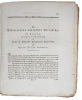
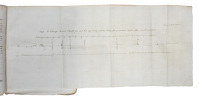
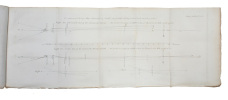
First edition of this important first systematical treatment of the theory of complex numbers and at the same time, the first work to add vectors in three-dimensional space.""Wessel’s fame as a mathematician is based entirely on one paper, written in Danish and published in the Mémoires of the Royal Danish Academy, that established his priority in publication of the geometric representation of complex numbers. John Wallis had given a geometric representation of the complex roots of quadratic equations in 1685"" Gauss had had the idea as early as 1799 but did not explicitly publish it until 1831. Robert Argand’s independent publication in 1806 must be credited as the source of this concept in modern mathematics because Wessel’s work remained essentially unknown until 1895, when its significance was pointed out by Christian Juel. The title of Wessel’s treatise calls it an ""attempt"" to give an analytic representation of both distance and direction that could be used to solve plane and spherical polygons. The connection of this goal with Wessel’s work as a surveyor and cartographer is obvious. The statement of the problem also suggests that Wessel should be credited with an early formulation of vector addition. In fact, Michael J. Crowe, in A History of Vector Analysis (University of Notre Dame Press, 1967), defines the first period in that history as that of a search for hypercomplex numbers to be used in space analysis and dates it from the time of Wessel, whom he calls the first to add vectors in three-dimensional space."" (DSB).

[Westall (William)] - Westall (William) (from drawings by), Moule (Thomas) (descriptions by), Finden (Edward) (engraved by, and under the direction of).
Reference : 2697
(1830)
Great Britain illustrated : a series of original views.
1830 Charles Tilt, London, 1830. Un volume in-4 demi maroquin rouge à coins, dos à nerfs orné de caissons dorés, titre doré, tranches marbrées, VI + 119 pages, nombreuses gravures (une vignette de titre + 108 vignettes sur 59 pl. hors-texte), texte en anglais. Quelques rousseurs, néanmoins bel exemplaire.
La librairie est ouverte du mardi au samedi de 9h30 à 12h30 et de 13h30 à 19h00. Commandes par courriel ou téléphone. Envoi rapide, emballage soigné.

West of the Pecos Rodeo. 113th Edition
Rodeo News Inc.. 1995. In-4. Broché. Bon état, Couv. convenable, Dos satisfaisant, Intérieur frais. 95 pages. Nombreuses illustrations en noir et blanc, dans et hors texte. Texte en anglais.. . . . Classification Dewey : 420-Langue anglaise. Anglo-saxon

Classification Dewey : 420-Langue anglaise. Anglo-saxon
West of the Pecos Rodeo. Western Art show and sale
Jennings. 1988. In-4. Broché. Bon état, Couv. convenable, Dos satisfaisant, Papier jauni. 103 pages. Nombreuses illustrations en couleur et en noir et blanc, dans et hors texte. Texte en anglais.. . . . Classification Dewey : 420-Langue anglaise. Anglo-saxon
Classification Dewey : 420-Langue anglaise. Anglo-saxon
Final Cut Pro HD - Ouvrage officiel de formation (+ DVD): Ouvrage d'auto-formation Apple
Pearson 2004 748 pages 19x4x23 2cm. 2004. Broché. 748 pages.
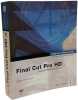
Bon état intérieur propre avec son DVD tranche un peu ternie
Reinventing the Middle Ages and the Renaissance. Constructions of the Medieval and Early Modern Periods,
Turnhout, Brepols, 1998 Hardback, XX 243 p., 7 b/w ill., 160 x 240 mm. ISBN 9782503508047.
The fourteen essays presented in this volume take an historicized approach to constructions of the past, and all of them focus on how and why the present of any period uses the past to promote its own opinions, beliefs, doctrines or views. The fourteen essays presented in this volume contribute substantially to the study of the reinvention of the Middle Ages and the Renaissance. They take an historicized approach to constructions of the past, and most address the relatively new field of Medievalism. All of them focus on how and why the present of any period uses the past to promote its own opinions, beliefs, doctrines or views. In particular, the volume demonstrates that reinventions of past eras or figures can be motivated by a nationalistic desire to create cultural 'roots', to discover origins that justify a regime or group's self-identity, to appropriate a cultural icon or neglected author for a particular political agenda, or to reflect on contemporary social issues via a remote time and place. Reworkings or adaptations of earlier culture often tell us more about the age in which they were produced than the one revived or revisited. This volume features five essays that treat medieval subjects; four focus on Tudor and Stuart figures, religion or politics; and five concentrate on nineteenth-century uses of medieval or early modern events, literary conventions, settings and themes. The contributions are as follows: John D. Niles, 'The wasteland of Loegria: Geoffrey of Monmouth's reinvention of the Anglo-Saxon past'; Richard W. Clement, 'Richard Verstegan's reinvention of Anglo-Saxon England: a contribution from the continent'; Anne Savage, 'Pagans and Christians, Anglo-Saxons and Anglo-Saxonists: the changing face of our mythical landscape'; Daniel F. Melia, 'Congruent desires: medieval and modern reconstructions of Irish and Welsh literary artifacts'; Thomas A. Prendergast, 'Politics, prodigality, and the reception of Chaucer's Purse; Kenneth J.E. Graham, 'Defining the "discipline" of Reformation Studies'; Robert L. Entzminger, 'Jonson, the myth of Sidney, and nostalgia for Elizabeth', Renee Pigeon, 'Gloriana goes Hollywood: Elizabeth I on film, 1937-1940'; Paul N. Hart. New.
The Bakerian Lecture, - An Account of several new Instruments and Processes for determining the Constants of a Voltaic Circuit. Received June 15, - Read June 15, 1843.
(London, Richard and John E. Taylor, 1843). 4to. No wrappers as extracted from ""Philosophical Transactions"" 1843 - Part II. Pp. 303-327 and 2 lithographed plates.
Frst appearance of an importent paper in the history of electricity. ""In 1843 Wheatstone published an experimental verification of Ohm's law, helping to make the law (already well known in Germany) more familiar in England. In connection with the verification he developed new ways of measuring resistances and currents. In particular, he invented the rheostat and popularized the Wheatstone bridge (in the paper offered), originally invented by Samuel Christie.""(DSB).
"WHEWELL, WILLIAM - A PIONEER-WORK ON TIDES WITH THE FIRST COTIDAL WORLD-MAP.
Reference : 42692
(1833)
Essay towards a First Approximation to a Map of Cotidal Lines. Read May 2, 1833.
(London, Richard Taylor, 1833). 4to. No wrappers as extracted from ""Philosophical Transactions"" 1833 - Part I. Pp. 147-236, a few textillustr.,1 engraved plate and 2 large folded engraved maps (a general, representing the greater part of the world (42x93 cm) and Chart of the British Isles, drawn and engraved by J.& C. Walker.). A small tear to world map. Clean and fine.
First appearance of this classic, pioneering paper on the investigation of tidal phenomena. It is the first in a series of 16 papers Whewell made for the Royal Society. It contains the first printed cotidal world-map.""Whewell took over the subject of mapping cotidal lines from Lubbock with entusiasm....He exercised the pioneer's privilege of coining new words and phrases appropriate to his subject. Many failed to stick, some phrases of Whewell's origin still occasionally used are: 'age of the tides', 'luni-tidal interval', 'semi-menstrual inequality' etc, etc....Whewell's initial cotidal map for the world ocean was presented in his first paper of 1833 (the paper offered). By his own admission, it was entirely preliminary and tentative, what nowadays might be called a ""strawman"", to stimulate discussionm. He later (1836) suggested smll modifications, especially near the coast of North America"" these were incorporated in an 'improved' world map by G.B. Airy in his celebrated tratise on ""Tides and wave"", (Cartwright in ""Tides. A Scientific History"", pp.110-112.)
"WHEWELL, W. - THE FOUNDATION OF MATHEMATICAL CRYSTALLOGRAPHY.
Reference : 46098
(1825)
A general Method of Calculating the Angles made by any Planes of Chrystals, and the Laws according to which they are formed. Read November 25, 1824.
(London, G. and W. Nicol, 1825). 4to. No wrappers as extracted from ""Philosophical Transactions"" 1825 - Part I. Pp. 87-130 and 2 engraved plates with many figs. Upper right corner dampstained, mostly on the first page and here only slightly touching a few letters.
First appearance of this importent paper in which Whewell gave crystallography a mathematical foundation.""In a paper read before the Royal Society in 1824, Whewell, according to Herbert Deas, ""laid the foundations of mathematical crystallography."" His system for calculating the angles of planes of crystals assumed that crystals are aggregates of small rhomboids that can be thought to shrink below the level of possible measurement, thus suggesting that crystals are latticelike. In 1825 Whewell visited Mohs in Germany. In 1828, the year in which Whewell became professor of mineralogy, he published a revision of Mohs’s system of mineralogical classification.""(DSB).
Forest Flora of Northern Rhodesia
1962 Oxford University Press - 1962 - In-8, cartonnage toilé vert sous jaquette de l'éditeur - 455 pages - Nombreuses illustrations en N&B hors texte - Ouvrage en anglais - Envoi de l'auteur (dédicace) à Jean et Aline Raynal en première page de garde
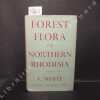
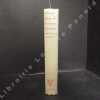
Bon état - Jaquette légèrement défraichie (Menus frottements, infimes tâches) - Dos de la jaquette légèrement insolé
East Sussex
Spurbooks Ltd 1978 160 pages 13 4x2 2x21 2cm. 1978. Broché. 160 pages.
couverture défraîchie intérieur propre dos ridé intérieur propre
THE HEART OF ENGLAND. FROM THE WELSH BORDERS TO STRATFORD-UPON-AVON,
London, Weidenfeld and Nicolson, 1996 Pictorial paperback, oblong: 245 x 190mm., 160pp., profound colour illustration. ISBN 0297833812.
Covers the area of lush pastureland and gentle, rolling hills that stretches from Shrewsbury in the north to Gloucester in the south, and from the Welsh borders in the west to around Stratford-upon-Avon in the east. Good condition.
THE SMALL HOUSE : TODAY AND TOMORROW,
, London, Leonard Hill, 1957, Bound, cloth with silverimprint on front and spine, photo - frontispice, 190 x 250mm., 218pp., b/w documentation and LXIX b/w picture - plates.
Book was written in collaboration with Johannes Schreiner. First edition. Good condition.
(And:) Who's who in the Roman world. (And:) Who's who in classical mythology. (By) J. HAZEL & M. GRANT.
Lnd., N.Y., Routledge, 2002.
3 vols: X,284;X,367;XII,367 p. Hardb. 24 cm (Including dustjackets, in slipcase) (Heavy book, may require extra shipping costs)
Berg- und Gletscherfahrten in den Alpen in den Jahren 1860 bis 1869. Autorisierte deutsche Bearbeitung von Friedrich Steger.
2. Aufl. Braunschweig, George Westermann, 1892. Gr.-8°. (1) Bl., XX, 538 S. Mit 24 Abb. auf Tafeln (dv. 1 als Frontispiz), 91 Abb. im Text sowie 1 Karte und 1 gef. Tafel. Halblederband der Zeit .
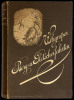
Gutes Exemplar. Leichte Gebrauchsspuren. Besitzereintrag auf dem Vortitel.
Escalades dans les alpes de 1860 à 1869. Ouvrage traduit de l'anglais avec l'autorisation de l'auteur par Adolphe Joanne.
Deuxième Edition. Paris, Hachette, 1875. Gr.-8°. (1) Bl., (4), IV, 431, (1) S. Mit 108 gest. Abb. (dv. 16 ganzs.) und 6 Karten. Halblederband der Zeit mit Rückenvergoldung.
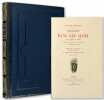
Zweite französische Ausgabe. – Sehr gut erhaltenes Exemplar.
"(WIBERG, MARTIN) - THE WIBERG CALCULATING MACHINE PRESENTED.
Reference : 59088
(1863)
Rapport sur la machine à calculer présentée par M. Wiberg. (Commissaires: Mathieu, Chasles, delaunay rapporteur)
(Paris, Mallet-Bachelier), 1863. 4to. No wrappers. In: ""Comptes Rendus Hebdomadaires des Séances de L'Academie des Sciences"", Tome 56, No 8. Pp. (317-) 364. (Entire issue offered). The paper: pp. 330-339.
First apperance of this detailled report and examination by the French mathematiciens Mathieu, Chasles and Delaunay of the calculating machine invented by Martin Wiberg as an improvement on the Scheutz machine. The machine could produce tables of logarithms.
Historisch=kritische Untersuchung der Alchemie, oder der eingebildeten Goldmacherkunst" von ihrem Ursprunge sowohl als Fortgange, und was nun von ihr zu halten sey.
Weimar, Carl Ludolf Hoffmann, 1777. Small 8vo. A bit later marbled boards. Spine gone. (22),437,(3) pp. Light toning to text and some scattered brownspots.
Scarce first edition of Wiegleb's most importent work and one of the most importent historical criticism of the alchymistic theories of transmutations. ""Wiegleb’s critical attitude in assessing scientific questions earned him high esteem in learned circles. After several years of work he published Historisch-kritische Untersuchung der Alchemie (1777), which went through a second edition. In this work he stated: ""The best accounts from the period when the name alchemy is encountered, . . . are examined, and it is thereby demonstrated that they are, taken together, incapable of confirming the reality of alchemy. Then, the strongest proof is adduced to show that the entire imaginary art of alchemy is impossible according to all known, certain natural laws of human art: thus [it is shown] that it has never truly been practiced by anyone."" Wiegleb carefully examined famous reports of the transformation of metals and pointed out their deficiencies: in a short time his work became widely known. His motto was ""To doubt is the beginning of knowledge,"" so it is all the more as tonishing that Wiegleb was a convinced proponent of Stal’s phlogiston theory throughout his life."" (DSB).Ferguson II, 546. - Duveen, 620.
Erklärung des atomistischen Wesens des tropfbar-flüssigen Körperzustandes, und Bestätigung desselben durch die sogenannten Molecularbewegungen.
Leipzig, Johann Ambrosius Barth, 1863. Conemp. hcalf. 5 raised bands, gilt spine and gilt lettering to spine. A few scratches to spine. A small nich to middle of spine.Small stamp on verso of first -and general- titlepage. In: ""Annalen der Physik und Chemie. Hrsg. von J.C. Poggendorff"", Vierte Reihe Bd. 28, (=Poggendorff Bd. 118). Entire volume offered. X,644 pp. and 8 engraved plates. Wiener's paper: pp. 79-94.
First printing of this importent paper in the development of the atomic theory.The cause of the Brownian movement was ascribed by C. Wiener in 1863 to bombardment of the suspended particles by the molecules of the liquid. This was confirmed by Svedberg in 1906"" he found that the length of the path described agrees with that calculated from the kinetic theory by Einstein (1905) and Smoluchowski (1906).The volume contains further notable papers: G. KIRCHHOFF ""Zur Geschichte der Spectral-Analyse und der Analyse der Sonnenatmosphäre"". Pp. 94-111.L. LORENZ: ""Ueber die Theorie des Lichts"". Pp. 111-145. - Lorenz is well known for his theory of the electromagnetic nature of light, which he, independently of Maxwell, published in 1867.
"WIEN, WILLY. (WILHELM). - DETERMINING THE MASS AND VELOCITY OF CANAL RAYS.
Reference : 43653
(1898)
Untersuchung über die electrische Entladung in verdünnten Gasen. (Erste - Zweite Abhandlung). (2 Papers).
Berlin, J.A. Barth, 1898, 1901 Without wrappers. In ""Annalen der Physik und Chemie. Hrsg. von G. Wiedemann."", Neue Folge, Bd. 65, No. 7. (Entire issues offered). Pp. 241-480. . And Vierte Folge, Bd. 5. Pp. 241-488, textillustr. Wien's paper pp. 440-452, textillustrations and pp. 421-435, textillustrations. Clean and fine. The second issue punched in inner margin after cords., no loss of text.
First appearance of Wien's importent paper in which he shows that the cathode rays are particles, that their velocity is about a third to that of light and he establish the ratio between the mass and the charge.In the paper are ""described the experiments by which Wien determined the properties of the canal rays. The firstpart of the paper conatins a description of observations on the cathode rays, made with a Lenard Tube, in which the cathode rays passed through an aluminium window into an extension of the tube where as high a rarefaction as possible was maintained. The magnetic and electrostatic deflexions of a narrow cathode stream were observed and Wien concludes that it is proved by his investigation that the cathode rays which pass through the windoww carry with them strong negative charges.""(Magie ""Souce Book in Physics"", p. 597 ff.).Wien was awarded the 1911 Nobel Prize for physics for his discoveries regarding laws governing the radiation of heat.
Wiepke Loos, Marijn Schapelhouman, Rijksmuseum (Netherlands), R. J. A. te Rijdt
Reference : 026212
(2002)
ISBN : 9789040087066
Aquarellen van de Haagse School - de collectie Drucker-Fraser
2002 Rijksmuseum Amsterdam Hardcover As New
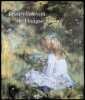
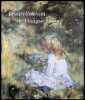
Relié, jaquette: Comme Neuf, 30 x 26 cm, 271 pages, Néerlandais, Illustrations, état: Comme Neuf [Cette description peut avoir été traduite par une IA.]
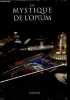
La mystique de l'Opium dans l'histoire et dans l'art.
Parkstone international. 2004. In-8. Broché. Etat d'usage, Coins frottés, Coiffe en pied abîmée, Intérieur frais. 95 pages, jaquette conservée, nombreuses photos et illustrations en noir et blanc et en couleur hors texte.. . . . Classification Dewey : 633.7-Plantes alcaloïdes (tabac, thé, cacao, café, pavot)
Classification Dewey : 633.7-Plantes alcaloïdes (tabac, thé, cacao, café, pavot)

