 Write to the booksellers
-
Type
Book (8591)
Disk (44)
Drawings (1)
Engraving (9)
Magazine (89)
Maps (4)
Music sheets (135)
New book (2)
Old papers (1)
Photographs (19)
Posters (1)
-
Latest
Last 24h (3)
Last 3 days (2)
Last month (1655)
Last week (2)
-
Language
Czech (1)
Dutch (9)
English (156)
French (8717)
German (4)
Italian (2)
Latin (3)
Russian (4)
-
Century
16th (17)
17th (43)
18th (199)
19th (882)
20th (2616)
21st (2690)
-
Countries
Belgium (1156)
Canada (32)
China (56)
Côte d'Ivoire (7)
Denmark (1063)
France (6232)
Germany (1)
Netherlands (181)
Switzerland (155)
United Kingdom (9)
United States of America (4)
-
Syndicate
ALAC (25)
CLAM (25)
CLAQ (2)
ILAB (2234)
NVVA (15)
SLACES (15)
SLAM (1026)
SNCAO (4)
Risk and Blame: Essays in Cultural Theory
Routledge 1992 336 pages 14 8x3 4x21 4cm. 1992. Cartonné jaquette. 336 pages.
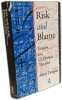
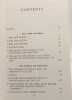
Bon état intérieur propre bonne tenue accroc sur la jaquette en haut du dos
A Brief Outline of the History of Old Hall. A Paper Written on the Occasion of the Centenary Celebration at St. Edmund's College, in 1869
Standon Edmundian Association 1891
First edition. Original cloth gilt now a bit dulled, all edges gilt, some foxing at the front, else a very good copy. Owner's name to the front (Syon Abbey). vi, 80 pp. Frontispiece and seven Illustrations. COPAC gives copies at Oxford and Cambridge only. St Edmund's Hall was established in 1795 for the education of the children of Roman Catholic nobility.

Hospital of Incurable Madness. L'Hospedale de' Pazzi Incurabili (1586), by Tomaso Garzoni,
Turnhout, Brepols, 2010 Hardback, VIII+251 p., 175 x 255 mm. ISBN 9782503528953.
This translation of Garzoni's The Hospital of Incurable Madness provides a fascinating addition to our understanding of representations of mental illness in the Middle Ages. This translation of Tomaso Garzoni's Renaissance 'best-seller' provides a rich and revealing window on sixteenth-century views of madness and foolishness, and social deviance. Garzoni's encyclopedic work is perhaps the most important contribution of the last half of the century to the 'fools' genre to which Erasmus' Praise of Folly and Sebastian Brant's Ship of Fools also belong. Garzoni provides a spoof of academic writing on madness, with extensive 'reviews of the medical literature' on certain types of madness. A final, intriguing section on the varieties of madness to be found in Garzoni's female 'patients' reveals much about late-Renaissance attitudes towards women. New.
Drac Dodo Cha/dodo Takaku Reiko Cha
Reference : 300032990
(2018)
ISBN : 9782203120846
Le Voile noir
Casterman 2018 48 pages 24x32x1cm. 2018. Relié. 48 pages.

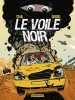
French édition - Livre issu de déstockage JAMAIS LU peut présenter d'infimes marques de manipulation sur la couverture et/ou les pourtours mais demeurant en très bon état d'ensemble.Expédition sous blister dans une enveloppe matelassée depuis la France
Draguet Michel Vandepitte Francisca
Reference : 500299233
(2010)
ISBN : 9789053497906
Charles Van Der Stappen: Sculpteur de la fin de siècle (Cahiers des musees de beaux arts de Belgique (6) Band 0)
Snoeck Publishers 2010 125 pages 17x1 2x24cm. 2010. Broché. 125 pages.
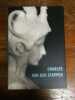
Très bon état
"DRAPER, (JOHN) WILLIAM. - THE FIRST DAGUERREOTYPE PORTRAIT.
Reference : 46912
(1840)
On the Process of Daguerreotype, and its application to taking Portraits from the Life.
London, Richard and John Taylor, 1840. Contemp. hcalf. A nic to spine at upper hinge. Hinges weakening (not loose). Gilt lettering to spine ""Philosophical Magazine"" - Vol.XVII. In: ""The London, Edinburgh, and Dublin Philosophical Magazine and Journal of Science. Conducted by David Brewster et al."". Vol. XVII. A stamp to titlepage and a few other pages. Entire volume offered. VIII,552 pp. Draper'spaper: pp. 217-225.
First printing of the famous paper in which Draper relates how he was able to made the first photographic portrait on a daguerreotype plate, giving an ennormously long exposure. The subject of the portrait, Draper's assistant, powdered his face with flour and sat in front of the camera for a half hour facing the sunlight.Draper stated that it is possible to make portraits in full sunlight, using mirrors as light reflectors. ""But in the reflected sunshine, the eye cannot support the effulgence of the rays. It is therefore necessary to pass them through some blue medium, which shall abstract from them their heat and take away their offensive brilliancy. Ihave used for this purpose blue glass, and also ammoniaco-sulphate of copper, contained in a large trough of plate glass, the interstice being about an inch thick."" (p. 217 in the paper offerd).""Draper first achieved wide celebrity for his pioneering work in photography. As early as 1837, while still in Virginia, he had followed the example of Wedgwood and Davy in making temporary copies of objects by the action of light on sensitized surfaces. When the details of Daguerre’s process for fixing camera images were published in various New York newspapers on 20 September 1839, Draper was ready for the greatest remaining challenge, to take a photographic portrait. A New York mechanic, Alexander S. Wolcott, apparently won the race by 7 October. But if Draper knew of this, he persisted in his own experiments and succeeded in taking a portrait not later than December 1839. His communication to the Philosophical Magazine, dated 31 March 1840, was the first report received in Europe of any photographer’s success in portraiture. The superb likeness of his sister Dorothy Catharine, taken not later than July 1840, with an exposure of sixty-five seconds, seems to be the oldest surviving photographic portrait.""(DSB).The volume contains also Michael Faraday's importent letter to Gay-Lussac on induction in the first English version. ""On Magneto-electric induction."", pp. 281-89 a. pp.356-366. (Originally published in French in ""Annales de Chimie et Physique"" in 1832.
"DRAPER, JOHN W. - THE ""TITHONIC RAYS"" AS THE FOURTH IMPONDERABLE AGENT.
Reference : 44759
(1843)
On the Decomposition of Carbonic Acid Gas and the Alkaline Carbonates, by the Light of the Sun"" and on the Tithonotype.
(London, 1843). No wrappers In: ""The London, Edinburgh and Dublin Philosophical Magazine and Journal of Science"", Third Series, September issue 1843. Pp. 161-240 (entire issue offered). Draperspaper: pp. 161-176.
The paper appeared the same year in ""Proceedings Am. Phil. Soc."" and it is an importent paper on the chemical action of light, the new science of photochemistry in which Draper made pioneering work, showing that it is only certain light rays of a definite wavelenght that is absorped, and it is this absorption that produces the photochemical effect.
Les tisanes qui font merveille - Une invitation à la santé toute en douceur.
Les éditions de l'homme. 1990. In-8. Broché. Bon état, Couv. convenable, Dos satisfaisant, Intérieur frais. 293 pages.. . . . Classification Dewey : 633.7-Plantes alcaloïdes (tabac, thé, cacao, café, pavot)

Classification Dewey : 633.7-Plantes alcaloïdes (tabac, thé, cacao, café, pavot)

History and Religion in Late Antique Syria (Collected Studies Series Cs464)
Variorum 1994 320 pages 15 24x2 29x22 61cm. 1994. Cartonné. 320 pages. Ce volume rassemble des études académiques de Han J.W. Drijvers sur l'interaction complexe entre influences religieuses culturelles et politiques en Syrie durant l'Antiquité tardive. Il comprend des sections consacrées au marcionisme et au manichéisme ainsi que des analyses sur le christianisme syriaque après les conquêtes arabes
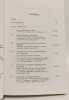
Très bon état intérieur propre bonne tenue
LOI portant que tout homme est libre en France et que quelle que soit sa couleur, il y jouit de tous les droits de Citoyen, s’il a les qualités prescrites par la Constitution. Donnée à Paris, le 16 octobre 1791
in-4° : 1 feuillet de quatre pages - Signé LOUIS. - Mont-de-Marsan, 1791.
England and the Continent in the Tenth Century. Studies in Honour of Wilhelm Levison (1876-1947),
Turnhout, Brepols, 2011 Hardback, XXVI 573 p., 49 b/w ill., 11 b/w tables, 15 b/w line art, 156 x 234 mm. ISBN 9782503532080.
Dedicated as a memorial to the great historian of England and the Continent in the eighth century, Wilhelm Levison, this book provides the widest and most in-depth exploration to date of relations between England and the Continent during an equally crucial period, the tenth century. The volume, which comes out of a sustained collaboration between English and Continental universities, contains thematically arranged essays by established leading specialists and also by younger scholars. By building on the approaches used by Levison as well as other methods that have been developed in the decades since his death, these essays tackle a broad range of questions: What routeways and modes of contact linked England with the Continent? How similar were attitudes to rulership and dynastic strategies? How did the law, the working of government, and the organization and culture of the church differ between England and the Continent? How was the past seen and represented on the two sides of the English Channel? In answering these questions, this volume offers news ways of exploring the links and developing the comparison between England and the Continent in the century after the collapse of the Carolingian Empire, a formative period for the development of Europe. Studies in the Early Middle Ages (SEM 37). Languages: English, Old English, Old Norse. New.
"DRUMMOND, THOMAS. - THE INVENTION OF LIMELIGHT, THE ""DRUMMOND LIGHT""
Reference : 46535
(1826)
On the means of facilitating the observation of distant stations in geodætical operations. Read May 4, 1826.
(London, W.Nicol, 1826). 4to. No wrappers as extracted from ""Philosophical Transactions"" 1826 - Part III. Pp. 324-337 and 1 engraved plate. A faint dampstain to top of plate.
First appearance of Drummond's paper in which he described his (and Goldsworthy Gurney's) invention and coined the word 'limelight'. His apparatus, demonstrated on the plate, was originally used for surveying as the title of the paper shows. Drummond claimed the light to be 83 times brighter than any previous artificial light.The Scottish engineer, Thomas Drummond (1797-1840), saw a demonstration of the effect by Michael Faraday and realized that the light would be useful for surveying. Drummond built a working version in 1826, and the device is sometimes called the Drummond Light after him. Limelight was first used in public in the Covent Garden Theatre in London in 1837 and enjoyed widespread use in theatres around the world in the 1860s and 1870s. Limelights were employed to highlight solo performers in the same manner as modern followspots (spotlights). Limelight was replaced by electric arc lighting in the late 19th century. (Wikipedia).""John Hersehel describes the impression produced when the light was first exhibited in the Tower: ""The common Argand burner and parabolic reflector of a British lighthouse were first exhibited, the room being darkened, and with considerable effect. Fresnel’s superb lamp was next disclosed, at whose superior effect the other seemed to dwindle, and showed in a manner quite subordinate. But when the gas began to play, the lime being brought now to its full ignition and the screen suddenly removed, a glare shone forth, overpowering, and as it were annihilating, both its predecessors, which appeared by its side, the one as a feeble gleam which it required attention to see, the other like a mere plate of heated metal. A shout of triumph and of admiration burst from all present.""’ (DNB).Parkinson ""Breakthroughs"", 1825 C
Histoire de la Révolution dans l'Ain.
Bourg, Imprimerie Brochot, 1931 - 1935 ; grand in-8 ; six volumes, brochés ; 448 ; 511 ; 464 ; 458 ; 470 ; 470 pp.
A ce jour, c'est l'ouvrage le plus complet et le plus achevé sur cette période importante de l'histoire, tout particulièrement pour l'Ain, département-frontière.Exemplaire non coupé, à l'état de neuf, quelques très rares piqûres.
Journal --- tome 2: 1926 1929
Buchet chastel 2003 1008 pages 14 2x4x19 8cm. 2003. Broché. 1008 pages.
Bon état couverture un peu ternie intérieur propre bonne tenue sans son bandeau
pratique de l ecrit 5e eleve
Edl 1986 160 pages 23 6x1x17 2cm. 1986. Broché. 160 pages.
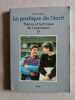
Bon état
Ducasse Nicolas Forichon Benjamin Garcia Johanna Mulard Hervé Vah Bruno
Reference : 500082242
(2019)
ISBN : 9782401052208
Fiches bac SVT 1re générale (spécialité): nouveau programme de Première
Hatier 2019 124 pages 11 8x17 8x1 2cm. 2019. Broché. 124 pages.
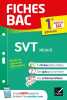
Très Bon Etat
Ducellier Typhaine Jenkins Reid Taylor
Reference : 500097206
(2022)
ISBN : 9782368128152
Les Sirènes de Malibu
Charleston 2022 448 pages 14 7x23 2x4 1cm. 2022. Broché. 448 pages.
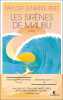
Très bon état
Considérations sur les moeurs de ce siècle [relié avec] Théorie des sentimens agréables.
[sans lieu]; Paris, [sans nom]; David le jeune, 1751; 1748. In-12 de [2]-366; [2]XVI-192-6] pages, plein veau brun, dos à nerfs orné de filets et fleurons dorés, tranches rouges, armes dorées frappées au bas du dos, de la famille Du Breil de Pontbriand, ex-libris C. T. Noel du Payrat. Petit manque à la coiffe inférieure et petite fente à un mors. Sur le second feuillet blanc, inscription ancienne: "Provient de la vente des livres de feu l'abbé de Pontbriand à Paris en juillet 1767".In-12 of [2] -366; [2] XVI-192-6] pages, full brown calf, ribbed back decorated with gilt fillets and floral ornaments, red edges, golden arms stamped on the lower back, from the Du Breil de Pontbriand family, and C.T. Noel du Payrat bookplate. Small lacking in the lower turn in and small slit on one joint. On the second white leaf, old inscription: "Provient de la vente des livres de feu l'abbé de Pontbriand à Paris en juillet 1767".
![Considérations sur les moeurs de ce siècle [relié avec] Théorie des sentimens agréables.. [DUCLOS Charles Pinot]; [LEVESQUE DE POUILLY Louis Jean]:](https://static.livre-rare-book.com/pictures/KUA/9010_1_thumb.jpg)
![Considérations sur les moeurs de ce siècle [relié avec] Théorie des sentimens agréables.. [DUCLOS Charles Pinot]; [LEVESQUE DE POUILLY Louis Jean]:](https://static.livre-rare-book.com/pictures/KUA/9010_2_thumb.jpg)
Le second ouvrage est illustré de trois vignettes de De Sève, gravées par Fessard. On mentionne parfois un frontispice, qui n'est pas présent.The second work is illustrated with 3 vignettes by De Sève, engraved by Fessard. Sometimes a frontispiece is mentioned, which is not present here. Bel exemplaire de cette véritable édition originale "devant être préférée à celle qui porte le nom de Prault, 1751" (Quérard), car elle est antérieure: notre exemplaire comporte une correction manuscrite à l'encre, de l'époque, qui sera prise en compte dans l'édition suivante (ladite "Prault, 1751"). "Les Considérations sur les mœurs de ce siècle passent avec raison pour le tableau le plus intéressant que nous ait laissé le siècle dernier : on a dit qu’elles étaient le chef-d’œuvre de Duclos. Louis XV qui l’estimait particulièrement lui avait délivré des lettres de noblesse. " (T. Tastet). Le roi Louis XV dira des Considérations: "C’est l’ouvrage d’un honnête homme". La Théorie des sentiments agréables est ici dans sa troisième édition, la seconde mise dans le commerce, avec une préface de Jean Jacob Vernet.Beautiful copy of this true original edition "devant être préférée à celle qui porte le nom de Prault, 1751" (Quérard), because it is earlier: our copy includes a handwritten correction in ink, of the time, which will be taken into account in the following edition (the so-called "Prault, 1751"). The Considérations sur les moeurs de ce siècle pass with reason for the most interesting picture that the eighteenth century has left us: it has been said that they were the masterpiece of Duclos. Louis XV, who particularly valued the author, had granted him letters of nobility. King Louis XV will say about the book "It is the work of an honest man". The Théorie des sentimens agréables is here in its third edition, the second release on the market, with a preface by Jean Jacob Vernet.
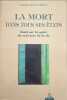
La Mort dans tous ses états - Essai sur la quête du vrai sens de la vie
DERVY 1998 326 pages 15 9x23 6x2 6cm. 1998. Broché. 326 pages. Essai sur la quête du vrai sens de la vie
Maîtres de l'Affiche - Original Plate N°48 - "The Chieftain, Savoy Theatre " par Dudley HARDY
paris Imprimerie Chaix 1896 Une Affichette Publicitaire [Fac-similé réduit de l'affiche originale], lithographiée en couleurs, format : 40 x 28,6 cm, Signé en bas à droite : Dudley HARDY , Timbre sec dans le coin inférieur droit : "Les Maîtres de l'affiche // Imprimerie Chaix", 1896 [Paris] : Les Maîtres de l'Affiche Editeur,
Édition : [Fac-similé réduit de l'affiche originale] , Note : Source : Affiche originale de : WATERLOW & SONS LONDON ..... SUPERBE .................. en trés bon état (very good condition). en trés bon état
"DUFAY (DU FAY), CHARLES FRANCOIS DE CISTERNAY. - THE DISCOVERY OF POSITIVE AND NEGATIVE CHARGE OF ELECTRICITY.
Reference : 46590
(1735)
Premier- (Quatrième) Mémoire sur L'Électricitè. (1. Histoire de L'Électricité. 2. Quels sont les Corps qui sont susceptibles d'Électricité. 3. Des Corps qui sont le plus vivement attirés par les matiéres électriques, & de ceux qui sont les plus p...
(Paris, L'Imprimerie Royale, 1735). 4to. Without wrappers. Extracted from ""Mémoires de l'Academie des Sciences. Année 1733"". Pp. 23-39, pp. 73-84, pp. 233-254 a. 1 engraved plate, pp. 457-476. With titlepage to the volume (1733/1735). Margins of titlepage with a few brownspots.
First appearance of these milestone papers in the histroy of electricity in which Dufay explains his discovery of two kinds of electricity and the relation between them, attraction and repulsion, shocks and sparking, and the full recognition of electrostatic repulsion. He formulates the two-fluid theory of electricity. He further showed that ""not all bodies can become electrified themselves"" (by friction) and went on to show, ""that they can all acquire a considerable (electrical) virtue when the tube (of rubbed) glass), wood, metals or liquids are brought near them,"", provided only that they are insulated by beiing stood on ""a support of glass or of sealing-wax"".Dufay ""TRANSFORMED A COLLECTION OF MISCELLANEOUS WEEDS INTO THE FIRST GARDEN OF EUROPE"" (Heilbron)""Dufay's substantive discoveries - ACR, the two electricities, shocks and sparking - are but one aspect, and perhaps not the most significant, of his achievement. His insistence on the impiortence of the subject, on the universal character of electricity, on the necessity of organizing, digesting and regulariizing known facts before grasping new ones, all helped to introduce order and professionel standards into the study of electricity at precisely the moment when the accumulation of data began to require them. He foundthe subject a record of often capricious, disconnected phenomena, the domain of the polymaths, textbook writers, and prfesional lecturers, and left a body of knowledge that invited and rewarded prolonged scrutinity from serious physicists."" (Heilbron ""Electricity in the 17 & 18 Centuries"", p. 260).Parkinson ""Breakthroughs"", 1734 P - Ronalds Library, p. 145. - Not in Wheeler Gift Cat.
Traité du thé.
Connaissance et Mémoires - CME, 1693, 2003 (réimpression), 48 p.
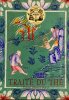
Ce traité est la transcription du plus ancien ouvrage de langue française jamais consacré au thé (1693). L’auteur y manifeste l’émerveillement de l’Europe du XVIIe pour l’Extrême-Orient ainsi que l’enthousiasme qu’elle porte à la nouvelle boisson. Le texte foisonne d’indications précieuses sur l’usage du thé, les “croyance” et “découvertes médicales”… Illustré de 6 gravures.
Legion au combat 1939-1945 album
Jean pierre taillandier 1993 96 pages in4. 1993. Cartonné. 96 pages.
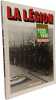
Bon état
TRAITEZ NOUVEAUX & CURIEUX DU CAFE, DU THE ET DU CHOCOLATE.Ouvrage également nécessaire aux médecins, & à tous ceux qui aiment leur santé.
A Lyon, chez Jean-Baptiste Deville, 1688, 1 pleine basane fauve, dos à nerfs, orné, ex-libris manuscrit sur la première garde, plats et mors frottés in-8 de 1 feuillet blanc, titre frontispice: gravure représentant un turc, un chinois et un indien d'Amérique, buvant chacun leur boisson (café, thé et chocolat), titre, 9 feuillets non chiffrés ( Epitre à monsieur le chevalier Valon seigneur de Janlis et de Veuvey, préface, avis au public, approbation), 444 pages, 5 feuillets non chiffrés (table, privilège), 3 planches dessinées et gravées par Mathieu Ogier (peintre lyonnais), bandeaux et vignettes par le même graveur, ex-libris manuscrit sur la page de titre ;
Cet ouvrage traite des vertus curatives du café, du thé et du chocolat et sur la manière de les préparer. La partie sur le chocolat est une traduction de l’espagnol par le médecin parisien René Moreau (1587-1656) d’une relation de Antoine Colmenero de Ledesma. Philippe Sylvestre Dufour, né à Manosque en 1622 et mort à Vevey (Canton de Vaud) vers 1687 est un apothicaire, banquier, collectionneur et auteur protestant installé à Lyon. Il s'exila à Genève lorsque l'exercice des professions médicales fut interdit aux Protestants. Il fut l'un des plus riches apothicaires lyonnais par la fortune héritée de sa famille et par son commerce lucratif de drogues en provenance d'Orient. Il se constitua un cabinet de curiosités, l'un des plus fournis de la ville.Réf. Biblio.: Vicaire, Bibliographie gastronomique, 293. Bitting, p. 134. Oberlé, 733. Haag IV, 377-378. Duval, 1912, Note sur les diverses éditions du Traité de Philippe Sylvestre Dufour, in Annales de la Société de Botanique. Lyon, 1912, XXXVII : 7-13.
Phone number : 06 80 15 77 01

