 Write to the booksellers
-
Type
Book (7247)
Disk (44)
Drawings (1)
Engraving (9)
Magazine (89)
Maps (4)
Music sheets (135)
New book (2)
Old papers (1)
Photographs (19)
Posters (1)
-
Latest
Last 24h (3)
Last 3 days (2)
Last month (971)
Last week (2)
-
Language
Czech (1)
Dutch (9)
English (156)
French (7373)
German (4)
Italian (2)
Latin (3)
Russian (4)
-
Century
16th (17)
17th (43)
18th (199)
19th (881)
20th (2478)
21st (1565)
-
Countries
Belgium (1156)
Canada (32)
China (56)
Côte d'Ivoire (7)
Denmark (1063)
France (4888)
Germany (1)
Netherlands (181)
Switzerland (155)
United Kingdom (9)
United States of America (4)
-
Syndicate
ALAC (25)
CLAM (25)
CLAQ (2)
ILAB (2234)
NVVA (15)
SLACES (15)
SLAM (1026)
SNCAO (4)
Diamant brut
Michel Lafon. 2012. In-8. Broché. Etat d'usage, Tâchée, Dos satisfaisant, Intérieur acceptable. 233 pages. Légères mouillures en tête de page sans incidence sur la lecture. . . . Classification Dewey : 848-Ecrits divers, citations, journaux intimes, souvenirs, mémoires
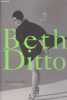
Traduit de l'anglais (Etats-Unis) par Eric Betsch Classification Dewey : 848-Ecrits divers, citations, journaux intimes, souvenirs, mémoires


Ditto Beth Tea Michelle Betsch Eric
Reference : 100056808
(2012)
ISBN : 9782749917368
Diamant brut
Michel Lafon 2012 233 pages 15x23x2cm. 2012. Broché. 233 pages.
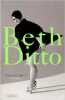
Bon état - . quelques marques plis de lecture et/ou de stodckage sur couverture et coins coins cornés sur couverture mais du reste en bon état - envoi rapide et soigné dans enveloppe à bulles depuis france
Ditto Beth Tea Michelle Betsch Eric
Reference : 500081920
(2012)
ISBN : 9782749917368
Diamant brut
Michel Lafon 2012 233 pages 15 2x2 2x23 4cm. 2012. Broché. 233 pages.
Très Bon Etat
Delvaux and Antiquity and the Antiquity
Brussels , B.A.I., 2009 Paperback with flaps, 300x240mm, 192p, ,Text ENGLISH - K.M.S.K.B.Expo: 23/10/2009 - 31/01/2010 . ISBN 9789085865414.
Antiquity as inspiration can be revealed in the works of Paul Delvaux as from the beginning of the 1930s and gets more important during World War II, for example with the theme of the tragic city. His interest in antiquity is characterized by antique sculpture and leads the artist to the elaboration of a theatralic human figure. These theatralic and dramatic representations put on mythical figures like Pygmalion, Venus or Penelope as well as sirens, ephebes and hamadryads. Delvaux also evokes a certain secret sacrality of so-called ''places of memory'' as temples and antique places like the Acropolis, Olympia or Pompeii. Places which Delvaux visited on the occasion of his two journeys to Italy in 1937 and 1939 as well as on his travel through Greece in 1956. Finally, we should not forget a most important aspect of Delvaux's reception of antiquity: that of melancholic withdrawal. The exhibition will show around sixty works, paintings and drawings, declined around the above mentioned themes.
Delvaux and the Antiquity
Brussels , B.A.I., 2009 Paperback with flaps, 300x240mm, 192p, ,English edition, K.M.S.K.B.Expo: 23/10/2009 - 31/01/2010 . ISBN 9789085865421.
Antiquity as inspiration can be revealed in the works of Paul Delvaux as from the beginning of the 1930s and gets more important during World War II, for example with the theme of the tragic city. His interest in antiquity is characterized by antique sculpture and leads the artist to the elaboration of a theatralic human figure. These theatralic and dramatic representations put on mythical figures like Pygmalion, Venus or Penelope as well as sirens, ephebes and hamadryads. Delvaux also evokes a certain secret sacrality of so-called "places of memory" as temples and antique places like the Acropolis, Olympia or Pompeii. Places which Delvaux visited on the occasion of his two journeys to Italy in 1937 and 1939 as well as on his travel through Greece in 1956. Finally, we should not forget a most important aspect of Delvaux's reception of antiquity: that of melancholic withdrawal. The exhibition will show around sixty works, paintings and drawings, declined around the above mentioned themes
Delvaux et le monde antique
Brussels , B.A.I., 2009 Paperback with flaps, 300x240mm, 192p, ,Texte en Francais, K.M.S.K.B.Expo: 23/10/2009 - 31/01/2010 . ISBN 9789085865407.
L'inspiration antique se revele dans l'oeuvre de Paul Delvaux des le debut des annees 1930. Elle prendra une ampleur plus importante avec la guerre. Notamment a travers theme de la cite tragique. L'interet que Delvaux porte a l'antiquite est marque par la sculpture antique qui mena l'artiste a l'elaboration d'une figure humaine theatralisee. Ces representations theatrales et dramatiques mettent en scene les figures mythiques de l'antiquite comme Pygmalion, Venus ou encore Penelope ainsi que les sirenes, ephebes ou hamadryades. S'y ajoutera l'evocation d'une certaine sacralite secrete des ? lieux de memoire ? tel que les temples et villes antiques comme l'Acropole, Olympie ou encore Pompei. Lieux que Delvaux visita a l'occasion des deux voyages en Italie qu'il effectua en 1937 et 1939 ainsi que d'un periple en Grece en 1956. Finalement, un autre aspect important de la reception de l'antiquite par Delvaux sera celui de la retraite melancolique. L'exposition montrera environ soixante oeuvres, peintures et dessins, declines autour de ces themes.
Focus paris Cobra Museum voor moderne kunst
, V + K Publishing, 2001 Paperback, 319 pages, English, 305 x 245 mm, fine copy with coloured illustrations, . ISBN 9789074265263.
The art works pictured in this book can be viewed in the Netherlands in the 'Cobra Museum voor Moderne Kunst' in Amstelveen. With FOCUS PARIS I have tried to give a balanced and fully representative image of my collection. These works speak for themselves and I sincerely hope that you, like us, will derive constant enjoyment from them. Without the artists, however, these works would never have seen the light of day. I should therefore like to consider this book as an expression of homage to them. Henk Klasema / With many colour illustrations throughout the book. Original Softcover. Includes for the following essays: Henk Klasema - Preface / Wim Crouwel - The Fascination for the Abstract / Drs.A.E. de Jongh-Vermeulen - Focus Paris. Includes for example the following artists: Gino Severini / Alfred Reth / Jean Lur at / Willem Schrofer / Walter Helbig / Nicolaas Warb /Adolf Breetvelt / Andr van der Vossen / Willy Boers / Nicolaas Warb / Oscar Gauthier / Willem Hussem / Toon Kelder etc etc.
Tracts for the times - Volume V 1838-1840 (tracts 83-88)
London/ Oxford, Rivington/ Parker 1840 Volume 5 containing 5 tracts: viii + 54 [ii], 45 [ii], 116, 100, 144, 96pp., original 1840-edition, nice full-leather binding (title engilded on spine), marbled edges, 22cm., few underlinings in pencil, VG, [Contains Tract 83: Advent sermons on Antichrist, 84: Whether a clergyman of the church of England be now bound to have morning and evening prayers daily in his parish church?, 85: Lectures on the scripture proofs of the doctrines of the Church - part I, 86: Indications of a superintending providence in the preservation of the prayer book and in the changes which it has undergone, 87: On reserve in communicating religious knowledge, 88: The Greek devotions of bishop Andrews translated and arranged]
La Danse. The Dance. Revue Masques, n° 2.Préface de Serge Lifar. Texte et commentaires de Fernand Divoire.
Revue "Masques", n° 2, 1948, in-4, agrafé, jaquette et couv. illustrée, 92 pp. essentiellement de photos en noir et blanc.
Remise de 20% pour toutes commandes supérieures à 200 €
Dizard Wilson P. Swensrud S. Blake Swensrud S Blake Dizard Jr Wilson P
Reference : 100140044
(1987)
ISBN : 0813375185
Gorbachev's Information Revolution: Controlling Glasnost In A New Electronic Era (Csis Significant Issues Series)
Westview Press 1987 99 pages in8. 1987. Broché. 99 pages.
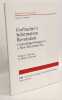
Très bon état cependant dos un peu frotté intérieur propre bonne tenue
Livet paa Færøerne i Billeder og Tekst.
(K.), 1950. 4to. Orig.hldrbd. Ryg med lidt skrammer. 568,XIX pp. Rigt illustr.
Art auctions and dealers. The Dissemination of Netherlandish Art during the Ancien Regime.
Turnhout, Brepols, 2009 Paperback, original editor's jacket, english, XI+174 pp., 41 b/w illustrations., 17x25 cm. NEX ISBN 9782503516202.
Studies in European Urban History (1100-1800). Studies in European Urban History (1100-1800) (SEUH 20). This collection of essays presents a status quaestionis concerning the dissemination of Flemish and Dutch art during the period 1400-1800, and highlights the role art auctions and dealers have played in this process. Auctions emerged as the primary channel for art sales at the end of the seventeenth century in the Low Countries and during the eighteenth century, countless local art collections were broken up and put up for auction. Especially (old master) paintings exchanged hands in great numbers at these public sales, and the finest pieces frequently ended up in foreign holdings. The activities of the professional art dealer form the focus of several essays. These intermediaries played an instrumental role in the commercialization and expansion of the art trade in early modern Europe. They had a profound impact on the history of collecting as they mediated and even influenced taste. Naturally, the role of art dealers changed over time. Therefore, the historians, art historians and economists who contributed to this volume have approached this phenomenon in an interdisciplinary fashion in order to properly understand how art markets functioned. In doing so, these essays explore the various ways in which art dealers helped shape markets for art, and how they facilitated the increasing volume of exports of Netherlandish art from the sixteenth century onwards.
Les Miracles du Thé. Les recettes secrètes du Dr Leonhard Hochenegg.
GODEFROY. Avril 1998. In-12. Broché. Bon état, Couv. fraîche, Dos satisfaisant, Intérieur frais. 510 pages. Quelques illustrations en noir et blanc, dans le texte. Traduction de Valérie Le Nost.. . . . Classification Dewey : 633.7-Plantes alcaloïdes (tabac, thé, cacao, café, pavot)
Classification Dewey : 633.7-Plantes alcaloïdes (tabac, thé, cacao, café, pavot)
Documents in Reference to the Abolition of Separate Schools in the Province of Manitoba
Reference : 36821
(1891)
Documents in Reference to the Abolition of Separate Schools in the Province of Manitoba
Brown Chamberlin, Printer to the Queen's Most Excellent Majesty Softcover Ottawa 1891
Very good Octavo. 76 pages. Signature of a previous owner on front cover, small piece of paper chipped. Many essential documents reproduce to understand that important case in the history of Manitoba.
Documents relative to the European War comprising Orders in Council, Cablegrams, Correspondence, and Speeches Delivered in Imperial House Of Commons
J. de L. Taché, Printer to King most excellent Majesty Softcover Ottawa 1914
Very good Large 8vo. 167 pages + 6 pages (1915). Paper chipped on spine. Several documents on WW1.
DOCUMENTS REUNIS ET PRESENTES PAR REPORTERS SANS FRONTIERESPREFACE DE RONY BRAUMAN TEXTES DE AMNESTY INTERNATIONAL -B'T SELEMFEDERATION DE LA LIGUE DES DROITS DE L'HOMME HUMAN RIGHTS WATCH - PALESTINIAN CENTER FOR HUMAN RIGHTS THE PALESTINIAN HUMAN RIGHTS MONITORING GROUP THE PUBLIC COMMITTEE AGAINST TORTURE IN ISRAELREPORTERS SANS FRONTIERES
Reference : 14559
ISRAEL PALESTINE LE LIVRE NOIR
1352 Broché - 13,5 x 22 - 231 pp - année 2002 - éditions La Découverte -
ANTHROLOGIE HISTOIR PHILOSOPHIE LITTERATURE PARADES
Dogan Zehra Oke Naz Loutre-Barbier Laurence
Reference : 100146547
(2018)
ISBN : 2849754897
Zehra Dogan les yeux grands ouverts - Journal d'une condamna: Journal d'une condamnation / Chronique d'une exposition
FAGE 2018 96 pages 16 8x22 8x1 2cm. 2018. Broché. 96 pages. Le philosophe Rémi Brague examine la nature et la singularité du Dieu chrétien à travers sept chapitres concis et informés en répondant aux questions fondamentales sur ses caractéristiques distinctives par rapport à d'autres conceptions divines
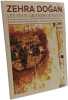
proche du très bon état intérieur propre
DE GESCHIEDENIS VAN O.L. VROUW VAN GOEDEN WIL TE DUFFEL,
Tongerloo, St. Norbertus Drukkerij, 1936 gebonden half linnen band zonder de oorspronkelijk uitgeversomslag. 180 x 240mm., 263pp., z/w illustratie.
*** MET HANDGESCHREVEN OPDRACHT VAN Ev. DOM. GESIGNEERD.
ONZE LIEVE-VROUW VAN GOEDEN WIL TE DUFFEL, 1637 - 1921. VERSLAG OP HET MARIA-CONGRES, BRUSSEL, 1921.
Brussel, Vromant, 1922 Geniet, originele papieren uitgevesomslag, 24x15.7 cm., 15 pp.
Pseudo-Cl ment et Vrai Proph te. Itin raire d?Ath nes J rusalem
, Brepols, 2023 Paperback, 420 pages, Size:156 x 234 mm, Language(s):French, Latin, Greek. ISBN 9782503599205.
Summary Les personnages historiques que sont Cl ment de Rome, Simon le Magicien, Pierre l'Ap tre et Apion le grammairien deviennent, dans les Reconnaissances de Cl ment, les personnages d'une fiction romanesque. Rufin d'Aquil e, la fin du IVe si cle, nous apprend qu'il existait de son temps deux versions de ces Reconnaissances dans lesquelles discussions philosophiques et rebondissements de l'intrigue visaient le m me but : d montrer la sup riorit de la v rit proph tique sur celle des philosophes et des autres tenants de la culture grecque. Les tudes que regroupe ce volume proposent une analyse du roman de Cl ment dans sa composition litt raire et dans son contexte culturel et religieux. On y aborde tout d'abord la question des rapports du texte cl mentin avec la paideia, dans les tudes qui portent sur la discussion entre Cl ment de Rome et Apion d'Alexandrie. C'est la nature litt raire du corpus qui occupe ensuite la partie centrale du recueil. On s'int resse aussi la relation qu'entretient le texte avec la philosophie et ses repr sentations, dans les chapitres qui cherchent comprendre l'opposition entre Pierre et Simon. C'est enfin la dimension jud enne du texte qui fait l'objet d'une s rie d' tudes qui traitent de proph tie, de mystique et d'identit religieuse. TABLE OF CONTENTS Avant-propos Premi re partie. Du c t de chez A(p)pion Chapitre I. La figure d' ros dans les Hom lies pseudo-cl mentines Chapitre II. Les proc d s rh toriques dans les Pseudo-Cl mentines. L' loge de l'adult re du grammairien Apion Chapitre III. Le grammairien Apion et la rh torique dans les Hom lies pseudo-cl mentines Deuxi me partie. Le texte et son contexte Chapitre IV. La Discussion avec Appion et la coh rence litt raire des Hom lies. Au sujet de l'hypoth se d'une source jud enne du IIe si cle Chapitre V. La fonction litt raire de Simon le Magicien dans les Pseudo-Cl mentines Chapitre VI. Les Pseudo-Cl mentines ou le choix du roman grec Chapitre VII. Sacrifice et th urgie dans les Pseudo-Cl mentines Chapitre VIII. La th ogonie orphique des Pseudo-Cl mentines. Fonction litt raire et pol mique Chapitre IX. Simon de Samarie dans les Hom lies pseudo-cl mentines. ?Magicien? ou philosophe ? Troisi me partie. Du c t des Jud ens Chapitre X. La forme de Dieu dans les Hom lies pseudo-cl mentines et la notion de Shiur Qomah Chapitre XI. Le probl me de l'identit religieuse dans la Syrie du IVe si cle. Le cas des Pseudo-Cl mentines et de l'Adversus Judaeos de S. Jean Chrysostome Chapitre XII. Le Vrai Proph te et ses incarnations dans les Hom lies pseudo-cl mentines Chapitre XIII. Au nom de Jacques et de Cl ment. Le Fr re du Seigneur dans les Pseudo-Cl mentines Annexe. La question des sources Index
LA RESISTANCE EN CHANTANT + CD: 1939-1945
AUTREMENT 2004 322 pages collection France Bleu. 17 6x2 8x22 6cm. 2004. Reliure Editeur avec jaquette. 322 pages.


De l'origine des globules du Sang, de leur mode de formation et de leur fin.
(Paris, Bachelier), 1842. 4to. No wrappers. In: ""Comptes Rendus Hebdomadaires des Séances de L'Academie des Sciences"", Tome 14, No. 10. Pp. (349-) 378. (Entire issue offered). Donné's paper: pp. 366-368.
First printing of the paper, announcing the discovery of blood-platelets, THE THIRD CORPUSCLES OF THE BLOOD. Platelets, or thrombocytes or yellow blood cells, are very small, irregularly shaped clear cell fragments (i.e. cells that do not have a nucleus containing DNA), 2-3 µm in diameter, which derive from fragmentation of precursor megakaryocytes. The average lifespan of a platelet is normally just 5 to 9 days. Platelets are a natural source of growth factors. They circulate in the blood of mammals and are involved in hemostasis, leading to the formation of blood clots. Platelets release thread-like fibers to form these clots.Garrison & Morton, 864.
VAN GOGH UND DIE HAAGER SCHULE.
, Wien, Bank Austria Kunstforum / Milano, Skira Editore, 1996,, ISBN 9788881180721.
Farbig illustrierter Softcover im Leinen-Schmuckschuber, Frontispiz, 240 x 285mm., 356 Seiten, 200 Abbildungen davon 160 in Farbe. Dieses Katalogbuch erscheint anlaslich der Ausstellung - Van Gogh und die Haager Schule - im Bank Austria Kunstforum, Wien, 28. Februar bis 27. Mai 1996. Eine Austellung des Bank Austria Kunstforums in Zusammenarbeit mit dem Haags Gemeentemuseum, Den Haag. Guter Zustand.
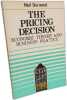
Pricing Decision: Economic Theory and Business Practice
SAGE Publications Inc 1987 200 pages 14 8x1 2x22 8cm. 1987. Broché. 200 pages.
Bon Etat intérieur propre bonne tenue
( Dossiers de Presse Musique - Rock ) - Georgie Fame and The Blues Flames.
Reference : 16665
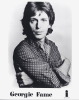
Dossier de presse + 2 photos originales argentiques de Georgie Fame and The Blues Flames.
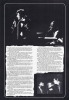
Magnifique Dossier de Presse " Island Records " dépliant de 8 pages consacré à Georgie Fame & The Blues Fame avec photos, biographie & discographie. Texte en Anglais. Dossier contient 2 photo originale argentique ( une avec cachet au dos ) de Georgie Fame & de son groupe " The Blues Flames ". Photos au format 25,3 x 20,3 cm. Dossier accompagné d'un dossier de 2 pages avec les dates de la tournée du groupe en 1974. Rare. Etat de neuf.

Vente exclusivement par correspondance. Le libraire ne reçoit, exceptionnellement que sur rendez-vous. Il est préférable de téléphoner avant tout déplacement.Forfait de port pour un livre 10 € sauf si épaisseur supérieure à 3 cm ou valeur supérieure ou égale à 100 €, dans ce cas expédition obligatoire au tarif Colissimo en vigueur. A partir de 2 livres envoi en colissimo obligatoire. Port à la charge de l'acheteur pour le reste du monde.Les Chèques ne sont plus acceptés.Pour destinations extra-planétaire s'adresser à la NASA.Membre du Syndicat Lusitanien Amateurs Morues

