 Write to the booksellers
-
Type
Book (7247)
Disk (45)
Drawings (1)
Engraving (9)
Magazine (89)
Maps (4)
Music sheets (135)
New book (2)
Old papers (1)
Photographs (19)
Posters (1)
-
Latest
Last 24h (1)
Last 3 days (1)
Last month (118)
Last week (857)
-
Language
Czech (1)
Dutch (9)
English (156)
French (7374)
German (4)
Italian (2)
Latin (3)
Russian (4)
-
Century
16th (17)
17th (43)
18th (199)
19th (882)
20th (2480)
21st (1563)
-
Countries
Belgium (1156)
Canada (32)
China (56)
Côte d'Ivoire (7)
Denmark (1063)
France (4889)
Germany (1)
Netherlands (181)
Switzerland (155)
United Kingdom (9)
United States of America (4)
-
Syndicate
ALAC (25)
CLAM (25)
CLAQ (2)
ILAB (2245)
NVVA (15)
SLACES (15)
SLAM (1037)
SNCAO (4)
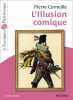
Corneille Pierre Beauregard Lula Girodias-Majeune Christine
Reference : 500198294
(2013)
ISBN : 9782210761025
L'Illusion comique - Classiques et Patrimoine
Magnard 2013 160 pages 13x1 2x17 8cm. 2013. pocket_book. 160 pages.
Très bon état
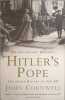
Hitler's Pope: The Secret History of Pius XII
Penguin 2000 464 pages 12 8x19 6x3cm. 2000. Broché. 464 pages. The Secret History of Pius XII 'Superb ... This is a brilliant book which should be read and reread' Independent on Sunday
Black Notice: The New Scarpetta Novel
Penguin Books UK 1999 432 pages 15 8x4x23 4cm. 1999. Relié. 432 pages.
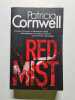
Red Mist (Kay Scarpetta)
Sphere 2012 512 pages 12 6x3 6x19 4cm. 2012. Broché. 512 pages.
Bon état
"CORONELLI, P.M. (VINCENZO MARIA). - THE RECONQUEST OF PELOPONNESE (MOREA).
Reference : 49367
(1686)
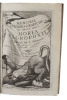
Memorie istorio grafiche de Regni della Morea Negroponte e Littorali fin á Salonichi. Aceresciute in guesta Seconda edizione. - [THE RECONQUEST OF PELOPONNESE (MOREA).]
Venezia, (1686). 8vo. (16,5x11 cm.). Contemp. full vellum. Halftitle-page. Engraved Title-page (the Lion of St. Mark). (8),237,1 blank,(2- Indice) pp. and 41 (of 42 ?) double-page folded engraved maps and plans (bird's-eye views or plans of fortified towns and places etc.). Internally fine and clean. Printed on good paper. A fine copy.
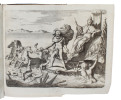
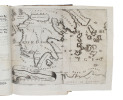
Second edition (the first 8vo-edition), issued the same year as the first (in folio), describing the Venetian campaign for the reconquest of the Peloponnese or Morea, from which Venice had been almost completely excluded since the Turkish conquest of the Greek island in 1458.""As is often the case with Coronelli's work, the contents may vary with each example as plates were added, subtracted or changed as the editor saw fit"" (Rodney Shirley ""Maps in the Atlases of the british Library"", T.Coro-1a, - listing only 39 maps and views for this copy).Coronelli Vincenzo Maria, an Italian geographer and draughtsman, was born at Venice about 1650. From 1681-1683 he worked in Paris on a pair of 3.85 meter diameter globes for Louis XIV, which are now in the National Library in Paris. On his return to Venice he was made cosmographer of the Republic, and founded the Academy of Argonauts (the first Geographical Society). In 1702 he became general of his order.

Vivre les maths CE1 : Programmes 2002
Nathan 2004 125 pages 19x1 2x26 2cm. 2004. Broché. 125 pages.
Bon état
Vivre les maths CE1 : Programmes 2002
Nathan 2004 125 pages 19x1 2x26 2cm. 2004. Broché. 125 pages.
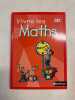
Bon état
The Great Arch: State Formation Cultural Revolution and the Rise of Capitalism (Ideas S.)
Blackwell Publishers 1985 280 pages in8. 1985. Broché. 280 pages.
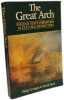
Très bon état étiquette sur le 2e plat intérieur propre bonne tenue
In Blue
Atlantic 2000 14x13x1cm. 2000. CD.

French édition - en très bon état d'ensemble. Envoi rapide et soigné dans une enveloppe à bulle depuis France
Histoires des Cronopiens et des Fameux
La Louvière Editions Daily-Bul 1968 In-16 Agrafé
EDITION ORIGINALE. Volume 24 de la collection « Les poquettes volantes ». Hors texte, 8 dessins de Pierre ALECHINSKY. Tirage à 1000 exemplaires numérotés, celui-ci parfaitement conservé. (Alechinsky. The Complete books n°28). Très bon 0
Le nouveau dictionnaire des mots nés de la mer: Les termes issus du langage maritime
Glenat 2010 720 pages 14x5 4x19 8cm. 2010. Broché. 720 pages.
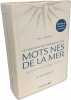
Bon état couverture un peu défraîchie intérieur propre
Les mensonges de Napoléon.
Perrin, 2004 22,5 x 14 x 2 cm., 209 pp, Broché
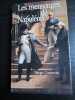
- - VENTE PAR CORRESPONDANCE UNIQUEMENT - LIEN DE PAIEMENT, NOUS CONSULTER.

Etudes Scientifiques : Le Caféier
DES PERES JESUITES. Mars - Juin 1969. In-8. Broché. Etat d'usage, Couv. légèrement passée, Dos satisfaisant, Mouillures. 105 pages. Quelques photos en noir et blanc dans le texte.. . . . Classification Dewey : 633.7-Plantes alcaloïdes (tabac, thé, cacao, café, pavot)
Classification Dewey : 633.7-Plantes alcaloïdes (tabac, thé, cacao, café, pavot)
"COULOMB, (CHARLES AUGUSTIN) - THE PRIZE-WINNING MÉMOIR CREATING THE SCIENCE OF FRICTION.
Reference : 44907
(1785)
Théorie des Machines Simples, en ayant égard au Frottement de leurs Parties, et a la Roideur des Cordages. piece qui a remporté le Prix double de l'Academie des Sciences pour l'année 1781.
Paris, Moutard, Panckoucke, 1785. 4to. Extract from ""Mémoires fe Mathematique et de Physique, Présentés à l'Academie des Sciences par divers Savans"", Tome X. Withtitlepage to vol. X. Pp. 131-332 and 5 folded engraved plates. The memoir has also its own titlepage. Fine and clean. Wide-margined.
First edition of this monumentalwork by which Coulomb CREATED THE SCIENCE OF FRICTION.""1781 saw him win the Academy prize for his mémoir ""Théorie des Machines Simples,"" in which the results of his experiments on the friction of different bodies slipping on one another (dry, or coated with greasy substances) were presented.""(Timoshenko p. 48).""Coulomb’s most celebrated study, one that brought him immediate acclaim, was ""Théorie des machines simples,"" his prize-winning friction study of 1781. He investigated both static and dynamic friction of sliding surfaces and friction in bending of cords and in rolling. From examination of many physical parameters, he developed a series of two-term equations, the first term a constant and the second term varying with time, normal force, velocity, or other parameters. In agreement with Amontons’s work of 1699, Coulomb showed that in general there is an approximately linear relationship between friction and normal force"" but he extended the investigation considerably to show complex effects due to difference in load, materials, time of repose, lubrication, velocity, and other considerations. Coulomb’s work in friction remained a standard of theory and experiment for a century and a half, until the advent of molecular studies of friction in the twentieth century. To quote Kragelsky and Schedrov’s recent monograph (p. 52) on the history of friction: ""Coulomb’s contributions to the science of friction were exceptionally great. Without exaggeration, one can say that he created this science.""(DSB).Poggendorff I:487.,
"COULOMB, (CHARLES AUGUSTIN) - THE PRIZE-WINNING PAPER ON MAGNETIC COMPASSES INTRODUCING THE TORSION BALANCE
Reference : 44921
(1780)
Recherches sur la meilleure Manière de fabriquer les Aiguilles Aimantées, de les suspendre, de s'assurer quelles sont dans le véritable Méridian magnétique: enfin de rendre raison de leurs Variations diurnes régulières: Pièce qui a partae le Prix p... - [THE PRIZE-WINNING PAPER ON MAGNETIC COMPASSES INTRODUCING THE TORSION BALANCE]
Paris, Moutard, Panckoucke, 1780. 4to. Extract from ""Mémoires fe Mathematique et de Physique, Présentés à l'Academie des Sciences par divers Savans"", Tome IX. With titlepage to vol. IX. Pp. (2), (167-) 264 and 4 folded engraved plates. The memoir has also its own titlepage. Fine and clean. Wide-margined.
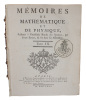
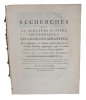
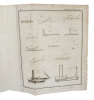
First printing of this monumental memoir (the invention of the TORSION BALANCE) dealing with the best way to construct a magnetic compass. The paper contains the design of a torsion suspension declination compass and the demonstration that the forces of torsion is proportional to the angle of twist. Coulomb received the prize awarded by the Academy for this paper drafted by the Academy in 1777 (he shared the prize with Van Swinden). - ""The importance of this memoir for Coulomb's career is that it CONTAINED ELEMENTS OF ALL HIS MAJOR PHYSICAL STUDIES: the quantitative study of magnetism, torsion and the torsion balance, friction and fluid resistance, and the germ of his theories of elasticity and magnetism.""(DSB).""Coulomb’s first writings on torsion were presented in his Academy prize-winning memoir of 1777, ""Recherches sur la meilleure maniere de fabriquer les aiguilles aimantées.""......... his simple, elegant solution to the problem of torsion in cylinders and his use of the torsion balance in physical applications were important to numerous physicists in succeeding years. In chapter 3, Coulomb developed the theory of torsion in thin silk and hair threads. Here he was the first to show how the torsion suspension could provide physicists with a method of accurately measuring extremely small forces. He showed that within certain angular limits, torsional oscillation consisted of simple harmonic motion. He examined the parameters relating the angle of twist to the length, diameter, and elastic properties of the torsion thread. In the range of simple harmonic oscillation Coulomb demonstrated that the force of torsion was proportional to the angle of twist. He used this principle in measuring small magnetic forces and also called attention to its use in measuring other forces, notably those of fluids in motion. Eventually he was able to measure forces of less than 9 x 10⁻⁴ dynes.""""Coulomb’s major memoirs in electricity and magnetism are his 1777 memoir on magnetic compasses, the famous series of seven electricity and magnetism memoirs read at the Academy from 1785 to 1791, and several magnetism memoirs prepared after the French Revolution. In his electrical studies Coulomb determined the quantitative force law, gave the notion of electrical mass, and studied charge leakage and the surface distribution of charge on conducting bodies. In magnetism he determined the quantitative force law, created a theory of magnetism based on molecular polarization, and introduced the idea of demagnetization (basically, that combinations of magnetic poles can ""cancel"" each other).""(DSB).Parkinson ""Breakthroughs"": 1777:P
L'Arbre à Thé
Paris, Augustin Challamel, Editeur, Librairie Maritime et Coloniale, 1900. 1 volume in-8, VI-163 pp., orné de 35 figures in et hors texte, dont 12 planches photographiques à pleine page, d'une vue de factorerie et d'un plan de factorerie, reliure ancienne demi-chagrin, dos orné à nerfs et fleurons, bel exemplaire.
Précis de culture du thé, richement illustré, peu courant. Rare édition originale de cet ouvrage sur le thé de la collection "Catéchisme du Planteur". L'ouvrage se présente comme un florilège de questions et réponses sur la culture du thé.
Count de Guines. The French Ambassador. (Choiseul, Etienne François, Herzog von (seit 1758), Marquis de Stainville) (1719-1785).
Reference : 184CG
(1774)
Franz. Staatsmann.
London, P. Sion, 1774. Kupferdruck in Schabkunst. Bildgrösse: 46 (50 Platte) x 35 cm. Blattgrösse: 54,5 x 39 cm.
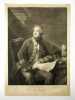
Mit 15 cm langem, hinterlegten Einriss.
Countess Marie LARISCH (née Baroness von Wallersee), niece of the late empress Elizabeth of Austria and daughter of Duke Ludwig of Bavaria.
Reference : 84026
(1913)
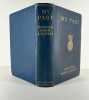
My Past.
London, Eveleigh Nash, 1913, fort in-8, reliure bleue éditeur, 303p. Portrait photographique en frontispice. Documents et photographies hors-texte. Bon état.
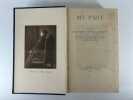
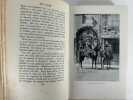
Researches into the Mathematical Principles of the Theory of Wealth by Augustin Cournot 1838. Translated by Nathaniel T. Bacon with an Essay on Cournot and mathematical Economics and a Bibliography of Mathematical Economics by Irving Fisher [ Inscribed : "G. H Bousquet Don d'Irving Fisher" ]
8vo, The Macmillan Company, New York, 1927, xxiv-213 pp. with a folding plate. Rappel du titre complet : Researches into the Mathematical Principles of the Theory of Wealth by Augustin Cournot 1838. Translated by Nathaniel T. Bacon with an Essay on Cournot and mathematical Economics and a Bibliography of Mathematical Economics by Irving Fisher [ Inscribed : "G. H Bousquet Don d'Irving Fisher" ]
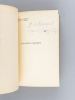
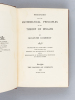
From Irving Fisher's library. Joseph Schumpeter described him as "the greatest economist the United States has ever produced". Good (waterstains on cover, a few manuscript annotations by G. H. Bousquet). Annotation manuscrite en garde : "G. H. Bousquet Don d'Irving Fisher" [ unidentified manuscript indication in french : Gift from Irving Fisher ]. Le professeur Georges-H. Bousquet (1900-1978) fut notamment professeur aux facultés d'Alger puis de Bordeaux. Juriste de formation initiale (docteur en droit en 1923 avec une thèse sur "L'évolution sociale en Hollande 1914-1922"), il devint un spécialiste de questions économiques, proche de Pareto et Schumpeter, ainsi qu'un islamisant de l'école de Goldziher et Snouck-Hugronje. Il fut proche de son maître en sociologie Vilfredo Pareto, dont il servit fortement la pensée, avec lequel il échangea une correspondance et qu'il rencontra, en Suisse.En septembre 1923, à Vienne et par l'intermédiaire de Paul Lazarsfeld, il fut présenté à son autre maître et ami Joseph Schumpeter. "A ce moment, Schumpeter avait 40 ans. Il était alors totalement ignoré en France, mais connu aux Etats-Unis où il avait été invité à professer quelque temps, et en Angleterre, où il avait eu également l'occasion de se faire entendre". Georges Bousquet sera fasciné par l'oeuvre de Schumpeter, qu'il fera notamment découvrir, tant par ses articles que par les discussions, à l'économiste François Perroux. Dans les années 1933-1934, les Bousquet et Schumpeter seront en contact permanent à Harvard, où Schumpeter était devenu professeur, et ou G.-H. Bousquet avait été envoyé faire un séjour de recherche, avec le soutien de la fondation Rockfeller. C'est à cette occasion que Bousquet rencontre Irving Fisher (1867-1947), l'un des premiers économistes américains de l'école néoclassique. On peut signaler que G.-H. Bousquet est l'un des quelques économistes français contemporains à être plusieurs fois cité par Schumpeter dans sa monumentale Histoire de l’Analyse Economique.
Justine et compagnie : Méthode de lecture CP cycle 2 livre 1
Belin 2000 96 pages 22x29 7x0 9cm. 2000. Relié. 96 pages.
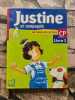

Bon état
Découverte d'une substance nouvelle dans le Vareck. (Annoncée par M. Clément). - Sur un nouvel acide formé avec la substance découverte par M. Courtois. - Note Sur la combinaison de l'iode avec l'oxigène" Par M. Gay-Lussac. - Lettre de M. Humphry ...
Paris, J. Klostermann, 1813. Contemp. hcalf. Spine gilt. A few scratches to binding. In: ""Annales de Chimie, ou Recueil de Mémoires concernant la Chemie"" Tome 88. - 336 pp. (the entire volume offered). Pp. 304-310, 311-318, 319-321 a. 322-329. Scattered brownspots.
First printing of this paper announcing the discovery of Iodine. Courtois found this substance, which he suspected to be a new element, while burning algae in order to obtain sodium and potassium compounds. Although Courtois discovered the element in 1811, the announcement of it was not made until two years later after he had turned it over to Charles Desormés and Nicolas Clément.""The first publication on iodine are somewhat confusing. Courtois's research is found in a paper attributed to him (the paper offered) but actually the work of Clément.... was followed by an anonymous article (the second paper offered). Gay-Lussac. who repeated and extended Courtios's work, was responsible for this paper. Courtois himself published nothing. These two articles were immediately followed by short contributions of Gay-Lussac and Humphry Davy on the new element (third and fourth paper offered). Gay-Lussacs views (none too flattering to Davy) on the history ofthe discovery of iodine appeared in his ""Mémoire sur l'iode"" (1814).""(DSB III, p. 455). - Weeks ""Discovery of the Elements"", pp. 257-262.The volume contains further importent papers in chemistry, Guyton de Morveau ""Sur la chaux maigre"", ""Sur le dissolvant des pierres biliaires"", an importent paper by Chevreul on animal fats ""Recherches chimiques sur plusieurs corps gras, et particulierement sur leurs combinaisons avec les alcalis"", Berzelius's papers ""Mémoires sur la compositions des fluides animaux"" (first edition in French) + Suite (first edition), Parmentier etc. etc.
"LE THE / COLLECTION ""TOUT SAVOIR""."
EDITION 2000. 2000. In-12. Broché. Bon état, Couv. convenable, Dos satisfaisant, Intérieur frais. 127 pages - augmenté de nombreuses illustrations en couleurs et en noir rt blanc in et hors texte.. . . . Classification Dewey : 633.7-Plantes alcaloïdes (tabac, thé, cacao, café, pavot)
Classification Dewey : 633.7-Plantes alcaloïdes (tabac, thé, cacao, café, pavot)
Le thé
Edition 2000. . In-12. Broché. Etat d'usage, Couv. défraîchie, Dos satisfaisant, Intérieur frais. 125 pages. Nombreuses photographies et illustrations en noir et blanc et en couleurs dans et hors texte.. . . . Classification Dewey : 633.7-Plantes alcaloïdes (tabac, thé, cacao, café, pavot)
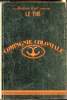
"collection ""Tout Savoir"" n°30. Classification Dewey : 633.7-Plantes alcaloïdes (tabac, thé, cacao, café, pavot)"
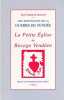
La petite église du bocage Vendéen: Une survivance de la guerre de Vendée (French Edition).
Herault Editions, 1987 23 x 15 cm., 109 pp, Broché
- - VENTE PAR CORRESPONDANCE UNIQUEMENT - LIEN DE PAIEMENT, NOUS CONSULTER.

