 Write to the booksellers
-
Type
Book (7280)
Disk (45)
Drawings (1)
Engraving (9)
Magazine (89)
Maps (4)
Music sheets (134)
New book (4)
Old papers (1)
Photographs (19)
Posters (1)
-
Latest
Last 24h (2)
Last 3 days (3)
Last month (120)
Last week (855)
-
Language
Czech (1)
Dutch (18)
English (162)
French (7392)
German (4)
Italian (2)
Japanese (1)
Latin (3)
Russian (4)
-
Century
16th (17)
17th (43)
18th (199)
19th (885)
20th (2497)
21st (1572)
-
Countries
Belgium (1177)
Canada (32)
China (56)
Côte d'Ivoire (7)
Denmark (1063)
France (4893)
Germany (1)
Netherlands (181)
Switzerland (161)
United Kingdom (12)
United States of America (4)
-
Syndicate
ALAC (25)
CLAM (46)
CLAQ (2)
ILAB (2272)
NVVA (15)
SLACES (15)
SLAM (1040)
SNCAO (4)
Traité des sistêmes où l'on en démêle les inconveniens et les avantages. Par l'Auteur de l'Essai sur l'origine des Connaissances Humaines.
La Haye, Neaulme, 1749 ; 2 tomes reliés en un volume in-12 ; plein veau fauve marbré, dos à faux-nerfs dorés, décoré et doré, pièce de titre grenat, roulette dorée sur les coupes, tranches rouges (reliure de l'époque) ; (8), 228, (4), pp. [229]-449, (1) pp. faute à corriger.
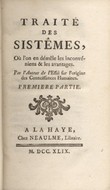
EDITION ORIGINALE (Tchemerzine-Scheler, II-478). Minuscule restauration à un coin, très bel exemplaire d'un des textes majeurs de la Philosophie des Lumières.


Wave Mechanics and the Normal State of the Hydrogen Molecule.
Easton, PA., Mack printing Compagny, 1927. Royal8vo. Contemp. full cloth. Spine gilt and with gilt lettering. In: ""Proceedings of the National Academy of Sciences of the United States of America"", Vol. 13. IX,865 pp. (Entire volume offered). Condon's paper: pp. 466-470.
First printing of pioneering paper uniting chemistry with Quantum mechanics. Condon explains the chemical bond by means of the new wave mechanics. A wave function is formulated that involves the introduction of a pair of electrons (the hydrogen molecule) in an electron orbital that extends about two ore more atomic nuclei. Together with a paper by Heitler and London from the same year, this paper marks the beginning of a new era in chemistry as it explains the chemical bond in terms of the new physics.Henry M. Leicester ""Source Book in Chemistry 1900-1950"", pp. 151-156.The volume contains also Condon's paper. ""Coupling of electronic and nuclear Motions in Diatomic Molecules"", pp. 462-466.
The Condor. A Journal of Avian Biology. Vol. 96(304) & Vol. 97(1-4).
1994-1995 pp. 577-1121 &1-1108, num. figs, paperbound. In issues. Library stamps.
Conference of the Swiss Scientific Academies, Gerald Berthoud, Beat Sitter-Liver
Reference : lc_15901
The Responsible Scholar: Ethical Considerations in the Humanities and Social Sciences
Watson Pub Intl (1 mai 1996)
Hardcover with dustjacket as new
Conference on the National Archives and Research in Historical Geography (1971 : Washington D. C.) United States National Archives and Records Service Ehrenberg Ralph E
Reference : 100138520
(1975)
ISBN : 0882580507
Pattern and Process: Research in Historical Geography (National Archives Conferences V. 9)
Howard Univ Pr 1975 360 pages in8. 1975. Cartonné jaquette. 360 pages.

bon état jaquette défraîchie intérieur propre
Le tabac
Hachette. 1955. In-12. Broché. Bon état, Tâchée, Dos frotté, Intérieur frais. 36 pages.quelques gravures.Encyclopédie des connaissances agricoles.. . . . Classification Dewey : 633.7-Plantes alcaloïdes (tabac, thé, cacao, café, pavot)
Classification Dewey : 633.7-Plantes alcaloïdes (tabac, thé, cacao, café, pavot)
"CONFUSIUS. - CHUN CIEU, THE FIRST TRANSLATION INTO A WESTERN LANGUAGE.
Reference : 50862
(1740)
De Confucii Libro Chun cieu. Auctore T.S. Bayer. (Theophilus Siegfried Bayer).
Petropoli, St. Petersburg, Typis Academiae, 1740. 4to. No wrappers. In: ""Classes Tertia continens Historica. Commentarii Academiae Scientiarum Imperialis Petropolitanae"", Tomus VII ad Annos 1734 & 1735. The whole section of ""Historica""offered. Title-page to Tome VII (with engraved vignette), halftitle (to the section) a. pp. 345-426, 6 engraved plates. Bayer's paper: pp. 362-426 and 5 engraved plates with numerous chinese characters. Clean and broad-margined.
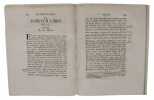
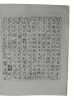
First printing (in part) of the first Western translation of any part of Confusius' influential Chun Cieu, being the fourth volume of his works. ""The title Chun Cieu (Chunqiu) signifies the Spring and Autumn. He discourses like an historian of the expditions of diversr princes, of their Virtues and Vices, of the fatigues they underwent... The title is an emblematic title, because that states flourish when their Princes are endowed wit Virtue and Wisdom, which is represented by the Spring, and that on the contrary they fall like the leaves and are utterly destroyed when their Princes are dispirated, or are wicked, which is represented by the Autumn.""(James Legge).The section also comprises Bayer. Elementa Calmucia. (1) pp. and 1 engraved plate (numerous characters) and Bayer. De Venedis, et Eridano Fluvvio. Pp. 346-361.
Connecticut automatic igniter system
Meriden, s.d. (c.1915), in-8, 16pp, br, premier plat illustré, Catalogue N°40 de cette maison américaine, abondamment illustré 16pp.
Connecticut Ignition & lighting appliances
Meriden, 1916, in-8, 18pp, br, premier plat illustré, Catalogue N°41 de cette maison américaine, abondamment illustré 18pp.
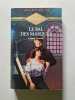
Le bal des masques
Harlequin Sans date. Le Bal des masques est un roman sentimental de Connie Bennett publié en 1990 dans la collection Harlequin Série d'Or (n° 323). Il s'agit de la traduction française de l'œuvre originale anglaise intitulée "Changes in the Wind"
Très bon état
Conran Terence DuBern Roger McGowan John Johnson Hugh
Reference : 3133
(1999)
ISBN : 2082009203
CREEZ VOTRE DECOR UN GUIDE COMPLET POUR INSTALLER ET DECORER LA MAISON: - TECHNIQUES - PHOTOGRAPHIES
Flammarion 1999 253 pages 24 4x2 8x28 2cm. 1999. broché. 253 pages.

Très bon état
Herm neutiques en Islam contemporain. Th ologie, ex g se et philosophie
, Brepols - Ecole Pratique des Hautes Etudes, 2026 Hardback, Pages: 224, Size:156 x 234 mm, Languages: French, English. ISBN 9782503624556.
Summary L'ouvrage vise donner un aper u de l'ex g se coranique contemporaine, ainsi que des efforts men s pour acclimater l'herm neutique philosophique europ enne dans la th ologie de l'Islam. Les th ologiens et philosophes musulmans usent librement de l'herm neutique. Les contributions r unies explorent les oeuvres les plus embl matiques de l'ex g se coranique et de la th ologie musulmane nourrie par l'herm neutique philosophique europ enne. Elles sont pr c d es par une r trospective sur l'histoire de l'herm neutique, retrac e par Marc de Launay. Ce volume est issu d'un colloque organis en novembre 2022 l' cole pratique des hautes tudes Paris. Les auteurs qui ont contribu l'ouvrage sont philosophes ou historiens. TABLE OF CONTENTS Constance Arminjon et Rainer Brunner, Introduction Marc de Launay, R flexions sur l'herm neutique et ses conflits de m thode Sylvain Camilleri, Hasan Hanafi et l'herm neutique ph nom nologique du fiqh Kata Moser, Fu'ad Zakariyya and Hermeneutics. Religious Exegesis in Analogy to Understanding Music Constance Arminjon, Herm neutique et critique de la tradition islamique chez Abu Zayd et Shabestari. Affronter les "classiques" Sajjad Rizvi, Critique, Metaphysics, and Social Exegesis: A Case Study of Yahya Yasrebi Urs G sken, De l'ex g se du "Coran par le Coran" de Muhammad husayn Tabataba'i l'ex g se "de l'homme par l'homme" de 'Abd Allah Gawadi Amuli. Herm neutique et anthropologie spirituelle la base de la Sagesse transcendante Dominique Avon, Hommes de religion sunnites et tudes profanes sur le Coran. Controverses autour de la distinction entre versets mecquois et m dinois (ann es 1910-ann es 1970)
Constant Christian Barruel Laurence Legay Guy
Reference : 500113940
(2020)
ISBN : 9782812926983
Constant Christian Barruel Laurence Legay Guy
Reference : 500115514
(2020)
ISBN : 9782812926983
Constant Christian Barruel Laurence Legay Guy
Reference : 500116248
(2020)
ISBN : 9782812926983
Constant Christian Barruel Laurence Legay Guy
Reference : 500122119
(2020)
ISBN : 9782812926983
Bijdragen tot de technologische studie van het aardewerk. Contributions à l'étude de la technologie de la céramique. (By) A. van As, R.M.A Bedaux, G. Bronitsky, H.J. Franken, L. Jacobs, G.A. London.
Tongeren, Provinciaal Gallo-Romeins Museum, 1987.
4to. 77 p.; ills. Wrs. (Publ. van het Provinciaal Gallo-Romeins Museum, 34)
Voyage to the Pacific Ocean. 2nd Edition
" undertaken by the command of his majesty, for making discoveries in the Northern Hemisphere. Performed under the direction of captains Cook, Clerke and Gore, in his majesty's ships the Resolution and Discovery; in the years 1776, 1777, 1779, and 1780. IN THREE VOLUMES : Volume 1- 3; Vol. I and II written by Captain James Cook; Published by Order of the Lords Commissioners of the Admiralty, Vol. III by Captain James King . Second edition."
Ces trois livres sont brochés , ils sont à relier , un manque de pages de garde sur un tome ,beaucoup de cartes et croquis , photos sur demande
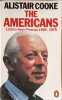
The Americans: Letters from America On Our Life And Times 1969-1979
Penguin 1980 288 pages 11 176x2 032x18 034cm. 1980. Broché. 288 pages. Ce livre compile une sélection des célèbres émissions radiophoniques 'Letter from America' d'Alistair Cooke diffusées sur la BBC pendant près de six décennies. À travers des observations érudites et pleines d'esprit Cooke explore la vie et l'époque américaines couvrant des événements majeurs comme le Watergate et la guerre du Vietnam ainsi que des aspects plus intimes de la société américaine
EEN KERK EN HAAR GESCHIEDENIS. DE KAPELLEKERK TE BRUSSEL 1134 - 1984,
, Brussel; R. Coolen, 1984, Originele uitgeversomslag geillustreerde kartonomslag, 200 x 210mm., 192pp., zeer uitgebreide illustratie in kleur en z/w.
Catalogus bij de gelijknamige tentoonstelling in de ASLK-Galerij, van 16 maart tot 3 juni 1984. In goede staat.
Oeuvres chirurgicales complètes de Sir Astley Cooper.Traduites de l'anglais, avec des notes par E. Chasseignac, professeur agrégé à la faculté de médecine de Paris, vice président de la société anatomique, et G. Richelot, docteur en médecine de la faculté de Paris.
Paris, Béchet jeune, libraire de la faculté de médecine de Paris 1837. Reliure in-8 demi veau de l'époque. Dos lisse orné,coiffe superieure trés usée,. Légères rousseurs aux premières pages. Bon état interieur.
A pupil of John Hunter, Cooper made great strides in surgical technique, most notably in the area of vessel ligation. As a teacher he stressed practical demonstrations over didacticism and gained the respect and admiration of his students. He was awarded the Copley Medal of the Royal Society, the highest honor the Society could bestow, for noteworthy contributions to medical knowledge. Cooper was not a prolific writer, but his publications were of the highest quality and were the result of personal knowledge and observation gained from long hours of practice, dissecting and experimentation... . (Heirs of Hippocrates N 1224). Cf. Garrison N 3361, 3581, 5587, 4166, 1119. Traité des luxations et des fractures des articulations - Traité des hernies - Traité des maladies du testicule - Traité des maladies du sein - Anévrysmes - Maladies des voies urinaires - Maladies de l"oreille - Tumeurs - Mémoire sur l"oblitération du canal thoracique et sur les effets de la ligature de ce conduit Remise de 20% pour toutes commandes supérieures à 200 €
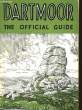
THE OFFICIAL GUIDE TO DARTMOOR
THE COUNTRY ASSOCIATIONS. sans date. In-12. Broché. Bon état, Couv. convenable, Dos satisfaisant, Intérieur frais. 64 pages illustrées de nombreues photographies en noir et blanc hors et dans le texte ; de quelques cartes en noir et blanc hors texte. Frontispice en noir et blanc. Texte en anglais.. . . . Classification Dewey : 420-Langue anglaise. Anglo-saxon
Classification Dewey : 420-Langue anglaise. Anglo-saxon
THE PORT OF ANTWERP AND ITS ACTIVITY,
Antwerp, Excelsior, 1927 Paper cover, 175 x 270mm., 179pp., b/w illustration.
Translated from the Flemish by the author. With 43 Photographs by J.E. Wygaerts and 31 Sketches by Jos. Van Eeckhoven. Cover damaged at spine.
DE RECHTSTOESTAND VAN DE GODSHUIZEN TE 'S-HERTOGENBOSCH VOOR 1629.
's Hertogenbosch, Zuid-Nederlandsche Drukkerij, 1964 Gebrocheerd, originele uitgeversomslag, 15.8x24 cm., 213 pp.
Met opdracht van + gesigneerd door de auteur.

