Previous 1 ... 38 39 40 41 ... 105 169 233 297 ... 301 Next Exact page number ? OK

‎BROCHARD Gilles - COFFE Jean-Pierre‎

Reference : 432146

‎Agenda du Thé.‎

‎Société Nouvelle Des Editions Du Chêne S.L. 1993 In-8 carré ( 205 X 200 mm ), broché sous couverture illustrée en couleurs rempliée. Très nombreuses illustrations en couleurs dans et hors-texte. Deuxième édition. Très bel exemplaire enrichi d'un bel envoi autographe signé de l'auteur à Jean-Pierre COFFE. De la bibliothèque de Jean-Pierre COFFE avec son timbre humide.‎


Phone number : 04 91 42 63 17

EUR40.00 (€40.00 )

‎BROCHARD Gilles - COFFE Jean-Pierre‎

Reference : 844375

‎Agenda du Thé.‎

‎Société Nouvelle Des Editions Du Chêne S.L. 1992 In-8 carré ( 205 X 200 mm ), cartonnage illustré en couleurs. Très nombreuses illustrations en couleurs dans et hors-texte. Edition originale. Très bel exemplaire enrichi d'un très bel envoi autographe signé de l'auteur à Jean-Pierre COFFE. De la bibliothèque de Jean-Pierre COFFE avec son timbre humide.‎


Phone number : 04 91 42 63 17

EUR55.00 (€55.00 )

‎Brochard, Gilles (texte) ; Carles, Michele (recettes) ; Fleurent, Christine (photographies) ; Michalon, Marie-France (stylisme)‎

Reference : 46419

(2005)

ISBN : 2842770951

‎Plaisirs de Thé‎

‎Chene 2005 in-4, cartonnage editeur sous jaquette illustree, 175 pp., illustrations en couleurs.‎


‎ Très bon état d’occasion ‎

Librairie de l'Avenue - Saint-Ouen

Phone number : 01 40 11 95 85

EUR21.00 (€21.00 )

‎Broche F‎

Reference : 100141018

(1993)

‎Le livre des bonnes plantes‎

‎Dervy 1993 361 pages in8. 1993. Cartonné. 361 pages.‎


‎Très bon état‎

Un Autre Monde - Val Couoesnon

Phone number : 07.69.73.87.31

EUR10.00 (€10.00 )

‎"BRODIE, B.C. - THE ATOMIC DEBATE IN CHEMISTRY. - ""BOOLEAN CHEMISTRY""‎

Reference : 43745

(1866)

‎The Calculus of Chemical Operations"" being a Method for the Investigation, by means of Symbols, of the Laws of the Distribution of Weight in Chemical Change. Received April 25, Read May 3, 1866. Part I-II. (I. On the Construction of Chemical Symbols. ...‎

‎(London, Taylor and Francis, 1866 a. 1877. 4to. No wrappers as extracted from ""Philosophical Transactions"", Vol. 156 - Part II a. vol. 167 - Part I. Pp. 781-859 a. pp. 35-116. Clean and fine.‎


‎First appearance of both papers, controversial as Brodie here tries to established a new chemical philosophy, refusing atomism and founding the calculation of chemical processes on Boolean Algebra, defining chemical symbols with mathematical terms and notations. The work is a remarkable attempt to set chemistry on a rational deductive basis. - The introduction in the second paper meets the main points raised by his critics.""In 1866 the Royal Society began to publish Brodie’s ""The Calculus of Chemical Operations"" (Philosophical Transactions, 156 [1866], 781-859"" 167 [1877], 35-116) which introduced Greek symbols for the chemical elements to replace the roman alphabet (Berzelian) symbols that contemporary chemists used to represent atomic weights. Brodie’s symbols, however, represented operations on space (volumes), not weights for, besides its revolutionary symbolism, the calculus also demanded an appreciation of George Boole’s algebraic logic, which Brodie had studied after the publication of Boole’s Investigation of the Laws of Thought in 1854. In this an equation such as y = xy is a symbolic statement that y is a subset of x in which the symbol x is an operator on y. Although professional mathematicians like William Donkin and Henry Smith later advised Brodie, it appears that he developed the system without professional help. The principal difficulty about the calculus for the present-day historian and philosopher of science is the need to explain it before going on to discuss it and the difficulty of giving any concise description of it. Boole had developed the concept of symbolic operators in algebraic analysis. These provided a code as to how the symbols were to be understood and manipulated. Brodie exploited this in the idea of a chemical operator, or chemical operations, that he symbolized by Greek letters. It is probably unwise, therefore, to interpret Brodie’s philosophy as analogous to Percy Bridgman’s later operationism. He proposed that if two substances with the empirically-derived weights, x and y combined to form a new compound with weight xy, then x + y = xy. From such weight equations he constructed a symbolic algebra that bypassed any atomistic interpretation.""(William H. Brock in ""Hyle Biography"").‎

Logo ILAB

Phone number : +45 33 155 335

DKK2,500.00 (€335.30 )

‎Brod Véronique Le Beuze Alain‎

Reference : 100112812

(2004)

ISBN : 2843981689

‎L'EFFET MER‎

‎Apogée 2004 64 pages 21 8x1 4x25 4cm. 2004. Broché. 64 pages.‎


‎intérieur propre‎

Un Autre Monde - Val Couoesnon

Phone number : 07.69.73.87.31

EUR12.00 (€12.00 )

‎"BROGLIE (DEBROGLIE), LOUIS de. - COINING THE TERMS 'ANTIPARTICLE' AND 'ANTINEUTRINO'.‎

Reference : 48952

(1934)

‎Sur la nature de photon.‎

‎(Paris, Gauthier-Villars), 1934. 4to. No wrappers. In: ""Comptes Rendus hebdomadaires des Séances de L'Academie des Sciences"", tome 198, No 2. Pp. (129-) 212. (Entire issue offered). De Broglie's paper: pp. 135-138. A stamp to the first page. Disbound.‎


‎First apperance of de Broglie's importent paper on antiparticles and the Neutrino of light. The antiparticle having the same mass as another but opposite values for its other properties.""In a communication dated January 8, 1934 (the paper offered)... de broglie stated that this new particle is an 'antiparticle which is related to (the neutrino) like the positive electron to the negative electron in the whole theory of Dirac'. In this note the terms 'antiparticle' and 'antineutrino' enter physics for the first time.""(Pais in ""Inward Bound"", p. 418).‎

Logo ILAB

Phone number : +45 33 155 335

DKK2,500.00 (€335.30 )

‎"BROGLIE (DE BROGLIE), LOUIS DE . - DISCOVERY OF THE WAVE THEORY OF MATTER AND CREATION OF WAVE-MECHANICS‎

Reference : 49718

(1923)

‎Ondes et quanta. Note de M. Louis de Broglie, présentée par M. Jean Perrin. (Séance du 10 Septembre 1923). (+) Quanta de lumière, diffraction et interférences. Note de M. Louis de Broglie, transmise par M. Jean Perrin. (Séance du 24 Septembre 1923). (...‎

‎Paris, Gauthier-Villars et Cie, 1923. 4to. Bound in one contemp. full buckram. Spines gilt and with gilt lettering. In: ""Comptes Rendus Hebdomadaires des Séances de L'Academie des Sciences"", Tome 177. Bound with orig. printed front-wrapper to No. 1, half-title and title-page to vol. 177. 1513 pp. (Entire volume offered). De Broglie's papers: pp. 507-510, pp. 548-551 a. pp. 630-32. Clean and fine. A punched stamp on foot of title-page.‎


‎First edition of these papers which ESTABLISHED A NEW ERA IN PHYSICS by introducing the epochal new principle that particle-wave duality should apply not only to radiation but also to matter and thus CREATING QUANTUM MECHANICS. These 3 papers were extended to form his doctoral thesis of 1924 ""Recherches sur la Théorie des Quanta.""De Broglie relates ""After long reflection in solitude and meditation, I suddenly had the idea, during the year 1923, that the discovery made by Einstein in 1905 should be generalized by extending it to all material particles and notably to electrons"" (Preface to his PhD thesis 1924).""He made the leap in his September 10, 1923, paper: E=hv should hold not only for photons but also for electrons, to which he assigns a 'fictitious associated wave'. In his September 24 paper, he indicated the direction in which one 'should seek experimental confirmations of our ideas': a stream of electrons traversing an aperture whose dimensions are small compared with the wavelenght of the electron waves 'should show diffraction phenomena' .""(Pais ""Subtle is the Lord"", pp. 425-436).In the third paper (October 8) he discusses ""The interplay between the propagation of the particle and of the waves could be expressed in more formal terms as an identity between the fundamental variational principles of Pierre de Fermat (rays), and Pierre Louis Maupertuis (particles) as de Broglie discussed it further in his last communication . Therein he also considered some thermodynamic consequences of his generalized wave-particle duality. He showed in particular how one could, using Lord Rayleigh’s 1900 formula for the number of stationary modes for phase waves, obtain Planck’s division of the mechanical phase space into quantum cells.Louis de Broglie achieved a worldwide reputation for his discovery of the wave theory of matter, for which he received the Nobel Prize for physics in 1929. His work was extended into a full-fledged wave mechanics by Erwin Schrödinger and thus contributed to the creation of quantum mechanics. After an early attempt to propose a deterministic interpretation of his theory, de Broglie joined the Copenhagen school’s mainstream noncausal interpretation of the quantum theory.""(DSB).""This idea [i.e. de Broglie's that matter might behave as waves] was tested and confirmed by Davisson and Germer in 1927... Thus the duality of both light and matter had been established, and physicists had to come to terms with fundamental particles which defied simple theories and demanded two sets of 'complementary' descriptions, each applicable under certain circumstances, but incompatible with one another."" (Printing and the Mind of Man, 417). ‎

Logo ILAB

Phone number : +45 33 155 335

DKK30,000.00 (€4,023.66 )

‎"BROGLIE (DEBROGLIE), LOUIS de. - DISCOVERY OF THE WAVE THEORY OF MATTER AND CREATION OF WAVE-MECHANICS.‎

Reference : 46949

(1923)

‎Ondes et quanta. Note de M. Louis de Broglie, présentée par M. Jean Perrin. (Séance du 10 Septembre 1923). (+) Quanta de lumière, diffraction et interférences. Note de M. Louis de Broglie, transmise par M. Jean Perrin. (Séance du 24 Septembre 1923). (...‎

‎Paris, Gauthier-Villars et Cie, 1923. 4to. Bound in 2 contemp. full cloth. Spines gilt and with gilt lettering. In: ""Comptes Rendus Hebdomadaires des Séances de L'Academie des Sciences"", Tome 177. With htitle a. titlepage. 1513 pp. (Entire volume offered). De Broglie's papers: pp. 507-510, pp. 548-551 a. pp. 630-32. Clean and fine. A stamp to verso of titlepage.‎


‎First edition of these papers which ESTABLISHED A NEW ERA IN PHYSICS by introducing the epochal new principle that particle-wave duality should apply not only to radiation but also to matter and thus CREATING QUANTUM MECHANICS. These 3 papers were extended to form his doctoral thesis of 1924 ""Recherches sur la Théorie des Quanta.""De Broglie relates ""After long reflection in solitude and meditation, I suddenly had the idea, during the year 1923, that the discovery made by Einstein in 1905 should be generalized by extending it to all material particles and notably to electrons"" (Preface to his PhD thesis 1924).""He made the leap in his September 10, 1923, paper: E=hv should hold not only for photons but also for electrons, to which he assigns a 'fictitious associated wave'. In his September 24 paper, he indicated the direction in which one 'should seek experimental confirmations of our ideas': a stream of electrons traversing an aperture whose dimensions are small compared with the wavelenght of the electron waves 'should show diffraction phenomena' .""(Pais ""Subtle is the Lord"", pp. 425-436).In the third paper (October 8) he discusses ""The interplay between the propagation of the particle and of the waves could be expressed in more formal terms as an identity between the fundamental variational principles of Pierre de Fermat (rays), and Pierre Louis Maupertuis (particles) as de Broglie discussed it further in his last communication . Therein he also considered some thermodynamic consequences of his generalized wave-particle duality. He showed in particular how one could, using Lord Rayleigh’s 1900 formula for the number of stationary modes for phase waves, obtain Planck’s division of the mechanical phase space into quantum cells.Louis de Broglie achieved a worldwide reputation for his discovery of the wave theory of matter, for which he received the Nobel Prize for physics in 1929. His work was extended into a full-fledged wave mechanics by Erwin Schrödinger and thus contributed to the creation of quantum mechanics. After an early attempt to propose a deterministic interpretation of his theory, de Broglie joined the Copenhagen school’s mainstream noncausal interpretation of the quantum theory.""(DSB).""This idea [i.e. de Broglie's that matter might behave as waves] was tested and confirmed by Davisson and Germer in 1927... Thus the duality of both light and matter had been established, and physicists had to come to terms with fundamental particles which defied simple theories and demanded two sets of 'complementary' descriptions, each applicable under certain circumstances, but incompatible with one another."" (Printing and the Mind of Man, 417). ‎

Logo ILAB

Phone number : +45 33 155 335

DKK30,000.00 (€4,023.66 )

‎"BROGLIE, LOUIS de. - DISCOVERY OF THE WAVE THEORY OF MATTER AND CREATION OF WAVE-MECHANICS.‎

Reference : 46950

(1924)

‎A Tentative Theory of Light Quanta.‎

‎London, Taylor and Francis, 1924. Later full buckram, gilt lettering to spine. In: Philosophical Magazine conducted by Oliver Joseph Lodge etc."", Vol. 47. - Sixth Series. VIII,1168 pp. and 8 plates. (Entire volume offered). De Broglie's paper: pp. 446-458. Internally clean and fine.‎


‎First English version of the papers which ESTABLISHED A NEW ERA IN PHYSICS by introducing the epochal new principle that particle-wave duality should apply not only to radiation but also to matter and thus CREATING QUANTUM MECHANICS. The English paper is a translation of de Broglie's 3 ""Notes "" which he published in ""Comptes Rendus"" in September and October 1923 (Ondes et quanta. - Quanta de lumière, diffraction et interférences. - Les quanta, la théorie cinétique des gaz et le principe de Fermat). These 3 papers were extended to form his doctoral thesis of 1924 ""Recherches sur la Théorie des Quanta."" - This English edition (of the papers) was published before his thesis of 1924 as the paper is dated October 1, 1923, and published here in the Februar issue of Philosophical Magazine, months before the thesis.The English version contains furthermore an addition, a postscript, which contains a generalization of the theory which is consistent with the special theory of relativity, and NOT published in ""Comptes Rendues"" in 1923.With the three communications to the Academy of Sciences (the 3 Comptes Rendus papers) in the fall of 1923 de Broglie had presented the main ideas of his unified dynamics of light quanta and atoms. He was confident enough about his results that he submitted them also in English in the offered paper. At the end of the paper he summarized his results. De Broglie relates ""After long reflection in solitude and meditation, I suddenly had the idea, during the year 1923, that the discovery made by Einstein in 1905 should be generalized by extending it to all material particles and notably to electrons"" (Preface to his PhD thesis 1924).""He made the leap in his September 10, 1923, paper: E=hv should hold not only for photons but also for electrons, to which he assigns a 'fictitious associated wave'. In his September 24 paper, he indicated the direction in which one 'should seek experimental confirmations of our ideas': a stream of electrons traversing an aperture whose dimensions are small compared with the wavelenght of the electron waves 'should show diffraction phenomena' .""(Pais ""Subtle is the Lord"", pp. 425-436).In the third paper (October 8) he discusses ""The interplay between the propagation of the particle and of the waves could be expressed in more formal terms as an identity between the fundamental variational principles of Pierre de Fermat (rays), and Pierre Louis Maupertuis (particles) as de Broglie discussed it further in his last communication . Therein he also considered some thermodynamic consequences of his generalized wave-particle duality. He showed in particular how one could, using Lord Rayleigh’s 1900 formula for the number of stationary modes for phase waves, obtain Planck’s division of the mechanical phase space into quantum cells.Louis de Broglie achieved a worldwide reputation for his discovery of the wave theory of matter, for which he received the Nobel Prize for physics in 1929. His work was extended into a full-fledged wave mechanics by Erwin Schrödinger and thus contributed to the creation of quantum mechanics. After an early attempt to propose a deterministic interpretation of his theory, de Broglie joined the Copenhagen school’s mainstream noncausal interpretation of the quantum theory.""(DSB).""This idea [i.e. de Broglie's that matter might behave as waves] was tested and confirmed by Davisson and Germer in 1927... Thus the duality of both light and matter had been established, and physicists had to come to terms with fundamental particles which defied simple theories and demanded two sets of 'complementary' descriptions, each applicable under certain circumstances, but incompatible with one another."" (Printing and the Mind of Man, 417).This volume of Philosophical Magazine contains another importent paper in the history of Quantum Mechanics"": ""The Quantum Theory of Radiation"" by BOHR, KRAMERS AND SLATER, pp. 785-802. ""After Kramers had succeeded in extending the scope of the correspondence argument to the theory of optical dispersion ""thus rounding off a treatment of the interaction of atomic systems with radiation that accounted for all emission, absorption, and scattering processes"" Bohr ventured to propose a systematic formulation of the whole theory, in which what he called the virtual character of the classical model was emphasized. In this he was aided by Kramers and a young American visitor, J. C. Slater, and the new theory was published in 1924 under the authorship of all three. The most striking feature of this remarkable paper, ""The Quantum Theory of Radiation,"" was the renunciation of the classical form of causality in favor of a purely statistical description. Even the distribution of energy and momentum between the radiation field and the ""virtual oscillators"" constituting the atomic systems was assumed to be statistical, the conservation laws being fulfilled only on the average. This was going too far: the paper was hardly in print before A. H. Compton and A. W. Simon had established by direct experiment the strict conservation of energy and momentum in an individual process of interaction between atom and radiation. Nevertheless, this short-lived attempt exerted a profound influence on the course of events"" what remained after its failure was the conviction that the classical mode of description of the atomic processes had to be entirely relinquished."" (DSB).‎

Logo ILAB

Phone number : +45 33 155 335

DKK15,000.00 (€2,011.83 )

‎Bronte Charlotte‎

Reference : 500258455

(2007)

ISBN : 9780099511120

‎Jane Eyre (Vintage Classics)‎

‎Vintage Classics 2007 560 pages 13x19 7x4 2cm. 2007. Broché. 560 pages.‎


‎Etat correct‎

Démons et Merveilles - Joinville

Phone number : 07 54 32 44 40

EUR7.50 (€7.50 )

‎[The Bronx Parkway Commission] - ‎ ‎Bronx Parkway Commission ; New York State‎

Reference : 42137

(1922)

‎Report of the Bronx Parkway Commission. 1922‎

‎1 vol. in-8 br., The Bronx Parkway Commission, December 31 1922, 89 pp.‎


‎Etat satisfaisant (mq. au dos en tête). With the card "Compliments of Bronx Parkway Commission". Small lack at the top of spine.‎

Phone number : 09 82 20 86 11

EUR60.00 (€60.00 )

‎BRONZES AND IVORIES FROM THE OLD KINGDOM OF BENIN‎

Reference : 360184

‎Bronzes and Ivories from the old kigdom of benin. Exhibition from november 25 to december 14 - 1935.‎

‎M. Knoedler And Company New York 1935 In-8 ( 275 X 215 mm ) broché sous couverture imprimée. Planches dans le texte et hors-texte Très bel exemplaire.‎


Phone number : 04 91 42 63 17

EUR60.00 (€60.00 )

‎"BROOKE, CHARLES. - THE INVENTION OF THE PHOTOGRAPHIC MAGNETOMETER.‎

Reference : 43535

(1847)

‎On the Automatic Registration of Magnetometers, and other Meteorological Instruments, by Photography. Received June 16, - Read June 18, 1846. (+) On the Automatic Registration of Magnetometers,....Supplement. 1846.(2 Papers).‎

‎(London, Richard and John E. Taylor, 1847). 4to. No wrappers as extracted from ""Philosophical Transactions"" 1847 - Part I. Pp. 59-68 a. pp. 69-77, 5 lithographed plates (one folding), depicting the photographic magnetometer. Clean and fine.‎


‎First printing of an importent paper in the history of meteorology, describing the invention of the Brooke-magnetometer. This new photographic drum method ensured continuous recording of geomagnetic elements, and rapidly gained use all over the world.The instrumental developments by Ronalds and Brooke establishedthe standard technique employed for magnetic observatory recording for more than a century.In 1845 Charles Brooke devised a self-recording photographic magnetometer with a light-source, a mirror for amplifying the magnet’s movement, and a drum of photographic paper. This system gradually replaced the older manual method of taking eye-observations through vertical microscope which scanned the ends of a magnetic needle" the magnetic needle itself was suspended by a bunch of silk fibersWheeler Gift No 2858..‎

Logo ILAB

Phone number : +45 33 155 335

DKK1,800.00 (€241.42 )

‎BROOKMYRE, Chris - Traduit de l'anglais par David Fauquemberg‎

Reference : 111408

(2022)

‎Coupez !‎

‎ 2022 Editions Métaillé Noir, collection "Bibliothèque écossaise" dirigée par Keith Dixon - 2022 - In-8, broché couverture illustrée - 510 pages‎


‎Bon état ‎

Phone number : 04 78 38 32 46

EUR15.00 (€15.00 )

‎BROOS, Ben (catal.).‎

Reference : 30948

‎HOLLANDSE MEESTERS UIT AMERIKA.‎

‎Zwolle, Waanders, 1990 softcover originele uitgeversomslag in kleur, 28x22.8 cm., 563 pp., geillustreerd in kleur en z/w. ISBN 9789066302525.‎


‎Uitgegeven ter gelegenheid van de gelijknamige tentoonstelling in het Mauritshuis, Den Haag 28 september 1990 - 13 januari 1991 en in The Fine Arts Museums of San Francisco, 16 februari 1991 - 5 mei 1991.‎

ERIK TONEN BOOKS - Antwerpen

Phone number : 0032495253566

EUR12.00 (€12.00 )

‎BROOS, Ben (catal.).‎

Reference : 40685

‎HOLLANDSE MEESTERS UIT AMERIKA.‎

‎Zwolle, Waanders, 1990 Gebonden, lichtroze linnen hardcover met zilveropdruk op de rug, originele uitgeversomslag in kleur, 28.6x23.4 cm., 563 pp., geillustreerd in kleur en z/w. ISBN 9066302437.‎


‎Uitgegeven ter gelegenheid van de gelijknamige tentoonstelling in het Mauritshuis, Den Haag 28 september 1990 - 13 januari 1991 en in The Fine Arts Museums of San Francisco, 16 februari 1991 - 5 mei 1991.‎

ERIK TONEN BOOKS - Antwerpen

Phone number : 0032495253566

EUR20.00 (€20.00 )

‎Brothers of the Christian Schools‎

Reference : 2210

‎American Centenary‎

‎ San Francisco - 1948 - In-8 - Reliure éditeur, illustrée, titre & dessins dorés - Nombreux dessins & photographies en & hors-texte - 151 p. - Très popre‎


A l's.p.rance - Brest

Phone number : 06 81 23 31 48

EUR45.00 (€45.00 )

‎Brown Dan‎

Reference : 500131792

(2005)

ISBN : 9782744186868

‎Anges et Démons : Edition illustrée‎

‎LATTES 2005 528 pages 20 8x3 8x24 6cm. 2005. Broché. 528 pages.‎


‎Bon état‎

Démons et Merveilles - Joinville

Phone number : 07 54 32 44 40

EUR8.20 (€8.20 )

‎BROWN (James)‎

Reference : 32998

(1991)

‎The passion.‎

‎Lund (Suède), AB Propexus, 1991. In-folio (50,5 x 32 cm), relié de pleine toile violette, titre noir, sous étui en carton noir, (3)ff., 40 planches en couleurs. Edition originale de cet ouvrage publié à l'occasion de l'exposition de James Brown à la Anders Tornberg Gallery en Novembre et Décembre 1991 à Lund. Tirage limité à 1400 exemplaires, celui-ci est signé par l'artiste. Excellent état‎


Déjà Jadis - Fréjus

Phone number : +33 (0) 4 94 53 89 34

EUR200.00 (€200.00 )

‎Brown Peter‎

Reference : 100132641

(1989)

ISBN : 0571154468

‎The Body and Society: Men Women and Sexual Renunciation in Early Christianity‎

‎Faber & faber 1989 524 pages in8. 1989. Cartonné jaquette. 524 pages.‎


‎Bon état intérieur propre avec sa jaquette‎

Un Autre Monde - Val Couoesnon

Phone number : 07.69.73.87.31

EUR36.00 (€36.00 )

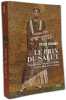
‎Brown Peter Goddard Christophe J‎

Reference : 100143159

(2016)

‎Le Prix du Salut: Les chrétiens l'argent et l'au-delà en Occident (IIIe-VIIe siècle)‎

‎BELIN 2016 328 pages in8. 2016. Broché. 328 pages.‎


‎proche du très bon état intérieur propre bonne tenue‎

Un Autre Monde - Val Couoesnon

Phone number : 07.69.73.87.31

EUR14.00 (€14.00 )

‎"BROWN, ROBERT. - THE DISCOVERY OF ""BROWNIAN MOTION""‎

Reference : 43318

(1828)

‎Mikroskopische Beobachtungen über die im Pollen der Pflanzen enthaltenen Partikeln, und über das allgemeine Vorkommen activer Molecüle in organischen und unorganischen Körpern"" (Unterdem Titel: ""A brief Account of Microscopical Observations made in th...‎

‎Leipzig, Johann Ambrosius Barth, 1828. Without wrappers as issued in ""Annalen der Physik und Chemie. Hrsg.von Poggendorff"", Bd. 14, Zweites Stück. (=Jahrgang 1828, zehntes Stück). Pp. 191-306 a. 3 engraved plates. (the entire issue offered (Heft 2) together with the titlepage to 14. Band). Brown's paper: pp. 294-313. Clean and fine. Small stamp on verso of titlepage.‎


‎First appearance in German of this monumental paper in atomic theory and kinematics, as it was the first evidence for atomism that was an observation rather than a deduction from abstract principles.""In 1827 as he was viewing a suspension of pollen in Water under the microscope, he noted that the individual grains were moving about irregularly. This, he thought, was the result of the life hidden within the pollen grains. However, when he studied dye particles (indubitably nin-livin) suspended in water, he found the same erratic motion. This has been called ""Brownian motion"" ever since and Brown could merely report on the observation. He had no explanation for it. Nor had anyone else until the development of the kinetic theory of gases by men such as Maxwell a generation later. It seemed plain. after Maxwell and especially after the work of Einstein and Perrin a half century after Maxwell, that the Brownian Motion was actually a visible effect of the fact that water was composed of particles. It was the first evidence for atomism that was an observation rather than a deduction."" (Asimov).The issue contains other importent papers by C.. Naumann, G. Magnus, Th. Saussure ""Kohlensäuregas in der Atmosphäre"" andothers.PMM: 290 (the English paper from 1828) - Sparrow, Milestones of Science No 31. - Magie ""A Source Book in Physics p. 251-255. - Dibner, Heralds of Science No 156.‎

Logo ILAB

Phone number : +45 33 155 335

DKK12,500.00 (€1,676.52 )

‎"BROWN-SÉQUARD, (CHARLES ÉDOURD). - THE 'FATHER' OF ENDOCRINOLOGY.‎

Reference : 49001

(1856)

‎Recherches expérimentales sur la physiologie et la pathologie des capsules surrénales. (1.-2. Mémoirs). (Extrait par l'auteur). 2 papers.‎

‎(Paris, Mallet-Bachelier), 1856. 4to. No wrappers. In: ""Comptes Rendus Hebdomadaires des Séances de L'Academie des Sciences"", Tome 43, No 8 a. No. 10. Pp. (409-) 452 a. pp. (497-) 560. (Entire issues offered). Brown-Sequard's papers: pp. 422-425 a. pp. 542-546.‎


‎First appearance of a pioneering work in endocrinology, initiating the development of our knowledge of the internal secretions.""Brown-Sequard is best known for his research on the endocrine system, the present work (the papers offered) being one of the most importent in that field. By the simple experiment of exicising the adrenal glands of animals, he proved the glands were indispensable to life. It is one of the first works to demonstrate the functions of the glands of internal secretion and is basic to the development of endocrinology.""(Heirs of Hippocrates).Garrison & Morton No. 1140. - Heirs of Hippocrates No. 986.‎

Logo ILAB

Phone number : +45 33 155 335

DKK2,500.00 (€335.30 )

‎Brown, the Reverend Sandy‎

Reference : SLIVCN-9781852848842

‎Walking the Via Francigena Pilgrim Route - Part 1‎

‎Cicerone Press (2/2023)‎


‎LIVRE A L’ETAT DE NEUF. EXPEDIE SOUS 3 JOURS OUVRES. NUMERO DE SUIVI COMMUNIQUE AVANT ENVOI, EMBALLAGE RENFORCE. EAN:9781852848842‎

Bookit! - Genève
EUR41.65 (€41.65 )
Previous 1 ... 38 39 40 41 ... 105 169 233 297 ... 301 Next Exact page number ? OK
Get it on Google Play Get it on AppStore
The item was added to your cart
You have just added :

-

There are/is 0 item(s) in your cart.
Total : €0.00
(without shipping fees)
What can I do with a user account ?

What can I do with a user account ?

  • All your searches are memorised in your history which allows you to find and redo anterior searches.
  • You may manage a list of your favourite, regular searches.
  • Your preferences (language, search parameters, etc.) are memorised.
  • You may send your search results on your e-mail address without having to fill in each time you need it.
  • Get in touch with booksellers, order books and see previous orders.
  • Publish Events related to books.

And much more that you will discover browsing Livre Rare Book !