 Write to the booksellers
-
Type
Book (7255)
Disk (44)
Drawings (1)
Engraving (9)
Magazine (89)
Maps (4)
Music sheets (135)
New book (2)
Old papers (1)
Photographs (19)
Posters (1)
-
Latest
Last 24h (2)
Last 3 days (10)
Last month (948)
Last week (6)
-
Language
Czech (1)
Dutch (11)
English (156)
French (7379)
German (4)
Italian (2)
Latin (3)
Russian (4)
-
Century
16th (17)
17th (43)
18th (199)
19th (882)
20th (2482)
21st (1567)
-
Countries
Belgium (1158)
Canada (34)
China (56)
Côte d'Ivoire (6)
Denmark (1063)
France (4893)
Germany (1)
Netherlands (181)
Switzerland (155)
United Kingdom (9)
United States of America (4)
-
Syndicate
ALAC (27)
CLAM (27)
CLAQ (2)
ILAB (2238)
NVVA (15)
SLACES (15)
SLAM (1026)
SNCAO (4)
Mon cahier d'écriture GRANDES LETTRES - Spécial gauchers
Larousse 2017 48 pages 16 6x21 8x0 7cm. 2017. Broché. 48 pages.



Bon état
LE GOUT DES CAFES
THAMES AND HUDSON. 1994. In-8. Relié. Bon état, Couv. convenable, Dos satisfaisant, Intérieur frais. 112 pages - nombreuses photos en couleurs dans et hors texte - frontispice en couleur - jaquette illustrée en couleurs - contre-plats illustrés monochromes.. Avec Jaquette. . . Classification Dewey : 633.7-Plantes alcaloïdes (tabac, thé, cacao, café, pavot)
PHOTOGRAPHIES D'ERIC MORIN Classification Dewey : 633.7-Plantes alcaloïdes (tabac, thé, cacao, café, pavot)


Le goût des cafés
Thames & Hudson 1994 In-8 relié 23,4 cm sur 20,4. 120 pages. Très bon état d’occasion.
Très bon état d’occasion
Mauritshuis Museum : Royal Cabinet of Paintings Mauritshuis and Gallery Prince William V.
London, Scala Publications, 1994 Hardcover, 128 pages, ENG. edition, 280 x 205 x 20 mm; in very good condition, illustrated dustjacket; blue cloth with goldcoloured imprint ; illustrated in colors. ISBN 9781857590319.
This gem of a museum, housed in a graceful seventeenth-century lake-side mansion in The Hague, has a fine collection of Dutch and Flemish art. King William I gave the collection to the Dutch state after it was returned from France, and the house and its contents were officially opened as a museum in 1822. Among its treasures are self portraits by Rembrandt as well as The anatomy lesson of Dr Nicolaes Tulp, Vermeer's View of Delft (recently restored), and paintings by Holbein, Rubens, Frans Hals and Van Dyck. Also present are some of the finest examples of landscape and still life paintings to have been produced in the Dutch Golden Age.
"BRACONNOT, HENRI. - THE FIRST ISOLATION OF GLYCINE AND LEUCINE.
Reference : 45518
(1820)
Mémoire sur la Conversion des matières animales en nouvelles substances par le moyen de l'acide sulfurique.
(Paris, Crochard, 1820).. No wrappers. Extracted from: Annales de Chimie et de Physique, Par MM. Gay-Lussac et Arago."", Series 2, Tome 13. Pp. 113-125.
First printing recording Braconnot's isolation of Glycine and Leucine which became the first instance in which a pure amino acid was received from a protein (gelatin) by acidic hydrolysis.""He went on to study the effects of sulfuric acid on animal substances: gelatin, muscle fibers, and wool. In the case of gelatin, he discovered a sugar-like substance which he called sucre de gélatine, later named glycocoll (glycine). Sulfuric acid converted wool and muscle fiber to a white substance he called leucine."" (DSB).Garrison & Morton: 668.3.
"BRACONNOT, HENRI. - THE FIRST ISOLATION OF GLYCINE AND LEUCINE.
Reference : 50172
(1820)
Mémoire sur la Conversion des matières animales en nouvelles substances par le moyen de l'acide sulfurique.
(Paris, Crochard, 1820). No wrappers. In: Annales de Chimie et de Physique, Par MM. Gay-Lussac et Arago."", Series 2, Tome 13, Cahier 2. Pp. 113-224 (entire issue offered). Braconnot's paper: pp. 113-125. Clean.
First printing recording Braconnot's isolation of Glycine and Leucine which became the first instance in which a pure amino acid was received from a protein (gelatin) by acidic hydrolysis.""He went on to study the effects of sulfuric acid on animal substances: gelatin, muscle fibers, and wool. In the case of gelatin, he discovered a sugar-like substance which he called sucre de gélatine, later named glycocoll (glycine). Sulfuric acid converted wool and muscle fiber to a white substance he called leucine."" (DSB).Garrison & Morton: 668.3.
Fox-hunting Fom Shire to Shire with Many Noted Packs
London George Routledge and Sons, Limited 1912 In-8 Dos légèrement passé, coiffes un peu molles, coins émoussés sans gravité, tête dorée 13 illust. 6 IN colours first edition
Correct Percaline Éditeur Décorée
HET PROTESTANTISME TE BRUSSEL. VAN DE OORSPRONG TOT AAN HET OVERLIJDEN VAN LEOPOLD I.
Brussel, Koninklijke Bibliotheek Albert I, 1980 Gebrocheerd, originele uitgeversomslag in kleur, 25.5x18.5 cm., X pp. + 134 pp. , met illustraties in z/w doorheen de tekst..
Catalogus nr. C 171. Tentoonstellingscatalogus ter gelegenheid van de 175e Verjaardag van de erkenning van de Protestantse Kerk van Brussel, Koninklijke Bibliotheek Albert I Brussel, 16 februari tot 27 maart 1980.
"BRAGG, W.H. - THE CORPUSCULAR NATURE OF X-RAYS AND GAMMA-RAYS.
Reference : 45123
(1910)
The Consequences of the Corpuscular Hypothesis of the (gamma) and X-rays, and the Range of ß Rays.
(London, 1910). No wrappers. In: ""The London, Edinburgh, and Dublin Philosophical Magazine and Journal of Science"", (Sixth Series), September 1910. Pp. 385-544 a. 6 folded plates. (Entire Sept.-issue offered). Bragg's paper: pp. 385-416.
First printing of the paper in which Bragg discloses the corpuscular nature of Gamma- and X-Rays.""Considering gamma and X rays to be of the same nature, he declared the evidence in favor of the ether pulse theory to be ""overrated,"" and emphasized that theory was unable to account for the large quantity of energy and momentum that remained in the ray regardless of the distance from its source, and that could all be delivered to a single electron. During the following five years Bragg backed off somewhat from this concrete model of the gamma ray, emphasizing its ""corpuscular"" rather than its ""material"" nature. but did not abandon the general concept of an electron-with-its-charge-neutralized until after the discovery of X-ray diffraction in 1912. Thus, initially without being aware of the views of Einstein and Stark, Bragg became the first, and remained the foremost, English-language advocate of a view of X rays that stressed their ""quantal"" properties. (DSB).
BRAHE, TYCHO - BRING, ERLAND SAMUEL (PRÆSES), GUSTAV JOHANN BILLBERG (FORF.) - THE ISLAND OF HVEN DESCRIBED.
Reference : 45277
(1793)
Dissertationis historicae de insula Hven. Particulam primam favente summo numine et consensu amplissimae facultatis philosophicae in regia Academia Carolina sub praesidio domini magistri Erland Samuel Bring ... Publicae bonorum censurae subjicit Gusta...
Lund, Berling, (1793-95). 4to. Ubeskåret i et senere mønstret papirsomslag med forgyldt skindtitel på forsiden. (1-5)pp 6-24(2) pp. 27-53 pp. samt et stort kort over Hven (30x25 cm), hvor rammen er håndkoloreret. (Charta öfwer Hwen, J.M. Wetter sculp.). Marginer med lidt runpletter. Nederste højre hjørne af titelbladet til del 2, bortskåret, uden teksttab.
Originaltrykket af denne sjældne latinske beskrivelse af Tycho Brahe's Hven med det attraktive foldekort i fin stand.
"BRAHE, TYGE (TYCHO). - THE FIRST DANISH TRANSLATION OF ""DE NOVA STELLA"".
Reference : 45598
(1923)
Den Ny Stjerne (1572). Oversat fra Latin af Otto Gelsted under medvirken af Thøger Larsen med Efterskrift af Harald Mortensen og Noter af Thøger Larsen. (Omslagstitlen). Danskerens Tyge Brahe's matematiske Betragtning over den Ny og aldrig nogensinde...
Lemvig, Atlantis' Forlag, 1923. Ubeskåret i originale bogtrykte omslag. De første og sidste blade med lidt brunpletter. (2),56,(2) pp., tekstillustrationer. (Særtryk af Atlantis). Nr. 122 af 200 salgseksemplarer, hele oplaget var på 250 eksemplarer. Nederste margin af omslaget med en svag skjold.Uncut in the original printed wrappers. First and last leaves with a bit of brownspotting. Lower margin of wrapper with a faint damp stain. (2),56,(2) pp., tekstillustrationer.
Første danske oversættelse af Brahes ""De Nova Stella"". Værket er aldrig blevet oversat i sin helhed, men Gelsted og Thøger Larsen har her oversat værkets astronomiske del for første gang i det 350. år efter dens første udgivelse. First edition of the first Danish translation of any part of Brahe's seminal ""De Nova Stella"" (1573). The work has never been translated in its entirety, but here we have Gelted and Thøger Larsen's excellent translation of the astronomical part of it, published 350 years after its original publication in Latin. This is nr. 122 out of 200 copies that were for sale, being an offprint from ""Atlantis"".
Questioning the World. Greek Patristic and Byzantine Question-and-Answer Literature
, Brepols, 2021 Hardback, 472 pages, Size:156 x 234 mm, Illustrations:6 tables b/w., Language(s):English, French, Greek. ISBN 9782503590752.
Summary This volume discusses cosmological issues in Greek Patristic and Byzantine question-and-answer literature. By adopting this focus, it yields novel insights into both the (theological / philosophical) content and the (literary) form of the texts under scrutiny. How did Greek Patristic and Byzantine authors understand the cosmos of which they were a part and the world in which they lived? And what literary forms did they use to express their questions and answers on these issues? This collection of studies shows that, in order to bring out the important intellectual contribution of the authors under discussion, both 'cosmology' and 'question-and-answer literature' should be defined more broadly than expected. Several papers deal with the crucial corpora by Pseudo-Justin and Maximus the Confessor. Other authors under discussion include Philoponus, Pseudo-Caesarius, Michael Psellus, Severian of Gabala, and Nilus Doxopatres. Attention also goes to the critical edition of question-and-answer literature, as well as to the Greek Patristic and Byzantine reception of cosmological questions and answers from Antiquity (i.c. Aristotle, Philo of Alexandria, Plutarch, and Iamblichus). TABLE OF CONTENTS Introduction: Questions and Kosmoi (Bram Demulder & Peter Van Deun) Part 1: Pseudo-Justin Cosmology and its 'Problems' in Ps.-Justin's Quaestiones et responsiones ad orthodoxos (Yannis Papadogiannakis) The Ps.-Justinian Corpus of Erotapokriseis and Apologetical Treatises. In Search of an Author and a Historical Setting (Benjamin Gleede) Is the Prime Mover the Source of All Movement? Pseudo-Justin on Aristotle's Unmoved Mover (Marcelo D. Boeri) Une pol mique contre Philon d'Alexandrie dans la Question 69 ad orthodoxos attribu e Justin ? (S bastien Morlet) Part 2: Maximus the Confessor Re-interpreting Tradition: Maximus the Confessor on Creation in Ambigua ad Ioannem (Vladimir Cvetkovi?) St Maximus the Confessor on the Mystery of Christ (Torstein Theodor Tollefsen [University of Oslo]) Jamblique et Maxime le Confesseur, cosmologie et th urgie (Christian Boudignon) What Theodosius of Gangra wanted to Know from Maximus the Confessor (Bram Roosen) Part 3: Cosmologies in Sixth-Century Byzantium Les conditions de l'av nement de la lumi re dans le De opificio mundi de Jean Philopon. Difficult s et solutions (Pascal Mueller-Jourdan) Pre-Existence and the Creation of the World in Pseudo-Caesarius (Istv n Perczel) Part 4: Questioning Genre in the Middle-Byzantine Period Pagan Garlands and Christian Roses. Plutarch's Quaestiones convivales in Michael Psellus' De omnifaria doctrina (Michiel Meeusen) Cosmological Questions Answered with Severian of Gabala in MS Athonensis, Lavras B 43 (Eustratiadis 163) (Reinhart Ceulemans) Le De oeconomia Dei de Nil Doxapatr s. Quelques observations sur le genre litt raire de l'?uvre et sur sa transmission manuscrite (Peter Van Deun) List of Abbreviations Index biblicus (Maxim Venetskov) Index fontium (Maxim Venetskov)
The Brides Book. / (A Perpetual Guide for the Montreal Bride).
Montréal, The Brandow Publishing Company of Canada, Limited, 1928. In-16 (25,3 cm) 352 pages, illustré de 108 planches d’annonces publicitaires de commerçants, manufacturiers et bureaux d’affaires montréalais. Reliure toile brune foncée d’édition. Plat supérieur orné et titré or. Mors supérieur légèrement fendillé, mais solide, plats supérieur et inférieur légèrement frottés. Très bel état intérieur.
Contient principalement des recettes et menus, mais aussi des articles sur le soin des enfants, la santé, le bridge, l’art de tenir maison et un article de l’Hon. Athanase David sur les lois du mariage au Québec.
"BRANLY, ÉDOUARD. - THE INVENTION OF THE ""COHERER"" (RADIO-CONDUCTOR).
Reference : 48907
(1890)
Variations de conductibilité sous diverses influences électriques.
(Paris, Gauthier-Villars), 1890. 4to. No wrappers. In: ""Comptes Rendus Hebdomadaires des Séances de L'Academie des Sciences"", Tome 111, No 21. Pp. (767-) 810. (Entire issue offered). Branly's paper: pp. 785-787.
First appearance of the paper in which Branly announced his discovery that the electrical resistance of a granular metallic conductor could drop by several orders of magnitude when excited by the electromagnetic field emitted by an electrical spark, the so-called Branly-effect.The coherer was a key enabling technology for radio, and was the first device used to detect radio signals in practical spark gap transmitter wireless telegraphy. It became the basis for radio reception around 1900, and remained in widespread use for about ten years.
"BRAUN, FERDINAND. - THE DISCOVERY OF SEMICONDUCTOR RECTIFIER EFFECT.
Reference : 49327
(1874)
Ueber die Stromleitung durch Schwefelmetalle.
Leipzig, Johann Ambrosius Barth, 1874. 8vo. Contemp. hcalf. 5 raised bands, gilt spine and gilt lettering to spine. A few scratches to spine. Small stamp on verso of first -and general- titlepage. In: ""Annalen der Physik und Chemie. Hrsg. von J.C. Poggendorff"", Sechste Reihe Bd. 3, (= Poggendorff Bd. 153). X,636 pp., 4 plates. (Entire volume offered). Braun's paper: pp. 556-563.
First printing of Brown's importent paper in which he described his discovery of a semiconductor diode, noting that electrical currents flows freely in only one direction at the contact between a metal point and a galena crystal.""In 1874 Braun published the results of his research on mineral metal sulfides. He found that these crystals conducted electric currents in only one direction. This information was important in electrical research and in measuring another property of substances, the electrical conductivity, but Braun’s discovery did not have immediate practical application. In the early twentieth century the principle that Braun had discovered was employed in crystal radio receivers.""(DSB).The Nobel Prize in Physics 1909 was awarded jointly to Guglielmo Marconi and Karl Ferdinand Braun ""in recognition of their contributions to the development of wireless telegraphy"".
BRAUN, FERDINAND. - THE INVENTION OF THE CATHODE-RAY INDICATOR TUBE - SEEING BY ELECTRICITY.
Reference : 43448
(1897)
Ueber ein Verfahren zur Demonstration und zum Studium des zeitlichen Verlaufes variabler Ströme" (On a Method for the demonstration and study of currents varying with time).
Leipzig, Johann Ambrosius Barth, 1897. No wrappers. In ""Annalen der Physik und Chemie, Neue Folge"", Bd. 60, No 3. Pp. 401-576, textillustr. and 2 folded plates. (the entire issue offered, ""Heft 3""). Braun's paper: pp. 552-559 a. 6 textillustrations (showing the Braun tube and its operations). Clean and fine.
First printing of this groundbreaking paper being the first description of the principles governing the ""BRAUN TUBE"", which moves the elctron beams of alternating voltage, the principle on which ALL TELEVISON TUBES operate. - Braun shared the Nobel Prize for 1909 with Marconi ""in recognition of their contributions to the development of wireless telegraphy"".""Cold cathode tube with side anode, annular diaphragm to control spot size, and built-in fluorescent screen. Beam deflection by one external coil with the trace viewed indirectly in a rotating mirror, or by two coils at right angles for direct viewing. Excitation by hand-drive influence machine (friction generator) or by an induction coil. This ""indicator tube"", which enabled Braun to demonstrate how a variety of periodic and transient electrical phenomena could be visually examined, is the ancestor of electric oscilloscopes, televison picture tubes, and other electron-beam display devices.""( Shiers & Shiers ""Early Televison. A Bibliography to 1940"", No. 263).""The first oscilloscope, or Braun tube, was introduced in 1897. In order to study high-frequency alternating currents Braun used the alternating voltageto move the electron beam within the cathode tube. The trace on the face of the cathode tube represented the amplitude and frequency of the alternating-current voltage. He then produced a graph of this trace by use of a rotating mirror. The Braun tube was a valuable laboratory instrument, and modifications of it are a basic devise in electronic testing and research. The principle of the Braun tube, moving a electron beam by means of alternating voltage, is the principle on which all televison operate.""(DSB II, pp. 427-428).In 1909 he shared the Nobel Prize for physics with Guglielmo Marconi for their development of wireless telegraphy.
Manuel d'Histoire franco-allemand Tles L-ES-S : L'Europe et le monde depuis 1945 (1CD audio)
Nathan 2006 335 pages 21x1 6x27 8cm. 2006. Broché. 335 pages.
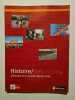
Bon état
Recherches sur la Théorie de la Machine de Gramme, sur la Cause de la Position dissymétrique de ses Frotteurs, et incidement, Étude des Écrains magnetiques.
Paris, G. Masson, Imprimerie Gauthier-Villars, 1879. 8vo. Contemporary half calf, raised bands, gilt spine. Light wear along edges. Small stamps on verso of title-page. In ""Annales de Chimie et de Physique"", Cinquiéme Series - Tome XVI. 576 pp. a. 2 folded plates. (Entire volume offered). Breguet's paper: pp. 5-48 a. 1 large folded engraved plate.
First edition of this importent paper giving the first physical theory of the Grammo machine's magnetic function. - Wheeler Gift No. 3990.A Gramme machine, Gramme ring, Gramme magneto, or Gramme dynamo is an electrical generator which produces direct current, named for its Belgian inventor, Zénobe Gramme, and was built as either a dynamo or a magneto. It was the first generator to produce power on a commercial scale for industry.
Úrvalsrit. Buin til Prentunar eptir Einar Benediktsson.
K., 1894. Med orig.omsl.i samthldrbd.(hajskind). XLIII,276 pp. - Originaludgaven.
THE AGAVES,
Reseda, Abbey Garden Press, 1968 Illustrated cardboard cover, 170 x 260mm., 108pp., profound b/w illustration.
The Cactus and Succulent Journal 1968 Yearbook. In good condition.
Years of News, Event and Narration in Early Modern Times
, Brepols - Harvey Miller, 2025 Pages: 245 pages, Size:220 x 280 mm, Illustrations:18 b/w, 35 col., 18 tables b/w., 4 tables col. Language :English . New. ISBN 9781912554881.
In the early modern springtime of regular news production and consumption, what was the news? Where did it come from? Where did it go? Years of News surveys the world of early modern news, in script and print, in a variety of languages, from a unique vantage point: namely, the news productivity across Europe in a series of carefully chosen years. Contributors, applying a wide variety of innovative approaches and methodologies to original material from archives and libraries far and wide, have explored the stories and the tellers, the networks and the vectors, the effects and reactions. Diving deeply into the data without losing sight of the wider perspective, they seek to illustrate the relation between event and narration, and between narration and impact, while conveying the flavor of the times as experienced by the actors through the medium of news. TABLE OF CONTENTS Foreword Introduction Brendan Dooley and Paola Molino Prologue: 1588 between Divulgation and Surprise Brendan Dooley 1604: Processing News in Print in the Year before the Newspaper Paul Arblaster 1618: From Beginning to End Brendan Dooley 1623: Telling the News in England: Serialized Print News, Experimentation, and News Management Nicholas Brownlees 1625: The Annus Mirabilis of the News in Spain Carmen Espejo-Cala 1636: The Facts and the Stories Mario Infelise 1648: A Year of Revolutions Davide Boerio 1653: Rebellion or Revolution? European Newspapers Reporting the Swiss Peasants? War Andreas W rgler 1669: Mediterranean Free Ports Making the News Giulia Delogu 1683: Political Agents, Preachers, and Signs from the Sky: The Circulation of News Pasquale Palmieri 1689: The News in Dutch Newspapers Joop W. Koopmans 1700: The Deaths of Charles II of Spain: Autopsy of the Francophone Political Press in Europe Marion Br t ch
Tchaïkowsky ou La nuit d'octobre: 1840-1893 --- avec hommage de l'auteur à J.P. Bertrand directeur des éditions du Rocher
Editions du Rocher 1993 in8. 1993. Broché.
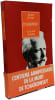
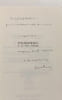
avec hommage de l'auteur à J.P. Bertrand directeur des éditions du Rocher très bon état cependant petit accroc sur le premier plat
The Anglo-Norman Bible's Book of Joshua. A Critical Edition (BL Royal 1 C III)
, Brepols, 2020 Paperback, 208 pages, Size:156 x 234 mm, Illustrations:1 b/w, Languages: English, Middle English. ISBN 9782503591339.
Summary The Anglo-Norman Bible's Joshua includes tales of spies, giants, the prostitute Rahab, the punishment of Achan, oracles, and Joshua's brilliant military victories. Joshua stops the sun. The first half of the book relates Joshua's stunning conquests in Canaan. The second half, the apportionment of the land among the tribes, detailed geographical surveys of territorial boundaries, and the death of Joshua. Skilful, well-paced story telling is a feature of the ANB's Joshua. To the accounts of Rahab and Achan we may add the chronicle of Joshua's successful, crushing campaign in the wake of the destruction of Makkedah. In rapid succession, and in an annalistic style involving staccato repetition of key phrases, the narrator relates the destruction of Libnah, Lachish, Eglon, Hebron, and Debir. The text of the ANB's Joshua is extant in British Library Royal 1 C III (base manuscript, L) and Paris, Biblioth que nationale de France, MS fran ais 1 (P), both c. 1350 and both the Bibles of kings. L belonged at some point in the fifteenth century to Reading's Benedictine abbey, entering the royal library in 1530. Characteristic of L is its occasional insertion of short glosses in English or Latin to clarify or correct the Anglo-Norman text. An illustrated text, P was prepared by an English workshop for the fourth baron de Welles, John, and his wife, Maud, daughter of William, Lord Ros. This is clearly the Bible of a wealthy and well-connected English family. After the Welles family, the manuscript belonged to Louis de Bruges (? 1492), then to King Louis XII of France. TABLE OF CONTENTS Acknowledgements Abbreviations INTRODUCTION The Old Testament book of Joshua Manuscripts of the Anglo-Norman Bible's book of Joshua L's Middle English and Latin glosses LANGUAGE Orthography Verbs Syntax Morphology Lexis Geography, terrain, and family in the Anglo-Norman Bible's book of Joshua Joshua in medieval culture Joshua in medieval exegesis Editorial considerations Bibliography THE ANGLO-NORMAN BIBLE'S BOOK OF JOSHUA Rejected readings and pal ographical notes Critical notes APPENDICES A. A hypothetical earlier manuscript B. Comparison of L and P C. Divergences in word-choice in L and P D. Glossary E. Geographical names in the Anglo-Norman Bible's book of Joshua
Anglo-Norman Bible's Book of Judges. A Critical Edition (BL Royal 1 C III)
, Brepols, 2022 Paperback, 169 pages, Size:156 x 234 mm, Illustrations:1 b/w, Language: English. ISBN 9782503600116.
Summary A silver-tongued assassin, a motherly prophetess, a consecrated strongman unable to resist the charms of foreign women: the Anglo-Norman Bible's Book of Judges features a roll-call of unlikely heroes. At the book's core is a cycle of saviour stories. Twelve times the Israelites embrace foreign gods, succumb to neighbouring enemies, repent and are delivered by a 'judge'. As Israel itself descends into ever-greater religious, moral and political decay, the narrative pattern also unravels. The book ends bleakly, with stories of rape, murder and civil war. The stage is set for a king. Gideon?a doubting Thomas who repeatedly 'tests' God?and Samson?lion-killer and lover of Delilah?were firm medieval favourites. Their tales and those of other flawed judges inspired heroic deeds on the battlefield and provided lessons on how to behave (and indeed how not to behave). With its remarkable heroines, moreover?from cut-throat Jael, who wields a tent-peg to devastating effect, to Jephthah's dignified daughter, sacrificed because of her father's rash vow?this is a book that prompted much reflection in the Middle Ages on the place of women in society. The Anglo-Norman Bible's Book of Judges survives in two fourteenth-century manuscripts: British Library Royal MS 1 C III (L), noted for its multilingual glosses, and the richly illustrated Paris, Biblioth que nationale de France, fonds fran ais 1 (P). The critical text, based on L, has been prepared by Pitts. An introduction and notes by Grange aim to elucidate and interpret the Anglo-Norman Bible's Book of Judges for the modern reader. TABLE OF CONTENTS Acknowledgements Abbreviations Introduction The Old Testament book of Judges Manuscripts of the Anglo-Norman Bible's book of Judges Sources and influence of the Anglo-Norman Bible's book of Judges Comparison of manuscripts L and P Language Orthography Nouns, articles, adjectives and pronouns Verbs Syntax Lexis The book of Judges in medieval culture Editorial considerations Bibliography The Anglo-Norman Bible's book of Judges Text edition Rejected readings Critical notes Appendices A. Comparison of the Anglo-Norman Bible to the twelfth-century Anglo-Norman Judges B. Comparison of L and P C. Divergent word-choice in L and P D. Personal names in the Anglo-Norman Bible's book of Judges E. Geographical names in the Anglo-Norman Bible's book of Judges Glossary
Anglo-Norman Bible's Books of Samuel. A Critical Edition (BL Royal 1 C III)
, Brepols, 2023 Paperback, 270 pages, Size:156 x 234 mm, Illustrations:1 b/w, Language: English. ISBN 9782503605951.
Summary Tales of treachery and friendship, adultery and murder, rape and revenge, as well as prophecy, repentance, forgiveness and thanksgiving ? such is the stuff of the Anglo-Norman Bible's Books of Samuel. They recount the life of the last of Israel's judges but include some of the world's best-known characters ? Saul, David and Jonathan, Goliath, Bathsheba, and Absalom. The first book traces the life of Samuel, and the initial success of King Saul, chosen to satisfy the Israelites' demand for a king. After Saul loses God's favour, David enters his court to console him, but Saul envies David's success. When Saul dies in battle, David succeeds him. In book two, David consolidates control over his kingdom, but his adultery with Bathsheba precipitates the reverses of the final chapters. Historically, the Books of Samuel trace the creation of Israel's monarchy and explain its ultimate failure. Religiously, they relate Israel's continuing relationship with God and the establishment of Jerusalem as the religious and political capital of the new kingdom. Two mid-fourteenth-century manuscripts preserve the text of the Anglo-Norman Bible's Samuel. The base manuscript (L), British Library Royal 1 C III, notable for its inclusion of multi-lingual glosses, was acquired by Henry VIII from the Benedictine Abbey of Reading in 1530. The lavishly illustrated Paris, Biblioth que nationale de France, MS fran ais 1 (P), produced in England for the baronial de Welles family, later belonged to King Louis XII of France. Brent A. Pitts has prepared the critical edition and Maureen Boulton's introduction and notes elucidate the text and its interpretation by medieval commentators. TABLE OF CONTENTS Acknowledgements Abbreviations Introduction The books of Samuel: Summary, Structure, and Interest Jerome's Prologue Samuel in Medieval Exegesis Versions of Samuel in French The Books of Samuel in Medieval Art and Literature Manuscripts of the Anglo-Norman Bible's books of Samuel Relationship of L and P Editorial considerations Bibliography The Anglo-Norman Bible's books of Samuel Text edition Rejected Readings and Palaeographical Notes Reading and Cultural Notes Line(s) Notes Appendices A. Comparison of L and P B. Divergent Word-Choice in L and P C. Geographical Names in the Anglo-Norman Bible's Books of Samuel D. Personal names in the Anglo-Norman Bible's books of Samuel Glossary

