Write to the booksellers
-
Type
Book (7151)
Disk (1)
Drawings (1)
Engraving (9)
Magazine (89)
Maps (4)
Music sheets (136)
New book (4)
Old papers (1)
Photographs (7)
-
Latest
Last 24h (4)
Last 3 days (5)
Last month (116)
Last week (20)
-
Language
Czech (1)
Dutch (9)
English (158)
French (7221)
German (4)
Italian (2)
Japanese (1)
Latin (3)
Russian (4)
-
Century
16th (9)
17th (43)
18th (194)
19th (879)
20th (2403)
21st (1535)
-
Countries
Belgium (1160)
Canada (34)
China (56)
Côte d'Ivoire (7)
Denmark (1063)
France (4730)
Germany (1)
Netherlands (181)
Switzerland (155)
United Kingdom (12)
United States of America (4)
-
Syndicate
ALAC (27)
CLAM (29)
CLAQ (2)
ILAB (2264)
NVVA (15)
SLACES (15)
SLAM (1047)
SNCAO (4)
Epreuve orale d'admission -Concours AS-AP
Ophrys 2011 208 pages 12x1 4x17 8cm. 2011. Broché. 208 pages.
Bon état
CATHERINE THE GREAT (CATHERINE II) - CHURCH SLAVONIC RITUAL.
Reference : 49686
(1795)
Church Slavonic/ Cyrrilic letters (On the Church and the Sacrements).
(City of the Regent (St. Petersburg), November 7303 (= 1795)). 4to. Contemp. full calf over wood, remains of clasps. The covers bent. A crack in the wood and leather on the backcover. 82 leaves (164 pp). Printed on thick paper, internally clean. A small nick to margin on the first leaf.
First edition of Catherine's Church Ritual for the Old Believers.

"CAUCHY, AUGUSTIN + I.J. BIENAYMÉ - THE CAUCHY DISTRIBUTION AND THE PROOF OF CLT.
Reference : 48829
(1853)
Mémoire sur l'évaluation d'inconnues déterminées par un grand nombre d'équations approximatives du premier degré. (+) Mémoire sur l'interpolation, ou Renarques sur les remarques de M. Jules Bienaymé. (+) Sur la nouvelles méthode d'interpolat...
(Paris, Bachelier),1853. 4to. No wrappers. In: ""Comptes Rendus Hebdomadaires des Séances de L'Academie des Sciences"", Tome XXXVI, No. 26 and tome XXXVII. No. 3,4,6,7,9,10 (entire issues offered). The papers: pp. 1114-1122, 64-69, 100-109, 198-206, 264-272, 326-334, 381-385. Some scattered brownspots.
First printing of these importent papers in probability theory, introducing the Cauchy-Distribution and proving the Central Limit Theorem (CLT).""In the course of these investigations Cauchy proved the central limit theorem by means of Fourier transforms in a much more general setting than Laplace had done."" (DSB).
"CAUCHY, AUGUSTIN. - THE CLASSICAL ""SAMPLING THEOREM"" STATED.
Reference : 49105
(1841)
Mémoire sur diverses formules d'analyse.
(Paris, Bachelier), 1841. 4to. Without wrappers. In ""Comptes rendus hebdomadaires des séances de l’Académie des sciences"", Vol. XII, No 6. Pp. (267-) 316. (Entire issue offered). Cauchy's paper: pp. 283-298. Some scattered brownspots.
First printing of an importent paper in information theory - the paper stating the earliest version of what will later be known as the ""Nyquist Sampling Theorem"", describing how many and what kind of samples are needed to construct a curve.""The theorem will be formulated more completely in 1928 and become one of the cornerstones of information theory"" (Bryan Bunch, 1841 M).
Rimes
Imprimerie nationale 1993 228 pages 20 4x2 2x14 8cm. 1993. Relié. 228 pages.
proche du très bon état intérieur propre bonne tenue couverture ternie
THE UNICORN TAPESTRIES AT THE METROPOLITAN MUSEUM OF ART,
New York, Metropolitan Museum/ Harry N. Abrams, 1998 Softcover, illustrated, 230 x 310mm., colour frontispice, 235 x 310mm., 128pp., rich colour illustration. ISBN 0810939479.
Tales of the Unicorn: A new look at the Unicorn Tapestries - History of the tapestries - The Unicorn: What is was and where it trived - The three hunts of the Unicorn - The tapestries as works of art and how they were made - An appreciation - Flora in the Unicorn Tapestries - Fauna in The Unicorn Tapestries. Book is in excellent condition.
"CAVENDISH, HENRY. - WEIGHING THE WORLD - THE MOST IMPORTENT ADDITION TO GRAVITATION THEORY SINCE NEWTON.
Reference : 43865
(1799)
Versuche über die Dichtigkeit der Erde zu Bestimmen. Erläutert vom Herausgegeber (Gilbert). (Experiments to determine the Density of the Earth.).
Halle, Rengerschen Buchhandlung, 1799. Without wrappers. In ""Annalen der Physik. Herausgegeben von Ludwig Wilhelm Gilbert"", Bd. 2, Erstes Stück. (The entire issue offered). Titlepage to vol. 2. Pp. 1-118 a. 2 folded engraved plates. Cavendish's paper: pp. 1-62. (the torsion balance of Michell shown on the plates).
First German edition of Cavendish's famous paper in which he calculated the weight of the earth and determined its mass. He also, as the first, observed gravitational motion of minute portions of matter. He estimates the earth's mass to 6,6 x 10 to the potential of 24 kg. The original paper ""Experiments to determine the Density of the Earth"" appeared in Philosophical Transaction, 1798.""Cavendish published five papers between 1784 and 1809...With one exception they were comparatively minor productions....The exception was his determination of the density of the earth or weighing of the world in 1798, by means of John Michell's torsion balance. The apparatus consisted of two lead balls on either end of a suspended beam" these movable balls were attracted by a pair of stationary lead balls. Cavendish calculated the the force of attraction between the balls fro the observed period of oscillation of the balance and deduced the density of the earth from the force. He found it to be 5.48 times that of water. Cavendish was the first to observe gravitational motions induced by comparatively minute portions of ordinary matter...By weighing the world he rendered the law of gravitation complete. The law was no longer a proportionally statement but a quantitatively exact one" this was the most importent addition to the science of gravitation since Newton.""(DSB III, p. 158.).
"CAVENDISH, HENRY. - WEIGHING THE WORLD - THE MOST IMPORTENT ADDITION TO GRAVITATION THEORY SINCE NEWTON.
Reference : 48206
(1799)
Versuche über die Dichtigkeit der Erde zu Bestimmen. Erläutert vom Herausgegeber (Gilbert). (Experiments to determine the Density of the Earth.).
(Halle, Rengerschen Buchhandlung, 1799). Without wrappers. In ""Annalen der Physik. Herausgegeben von Ludwig Wilhelm Gilbert"", Bd. 2, Erstes Stück. (The entire issue offered). 1-118 a. 2 folded engraved plates. Cavendish's paper: pp. 1-62. (the torsion balance of Michell shown on the plates).
First German edition of Cavendish's famous paper in which he calculated the weight of the earth and determined its mass. He also, as the first, observed gravitational motion of minute portions of matter. He estimates the earth's mass to 6,6 x 10 to the potential of 24 kg. The original paper ""Experiments to determine the Density of the Earth"" appeared in Philosophical Transaction, 1798.""Cavendish published five papers between 1784 and 1809...With one exception they were comparatively minor productions....The exception was his determination of the density of the earth or weighing of the world in 1798, by means of John Michell's torsion balance. The apparatus consisted of two lead balls on either end of a suspended beam" these movable balls were attracted by a pair of stationary lead balls. Cavendish calculated the the force of attraction between the balls fro the observed period of oscillation of the balance and deduced the density of the earth from the force. He found it to be 5.48 times that of water. Cavendish was the first to observe gravitational motions induced by comparatively minute portions of ordinary matter...By weighing the world he rendered the law of gravitation complete. The law was no longer a proportionally statement but a quantitatively exact one" this was the most importent addition to the science of gravitation since Newton.""(DSB III, p. 158.).The issue contains further papers by Ritter, Chladni et al.
"CAYLEY, ARTHUR. - THE CAYLEY-HAMILTON THEOREM ANNOUNCED - THE MATHEMATICS OF QUANTUM MECHANICS.
Reference : 42295
(1858)
A Memoir on the Theory of Matrices. Received December 10, 1857, - Read January 14, 1858. (+) A Supplementary Memoir on the Theory of Matrices. Received October 24, - Read December 7, 1865.
(London, Richard Taylor and William Francis, 1858 and Taylor and Francis, 1866. 4to. No wrappers as extracted from ""Philosophical Transactions"" Vol. 148 - Part I. Pp. 17-37, and Vol. 156 - Part I, Pp. 25-35. Clean and fine.
First appearance of this outstanding contribution to mathematics, announcing his invention and developments of the ALGEBRA OF MATRICES, what is now called the Cayley-Hamilton theorem for square matrices of any order. ""The subject originated in a memoir of 1858 (the paper offered) and grew directly out of simple observations on the way in which the transformations (linear) of the theory of algebraic invariants are combined...a distinctive feature of these rules is that multiplication is not commutative...we get different results according to the order in which we do the multiplication... (it) seems about as far from anything of scientific or practical use as anything could possible be. Yet sixty seven years after Cayley's invented it, HEISENBERG in 1925 recognized in the algebra of matrices exactly the tool which he neede for his revolutionary work in QUANTUM MECHANICS.""(Bell, Men of Mathematics).""It was in connection with the study of invariants under linear transformation that Cayley first introduced matrices to simplify the notation involved. Here he gave some basic notions. This was followed by his first major paper on the subject ""A Memoir on the Theory of Matrices."", the paper offered here. (Kline, Mathematical Thought...p. 806).
On the Colouring of Maps.
London, Edward Stanford, 1879. Without wrappers in ""Proceedings of the Royal Geographical Society and monthly Record of Geography"", April issue with titlepage to vol. 1, 1879. Pp.(2), 225-288 a. 2 folded maps. Cayley's paper: pp. 259-261
Fitrst appearance of Cayley's famous paper on the Four-Colour-Problem""The four-colour map problem (to prove that on any map only four colours are needed to separate countries) is celebrated in mathematics. It resisted the attempts of able mathematicians for over a century and when it was successfully proved in 1976 the ‘computer proof’ was controversial: it did not allow scrutiny in the conventional way. At the height of his influence in 1878, Arthur Cayley had drawn attention to the problem at a meeting of the London Mathematical Society and it was duly ‘announced’ in print. (the paper offered). He made a short contribution himself and he encouraged the young A. B. Kempe to publish a paper on the subject. Though ultimately unsuccessful, the work of Cayley and Kempe in the late 1870s brought valuable insights..... Francis Galton is revealed as the ‘go-between’ in suggesting Cayley publish his observations in Proceedings of the Royal Geographical Society."" (Tony Crilly).The Four-Colour-Theorem was proved in 1976 by Kenneth Appel and Wolfgang Haken. It was the first major mathematical theorem to be proved using a computer.
"CAYLEY, ARTHUR. - THE THEORY OF FORMS (QUANTICS) - A NEW ASPECT OF NON-EUCLIDEAN GEOMETRY.
Reference : 42296
(1859)
A Sixth Memoir upon Quantics. Received November 18, 1858, - Read anuary 6, 1859.
(London, Richard Taylor and William Francis, 1859). 4to. No wrappers as extracted from ""Philosophical Transactions"" Vol. 149 - Part I. Pp. 61-90. Clean and fine.
First appearance of this pathbreaking paper in which Cayley unites 'Metrical Geometry' and 'Projectice Geometry' by introducing ""imaginary"" elements to metrical properties.""The fundamental notions in metrical geometry are the distance between two points and the angle between two lines. Replacing the concept of distance by another, also involving ""imaginary"" elements, Cayley provided the means for unifying Euclideangeometry and the common non-Euclidean gemoetries into one comprehensive theory.""(Bell in ""Men of Mathematics"").In non-Euclidean geometry prepared the way for Klein's splendid discovery that the geometry of Euclid and the non-Euclidean geometries of Lobatchewsky and Riemann are, all threee, merely different aspects of a more general kind of geometry which includes them as special cases..Dealing with the relations between metrical and projective geometry Klein remarks (In ""Entwicklung der Mathematik"", Teil I p. 148): ""Vor allem kommt für uns sein (Cayley's) berühmtes 'A Sixth Memoir upon Quantics"" im betrachtt. Quantioc heisst soviwel ""Form"", d.h. homogenes Polynom von zwei, drei oder mehr Variablen, wonach man binäre, tertiäre usw. Formen unterscheidet...""
Cayrey Anne-Sophie Auline Lisa Favier Christine Collectif
Reference : 500074596
(2022)
ISBN : 9782047400258
Je joue je révise ! - Je rentre en 6e: Je rentre en 6e révisions du CM2
BORDAS 2022 96 pages 19 4x25 8x1 2cm. 2022. Broché. 96 pages.
Très bon état - légères marques de lecture et/ou de stockage mais du reste en très bon état- expédié soigneusement depuis la France
EAU-FORTE ORIGINALE : "Heldenmoed van eene vrouw, te St. Mithier, tegen de oproerige Vendeeers in 1794 [Une femme se défend courageusement contre les soldats à Saint-Mithier pendant la guerre de Vendée.]", [estampe] Cazenave, J.-Frédéric ; R. Vinkeles & D. Vrydag sculp.
Amsterdam J. ALLART 1805 Une gravure Originale à l'eau-forte et au burin en noir : Format : 26,5 de haut par 21,5 centimètres de large, sur papier crème, Inscriptions / marques - Lettre dans la cuvette au centre : "Heldenmoed van eene vrouw, te St. Mithier, tegen de oproerige Vendeeers in 1794 [Une femme se défend courageusement contre les soldats à Saint-Mithier pendant la guerre de Vendée.]" et à droite : R. Vinkeles & D. Vrydag sculp., en bas à gauche Cazenave, J.-Frédéric, 1805 Amsterdam J. ALLART Editeur,
SUPERBE ET RARE EAU-FORTE ............... en trés bon état (very good condition). en trés bon état
Cazes Aliette Romet Jean-Luc Vayssières Frédérique
Reference : 500131668
(2019)
ISBN : 9782047357392
Ça y est je sais ! Maths 3e
BORDAS 2019 64 pages 17 8x25 4x0 6cm. 2019. Broché. 64 pages.
Très bon état
Hagiographies, 9. L'hagiographie latine Rome et en Italie du Sud entre 550 et 750
, Brepols - Turnhout, 2024 Hardback, 962 pages, Size:155 x 245 mm, Illustrations:1 col., 44 tables b/w., 8 maps b/w, Language: French. ISBN 9782503600284.
Dans l'Italie des VIe-VIIIe si cles, d chir e entre Lombards et Byzantins, l'hagiographie fut la forme litt raire la plus pratiqu e, et sans doute aussi la plus commun ment appr ci e. Rome et en Italie du Sud, clercs et moines s'affair rent composer en latin, ou traduire du grec en latin, des textes qui t moignaient de leur d votion pour les martyrs du temps des pers cutions. Leurs r cits romanesques, de qualit et d'int r t tr s divers, accompagn rent ainsi l'entr e de la p ninsule dans le Moyen ge. Ils aliment rent la curiosit des p lerins et des fid les pour les saints anciens, comme pour ceux, venus d'Orient, dont le culte avait pris plus r cemment racine en Italie. Ce gisement documentaire, vestige inestimable d'une poque contrast e et parfois dramatique, est toutefois d'un abord difficile : les pi ces concern es constituent un ensemble complexe de dossiers enchev tr s, de textes anonymes, souvent tr s approximativement dat s ou localis s. Dans la continuit des chapitres pr c demment publi s sur l'hagiographie latine d'Italie dans la collection Hagiographies, le pr sent ouvrage propose donc un r pertoire critique des textes produits Rome et dans le Mezzogiorno, entre 550 (r tablissement de la Pr fecture d'Italie) et 750 (chute de l'exarchat). Une trentaine de dossiers y font l'objet de recherches a novo, et ces analyses d taill es permettent d'esquisser les contours litt raires et historiques d'une production hagiographique qui fut ensuite largement pl biscit e par les diteurs de l gendiers m di vaux.
Brueg(H)el Phenomenon, Paintings by Pieter Bruegel the Elder and Pieter Brueghel the Younger with a Special Focus on Technique and Copying Practice.
, Brepols, 2012 Paperback, 3 volume set in cardboard box, 1061 pp., 230 x 290 mm, Languages: English, As new (signed and dedication by both authors on first page) ISBN 9782930054148.
The fascination exerted by the works of the illustrious Pieter Bruegel the Elder in the decades following his death in 1569 is matched only by the intense interest they generate today. At the end of the sixteenth century and in the first half of the seventeenth, the most ambitious art collectors fought over the few paintings by the master that were still on the market. This setting was the catalyst for the appearance of copies and pastiches ? and even deliberate forgeries. It was then that the elder son of Pieter Bruegel, known as Pieter Brueghel the Younger (whose name is spelled ?Brueghel? here, conforming to the signature that he adopted during the initial phase of his career) emerged as a legitimate successor, producing astonishingly faithful replicas of his father?s paintings. This was all the more surprising given that they were often made after works that were by then dispersed in diverse and sometimes inaccessible private collections. Operating within the context of a sizeable workshop, Brueghel supplied the market with hundreds of copies of variable quality according to demand. This enterprise merited re-evaluation from a technical point of view: how were such vast numbers of copies produced in practice? This three-volume book explores the intriguing Brueg[H]el phenomenon through the two artists? painting practices. The technical aspects of their works are investigated in a detective-like manner and are strikingly elucidated with a wealth of colour illustrations. The reader will come to understand the accomplished practitioner behind the genius that is Bruegel the Elder and the working procedures of his foremost emulator?s workshop. Furthermore, Brueghel the Younger?s exceptional qualities as a painter are singled out from those of his workshop production. The book also reveals fresh discoveries on the father?s creative process through the study of his son?s copies.
Kaleidoscope PP5/ Kaleidoscope PP6
Editions musicales Fantasia. 1963. In-8. Broché. Bon état, Couv. convenable, Dos satisfaisant, Intérieur frais. 12 pages augmentées de partitions en noir et blanc. Pour piano, violon accordéon, saxo ténor,. . . . Classification Dewey : 780.26-Partitions
Classification Dewey : 780.26-Partitions

MEMOIRES DE BENVENUTO CELLINI orfèvre et sculpteur florentin
1953 pleine reliure vert in-octavo avec une jaquette en papier gris sur les plats (green full binding with a dustjaket in grey paper on the covers), dos insolé (fading spine) - titre frappé or sur le dos (gilt title on the spine), marque-page en tissu (bookmark in tissue), toutes tranches lisses (all smooth edges), pages de garde vertes (gren endpapers), page de faux-titre (half title page), tirage limité à 10126 exemplaires - 1 des 10000 exemplaires hors commerce numérotés de 1 à 10000 réservés exclusivement aux Membres du Club français du Livre (details/certificate of issue - limited edition - 10126 copies were printed - printed for private distribution), illustration : 1 frontispice (illustration : 1 frontispiece), XXVI + 604 pages + 1 page de justificatif du tirage (1 page of details/certificate of issue), 1953 à Paris le Club Français du Livre - 8 rue de la Paix,
Collection "Les Portiques" numéro 24 - édition établie et annoté par (established edition and annotated by) Giulano Maggiora d'après les manuscrits toscans et la traduction de (according to toscans manuscripts and translation of) Léopold Leclanché - bon état malgré le petit défaut signalé (very good condition in spite of the small defect indicated)
Hors la loi! La Vie d'un outlaw américain. Al Jennings raconté par lui-même
Paris Grasset 1936 In-8 Broché Ed. originale
Editon originale de la traduction et adaptation de l'américain et du slang par Cendrars. Portrait de Jennings en frontispice. Un des 62 exemplaires numérotés sur alfa satiné Outhenin Chalandre. Dos discrèrement repris. > C'et le seul tirage de tête avec 6 Montval et 21 pur fil. Bon exemplaire 0
Hors la loi! La Vie d'un outlaw américain. Al Jennings raconté par lui-même
Paris Grasset 1936 In-8 Broché Ed. originale
Editon originale de la traduction et adaptation de l'américain et du slang par Cendrars. Portrait de Jennings en frontispice. Un des 62 exemplaires numérotés sur alfa satiné Outhenin Chalandre. > C'et le seul tirage de tête avec 6 Montval et 21 pur fil. Bon exemplaire 0
Cendrey Hennig Géné Ndiaye Giovanni Vincent Detambel Wajcman Vaneigem Serena Bon Maffesoli
Reference : 100155793
(1999)
ISBN : 9782858508891
Les péchés capitaux: La colère + La paresse + L'avarice + L'orgueil + La gourmandise + La luxure (6 des 7 péchés)--- exposition Cente Pompidou
CENTRE POMPIDOU 1999 68 pages 1x21x15cm. 1999. Broché. 6 volume(s). 68 pages.
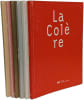
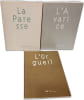
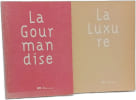
Bon état couvertures un peu frottés intérieurs propres bonne tenue
L'envers de la guerre
Fage Editions 2004 16 256x0 762x22 86cm. 2004. Broché.
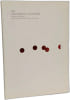
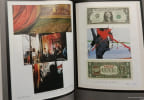
Bon état couverture légèrement ternie bonne tenue intérieur propre
Les Maries De La Tour Eiffel: ET AUTRES NOUVELLES INSPIREES DE CHEFS-D'OEUVRE DE L'ART MODERNE
Centre Georges Pompidou Service Commercial 2013 176 pages 14 8x21 3x2 4cm. 2013. Broché. 176 pages.
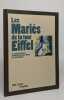
tranches fânées intérieur propre
FENETRES OUVERTES 5E FRANCAIS 2010 MANUEL: Programmes 2010
BORDAS 2010 359 pages 19 8x1 8x28 2cm. 2010. Relié. 359 pages.