 Write to the booksellers
-
Type
Book (7230)
Disk (1)
Drawings (1)
Engraving (9)
Magazine (89)
Maps (4)
Music sheets (136)
New book (4)
Old papers (1)
Photographs (7)
-
Latest
Last 24h (3)
Last 3 days (6)
Last month (116)
Last week (20)
-
Language
Czech (1)
Dutch (9)
English (158)
French (7300)
German (4)
Italian (2)
Japanese (1)
Latin (3)
Russian (4)
-
Century
16th (10)
17th (43)
18th (197)
19th (882)
20th (2425)
21st (1549)
-
Countries
Belgium (1156)
Canada (34)
China (56)
Côte d'Ivoire (7)
Denmark (1063)
France (4800)
Germany (1)
Netherlands (181)
Switzerland (168)
United Kingdom (12)
United States of America (4)
-
Syndicate
ALAC (27)
CLAM (25)
CLAQ (2)
ILAB (2295)
NVVA (15)
SLACES (15)
SLAM (1082)
SNCAO (4)
Sur la Formation artificielle de l'Urée.
(Paris, Crochard, 1828). 8vo. Without wrappers. Extract from 'Annales de Chimie et de Physique', Series 2 - Volume 37. Pp. 330-334.
First appearance in French of this milestone paper, marking the beginnings of organic chemistry, in which Wöhler describes how he managed to synthezise urea from cyanate of ammonia. The French version here is translated from the German paper ""Ueber künstliche Bildung des Harnstoffs."", which was issued the same year (1828). This broke down the old distinction between organic and inorganic substances. ""This was the first synthesis of an organic compound, and this accomplishment is generally regarded as the beginning of organic chemistry.""(Sparrow ""Milestones of Science"", p.37). The discovery destroyed the vitalistic theory which held that organic compounds could be produced only by living organisms, and led eventually to the brilliant results that have been achieved in attempts to synthesize other organic compounds.Dibner: Heralds of Science, no. 45. - Sparrow: Milestones of Science, no. 197. - Garrison & Morton, no. 671. See also DSB XIV p.475.
Ueber künstliche Bildung des Harnstoffs.
Leipzig, Johann Ambrosius Barth, 1828. Without wrappers as issued in ""Annalen der Physik und Chemie. Hrsg.von Poggendorff"", Bd. 12, Zweites Stück. Pp. 161-336 (the entire issue offered (Heft 2) together with the titlepage to 12. Band). Wöhler's paper: pp. 253-256. Clean and fine, printed on good paper.
First appearance of this milestone paper, marking the beginnings of organic chemistry, in which Wöhler describes how he managed to synthezise urea from cyanate of ammonia. This broke down the old distinction between organic and inorganic substances. ""This was the first synthesis of an organic compound, and this accomplishment is generally regarded as the beginning of organic chemistry.""(Sparrow ""Milestones of Science"", p.37). The discovery destroyed the vitalistic theory which held that organic compounds could be produced only by living organisms, and led eventually to the brilliant results that have been achieved in attempts to synthesize other organic compounds.Dibner: Heralds of Science, no. 45. - Sparrow: Milestones of Science, no. 197. - Garrison & Morton, no. 671. See also DSB XIV p.475.
"WÖHLER, FRIEDRICH - THE PREPATORY WORK OF ORGANIC CHEMISTRY.
Reference : 49580
(1823)
Bildung der Cyansäure auf neuem Wege, und fernere Untersuchungen über die Cyansäure und deren Salze.
Leipzig, Johann Ambrosius Barth, 1823. 8vo. Contemp. hcalf. Gilt spine and with gilt lettering. Some scratches to spine. In: ""Annalen der Physik und der Physikalischen Chemie. Hrsg. Ludwig Wilhelm Gilbert"", Bd. 13 (= Bd. 73 der Reihe). (12),444 pp., 1 folded table and 5 engraved plates. Small stamp to verso of titlepages. Internally clean and fine. Wöhler's paper: pp. 157-172.
First printing of Wöhler's importent paper in which he in reality for the first time synthezised an organic substance, leading to his historic preparation of ""artificial"" urea in 1828 ""Ueber künstliche Bildung des Harnstoffs"". This broke down the old distinction between organic and inorganic substances. ""This was the first synthesis of an organic compound, and this accomplishment is generally regarded as the beginning of organic chemistry.""(Sparrow ""Milestones of Science"", p.37, the 1828 paper).""In his published paper (the 1828 paper) Wöhler referred to his work of 1823 (the offered paper), in which he had shown that cyanogen and aqueous ammonia yielded oxalic acid and a white crystalline solid that he now realized was urea. This, and his new method, he considered to be remarkable examples of the preparation ""by art"" of a substance of animal origin from inorganic materials.""(DSB).The volume contains other notable papers BECQUEREL: ""Ueber die Electricitäts-Erregung durc Druck, nach versuchen des herrn becquerel"" ein bericht abgestatt.... von Biot. Frei übersetzt von Gilbert"", pp. 117-129. A pioneer paper on Piezoelectricity. SEEBECK ""Notiz von neuen electrisch-magnetischen Versuchen des Herrn Seebeck... mitgeteilt von Hrn Oersted."", pp. 430-32. Also papers by Heinr. Rose, Döbereiner, Lampadius, Sertürner etc. etc.
"WÖHLER, F. und J. LIEBIG. - THE DISCOVERY OF ""EMULSIN"" A MAIN WORK IN ORGANIC CHEMISTRY.
Reference : 43739
(1837)
Ueber die Bildung des Bittermandelöls. (+) Vorschlag zur Einführung eines neuen Arzneimittels anstatt des destillirten Kirschlorbeer- und Bittermandelswassers. (+) Ueber Marcet's Xanthic-Oxyd. (3 papers all by Wöhler u. Liebig).
Leipzig, Johann Ambrosius Barth, 1837. Without wrappers as issued in ""Annalen der Physik und Chemie. Hrsg.von Poggendorff"", Bd. 41, Zweites Stück. (Entire issue No 6 offered). Titlepage to vol. 41. Pp. 225-448 a. 2 folded engraved plates. Wöhler & Liebig's papers: pp. 345-366, pp. 366-374 a. pp. 393-397. Clean and fine.
First appearance of this classic paper in organic chemistry in which Wöhler and Liebig showed how Amygdalin could be decomposed by a vegetable emulsion, the first example of a glycoside.""The conclusions which you have drawn from the investigation of bitter-almond oil,"" wrote Berzelius to Liebig and Wöhler, ""are certainly the most importent which have so far been reached in the domain of vegetable chemistry, and give promise of shedding an unexpected light over this part of the science...The facts which you have set forth inspire such reflections that they may be regarded as the dawn of a new day in vegetable chemistry.""(Berzelius-Wöhler Briefwechsel).""During the years that Liebig was preoccupied with the ether theory and with organic acids, he also carried out two importent investigations with Wöhler. In october 1836 Wöhler wrote that he had discovered a way to transform amygdalin to oil of bitter almonds and hydrocyanid acis, by distilling it with manganese and sulfuric acid, and he invited Liebig to join in pursuing the topic. Two days later he made a more remarkable discovery. It had occurred to him that perhaps thetransformation of amygdalin could be effected by the albumin in the almonds, in a manner similar to the action of yeast in sugar...Wöhler suspected that the decomposition was an example of what Berzelius had recently defined as catalysis. Liebig and Wöhler then divided up the detailed examination of the properties and composition of amygdalin. They precipitated from the emulsion of almonds a substance which when dissolved retain its action. They named the active substance ""emulsion"". Its effectiveness in very small quantities confirmed that it acted like yeast.""(DSB VIII, p. 342).
James Ensor Die Gem lde
Brussel, Hatje Cantz /Mercatorfonds, 2009 Hardcover in illustriertem Schuber, Seiten: 480, Format: 32,5 x 24,5 cm 1000 Farbabbildungen TEXT IN DEUTSCH. . ISBN 9783775724647.
Bereits zu Lebzeiten war James Ensor (1860-1949) - neben Vincent van Gogh und Edvard Munch der Avantgardist des Nordens und Vorlaufer der deutschen Expressionisten und franzosischen Surrealisten - eine Legende. Beruhmtheit erlangte er als ? Maler der Masken? , der skurrilen Stillleben und grotesk-karnevalesken Szenen in der Tradition der flamischen Totentanze, in denen er grell leuchtende Farben miteinander kontrastierte. Dass Ensor daruber hinaus ein ausgesprochener Stilpluralist war, der unterschiedliche Themen und Motive immer wieder aufgriff und variierte, lasst ihn noch heute uberraschend modern erscheinen. Wie vielfaltig das OEuvre des belgischen Malers ist, lasst sich nun anhand des durchgangig farbig und opulent bebilderten Werkverzeichnisses der Gemalde entdecken. Eine umfassende, illustrierte Chronologie bietet zusatzlich detaillierte Informationen zu Leben und Werk.
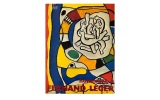
[Fernand Léger] - XXe SIÈCLE HOMMAGE À FERNAND LÉGER. Numéro spécial hors abonnement.
Reference : 1496
(1971)
Revue XXe Siècle, Paris 1971. In-4 (318 x 245). 128 pages. Cartonnage toilé, titré or sur le premier plat, jaquette illustrée d'une photographie en couleurs représentant Henry Moore et deux sculptures. 150 illustrations et reproductions en noir et 26 en couleurs sur beau papier couché. UNE LITHOGRAPHIE ORIGINALE EN COULEURS ET HORS-TEXTE DE LÉGER. Édition originale française.
Bon exemplaire. Quelques taches sur la toile du cartonnage et accrocs marginaux à la jaquette.

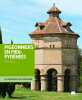
Pigeonniers en Midi-Pyrénées
CHARLES MASSIN 2014 191 pages 19 3x23 1x2cm. 2014. Relié. 191 pages.

Très bon état
Pigeonniers en Midi-Pyrénées
CHARLES MASSIN 2014 191 pages 19 3x23 1x2cm. 2014. Relié. 191 pages.
Très bon état
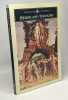
A History of My Times + Hesiod and Theognis --- (Penguin Classics)
Penguin Classics 1979 432 pages 12 7x2 286x19 558cm. 1979. Broché. 2 volume(s). 432 pages.

Très bon état
NOS RAPPORTS AVEC L'INVISIBLE.: Dangers et aides de l'au-delà
Editions du Graal 1999 1999. Broché.
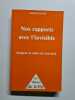
Bon état
Artificial Wonderland
2013 - cartonné - Galerie Paris Beijing - 2013 - In-4 format carré (29 x 29 cm) cartonnage illustrée - 198 pages - Nombreuses photographies en noir et blanc dont quelques unes dépliantes - ISBN : 9791090176485 - SOMMAIRE : Phantom Landscape - On the Quiet Water - Heavenly City - Viridescence - Snow City - Artificial Wonderland - The Peach Blossom Colony - The Silent Valey - Moonlight - A Bowl of Taipei - Biography - Ouvrage en anglais
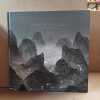
Bon état
YANK - The army weekly. By the men... for the men in the service
Reference : 121400
(1943)
Yank reprint. Volume Three, Nov. 7, 1943 - Apr. 30, 1944
1943-1944 Du Vol. 2, N°21 (7 novembre 1943) au Vol. 2, N°46 (30 avril 1944) - 1943-1944 - In-folio, cartonnage noir de l'éditeur - Pagination non continue, 24 pages par numéro - Très nombreuses reproductions photographiques en N&B - Ouvrage en anglais
Bon état
365 Soluciones para reducir tu huella de carbono
Naturart S.A. (Blume) 2008 128 pages 2008. Broché. 128 pages.
Bon état
Jan Rombouts. The Discovery of an Early Sixteenth-Century Master in Louvain.
, brepols, 2011 Hardback with dusjacket, 312 p., 237 b/w ill. 48 colour ill., 210 x 297 mm, Languages: English. new, fine condition !. ISBN 9782503525693.
This monograph introduces the sixteenth-century Louvain artist Jan Rombouts (c. 1480 ? 1535), whose oeuvre was previously assigned to Jan van Rillaer. Debates concerning Rombouts?s identity are explored in detail by means of reinterpretation of published archival documents and the discovery of numerous new documents. The publication of the sources, most with full transcriptions, provides a sound basis for the author?s arguments supporting the new identification.The remaining oeuvre of the artist, as it is known today, comprises engravings and paintings. This monograph argues for the expansion of Rombouts?s oeuvre with some dozen stained-glass windows, roundels and a drawn design for a church window, while suggestions are put forth for other possible attributions. Attention is given to the historical context for Rombouts?s activity as a glass painter, and the attributions of these works, none of which are monogrammed, are made by comparing their style with that of works securely attributed to the artist. This section is backed up by numerous illustrations of the windows, many of which are quite inaccessible. Finally, a discussion of archival sources concerning the Louvain confraternity of St Luke and commissions for works of art to local artists in the period covered by the book, form the rich historical background against which Jan Rombouts executed his oeuvre of engravings, paintings, roundels and stained-glass windows. The size, individuality, diversity and craftsmanship of this oeuvre enable us to finally identify and place him securely within the history of south Netherlandish art of his time.
1937-1947. Ed. by S.G. OWEN, (G.B.A. FLETCHER & M. PLATNAUER).
Amst., Benjamins, 1970.
5 vols. in 1. Together more than 650 p. Cl. 23 cm (Reprint)
Modern poetry. The Eighteenth of the Broadcast National Lectures Delivered on 11 October 1936.
London The British Broadcasting Corporation 1936 plaquette in-12 Broché
EDITION ORIGINALE du texte de cette conférence. 28 pp. La couverture est bien verte. Très bon 0
Scrambles in the Eastern Graians 1878 - 1897.
London: T. Fisher Unwin, n.d. (1900), in-8vo, XX + 279 p. (+ 1), illustr. with 20 black and white plates and a folded map in good condition, some foxing to endpapers, exlibris Peter E. Obergfell, Blue cloth covered boards with gilt lettering and gilt vignette to corner of front board,uncut edges to reading and foot,
Image disp.

(SLACES, NVVA)
Phone number : 41 (0)26 3223808
Nuits de Chine.
, P., Seghers, 1954; in-12. Portant un envoi autographe de l’auteur au poète Norge. ÉDITION ORIGINALE en français avec le texte original chinois en vis à vis. Envoi autographe au poète Norge.
Latinity and Alterity in the Early Modern Period,
Turnhout, Brepols, 2011 Hardback, VIII+304 p., 160 x 240 mm. ISBN 9782503533759.
This volume presents essays on early modern Latinity, which examine both humanist Latin and Latinists' responses to Otherness of various kinds. The essays in this volume, many of which are in dialogue with Francoise Waquet's Latin or the Empire of a Sign, showcase some of the most exciting and sophisticated new work in the field of neo-Latin studies. They illustrate the significance of 'Latinity' for understanding the early modern world from a variety of disciplinary perspectives and will be of interest not only to neo-Latinists but to students of the modern European vernaculars, social historians of language, lexicographers, intellectual and scientific historians, and to cultural and cross-cultural historians. Under the second term of the title, 'Alterity', our volume explores humanist Latin's 'opposition' to mediaeval Latin and the modern vernaculars; the 'otherness' of women's Latinity; the construction of the non-European in Latin humanism; and the Latin writings of non-Europeans, from indigenous Americans to Africans. The exploration of these themes helps us more fully to understand what Latin 'really meant' during the early modern period. New.
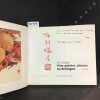
Le voyage d'un peintre chinois en Bretagne
2002 Editions Ouest-France - 2002 - In-4 à l'italienne; cartonnage illustré avec jaquette illustrée - 138 pages - Nombreuses illustrations en couleurs, in et hors-texte, dans l'ouvrage
Bon état Bon
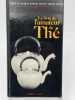
Le livre de l'amateur de thé.
Paris, Robert Laffont, 1990, in-8 étroit, br., couv. ill. coul. éd., 244 pp., papier crème, très nb. dessins, carte et photos en noir et en bistre, Lexique, Bibliographie, Table des matières, Très intéressant ouvrage sur l'origine, l'histoire, la culture, les propriétés, les recettes, les différents "types" de thé. Belle iconographie ancienne. Très bon état
Librairie spécialisée en gastronomie , œnologie et tabagie
Yi Sabine, Jumeau-Lafond Jacques, Walsh Michel
Reference : 129696
(1983)
ISBN : 2221011376 9782221011379
Le livre de l'amateur de thé
Robert Laffont 1983 In-8 cartonnage éditeur. 21,0 cm sur 12,2. 239 pages. Cartommage émousé.. Bon état d’occasion.
Une des rééditions de 1988 Bon état d’occasion
YI Sabine - JUMEAU-LAFON Jacques - WALSH Michel
Reference : 180899
(1983)
ISBN : 2221011376
Le livre de l'amateur de thé
Laffont Robert Laffont,1983. In-8 relié cartonnage éditeur de 240 pages. Illustrations. Très bon état.
Toutes les expéditions sont faites en suivi au-dessus de 25 euros. Expédition quotidienne pour les envois simples, suivis, recommandés ou Colissimo.
Hydraulic Investigations, subservient to an intended Croonian Lecture on the Motion of the Blood.
London, William Nicholson, 1809. 8vo. Contemp. hcalf, but spine lacks, boards loose. In: ""A Journal of Natural Philosophy, Chemistry, and the Arts. By William Nicholson."" Vol. XXII. - VIII,384,(8) pp. a. 10 engraved plates. Youngs paper: pp. 104-124. Small stamps to verso of titlepage. Internally fine and clean.
First appearance (together with the paper in the ""Transactions of the Royal Society at the same time) of this famous paper, containing Young's implicit discovery of the Joukowski equation for solids, 100 years before it appeared under the name of Joukowski (1847-1921), the well-known pioneer in the theory of aerodynamics.
"YOUNG, THOMAS. - THE DISCOVERIES OF THE INTERFERENCE OF LIGHT - GERMAN EDITIONS.
Reference : 44092
(1811)
Ueber die Theorie des Lichts. Frei übersetzt vom Professor Lüdicke. (+) Nachricht von einigen Fällen einer bisher noch nicht beschriebenen Entstehung der Farben. (+) Beschreibung einer Vorrichtung, um mittelst des Sonnen-Mikroskops die Farben dünner F...
Leipzig, Johann Ambrosius Barth, 1811. Without wrappers. In: ""Annalen der Physik. Hrsg. Ludwig Wilhelm Gilbert"", Bd. 39 (der Reihe), Eilftes u. Zwölftes Stück. Titlepage to vol. 39. Pp. 129-244 a. 2 engraved plates. (The entire issue offered). Young's papers: pp. 156-205 a. pp. 206-220. And pp. 245-360 a. 2 engraved plates. (The entire issue offered). Young's papers: pp. 255-261 a. pp. 262-290.
First appearance in German of Youngs 3 groundbreaking papers ( On the Theory of Light and Colours 1802 - An account of some Cases of the Production of Colours not hitherto described 1802 - The Bakerian Lecture. Experiments and Calculations relative to physical Optics. 1804) - which gives the first really convincing evidence that the fringes are produced by interference of light waves, and giving the experimental demonstrations of the general law of Interference.These importent demonstrations served as the experimental basis for the wave hypothesis of light. - In his two first papers ""On the Theory of Light and Colours"", 1802 and ""An account of Some Cases of the Production of Colours not hitherto described"", 1802 - he only partially announced his principle of Interference, and the statement of it in ""An Account..."" was entirely hypothetical and not experimental. (Magie. Source Book in Physics gives extracts of this paper and a later paper under the head: Discovery of the interference of light, pp.308-15).Young also shows here that diffraction effects can be explained by the interference law.""The experimental basis for the wave hypothesis of light as Young formulated it was interference. The fact has already been observed that two trauins of water waves may be so superposed that in certain regions the throughs of one train will lie continuously on the crests of another, thereby producing zero disturbance...Destryctive interference is said to occur between the two trains of waves in the former case and constructivee interference in lthe latter. Similarly, two sound waves may be so combined as to produce alternate regions of silence and enhanced sound. The phenomenon of interference, of which the forgoing are familiar examples, is easely comprehensible in the case of combining waves, but would be utterly incomprehensible in the case of combining streams of particles. So when Young demonstrated that two beams of light could, under properly controlled conditions be made to combine in such a way as to produce alternate regions of darkness and light, he was rightly considered to have identified in light a characteristic property of waves."" (Lloyd Taylor in: Physics. The Pioneer Science. p. 511).Of the three papers published in the years 1802-04 the last is the most importent as it gives the experimental demonstrations of the interference of light. (Dibner in Heralds of Science No. 151 list the first paper, so does PMM: 259).

