 Write to the booksellers
-
Type
Book (808)
Magazine (7)
Object book (1)
-
Latest
Last month (7)
Last week (10)
-
Language
English (3)
French (813)
-
Century
17th (2)
18th (7)
19th (52)
20th (376)
21st (62)
-
Countries
Belgium (95)
Canada (1)
China (2)
Côte d'Ivoire (1)
Denmark (2)
France (689)
Greece (1)
Switzerland (25)
-
Syndicate
ALAC (1)
ILAB (271)
NVVA (3)
SLACES (3)
SLAM (264)
SNCAO (1)
Michael JAMES. L'ART DU QUILT
Neuchâtel - Paris Victor Attinger - Bibliothèque des Arts 1995 grand in 4 (31,5x25) Un volume reliure pleine toile d'éditeur, sous jaquette illustrée en couleurs, 117 pages. Nombreuses illustrationse en noir et blanc, et en couleurs. Bel exemplaire ( Photographies sur demande / We can send pictures of this book on simple request )
Très bon Jaquette en très bon état Reliure
Pictorial Treasury of Curtain and Drapery Design, 1750-1950
Potterton Books Publishing 1987 Jaquette grise, légère déchirure en tête, sans manque, très bon ex.
Très bon état d’occasion
Sur la phylogénèse de l’orthobionte.
Limoges,, Ducourtieux et Gout,, 1916 ; in-8, broché. 72pp., 6ff. de tableaux, 8ff. de planches.
Les Arts de la terre et du métal. Exposition internationale des arts décoratifs et industriel modernes
Paris Beaux-arts 1925 In-4 agrafé, couverture illustrée
Edition originale. Numéro spécial de la revue "Beaux-arts". 39 illustrations en noir dans le texte, et une en couverture. Oeuvres - Faïence, verre, vase, grès, porcelaine, pête de verre, flacon, vitrail, orfèvrerie, fer forgé, meubles, de Goupy, Simmen, Lenoble, Decoeur, Engelhardt, Pedersen, Gauguin, Gensoli, Gauvenet, Adnet, Süe et Mare, Decorchemont, Marinot, Luce, Gruber, Lalique, Barillet, Ballet, Brandt, Schwartz-Haumont, Baguès, Dunand, Serrière, Puiforçat, Linossier, Subes, Fisker, Jensen, Sandoz. Publicités. 50 pp. Très bon 0
Tapisserie pour vos sièges
Office du livre 1975 In-4 relié. 127 pages. Très bon état d’occasion.
Très bon état d’occasion
J. CAILLEUX, E. LEVY, J. NICOLIER, S. FANIEL, A. FILSJEAN, J. LEBRUN, P. SAUVAGE, J. NICLAUSSE, J. et M. THIERARD, P. GOUVERT, N. LANDAU, A. GILOU
Reference : LFA-126736589
(1960)
Le XVIIIe SIECLE FRANCAIS
Un ouvrage de 232 pages, format 255 x 320 mm, illustré, relié cartonnage couleurs, publié en 1960, Librairie Hachette, Collection "Connaissance des Arts", bon état
Peinture, mobilier, céramique, orfèvrerie, bronzes, objets d'art, verrerie, tapisseries, tapis, tissus, sculpture, ensembles décoratifs du XVIIIe siècle en France
Phone number : 04 74 33 45 19
l'aube de la peinture moderne, Vers un nouvel humanisme, de Byzance l'Italie
, Brepols - Harvey Miller, 2025 Hardcover with dusjacket, 312 pages, Size:178 x 254 mm, Illustrations:248 col.,Language: French, *new. ISBN 9782503615691.
Summary Il s'agit de revisiter ici une phase cruciale de l?histoire de la peinture dans une optique bien sp cifique. On se d marque en effet d?une vision ayant cr dit de mani re trop exclusive l?Italie des environs de 1300 d?une r volution ouvrant la voie la modernit . En revenant sur ce qui a pr lud cela dans la P ninsule m me, et surtout en accordant une gale attention ce qui a simultan ment ? ou ant rieurement, maints gards ? t produit dans le monde byzantin, on tend un radical r quilibrage de la perspective. C?est alors dans sa v ritable dimension que se per oit l? volution artistique de l? poque, en lien troit avec un contexte politico-religieux tout fait particulier : celui d?une installation des Latins Constantinople et dans plusieurs territoires de l?Empire d?Orient, et d?un projet de r union des ob diences catholique et orthodoxe ; avec, dans ce cadre, une d cisive action des nouveaux Ordres Mendiants vite implant s dans tout le monde m diterran en et d veloppant une pr dication r ellement accessible au plus grand nombre, tay e ? chez les Franciscains au premier chef ? par une imagerie traduisant la geste du Christ et des saints sur le mode le plus cr dible, incorporant pr cis ment les avanc es d j op r es cette fin dans la zone orientale. Apr s un panorama historiographique faisant le point sur les positions plus ou moins anciennes et leur impact jusqu? nos jours, on aborde en premier lieu ce qu?il en a t des conceptions et fonctions d volues l?image, trop volontiers consid r es comme diff rentes d?un milieu l?autre. Puis on affronte le champ de l?iconographie en propre, avec les accents sp cifiques qui y sont port s. Ensuite vient l?examen des divers aspects formels (et des moyens techniques mis en ?uvre) ; examen non moins capital puisque ce sont le naturalisme et l?expressivit de la figure, ainsi que son insertion dans un espace tridimensionnel, qui visent une communication plus efficace avec le fid le ; cela par la forte sollicitation de ses sens, pour sa profonde impr gnation de ce qui s?offre sa vue. On peut, dans cette d marche, reconna tre une authentique humanisation de la foi. Et il s?av rait donc essentiel de souligner que, dans cette mutation o l?image s?est trouv e investie d?un r le majeur, la contribution de la chr tient byzantine a t aussi d terminante que celle de l?Italie. TABLE OF CONTENTS Remerciements Avant-propos Parcours historiographique Fonctions et th matiques Conception et r ception des images Iconographie Le renouveau formel Maniera greca : Les ambigu t s d'un concept fondateur S ductions du Gothique et H ritage romain antique ? Technique et mise en ?uvre Sugg rer la profondeur spatiale : Architectures Volume Style Expressivit En guise de bilan Contacts et changes : de Byzance l'Italie Conclusion Bibliographie Cr dits photographiques
l'aube de la peinture moderne Vers un nouvel humanisme, de Byzance l'Italie
, Brepols - Harvey Miller, 2025 Hardback, Pages: 312 p , Size:178 x 254 mm, Illustrations:248 col. Language French, NEW. ISBN 9782503615684.
Summary Il s?agit de revisiter ici une phase cruciale de l?histoire de la peinture dans une optique bien sp cifique. On se d marque en effet d?une vision ayant cr dit de mani re trop exclusive l?Italie des environs de 1300 d?une r volution ouvrant la voie la modernit . En revenant sur ce qui a pr lud cela dans la P ninsule m me, et surtout en accordant une gale attention ce qui a simultan ment ? ou ant rieurement, maints gards ? t produit dans le monde byzantin, on tend un radical r quilibrage de la perspective. C?est alors dans sa v ritable dimension que se per oit l? volution artistique de l? poque, en lien troit avec un contexte politico-religieux tout fait particulier : celui d?une installation des Latins Constantinople et dans plusieurs territoires de l?Empire d?Orient, et d?un projet de r union des ob diences catholique et orthodoxe ; avec, dans ce cadre, une d cisive action des nouveaux Ordres Mendiants vite implant s dans tout le monde m diterran en et d veloppant une pr dication r ellement accessible au plus grand nombre, tay e ? chez les Franciscains au premier chef ? par une imagerie traduisant la geste du Christ et des saints sur le mode le plus cr dible, incorporant pr cis ment les avanc es d j op r es cette fin dans la zone orientale. Apr s un panorama historiographique faisant le point sur les positions plus ou moins anciennes et leur impact jusqu? nos jours, on aborde en premier lieu ce qu?il en a t des conceptions et fonctions d volues l?image, trop volontiers consid r es comme diff rentes d?un milieu l?autre. Puis on affronte le champ de l?iconographie en propre, avec les accents sp cifiques qui y sont port s. Ensuite vient l?examen des divers aspects formels (et des moyens techniques mis en ?uvre) ; examen non moins capital puisque ce sont le naturalisme et l?expressivit de la figure, ainsi que son insertion dans un espace tridimensionnel, qui visent une communication plus efficace avec le fid le ; cela par la forte sollicitation de ses sens, pour sa profonde impr gnation de ce qui s?offre sa vue. On peut, dans cette d marche, reconna tre une authentique humanisation de la foi. Et il s?av rait donc essentiel de souligner que, dans cette mutation o l?image s?est trouv e investie d?un r le majeur, la contribution de la chr tient byzantine a t aussi d terminante que celle de l?Italie. TABLE OF CONTENTS Remerciements Avant-propos Parcours historiographique Fonctions et th matiques Conception et r ception des images Iconographie Le renouveau formel Maniera greca : Les ambigu t s d'un concept fondateur S ductions du Gothique et H ritage romain antique ? Technique et mise en ?uvre Sugg rer la profondeur spatiale : Architectures Volume Style Expressivit En guise de bilan Contacts et changes : de Byzance l'Italie Conclusion Bibliographie Cr dits photographiques
Panta Pei Change in Thirteenth-Century Byzantine Architecture, Art, and Material Culture
, Brepols, 2023 Paperback, 449 pages, Size:156 x 234 mm, Illustrations:24 b/w, 149 col., 3 maps b/w, 2 maps color, Language: English. ISBN 9782503602684.
Summary The year 1204, when Byzantium was conquered by the participants of the Fourth Crusade, marks a major and violent change on several levels, including politics and the economy, society and religion, as well as art and culture. The once powerful empire experienced both the humiliation of foreign occupation and its political subjugation. After its re-establishment in 1261, Byzantium had become a shrunken state, surrounded by aggressive enemies, while a number of its vital areas, such as Crete and Cyprus, together with the Aegean and Ionian islands, remained under foreign rule. These changes influenced not only the artistic output but the everyday life of the Byzantines as well. New ideas, new preferences, and new techniques are attested in architecture, painting, sculpture, and minor arts, all of which developed a new dynamic. According to the Greek philosopher Heraclitus of Ephesos (c. 535 - c. 475 B.C.), whose aphorism ????? ???, i.e. everything flows, is highlighted in the title of this collective volume, change is the fundamental essence of the universe. The book aims to provide an up-to-date, well-rounded, and balanced overview of the long thirteenth century, by examining aspects of the artistic and cultural transformations created and developed within the new framework of co-existence among Byzantines, Latins, Slavs, and Ottomans. TABLE OF CONTENTS Notes on Contributors List of Figures Acknowledgments Introduction Jenny P. Albani and Ioanna Christoforaki PART I. A Capital Exiled, A Capital Regained Chapter 1 Loss, Memory, and Exile: Innovation and Simulation in Laskarid Art and Architecture Naomi Ruth Pitamber Chapter 2 Brickwork and Fa ade: Envisioning the Apse of the Church of Saint John the Baptist at the Lips Monastery Jasmina S. ?iri? PART II Artistic Developments and Interactions in the Christian East Chapter 3 Tradition and Transition on the Slopes of the Pentadaktylos Mountain in Thirteenth-Century Cyprus Nikolas Bakirtzis Chapter 4 Icons of the Virgin Nursing at Sinai and the Question of the Origins of the Madonna dell'Umilt Irene Leontakianakou Chapter 5 An Unknown Frankish Icon of the Mother of God Michele Bacci Chapter 6 Changes and Innovation: Reassessing Thirteenth-Century Byzantine Manuscript Illumination Marina Toumpouri PART III Regional Styles and New Cultural Identities Chapter 7 Architectural Sculpture during the Thirteenth Century: Cultural Interactions Shaping New Regional Identities Catherine Vanderheyde Chapter 8 Artistic Links between Epiros, Prilep, and Berroia in the Late Thirteenth Century: Continuity and Change in Monumental Painting Leonela Fundi? Chapter 9 A Missing Link in the Development of Relief Haloes: The Evidence from Macedonia Nikolaos Siomkos PART IV New Data on Everyday and Luxury Objects Chapter 10 Changing Byzantium: The Thirteenth Century Viewed through Its Pottery: Summary of the Evidence, Main Trends, Thoughts for Future Directions Anastasia G. Yangaki Chapter 11 Slow Paces of Change in Byzantine Material Culture: Dress in the Thirteenth Century Pari Kalamara Chapter 12 New Light on Byzantine Enamels of the Thirteenth Century Antje Bosselmann-Ruickbie PART V Envisaging and Visualizing Death Chapter 13 Eloquent Texts, Colourful Images: Visionary Scenes at the Refectory of the Patmos Monastery Konstantia Kefala Chapter 14 Is Everything Dead after Death? Mural Paintings of the Last Judgment and the Eschatological Preoccupations of the Thirteenth Century. Dimitra Kotoula In Conclusion Jenny P. Albani and Ioanna Christoforaki Index of Persons Topographical Index
Adoption, Adaption, and Innovation in Pre-Roman Italy. Paradigms for Cultural Change
, Brepols, 2023 Paperback, 282 pages, Size:216 x 280 mm, Illustrations:60 b/w, 84 col., 8 tables b/w., 10 maps b/w, 5 maps color, Language: English. ISBN 9782503602325.
Summary The ancient Mediterranean basin was once thought to be populated by large, monolithic, cultural-political entities. In this conception, 'the Greeks', 'the Romans', and other stable and homogenous cultures interacted and vied for supremacy like early modern states or empires. Today, however, thanks largely to an ever-increasing archaeological record, critical and sensitive approaches to the literary evidence, and the impact and application of new theoretical approaches, the ancient Mediterranean region is instead argued to be full of dynamic microcultures organized in a fluid set of overlapping networks. While this atomization of culture has resulted in more interesting and accurate micro-histories, it has also challenged how we understand cultural interaction and change. This volume draws on this new understanding of cultural identity and contact to address the themes of adoption, adaption, and innovation in Pre-Roman Italy from the 9th-3rd centuries BCE. The contributors to this volume build upon recent paradigm shifts in research that challenge traditional Hellenocentric models and work to establish a new set of frameworks for approaching the tangled question of how 'indigenous' and 'foreign' features relate to one another in the material record. Using focused case-studies, ranging from the role played by mobile populations in transferring ideas and technologies to the different ways in which 'foreign' artistic elements were used by Italian peoples, the volume explores what the ? now commonly accepted ? connectedness of a wider Mediterranean world meant for the people of Italy in practical terms, and offers new models for how concepts and ideas were transmitted, reinterpreted, repurposed, and re-appropriated in early Italy to fit within their local context. TABLE OF CONTENTS List of Illustrations Acknowledgements Abbreviations 1. Rethinking Cultural (Ex)Change in Pre-Roman Italy Jeremy Armstrong and Aaron Rhodes-Schroder 2. The Paradox of Innovation in Conservative Societies: Cultural Self-Consistency and Bricolage in Iron Age Central Italy Nicola Terrenato 3. Mixing Up Mediterranean Innovation: The Case of Viticulture and Wine Franco De Angelis 4. The World has Changed: Insularity and Tyrrhenian Connectivity during the Corsican Iron Ages Marine Lechenault and Kewin Peche-Quilichini 5. Folding Meaning in an Object: The Ficoroni Cista and the Heterarchy of Art in Early Italy John North Hopkins 6. Virtue in Variety: Contrasting Temple Design in Etruscan Italy Charlotte R. Potts 7. The Demon Is in the Detail: Greek Pottery in Etruscan Funerary Contexts Aaron Rhodes-Schroder 8. Local Choices in a Networked World: Funerary Practices at Crustumerium (Lazio) during the Long Seventh Century BCE Peter Attema, Barbara Belelli Marchesini, and Matthijs Catsman 9. From the Ground Up: Constructing Monumental Buildings in Archaic Central Italy Amanda K. Pavlick 10. The Archaic Countryside Revisited: A Ceramic Approach to the Study of Archaic Rural Infill in Latium Vetus Gijs Tol 11. Ritual Connectivity in Adriatic Italy Camilla Norman 12. Face to Face: Isolated Heads in South Italian and Etruscan Visual Culture Keely Elizabeth Heuer 13. Feasting Transformed: Commensal Identity Expression and Social Transformation in Iron Age and Archaic Western Sicily William M. Balco 14. The Deep Past of Magna Graecia's Pottery Traditions: Adoption and Adaptation at Timpone della Motta and in the Sibaritide (Northern Calabria, Italy) between the Middle Bronze Age and the Archaic Period Peter Attema, Carmelo Colelli, Martin Guggisberg, Francesca Ippolito, Jan Kindberg Jacobsen, Gloria Mittica, Wieke de Neef, and Sine Grove Saxkj r Index
The Life of Beau Brummel.
NAVARRE SOCIETY 1927 2 New edition, with an introduction and twenty coloured plates. London, The Navarre Society Limited, 1927, 2 volumes in-8, maroquin havane, plats décorés à froid, dos à nerfs orné d'un fin filet doré sous chacun des nerfs, pièce de titre et de tomaison en maroquin vert, tête rouge.
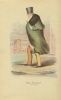
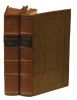
Récit illustré de la vie de ce gentleman qui marqua de sa personnalité la vie mondaine de la première moitié du XIXème siècle. Reliure insolée et quelques taches, légère usure, piqûres internes, infimes déchirures, brochage fragile.
Explorations in Islamic Archaeology
, Brepols - Harvey Miller, 2025 Paperback, Pages: 360 pages, Size:178 x 254 mm, Illustrations:14 b/w, 112 col., 17 tables b/w., 4 maps b/w, Language:English, *new. ISBN 9782503618722.
This volume presents contributions by leading scholars on various topics and aspects of Islamic Archaeology, a discipline which has recently seen the development of exciting new approaches to the study of the material culture of the Muslim world. This material culture was produced by and/or for Muslims, as well as by and/or for non-Muslims living under Islamic rule from the 7th century onward, in an expanding and ultimately vast area reaching from southern Europe to West Asia. The contributions in this book focus on Jordan, Oman, Spain, Turkey, Lebanon, as well as Israel, and cover a timespan from the 7th century through the Mamluk period to the early 20th century. They highlight the archaeology of large Islamic centers in the past, but also of the material culture in smaller sites and peripheral regions. Special emphasis is paid to pottery as one of the main artifacts that carry information on past societies, but other finds and materials are discussed as well. The aspect of Islamic material culture which receives particular attention is ?production?, specifically the production of clay vessels, glaze, mercury, and crops. What unites the new approaches presented here is that Islam is understood as both a ?religion? and a framework for economic, cultural, and social networks and influence. In this perspective, the volume aims to offer students of Islamic archaeology, historians of Islam and archaeologists of different disciplines a glimpse of the state-of-the-art in current Islamic Archaeology TABLE OF CONTENTS JOANITA VROOM (Series Editor) Preface HAGIT NOL & JOANITA VROOM (Volume Editors) Introduction: Current trends in Islamic Archaeology THEORY AND POTTERY JOS CRIST BAL CARVAJAL L PEZ Islamization and ceramics: Assembling change and Con-Text BETHANY J. WALKER ?Made on Order for the Amir?: What was the function of Mamluk Barracks Wares? ELENA SALINAS Entanglements in the western Islamic lands: Early glazed ceramics of al-Andalus SETTLEMENTS AND LANDSCAPES JOANITA VROOM All that glitters: Islamic material culture in Ephesus, western Turkey HAGIT NOL The archaeological narratives of Ramla from the 7th to the 11th century: Experimenting with Big Data KATAR NA MOKR NOV & MARGREET L. STEINER Material entanglements in the Early Islamic southern Levant (650-1000 CE): A view from the rural site of Tell Abu Sarbut, Jordan VALENTINA VEZZOLI Material culture and human landscape in Lebanon during the Islamic period: Baalbek and the Beqaa Valley PETER M.M.G. AKKERMANS, MEREL L. BR NING & AHMAD ALGHIZAWAT The grazing ground beyond the sown: Mamluk pastoralist settlement in Jebel Qurma, Black Desert, north-east Jordan IRINI BIEZEVELD & BLEDA S. D RING Quantifying the Late Islamic ooccupation peak: The case of the Upper Falaj al-Mu?tari?
JOURNAL DE LA DECORATION. BARBIER (George), ENDEL (F.), THROLL (Richard), JAEGER (F.), RANSON (Pierre), GRUBER (Louis)...
Reference : 16373
Journal de la Décoration, 27e Année.
Paris Armand Guérinet Recueil de Documents utiles aux Artistes-Décorateurs. Publication trimestrielle. Nouvelle Série. Trimestres I-II-III-IV. Paris, Armand Guérinet, sans date, in-4 en feuilles, sous couverture cartonnée, demi-toilée rose pâle, feuille rose contrecollée sur la couverture, avec le titre contrecollé, 80 planches.
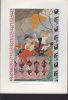
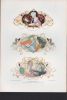
Ce recueil des 4 trimestres de la 27e de ce Journal de la Décoration, comprend 80 planches, soit 20 par trimestre, en couleurs, sur papier glacé. On y trouve par exemple une "Garniture brodée de robe, soie et or sur toile", des "Esquisses pour un panneau ; France fin du XVIIe siècle" attribuée à Claude Gillot, des "Masques , indiens et japonais. D'après les aquarelles de F. Endell", "Pierre Ranson (1736 à 1786), Projets de décorations", "George Barbier, vignettes", "Décoration murale de l'époque romane", "Richard Throll : Décorations murales modernes". Couverture jaunie, plat supérieur déchiré, légers manques aux tranchefilles.
La Manufacture de Jouy et la toile imprimée au XVIIIe siècle.
1926 1 Paris, Van Oest, 1926, in 8 oblong, broché, 36 pages et 32 planches.
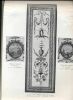

Histoire de cette prestigieuse Manufacture spécialisée dans la réalisation de toiles imprimées et l'indiennage. D'abord installé rue de Seine-Saint-Marcel, l'atelier, sous l'impulsion de Christophe-Philippe Oberkampf, déménage pour Jouy-en-Josas et prend une position dominante. Nombreuses illustrations en noir et en couleurs de panneaux anciens reproduits en toile de Jouy, de dessins de toiles de Jouy et deux échantillons de tissus sur toile de lin. Petites usures et salissures à la couverture, brochage fragile.
J.R.J. van Asperen de Boer, Jeltje Dijkstra, Roger Van Schoute, C.M.A. Dalderup, Michael Hoyle
Reference : 67440
Underdrawing in paintings of the Rogier van der Weyden and Master of Fle?malle groups
, Waanders, 1992 Hardcover with dusjacket, 328 pages . 27 cm. Illustrated, . *good. ISBN 9789066303508.
Part 41 of the Dutch Art History Yearbook is dedicated to the two most renowned painters of the Netherlands in the fifteenth century: Rogier van der Weyden and the anonymous Master of Fl malle. The paintings attributed to these two masters are unsigned. The division of the paintings into two groups, with some attributed to Rogier and others to his anonymous teacher, is therefore based on attributions. Using infrared reflectography, ..etc.
New Research on Central Asian, Buddhist and Far Eastern Art and Archaeology
, Brepols, 2019 Paperback, 346 pages, Size:216 x 280 mm, Illustrations:86 b/w, 185 col., Language: English. ISBN 9782503584508.
Summary This second volume of the series offers a broad range of subject matter from an equally broad range of regions. Michael Shenkar compares a particular type of deity from the Parthian West (Palmyra, Hatra) with the colossal image of a divinity from Akchakhan-kala in ancient Choresmia (part of modern-day Uzbekistan). Careful iconographic analysis of a sealing showing the god Mithra, found at Kafir Qala near Samarkand, allows Fabrizio Sinisi to suggest a Kushan origin for the seal that made the impression. Several contributions on Sogdiana concern its archaeology and early history (Bi Bo on Kangju and Sogdiana); the iconography of one of the major wall painting cycles at Panjikent (Matteo Compareti) as well as the city's temples and deities worshipped (Markus Mode). By drawing on archaeological, ethnological and historical data, S ren Stark offers an extensive discussion of mountain pastoralism and seasonal occupation in northern Tajikistan, north of the Zerafshan River in what were borderlands for Sogdiana. Rounding out the first part of this volume is Suzanne G. Valentine's publication of a Bactrian camel clay sculpture, excavated in the Sui-Tang capital of Xi'an, its saddlebags decorated with an unusual motif. The second and last part is guest-edited by John Clarke, convener of a Buddhist conference in 2010. This section contains updated or new papers by some of the participants-Naman P. Ahuja on Buddhist imagery in Bengal; Amy Heller on the impact of Kashmiri art on Guge and Ladakh; Deborah Klimburg-Salter on Buddhist pilgrimage sites in Afghanistan; and Michael Willis on sculpture from Sarnath in the British Museum-along with that of Chiara Bellini on the restoration of the Alchi Sumtsek and the dating of the Ladakhi temple. TABLE OF CONTENTS On Central Asian Art and Archaeology Michael SHENKAR - "The Chorasmian Gad: On the "Colossal" Figure from Akchakhan-kala" Fabrizio SINISI - "A Kushan Investiture Scene with Mithra on a Seal Impression from Kafir Qala, Samarkand" BI Bo - "Recent Archaeological Discoveries Regarding Kangju and Sogdiana" Matteo COMPARETI - "Simurgh or Farr? On the Representation of Fantastic Creatures in the Sogdian 'Rustam Cycle' at Panjikent" Markus MODE - "In the Heart of the City: On Sogdian Temples and Deities at Panjikent" ? ? On Buddhist Sculpture: Papers from a Symposium held at the Victoria and Albert Museum, London, November 8 and 9, 2010, and Papers Inspired by the Symposium John CLARKE (Guest Editor) - "Introduction" Naman P. AHUJA - "A Buddhist Interpretation of Small Finds in the Early Historic Period" Michael WILLIS - "Markham Kittoe and Sculpture from Sarnath in the British Museum" Deborah KLIMBURG-SALTER - "Buddhist Pilgrimage to India: Bamiyan, Kapisa -Kabul, and Mes Aynak" Amy HELLER - "Tracing the Impact of Kashmiri Art in Guge and Ladakh, Eleventh to Thirteenth Centuries" Chiara BELLINI - "Some Other Pieces of the Puzzle: The Restoration of the Alchi Sumtsek by Tashi Namgyal and Other Considerations on the Dating of the Ladakhi Temple" On Far Eastern Art and Archaeology Bonnie CHENG - "The Underground Silk Road - Pictorial Affinities in Fifth-century Cave Temples and Tombs" Heather D. CLYDESDALE - "Buried Towers: Artistic Innovation on China's Frontier" Suzanne G. VALENSTEIN with Annette L. JULIANO and Judith A. LERNER - "Hellenism in Sui-Tang Chang'an: Dionysiac Imagery on Mortuary Camels" Young-pil KWON - "Note on Border Patterns Dividing the Earthly and Heavenly Realms in Goguryeo Tomb Paintings"
Bonneterie Mécanique. Les Machines à tricoter rectilignes. Tricoteuses ordinaires - Tricoteuses double chute - Tricoteuses Jacquard - Tricoteuses spéciales - Machines à mailles retournées. Description - Fonctionnement - Réglages - Différents genres de tricots, par Albert Jungblut, Ingénieur de l'Industrie Textile, Directeur des Ecoles Provinciales des Textiles et de Bonneterie du Tournaisis ( Province du Hainaut, Belgique).
P., Editions "La Maille", Troyes, Imprimerie Montgolfier Fils, 1926, fort in 8° relié demi-percaline verte de l'éditeur, 652 pages ; innombrables figures ; complet du signet publicitaire ; publicités en début d'ouvrage, sur papier vert ; cartonnage très légèrement fané.
PHOTOS sur DEMANDE. ...................... Photos sur demande ...................


Phone number : 04 77 32 63 69
Les machines à tricoter rectilignes à main et automatiques.
Paris, Editions " La Maille", sans date, fort in 8° relié pleine toile bleue de l'éditeur, XVI-893 pages ; innombrables figures ; nombreuses publicités hors-texte en début d'ouvrage.
Bel exemplaire. ...................... Photos sur demande ...................
Phone number : 04 77 32 63 69
JUNGMANN. BOUTET DE MONVEL (R.). BOSCHER (F.), HENRY (Robert).
Reference : 11829
(1912)
Au temps passé.
Paris TOLMER 1912 1 in-4 Paris, Tolmer, (1912), in-4, cartonnage illustré en couleurs, couverture imitant un couvre-livre.
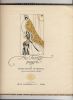
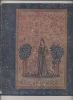

Belle réalisation de Tolmer alliant une réflexion historique de Louis XV à 1913, en passant par la Révolution sur nos élégantes en fourrures. 10 médaillons sous cache encadrent élégamment de charmants modèles dessinés par BOSCHER tirés en sépia. Le texte est orné de dessins raffinés de Robert HENRY tirés en 2 coul. La couv. cart. reproduit une interprétation de la tapisserie à la Licorne. Exposition Forney 1988. Petites usures aux coins et dos.
13 planches publicitaires.
1 P., H.L. Motti Imprimeur, sans date, in-4, en feuilles.
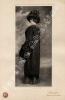
13 planches, tirées en sépia, présentent la collection de fourrure JUNGMANN . Petites usures et salissures.
Précis d'histologie: La cellule - les tissus - les organes
Masson et Cie Editeurs 1963 690 pages IN8. 1963. reliure editeur. 690 pages. Ce 'Précis d'histologie' est un manuel scientifique détaillant l'étude des tissus biologiques organisé en trois parties principales : la cellule les tissus et les organes. Il s'agit d'un ouvrage de référence en histologie publié par Masson & Cie dont les auteurs sont A. Branca et J. Verne (Jean Verne médecin distinct de l'écrivain Jules Verne)
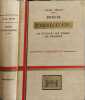
couverture légèrement salie ensemble trés propre
Michèle Rosier. Vêtements de vacances et autres. 1962-1972.
P., Editions du regard, 2016. In-8 br., couv. en carton fort ill., 135 pp., nb. ill. en coul. et n. et bl. in et hors-texte.

Très bonne condition. - Frais de port : -France 6,8 € -U.E. 9 € -Monde (z B : 14 €) (z C : 24 €)
Kapur Chishti (Rta) - Jain (Rahul) - Singh (Martand)
Reference : 52182
(2001)
ISBN : 2841900436
Tissus indiens
Paragon, coll. « Tradition et modernité » 2001 In-4 cartonné. sous étui. Jaquette en bon état. Très bon état d’occasion.
Très bon état d’occasion
Katchalski-Katzir E. Binst Georges van Prelog V
Reference : 100128173
(1986)
ISBN : 3642709281
Design and Synthesis of Organic Molecules Based on Molecular Recognition: Proceedings of the XVIIIth Solvay Conference on Chemistry Brussels November 28 - December 01 1983
Springer 1986 332 pages 1354x130x1806cm. 1986. Cartonné. 332 pages.
Bon état bords un peu frottés intérieur propre écorchure sur la couverture réparé par un adhésif transparent collé
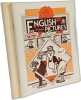
English Through Pictures - BOOK 1 + BOOK 2
Longman ELT 1980 64 pages in8. 1980. Agrafé. 2 volume(s). 64 pages.

Bon état

