 Write to the booksellers
-
Type
Book (800)
Magazine (7)
Object book (1)
-
Latest
Last 24h (1)
Last 3 days (2)
Last month (3)
-
Language
English (3)
French (805)
-
Century
17th (2)
18th (7)
19th (52)
20th (374)
21st (61)
-
Countries
Belgium (95)
Canada (1)
China (2)
Côte d'Ivoire (1)
Denmark (2)
France (683)
Greece (1)
Switzerland (23)
-
Syndicate
ALAC (1)
ILAB (274)
NVVA (3)
SLACES (3)
SLAM (267)
SNCAO (1)
CATALOGUES TISSUS JAPONAIS 19EME.
Sans date ni lieu.In-8,couverture japonaise illustrée avec lacets.Beau.
CATALOGUE TISSUS JAPONAIS
Sans date ni lieu.In-8 couverture à la japonaise colorée avec lacets.Beau.Caractères japonais sur la couverture.19ème siècle.
Art italien, le tissu. Du XIIe au XVIIIe siècle
P. Tisné 1960 In-4 relié 28,8 cm sur 24,8. 223 pages. Bon état d’occasion.
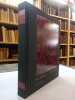
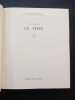
Bon état d’occasion
PATOLAS AND RESIST-DYED FABRICS OF INDIA
Ahmedabad, India Mapin Publishing 1988 petit in 4 (30x22) 1 volume reliure cartonnée illustrée de l'éditeur, 64 pages, avec de nombreuses reproductions en couleurs. Texte en langue anglaise. Publié à l'occasion de l'exposition ''Voyage of a Cloth'' à Jakarta. Bel exemplaire ( Photographies sur demande / We can send pictures of this book on simple request )
Très bon Couverture rigide
Materiality and Religious Practice in Medieval Denmark
, Brepols, 2021 Hardback, 296 pages, Size:156 x 234 mm, Illustrations:11 b/w, 32 col., Language: English. ISBN 9782503594163.
Summary From bread and wine to holy water, and from oils and incense to the relics of saints, the material objects of religion stood at the heart of medieval Christian practice, bridging the gap between the profane and the divine. While theoretical debates around the importance of physicality and materiality have animated scholarship in recent years, however, little attention has been paid to finding solid, empirical evidence upon which to base such discussions. Taking medieval Denmark as its case study, this volume draws on a wide range of different fields to explore and investigate material objects, spaces, and bodies that were employed to make the sacred tangible in the religious experience and practice of medieval people. The contributions gathered here explore subjects as diverse as saints' relics, sculptures, liturgical vessels and implements, items used for personal devotion, gospel books, and the materiality of Christian burials to explore the significance of objects that moved the souls, bodies, hearts, and minds of the faithful. In doing so, they also open new insights into religion and belief in medieval Denmark. TABLE OF CONTENTS List of Illustrations Introduction: Materiality and Religious Practice in Medieval Denmark - MADS VEDEL HEILSKOV AND SARAH CROIX Research History - Materiality and Medieval Religious Practice in Danish Research - MORTEN LARSEN Materiality in Medieval Episcopal Rites: Some Examples - BERTIL NILSSON The Liturgical Use of the Gospel Book in the Middle Ages and Notions of Sacramentality? - NILS HOLGER PETERSEN Making the Liturgy Manifest: Objects and Materials in Late Medieval Church Rites - MARTIN WANGSGAARD J RGENSEN Holy Heads: Pope Lucius's Skull in Roskilde and the Role of Relics in Medieval Spirituality - LENA LIEPE Living Matter in Medieval Denmark - MADS VEDEL HEILSKOV Objects of Personal Devotion - Outer Markers and Inner Meanings - METTE H JMARK S VS AND MARIA KNUDSEN Materiality of Memory: The Use and Significance of Wax in Late Medieval Devotion - LAURA KATRINE SKINNEBACH Materiality in Medieval Burials - JAKOB TUE CHRISTENSEN AND MIKAEL MAN E BJERREGAARD Future Perspectives: An Epilogue from the Views of an Archaeologist and Art Historian - METTE SVART KRISTIANSEN AND MERCEDES P REZ VIDAL
Portable Panel Paintings at the Angevin Court of Naples. Mobility and Materiality in the Trecento Mediterranean
, Brepols, 2022 Hardback, 292 pages, Size:216 x 280 mm, Illustrations:11 b/w, 132 col., 2 tables b/w., 1 maps b/w, Language: English. ISBN 9782503596952.
Summary This book explores the mobilities and materialities of panel painting at and beyond the Angevin court of Naples in the context of objects, materials, patrons, and painters on the move through the fourteenth-century world. It asks how panel paintings participated in and thematized patterns of circulation and exchange; how they extended the artistic and political geography of the court far beyond Naples itself; how their materialities intersected with other mediums from woven silk to precious metalwork to stone; and how painters' formal and technical experimentation combined with painted panels' real and imagined itineraries to create meaning. The volume traces a series of painted panels through networks of patronage, production, gift giving, transport, and replication. It locates the making, movement, and meaning of these works in the overlapping contexts of Angevin dynastic and territorial ambitions, including the family's stakes in the Holy Land; patterns of collecting and adapting authoritative icons; practices of royal female patronage; and painters' engagement with the limits of the medium of panel painting itself. Each chapter weaves together sustained analysis of paintings' pictorial and material structures, close reading of primary sources, and questions of art's materialities and mobilities. Moving between single objects and larger patterns, between the local and the global, this study presents new research on individual works even as it reframes trecento art in the broader context of artistic circulation, exchange, and transformation across the late medieval and early Renaissance world. TABLE OF CONTENTS Chapter 1. Panel Painting in and beyond Fourteenth-Century Naples: Mobility and Materiality Chapter 2. Mobility and Materiality in Simone Martini's Saint Louis of Toulouse Crowning Robert of Anjou Chapter 3. Icons in Angevin Naples between Past and Present, the Monumental and the Mobile Chapter 4. Artists, Patrons, and Objects on the Move: Diptychs for the Angevin Court Chapter 5. Paint, Stone, Flesh: Portable Multipart Panel Paintings with Porphyry Exteriors Chapter 6. Portable Panel Paintings, Royal Women as Patrons, and Court Art beyond the Court Chapter 7. Materiality, Mobility, and Revelation in the Stuttgart Apocalypse Panels Conclusion Bibliography
Le Soutien-gorge à travers les âges.
SCANDALE 1936 1 Illustré de SAINT-PRIX. Paris, Scandale, 1936, in-4, broché, illustré de 14 estampes en couleur, 32 pages.

Ouvrage qui imagine avec humour un soutien-gorge pour chaque grande époque de l'histoire, de l'âge de pierre au moyen-âge en passant par la Révolution, et qui s'achève à l'ére contemporaine. Les belles illustrations de Saint-Prix mettent en lumière l'ingénuité des modèles. Infimes taches, usures et petites déchirures à la couverture, plis internes et reports, publicité de parfum contrecollée sur le contre-plat. Taches et us. à la couv.
Cours de composition décorative appliquée aux travaux Broderie de dames (conforme aux programmes officiels)
Paris, Henri Laurens 1899 In-4 32,5 x 24,5 cm. Cartonnage éditeur percaline cachou, titre en rouge sur le et le premier plat orné d’une vignette, VIII-80 pp., 10 planches hors-texte en couleurs, 20 planches en noir, 300 dessins dans le texte. Couverture ternie, intérieur correct.
Etat correct d’occasion
Alarm Fur Goethestrabe 3 (Ghost Stories) (Lesetexte Deutsch - Level 1)
Max Hueber Verlag 1986 48 pages 0x16x12cm. 1986. turtleback. 48 pages.
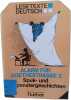
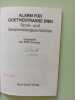

Bon état
Silk
Yale University Press 2007 In-4, cartonnage éditeur sous jaquette illsutrée. Texte en anglais, richement illustré. 256 p. Très bon état.Jaquette : Léger accroc en tête, sinon, très bon ex.
Très bon état d’occasion
SCHULMANN, Didier ; PEREZ-TIBI, Dora ; FOREST, Dominique ; TOURLONIAS, Anne ; VIDAL, Jack
Reference : 20306
(2003)
ISBN : 2850566209
Raoul Dufy, du Motif à la Couleur
Somogy Editions d’Art/Musée d’Art et d’Industrie, Roubaix/Musée Malraux, Le Havre/Association des Amis du musée de Céret, Céret 2003 In-4, broché couv. illustrée rempliée, photographies pleines pages en couleurs, 207 pp.
Mettant l’accent sur les rapports entre arts appliqués et art pictural dans l’oeuvre de Dufy, cet ouvrage permet de découvrir des réalisations et des thèmes méconnus, voire inédits, et propose une lecture originale d’une page essentielle de l’art moderne. Très bon état d’occasion
Ladies tailors, riding habits, boys' suits.
1895 1 Paris, 1895, br., couv. ill., in-8, 22 pp.
Catalogue de ventes et nomenclatures des prix pour dames, garçons et fillettes. Planches illustrées en noir présentant les différents modèles. Manques, dessin enfantin-à la mine de plomb- sur la deuxième de couverture, coloriage enfantin, usures et taches. Taches et coups de crayon.

Le Livre de la soie
Imprimerie nationale In-4 Jaquette en très bon état Couverture rigide toile Paris 1993
Très bon 255 pages. Parcours à travers les déclinaisons fastueuses de la soie : de la tapisserie, de la broderie, etc.
Les excentricités de la mode.
1 Paris, (1914-1918), in-folio, 13 planches en couleurs.


Préface de SEM qui affirme que l'album est un plaisir pour les yeux. Usures et manques au cartonnage.
S. FANIEL, P. LEVALLOIS, J. BARRELET, J. DAUTZENBERG, J. FERAY, P. GOUVERT, J. NICLAUSSE, J. NICOLIER et J. WILHELM
Reference : LFA-126712380
(1958)
Le XVIIe SIECLE FRANCAIS
Un ouvrage de 232 pages, format 255 x 320 mm, illustré, relié cartonnage couleurs, publié en 1960, Librairie Hachette, Collection "Connaissance des Arts", bon état
Peinture, mobilier, céramique, orfèvrerie, bronzes, objets d'art, verrerie, tapisseries, tapis, tissus, sculpture, ensembles décoratifs du XVIIe siècle en France
Phone number : 04 74 33 45 19
S. FANIEL, Y. AMIC, D. CHEVALIER, O. LEFUEL, J. NICOLIER, E. SCHLUMBERGER, A. GILOU
Reference : LFA-126736590
(1960)
Le XIXe SIECLE FRANCAIS
Un ouvrage de 232 pages, format 255 x 320 mm, illustré, relié cartonnage couleurs, publié en 1960, Librairie Hachette, Collection "Connaissance des Arts", bon état
Peinture, mobilier, céramique, orfèvrerie, bronzes, objets d'art, verrerie, tapisseries, tapis, tissus, sculpture, ensembles décoratifs du XIXe siècle en France
Phone number : 04 74 33 45 19
Braquenié. Créateur de textiles depuis 1823.
Paris, 1998, in-4 carré cart. (205 pages). Abondamment illustré par des dessins, tissus imprimés, soieries, tapis et moquettes...

bon afrique
Vêtements Sive, à Denfert, été 1930.
1930 1 Paris, imprimerie Lang, 1930, in-12, relié par une agrafe, couverture illustrée en couleurs de Janko.

Catalogue à prix marqués de vêtements destinés à une clientèle masculine, pour les cadets et les enfants où le "chic" et la variété font la réputation de Sive. De nombreux modèles de Janko, tirés en sépia, pour la ville et le voyage, pour les sports et le plein air, pour les cérémonies, pour la moto et la pluie, trousseaux sont présentés. Rouille à l'agrafe, pages détachées.
50 modèles en cuir
Dessain et Tolra 1983 In-4 relié. 135 pages. Jaquette déchirée en tête, sans manque, sinon très bon ex.. Très bon état d’occasion.
Très bon état d’occasion
Poly Organo Phosphazene Nanomaterials for Therapy (À l'aventure 1)
S Mehnath 2023 218 pages 13 2x16 6x2 4cm. 2023. Relié. 218 pages.

Très bon état - légères marques de lecture et/ou de stockage mais du reste en très bon état- expédié soigneusement depuis la France
Reglemens et status, concernans le commerce, art et fabrique des draps, or, argent et soye et autres etoffes mélangées, qui se font dans la ville de Lyon et faux bourgs d’icelle, et dans tout le Païs de Lyonnais.
Lyon, Rolin Glaize, 1693 (i.e. 1679) ; in-8, veau épidermé de l’époque, dos à nerfs décoré et doré, sans pièce de titre ; 88, [7] pp. de Table.

Edition qui va jusqu’à la fin du XVIIe siècle, l’exemplaire mis à jour pour l’édition de 1693 mais avec la date au titre de 1679 et avec la table des matières sans mise à jour. (Charlety 1351). Exemplaire très correct et plutôt rare.
Les soies et les soieries à l'Exposition de Chicago. Rapports présentés à la Chambre de Commerce de Lyon.
Lyon, Rey, 1894, grand in 8° broché, 173 pages ; dos renforcé au ruban adhésif.
PHOTOS sur DEMANDE. ...................... Photos sur demande ...................


Phone number : 04 77 32 63 69
Exposition Universelle de Lyon 1894. Section lyonnaise des soies et soieries. L'INDUSTRIE de la SOIE en FRANCE.
1894 Lyon, Mougin-Rusand, 1894, grand in 8° broché, VIII-149 pages ; cachet-ex-libris ; couverture rempliée (traces de renfort au dos).
...................... Photos sur demande ...................
Phone number : 04 77 32 63 69
Exposition Universelle de Vienne en 1873. L'INDUSTRIE de la SOIE. Rapport. Seconde édition.
1875 Lyon, Pitrat, 1875, grand in 8° broché, VII-233 pages ; non coupé.
Comparaison de l'Industrie de la Soie pays par pays. ...................... Photos sur demande ...................
Phone number : 04 77 32 63 69

