1938 A Paris, Bureau d'Editions - 1938 - In-8, broché - 91 p.
Bon état - Déchirure avec petit manque de papier en haut du dos - Légers plis et frottements sur la couverture
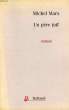
Marx, Karl (Préf. de F. Perroux, édition établie et annotée par M. Rubel)
Reference : 47773
(1969)
Gallimard Jaquette en très bon état Cuir Paris 1969
Très bon In-12. 1821 pages. Sous étui. Coll. "Bibliothèque de la Pléiade".
1948 Paris, Rivière (Bibliothèque des Sciences Politiques et Sociales), 1948, in 8° broché, LV-379 pages ; index des noms in-fine ; complet du feuillet volant d'errata.
...................... Photos sur demande ..........................
Phone number : 04 77 32 63 69
"MARX, KARL [Translated by:] P. RUMYANTSEV [Edited by:] A.MANUILOV.
Reference : 59587
(1896)
Moscow, Izdanie Vladimira Bonch-Bruevicha, 1896. 8vo. In a later modest black half calf binding with marbled boards. Traces of stamp to verso of front and back board. Title-page slightly rubbed. Occassional underlignings in text and margins. Pp. 145-146 reinforced in margin. Otherwise a fine copy. XII, (4), (1)-160 pp.
Exceedingly rare first Russian translation of this groundbreaking work, in which Marx first presents his revolutionizing theories of capitalism. For years, the present work was largely overshadowed by ‘Das Kapital’, and despite being published 8 years earlier (The original being published in 1859, ‘Das Kapital’ in 1867), the present work was not translated, until ‘Das Kapital’ had made Marx a household name in socialist and revolutionary circles, making the present translation comparatively early (the first English translation being from 1904).The Russian censorship cut Marx’ preface in this first translation - the full text did not appear until the revolutionary decade of 1905-1917. This Manuilov/Rumiantsev-translation remained the canonic-translation throughout the Soviet rule. The translation was made by Bolshevik revolutionary Petr Rumiantsev (1870-1924), who left the party in 1907 and emigrated in 1918, but the success of the present translation is primarily due to editor Manuilov. Editor Alexander Appolonovich Manuilov (1861-1929) was a Russian economist and politician, famous not only as one of the founding members of the Constitutional Democratic party (known as the Kadets), but also as the Russian translator of the present work. ""Manuilov graduated from the law department of the University of Novorossiia (Odessa, 1883). He began scholarly and pedagogical work in political economy in 1888. In 1901 he became head of a subdepartment at Moscow University, becoming assistant rector in 1905 and serving as rector from 1908 to 1911. He was dismissed by the tsarist government for attacking the ""extremes"" of Stolypin's agrarian legislation. In the 1890's he was a liberal Narodnik (Populist), later becoming a Constitutional Democrat (Cadet) and a member of the Central Committee of the Cadet Party. Manuilov's draft on agrarian reform (1905) was the basis for the Cadets' agrarian program. V. I. Lenin sharply criticized Manuilov, calling him one of ""the bourgeois liberal friends of the muzhik who desire the 'extension of peasant land ownership' but do not wish to offend the landlords"" (Poln. sobr. soch., 5th ed., vol. 11, p. 126, note).""At the beginning of his scholarly career Manuilov accepted the labor theory of value. In 1896 he translated K. Marx' work A Contribution to the Criticism of Political Economy (Zur Kritik der Politischen Oekonomie). During the years of reaction he espoused subjectivist and psychological views in political economy. In 1917 he was minister of education of the Provisional Government. After the October Revolution in 1917 he emigrated but soon returned and cooperated with Soviet power. He participated in the orthographic reform (1918). In 1924 he became a member of the board of Gosbank (State Bank). He taught in higher educational institutions. Changing to Marxist positions and relying on Lenin's works, he criticized the revisionists and neo-Narodniks on the agrarian question."" (Encycl. Britt.). For many years, the exclusive focus on ""Das Kapital"" meant that the ""Kritik"" was overlooked. Since the beginning of the 1960's, however, scholars have become increasingly aware of its importance as the blueprint for the social and economic theory Marx shall go on to develop (see for example Raymond Aron, ""Le Marxisme de Marx"", 1962). It is here that Marx outlines the research programme to which he shall devote the rest of his working life. He himself described ""Das Kapital"" as a continuation of his ""Zur Kritik der politischen Oekonomie"" (see e.g. PMM 359), in which his primary concern is an examination of capital and in which he provides the theoretical foundation for his political conclusions later presented in ""Das Kapital"". ""I examine the system of bourgeois economy in the following order: capital, landed property, wage-labour" the State, foreign trade, world market. The economic conditions of existence of the three great classes into which modern bourgeois society is divided are analysed under the first three headings the interconnection of the other three headings is self-evident. The first part of the first book, dealing with Capital, comprises the following chapters: 1. The commodity, 2. Money or simple circulation" 3. Capital in general. The present part consists of the first two chapters."" (Preface to the present work, in the translation (by S.W. Ryazanskaya) of the Progress Publishers-edition, Moscow, 1977). Apart from the obvious importance of the work as the foundational precursor to what is probably the greatest revolutionary work of the nineteenth century, the ""Kritik"" is of the utmost importance in the history of political and economic thought, as it is here, in the preface, that Marx outlines his classic formulation of historical materialism. This preface contains the first connected account of what constitutes one of Marx's most important and influential theories, namely the economic interpretation of history - the idea that economic factors condition the politics and ideologies that are possible in a society. ""The first work which I undertook to dispel the doubts assailing me was a critical re-examination of the Hegelian philosophy of law"" the introduction to this work being published in the Deutsch-Franzosische Jahrbucher issued in Paris in 1844. My inquiry led me to the conclusion that neither legal relations nor political forms could be comprehended whether by themselves or on the basis of a so-called general development of the human mind, but that on the contrary they originate in the material conditions of life, the totality of which Hegel, following the example of English and French thinkers of the eighteenth century, embraces within the term ""civil society"""" that the anatomy of this civil society, however, has to be sought in political economy. The study of this, which I began in Paris, I continued in Brussels, where I moved owing to an expulsion order issued by M. Guizot. The general conclusion at which I arrived and which, once reached, became the guiding principle of my studies can be summarised as follows. In the social production of their existence, men inevitably enter into definite relations, which are independent of their will, namely relations of production appropriate to a given stage in the development of their material forces of production. The totality of these relations of production constitutes the economic structure of society, the real foundation, on which arises a legal and political superstructure and to which correspond definite forms of social consciousness. The mode of production of material life conditions the general process of social, political and intellectual life. It is not the consciousness of men that determines their existence, but their social existence that determines their consciousness. At a certain stage of development, the material productive forces of society come into conflict with the existing relations of production or - this merely expresses the same thing in legal terms - with the property relations within the framework of which they have operated hitherto. From forms of development of the productive forces these relations turn into their fetters. Then begins an era of social revolution. The changes in the economic foundation lead sooner or later to the transformation of the whole immense superstructure."" (Preface to the present work, in the translation (by S.W. Ryazanskaya) of the Progress Publishers-edition, Moscow, 1977). OCLC lists merely three copies, all in the US (Havard, Wisconsin, and Hoover Institute on War).
1947 P., Corrêa, 1947, in 12 broché, 283 pages.
...................... Photos sur demande ..........................
Phone number : 04 77 32 63 69
Gallimard Cuir Paris 2010
Très bon 4 vol. in-12. 1821, 1970, 1976 et 1829 pages. Sous étuis illustrés. Coll. "Bibliothèque de la Pléiade".
Gallimard Jaquette en bon état Cuir Paris 1979
Très bon In-12. 1970 pages. Petite perte à la jaquette. Coll. "Bibliothèque de la Pléiade".
Warszawa, Bibljoteka Naukowa, 1906. Small4to. Bound in contemporary half calf with gilt lettering to spine with four raised bands. Stamp to title-pages and last leaf, otherwise fine. 277, (3), 154, (6), 51, (1) pp.
First Polish translation of Marx and Engel's articles on the events in the Prussia, Austria and other German states during 1848, describing the impact on both middle-class and working-class aspirations and on the idea of German unification. It was originally published as a series of articles in the New York Daily Tribune 1851 to 1852 under Marx's byline, the material was first published in book form under the editorship of Eleanor Marx Aveling in 1896.
[Weimar, Gustaf Uszman] for E.L. Kasprowicz, Lipsk [Leipzig], 1884-[89]. Large 4to. Bound in a very nice recent red half calf with five raised bands and gilt title to spine. Title-page with repair to inner margin and with a few closed tears. Outer margin discreetly reinforced. Verso of title-page with ""1942 D. 1513"" in pencil. Last leaf also with a couple of closed/repaired tears, with minor loss of text, and reinforced in margin. Apart from the nicely restored flaws to the first and last leaf, this is an excellent, very nice and clean copy. VII, 325, (1) pp.
Very rare first edition of the first Polish translation of Marx' revolutionizing main work, ""The Capital"", which was clandestinely printed in Germany and then smuggled into Poland. The Polish translation, which is much rarer than the first Russian edition, and thus of the utmost scarcity, was illegally printed in Germany, with the mediation of the translator Kasprowicz (who worked for Brockhaus), by G. Uszman in Weimar (far enough from Prussia for the government not to be too concerned with the socialist activities of Polish students) and was then smuggled, mostly via Leipzig and Torún, into Russian Poland. It appeared in three parts, from 1884 to 1889. The translation, which was mainly done from the French, was the work of the hugely influential Polish socialist group, the Krusinsk-ites, which counted Stanislaw Krusinski, Ludwik Krzywicki (who corresponded directly with Marx himself), Mieczyslaw Brzezinski, Kazimierz Plawinski, and Jozef Siemaszko. Ludwik Krzywicki (1859-1941) was the editor-in-chief of this great collaborative work. He is credited with being the leading Marxist of the period and one of the greatest Marxist thinkers of Poland. In 1883 he was expelled from Warsaw University, after which he went to Germany, Switzerland and France, before returning to Poland in 1893, where he continued his political activities and took part in the 1905 revolution. While in Leipzig (from 1883), working on the translation of the Capital into Polish, he began corresponding with Marx, and after Marx died (March 1883), he continued corresponding with Engels, who provided direct suggestions of improvements and corrections.The publication of the first Polish translation of Marx' Capital not only came to influence Polish politics and economics, it also marked an important divide in Polish socialism and constitutes one of the earliest printings within organized Polish Marxism. ""In 1882 Ludwig Warýnsk (1856-89) organized in the former Congress Kingdom the first Polish workers' party under the name Social-Revolutionary Party ""Proletariat"". At the same time in the Russianized Imperial University of Warsaw a circle of young Polish socialists established itself. Its main theoretician was Stanislaw Krusinski (1857-86) after whom the group were called ""Krusinski-ites"". The most important among them was later to become one of the greatest scholars in the field of the social sciences. In 1884 the Krusinski-ites published in Leipzig the Polish translation of volume one of ""Capital"".In the ideology of the first Polish Marxists two different tendencies are to be distinguished"" a social-revolutionary and a social-democratic one. The first was prevalent in Warzynski's ""Proletariat"""" after the secession of a social-democratic group named ""Solidarity"" and led by Kazimierz Puchewicz it was unanimously accepted by this party. The second tendency was dominant in Krusinski's circle. The differences dividing them were profoundly theoretical and not merely tactical. Generally speaking, the social revolutionaries emphasized the important role of the ""subjective factor"" in history while the social democrats insisted on the necessity of a gradual ""ripening"" of the economic conditions of the socialist revolution. The social revolutionaries closely collaborated with the Russian populist party, The People's Will, and, under its influence, endorsed political terrorism"" the social democrats were resolutely opposed to this. Even more important was the controversy concerning the basic theoretical assumptions of Marxism and their applicability to an economically backward country. The social democrats were convinced that the objective conditions for a socialist revolution would not be ripe until the given country had passed through all phases of capitalist development..."" (Walicki, Stanislaw Brzozowski and the Polish Beginnings of ""Western Marxism"", pp. 41-42).
Bratislava, Vydalo Slovenské vydavatel'stvo politickej literatúry, 1955 - 1958. 8vo. 4 volumes, all in publisher's original full cloth. Gilt lettering to spines and front boards and Marx in profile blind-stamped to front boards. A very fine and clean set. 918, (2) pp + fontiespiece of Marx 590, (2) pp 515, (4) pp 541, (4) pp.
Rare first Slovakian translation of Marx’ landmark work ‘Das Kapital’. A Czech translation was made in 1913 which, due to similarities between the languages, for a while made a Slovakian translation superfluous. Because of the dominance from the Soviet a need for a Slovak translation rose and a complete transition of all three volumes were published between 1955 and 1958. In the Czech lands and Slovakia the study of economics developed later than in the West European countries. An urgent need for economic study arose only in the 19th century, when the disintegration of feudal relations and the development of capitalism, were accompanied by a national revival. Marxist economic theory was somewhat slow to gain a following in the Czech lands and Slovakia.
Amphoto an imprint of watson-guptill publications. 1994. In-4. Broché. Bon état, Couv. convenable, Dos satisfaisant, Intérieur frais. 144 pages - ouvrage en anglais - nombreuses photos en couleurs et en noir et blanc dans et hors texte - ex dono en début d'ouvrage.. . . . Classification Dewey : 420-Langue anglaise. Anglo-saxon
Ouvrage en anglais. Classification Dewey : 420-Langue anglaise. Anglo-saxon
Oberbadische Druckerei und verlagsanstalt. Non daté. In-8. Broché. Etat d'usage, Couv. légèrement passée, Dos satisfaisant, Papier jauni. 49 pages. Livre en allemand. Plats tachés. 1er plat légèrement plié. Non daté, vers 1946.. . . . Classification Dewey : 430-Langues germaniques. Allemand
Classification Dewey : 430-Langues germaniques. Allemand
LANGUES ETRANGERES.. 1977. In-8. Broché. Bon état, Couv. convenable, Dos satisfaisant, Intérieur frais. 81 pages.. . . . Classification Dewey : 800-LITTERATURE (BELLES-LETTRES)
Classification Dewey : 800-LITTERATURE (BELLES-LETTRES)
Preveo M. Pijade (Belgrad), Biblioteka Marksizma-Lenjinizma, 1945. 8vo (195 x 145 mm). In the original printed wrappers. A few small nicks to wrappers and a few occassional light markings in margin. Otherwise a fine and clean copy. 64, (3) pp.
First Croatian translation of the Communist Manifesto, translated by Moša Pijade (1890 – 1957), a Yugoslav communist, politician and Tito’s close friends. Pijade also translated the introductions to previous translations to other languages, to help the reader to understand the importance of the work. Pijade, artist, art critic and author, was born in Belgrade and of Sephardic Jewish parentage. He joined the Communist party in the 1920s, in which he was active as a writer for various newspapers and magazines. After having translated ‘Das Kapital’ in 1924, Pijade was arrested and sentenced to 20 years in prison because of his ‘revolutionary activities’, a sentence, for which he served 14 years. In the prison Moša Pijade befriended Josip Bros-Tito, who was also imprisoned for his illegal communist activities, and the two men became good friends. During WWII, Pijade became one of the leaders of Tito’s partisans and after the war the President of the Yugoslavian Parliament between 1954 and 1955. In 1948, Pijade convinced Tito to allow the Yugoslav Jews to immigrate to Israel.
London, Ian Allan Ltd. 1985, 240x180mm, 111pages, editor's binding with jacket. Dust jacket protected by a layer of plastic paper, whitout scotch stick on it. Book in very good condition.
b/w photographs, Pour un paiement via PayPal, veuillez nous en faire la demande et nous vous enverrons une facture PayPal
Editions Corréa, PAris, 1947.
Un volume in-12°, broché, couverture souple éditeur, 1er plat présentant le titre en lettres noires sur un fond marron clair, lui même encadré sur un fond marron. 283 pages. Légères m arques d’âge et d’usage mais BON ETAT.
Théâtrales (11/2022)
LIVRE A L’ETAT DE NEUF. EXPEDIE SOUS 3 JOURS OUVRES. NUMERO DE SUIVI COMMUNIQUE AVANT ENVOI, EMBALLAGE RENFORCE. EAN:9782842608941
J.B.Metzlersche Verlagsbuchhandlung stuttgart. 1985. In-12. Broché. Bon état, Couv. convenable, Dos satisfaisant, Papier jauni. VIII+197 pages - une étiquette collée sur le 2ème plat - livre en allemand.. . . . Classification Dewey : 430-Langues germaniques. Allemand
Sammlung Metzler n°216. Classification Dewey : 430-Langues germaniques. Allemand
Francfort s. M., Andreae, 1826, pt. in-8vo, frontispice gravé (Vierge) + X + 276 p., belle reliure en plein-veau, dos à 3 faux-nerfs avec titre et filets en or, plats ornés en reliefs avec double encadrement en or, tranches dorées, contre-plats et gardes recouverts de soie grise, encadrés par une élégante ornamentation en or. Bel exemplaire.
Image disp.
Phone number : 41 (0)26 3223808
Antwerpen, gebr. Dewever 1839 339 + [3] pp., 18cm., contemporaine gecart. band (gemarbreerde platten lederen rug met titel in goudopdruk, voorste scharnier onderaan licht gespleten), luttele roestplekjes, goede staat, zeldzaam, H99582
Paris, Masson, 1887. In-8 broché (couverture légèrement défraîchie, tranches piquées), 170 pp. 28 figures en noir. Traité analytique des eaux, des orges, des malts, des houblons, des goudrons, des bières, qualités et falsifications. Envoi de l'auteur.
Valence, Jules Céas & Fils, 1889.
Illustré par 95 figures intercalées dans le texte. Troisième édition, considérablement augmentée, (du plus du double de pages) entièrement revue et corrigée. /// In-8 de (6), VI, 421 pp. Demi-basane bleue marine. (Reliure de l'époque.) ////
Valence, Imprimerie et Lithographie Jules Céas & Fils, 1889. In-8 broché. Mention de 3ème édition. 421 pages. 95 figures in texte. Dos fendu. Couverture défraîchie sans manque. Petite réparation haut du dos. Tache brune sur 4ème de couverture sans altérer le texte. Intérieur plus que convenable. Ouvrage méritant la reliure. Peu courant. Assez bon état.
Taylor & francis ltd (7/2024)
LIVRE A L’ETAT DE NEUF. EXPEDIE SOUS 3 JOURS OUVRES. NUMERO DE SUIVI COMMUNIQUE AVANT ENVOI, EMBALLAGE RENFORCE. EAN:9781032478739