 Write to the booksellers
-
Type
Book (1731)
Magazine (37)
Music sheets (1)
New book (1)
-
Latest
Last 24h (5)
Last month (35)
Last week (4)
-
Language
Dutch (4)
French (1465)
German (3)
Russian (298)
-
Century
19th (53)
20th (750)
21st (80)
-
Countries
Belgium (86)
Canada (12)
Denmark (45)
France (1240)
Germany (6)
Netherlands (2)
Switzerland (75)
United Kingdom (2)
United States of America (302)
-
Syndicate
ALAC (10)
CLAM (5)
ILAB (649)
NVVA (17)
SLACES (17)
SLAM (567)
SNCAO (1)
Etudes philosophiques. Nouvelle édition revue et augmentée. Introduction de Guy Besse.
P., Editions Sociales (Collection "Classiques du Marxisme"), 1974, petit in 12 broché, 284 pages.
PHOTOS SUR DEMANDE. Fermeture du 1er au 23 Août


Phone number : 04 77 32 63 69
GESCHICHTE UND POLITIK, 1 (Karl Marx, Frierich Engels, Band III)
Fischer. 1966. In-12. Broché. Etat d'usage, Couv. convenable, Mors fendus, Intérieur acceptable. 255 pages. Nombreuses annotations dans l'ouvrage (ouvrage de travail).. . . . Classification Dewey : 430-Langues germaniques. Allemand
Fischer Bücherei, Bücher des Wissens, 766. Karl Marx, Frierich Engels, Band III, Hrsg. von Iring FETSCHER. Classification Dewey : 430-Langues germaniques. Allemand
Geschichte und Politik 2. Abhandlungen und Zeitungsaufsätze zur Zeitgeschichte. Volume IV
Fischer. 1966. In-12. Broché. Etat d'usage, Couv. défraîchie, Dos plié, Papier jauni. 284 pages. Texte en allemand. Quelques annotations à l'encre dans le texte. Un ex-libris à l'encre sur la page de garde.. . . . Classification Dewey : 430-Langues germaniques. Allemand
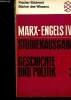
Classification Dewey : 430-Langues germaniques. Allemand
Inventer l'inconnu - Textes et correspondance autour de la Commune - Précédé de Politiques de Marx, par Daniel Bensaïd
La Fabrique. 2008. In-8. Broché. Etat d'usage, Couv. partiel. décollorée, Dos satisfaisant, Intérieur frais. 297 pages. Plats légèrement décolorés.. . . . Classification Dewey : 944.0811-Guerre et révolution de 1870/1871
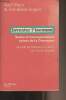
Classification Dewey : 944.0811-Guerre et révolution de 1870/1871
KARL MARX UND FRIEDRICH ENGELS, AUSGEWÄHLTE SCHRIFTEN IN ZWEI BÄNDEN (2 VOL.)
Dietz Verlag. 1958-1959. In-8. Relié. Bon état, Couv. convenable, Dos satisfaisant, Intérieur acceptable. 648 pages pour le tome I et 504 pages pour le tome II. Photos en noir et blanc en frontispice du tome I (portraits). Annotations en pages de garde (ex-libris). Tranches légèrement passées. Jaquettes manquantes.. . . . Classification Dewey : 430-Langues germaniques. Allemand
9. Auflage. Classification Dewey : 430-Langues germaniques. Allemand
La guerre civile en France 1871.
Editions Sociales Broch D'occasion bon tat 01/01/1952 150 pages
La Guerre civile en France 1871 (La Commune de Paris).
Paris, Editions Sociales, "Les Eléments du communisme", 1946 1 volume In-8° (13,3 x 21cm) Broché sous couverture grise imprimée en bleu nuit. 97p., 1feuillet. Bon état.
Texte de Karl MARX (1818-1883) précédé d'une introduction de Friedrich ENGELS et des "Premier" et "Second Manifeste[s] du Conseil général" (de la 1ère Internationale: textes de Karl MARX) sur la guerre franco-prussienne (23 juillet et 9 septembre 1870) et suivi de lettres de Karl MARX et de Friedrich ENGELS sur la Commune de Paris; index des noms.
LA NOUVELLE GAZETTE RHENANE-1
format moyen, couverture souple.501 pages.exemplaire non coupé. Bon état. Une expédition par Mondial Relay vous sera proposée 1964 éditions sociales
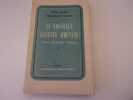
La “Nouvelle gazette rhénane” (Die Neue Rheinische Zeitung) [3 volumes]. Traduction et notes par Lucienne Netter
Paris, éditions sociales 1971 3 volumes. In-8 23 x 14 cm. Reliures toile beige, dos et premiers plats de couverture conservés, 501-382-575 pp., index des noms cités, table des matières à la fin de chaque volume. Exemplaires en très bon état.
Contient : I, 1er juin-5 septembre 1848 - II, 7 septembre-4 février 1849 - III, 14 février 1849-19 mai 1849. Très bon état d’occasion
La Nouvelle Gazette Rhénane en 2 volumes (Neue Rheinische Zeitung)
Éditions Sociales (1963 - 1969) - In-8 brochés de 504 et 384 pages - Traduction, introduction et notes par Lucienne Netter - Index des noms cités - Exemplaires en excellent état
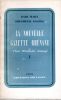
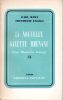
Tome1 : 1° Juin - 5 Septembre 1848 (1963) - Tome 2 : 7 Septembre 1848 - 4 Février 1849 (1969)
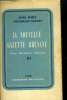
La nouvelle gazette rhénane III
editions sociales. 1971. In-8. Broché. Etat d'usage, Couv. défraîchie, Dos satisfaisant, Quelques rousseurs. 575 pages. 2ème plat annoté et partiellement découpé.. . . . Classification Dewey : 840-Littératures des langues romanes. Littérature française
Classification Dewey : 840-Littératures des langues romanes. Littérature française
La Nouvelle Gazette rhénane (Neue Rheinische Zeitung) - Tome 1 (1er juin - 5 septembre 1848)
Editions Sociales, 1963, in-8 br., 501 p., tome 1 seul, traduction et notes par Lucienne Netter, exemplaire non coupé, très bon état.

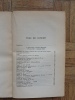
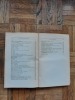
Voir le sommaire sur photos jointes.
La nouvelle gazette rhénane - Tome 1 + Tome 2 + Tome 3 (3 volumes).
Editions Sociales. 1964-1971. In-8. Broché. Etat d'usage, Couv. légèrement passée, Dos satisfaisant, Papier jauni. 501 pages + 382 pages + 575 pages - quelques annotations et quelques phrases soulignées au crayon à papier à l'intérieur des ouvrages ne gênant pas la lecture - couverture jaunie - annotation sur la page de titre.. . . . Classification Dewey : 70.1-Journaux
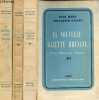
Traduction et notes par Lucienne Netter - Tome 1 : 1er juin - 5 septembre 1848 - Tome 2 : 7 septembre 1848 - 4 février 1849 - Tome 3 : 14 février 1849 - 19 mai 1849 annexes. Classification Dewey : 70.1-Journaux
La sainte famille
Paris, Editions Sociales 1972 1 in -8 Broché 254[p.p]

correct Disponibilité sous réserve de vente en boutique, prix valable, frais de port en plus, La Poste ou Mondial Relay
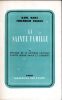
La sainte famille ou critique de la critique critique contre Bruno Bauer et consorts.
Editions Sociales. 1972. In-8. Broché. Etat d'usage, Couv. légèrement passée, Dos satisfaisant, Papier jauni. 256 pages- rousseurs sur les plats.. . . . Classification Dewey : 100-PHILOSOPHIE ET DISCIPLINES CONNEXES

Traduction d'Erna Cogniot présentée et annotée par Nicole Meunier et Gilbert Badia. Classification Dewey : 100-PHILOSOPHIE ET DISCIPLINES CONNEXES
La Sainte Famille ou Critique de la critique critique contre Bruno Bauer et consorts
Éditions Sociales (1969) - In-8 broché de 256 pages - Presentée at annotée par Gilbert Badia et nicole Meunier - Traduction de Erna Cogniot - Index des noms cités et index thématique - Exemplaire en excellent état
Le manifeste communiste.
Pathfinder. 2009. In-8. Broché. Bon état, Couv. convenable, Dos satisfaisant, Intérieur frais. 93 pages.. . . . Classification Dewey : 320-Science politique
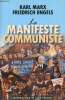
Introduction de Léon Trotsky. Classification Dewey : 320-Science politique
Le manifeste communiste. Traduit d'après l'édition originale de février 1848 par J. Molitor. Suivi des Principes du communisme de Fr. Engels et de nombreux inédits.
Alfred Costes, 1953. Petit in-8 broché, couverture imprimée. Pli marqué à un bord, petites traces d'autres plis, quelques repères ou passages soulignés dans le texte. Bien complet des 4 hors-textes annoncés.

Suite à un accident immobilisant votre libraire pour quelques semaines, le traitement des commandes est bien assuré, mais momentanément ralenti. Merci de votre patience et de votre compréhension.
Le mouvement ouvrier français - Tome 1 + Tome 2 (2 volumes) - Tome 1 : Tactique dans la révolution permanente - Tome 2 : Efforts pour créer le parti de classe - Petite collection maspero n°131-132.
François Maspero. 1974. In-12. Broché. Etat d'usage, Coins frottés, Dos satisfaisant, Intérieur frais. 191 pages + 182 pages - couverture contrepliée - coins et tranches frottés.. . . . Classification Dewey : 331.88-Syndicalisme

Petite collection maspero n°131-132 - Introduction, traduction et notes de Roger Dangeville. Classification Dewey : 331.88-Syndicalisme
Le mouvement ouvrier français - Tome 2 : Efforts pour créer le parti de classe - Petite collection maspero n°132.
François Maspero. 1974. In-12. Broché. Bon état, Couv. convenable, Dos satisfaisant, Intérieur acceptable. 182 pages - couverture contrepliée.. . . . Classification Dewey : 300-SCIENCES SOCIALES

Petite collection maspero n°132 - Introduction, traduction et notes de Roger Dangeville. Classification Dewey : 300-SCIENCES SOCIALES
Les luttes de classes en France (1848-1850). Introcution par F. Engels.
P., Bureau d'Editions, 1936, in 8° broché, 127 pages.
Fermeture du 1er au 23 Août
Phone number : 04 77 32 63 69
LES LUTTES DE CLASSES EN FRANCE (1848-1850), SUIVI DE LES JOURNEES DE JUIN 1848
Editions Sociales. 1948. In-8. Broché. Bon état, Couv. convenable, Dos satisfaisant, Intérieur acceptable. 155 pages. Annotation en page de garde.. . . . Classification Dewey : 320-Science politique
'Le Printemps des peuples'. Classification Dewey : 320-Science politique
LES LUTTES DE CLASSES EN FRANCE 1848-1850 - SUIVI DE LES JOURNEES DE JUIN 1848
EDITIONS SOCIALES. 1952. In-8. Broché. Etat d'usage, Couv. légèrement pliée, Coiffe en tête abîmée, Intérieur frais. 143 pages - quelques cartes noir et blanc hors texte - quelque annotations et soulignements à l'encre dans le texte sans conséquences sur la lecture - léger manque en coin supérieur du 2eme plat. . . . Classification Dewey : 320-Science politique
Classification Dewey : 320-Science politique
Les luttes de classes en France (1848-1850), suivi de Les journées de juin 1848 par Friedrich Engels.
P., Editions Sociales, 1946, in 8° broché, 127 pages ; couverture fanée, petits manques au dos.
PHOTOS sur DEMANDE. Fermeture du 1er au 23 Août
Phone number : 04 77 32 63 69
Les luttes de classes en France 1848-1850. Suivi de Les journées de juin 1848 par Friedrich Engels.
P., Editions Sociales, 1952, 1 vol. in-8 (217 x 143) broché sous couverture imprimée en rouge, de 144 pp. Papier jauni, très bel exemplaire non coupé.
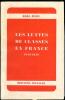
Contient un index des noms cités.

