 Write to the booksellers
-
Type
Book (1331)
Magazine (6)
-
Latest
Last month (4)
Last week (8)
-
Century
16th (3)
17th (12)
18th (120)
19th (778)
20th (366)
21st (12)
-
Countries
Belgium (4)
Denmark (1224)
France (103)
Switzerland (6)
-
Syndicate
ILAB (1253)
NVVA (2)
SLACES (2)
SLAM (27)
Lærdoms Lystgaard eller adskillige Discurser. Oversat fra latin og forsynet med Indledning og Noter af Jørgen Olrik. 1.-3- Part (alt).
K. og Kria., 1919. 3 bd. Ubeskårne og delvist uopskårne i orig. omsl. Rygge lidt plettede.
Nr. 161 af 200 ekspl. Udgivet af det Danske Sprog- og Litteraturselskab.

Clara Raphael. Tolv Breve, udgivne af Johan Ludvig Heiberg. - [FOUNDING FEMINISM IN DENMARK]
Kjøbenhavn [Copenhagen], 1851. Bound in a lovely, elegant later (ca 1920) brown half calf with gilt spine and blindtamped borders to boards. Some brownspotting throughout. Numerous pencil-annotations. Fly-leaf with old owner's name. Last leaf repaired at inner hinge, no loss.
![Clara Raphael. Tolv Breve, udgivne af Johan Ludvig Heiberg. - [FOUNDING FEMINISM IN DENMARK]. "[FIBIGER, MATHILDE].](https://static.livre-rare-book.com/pictures/LLX/60744_1_thumb.jpg)
![Clara Raphael. Tolv Breve, udgivne af Johan Ludvig Heiberg. - [FOUNDING FEMINISM IN DENMARK]. "[FIBIGER, MATHILDE].](https://static.livre-rare-book.com/pictures/LLX/60744_2_thumb.jpg)
![Clara Raphael. Tolv Breve, udgivne af Johan Ludvig Heiberg. - [FOUNDING FEMINISM IN DENMARK]. "[FIBIGER, MATHILDE].](https://static.livre-rare-book.com/pictures/LLX/60744_3_thumb.jpg)
Scarce first edition of the first feminist novel in Denmark, the highly controversial and influential ""Clara Raphael"", which is the work that sparked the battle for women's rights in Denmark. The work is is main work of feminism in Denmark and the first Danish governess novel. It founded an entirely new genre of women's novels hitherto unknown in Denmark. The work, which constitutes the break-through of feminism in Denmark, was greatly controversial and immediately caused great furore. It resulted in the so-called Clara Raphael Dispute, in which for instance N.F.S. Grundtvig defended Mathilde Fibiger. Due to the controversial contents of the work, Mathilde Fibiger published it anonymously, and only J.L. Heiberg (1791-1860, perhaps the most famous cultural persona during the Danish Golden Age. He played a more significant role than any other author or thinker during this period) is mentioned on the title-page, as the editor. No publisher had wanted to touch this highly controversial work, and it was only after the appearance of ""Jane Eyre"" that a publishing house dared take it on. As Mary Wollstonecraft had pioneered feminist philosophy with ""A Vindication of the Rights of Women"" from 1792 and argued for education as the means to liberate women, so Mathilde Fibiger surprised her Danish contemporaries with her groundbreaking novel ""Clara Raphael. Twelve Letters"", from 1851, in which she made the connection between the national-democratic movement and the liberation of women. With this book, which deals with the inequality of the sexes and the lack of possibility for women to develop themselves, Mathilde Fibiger became the first notable advocate of the emancipation of women in Denmark. It was not only the political controversy caused by the request of equality that made the book so extremely controversial, it was also the ability of the merely 20 year old author to clearly and precisely state and substantiate the essential problems. When reading the book, it is not difficult to see why it came to have the effect that it did, and why it caused the furor that it did. For instance, Clara Raphael, when despairing at the position of women in society, writes: ""Our position in society is tragic, and why? What right does man have to suppress us? For subjugated we are, despite the chains being gilded."" She understands that casting off these chains will be no easy matter, and that it will not only be a matter of politics, but also of consciousness and mindset: ""When the peasants were granted their freedom, some of them wept, begging for permission to keep things as they had been."" One of the beaming sentences of the novel is Clara's response to her friend when asked what she is actually fighting for: ""I will fight and live for what I understand by the emancipation of women.""Her hope of breaking with the existing patriarchal system of society required national and democratic self-awareness, which for her constituted a promise of freedom. In 1871, Frederik Bajer (1837-1922) and Matilde Bajer (1840-1934) founded the Danish Women's Society, the first women's organisation in Denmark. Mathilde Fibiger was one of the earliest members of the Society. When the Danish Women's Society was established, it did not demand female suffrage. It was not until 1906 that a majority of the members were in favour of making that demand the official policy of the Society. In Denmark, women were not allowed to vote in parochial church council elections until 10+3" not until 1908 were they allowed to vote in parish council and local council elections, and not until 1915 in the Folketing and the Landsting elections. It was not until then that women became fully-fledged citizens in a political sense.
Den Danske Mercurius, efter Bordings Maade. 1.-2. Hefte.
København, Brødrene Berling, 1766 - 1769. 4to. In contemporary half calf. Binding with wear. Ex-libris to verso of front board. Previous owner's names to title-page. Internally nice and clean. (2), 192, 192 pp.
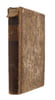
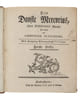
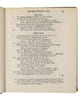
Den Danske Mercurius, efter Bordings Maade. Januarius 1766-November 1769. (= l.-2. Hefte, af 3 udkomne).
Kbhvn., Brødrene Berling, 1766-69. 4to. Senere hldrbd. Lille revne ved kapitæl. 192,192 pp.
I rimede vers beskriver han inden-og udenlandske begivenheder. Avisen udkom én gang om måneden.
Digte. Udgivne efter hans Død. 2 Deele.
k:, 1818. Indb. m. Gravblomster. Peter Foersoms Erindring helligede. K., 1819 i ét samt. slidt hldrbd. Gl. ejernavn streget ud på titelbl. af Første Deel. Uden portræt.
Gravblomsterne er med bidrag af Liebenberg, Ingemann, Rahbek, Tøxen, N. T. Bruun, Thaarup, m. fl.
Nytaarsgave udfiven af Foreningen ""Fremtiden"".
Kjøbenhavn, S.L. Møller, 1866. Samt. hldrbd. med rygforgyldning. Litograferet Portræt (Skovgaard). 231 pp. Nodebilag., 2 litograferede plancher.
Je est ailleurs.
Arles, Actes Sud, "Lettres scandinaves", 2003 1 volume 11,5 x 21,8cm Encollé sous couverture au 1er plat illustré couleurs. 267p., 2 feuillets. Très bon état.
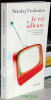
Traduction, par Lena GRUMBACH et Hélène HERVIEU, de "Andre Steder", roman publié en 2001 par l'écrivain et cinéaste norvégien Nikolaj FROBENIUS: sur les traces d'un père, réalisateur de films documentaires, qui se révèle un mystificateur, "un falsificateur de la vérité, un terroriste de l'information". 1ère édition, dans la collection dirigée par Marc de Gouvenain.
Räggler å Paschaser på vårt Mål tå En Bonne.
Stockholm, Albert Bonnier, (1895). Indbundet ubeskåret med orig. bogtrykte for-og bagomslag i smukt hldrbd. i mørkegrøn oaseged med rygforgyldning. (Anker Kyster). Gl. ejernabn øverst på foromslaget. Indvendig helt ren og frisk.
Originaludgaven.
Stänk och flikar. Dikter (Tredje samlingen). Tredje tusendet.
Stockholm, Bonnier, 1896. Samtidigt smukt privat halvmaroquin, rig rygforgyldning, Bindet signeret N. Bernhard Andersson, Stockholm. 177 pp-
Den beslaglagte udgave. ""En morgondrøm"" er ændret, afsnit 5 og 6 er helt udgået. ""I Daphne"" og ""Herran steg øfrer Korasan"" helt udgået.
Heimur og Heima. Yrkingar.
Tórshavn, 1933. Ubeskåret i orig. bogtrykt papbd. 59,(4) pp. Aldeles frisk eksemplar.
Originaludgaven.
Føroya Kvædi. Corpus Carminum Færoensium a Sv. Grundtvig et J. Blom comparatum. Mit Kommentaren in Deutscher Sprache. 1.-6. Bd. (in 12 Theile).
Kopenhagen, Munksgaard, 1944-72. Small folio. In clean parts. All 12 parts with orig. printed wrappers, uncut.
Ewalds Død. K., 1943.
Ubeskåret, orig. omsl. Friskt ekspl. på håndgjort papir.
Originaludgave. Nr. 18 af 250 ekspl., udsendt privat.
Et un jour de plus
2007 Larbey Gaïa éditions 2000 Un volume in°12 broché 239 pages Traduit du suédois par Christophe Valens LR29
![Et un jour de plus. GARDELL Jonas - [Litterature scandinave]](https://static.livre-rare-book.com/pictures/RLI/1689_1_thumb.jpg)
Très bon état N'hésitez pas à nous mettre dans vos favoris. Vous serez ainsi tenu au courant de nos nouveautés
Utdrag ur bref och dagböcker. Första delen. Andra upplagan. (det udkomne).
Upsala, Palmblad, 1834. Samtidigt marmoreret papbind med skindtitelfelt, svage brugsspor. (4),204,(1) pp. Noget gulplettet.
Aandelige Oder og Sange. Paa dansk oversatte ved J.E. heilmann. Fierde og forbdrede Oplag.
Kiøbenhavn, Gyldendal, 1792. Samtidigt hldrbd. Ryg lidt slidt.
Jomfru Gloriant. Digte.
København, Levin & Munksgaard, 1923. Ubeskåret i orig. bogtrykte omslag. 80 pp. Oplag 350 eksemplarer.
Originaludgaven.
Rejsen til Astrid. Digte.
København, Levin & Munksgaard, 1927. Ubeskåret i orig. bogtrykte omslag. 64 pp.
Originaludgaven.
Abels Död. Oversadt af det Tydske efter Hr. Gesners Original.
Kiöbenhavn, L.H. Lillies Enke, 1764. Samtidigt helldrbd. i flammet kalv. Rig rygforgyldning og skindtitel. Kobberstukket usigneret frontispiece. (12),156,(1) pp. På skrivepapir, men indvendig med brugsspor.
Første danske oversættelse af ""Der Tod Abels in fünf Gesängen"" 1758. Oversættelsen blev tillagt Peder Topp Wandal af Nyerup, men dette er tvivlsomt. Tilsyneladende ikke i Bibliotheca Danica.
Abels Død, Rim=Digt udi fem Sange, ved Gessner. Efter Hubers Franske Edition oversat af Hans Pontoppidan.
Kiøbenhavn, Nicolaus Møller, 1767. Samtidigt helldrbd. i flammet kalv med rig rygforgyldning. Ryg med lettere brugsspor og øverste kapitæl slidt. Kobberstukket titelvignet. (2),190 pp.
Le Theatre Italien, ou le recueil general de toutes les Comedies & Scenes Francoises jouées par les Comediens Italiens du Roy, pendant tout le temps qu'ils ont été au Service. Eurichi d'Estampes en Tuille-douce à la tête de chaque Comedie, à la ...
Paris, Jen-Bapt. Cusson et Pierre Witte, 1700. One cont. full calf w. raised bands on back. Bdg. worn but not loose. Backgilding almost worn off, corners bumped, lower capital w. small loss of leather, hinges at top-capital a bit cracked. T-p. miscoloured in left margin, ""Tome IV"" crossed out on t-p., old owner's name written over this. Old owner's names on verso of frontispiece. Almost no brownspotting. W. engr. frontispiece and 9 (of 10) engr. plates, one for each play, lacking the one for ""Les Adieux des Officiers"". W. 30 pp. of music.
Volume four of the first illustrated edition of the Italian plays. Evaristo Gherardi was an Italian actor and writer, he was considered one of the best actors of the ""Comediens Italiens du Roy"" and later became director of the troup. He is now primarily known for having made the ""Théâtre Italien.""
Barabbas. Traduit du suédois par Marguerite Gay et Gerd de Mautort. Avant-propos de Lucien Maury. Lettre d'André Gide.
Paris Stock, coll. "Scandinave" 1950 1 vol. broché in-12, broché, non coupé,198 pp. Édition originale française. Exemplaire en service de presse enrichi d'un envoi autographe signé de Lucien Maury à Marcel Arland. Complet du prière d'insérer. En parfaite condition.

Konvolutten. En graphologisk Studie. Illustr. af Louis Moe.
K., 1897. 12mo. M.orig.for-og bagomsl.i smukt helbd.af brun oaseged m.indvendig forgyldt bordure og kantforgyldn. Topguldsnit. Ubeskåret.
Kong Hjarne Skjald. Tragedie i fem Handlinger. K.,1893.
Aldeles rent ekspl.indb.i et samt.hldrbd.m.en smule slidte katitæler.
Originaludgave.

