 Write to the booksellers
-
Type
Book (1307)
Magazine (1)
-
Century
16th (3)
17th (12)
18th (120)
19th (778)
20th (339)
21st (11)
-
Countries
Belgium (4)
Denmark (1225)
France (73)
Switzerland (6)
-
Syndicate
ILAB (1254)
NVVA (2)
SLACES (2)
SLAM (27)
Samfundets Reform. (1.-) 2. Kvartal. (Hefte 1-10 + Hefte 1-12).
Kiøbenhavn, J.D. Qvist, 1852. 8vo. In recent blue full cloth with gilt lettering to spine. With occassionally brownspotting. (4), 384 pp.
Originaltrykket. Yderst sjældent. Her foreligger de 18 første hefter af dette tidsskrift, som næsten udelukkende blev forfattet af Dreier selv og hvis formål var at være talerør for ""den frie, forfriskende, reformbringende kritik, for hvilken arbejdets frigørelse fra pengemagtens åg er en hovedopgave"". Hermed bliver værket det første socialistiske tidsskrift i Danmark, og Dreier er senere karakteriseret som Danmarks første socialist.Dreier blev syg i slutningen af 1852, og herfefter optog han først udgivelsen i februar 1853, hvor der yderligere blev udgivet numrene 9-12 (af 2. Kvartal)""Samfundets Reform udkom som ugeblad med 22 numre fra april 1852 til 28.2.1853 med afbrydelser grundet på D.s militærtjeneste juni 1852 og sygdom. Han skrev selv hele indholdet og behandlede spørgsmål som kapital og arbejde, ""kommunalsvineriet"" (kort efter udbrød koleraepidemien), lavsvæsenets ophævelse, valgrettens udvidelse, programmet for et selvstændigt arbejderparti, oprettelse af frie fagforeninger og af kooperative foretagender med offentlig støtte o. m.a.."" (DBL).

Danmarks litterariske progresser. Fierde bind. (Vol. 4 out of 4)
Odense, Iversen, 1789. 8vo. In contemporary half calf with four raised bands and gilt lettering to spine. Small paper-label pasted on to top of spine. Light wear to spine. A nice and clean copy. (4), 364 pp.
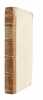
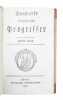
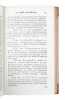
Last volume (volume 4) in ""Danmarks litterariske progresser"" (“Denmark’s Literary Progresses”), Danish periodical published from 1781 to 1789 edited by F. Dræbye. The journal later changed its name to ""Historisk, politisk, satyrisk, poetisk, moralsk"" (“Historical, Political, Satirical, Poetic, Moral”) and was issued in a total of four volumes during that period. Biblioteca Danica IV, 537.
Danmarks litterariske progresser. Første bind. (Vol. 1 out of 4)
Odense, Iversen, 1781. 8vo. In contemporary half calf with four raised bands and gilt lettering to spine. Small paper-label pasted on to top of spine. Light wear to spine and a few holes in back hinge. Internally a nice and clean copy. (4), 379, (1) pp.
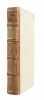
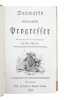
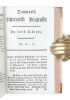
First volume in ""Danmarks litterariske progresser"" (“Denmark’s Literary Progresses”), Danish periodical published from 1781 to 1789 edited by F. Dræbye. The journal later changed its name to ""Historisk, politisk, satyrisk, poetisk, moralsk"" (“Historical, Political, Satirical, Poetic, Moral”) and was issued in a total of four volumes during that period. Biblioteca Danica IV, 537.
L'après-midi de Monsieur Andesmas.
Paris, Gallimard, (1962). Uncut in orig. printed wrappers. A mint copy. No 32 of 45 copies ""sur velin pur fil Lafuma-Navarre"", a total of 120 copies.
First edition.
Les chevaliers de l'escalier rond
2007 Larbey Gaïa éditions 2007Un volume in°8 broché 270 pages LR29
![Les chevaliers de l'escalier rond. Einar Mar Guomundsson - [Litterature scandinave]](https://static.livre-rare-book.com/pictures/RLI/1688_1_thumb.jpg)
Très bon état N'hésitez pas à nous mettre dans vos favoris. Vous serez ainsi tenu au courant de nos nouveautés
In Candidum.
Stockholm, Bonniers, (1905). Ubeskåret i orig. bogtrykte omslag. 71,(3) pp. Rift i bagomslaget men intet tab af papir.
Originaludgaven.
Nordiskt och Klassiskt. Aforismer.
Stockholm, Bonniers, (1914). Samtidigt helshirtbd. 117 pp.
Originaludgaven.
Læsefrugter, samlede paa Literaturens Mark. Otte og tyvende Bind. Aarhus, 1825.
Samt. slidt hldrbd. Her og der lidt brunplettet.
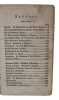
Originaludgaven af 28. bd. m. adskillige førstetryk, bl.a. Blichers ""Det lykkelige Møde. En Morgenscene."" Bibl. Dan. Iv:436
Hand, fågel -kärlekslyrik. Uppsala,1946.
Ubeskåret og uopskåret i orig. omsl.
Originaludgave med dedikation: ""Til hr.Ejnar Munksgaard/ av/ Lars Englund.""
Thet åhr: En Gyldene Book om tuchtig ursinnigheet och...
Holmiæ, 1896. 4to. Ubeskåret i senere helldrbd. Upagineret. Rigt illustr. Engströms debutbog i originaludgaven.
En Ræffue Bog som kaldes paa Tyske Reinicke Foss/ Oc er en deylig oc lystig Bog met mange skønne Historier/ lystige Rim/ Exempel/ och herlige Figurer/ som aldri føre haffuer værid paaDanske/ nu Nylige fordanskit aff Herman Weigere/ Borgere vdi Cøbneha... - [FIRST DANISH TRANSLATION OF REYNARD THE FOX]
Lübeck, Jürgen Richolff, 1555. 4to. Senere hellæderbind (omkr. 1750). Med ophøjede bind i 5 rygfelter. Rig forgyldning, men forgyldningen delvis krakeleret. Titelfeltet med forgyldt skindtitel. Øverste kapitæl restaureret. 315 blade, heraf er 1 blad i faksimile (Qqi, - et blad i registeret). Uden det sidste blanke blad. På titelbladet er teksten trykt inden for stor figurlig træstukken ramme. Med de 36 store træsnit som er kopier efter originalerne stukket af Erhard Altdorfer i Lübecker-udgaven fra 1498. Her og der med lettere brugsspor.
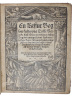
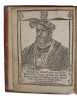
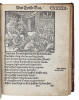
The exceedingly scarce first Danish translation of the Medieval beast epic Reynard the Fox, rarely found in the trade. This is the work that introduced the Medieval animal epic into Danish literature, and it marks a decisive step in the reception of continental narrative traditions in Denmark. Circulating from the 12th-century and derived in part from Aesop, Reynard the Fox is one of the most popular and enduring beast-epics. Reynard the Fox is a collection of fables that originated in Medieval Europe, and the exact authorship is unknown. The stories were likely passed down orally before being written down in various versions over the centuries. The fables, with the wily fox as a central character, lent themselves to satire and was used by the Protestant reformers and others. ""With this Reynard the Fox medieval animal fiction is introduced to Denmark. The origin poem goes back to the 12th century in France. In the 13th century the fox becomes the cunning hero in the edition by Fleming, Willem. The poem was printed 1498 in Low German in Lübeck, and in 1539 and 1549 in Rostock by Ludwig Dietz. The 1539 Rostock edition, of which incidentally only one copy is preserved in the Staatsbibliothek, hamburg, is the one used in the translation by herman veigere. The book is dated september 20, 1554, and dedicated to King Christian III.. Veigere's translation is certainly not inferior to the original. (…) The book has always been considered one of the desiderate of Danish book-collectors” (Thesaurus I,282). Lauritz Nielsen, 1406. The translator, Herman Weigere, a Copenhagen burgher and brother of the noted medical writer Henrik Smith, based his translation on the Low German Rostock edition of 1539 printed by Ludwig Dietz (now surviving in a single copy in Hamburg). Weigere’s Danish version was completed in 1554 and dedicated to King Christian III, and printed the following year by Jürgen Richolff in Lübeck. Thesaurus 2821Laurits Nielsen 1406.
Konung Erik XIV:s Krönika, på Rim eller uti en Visa författad. Efter Äldre Handskrifter utg. af Frederik August Dahlgren.
Stockholm, 1847. Samt. hshirtbd. Ryg lidt slidt. XIV,194 pp.
Doppler
2007 Larbey Gaïa éditions 2006 Un volume in°12 broché 202 pages Traduit du norvégien par Jean Baptiste Courseaux LR29
![Doppler. Erlen Loe - [Litterature scandinave]](https://static.livre-rare-book.com/pictures/RLI/1694_1_thumb.jpg)
Très bon état N'hésitez pas à nous mettre dans vos favoris. Vous serez ainsi tenu au courant de nos nouveautés
Volvo Trucks
2007 Larbey Gaïa éditions 2009 Un volume in°12 broché 251 pages Traduit du norvégien par Jean Baptiste Courseaux LR29
![Volvo Trucks. Erlen Loe - [Litterature scandinave]](https://static.livre-rare-book.com/pictures/RLI/1692_1_thumb.jpg)
Très bon état N'hésitez pas à nous mettre dans vos favoris. Vous serez ainsi tenu au courant de nos nouveautés
De to Studenter og Amors Skjærmydsler, Novelle af Carl og Novelette af H. Udgivne, som Nytaars-Skjärv, af Claudius Rosenhoff.
(København), A.P. Liunge, 1838. Lille 8vo. Orig. papbd. med permer af rosafarvet glanspapir. Den forgyldte rygtitel bevaret, dog med små tab. Helt guldsnit. Halvtitelbladet: Nytaarsgave for 1838. X,216 pp. Spredte brunplatter.
Originaludgaven af Carit Etlars romandebut.
Samtlige Skrifter. 8 vols.
Kjøbenhavn, E. L. Thaarups Forlag, 1855. Indbundet i 8 ensartede grønne halvlæderbind med rig rygforgyldning og forgyldt snit. Rygge en smule misfarvet og indvendig sporadisk brunplettet.
Familien Nordby. Roman i tre Dele. 3 bd. Kbh., 1862.
3 ensartede samt. hldrbd. m. brugsspor.
Originaludgave.
Adam og Ewa eller Den Ulykkelige Pröve, Et dramatisk Stykke i fem Handlinger med Mellem-Sange.
Kiöbh., 1769. Samt. hldrbd. m. brugsspor.
Originaludgave. Ewalds første større digterværk.
Adam og Ewa eller den Ulykkelige Pröve, et dramatisk Stykke i fem Handlinger med Mellem-Sange.
Kiöbenhavn, Cl. Philibert, 1769. Samtidigt hldrbd. Rygforgyldningen svag. Forgyldt titeetiket fornyet i gl. stil. Ryg lidt slidt, mest i nederste rygfelt. Trykt på skrivepapir.
Originaludgaven af Ewalds første større digterværk.
De Brutale Klappere. Et tragicomisk Forspil i een Handling. Med et Kobber af Chodowiecki.
Kiøbenhavn, Prosts, 1791. Indbundet ubeskåre med de originale blå blanke omslag i et senere mønstret papbind med forgyldt skindtitel på forpermen (Anker Kyster). Med den kobberstukne illustration som frontispiece af Chodowiecki. Udgivet som et særtryk på af Samlede Skrifter. Trykt på blåligt skrivepapir.
Fiskerne. Et Syngespil i Tre Handlinger.
Kiøbenhavn, Gyldendal, 1783. Uden omslag. (4),128 pp. Med det originale titelblad (heri en lille rift of nogle små huller øverst, intet tab) til samlingen hvori værket udkom: ""Nye Originale danske Skuespil"" Bd. IV, 1783. ""Fiskerne"" har også eget titelbad, men uden år. Selvstændigt pagineret.
Bibl. Danica IV:306.
Fiskerne. Et Syngespil i Tre Handlinger. En Priisdigt.
(K., 1779). Uden omsl. Ren og frisk.
Originaludgaven, der kom i ""Forsøg i de skiønne og nyttige Videnskaber. Samlede ved et patriotisk Selskab. Trettende Stykke."" Hér m. det overordnede kobberstukne titelblad til Syvende Bind, titelbladet til Trettende Stykke og deltitelbladet til Fiskerne. Fra Jonas Skougaards bibliotek.
Levnet og Meninger. Selvbiografiske Brudstykker og Breve. Udgivne af Louis Bobé.
København, Lybecker, 1911. Samtidigt hldrbd. Nederste kapitæl en smule slidt. 352 pp.

