 Write to the booksellers
-
Type
Book (660)
Magazine (18)
-
Latest
Last 3 days (2)
Last month (6)
-
Century
18th (2)
19th (55)
20th (124)
21st (191)
-
Countries
Belgium (168)
Canada (7)
Côte d'Ivoire (3)
Denmark (1)
France (441)
Switzerland (58)
-
Syndicate
ALAC (6)
CLAQ (2)
ILAB (39)
NVVA (1)
SLACES (1)
SLAM (29)
SNCAO (1)
Docteur Karel Hendryx
1943 N° 13 - in-12 broché avec sa jaquette illustrée - 1943 - 192 pages - Ed. Les Publications Georges Ventillard, Editeurs - coll. Minuit
bon état (légères traces de frottement sur la jaquette) Bon
Gothic Cathedral in Cracow and the European Architecture Around the Year 1300
, Brepols, 2026 Paperback, 430 p., 216 x 280 mm, Illustrations:426 b/w, 2 col., Language(s):English. *New . ISBN 9782503616582.
The turn of the fourteenth century was a difficult period in the history of late medieval Europe, marked by political instability, endless wars and all kinds of disasters. Yet it saw an extraordinary flourishing of Gothic architecture, marked by constant stylistic transformations that gave rise to a new phenomenon in European architecture: the late Gothic. This book is devoted to the Gothic cathedral in Cracow (1320?1364), an edifice that perfectly embodies these complex transformations. Although situated on the periphery of the Latin world at the time, it is one of the most stylistically advanced buildings that can be counted as examples of ?architecture around 1300?, featuring most of the artistic phenomena that distinguish this period in the history of medieval art. Moreover, this church served as the place of coronation and necropolis for the kings of Poland, and as a national shrine of the patron saint of the Kingdom, Saint Stanislaus, placing it on a par with sacred places such as Reims, Saint-Denis, Westminster, Aachen or Prague. This new study presents Cracow Cathedral in the broader context of the stylistic transformations that marked the Gothic architectural period between 1270 and 1350, and approaches this interregional phenomenon from a completely new angle, taking into account many buildings in Poland and Central Europe, that are generally overlooked. In addition to the history of style, the book focuses on the interface of politics, functional and liturgical considerations, and requirements of ceremony and display as determinants of the form and function of an architectural work.
Luigi Pulci in Renaissance Florence and Beyond New Perspectives on his Poetry and Influence
, Brepols, 2018 Hardback, 239 pages, 156 x 234 mm, English, Italian. *NEW. ISBN 9782503574394.
Luigi Pulci?s rollicking, ribald account of the exploits of the paladin Orlando and his giant friend Morgante has never failed to provoke strong reactions in its readers. Pulci?s irreverent satirical wit made his Morgante an instant bestseller following its initial publication, but also drew the ire of powerful enemies like the Dominican friar Girolamo Savonarola, who called for copies to be burned in the ?bonfires of vanities? organized by his followers in Florence. The Morgante is the most important immediate precursor to the Orlando innamorato and the Orlando furioso, yet relatively little critical attention has been devoted to Pulci?s work compared to that of his successors Boiardo and Ariosto. This volume ? the first collection of critical essays dedicated to Pulci ? offers a comprehensive reassessment of Pulci?s work and legacy, shedding new light on the cultural and literary traditions that Pulci draws from and subverts, the social and political forces that shaped Pulci?s work, and the breadth of Pulci?s influence from the Renaissance to the present day. TABLE OF CONTENTS Introduction - JAMES COLEMAN AND ANDREA MOUDARRES Tra autobiografia e confessione - MARCO VILLORESI The Devil and the Mirror: Pulci?s Theology - GIUSEPPINA PALMA The Tenzone between Matteo Franco and Luigi Pulci in the Context of Renaissance Vituperium: Notes on Language and Intertextuality - MICHELANGELO ZACCARELLO Rhetoric of Insult in Luigi Pulci?s Morgante - ALESSIO DECARIA ?? e tutto il prato di pecore pieno? (Morgante XX. 37). Dalla similitudine alla metafora? - MARIA CRISTINA CABANI La morte di Orlando nel Morgante - STEFANO CARRAI Luigi Pulci and the Invention of Renaissance Irreverence - LINDA CARROLL The Ideological Battle of Roncevaux: The Critique of Political Power from Pulci?s Morgante to Sicilian Puppet Theater Today - JOANN CAVALLO Index of Names
L'automatisme psychologique , Essais de psychologie expérimentale sur les formes intérieures de l'activité humaine.
6e éd., 1 vol. in-8 rel. demi-chagrin brun, dos à 5 nerfs, Félix Alcan éditeurs, Librairies Félix Alcan et Guillaumin réunies, Paris, 1910, XXI-496 pp.
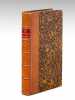
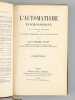
Très bon état. Peu courant ainsi relié
Silver Stained Roundels and Unipartite Panels before the French Revolution Flanders, Vol. 1: The Province of Antwerp
, Brepols Publishers, 2007 hardcover, XXV 436 pages., 510 b/w ill. 470 colour ill., 230 x 315 mm, english. ISBN 9781905375257.
This checklist is the first in a series of volumes describing the silver-stained glass roundels and unipartite panels from the 15th to the 18th centuries to be found in public buildings, museums and private collections in the present five provinces of Flanders (Belgium); as well as documented roundels and unipartite panels whose whereabouts are presently unknown or which have been moved to other locations or collections in the past. The checklist also mentions all known related material, and where possible, photographs of this material have been added. As far as the related material is concerned, the relevant publications are also mentioned. The related material includes direct designs, like drawings or engravings, and drawings and roundels which belong to either the same series or which are copies of these series.The present volume covers the Province of Antwerp. The publication of the checklists for the provinces of West Flanders, East Flanders (Vol. 2) and Limburg and Flemish Brabant (Vol.3) are planned for the near future. An inventory of the roundels in The Netherlands is also foreseen. "This handsomely produced and expensively illustrated volume is proof of the fact that Flemish roundels and unipartite panels have now regained the place of honour that they have always deserved." (Penny Hebgin-Barnes, Journal of the British Society of Master Glass Painters and The Journal of Stained Glass, vol. XXXII, 2008, p. 193-194)
Silver-Stained Roundels and Unipartite Panels before the French Revolution Flanders, Vol. 2: The Provinces of East and West Flanders.
, Brepols Publishers, 2011 hardcover, Corpus Vitrearum, Belgium, Checklists (CVBC 2) 631 pages C.J. Berserik, J. Caen Silver-Stained Roundels and Unipartite Panels before the French Revolution Flanders, Vol. 2: The Provinces of East and West Flanders XIV+631 p., 300 b/w ill. + 900 colour ill., 230 x 315 mm, 2011 ISBN: 978-1-905375-31-8 Languages: English ISBN 9781905375318.
This checklist is the second in a series of volumes describing the silver-stained glass roundels and unipartite panels from the Middle Ages to the 18th century found in public buildings, museums and private collections in the present five provinces of Flanders (Belgium). It also includes documented roundels and unipartite panels whose whereabouts are presently unknown and those which have been removed to other locations or collections in the past. The checklist also mentions all known related material. Where possible, photographs of this material have been added. As far as the related material is concerned, the relevant publications are also mentioned. This material includes models, drawings, engravings, and roundels which belong either to the same series or to those which are copies of these series. The present volume covers the Provinces of East and West Flanders (more or less the former County of Flanders). The first checklist, concerning the Province of Antwerp, was published in 2007. Additional volumes for the Provinces of Flemish Brabant and Limburg (Vol. 3), and the one with Addenda (Vol. 4) are in the planning stage. The former County of Flanders, with the cities of Bruges and Ghent, must once have displayed huge quantities of stained glass, which for the most part have been lost or relocated. The causes and reasons for this loss include natural calamities, fires, deliberate destruction and neglect. Most of the surviving roundels are now in foreign collections: on the continent; in Great Britain; or in the United States of America. It is worthy of note that great efforts have been made in the USA and Great Britain to compile and publish checklists of silver-stained roundels and other small panels, originating from the Low Countries, whilst here, where they were produced, this series is the first genuine overview that has ever been published. During the 15th and 16th centuries roundels and small panels played an important role as 'public relations' gifts among the upper classes, the church and its associated religious orders. As these gifts played a very significant role in social life, demand for these items was very high. It is clear that the manufacture of roundels and small panels was a substantial part of the earnings of these glass workshops, which also produced monumental windows. The most popular themes were predominantly religious, but also included heraldic, secular, mythological and allegorical subjects. The seasons and months and labours of the year were also commonly found. In the late 16th and the 17th centuries the range of iconographical subjects became more secular with, among other themes, representations of professions. Heraldry also remained very important, and in the second half of the 17th and the beginning of the 18th centuries nearly all roundels and panels depicted armorials and included the name of their donors.
Silver-Stained Roundels and Unipartite Panels before the French Revolution Flanders, Vol. 3: The Provinces of Flemish Brabant and Limburg.
, Brepols Publishers, 2014 hardcover, Corpus Vitrearum, Belgium, Checklists (CVBC 2)XIV+548 pages., 230 x 315 mm; English ISBN 9789079528240.
This book gives an extensive description of the silver-stained glass roundels and unipartite panels from the 15th to the 18th century to be found in public buildings, museums and private collections in the Flemish Provinces Limburg and Flemish Brabant. This checklist is the first in a series of volumes describing the silver-stained glass roundels and unipartite panels from the 15th to the 18th centuries to be found in public buildings, museums and private collections in the present five provinces of Flanders (Belgium); as well as documented roundels and unipartite panels whose whereabouts are presently unknown or which have been moved to other locations or collections in the past. The checklist also mentions all known related material, and where possible, photographs of this material have been added. As far as the related material is concerned, the relevant publications are also mentioned. The related material includes direct designs, like drawings or engravings, and drawings and roundels which belong to either the same series or which are copies of these series. The present volume covers the Provinces Limburg and Flemish Brabant. An inventory of the roundels in The Netherlands is also foreseen.
Silver Stained Roundels and Unipartite Panels before the French Revolution Flanders, 5 volumes complet; Vol 1: + Vol. 2: + Vol. 3: + Vol. 4: Addenda + Vol. 5:
, Brepols Publishers, 2007 -2021 Set of 5 volumes of this monumental work; hardcovers, XXV 2703 pages , 1807 colour ill., 230 x 315 mm, English.FINE. ISBN 9781905375257.
5 volumes describing the silver-stained glass roundels and unipartite panels from the 15th to the 18th centuries to be found in public buildings, museums and private collections in the present five provinces of Flanders (Belgium); as well as documented roundels and unipartite panels whose whereabouts are presently unknown or which have been moved to other locations or collections in the past. The checklist also mentions all known related material, and where possible, photographs of this material have been added. As far as the related material is concerned, the relevant publications are also mentioned. The related material includes direct designs, like drawings or engravings, and drawings and roundels which belong to either the same series or which are copies of these series.The present volume covers the Province of Antwerp. The publication of the checklists for the provinces of West Flanders, East Flanders (Vol. 2) and Limburg and Flemish Brabant (Vol.3) are planned for the near future. An inventory of the roundels in The Netherlands is also foreseen. "This handsomely produced and expensively illustrated volume is proof of the fact that Flemish roundels and unipartite panels have now regained the place of honour that they have always deserved." (Penny Hebgin-Barnes, Journal of the British Society of Master Glass Painters and The Journal of Stained Glass, vol. XXXII, 2008, p. 193-194) volumes; Vol. 1: The Province of Antwerp + Vol. 2: The Provinces of East and West Flanders + Vol. 3: The Provinces of Flemish Brabant and Limburg + Vol. 4: Addenda + Vol. 5: Medium-Sized Panels and Fragments of Large Stained-Glass Windows .
Amour, loi suprême
"Les Maîtres du roman populaire". Le roman complet - août 1932 - Couverture illustrée n&b - Arthème Fayard et Cie Editeurs - n° 434 - grand in-8 broché
assez bon état (couv. légèrement usée - très petite déchirure au niveau de la "coiffe" du haut)
Le plus cher trésor
"Les Maîtres du roman populaire". Le roman complet - juin 1931 - Couverture illustrée n&b - Arthème Fayard et Cie Editeurs - n° 406 - grand in-8 broché
assez bon état
Le Tueur de Navires
petit in-8 broché - 1937 - 256 pages - Ed. Paris, Le Livre Populaire - Librairie Arthème Fayard et Cie Editeurs
bon état (non massicoté)
Plaisir d'amour
"Les Maîtres du roman populaire". Le roman complet - Mai 1936 - Couverture illustrée n&b - Arthème Fayard et Cie Editeurs - n° 528 - grand in-8 broché
bon état
Jean Fresneau, Messe et Chansons
, Brepols, 2004 Softcover, 68 p., 185 x 270 mm, French. Nouveau. ISBN 9782503515328.
Dans l'ombre des plus c l bres compositeurs de la fin du XVe si cle gravitaient nombre de ma tres mineurs. Parmi eux, Jean Fresneau (1468-1505/13) que l'on suppose l'auteur de cinq chansons et d'une messe, est un "chantre" qui exercera ses talents dans deux des plus prestigieuses chapelles de l' poque: la chapelle royale de France et la chapelle ducale de Milan. Fresneau semble tre un compositeur assez conservateur, car toutes ses chansons sont trois voix dans un style g n ralement qualifi de "chansons bourguignonnes".
La dernière cartouche
Les éditeurs français réunis 1953 in12. 1953. Broché. Le roman raconte l'histoire d'un jeune soldat pendant la guerre d'Indochine dont la vie est sauvée par une dernière cartouche. Il s'agit de la première œuvre romanesque de Jean-Pierre Chabrol écrite en 1953
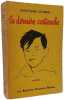
Bon état bords frottés couverture jaunie intérieur propre
Crossroads of Cultures. Multilingual Diversity in Dutch Literature from Late Medieval Flanders
, Brepols, 2026 Hardback, 338 pages, 156 x 234 mm, illustrations: 13 col., 4 tables b/w., English, Middle Dutch, Old French. NEW. ISBN 9782503616186.
Located in the geographical region where the Low Countries, the Holy German Empire, and the French Kingdom converge, the medieval County of Flanders was a crossroad at which many cultures from across Europe met. As these cultures mixed, so too did their languages, leading to Flanders becoming profoundly multilingual, both on a societal and individual level. This volume examines the literary interaction between the most prominent languages of Flanders, namely Dutch, French, and Latin, in a variety of texts and manuscripts from an array of genres, analyzing multilingualism as a cultural phenomenon, a sociolinguistic feature, and a literary device. Combining literary studies with insights from sociolinguistics, material philology, and translation studies, this work illustrates the rich multilingual diversity of medieval Flemish literature during the late Middle Ages and promotes the study of Dutch literature in a translingual, multicultural context.
JESSENNE (Jean-Pierre) et ROSSELLE (Dominique), avec la collaboration de DESVIGNES (Dominique), éditeurs.-
Reference : 61980
(1989)
Florilège des Cahiers de Doléances du Pas-de-Calais.
1989 Lille, Université Charles de Gaulle, Centre d'Histoire de la Région Nord et de l'Europe du Nord-Ouest (Collection "Histoire et Littérature Régionales", Série "Bicentenaire de la Révolution"), 1989, in 8° broché, 285 pages ; illustrations ; glossaire, bibliographie et index des noms de lieux.
Fermeture du 1er au 23 Août


Phone number : 04 77 32 63 69
FLORILEGE DES CAHIERS DE DOLEANCES DU PAS DE CALAIS
Format moyen, couverture souple. 280 pages. Très bon état. Une expédition par Mondial Relay vous sera proposée 1989 centre d'histoire de la région du Nord et de l'europe du nord ouest. Université de Lille
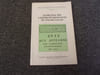
Two Irish Apocalypses The Vision of Adomn n and The Two Sorrows of the Kingdom of Heaven
, Brepols, 2026 Paperback, xii + 218 p., 120 x 190 mm, Illustrations:2 b/w, Language(s):English. *New . ISBN 9782503622187.
This volume presents translations of two medieval Irish eschatological texts, with extended commentary. "The Vision of Adomn n" is the most elaborate and ambitious account of the afterlife in the Irish language: using the framework of "The Vision of Saint Paul", the author constructs a rich and vivid picture of the next world, drawing upon many sources including a remarkable account of the seven heavens as regions of testing and punishment. "The Two Sorrows of the Kingdom of Heaven" is a considerably briefer work, describing the Last Judgement and the reign of Antichrist with reference to the eschatological martyrs Enoch and Elijah.
Grace and Grandeur: The Portraiture of Paolo Veronese
, , 2008 Cloth binding under dustjacket, 268 pages, 220 x 280 mm, illustrations: 135 b/w, 52 col. English text. *fine copy. ISBN 9781905375233.
Of the triumvirate of sixteenth-century Venetian painters, Titian, Veronese, and Tintoretto, Paolo [Caliari] Veronese (1528-1588) best conveyed Venice?s civic splendor. His masterpieces in the Doge?s Palace conferred on the Republic a magnificence and authority that was rapidly dwindling by the end of the Renaissance. But on a private level, he also reshaped the fashions of the Serenissima through a steady stream of portrait commissions. Many members of Venice?s most elite families sat for Veronese, as did notable artists and authors, including Titian and Sir Phillip Sidney. Once regarded as Venice?s best portraitist, his talents in this genre unfortunately remain largely unknown to modern audiences. This book offers the first comprehensive study of the approximately forty portraits that survive. Shedding new light on early works, such as the pendants of the Da Porto and the frescos of the Barbaro in the Palladian villa at Maser, Professor Garton also examines Paolo?s images of women within the larger polemics surrounding the anonymous beauties of Giorgione, Palma il Vecchio, and Titian. The author analyzes Veronese?s innovations in martial portraiture, melancholic portrayals of artists and nobility, and evocations of the antique. Relevant issues of social history, class insecurity, and poetic convention are all brought to bear in deciphering the meanings of these images and what they reveal about the painter and his clientele. This layered study of Venice?s golden age of painting ends appropriately with a glance at the ?moderns? who profited most from the study of Veronese?s portraits: Jean-Baptiste Carpeaux, Henri Fantin-Latour, Mary Cassatt, and Henri Matisse. A complete catalogue of Veronese?s portraits follows the chapters. John Garton, Ph.D., is assistant professor of liberal arts at the Cleveland Institute of Art.
Portraits After Existing Prototypes Corpus Rubenianum Ludwig Burchard part XIX.- 4
, Brepols - Harvey Miller, 2016 Hardcover with dusjacket.340 p., 130 b/w ill. + 100 colour ill., 180 x 265 mm, Languages: English. ISBN 9781909400580.
Rubens was mesmerised by faces. He studied physiognomy, the pseudo-science that began making headway in the sixteenth century, which postulated that a person?s character could be read from their facial features. He made geometrical analyses of the faces of ancient emperors and heroes. He invested a great deal of time in detailed anatomical studies, sometimes based on nature, and equally often on antique busts and coins. At times it seems as though the master wanted to know and understand every nook and cranny of the human face. To this end he studied man himself and the way in which the ancients dealt with nature. His best portrait copies, thus, are not strictly copies but rather studies in which art history, craftsmanship, literature and theory merge into an emulation of art and nature. They are works in which the artist was looking for what ultimately captivated him the most: man in all of his myriad facets, and the perspectives art afforded to better understand man.
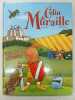
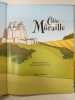
LE CREPUSCULE DES EDITEURS
Un ouvrage de 178 pages, format 120 x 220 mm, broché couverture couleurs, publié en 2019, Editions Parole, collection "Chemins Faisant", bon état
Voyage sur les chemins mal connus du monde des livres
Phone number : 04 74 33 45 19
drawings of Jacob de Gheyn II.
, New York, Grossman Publishers, 1973., Bound, cloth, original illustrated dust-jacket b/w, 19x25,5cm, 44pp + 111 full-page plates b/w.
The book contains a representative selection of 111 de Gheyn drawings, wich reflect the wide range of his interests and the fullness of his participation in the intelectual life of his time. The drawings of Jacob de Gheyn II.
Manuel D'archéologie Étrusque et Romaine
Alcide Picard & Kaan, Editeurs Par La Voie Etroite 318 pages en format -8 - nombreuses illustrations - belle reliure en toile au dos avec dorures et acton marbré
Bon État
Le Journal des Jésuites, publié d'après le manuscrit original conservé aux archives du Séminaire de Québec
J. M. Valois & cie Demi-toile à coins Montréal 1892
Très bon In-4. 403 pages. 2è édition. Sous reliure des Éditions Beauchemin. Restaurations anciennes aux premières pages.

