 Write to the booksellers
-
Type
Autograph (15)
Book (51161)
Magazine (372)
Manuscript (2)
Maps (1)
New book (1)
Old papers (1)
Photographs (1)
-
Latest
Last 24h (23)
Last 3 days (19)
Last month (265)
Last week (25)
-
Language
Dutch (5)
English (43)
Finnish (1)
French (51428)
German (18)
Greek (5)
Italian (20)
Japanese (2)
Latin (20)
Portuguese (3)
Spanish (7)
Swedish (2)
-
Century
16th (59)
17th (192)
18th (1261)
19th (3629)
20th (22318)
21st (3820)
-
Countries
Belgium (6742)
Brazil (24)
Canada (6)
China (2)
Côte d'Ivoire (68)
Denmark (1009)
France (39018)
Germany (3)
Greece (3)
Netherlands (269)
Switzerland (4410)
-
Syndicate
ALAC (6)
CLAM (36)
CNE (6)
ILAB (20087)
NVVA (998)
SLACES (907)
SLAM (17794)
SNCAO (41)
Le Faux Intellectualisme
Paris P.U.F 1948 In-8 120 pp, brochage légèrement passé.
Bon État Général Broché à raba
Les méfaits des intellectuels
Marcel rivière 1926 in12. 1926. Broché.
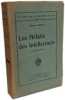
Bon Etat bonne tenue intérieur propre
LA LIBERTE CIVILE. Nouvelle étude critique sur les Publicistes Contemporains. PHILOSOPHIE POLITIQUE DE L'HISTOIRE DE FRANCE. Etude critique sur les Publicistes Contemporains ( 2 titres reliés en 1 volume ).
Paris, Librairie Académique DIDIER et Cie, 1864+1861, 14x22,5 cm, reliure demi-chagrin rouge, 490+352 pages., légères traces de mouillure en bordure inférieure en début d'ouvrage, tampon de bibliothèque, sinon bon état.
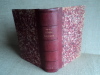
critiques sur JOHN STUART MILL - BENJAMIN CONSTANT - DAUNOU - M. DE LAMARTINE - BASTIAT - M. DUPONT WHITE - MACAULAY - MONTLOSIER - BERNAL - M. ODILON BARROT - M. ALBERT DE BROGLIE - DE TOCQUEVILLE - M. JULES SIMON - M. PROUDHON - M. EMILE DE GIRARDIN.
Les Cartésiens d'Italie.
P., Auguste Picard, 1920 In-8, broché, XXIV et 377 pp., cachet "Seminarium Valsense, Bibliotheca major". Thèse soutenue devant la Faculté des Lettres d'Aix. Edition originale. Importante bibliographie.
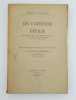
Couv. tachée, néanmoins intérieur très frais. - Frais de port : -France 7,15 € -U.E. 9 € -Monde (z B : 14 €) (z C : 24 €)
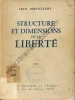
Structure et dimensions de la liberté
,Paris, Les éditions de l'école 1956, 255 pp., 1 vol. in 12 br. traces anciennes d'adhésif, cachets, illustrations hors-texte.
Science et libre pensée.
P., Calmann-Lévy, sans date (1905), fort in 8° broché, VI-411 pages ; couverture et dos abimés avec manques ; intérieur très frais.
Mention de 2e édition sur la couverture. PHOTOS sur DEMANDE. Fermeture du 1er au 23 Août


Phone number : 04 77 32 63 69
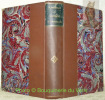
Science et morale.
Paris, Calman Lévy 1897, 230x145mm, XII - 515pages, demi-percaline. Plats papier marbré. Auteur et titre dorés au dos. Non rogné. Bel exemplaire.
Pour un paiement via PayPal, veuillez nous en faire la demande et nous vous enverrons une facture PayPal
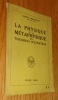
La physique et la métaphysique des théories d'Einstein
In-12 broché, Payot, 1922, 48 pp. Un peu frotté et écorné, petites pliures, coiffes un peu frottées, dos insolé, intérieur propre, usure d'usage, bon exemplaire de lecture. Poids 60 g. Frais d'envoi 1,70 euro sur la France, 2,20 euros UE et Suisse, 2,60 euros pour le reste du monde (tarifs de base hors envois suivis). Twitter : @Pontneuf06.
La science et la vie moderne.
In-8, broché (couv. lég. défr.), 221 p. Paris, Payot, 1924.
Edition originale.
Science et philosophie.
1905 P., Calmann-Lévy, sans date (vers 1905), in 12, XV-492 pages, relié pleine percaline rouge ; quelques pages poussiéreuses ; cachet.
Fermeture du 1er au 23 Août
Phone number : 04 77 32 63 69
SCIENCE ET LIBRE PENSÉE
Paris; Calmann-Lévy, Éditeurs, deuxième édition, 1 volume broché de format 23 x 14,5 cm, IV + 411 pages, bon état. Frais de port en supplément.
Envoi en colissimo : + 10,15 euros
Science et Morale.
CALMANN LEVY. 2ème édition. 1897. In-8. Broché. A relier, Plats abîmés, Dos abîmé, Quelques rousseurs. 518 pages. Ouvrage débroché, manques sur le dos fendu et cassé. Accrocs et quelques manques sur les bords de couverture.. . . . Classification Dewey : 190-Philosophie occidentale moderne
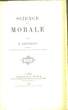
Ex-Libris manuscrit daté de 1903. Classification Dewey : 190-Philosophie occidentale moderne
Science et philosophie
Paris, Calmann Levy 1886 xv + 492pp., 1e édition, br.orig., 23cm., quelques rousseurs, non coupé, bon état, F80379
Sciences et Philosophie
CALMANN LEVY. 1886. In-8. Broché. Etat d'usage, Couv. défraîchie, Dos fané, Rousseurs. 492 pages. Dos fendu et restauré, avec étiquette sur coiffe en-tête. Bords des plats usés.. . . . Classification Dewey : 190-Philosophie occidentale moderne
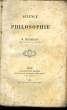
Edition originale. Classification Dewey : 190-Philosophie occidentale moderne
Science et Philosophie. (EXEMPLAIRE D'EPREUVE)
In-8 oblong (250 x 196 mm), demi-chagrin vert sapin à grands coins, dos lisse, titre doré, daté en pied, tête dorée, xv, (1) bl., 492 pages, couverture et grands témoins conservés. Paris, Calmann-Lévy, 1886.


Edition originale sur grand papier, non rogné, conservant les témoins de format in-4° ; exemplaire dépreuves portant un envoi autographe de lauteur au député Jules Roche (1841-1923), avocat, journaliste et cofondateur, avec Clemenceau, du journal "La Justice".Recueil dessais et de conférences, incluant la lettre adressée à Ernest Renan sur "la science idéale et la science positive". L'auteur y examine la relation entre science expérimentale et philosophie, affirmant l'autonomie de la connaissance scientifique et sa dimension morale, dans une perspective laïque et rationaliste.Emblématique du positivisme républicain, louvrage illustre le passage de Berthelot de la pratique savante à une réflexion sur les fondements et la portée morale de la connaissance scientifique.('Dict. P.U.F. des philosophes', p. 336.)Quelques annotations marginales au crayon de couleur et au crayon à papier. Marges brunies aux derniers feuillets. Exceptionnel exemplaire dépreuves avec envoi, très frais, non rogné, couverture et grands témoins conservés.
Marcellin Berthelot, pages choisies.
P., Les Editions Crès (Collection "Le Florilège Contemporain"), sans date, XXXVII-201 pages ; couverture fanée.
Fermeture du 1er au 23 Août
Phone number : 04 77 32 63 69
Louis Ménard et son oeuvre.
Etude précédée du portrait et d'un autographe de Louis Ménard, accompagnée de 2 reproductions de tableaux et de tables - Paris, Felix Juven, 1902 - in-12 : 314 pp. - br.
Bon ex.
Evolutionnisme et platonisme.
Paris, Félix Alcan, éd. 1908. In-8 broché, couv. factice de l'ép., titre manuscrit, IV-326 pp., appendices, ex. non coupé, envoi manuscrit de l'auteur sur la couv.
Dos jauni, intérieur frais, bon ex. - Frais de port : -France 5,7 € -U.E. 8 € -Monde (z B : 12 €) (z C : 22 €)
Evolutionnisme et Platonisme - Mélanges d'histoire de la philosophie et d'histoire des sciences
Paris, F.Alcan 1908 iv + 326pp., dans la "Bibliothèque de philosophie contemporaine", 1e éd., [artt.sur Darwin, Spencer, Nietzsche, Platon & Platonisme, Hegel, e.a.]
LA PENSÉE DE L'ASIE ET L'ASTROBIOLOGIE
Paris Payot 1938 in 8 (23x14,5) 1 volume broché, 383 pages. Les origines des sciences et des religions supérieures, l'astrologie chaldéenne, l'état chinois et les moralistes chinois. Les philosophies indiennes, la pensée bouddhique, le monothéisme islamique et judaique, la formation du christianisme dans leurs rapports avec l'astrobiologie. Collection ''Bibliothèque Scientifique''. René Berthelot, Membre associé de l'Académie de Belgique. Bon exemplaire
Bon
Le jeune homme comme il faut
Bonne Presse. Non daté. In-12. Broché. Etat d'usage, Couv. convenable, Coiffe en pied abîmée, Papier jauni. 497 pages Augmentées d'une illustration hors texte en noir et blanc. Déclaration de l'auteur.. . . . Classification Dewey : 210-Philosophie et théorie
Classification Dewey : 210-Philosophie et théorie
Le livre de tous
Bonne Presse. 1914. In-12. Broché. Etat d'usage, Couv. convenable, Dos satisfaisant, Papier jauni. 466 pages Augmentées d'illustrations en noir et blanc dans texte Coins frottés.. . . . Classification Dewey : 210-Philosophie et théorie

Edition nouvelle illustrée. Classification Dewey : 210-Philosophie et théorie
The Responsible Scholar. Ethical Considerations in the Humanities and Social Sciences.
Canton, Watson Publishing International 1996, 235x155mm, XIV - 303pages, editor's binding with jacket. Book in very good condition.

Pour un paiement via PayPal, veuillez nous en faire la demande et nous vous enverrons une facture PayPal
La doute et la foi. (L'étrange destinée d') Edmond Scherer, Henri-Frédéric Amiel (sa vie douleureuse, sa pensée profonde), Félix Bovet.
Neuchâtel, H. Messeiller, s.d. (1952), in-8°, 96 p., non rogné, brochure originale.
(SLACES, NVVA)
Phone number : 41 (0)26 3223808
Université d'Aix-Marseille. Les Cartésiens d'Italie. Recherches sur l'influence de la philosophie de Descartes dans l'évolution de la pensée italienne aux XVIIe et XVIIIe siècles. Thèse soutenue devant la Faculté des lettres d'Aix
Paris, Auguste Picard, 1920 in-8, [3] ff. n. ch., XXIV pp., 378 pp., un f. n. ch., demi-chagrin fauve à coins, dos à nerfs (reliure moderne). Coiffe supérieure obtondue.
Unique édition. - - ACTUELLEMENT EN CONGÉS, DE RETOUR LE 17 AOÛT - VENTE PAR CORRESPONDANCE UNIQUEMENT - LIEN DE PAIEMENT, NOUS CONSULTER.

