 Write to the booksellers
-
Type
Autograph (15)
Book (50760)
Magazine (288)
Manuscript (2)
Maps (1)
New book (1)
Old papers (1)
Photographs (1)
-
Latest
Last 24h (21)
Last 3 days (19)
Last month (264)
Last week (24)
-
Language
Dutch (5)
English (43)
Finnish (1)
French (50943)
German (18)
Greek (5)
Italian (20)
Japanese (2)
Latin (20)
Portuguese (3)
Spanish (7)
Swedish (2)
-
Century
16th (59)
17th (190)
18th (1233)
19th (3591)
20th (22068)
21st (3770)
-
Countries
Belgium (6739)
Brazil (24)
Canada (6)
China (2)
Côte d'Ivoire (68)
Denmark (1009)
France (38536)
Germany (3)
Greece (3)
Netherlands (269)
Switzerland (4410)
-
Syndicate
ALAC (6)
CLAM (36)
CNE (6)
ILAB (20089)
NVVA (998)
SLACES (907)
SLAM (17796)
SNCAO (41)
Eine Dialektanalyse der koischen Asylieurkunden. Diss.
Dunedin, John McIndoe Ltd. 1972, 225x155mm, V - 89Seiten, broschiert. Schönes Exemplar.
Pour un paiement via PayPal, veuillez nous en faire la demande et nous vous enverrons une facture PayPal
Essais sur les données immédiates de la Conscience.
P., Presses Universitaires de France, 1946, 1 vol. in-8 (230 x 145) broché sous couverture imprimée en noir et vert, de 181 pp. Bel exemplaire.
Collection "Bibliothèque de Philosophie Contemporaine" fondée par Félix Alcan. Mention de 53e édition en couverture et page de titre.


L'énergie spirituelle. Essais et Conférences.
P., Presses Universitaires de France, 1946, 1 vol. in-8 (230 x 145) broché sous couverture imprimée en noir et vert, de 214 pp. Bel exemplaire.
Collection "Bibliothèque de Philosophie Contemporaine" fondée par Félix Alcan. Mention de 42e édition en couverture et page de titre.
Le Matérialisme Actuel.
FLAMMARION Ernest. 1920. In-12. Broché. Etat passable, Couv. défraîchie, Dos satisfaisant, Intérieur acceptable. 261 pages. Dos renforcé par une bande, avec code de bibliothèque sur la coiffe en-tête. Tampons de bibliothèque sur la page de titre et dans quelques marges. 1er plat de couverture non-original.. . . . Classification Dewey : 190-Philosophie occidentale moderne
Bibliothèque de Philosophie Scientifique. Préface de Paul Doumergue. Classification Dewey : 190-Philosophie occidentale moderne
Essai de philosophie et de morale (en deux tomes)
Didier et cie 1864 532+545 pages in12. 1864. Relié. 532+545 pages.
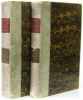
Bon Etat de conservation bords frottés couverture ternie qq rousseurs à l'intérieur globalement propre texte net bonne tenue
DOCTRINE DE SAINT AUGUSTIN SUR LA LIBERTE ET LA PROVIDENCE
Joubert. 1843. In-8. Broché. Etat passable, Plats abîmés, Dos abîmé, Mouillures. 254 pages. Dos manquant. Petits manques sur les plats. Cahiers se détachant. Rousseurs. Annotations d'époque en page de garde.. . . . Classification Dewey : 100-PHILOSOPHIE ET DISCIPLINES CONNEXES
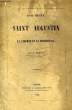
De la nature humaine. Opinion de S. Augustin. Réfutation du manichéisme. Dieu agit-il suivant quelque règle ? ... Classification Dewey : 100-PHILOSOPHIE ET DISCIPLINES CONNEXES
DU SPIRITUALISME ET DE LA NATURE
Librairie Philosophique de Ladrange, Paris. 1846. In-8. Broché. Etat d'usage, 2ème plat abîmé, Dos satisfaisant, Rousseurs. 362 pages. Etiquette de code sur la couverture. Fortes rousseurs.. . . . Classification Dewey : 210-Philosophie et théorie
Mouvement actuel des esprits vers la Nature. Du naturalisme ou athéisme. Causes de l'athéisme. Des lois naturelles, Superstition... Classification Dewey : 210-Philosophie et théorie
Du spiritualisme et de la nature
Paris, Ladrange 1846 lx + 362pp., 23cm., br.orig., rousseurs dans le texte, toujours non coupé, F81446
ESSAIS DE PHILOSOPHIE ET DE MORALE, TOME I
Librairie Académique Didier et Cie, Paris. 1864. In-12. Relié demi-cuir. Bon état, Couv. convenable, Dos à nerfs, Quelques rousseurs. 532 pages. Auteur, titre, tomaison et filets dorés sur le dos. Etiquette de code sur la couverture. Dos très légèrement frotté. Tranche légèrement passée.. . . . Classification Dewey : 100-PHILOSOPHIE ET DISCIPLINES CONNEXES
Essai sur la Providence. Philosophes du XVIIIe siècle. Une philosophie nouvelle... Classification Dewey : 100-PHILOSOPHIE ET DISCIPLINES CONNEXES
Essai sur la Providence.
In-12, demi-basane bleue nuit de l'époque, dos lisse orné de filets dorés, titre doré, tranches mouchetées, xlv, 283, (1) p. de table. Paris, Auguste Durand, 1853.

Edition originale de cet ouvrage qui contient le développement de la thèse de philosophie de Bersot concernant la doctrine de Saint-Augustin sur la Providence. "Pierre Bersot illustre à la fois les positions de l'esprit laïque lorsque celui-ci entre en collision avec l'esprit ecclésiastique et les positions du spiritualisme le plus religieux, puisque la liberté fait pour lui partie de la religion" (Jean Bonnet, 'Les formes du kantisme français dans la construction de la synthèse républicaine', p. 165).Rousseurs éparses.Exemplaire bien relié.
Etudes et discours (1868-1878).
In-12, demi-chagrin rouge de l'époque, dos à 5 faux nerfs orné de caissons garnis d'un riche décor de jeux de filets d'encadrement, plats de percaline rouge estampés à froid, fer du lycée de Montpellier doré au centre du plat supérieur, tranches mouchetées, (3) f., 466 p. Paris, Hachette et Cie, 1879.

Edition originale. Ernest Bersot (1816-1880) avait été le secrétaire de Victor Cousin alors ministre de l'Instruction publique. Devenu professeur de philosophie, en 1851, il refusa de prêter le serment des fonctionnaires et fut contraint de quitter lenseignement. Dès lors, il se consacra au journalisme et à ses travaux. En 1871, après la fin du Second Empire, il fut nommé directeur de l'École Normale Supérieure.Recueil d'articles, de travaux critiques, commentaires, essais et discours: Philosophie et religion (sur A. Franck), La Montagne (sur Michelet), "La France Nouvelle" de Prévost-Paradol, Les Lettres de Lamennais, journalisme (Avant le siège, vainqueurs et vaincus), "Oeuvres morales de Franklin", etc., etc.Bel exemplaire dans une reliure de prix au fer du lycée de Montpellier.
Etudes sur le XVIIIe siècle
Durand Auguste Relié 1855 In-12 (11x18 cm), relié demi-chagrin, titre et auteur au dos à quatre nerfs, 357 pages, études particulières : Voltaire, Rousseau, Diderot, Montesquieu ; dos insolé, bords, coins et coiffes frottés, quelques rayures et traces de frottement sur les plats, une mouillure à l'intérieur (sur la quasi totalité de l'ouvrage), assez bon état. Livraison a domicile (La Poste) ou en Mondial Relay sur simple demande.

Etudes sur le XVIIIème siècle. Etude générale. Tome 1
paris, Auguste Durand, Librairie, 1855 - in 8° : 516 pp - br.
bon ex. Tome 1 seul
La philosophie de Rousseau. (Extrait de la liberté de penser, n°8, 15 juillet 1848)
,Paris, Joubert, Libraire-éditeur 1848, 31 pp., 1 vol. in 8 br. couverture muette tachée, rousseurs et quelques traces d'humidité anciennes.
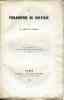
La Philosophie de Voltaire [ Edition originale ]
Avec une introduction et des notes, par Ern. Bersot, 1 vol. in-12 reliure de l'époque demi-chagrin noir, dos à 5 nerfs dorés orné, Librairie Philosophique de Ladrange, Paris, 1848, L-322 pp.
![La Philosophie de Voltaire [ Edition originale ]. BERSOT, Ernest](https://static.livre-rare-book.com/pictures/CDL/67568_thumb.jpg)
![La Philosophie de Voltaire [ Edition originale ]. BERSOT, Ernest](https://static.livre-rare-book.com/pictures/CDL/67568_2_thumb.jpg)
![La Philosophie de Voltaire [ Edition originale ]. BERSOT, Ernest](https://static.livre-rare-book.com/pictures/CDL/67568_3_thumb.jpg)
Bon exemplaire. Normalien, agrégé de philosophie et membre de l'Institut, Ernest Bersot (1816-1880) sera le directeur de l'École normale supérieure de 1871 à sa mort.
LIBRE PHILOSOPHIE
Germer Baillière, Paris. 1868. In-12. Broché. Bon état, Couv. légèrement passée, Dos satisfaisant, Quelques rousseurs. 168 pages. Etiquette de code sur la couverture.. . . . Classification Dewey : 100-PHILOSOPHIE ET DISCIPLINES CONNEXES
'Biblithèque de Philosophie contemporaine'. Antécédents de la philosophie actuelle. Tendances de la philosophie actuelle. La raison naturelle. La raison progressive... Classification Dewey : 100-PHILOSOPHIE ET DISCIPLINES CONNEXES
UN MORALISTE / ETUDES ET PENSEES.
HACHETTE. 1882. In-12. Relié demi-cuir. Bon état, Couv. convenable, Dos satisfaisant, Quelques rousseurs. LXXXVIII + 379 pages augmentées d'un frontispice sous serpente - Dos à 4 nerfs - Auteur, titre, fleurons dorés - 1er et 2ème plats marbrés - Plats intérieurs ornées de décorations fleurales.. . . . Classification Dewey : 100-PHILOSOPHIE ET DISCIPLINES CONNEXES
Précédé d'une notice biographique par Edmond SCHERER. Classification Dewey : 100-PHILOSOPHIE ET DISCIPLINES CONNEXES
DE LA PHILOSOPHIE SOCIALE, ETUDES CRITIQUES
Librairie Germer Baillière, Paris. 1877. In-12. Broché. Bon état, Couv. légèrement passée, Dos satisfaisant, Quelques rousseurs. 170 pages. Etiquette de code sur la couverture.. . . . Classification Dewey : 100-PHILOSOPHIE ET DISCIPLINES CONNEXES
'Bibliothèque de Philosophie contemporaine'. Classification Dewey : 100-PHILOSOPHIE ET DISCIPLINES CONNEXES
ESPRIT ET LIBERTE (Méthode spiritualiste)
Félix Alcan, Paris. 1892. In-12. Broché. Etat d'usage, Couv. légèrement passée, Manque en coiffe de pied, Intérieur acceptable. 458 pages. Etiquette de code sur la couverture. Petite annotation sur le 1er plat. Tampons sur le 1er plat et en page de titre (ex-libris).. . . . Classification Dewey : 100-PHILOSOPHIE ET DISCIPLINES CONNEXES
Introduction à la recherche des Causes premières, IV, Méthode spiritualiste (suite). Classification Dewey : 100-PHILOSOPHIE ET DISCIPLINES CONNEXES
ILLUSIONS ET VERITE.
Tournai (Belgique), Les cahiers du CESHE, série scientifique , 1985, broché, 14x22,5 cm, 78 pages, illustrations et croquis.
inscription (nom et n°) au feutre noir sur couverture, sinon bon état.
La mutation humaine. Collection : Petite Bibliothèque Payot, N° 60.
Paris, Payot, 1964. 11 x 18, 279 pp., broché, bon état (couverture défraîchie).
La symbolique au grade de Maître
1992 Editions Edilaf - 1992 - In-8 broché, couverture illustrée - 127 pages - 6 planches en N&B hors texte
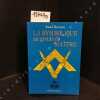

Bon état - Une nom manuscrit au stylo en page de garde Bon
La symbolique des nombres
1984 Editions EDIMAF - 1984 - In-8 broché, couverture illustrée - 314 pages - Illustrations en N&B dans le texte
Bon état - Légers plis de lecture au dos - Menus frottements sur la couverture Bon
Geschiedenis tussen struktuur en evenement. Een methodologies en wijsgerig onderzoek
Amsterdam, Wetenschappelijke Uitgeverij 1973 381pp., 25cm., mooie staat

