 Write to the booksellers
-
Type
Book (934)
Magazine (5)
-
Latest
Last 24h (1)
Last month (11)
-
Language
English (3)
French (936)
-
Century
16th (19)
17th (52)
18th (180)
19th (304)
20th (143)
21st (47)
-
Countries
Belgium (124)
Denmark (668)
France (147)
-
Syndicate
CLAM (2)
ILAB (677)
SLAM (7)
Festskrift til Johan Hvidtfeldt. På Halvfjerdsårsdagen 12. december 1978.
Aabenraa, 1978. Orig. papbd. 518 pp.

Niels Lyhne (entre la vie et le rêve). Compagnie française de traduction.
Paris, Librairie Stock, 1928. 13 x 20, xvi-326 pages, broché, non rogné, bon état.
"N° 431 sur 2530 exemplaires numérotés sur papier vélin d'Alfa teinté Outhenin-Challandre; traduit du danois par Mme R. Remusat; avant-propos d'Edmond Jaloux."
Bidrag til Fremstilling af det danske Kiøbstadvæsen under Kongerne Christian III. og Frederik II. - [DEDIKATIONSEKSEMPLAR.]
Kjøbenhavn, Bianco Luno, 1844. 8vo. I det originale blanke omslag. Med forfatterens dedikation på forsatsblad. Særtrykt fra ""Historisk Tidsskrift"". Omslag med pletter og en smule slitage. Indvendig ren og pæn. Trykt på godt papir. (2), 138 pp.
Særtryk, med forfatterens dedikation, af dette vigtige og tidlige studie af de danske købstæder under kongerne Christian 3. og Frederik 2.
Bidrag til Personal- og Tids-Historien i Danmark i det 16de Aarhundrede. (Særskilt Aftryk af Historisk Tidsskrift)
Kjöbenhavn, Bianco Luno, 1844. 8vo. I et simpelt samtidigt halvshirtbind. Kanter af permer en smule slidte. Med egenhændig dedikation fra forfatteren til ""Min kjære Hustrue"" på forsatsbladet. Enkelte spredte brunpletter, ellers ren indvendig. (2),128 pp.
Nydeligt dedikationseksemplar af originaltrykket.
Danmarks politisk-militaire Historie under Unionskongerne fra Kong Oluf og Dr.Margrethe, indtil Kong Hanses Død...
K.,1835. 4to. Samt.helshirt. Bindet lettere slidt. St.p.titel. På skrivepapir. XVI,592,(8) pp. samt 3 kobberstukne foldekort.
Almindelig Udsigt over Nordens, især Danmarks Krigsvæsen i Middelalderen indtil Krudtets Anvendelse i de nordiske Krige.
Kjøbenhavn, H.F. Popp, 1825. Samtidigt hldrbd. Rygforgyldning. Forgyldt titeletiket på ryg. Stempler på titelbladet. XVI,480 pp. samt 5 store foldede kobberstukne plancher, visende historiske våben. De første blade lidt brunede. Indvendig ren.
Historie om Calmarkrigen. Kbhvn., 1820.
Ubeskåret i nyere hldrbd. Stempel p.titelblad. XII,360,(1) pp.
Historie om Danmarks Deeltagelse i Trediveaarskrigen.
Kjøbenhavn, 1822. Ubeskåret i samtidigt blåt papirsomslag, dette omslag med tape øverst og neders. Stempel på titelblad. Noget brunplettet. XII,548,(1) pp. samt en stor udfoldelig kobbersukket planche: ""Plan og Grundrids over Fæstningen Glykstad.""
Historie om Danmarks Deeltagelse i Trediveaarskrigen.
Kjøbenhavn, 1822. Ubeskåret i nyere papbd. Forgyldt rygtitel. Stempel på titelbladet. XII,548,(2) pp., 1 foldet kobberstukket plan og grundrids over fæstningen Glykstad, 1628.
Literacy in Medieval and Early Modern Vilnius. Forms of Writing and Rhetorical Spaces in the City
, Brepols, 2023 Hardback, xlv + 765 pages, Size:156 x 234 mm, Illustrations:60 b/w, 16 col., 2 maps b/w, Language: English. ISBN 9782503604305.
Summary Late medieval and early modern cities in Europe could not exist without the use of the written word. Based on a case study of Vilnius ?the capital of the Grand Duchy of Lithuania in the fourteenth -eighteenth centuries ?this book shows how rhetoric influenced all the spheres of urban literacy: the rules of writing, rhetorical genres and their functions, and the social practices of producing, preserving, and disseminating texts. Vilnius was a multi-ethnic, multi-religious, and multi-scriptural city, and its literary culture was particularly rich. What was the legal basis of the city? Who were the professionals of the written word? What was the role of schools and books in the literary culture of the city? How did women participate in Vilnius's textuality? Which rhetorical genres were used? This study is based on research into the different types of texts used in Vilnius: contracts; last wills; sermons; municipal, state, and church records; primers; shopping lists; poetry; manuals; and letters, in Polish, Latin, Ruthenian, Lithuanian, Yiddish, and other languages written or printed in five alphabets. The rhetorical organization of Vilnius can serve as a model for examining other towns of the time. It also shows the complexity of the use of script in the multi-ethnic urban communities of North-Eastern Europe. TABLE OF CONTENTS Preface, Abbreviations, Images Chronological Table List of the Grand Dukes of Lithuania and the Kings of Poland Maps Transcriptions, Translations, and Spellings Introduction Part 1: Loci Textuales in Late Medieval and Early Modern Vilnius 1. Chanceries, Courts, and Their Writing Staff 2. The Preservation of Texts 3. Schools 4. Loci Textuales of Women Part 2: Languages and Scripts: Materiality, Writing and Reading 5. Reading and Writing in Early Modern Vilnius 6. The Materiality of Texts 7. The Book Part 3: Genera Scribendi 8. Genus Deliberativum: Letters and Testaments 9. Texts in a Dispute 10. Epideictic Texts 11. Religious Texts Recapitulation Conclusion The Lost Voices of the Inhabitants of Vilnius Bibliography Indices
Dictionnaire de poche. Suédois - Français. Français - Suédois.
Couverture rigide. Broché. 352 pages. Légères rousseurs.
Livre. Editions Jan Förlag, 1959.
Schleswig=Holsteins Befreiung. Hrsg. aus dem Nachlass Karl Jansen und ergänzt von Karl Samwer.
Wiesbaden, 1897. Lex8vo. orig. full cloth. Portrait. XVI,800 pp.


Versuch einer kirchlichen Statistik des Herzogthums Schleswig. 1.-4. Lieferung (4 Bde.).
Flensburg, 1840-42. Bound in 2 later solid hcalf. XVI,1708 pp.
Le Phare de l'Atlantide
Métailié 2002 156 pages 14x1 4x20 8cm. 2002. Broché. 156 pages.
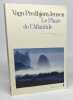
Bon état tranche supérieure salie intérieur propre
For Town and Country: The Civic Music System in Denmark, 1660-1800
, Brepols, 2019 Paperback, 340 pages, Size:190 x 290 mm, Illustrations:23 b/w, 7 col., 13 tables b/w., 6 maps b/w, 26 music examples, Language: English. ISBN 9782503585727.
Summary The employment of civic musicians was a practice in most European countries in early modern Europe, all the way from London and Venice to small Danish towns. This study's objective is to lay out which kinds of civic musicians (stadsmusikanter) Denmark had, and to examine what that came to signify for musicians and music, as there has not been a study in depth of civic musicians' employment in Denmark until now. It has been a particular objective of this study to illuminate the Danish situation in relation to some other European countries. Compared to Germany, the civic music system in the kingdom of Denmark developed some clear characteristics in the period 1660-1800 because it had to fulfil the requirements of both the absolute monarchy and the municipal authorities. It is particularly interesting that the system was regulated by royal licenses which applied across both towns and the countryside. The book's first main section goes through the background to the absolute monarchy's civic music system, including the conditions of employment. The second main section shows what the social consequences of the Danish system were for both licensed and unlicensed musicians. The third section is about the instruments and the music. We find examples of the entire repertoire of the Danish civic musicians, from ambitious artistic ensemble music to virtuoso solo sonatas with continuo and single part music for everyday use. The civic musicians exercised a marked influence on the unlicensed players in villages. One can speak of a cultural battle between the professional civic musicians' music and the traditions of the country fiddlers. Civic musicians in Denmark had international contacts with colleagues and played a prolific role as promoters of music.
Pre-Christian Religions of the North. History and Structures 4 vols.
, Brepols, 2020 Hardback, 4 vols, lxviii + 2122 pages, Size:156 x 234 mm, Illustrations:297 b/w, 3 tables b/w., Language: English. *NEW ISBN 9782503574899.
Summary The product of an international interdisciplinary team, the History and Structures strand of the Pre-Christian Religion of the North series aims to approach the subject by giving equal weight to archaeological and textual sources, taking into consideration recent theories on religion within all the disciplines that are needed in order to gain a comprehensive view of the religious history and world view of pre-Christian Scandinavia from the perspective of the beginning of the twenty-first century. Volume I presents the basic premises of the study and a consideration of the sources: memory and oral tradition, written sources, religious vocabulary, place names and personal names, archaeology, and images. Volume II treats the social, geographical, and historical contexts in which the religion was practiced and through which it can be understood. This volume also includes communication between worlds, primarily through various ritual structures. Volume III explores conceptual frameworks: the cosmos and collective supernatural beings (notions regarding the cosmos and regarding such collective supernatural beings as the norns, valkyries, giants, and dwarfs) and also gods and goddesses (including rr, inn, Freyr, Freyja, and many others). Volume IV describes the process of Christianization in the Nordic region and also includes a bibliography and indices for the entire four-volume work. TABLE OF CONTENTS Volume 1. Introductory and Sources Jens Peter Schj dt, John Lindow, Anders Andr n, Preface & Introduction Jens Peter Schj dt, Theoretical Considerations Pernille Hermann, Memory, Oral Tradition, and Sources John Lindow, Written Sources John Lindow, Language: Religious Vocabulary Per Vikstrand, Language: Placenames and Personal Names Anders Andr n, Archaeology Anders Andr n, Images Terry Gunnell, Folklore Anders Andr n, The Spatial and Temporal Frame John Lindow, The Linguistic Frame Jens Peter Schj dt, Continuity and Break: Indo-European Jens Peter Schj dt, Continuity and Break: Germanic Rudolf Simek, Encounters: Roman Matthias Egeler, Encounters: Celtic Leszek P. S?upecki, Encounters: Slavic Thomas Dubois, Encounters: Baltic Thomas Dubois, Encounters: S mi Thomas Dubois, Encounters: Balto-Finnic Volume 2. Contexts and Communication between Worlds Anders Andr n, Historical and Social Contexts Stefan Brink, Laws and Assemblies John Lindow, Ethics Judy Quinn, Gender Jens Peter Schj dt, Kings and Rulers Jens Peter Schj dt, Warrior Bands Jens Peter Schj dt, Various Ways of Communicating Stephen A. Mitchell, Magic and Religion Torun Zachrisson & Anders Andr n, Ritual Space Andreas Nordberg, Ritual Time and Time Reckoning Olof Sundqvist, Cultic Leaders and Religious Specialists Jens Peter Schj dt, Crisis Rituals Jens Peter Schj dt, Cyclical Rituals Jens Peter Schj dt, Passage Rituals Neil Price, Death Ritual and Mortuary Behaviour John Lindow & Anders Andr n, Worlds of the Dead John Lindow, Fate John Lindow & Jens Peter Schj dt, The Divine, the Human and In Between Volume 3. Conceptual Frameworks: Cosmos and Collective Supernatural Beings, Gods and Goddesses Mathias Nordvig, Cosmogony Mathias Nordvig, Cosmology Anders Hultg rd, Cosmic Eschatology: Ragnar k John Lindow, Vanir and sir John Lindow, rr Jens Peter Schj dt, inn Olof Sundqvist, Freyr Jens Peter Schj dt, Loki Ingunn sd sard ttir, Freyja John Lindow, Baldr John Lindow, Nj?r r John Lindow, T r Anders Andr n, Ullr Sebastian C llen, Heimdallr Ingunn sd sard ttir, Frigg Jens Peter Schj dt, Hoenir John Lindow, Ska i John Lindow & Jens Peter Schj dt, Minor Gods and Goddesses Anders Andr n, Divine Twins Anders Andr n, Sun and Moon Rudolf Simek, Matronae John Lindow, D sir Karen Bek-Pedersen, Norns Judy Quinn, Valkyries Margaret Clunies Ross, Giants Terry Gunnell, Dvergar (Dwarfs) Terry Gunnell, lfar (Elves) Volume 4. The Christianization Process, Bibliography, General Indices Michael H. Gelting, The Christianization of Denmark S bj rg Walaker Nordeide, The Christianization of Norway J n Vi ar Sigur sson, The Christianization of the North Atlantic Bertil Nilsson, The Christianization of Sweden Tuomas Heikkil , Christianization of Finland H kan Rydving, The Christianization of the S mi Primary & Secondary Sources - General Indices
Scandinavian Designers at Work
, Luster uitgeverij, 2014 Hardcover, 200 pagina's. ISBN 9789460581328.
Inspirerende en authentieke foto- en tekstreportages gemaakt op de werkplek van 18 diverse designers in Scandinavie. Jessy Van Durme (1988) is interieurarchitect en meubelontwerper die zich graag laat inspireren door de hedendaagse Scandinavische esthetiek en door vintage design uit het hoge noorden. Fotograaf Piet Goethals (1981) specialiseerde zich in muziek- en reisfotografie. Hij trok de afgelopen 15 jaar regelmatig door Scandinavie en maakte er portretten en landschapsfoto's. Het verslag van een unieke reis door het fascinerende noorden tijdens dewelke Jessy Van Durme en Piet Goethals hun interesses en krachten hebben gebundeld; Onderweg brachten ze een bezoek aan 18 hedendaagse designers die ze selecteerden op basis van de kwaliteit van hun werk en hun visie - designers die het verdienen om uit de schaduw van de modernen te treden; Ze bezochten ateliers, huizen en appartementen en maakten persoonlijke portretten van de designers achter het product - hun persoonlijkheden, hun inspiratiebronnen, hun visie op design en erfgoed... Met pure en sfeervolle foto's van interieurs, producten, mensen en landschappen.
Scandavian designers at work
antwerp, Luster, 2014 Hardcover, 192pp., 20x25cm. New. English! ISBN 9789460581328.
Scandinavian Designers at Work is een boek over design, maar het is nog veel meer een boek over mensen: jonge designers uit het hoge noorden met een passie voor hun werk en een visie op het leven. Passie is niet alleen het onderwerp, maar ook de motor achter dit boek; dat, en durf. De makers zijn Jessy Van Durme en Piet Albert Goethals, die samen een droomreis maakten door Scandinavie met een duidelijk doel: ze wilden de landen niet alleen zien, maar ook beleven, met als rode draad voor hun ontdekkingstocht hun liefde voor het hoge noorden, fotografie, mooie dingen in het algemeen en interieurdesign in het bijzonder. Ze stippelden hun reis daarom uit langs de woonplaatsen van verschillende jonge Scandinavische designers die ze wilden leren kennen. Lars Rank (Copenhagen) - Simon Key Bertman (Stockholm) - Jonas Wagell (Stockholm) - Nathalie Ladhenmaki (Helsinki) - Kristine Five Melvaer (Oslo)- Sami Kallio (Gothenburg) - Kristine Bjaadal (Oslo) - Morten and Jonas (Bergen) - Knudsen Berg Hindenes (Bergen) - Katriina Nuutinen (Joensuu) - Louise Hederstrom (Malmo) - Maija Puoskari (Helsinki) - Form Us With Love (Stockholm) - Susanne Vento (Helsinki) - Sophia Lithell (Malmo) - Siren Elise Wilhemsen (Bergen) - Mika Tolvanen (Helsinki) Jessy en Piet Albert bezochten de ateliers, huizen en appartementen van deze designers en maakten persoonlijke portretten van de mensen achter het product.
Richard Winther - Tableau-Vivant
Maison du Danemark, Paris/Editions Brøndum, Copenhague, 1980. In-12, broché sous couverture illustrée, 104 pp. Quelques mots sur les sculptures de Richard Winther, Flemming Johansen (1976). - Niepce et l'Antiquité, Riccardo da Winti - Richard Winther : Photographies 1966-1979.
Nombreuses planches en noir et blanc. --- Plus d'informations sur le site archivesdunord.com
Sur la correspondance littéraire secrète et son éditeur.
Göteborg, Akademiförlaget-Gumperts/Paris, Librairie A. G. Nizet, 1960. 12 x 20, 109 pp., broché, couverture rempliée, très bon état.
Petit comique deviendra grand
2007 Larbey Gaïa éditions 2002 Un volume in°12 broché 285 pages Traduit du suédois par Anne Ruchaud LR29
![Petit comique deviendra grand. Jonas Gardell - [Litterature scandinave]](https://static.livre-rare-book.com/pictures/RLI/1693_1_thumb.jpg)
Très bon état N'hésitez pas à nous mettre dans vos favoris. Vous serez ainsi tenu au courant de nos nouveautés
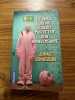
Le vieux qui ne voulait pas fêter son anniversaire
Pocket 2012 543 pages 13 9x18 6x2cm. 2012. broché. 543 pages. Un vieil homme décide de ne pas fêter son anniversaire et s'embarque dans une série d'aventures rocambolesques avec des personnages hauts en couleur mêlant humour absurde et réflexion sur la vieillesse
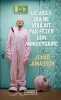
Très bon état
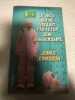
Le vieux qui ne voulait pas fêter son anniversaire
Pocket 2012 543 pages 13 9x18 6x2cm. 2012. mass_market. 543 pages.
Très bon état
Le vieux qui ne voulait pas fêter son anniversaire
Pocket 2012 543 pages 13 9x18 6x2cm. 2012. mass_market. 543 pages.
Bon état

