 Write to the booksellers
8 books for « menon joseph »Edit
-
Century
18th (5)
19th (1)
-
Topics
Cooking (2)
Early printed books (1)
Fruits (1)
Gastronomy (2)
Recipes (1)
-
Countries
Belgium (1)
Denmark (2)
France (4)
Switzerland (1)
-
Syndicate
CLAM (1)
ILAB (5)
SLAM (2)
La nouvelle cuisine avec de nouveaux desseins de tables et vingt-quatre menus. 3 vols. - [INVENTING THE ""NOUVELLE CUISINE""]
Paris, Guillyn, 1751. 8vo. Uniformly bound in three very nice contemporary full sprinkled calf bindings with five raised bands and richly gilt spines. Vol. 1 missing top 5 mm. of spine. Small paper-label pasted on to upper part of spines, indicating the inventory number in an estate library. Small worm-tract in lower margin of vol. 3, far from affecting text. A very nice set. (12), 456, (24) pp. + 8 folded plates" (36), 365, (3) pp." (8), 400 pp. + 4 folded plates.
Rare second edition, first with all three volumes published simultaneously, of arguable one of the most important and influential 18th century book on gastronomy. Here Menon for the first time explicitly describes the recently invented “nouvelle cuisine: a tendency to put food and nutrition on a scientific basis, its functions in the body, reducing the number of varieties offered at a meal, lighter foods and bringing simpler presentations to the table. Menon embraced a comprehensive approach to the culinary customs of his era, extending beyond mere food preparation and presentation. His works highlighted the significance of action, strategy, and demeanor, emphasizing that these aspects were equally crucial. His books served not only as guides to gastronomic practices but also as manuals for proper conduct and manners. For instance, in this present work, he incorporated a diagram illustrating the meticulous organization of dishes discussed throughout the books. Menon had what we would today call a holistic approach to gastronomic practices of his day that went well beyond the preparation and presentation of food. Several of his titles make clear that action, strategy and deportment were just as important. His book were as much about ways of acting as they were about food itself, like style-guides for gastronomic mores and manners. For instance, in his Nouveau traite, there is a diagram showing the careful arrangement of dishes that are described in the course of the books. ""François Menon was the most influential and prolific French cookbook author of the eighteenth century. During his time, today's familiar categories of French cooking were emerging, and Menon was a master of them all: nouvelle cuisine (a term that each generation redefines)" haute or classical cuisine and cuisine bourgeoise. He even wrote the first French cookbook devoted specifically to a woman cook (La cuisinìere bourgeoise)... Menon first described the new cuisine in detail in the third and final volume of Nouveau Traité de la cuisine (New Treatise on Cooking, 1742). In contrast to traditional cooking, he wrote, the key to nouvelle cuisine was delicacy. Sauces were lighter but at the same time more nourishing seasonings aimed to enhance rather than mask lead ingredients... Menon not only wrote about the practicalities of nouvelle cuisine" he was also concerned with philosophy, linking his mission closely to that of the leading thinkers of the Enlightenment: to advance and disseminate knowledge that allows humankind to live in a state of nature perfected."" (Willan, The Cookbook Library, pp. 218-19). Vassallo, Catalogo dei libri esistenti nella pubblica biblioteca di Malta p. 118.

Les Soupers de la Cour ou L'Art de travailler toutes sortes d'alimens. 3 vols. - [ONE OF THE MOST IMPORTANT 18TH CENTURY FRENCH WORKS ON GASTRONOMY]
Paris, L. Cellot, 1778. 12mo (170 x 105 mm). Uniformly bound in three nice contemporary full sprinkled calf bindings with five raised bands and richly gilt spine. Edges of boards gilt. Small Capital on vol. 1 with wear and scratch to front board on vol. 3. Small worm tract affecting lower margin of first few leaves in vol. 3, not affecting text. Small paper-label pasted on to top of spines indicating the inventory number in an estate library. A very nice set. (2), VIII, XXIV, 459 pp. (2), XXX, 524 pp." (2), XXXVI, 374, (2) pp.
![Les Soupers de la Cour ou L'Art de travailler toutes sortes d'alimens. 3 vols. - [ONE OF THE MOST IMPORTANT 18TH CENTURY FRENCH WORKS ON GASTRONOMY]. ...](https://static.livre-rare-book.com/pictures/LLX/60670_1_thumb.jpg)
![Les Soupers de la Cour ou L'Art de travailler toutes sortes d'alimens. 3 vols. - [ONE OF THE MOST IMPORTANT 18TH CENTURY FRENCH WORKS ON GASTRONOMY]. ...](https://static.livre-rare-book.com/pictures/LLX/60670_2_thumb.jpg)
![Les Soupers de la Cour ou L'Art de travailler toutes sortes d'alimens. 3 vols. - [ONE OF THE MOST IMPORTANT 18TH CENTURY FRENCH WORKS ON GASTRONOMY]. ...](https://static.livre-rare-book.com/pictures/LLX/60670_3_thumb.jpg)
A fine copy of the second edition of one of the most important 18th century French works on gastronomy. Here Menon presents more than two thousand recipes for ‘fine dining’ during the reign of Louis XV. Menon embraced a comprehensive approach to the culinary customs of his era, extending beyond mere food preparation and presentation. His works highlighted the significance of action, strategy, and demeanor, emphasizing that these aspects were equally crucial. His books served not only as guides to gastronomic practices but also as manuals for proper conduct and manners. Menon had what we would today call a holistic approach to gastronomic practices of his day that went well beyond the preparation and presentation of food. Several of his titles make clear that action, strategy and deportment were just as important. ""François Menon was the most influential and prolific French cookbook author of the eighteenth century. During his time, today's familiar categories of French cooking were emerging, and Menon was a master of them all: nouvelle cuisine (a term that each generation redefines)" haute or classical cuisine and cuisine bourgeoise. He even wrote the first French cookbook devoted specifically to a woman cook (La cuisinìere bourgeoise)... Menon first described the new cuisine in detail in the third and final volume of Nouveau Traité de la cuisine (New Treatise on Cooking, 1742). In contrast to traditional cooking, he wrote, the key to nouvelle cuisine was delicacy. Sauces were lighter but at the same time more nourishing seasonings aimed to enhance rather than mask lead ingredients... Menon not only wrote about the practicalities of nouvelle cuisine" he was also concerned with philosophy, linking his mission closely to that of the leading thinkers of the Enlightenment: to advance and disseminate knowledge that allows humankind to live in a state of nature perfected."" (Willan, The Cookbook Library, pp. 218-19). Provenance: A large Danish estate. Vicaire 591 Bitting 321 Livres en bouche, 212.
La science du maître d'hôtel, confiseur, à l'usage des officiers, avec observations sur la connoiffance et les propriétés des fruits, enrichie de deffeins en décorations et parterres pour les defferts. Suite du Maître d'hôtel cuifinier.
Paris, au Palais chez Paulus-Du-Mesnil, 1750, EDITION ORIGINALE, fort in-12, plein chagrin brun flammé, dos orné avec titre dorés sur dos lisse, tranches rouges, reliure de l'époque, IX - (11) - 525 - (25) pp., ill. par 5 pl. dépliables et de nb. bandeaux, lettrines et culs-de-lampe, préface, table des observations par ordre alphabétique, catalogue de l'éditeur, approbation et privilège du Roy, table des matières pour le travail pour les 4 saisons, table des ouvrages de toutes les saisons, Très bon ouvrage de Joseph Menon, en édition originale parue en 1750 et dans sa reliure de l'époque. Bien complet des 5 planches dépliables. Menon y donne les recettes de différentes préparations sucrées et confites (gelées, confitures, sirops, glaces, compotes, fruits séchés, dragées, macarons, ratafias, candis, fromages glacés, mousses, pralines, biscuits, ainsi que des eaux-de-vie de fruits et liqueurs, en fonction des saisons. Son ouvrage contient également des observations sur la science et les propriétés des fruits. Cet ouvrage est devenu RARE complet de ses 5 planches dépliables et dans sa reliure d'époque. Très bon état du papier et des gravures, sans rousseurs ni salissures; la reliure d'époque est restaurée par une professionnelle qui lui donne tout son charme
La Science du maître d'hôtel cuisinier, avec des observations sur la conoissance & les propriétés des alimens. Nouvelle édition revue & corrigée.
Paris chez les libraires associés 1776 1 vol. relié in-12, plein veau marbré, dos à nerfs orné d'une pièce de titre, caissons, fleurons et filets dorés, tranches rouges, XXIV + 561 pp. + 1 f. Un des grands textes de la gastronomie française du XVIIIe siècle, paru pour la première fois en 1749, avec son importante "Dissertation préliminaire sur la cuisine moderne". Ex-libris manuscrit. Reliure de l'époque très frottée (coiffes arrachées), quelques mouillures et rousseurs inernes.

Le Manuel des officiers de bouche, ou le précis de tous les Apprêts que l'on peut faire des Alimens pour servir toutes les Tables, depuis celles des grands Seigneurs jusqu'à celles des Bourgeois, suivant l'ordre des Saisons & des Services : ouvrage très utile aux Maîtres pour ordonner les Repas, & aux Artistes pour les exécuter.
A Paris, chez Le Clerc, M. DCC. LIX (1759). 17 x 10,5 cm, 618 pp. et 2 ff. Relié pleine basane fauve mouchetée, dos à nerfs orné,titre doré, tranches rouges, reliure de l'époque. Coins émoussés, léger manque à la coiffe supérieure, sinon bel exemplaire. Édition originale de cet ouvrage qui ne fut jamais réimprimé, contrairement aux autres ouvrages de cet auteur. Vicaire 593 Bitting, 321.
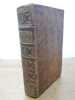
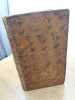
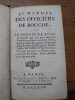
Joseph Menon est un auteur culinaire français qui vivait dans la seconde partie du XVIIIe siècle. On manque de renseignements sur ce savant gastronome, dont les ouvrages, nombreux, ont paru, pour la plupart, sans nom dauteur. Parmi ceux-ci, on compte La Cuisinière bourgeoise. Il est peu de livres qui, depuis leur apparition, aient donné lieu à un plus grand nombre de contrefaçons, de traductions ou déditions que ce manuel de lart culinaire.
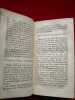
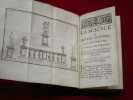
La science du maitre d'hotel (maître d'hôtel), confiseur, a l'usage des officiers, avec des observations sur la connoissance & les propriétés des Fruits.[...] Suite du Maître d'Hôtel Cuisinier.
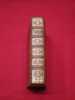
paris 1776 A Paris, (sans éditeur), 1776, 1 volume in-12 de 95x160 mm environ, VIIJ, (1) f., 525 pages, (13) ff. (Table), complet des 5 planches dépliantes. Pleine reliure marbrée d'époque, dos à cinq nerfs portant titres dorés, caissons ornés, filet d'encadrement à froid sur les plats, filet doré sur les coupes, tranches jaspées, gardes de papier marbré à la coquille. Cuir un peu frotté ou craquelé par endroits, coins émoussés, discret travail de ver sans atteinte au texte, sinon bon état général.
Merci de nous contacter à l'avance si vous souhaitez consulter une référence au sein de notre librairie.
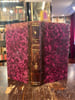
La Cuisinière bourgeoise, suivie de L'office a l'usage de tous ceux qui se mêlent de dépenses de maisons.
Bruxelles François Foppens 1761 1 vol. relié in-12, pleine basane fauve, dos à nerfs orné de caissons dorés, pièce de titre de veau citron, tranches rouges, 3 ff. + 484 pp. Nouvelle édition de ce livre de recettes classique et indémodable. Exemplaire en reliure d'époque usée avec d'importantes épidermures au dos et sur le second plat, quelques traces de mouillures intérieures.
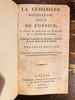
La Cuisinière Bourgeoise, suivie de l'office, à l'usage de tous ceux qui se mêlent de dépenses de maisons; contenant la manière de disséquer , connaître et servir toutes sortes de viandes. Augmentée de plusieurs râgouts des plus nouveaux, et de différentes tecettes pour les liqueurs.
Paris, Briand, 1810. In-12 de 321 pages, demi-basanne brune.
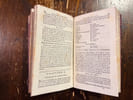
Un classique parmi les classiques. Dos frotté, rousseurs.

