 Write to the booksellers
-
Latest
Last month (5)
Last week (1)
-
Language
French (79)
Russian (7)
-
Century
18th (41)
19th (4)
20th (4)
21st (3)
-
Countries
Belgium (5)
Denmark (1)
France (62)
Germany (1)
Netherlands (2)
Switzerland (8)
United States of America (7)
-
Syndicate
CNE (2)
ILAB (45)
NVVA (5)
SLACES (3)
SLAM (41)
LE POT AU NOIR
Londres aux dépens de la Compagnie [ Cazin ] 1788 in 8 (20x12,5) 1 volume reliure demi velin, dos lisse, pièce de titre de cuir marron, 206 pages. Pamphlet antireligieux et anticlérical. Bon exemplaire ( Photographies sur demande / We can send pictures of this book on simple request )
Bon Reliure
LE BON SENS DU CURÉ J. MESLIER. Suivi de son TESTAMENT. Précédé d'une " Vie de J. Meslier d'après Voltaire ".
Au Palais des Thermes de Julien. 1802 [en réalité : 1820]. In-8°, reliure demi-chagrin, dos orné. 380 pages.
Reliure modeste mais saine ; bon état.
Variétés littéraires ou recueil de pièces tant originales que traduites concernant la philosophie, la littérature et les arts. Nouvelle édition, corrigée et augmentée.
1804 4 volumes in-8, demi-veau vert sapin, dos lisses ornés de triples filets dorés, titres et tomaisons dorés, tranches citron (rel. vers 1850). Paris, Xhrouet et Déterville, an XII - 1804.
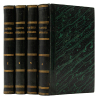
Recueil des principaux articles publiés dans la "Gazette Littéraire de l'Europe" ainsi que dans le "Journal des étrangers", par François Arnaud et Jean Baptiste Antoine Suard, fondateurs et rédacteurs historiques de ces périodiques, entre 1764 et 1766, augmenté de plusieurs articles qui ne figuraient pas dans l'édition originale.Ambitionnant d'élaborer un périodique culturel encyclopédique de "référence", les auteurs obtinrent le soutien actif du gouvernement et du ministère des Affaires étrangères et un large rayonnement international.Outre les articles d'Arnaud et de Suard, La "Gazette littéraire" comptait parmi ses rédacteurs Diderot, Voltaire, le baron d'Holbach, Morellet, Saint-Lambert, etc.De nombreux articles concernent la musique et l'opéra, sujet privilégié de François Arnaud, mais aussi beaux-arts, sciences de la vie, littérature et poésie, théâtre, médecine, philosophie, voyages, etc., etc. Chaque volume s'achève par une table.(Hatin, 'Bibliographie de la presse périodique française', p. 48).Quelques auréoles et quelques rousseurs.Bon exemplaire, bien relié.


ESSAI SUR L ART DE RAMPER A L USAGE DE
ALLIA EDITIONS
LIVRE A L’ETAT DE NEUF. EXPEDIE SOUS 3 JOURS OUVRES. NUMERO DE SUIVI COMMUNIQUE AVANT ENVOI, EMBALLAGE RENFORCE. EAN:9791030416404
Examen du matérialisme ; ou réfutation du système de la nature [2 volumes]
Tournay, Casterman 1838 Complet en 2 tomes: viii,376 + 358pp., reliures cart. (dos en cuir avec titre et décoration doré), 23cm., qqs.cachets et rousseurs, bon état, [réfutation de la théorie de Holbach]
Examen du matérialisme, ou Réfutation du système de la nature [2 volumes]
Paris, chez Humblot 1772 Complet en 2 tomes: xvi,430 + xii,413,[iii] pp., reliures uniformes cart. du 19e siècle (plats marbrés, dos en cuir avec titre et faux-nerfs dorés), 17cm., cachet, bon état, [réfutation de la théorie de Holbach], F92299
Blaise Monestier; John Turberville Needham; Jacques-François Valade
Reference : 18641
(1775)
La vraie philosophie,par l’abbé M...(Monestier)
1775 Bruxelles; Paris : Valade, 1775.,IN8 plein veau raciné,xxviii, 480 p.+errata ; 21 cm.,critique du Systeme de la Nature de Paul Henri Thiry Holbach, baron d'-"Avis de l'éditeur" signé Needham.
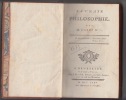
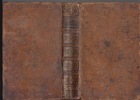
manques aux coiffes,reliure convenable,texte bon.Edition du principal ouvrage philosophique de l'auteur. Le mathématicien et philosophe auvergnat Blaise Monestrier (1717-1776) y réfute les doctrines matérialistes par "un spiritualisme expérimental et éclectique (.) où le cartésianisme occupe la plus grande place. (.) [Monestrier] ne veut rien devoir qu'à l'expérience" (Franck). Bon exemplaire dans sa reliure d'origine. Cf. Franck, Dictionnaire des Sciences Philosophiques, pp.1123-1124. Remise de 20% pour toutes commandes supérieures à 200 €
Recherches sur l'origine du Despotisme Oriental. Ouvrage posthume de Mr. B.I.D.P.E.C.
1763 rel. époque (mq. coiffe sup., un carton faible, maniée). in-12, (2ff.), XIXpp., 180pp., s.n., s.l., (Genève ?), 1763,
Naville p. 412: " C'est dans cet ouvrage que se révèle nettement comment le groupe Holbach liait aux rapports de l'homme avec la nature et la société, non seulement la croissance de la religion, mais aussi l'évolution des formes de gouvernement, c'est à dire la structure des Etats".Edition certainement contrefaite. La lettre à Helvetius, qui manque souvent dans les éditions ultérieures, le fx.titre et le titre sont d'un papier tres différent du reste de l'ouvrage. Le texte est imprimé tres serré, peut-être pour être mieux "colporté".
Oeuvres complettes de M. Boulanger. L'Antiquité dévoilée par ses usages. ou Examen critique des principales opinions, cérémonies et institutions religieuses et politiques des différens peuples de la terre. Par feu M. Boulanger
Amsterdam, Marc-Michel Rey, 1775 3 vol. in-8, [2] ff. n. ch., X pp., 310 pp., un f. n. ch. de table ; [2] ff. n. ch., 330 pp., un f. n. ch. de table ; [2] ff. n. ch., 330 pp., un f. n. ch. de table, demi-basane fauve, dos lisses, pièces de titre et de tomaison vertes, tranches mouchetées de rouge (reliure modeste de l'époque). Manques aux Coiffes, coupes et coins abîmés, rousseurs.
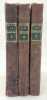
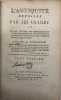
La première édition était parue en 1766 en un vol. in-4. Il s'agit ici d'expliquer par des symboles astronomiques, mais surtout par la terreur que le Déluge aurait inspirée aux hommes, les superstitions et les pratiques religieuses de l'humanité ancienne. Comme l'on sait, aucun des titres qui lui sont attribués ne parut du vivant de l'auteur, ils ont de plus été fortement retouchés par les éditeurs, à savoir le baron d'Holbach et Diderot : Boulanger (1722-1759), mort jeune chez Helvétius, fut, semble t-il, un prête-nom commode et hors d'atteinte, pour des théories audacieuses sur l'athéisme et les religions qui ne remontent pas toutes à lui.Quérard I, 456. Cioranescu, XVIII, 13 422. - - VENTE PAR CORRESPONDANCE UNIQUEMENT - LIEN DE PAIEMENT, NOUS CONSULTER.
BOULANGER Nicolas-Antoine ; HOLBACH Baron d’ (Nicolas Antoine)
Reference : 54481
(1772)
L'antiquité dévoilée par ses usages, ou examen critique des principales opinions, cérémonies & institutions religieuses & politiques de différens peuples de la terre.
Amsterdam, Chez Marc Michel Rey 1772 3 volumes in-12, plein veau marbré, dos à nerfs, caissons ornés, XXIV- 358- VII- 352- VII- 363 pp. Dos passés, coiffes et coins usés, qq. mors fendillés. Rares rousseurs.
Ouvrage posthume, remanié par d’Holbach, l’Antiquité dévoilée ambitionne d’interpréter superstitions et les pratiques religieuses de l'humanité par l'empreinte cataclysmes de la nature, notamment le déluge. Bon état d’occasion
BOULANGER (Nicolas Antoine) / HOLBACH (Paul-Henri-Dietich, baron d')
Reference : 23867
Recherches sur l'Origine du despotisme oriental.
S.l., 1775. 1 vol. in-12, basane marbrée, dos lisse orné de fleurons dorés, pièce de titre en basane havane, filet doré sur les coupes, tranches rouges. Reliure de l'époque. Bon exemplaire. xxiv-233 pp. Large mouillure dans la partie inf. des pp. 145 à 168.
Nouvelle édition de ce texte posthume de Boulanger, très remanié par le baron d'Holbach qui y a développé des idées antireligieuses. Sous le couvert d'un commentaire de l'Esprit des Lois de Montesquieu, cet essai dénonce les systèmes politiques orientaux fondés sur le despotisme et la théocratie, allusion transparente aux systèmes politiques occidentaux de l'ancien régime. Paru pour la première fois en 1761, le texte, traqué par le pouvoir royal, se répandit néanmoins comme une traînée de poudre : la police eut beau "mettre en oeuvre toute son autorité pour étouffer le Despotisme oriental, elle ne put empêcher qu'il y en eut bientôt cinq ou six éditions" (Diderot, Lettre sur le commerce de la Librairie). Quérard I, 456.
BOULANGER (Nicolas-Antoine) & HOLBACH (Paul-Henri Thiry, baron d').
Reference : 661
(1761)
Recherches sur l'origine du Despotisme oriental. Ouvrage posthume de M. B. I. D. P. E. C.
[Genève], , 1761. In-12 de XXXII-435 pp., veau havane marbré, dos lisse orné, pièce de titre en maroquin rouge, tranches rouges (reliure de l'époque).
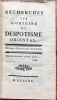
Édition originale. Dès leur parution, les Recherches ont été attribuées à Boulanger, les initiales qui apparaissent sur le titre désignent clairement l'auteur et ses fonctions : B-oulanger I-ngénieur D-es P-onts E-t C-haussées.Le rôle du baron d'Holbach et de ses amis se réduisent à celui d'éditeur et d'adaptateur ; on trouve l'empreinte de son esprit anti-religieux. « C’est dans cet ouvrage que se révèle nettement comment le groupe d'Holbach liait les rapports de l'homme avec la nature et la société, non seulement la croissance de la religion, mais aussi l'évolution des formes de gouvernement, c'est-à-dire la structure des États ».Vercruysse, 1761/F1 ; Naville, D'Holbach, p. 351. Bel exemplaire.
BOULANGER Nicolas-Antoine - [HOLBACH Paul-Henri Dietrich, baron d']
Reference : 54461
(1775)
L'antiquité dévoilée par ses usages. Ou examen critique des principales opinions, cérémonies et institutions religieuses et politiques des différens peuples de la Terre.
Amsterdam, Marc-Michel Rey 1775 3 volumes in-12, plein veau porphyre, dos lisse, caissons ornés, pièces de titre et de tomaison de maroquin noir et grenat, triple filet d’encadrement des plats, roulettes en coupes et contreplats, X-310- 330- 330pp. Reliure un peu frottée, quelques coins émoussés, un plat fragilisé en pied, petites attaques de ver, néanmoins décorative. Int. frais.
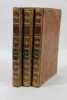
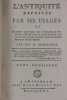
Ouvrage posthume, remanié par d’Holbach, l’Antiquité dévoilée ambitionne d’interpréter superstitions et les pratiques religieuses de l'humanité par l'empreinte cataclysmes de la nature, notamment le déluge. Bon état d’occasion
Boulanger Nicolas-Antoine Holbach Paul Henri Dietrich
Reference : 64052VPRT
ISBN : 9782012850194
Le christianisme dvoil ou Examen des principes et des effets de la religion chrtienne
Hachette Livre BNF Broch D'occasion bon tat 01/05/2013 326 pages
Oeuvres de Boullanger.
Genève, Slatkine, 1971 ; 6 tomes en 3 volumes in-8. Pleine toile bleue d'éditeur. Parfait état.
![Oeuvres de Boullanger.. BOULLANGER (Nicolas Antoine). [BOULANGER].](https://static.livre-rare-book.com/pictures/AIS/11464_1_thumb.jpg)
![Oeuvres de Boullanger.. BOULLANGER (Nicolas Antoine). [BOULANGER].](https://static.livre-rare-book.com/pictures/AIS/11464_2_thumb.jpg)
Impression fac-similé de l'édition de 1794 à Amsterdam. Edition collective réalisée par d'Holbach. Tomes 1 et 2 : L'Antiquité dévoilée par ses usages. Tome 3 : Recherches sur le despotisme oriental - Essai philosophique sur le gouvernement - Esope fabuliste - Du bonheur. Tome 4 : Le Christianisme dévoilé - Dissertation sur Elie et Enoch - Examen critique de Saint Paul - Dissertation sur Saint Pierre. Tome 5 : De la cruauté religieuse - [Articles pour l'Encyclopédie : Corvées ; Déluge ; Guèbres ; Langue Hébraïque ; Economie politique]. Tome 6 : Histoire d'Alexandre Le Grand. On trouve au début du tome 1er une notice sur le vie de Boulanger qui serait de Diderot. "Le Christianisme dévoilé" est généralement attribué à d'Holbach ; et Les Recherches sur le despotisme oriental, est l'oeuvre conjointe de Boulanger et d'Holbach.
COLLINS (Anthony) & HOLBACH (Paul Henri Dietrich, baron d').
Reference : 41908
(1770)
L'Esprit du Judaïsme ou Examen Raisonné de la Loi de Moyse & de son Influence sur la Religion Chrétienne.
Londres, , 1770. In-12 de (4)-XXII-201 pp., demi-papier rouge, dos à nerfs, entièrement non rogné (reliure de l'époque).
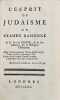
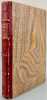
Première édition française établie par le baron d'Holbach et imprimée en Novembre 1769. Cette traduction servit d'introduction à l'Histoire Critique de Jésus-Christ publiée la même année. Barbier II, 188 ; Vercruysse, 1770/D1 ; Naville, D'Holbach, p. 415.
COLLINS (Anthony), [HOLBACH (Paul Thiry, baron d') traducteur et éditeur]
Reference : 37205
(1769)
Essai sur la nature et la destination de l'Ame Humaine (...). Traduit de l'Anglois, sur la dernière Edition revue & corrigée par l'auteur.
1769 In-12 (167 x 107 mm), broché, couverture papier bleu d'origine, (8), 295 p., exemplaire non rogné, non coupé, tel que paru. Londres [i.e. Amsterdam, Marc-Michel Rey], 1769.
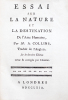

Première édition française probablement imprimée par M.-M. Rey à Amsterdam, dans une édition et une traduction attribuées à d'Holbach. Le volume réunit les pièces composées par Anthony Collins, libre-penseur, élève et ami de Locke, dans la polémique sur l'immatérialité et l'immortalité de l'âme qui opposa en 1706 Samuel Clarke à Henry Dodwell. Reprenant l'hypothèse lockienne de la matière pensante, Collins fait de la pensée un effet de l'organisation corporelle. Ces pages offraient aux matérialistes français un arsenal d'arguments, un an avant le "Système de la nature". D'Holbach possédait l'édition anglaise de 1731 qui réunit toute la controverse. Selon Bréhier (II, 293) : "Collins montre l'union du matérialisme à la doctrine sensualiste de la connaissance". De très larges extraits en ont été cités par Naigeon dans "l'Encyclopédie Méthodique". L'ouvrage a été interdit et condamné au feu.(Conlon, 'Siècle des Lumières', 69:676. Darnton, 'Corpus of Clandestine Literature', 223. 'Holbach et ses amis', 1553. Peignot, 'Livres condamnés', II, p.214. Vercruysse, p. 32. Weller, p. 182).Exceptionnel exemplaire, tel que paru, non rogné, non coupé.
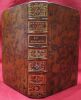
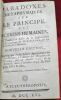
Paradoxes Métaphysiques sur le Principe des Actions Humaines, Ou Traduction Libre de la Dissertation Philosophique de M. COLLINS, sur la Liberté de l'Homme. Nouvelle Edition, Augmentée d'une Lettre Apologétique du Traducteur, à l'Auteur des Mémoires de Trévoux, sur un Article (110), de ce Journal, mois d'Octobre 1755. II. Vol. p.2623 &suiv. /-/ Lettre Apologétique de l'Auteur des Paradoxes Métaphysiques, au R.P. BERTHIER, Jesuite, sur un Article des Mémoires de Trévoux, mois d'Octobre 1755. II. Vol. p. 2623 & suiv. /-/. Le Bon-Sens ou Idées Naturelles Opposées aux Idées Surnaturelles [d'Holbach].
A Eleutheropolis, 1756 (2 premiers textes) / A Londres 1782 (dernier texte d'Holbach), 3 textes reliés en 1 tome in-16 de 155x90 mm environ, 16-ix-233-24-titre-x-250 pages, pleine basane marbrée brune, dos à nerfs portant titres dorés, orné de caissons à fleurons et motifs dorés, coupes dorées, gardes marbrées, tranches rouges. Mouillure dans la marge supérieure du premier texte, des traits de plume anciens dans le dernier texte, un coin dénudé, frottements et petites épidermures sur le cuir, petit trou traversant sur le premier plat et sur quelques pages, quelques pages légèrement brunies.
Paul Thiry, baron dHolbach (en allemand : Paul Heinrich Dietrich von Holbach), né le 8 décembre 1723 à Edesheim et mort le 21 janvier 1789 à Paris, est un savant, encyclopédiste et philosophe matérialiste dorigine allemande et dexpression française. Merci de nous contacter à l'avance si vous souhaitez consulter une référence au sein de notre librairie.
[BINET] - [CRILLON (Louis-Athanase des Balbes de Berton, abbé de)]
Reference : ARC-114153
(1777)
Mémoires philosophiques du baron de *** Chambellan de sa majesté l'Impératrice Reine.
Chez Berton, A Vienne et se trouve à Paris 1777 - 1778 2 volumes in-8 (12,5x19,5cm), (2) 4pp. (2) 304 pp. et 352 pp., reliés. Reliure veau blond glacé aux armes étrangères non identifiées ; dos lisse décor à la grotesque, pièces de titres en maroquin havane. mouillures claires sur 100 dernières pages du T.2 ; quelques taches sur les plats.
![Mémoires philosophiques du baron de *** Chambellan de sa majesté l'Impératrice Reine. . [CRILLON (Louis-Athanase des Balbes de Berton, abbé de)]](https://static.livre-rare-book.com/pictures/ARC/arc-114153_1_thumb.jpg)
![Mémoires philosophiques du baron de *** Chambellan de sa majesté l'Impératrice Reine. . [CRILLON (Louis-Athanase des Balbes de Berton, abbé de)]](https://static.livre-rare-book.com/pictures/ARC/arc-114153_2_thumb.jpg)
![Mémoires philosophiques du baron de *** Chambellan de sa majesté l'Impératrice Reine. . [CRILLON (Louis-Athanase des Balbes de Berton, abbé de)]](https://static.livre-rare-book.com/pictures/ARC/arc-114153_3_thumb.jpg)
Édition originale de ce pamphlet contre les philosophes. Elle est joliment illustrée d'un frontispice et de 3 figures hors texte, gravés à l'aquatinte, dues à Binet, selon Cohen. Une de ces figures reproduit l'intérieur du fameux café Procope à l'époque. Bel exemplaire en reliure de l’époque. Critique des philosophes et en particulier de la doctrine matérialiste de d'Holbach. Cioranescu, I, 21894.- Cohen, I, 267, REYNAUD col. 103
FRERET (Nicolas), [HOLBACH (Paul Thiry, baron d'), NAIGEON (Jacques André), LEVESQUE DE BURIGNY (Jean)]
Reference : 38310
Oeuvres complettes [sic] de M. Freret.
4 tomes reliés en un 2 volumes in-8 (195 x 121 mm), plein veau raciné de l'époque, dos lisses ornés de compartiments ornés de fers spéciaux, palettes et guirlandes dorées, pièces de titre de veau vert bronze, dorés, tranches citron, (1) f., 216 p. ; (1) f., viij, 139, (1) p. de table et (1) f., 123, (1) p. de table; (1) f., x, 162 p. Londres, 1775.
![Oeuvres complettes [sic] de M. Freret.. FRERET (Nicolas), [HOLBACH (Paul Thiry, baron d'), NAIGEON (Jacques André), LEVESQUE DE BURIGNY (Jean)]](https://static.livre-rare-book.com/pictures/HAT/38310_1_thumb.jpg)
Recueil de textes matérialistes publiés par la "secte holbachique": "Examen critique des Apologistes de la Religion chrétienne" (FRERET ou LEVESQUE de BURIGNY, revu et publié par NAIGEON) - Lettre à Eugénie (D'HOLBACH), précédée d'un "Avertissement" (NAIGEON) - Lettre de Thrasibule à Leucippe (FRERET) - La Moysade (Nouveau titre des "Réflexions impartiales sur l'Évangile", par FRERET ou MIRABAUD, revu par NAIGEON).Cette édition manque à Vercruysse et à Naville.Accrocs aux coiffes, mors légèrement fendillés. Brunissures et taches éparses.
FRÉRET (Nicolas), [HOLBACH (Paul Thiry, baron d'), NAIGEON (Jacques André), LEVESQUE DE BURIGNY (Jean)]
Reference : 024691
(1790)
Oeuvres de Fréret. (quatre tomes).
Paris Jean Serviere, Jean-François Bastien 1790 Quatre tomes en quatre volumes in-8° (127 x 206mm), XLVIII 359, (6) 376, (6) 432 et (6) 409 pp. Reliures en basane fauve marbrée, dos à faux nerfs ornés de pièces de titre et de tomaison, filets et fers dorés, tranches mouchetées (reliure ancienne). (volumes légèrement frottés, rousseurs). Recueil de textes matérialistes. I : Éloge de Fréret (BOUGAINVILLE) - Lettres à Eugénie (D'HOLBACH); II : Lettre de Thrasibule à Leucippe (FRERET) - Examen critique du nouveau Testament - Supplément (NAIGEON); III : Observations sur les oracles rendus par les âmes des morts - Réflexions sur les prodiges rapportés dans les anciens - Sur l'usage des sacrifices humains établi chez les différentes nations, et particulièrement chez les Gaulois - Sur la nature et les dogmes les plus connus de la religion gauloise - Sur l'étymologie du nom des druides - Examen critique des apologistes de la religion chrétienne - De l'origine du jeu d'échec; IV : Recherches sur les miracles - La religion chrétienne analysée, avec les notes et les preuves.
ETAT NATUREL DES PEUPLES - TOME SECOND.
INCONNU. XIXe SIECLE. In-8. Relié. Etat passable, Couv. défraîchie, Dos satisfaisant, Mouillures. 604 pages - Manque pages de titre et faux-titre - Manque surement les toutes dernieres pages de l'ouvrage - Traces de mouillure eu niveau de la reliure sans conséquence réelle sur la lecture - quelques traces de salissures sur quelques pages altérant légèrement la lecture.. . . . Classification Dewey : 300-SCIENCES SOCIALES
Classification Dewey : 300-SCIENCES SOCIALES
Oeuvres philosophiques et politiques.
1787 2 volumes in-8 (197 x 127 mm), demi-veau olive de lépoque, dos lisses ornés, titre et tomaison dorés, tranches jaspées, xlviij, 452, (18) p. ("Avertissement du traducteur" et table) et (4), iv, 292 [i.e. 308] pages, portrait frontispice gravé sur cuivre. Neufchâtel, Imprimerie Typographique, 1787.
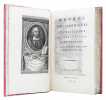
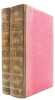
Première édition collective française des oeuvres de Hobbes, ornée dun portrait de lauteur gravé sur cuivre par Le Beau daprès Le Clère.Tome I°: Eléments du Citoyen, traduits par Samuel Sorbière. Suivi de "Avertissement du traducteur, ajouté après la publication de cet ouvrage".Tome II°: Le Corps politique traduit par Sorbière et La Nature humaine traduit par le baron dHolbach.(Tchemerzine-Scheler, III, 734. Vercruysse, Holbach, 1787 D1. Manque à Macdonald & Hargreaves).Dos passés et frottés. Petit accroc aux coiffes supérieures.Bon exemplaire, imprimé sur beau papier vergé, intérieur très frais, relié à lépoque.
HOBBES (Thomas), HOLBACH (Paul Thiry, baron d') traducteur et FAIGUET DE VILLENEUVE (Joachim)
Reference : 38500
(1772)
1- HOBBES, [HOLBACH, traduction, édition]. De la Nature Humaine, ou Exposition des facultés, des actions & des passions de l'Ame, & de leurs causes déduites d'après des principes philosophiques qui ne sont communément ni reçus ni connus. Par Thomas Hobbes; Ouvrage traduit de l'Anglois [par le baron d'Holbach]. Londres [i.e. Amsterdam, Marc-Michel Rey], 1772. (4), iv, 171 p. [Suivi de]2- [FAIGUET DE VILLENEUVE]. Légitimité de l'usure légale où l'on prouve son utilité; que les casuistes sont en contradiction avec eux-mêmes. Monts de piété. Pratique injuste de la poste. Où l'on discute les passages de l'Ancien & du Nouveau Testament sur l'usure &c. Amsterdam, Marc-Michel Rey, 1770. (4), 168 p.
1772 2 ouvrages reliés en un volume in-12 (153 x 96 mm), plein veau marbré de l'époque, dos lisse entièrement orné d'un décor doré à la grotesque, pièce de titre de maroquin bordeaux, tranches rouges.
![1- HOBBES, [HOLBACH, traduction, édition]. De la Nature Humaine, ou Exposition des facultés, des actions & des passions de l'Ame, & de leurs causes ...](https://static.livre-rare-book.com/pictures/HAT/38500_1_thumb.jpg)
![1- HOBBES, [HOLBACH, traduction, édition]. De la Nature Humaine, ou Exposition des facultés, des actions & des passions de l'Ame, & de leurs causes ...](https://static.livre-rare-book.com/pictures/HAT/38500_2_thumb.jpg)
![1- HOBBES, [HOLBACH, traduction, édition]. De la Nature Humaine, ou Exposition des facultés, des actions & des passions de l'Ame, & de leurs causes ...](https://static.livre-rare-book.com/pictures/HAT/38500_3_thumb.jpg)
1- Première édition de la traduction française réalisée par le baron dHolbach de cette oeuvre qui exerça une influence déterminante tant sur sa propre doctrine que sur la philosophie politique des Lumières. Ladresse londonienne est fictive; le livre a en réalité été imprimé à Amsterdam par Marc-Michel Rey. "Diderot nous a laissé un témoignage de lenthousiasme que suscita chez lui ce traité [in Lettre à Sophie Volland]. Bien des éléments de cette doctrine passeront dans le Système de la Nature, avant tout le sensualisme conséquent, le mécanisme et le relativisme des critères moraux et sociaux" (cf. Naville, 'Holbach', p. 218-224). (Conlon, 'Siècle des Lumières',72:860. Garcia, 'Hobbes: Bibliogr. internationale', p.8. Vercruysse, éd. 2017, 1772/D2. Tchemerzine-Scheler, III, 729).2- Édition originale et unique de cet essai, développement de larticle "Usure" que lauteur avait rédigé pour lEncyclopédie.Faiguet de Villeneuve présente une défense vigoureuse du prêt à intérêt, en réfutant les critiques traditionnelles émanant de lÉglise et du droit.Sur la base darguments dordre religieux, économiques et sociaux, il démontre que le prêt favorise le développement du commerce et de lindustrie, tout en permettant aux individus créatifs de développer leurs compétences et de créer une dynamique bénéfique entre détenteurs de capitaux et entrepreneurs.Au fil de sa démonstration, il propose une réforme novatrice du service postal, suggérant que le tarif d'expédition soit calculé en fonction de la forme et du poids des envois.Joachim Faiguet de Villeneuve (1703-1780), économiste et philanthrope, trésorier de France au Bureau des Finances de Châlons-sur-Marne, fut lun des collaborateurs réguliers de LEncyclopédie. Il est reconnu comme lun des pionniers de la science de léconomie politique en France.(Conlon, 'Siècle des Lumières', 70 :874. Goldsmiths-Kress, n°10683.3. Higgs, n°5043).Mors frottés. Très bon exemplaire, très frais, relié à lépoque.
Système Social
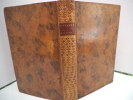
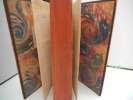
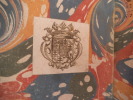
ou principes naturels de la morale et de la politique avec un examen de l’influence du gouvernement sur les mœurs3 tomes en un volume in 8 plein cuir fauve raciné pièce de titre chagrin rouge petits fers à la grotesque dorés,faux-titre,titre,VIII,220-176-168 pages tranches rouges filets dors sur coupes Londres 1773 exlibris gravé,un coin très très légèrement émoussé,quelques rousseurs en début de volume sinon très bon état.première édition.sans les 4 pages d'errata
"il se fit naturaliser Français, sa maison fut une sorte de salon que fréquentèrent les lettrés et les philosophes de son tems,Diderot,d’Alembert Rousseau… au nom de la science et de la philosophie il entreprit d’abattre la religion et d’édifier une morale nouvelle dans une série d’ouvrages et de pamphlets"

