 Write to the booksellers
-
Latest
Last month (126)
Last week (9)
-
Century
16th (1)
17th (9)
18th (55)
19th (100)
20th (630)
21st (143)
-
Countries
Belgium (260)
Brazil (2)
Denmark (229)
France (481)
Netherlands (145)
Switzerland (16)
-
Syndicate
ILAB (408)
NVVA (145)
SLAM (168)
Staternes indvortes Regiering. 5 Bd. (samt) Staternes udvortes Regiering. 2 Bd. (Ialt 7 bind, komplet).
Kiøbenhavn, Gyldendal (Trykt i Sorø), 1773-76. 8vo. 7 samtidige ensartede hldrbd. Rygge med brugsspor. 2 kapitæler lidt beskadiget. Kobberstukne titelvignetter.
Originaludgaven af Schyttes hovedværk, som er den første større sammenhængende fremstilling af de statsretlige, politiske og økonomiske forhold i Danmark. Schytte var stærkt påvirket af Montesquieu og af den tyske kameralist J.H.v. Justi. - Bibl. Danica I:1052 og II:485.
I Principj della Economia Sociale Esposti in Ordine Idealogico. - [LANDMARK WORK ON 19TH CENTURTY ITALIAN ECONOMICS]
Napoli, Dalla Tipografia di Gennaro Palma, 1840. 8vo. In contemporary full blue cloth with blindstamped title to spine. Remains of paper-label to to lower part of spine. Extremities with a few bumps and light soiling. Internally with light brown-spotting throughout. 379, (1) pp.
![I Principj della Economia Sociale Esposti in Ordine Idealogico. - [LANDMARK WORK ON 19TH CENTURTY ITALIAN ECONOMICS]. "SCIALOJA, ANTONIO.](https://static.livre-rare-book.com/pictures/LLX/50928_1_thumb.jpg)
![I Principj della Economia Sociale Esposti in Ordine Idealogico. - [LANDMARK WORK ON 19TH CENTURTY ITALIAN ECONOMICS]. "SCIALOJA, ANTONIO.](https://static.livre-rare-book.com/pictures/LLX/50928_2_thumb.jpg)
![I Principj della Economia Sociale Esposti in Ordine Idealogico. - [LANDMARK WORK ON 19TH CENTURTY ITALIAN ECONOMICS]. "SCIALOJA, ANTONIO.](https://static.livre-rare-book.com/pictures/LLX/50928_3_thumb.jpg)
The exceedingly rare first edition of Scialoja's seminal first publication. Scialoja - by Schumpeter characterized as a person of ""conspicuous brilliance"" - here presents himself as a follower of Say"" to a large extend, his work is a tribute to French though. Scialoja published his work at the age of 23 and ""I principj"" is today being regarded as one of the landmark works of 19th century Italian economics. It anticipated many of the thoughts presented by Keynes in the first half of the 20th century and it was instrumental in the economic development of the Resorgimento. For Scialoja the main cause of underdevelopment and imbalances that prevent a balanced growth of the economy must be sought in the undeveloped agricultural sector and lack of capital. According to Scialoja you can still talk about underdevelopment if economic growth is not used to make further developments in the agrarian sector. Because of the need of continuous development (economic and techinically) Scialoja consider the business owner the most important part in the healthy growth. Public intervention is particularly wanted - and in this regard he anticipates Keynes by almost a century - to correct and guide the country's economy to prevent instabilities. Antonio Scialoja (1817 - 1877) graduated in law at Naples in 1841 and became a professor of political economy at University of Turin in 1846. Antonio Scialoja is considered a leading figure in the economic policy of the Risorgimento. As a close ally of Cavour he was one of the chief archictects of the economic aspect of the Risorgimento and functioned as Minister of Agriculture and Commerce in the Liberal government of Carlo Troja, finance minister in the interim government of Garibaldi, Secretary General of the Ministry of Agriculture in the first Ricasoli Government of the Kingdom of Italy, counselor of the Court of Auditors and senators from 1862, Minister of Finance in the Government of La Marmora, second Government of Ricasoli and finally Minister of Education in Government Lanza and in the second Government Minghetti.In 2006 the work was republished with a new introduction. Goldsmiths 31364Carl-Menger=Bibliothek 720The catalogue of Mattioli holds several later works by Scialoja but not the present. The catalogue of Einaudi lists the second edition (1846) and the first French translation (1844) but not the present first.
Esquisse d'une histoire économique et sociale de la France depuis les origines jusqu'à la guerre mondiale
Paris, Alcan 1929 560pp., br.orig. (dos restauré), cachet, E41849
Histoire économique de la France [2 tomes] I.Le moyen âge et l'ancien régime, II.Les temps modernes (1789-1914)
Paris, A.Colin 1939-1942 XXV,453 + XLIX,459pp., br.orig., 25cm., bon état, E41683
Memento, et Barême de la perspective de notre avenir financier, en cas de naufrage de port. Paris, de l'Imprimerie de A. Henry, Mars 1825. - (Bound with:) SEGUIN, A. Plan extrait de l'ouvrage sur les finances, en 4 volumes in 8vo, par Armand Seguin. (Drop-head title).
No place, (1825). 2 works in one volume. 28 pp.; 119, (1) pp., the pages 1-4 incorrectly numbered as 29-32. 8vo. Disbound. First work: Kress C.1550; Goldsmiths 24597; not in Einaudi.Second work: Kress S.5636; not in Goldsmiths; not in Einaudi. First edition of both works. Armand Séguin made a fortune by winning the contract to supply the French revolutionary armies with boot leather. Napoleon, who had no love for profiteers, tried to reduce his fortune through taxes and fines but failed. Séguin survived the Empire and the Restoration and lived thereafter the life of an eccentric, Balzacian rentier, devoting most of his intellectual energies after 1815 to the composition of pamphlets on government finance. He is best known for his memoirs on heat and respiration and as Lavoisier's assistant from 1789 to the latter's death in 1794. - First quire loose.


(NVVA, )
Phone number : 31 20 698 13 75
Observations sur la nouvelle conception financière présentée à la Chambre des Députés, par M. le Président du Conseil des Ministres, Le 5 janvier 1825; ... Paris, Imprimerie d'Ant. Béraud, Janvier 1825. - (Bound with:) SEGUIN, A. Observations sur le rapport fait au nom de la commisssion de la Chambre des Députés, charger d'examiner le projet de loi sur la dette publique et l'amortissement. Paris, de l'Imprimerie de A. Henry, Février 1825 - (Bound with:) SEGUIN, A. Moyen de parer aux principaux inconvéniens des projets ministériels, sur les indemnités et sur la dette publique, en conservant les avantages qu'on peut obtenir de ces projets. Paris, de l'Imprimerie de A. Henry, Mars 1825. - (Bound with:) SEGUIN, A. Memento, et Barême de la perspective de notre avenir financier, en cas de naufrage de port. Paris, de l'Imprimerie de A. Henry, Mars 1825. - (Bound with:) SEGUIN, A. Plan Extrait de l'ouvrage sur les finances, en 4 volumes in-8. (Drop-head title). No place, (1825). - (Bound with:) SEGUIN, A. Causes de la dernière erreur de M. le Président du Conseil des ministres. (Drop-head title). (Paris), Imprimerie de J. Tastu, (1825). - (Bound with:) SEGUIN, A. Résultats inévitables de l'adaption du projet sur la réduction des rentes. ..... (Drop-head title). (Paris), Imprimerie de J. Tastu, Avril 1825. - (Bound with:) SEGUIN, A. Balance entre l'avantage pécuniaire de la réduction des rentes, et le désavantage pécuniaire de l'augmentation de leur capital nominal. Paris, De l'Imprimerie de A. Henry, Avril 1825. - (Bound with:) SEGUIN, A. De la nécessité de prescrire une règle positive pour l'emploi des sommes affectées à l'amortissement, dans le cas d'adoption des projets ministériels sur la dette publique. Paris, De l'Imprimerie de A. Henry, Avril 1825. - (Bound with:) SEGUIN, A. Moyens d'acquitter intégralement le milliard des indemnités, et d'atteindre le but politique au quel elles se rattachent; en parant aux principes inconvéniens des projets ministériels sur l'indemnité et sur la dette publique. Paris, De l'Imprimerie de Chaignieau jeune, Avril 1825. - (Bound with:) SEGUIN, A. Régulateur des rentiers, ou guide et résultat des combinaisons et des spéculations rentières qu'engendrera la loi sur la dette publique et l'amortissement; Et considérations sur les disposit que pourroient faire naître, et sur les emprunts que pourroient nécessiter dans l'avenir les besoins et les convenances de la nouvelle ère financière de la France; ..... Neuvième édition. Paris, De l'Imprimerie de C.J. Trouvé, Juillet 1825. - (Bound with:) SEGUIN, A. Moyens d'obtenir le bien que desirent le Roi, le Dauphin, et les Chambres; et d'éviter les maux qui dérivent des conceptions financières de M. le Président du Conseil des Ministres. Paris, Janvier 1826. -(Bound with:) (DELON.) Moyens d'exécution, applicables au systême de credit public de la France, faisant suite au systême fondé en 1816, sous le ministère de M. Corvello; et pouvant servir de réponse à la mesure de réduction de nos cinq pour cent en trois, proposée, par M. de Villèle. (Drop-head title). (Paris), De l'Imprimerie de J.M. Eberhart, (1825). - (Bound with:) (VAYSSE DE VILLIERS, R.J.F.) Opinion impartiale d'un capitaliste sur le projet de la réduction des rentes, sur les moyens de remplacer d'une manière avantageuse autant qu'honorable l'économie qui devoit en résulter, et sur la nécessité de maintenir l'intérêt a 5 pour 100. (Drop-head title). (Paris), Le Normant fild, (1825). - (Bound with:) DERNIER CRI, dernières plaintes, derniers gémissemens des rentiers. ..... Par G.D., Avocat sans Cause.
A Paris, Chez l'Auteur, Février 1825. 15 works bound in one volume. (4), 120 (misnumbered 119) pp.; one dedication leaf, 38 pp.; 20 pp.; 28 pp.; 119, (1) pp.; (2) pp.; 4 pp.; 23, (1) pp.; 55, (1) pp.; 31, (1) pp.; 24 pp.; (2), xvi, 236, 96 (Appendice) pp. + 4 leaves with tables numbered 111-117; 8 pp.; 15, (1) pp.; 86 pp. 8vo. Contemporary half calf, marbled boards, blue label to spine reading 'Chambres des Députés, session 1825. Objects DIV Tom II', and red label reading 'Réduction de la Rente par Armand Seguin', at foot of spine the number '12' gilt stamped. I: Kress C.1553; Goldsmiths 24599; not in Einaudi. II: Kress C.1554; Goldsmiths 24600; not in Einaudi. III: Kress C.1551; Goldsmiths 24598; not in Einaudi.IV: Kress C.1550; Goldsmiths 24597; not in Einaudi.V: Kress S.5636; not in Goldsmiths; not in Einaudi.VI: Kress C.1548; not in Goldsmiths; not in Einaudi.VII: Kress C.1557; not Goldsmiths; not in Einaudi.VIII: Kress C.1547; not in Goldsmiths; not in Einaudi.IX: Kress C.1549; Goldsmiths 24596; not in Einaudi.X: Kress C.1552; not in Goldsmiths; not in Einaudi.XI: Kress C.1556; Goldsmiths 24602; not in Einaudi.XII: Kress C.1788; not in Goldsmiths; not in Einaudi.XIII: Not in Kress; not in Goldsmiths; not in Einaudi.XIV: Kress C.1583; not in Goldsmiths; not in Einaudi.XV: Kress C.1407; not in Goldsmiths; not in Einaudi.All first or only editions with the exception of number 11.Armand Séguin made a fortune by winning the contract to supply the French revolutionary armies with boot leather. Napoleon, who had no love for profiteers, tried to reduce his fortune through taxes and fines but failed. Séguin survived the Empire and the Restoration and lived thereafter the life of an eccentric, Balzacian rentier, devoting most of his intellectual energies after 1815 to the composition of pamphlets on government finance. He is best known for his memoirs on heat and respiration and as Lavoisier's assistant from 1789 to the latter's death in 1794. - Second work with a printed dedication leaf, the fifth work with a handwritten and signed dedication, the work by Delon (number 13) has a somewhat larger size and has been folded to fit into the volume.
(NVVA, )
Phone number : 31 20 698 13 75
Considérations sur l'ésprit et les moeurs.
A Londres, et se trouve à Paris, Chez les Marchands des Nouveautés, 1787. (4), 388 pp. + errata leaf. 8vo. Contemporary grey paper covers, somewhat worn at spine and rear cover, uncut and unopened. INED 4140; not in Kress; not in Goldsmiths; not in Einaudi; Conlon 87:2725. First edition. 'Sur l'homme en société. Quelques réflexions sur l'influence respective de la guerre et de la paix sur le caractère national ......' (INED). A well written work giving interesting insights into French society on the eve of the revolution.
(NVVA, )
Phone number : 31 20 698 13 75
Inequality Reexamined
Clarendon press 1992 224 pages 14 2x2 2x21 8cm. 1992. Cartonné jaquette. 224 pages. Dans 'Inequality Reexamined' l'économiste Amartya Sen réexamine les différentes perspectives sur la notion générale d'inégalité en se concentrant principalement sur son approche par les capabilités. Il développe et approfondit les analyses présentées dans son précédent ouvrage 'On Economic Inequality' en apportant de nouvelles réflexions sur ce sujet crucial
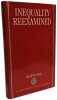
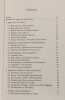
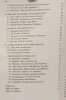
proche du neuf avec sa jaquette intérieur propre
Banques d'émission ; La Banque de France, son histoire, son organisation, ses opérations, son role
Paris, R.Pichon et R.Durand-Auzias 1938 214pp., br.orig., bel état
Réflexions sur la réformation des Etats provinciaux. Par un ancien Magistrat du P ... de G ... (Parlement de Grenoble).
No place, 1788. (2), 109 pp. 8vo. Modern marbled boards. INED 4175; Martin & Walter 31471 (1789 edition only); Renouvin, Assemblées provinciales, xiv; not in Kress, Goldsmiths and Einaudi. First edition, very rare, both INED and Martin & Walter citing an 1789 edition. 'Politique. Défense des droits du Tiers dans les États provinciaux. Sur l'égalité des trois ordres devant l'impôt; en cette matière, le seul privilège digne de la noblesse et du clergé serait de payer beaucoup plus: 'tandis que le peuple se plaint à peine quand l'impôt ne peut s'accorder avec sa subsistance, les deux autres ordres ne peuvent supporter l'impôt quand il se refuse à l'accroissement de leur luxe'' (INED).
(NVVA, )
Phone number : 31 20 698 13 75
Il declino del capitalismo (Osservatorio italiano)
Rizzoli 1993 280 pages in8. 1993. Cartonné jaquette. 280 pages.
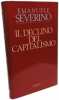

Très bon état avec sa jaquette (un peu frottée sur le dessus) intérieur propre
Modern Corporate Finance
Macmillan USA 1990 992 pages 19 4x4 8x23 8cm. 1990. Cartonné. 992 pages.

Bon état
Rational Expectations (Cambridge Surveys of Economic Literature)
Cambridge University Press 1983 224 pages 20 6x2x13 2cm. 1983. Broché. 224 pages.


Très Bon Etat de conservation intérieur propre bonne tenue
Comment remédier à la situation tragique des travailleurs chinois. Une assurance sociale appropriée à la Chine
Louvain, Em. Desbarax 1927 259pp., br.orig., 23cm., dans la "Collection de l'Ecole des sciences politiques et sociales de l'Université de Louvain", non coupé
Shughart William F. II Razzolini Laura
Reference : 100148090
(2001)
ISBN : 1843763877
The Elgar Companion to Public Choice
Edward Elgar Publishing Ltd 2001 832 pages 15 6x4 6x23cm. 2001. Broché. 832 pages.

Très bon état
Stakhanovism and the Politics of Productivity in the USSR 1935-1941 (Cambridge Russian Soviet and Post-Soviet Studies) (Soviet and East European Studies)
Cambridge University Press 1988 344 pages in8. 1988. Cartonné jaquette. 344 pages.


Bon état avec sa jaquette intérieur propre bonne tenue
The Philosophy of Money: Preface by David Frisby
Routledge 2004 616 pages 15 6x3 4x22 8cm. 2004. Broché. 616 pages. Ouvrage philosophique de Karl Jaspers publié en 1946 qui analyse la responsabilité collective de l'Allemagne après la Seconde Guerre mondiale. Il distingue différents types de culpabilité (criminelle politique morale métaphysique) et examine les conditions spirituelles qui ont permis l'avènement du régime nazi en insistant sur la responsabilité de ceux qui sont restés passifs
proche du très bon état intérieur propre bonne tenue
Models of Bounded Rationality: Empirically Grounded Economic Reason (The MIT Press)
MIT Press 1997 457 pages 16 15x3 28x23 5cm. 1997. Cartonné jaquette. 457 pages.
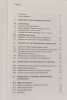
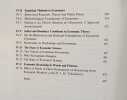
Très Bon Etat de conservation intérieur propre bonne tenue
Vingt et un siècles d'économie: En Vingt Et Une Dates-Cles (Romans Essais Poesie Documents)
LES BELLES LETTRES 2002 224 pages 13 4x1 8x20 8cm. 2002. Broché. 224 pages.
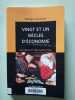
Bom estado
SKANDINAVISK AKTUARIETIDSSKRIFT: Udg. af Danske Aktuarer, den Norske Aktuarforening och svenska Aktuarieföreningen.
1919-88. Mangler 2 hefter: 1823: nr.3 og 1985: nr.2). Ellers komplet. Med Index 1918-57 og 1958-67.
S. Mayer JP Caldier Coutrot Décaillot A Palma Torres AF Taisne JP Vanhoove
Reference : 500091043
(2007)
ISBN : 9782916374086
Le Guide de l'Economie Equitable Commerce Equitable Cooperatives Mutuelles Associations
Fondation Gabriel Péri 2007 360 pages 21x2 2x14 8cm. 2007. Broché. 360 pages.
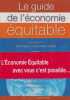
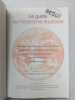
Bon état
Bargaining and Market Behavior: Essays in Experimental Economics
Cambridge University Press 2008 476 pages 15 6x3 6x22 6cm. 2008. Broché. 476 pages.
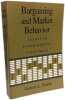
proche du neuf quelques marques sur la tranche du bas
En Undersökning av Folkens Välstånd dess Natur och Orsaker. Översättning av D:r Emil Sommarin. 2 volumes. - [FIRST SWEDISH EDITION OF ""THE WEALTH OF NATIONS""]
Lund, C. W. K. Gleerups förlag, 1909 & 1911. 8vo. Bound with the original wrappers of volume 1 in one contemporary half blue cloth binding with red leather titel label with gilt lettering to spine. A fine and clean copy. XVI,191, (4), 179 pp.
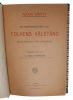
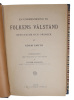

First edition of the first Swedish translation of Adam Smith's ground-breaking main work, the ""Inquiry into the Nature and Causes of the Wealth of Nations"". Smaller parts of the book had previously been translated into Swedish (in 1800, 1804 and 1869), but the present translation is considered the first actual translation of the work (even though some parts have been excluded by translator Emil Sommarin, who based his translation the 5th English edition, the last edition to be supervised by Adam Smith himself). It is to this date the only Swedish translation of the work, which tells us a lot about the history of Swedish economics. Despite the comparatively late translation into Swedish, it still had a profound influence, not on economists since they were well aware of the original work in English, but upon politics and public opinion in general: ""There are few things more striking to the modem student of the history of ideas in Sweden than the negative phenomenon that Sweden was almost entirely uninfluenced by this fact and thus remained almost unaffected by English economic thought during a period when its superiority was most evident. As far as I am acquainted with the Swedish economic discussion and our popular economic literature of the 1860's and 1870's, there is almost no trace of any influence from English writers. [...]Of Adam Smith we have still only one abbreviated translation of his famous work and that was published as late as during this century"" and, as far as I know, nothing of Ricardo's or Malthus' exists in Swedish, nor do any of the major economic works of J.S. Mill."" (Heckscher, A survey of economic thought in Sweden, 1875-1950).Translator Emil Sommarin (1874-1955) was a student of Knut Wicksell, arguably the most influential Swedish economist, and Sommarin succeeded Wicksell's professorship in national economics. Wicksell ""came to know his classics very well and became and remained an admirer of Adam Smith. Around 1910 he also assisted his former student and successor as economics professor in Lund, Emil Sommarin, with the translation of WN, still the most complete we have in Sweden. In this connection he wrote to a friend in Uppsala, ""It is almost unbelievable that we have been denied this masterpiece for 125 years and our economic policy is a result of the omission"" (Cheng-Chung Lai, Adam Smith Across Nations, p. 384).
En Undersökning av Folkens Välstånd dess Natur och Orsaker. Översättning av D:r Emil Sommarin. [i.e. Swedish ""Wealth of Nations""]. 2 volumes. - [FIRST SWEDISH EDITION OF ""THE WEALTH OF NATIONS""]
Lund, C. W. K. Gleerups förlag, 1909 & 1911. 8vo. Both volumes in the original printed wrappers. Light wear to spines, otherwise a very fine and clean set. XVI,191, (4), 179 pp.
![En Undersökning av Folkens Välstånd dess Natur och Orsaker. Översättning av D:r Emil Sommarin. [i.e. Swedish ""Wealth of Nations""]. 2 volumes. - ...](https://static.livre-rare-book.com/pictures/LLX/58833_1_thumb.jpg)
First edition of the first Swedish translation of Adam Smith's ground-breaking main work, the ""Inquiry into the Nature and Causes of the Wealth of Nations"". Smaller parts of the book had previously been translated into Swedish (in 1800, 1804 and 1869), but the present translation is considered the first actual translation of the work (even though some parts have been excluded by translator Emil Sommarin, who based his translation the 5th English edition, the last edition to be supervised by Adam Smith himself). It is to this date the only Swedish translation of the work, which tells us a lot about the history of Swedish economics. Despite the comparatively late translation into Swedish, it still had a profound influence, not on economists since they were well aware of the original work in English, but upon politics and public opinion in general: ""There are few things more striking to the modem student of the history of ideas in Sweden than the negative phenomenon that Sweden was almost entirely uninfluenced by this fact and thus remained almost unaffected by English economic thought during a period when its superiority was most evident. As far as I am acquainted with the Swedish economic discussion and our popular economic literature of the 1860's and 1870's, there is almost no trace of any influence from English writers. [...]Of Adam Smith we have still only one abbreviated translation of his famous work and that was published as late as during this century"" and, as far as I know, nothing of Ricardo's or Malthus' exists in Swedish, nor do any of the major economic works of J.S. Mill."" (Heckscher, A survey of economic thought in Sweden, 1875-1950).Translator Emil Sommarin (1874-1955) was a student of Knut Wicksell, arguably the most influential Swedish economist, and Sommarin succeeded Wicksell's professorship in national economics. Wicksell ""came to know his classics very well and became and remained an admirer of Adam Smith. Around 1910 he also assisted his former student and successor as economics professor in Lund, Emil Sommarin, with the translation of WN, still the most complete we have in Sweden. In this connection he wrote to a friend in Uppsala, ""It is almost unbelievable that we have been denied this masterpiece for 125 years and our economic policy is a result of the omission"" (Cheng-Chung Lai, Adam Smith Across Nations, p. 384).
Milletlerin Zenginligi. [i.e. ""Wealth of Nations""] 4 vols. - [FIRST TURKISH TRANSLATION OF 'WEALTH OF NATIONS']
Istanbul, Milli Egitim Basimevi, 1948 [Vol. 1 & 2] & 1955 [Vol. 3 & 4]. 8vo. 4 volumes in the original printed wrapper. Spines (especially on vol. 1 and 4) with wear and a bit of miscolouring, otherwise a fine and clean set. IV, 393, (8)" (6), 340386" 415, (2) pp.
![Milletlerin Zenginligi. [i.e. ""Wealth of Nations""] 4 vols. - [FIRST TURKISH TRANSLATION OF 'WEALTH OF NATIONS']. "SMITH, ADAM.](https://static.livre-rare-book.com/pictures/LLX/58582_1_thumb.jpg)
![Milletlerin Zenginligi. [i.e. ""Wealth of Nations""] 4 vols. - [FIRST TURKISH TRANSLATION OF 'WEALTH OF NATIONS']. "SMITH, ADAM.](https://static.livre-rare-book.com/pictures/LLX/58582_2_thumb.jpg)
Rare first Turkish translation of Adam Smith's landmark work ""Wealth of Nations"". Despite his indirect impact in the Ottoman intellectual sphere [the present work] was not translated into to Turkish until 1948. ""The reason for not translating The Wealth of Nations in full was purely pragmatic and was simply caused by market conditions. Above all, the market for books was small due to very low literacy rate."" (Kilinço?lu, Economics and Capitalism in the Ottoman Empire)""A 1881 Turkish translation of Wealth of Nations by Sakisli Ohanes is recorded by Vanderblue in 1936 as having been published in Constantinople, printed in 'old Turkish characters' , the modified Arabic-Persian script in use until about 1928. There is indeed a work by Sakizli Ohannes Pasha published in 1881 whose title translates as 'the science of the wealth of nations', but it is not a translation of Wealth of Nations. The book is a discussion of political economy in five parts - production, exchange, distribution, consumption and a conclusion"" it is therefore recognizable as a work written more under the influence of Jean-Baptiste Say than Adam Smith, but given a title reminiscent of Smith all the same"" (Mizuta, A Critical Bibliography of Adam Smith)Cheng-chung Lai, Table A18.

