 Write to the booksellers
-
Latest
Last month (126)
Last week (9)
-
Century
16th (1)
17th (9)
18th (55)
19th (101)
20th (638)
21st (145)
-
Countries
Belgium (260)
Brazil (2)
Denmark (229)
France (492)
Netherlands (145)
Switzerland (16)
-
Syndicate
ILAB (419)
NVVA (145)
SLAM (179)
Théorie et pratique du commerce et de la marine.
Paris, Estienne et Fils 1753. 4to. In a nice comtemporary full sprinked calf binding with five raised bands to spine. Red leather title-label with gilt lettering to spine. Comportments with gilt ornamentation. Binding with a few repairs. Small white paper-label pasted on to top left corner of pasted down front free end-paper and small stamp to top right corner of half-title. A [blank], (4), XII, 280, 206, (2), [blank] pp.
First edition of Véron de Forbonnais French translation of Ustariz influential tratise on the practicalities of international trade (taxation, monopoly, population ect.), the Spanish navy and its American colonies.. The original Spanish edition first published in 1724.It examines the causes of economic decline and he advocated a thorough financial reform to curb the imbalance of trade relations between Spain, England and America. Kress 5316

Théorie et pratique du commerce et de la marine.
Paris, Estienne et Fils, 1753. 4to. In a nice comtemporary full calf binding with five raised bands to spine. Red leather title-label with gilt lettering to spine. Compartments with gilt ornamentation. Small paper-label pasted on to upper compartment indicating the library number from an estate library. Ex-libris pasted on to pasted down front end-paper. A fine and clean copy. (blank), (4), XII, 280, 206, (2), (blank) pp.
First edition of Véron de Forbonnais French translation of Ustariz influential tratise on the practicalities of international trade (taxation, monopoly, population ect.), the Spanish navy and its American colonies.. The original Spanish edition first published in 1724.It examines the causes of economic decline and he advocated a thorough financial reform to curb the imbalance of trade relations between Spain, England and America. Kress 5316
PRIX DE L'ARGENT CFA HEURS ET MALHEURS DE LA ZONE FRANC
Karthala 2000 14 86x21 41x1 85cm. 2000. Broché.


très bon état de conservation intérieur propre
ECONOMIE GENERALE. TERMINALE G.
Dunod Dunod 1984, In-8 broché, 227 pages. Bon état.
Toutes les expéditions sont faites en suivi au-dessus de 25 euros. Expédition quotidienne pour les envois simples, suivis, recommandés ou Colissimo.
Precious Metals, Coinage and the Changes of Monetary Structures in Latin-America, Europe and Asia (Late Middle Ages - Early Modern Times)
Leuven, University Press 1989 222pp.with ills., softcover, 24cm., very good condition, E63539
La crise économique en Afrique belge - Situation actuelle et perspectives d'avenir
Bruxelles/ Paris, Bruylant/ Recueil Sirey 1931 xii + 109pp., br.orig., qqs. cachets, bon état, C41857
The Rise and Decline of Urban Industries in Italy and the Low Countries (Late Middle Ages - Early Modern times)
Leuven, University Press 1988 400pp.with ills., softcover, 24cm., Very good condition, E63540
Le rendement des placements (1865-1939)
Louvain, Société d'études morales sociales et juridiques/ Libr.Saint-Pierre 1943 532pp.avec planches dépliantes + joint: 1p."thèses", 25cm., 1e éd. dans la série "Université catholique de Louvain, Collection de l'Ecole des Sciences Economiques" no.27, br.orig., bel état, [thèse académique], E73983
Essays on medieval and early modern economy and society
Leuven, University Press 1977 viii + 309pp.+ frontispiece (portrait of author), publisher's hardcover binding in blue cloth, 25cm., in the series "Symbolae. Facultatis Litterarum et Philosophiae Lovaniensis" Series A vol.5, good condition, E60860
Melanges agronomiques rediges d'apres la pratique et les experiences des meilleurs fermiers anglais.
Leipzig, Jacobaeer, 1799. 8vo. In contemporary half calf. Light wear to spine otherwise a nice and clean copy. X, 358, (1) pp.

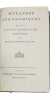
Rare work containing various papers on agricultural and farming techniques and practices inspired by English agriculture. Goldsmiths-Kress 17574
The American Economic Review, Volume XVIII [18].
Cambridge Massachusetts, American Economic Association, 1928. 8vo. Bound with the original red wrappers in contemporary half cloth with gilt lettering to spine. Library stamp to verso of title page. X, 828 pp.
First printing.
Projet d'une dixme royale. Qui supprimant la taille, Les Aydes, les Doüanes d'une Province à l'autre (...). - [""UNSURPASSED, BEFORE OR AFTER""]
(No place, nor printer), 1707. 8vo. In contemporary full calf with five raised bands and richly gilt spine. Edges of boards gilt. Title-label is either missing or have never been added. Small paper-label pasted on to top of spine. Stains and scratches to boards. Corners bumped. Internally nice and clean. VIII, 268 pp. + 3 folded tables.
![Projet d'une dixme royale. Qui supprimant la taille, Les Aydes, les Doüanes d'une Province à l'autre (...). - [""UNSURPASSED, BEFORE OR AFTER""]. ...](https://static.livre-rare-book.com/pictures/LLX/60967_1_thumb.jpg)
![Projet d'une dixme royale. Qui supprimant la taille, Les Aydes, les Doüanes d'une Province à l'autre (...). - [""UNSURPASSED, BEFORE OR AFTER""]. ...](https://static.livre-rare-book.com/pictures/LLX/60967_2_thumb.jpg)
![Projet d'une dixme royale. Qui supprimant la taille, Les Aydes, les Doüanes d'une Province à l'autre (...). - [""UNSURPASSED, BEFORE OR AFTER""]. ...](https://static.livre-rare-book.com/pictures/LLX/60967_3_thumb.jpg)
One of the at least seven different issues of the 12mo edition, published same year as the first edition (in 4to), in which Vauban proposed a comprehensive tax reform plan for France. The central idea was to replace the existing tax system, which heavily burdened the lower classes while exempting the nobility and clergy, with a single tax on income and property that would be fairly distributed among all citizens, regardless of social status. Schumpeter called the work 'unsurpassed, before or after, in the neatness and cogency of the argument. Purposeful marshalling of all the available data was the essence of his analysis. Nobody ever understood better the true relation between facts and argument. It is this that makes him an economic classic in the eulogistic sense of the work, and a forerunner of modern tendencies' (Schumpeter, History of Economic analysis, p. 204). 'an erudite economic work much in advance of its time, and distinguished both by accuracy of method and breadth of view' (Palgrave), 'creditable alike to the heart and the head of its illustrious author' (McCulloch). 'Though the book was published anonymously, and only a few copies issued (for circulation among friends), Vauban had to submit to the mortification of seeing it 'pilloried' by the parliament, while he himself incurred the displeasure of the king (Louis XIV).' (Palgrave).
On the Nature of Capital (+) On the Nature of Capital: Investment, Intangible Assets, and the Pecuniary Magnate.
(Boston, Stanford University Press), 1908. 8vo. Two offprints in the original printed wrappers. Offprints from ""Quarterly Journal of Economics"", Vol. XXII, August & Vol. XXIII, November 1908. Vol. XXII: Backwrapper detached, a few small nicks to extremities. Vol. XXIII: Front wrapper detached. Fine and clean. Pp. 517-42"" Pp. 103-136.
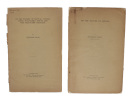
Two scarce offprints of Veblen's important publications on the theory of capital. Here Veblen broadens the concept of capital to include the capital of knowledge. Thus, Veblen's theory laid ""the foundation for a system of property rights created to enable individuals to productively utilize knowledge that resides within the community as a whole"" (Niman, Henry George and the Development of Thorstein Veblen's Theory of Capital). ""The foundation of Veblen's theory of capital is rooted in the special position knowledge holds in society. Knowledge forms the basis for the productive use of natural resources and is a community asset that, at its most fundamental level, is not owned by a single individual. Thus, Veblen's theory begins by laying the foundation for a system of property rights created to enable individuals to productively utilize knowledge that resides within the community as a whole. These property rights make it possible for the creation and ownership of capital in the form of industrial equipment. With growth in the scale and scope of the community comes the ability to monopolize a portion of the community's asset for pecuniary gain. Monopolization then leads to a form of economic servitude that is similar to slavery."" (Niman, Henry George and the Development of Thorstein Veblen's Theory of Capital).In contrast to conventional theories of capital that are founded on the productive labor of workers and described in individualistic terms, Veblen believed that the history of humanity is not the story of a collection of independent individuals, but, rather, is based on the collective contribution of the group. The group plays an important role because it is the group that forms the entity where knowledge iscaptured and stored.""Thorstein Veblen's theory of capital as an important element in developing an evolutionary economics warrants a closer investigation into the origins of the concept. In his essay outlining the basic theory of capital, Veblen (1908) makes explicit reference to the single taxers, and to the relationship between land as an unearned source of rent and the returns associated with capital.If one considers Veblen's anthropological approach to economics, then it becomes easier to see how, as society develops, capital in the form of community-based knowledge takes on the fundamental role previously played in an earlier era by land. Veblen's theory of capital does not invalidate the earlier focus on land, but, rather, is one step further down the path of economic development."" (Niman, Henry George and the Development of Thorstein Veblen's Theory of Capital).Thorstein Bunde Veblen was an American economist and sociologist, and regarded as being the founding figure of the institutional economics movement. ""He studied economics under John Bates Clark, a leading neoclassical economist, but rejected his ideas. He did his graduate work at Johns Hopkins University under Charles Sanders Peirce, the founder of the pragmatist school in philosophy, and at Yale University under laissez-faire proponent William Graham Sumner. He repudiated their views as well. Veblen did not reject economists' answers to the questions they posed"" he simply thought their questions were too narrow. Veblen wanted economists to try to understand the social and cultural causes and effects of economic changes."" (The Concise Encyclopedia of Economics).
L'organisation professionnelle - Projet de réalisation en Belgique
Bruxelles, L'édition universelle 1937 151pp., 2e éd., br.orig. (dos peu restauré), 24cm., estampe, bon état
De verhouding van den staat tot het bankwezen
Utrecht, Kemink en zoon 1864 xvii + 611pp., [Academisch proefschrift ter verkrijging van den graad van doctor in het romeinsch en hedendaagsch regt aan de hoogeschool te Utrecht, 4 mei 1864], moderne gecart.band, goede staat
Philosophie économique - Etudes critiques sur le naturalisme
, Paris, Desclée de Brouwer 1933, xxvi + 224pp., dans la série "Bibliothèque française de Philosophie", qqs.estampes, texte en bel état
Restauration corporative de la nation française
Paris, Flammarion 1936 282pp., dans la série "Bibliothèque d'études sociales", br.orig., 19cm., bon état
Vickrey William S. Dreze Jaques Arrow Kenneth Atkinson Anthony Arnott Richard
Reference : 100140285
(1994)
ISBN : 0521597633
Public Economics: Selected Papers by William Vickrey
Cambridge University Press 1994 558 pages in4. 1994. Cartonné jaquette. 558 pages.

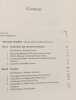
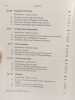
Bon Etat sous rhodoïd intérieur propre avec sa jaquette
Les difficultés de l'industrie britannique depuis la guerre
Paris, Pedone 1932 176pp., br.orig. (dos réparé), 25cm., cachet, texte en bel état, E41804
Servir
Librairie artheme fayard 2017 256 pages 15 2x23 4x2cm. 2017. Broché. 256 pages.

Etat correct
L'expérience Roosevelt - la politique bancaire et monétaire postérieure à 1934
Paris, Librairie sociale et économique 1939 iii + 132pp., br.orig. (dos restauré), cachet, texte en bon état, E41500
VINGTIEME SIECLE. N° SPECIAL : LES CRISES ECONOMIQUES DU XX° SIECLE.
Presses de Sciences Po Presses de Sciences Po. 1996, In-8 broché, 182 pages. Parfait état.
A. PLESSIS : LES BANQUES FRANCAISES DANS LES GRANDES CRISES DU XX° SIECLE etc... Toutes les expéditions sont faites en suivi au-dessus de 25 euros. Expédition quotidienne pour les envois simples, suivis, recommandés ou Colissimo.
Peasant Rebels Under Stalin: Collectivization and the Culture of Peasant Resistance
Oxford University Press Inc 1996 312 pages 14 986x2 286x22 606cm. 1996. Cartonné jaquette. 312 pages. Cet ouvrage historique de Lynne Viola basé sur des archives soviétiques nouvellement déclassifiées (y compris les rapports de la police secrète OGPU) documente la vaste rébellion paysanne contre la collectivisation forcée sous Staline entre 1928 et 1932. Il démontre que cette résistance caractérisée par des stratégies culturelles et symboliques a constitué le conflit le plus violent et soutenu contre l'État soviétique après la guerre civile équivalant à une quasi-guerre civile entre l'État et la paysannerie
Très bon état
Fatal Tradeoffs: Public & Private Responsibilities for Risk: Public and Private Responsibilities for Risk
Oxford University Press USA 1992 320 pages in8. 1992. Broché. 320 pages.


Très bon état dos insolé intérieur propre bonne tenue
Entertainment Industry Economics: A Guide for Financial Analysis
Cambridge University Press 1995 464 pages 16 7132x3 048x22 86cm. 1995. Cartonné jaquette. 464 pages.
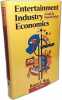

Bon état avec sa jaquette intérieur propre bonne tenue

