 Write to the booksellers
-
Latest
Last month (126)
Last week (9)
-
Century
16th (1)
17th (9)
18th (55)
19th (100)
20th (630)
21st (143)
-
Countries
Belgium (260)
Brazil (2)
Denmark (229)
France (481)
Netherlands (145)
Switzerland (16)
-
Syndicate
ILAB (408)
NVVA (145)
SLAM (168)
Placat, angaaende den Fortrinsret, som kan gives for de Forstrækninger, der gjøres til Plantagernes fornødne Drift paa St. Croix. Kjøbenhyavn, den 14de Maii 1823.
Kiøbenhavn, Schultziske Officin, (1823). 4to. (4) pp.
The original printing.
Placat, angaaende Forandring i Udførsels=Afgifterne paa St. Croix af denne Øes Producter. Kiøbenhavn, den 27 Mai 1825.
Kiøbenhavn, Jens Hostrup Schultz, (1825). 4to. (4) pp.
The original printing.
Undersøgelser om National-Velstands Natur og Aarsag, af Doctor Adam Smith, Medlem af det Kongelige Videnskabernes Selskab i London, og forhen offentlig Lærer i Moral- Philosophien ved Universitetet i Glasgou" af det Engelske oversat, og med nogle Anmæ... - [FIRST MENTIONING OF ADAM SMITH'S ""WEALTH OF NATIONS"" IN DENMARK]
Odense, 1782. 8vo. In contemporary half calf with four raised bands and gilt lettering to spine. Small paper-label pasted on to top of spine. In ""Danmarks litterariske progresser"", vol. 2, entire volume offered. A nice and clean copy. Pp. 172-175 (Entire volume: (4), 364, (2) pp.)

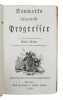
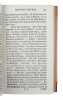
The uncommon first mentioning of Adam Smith’s “Wealth of Nations” in Denmark. It was translated early into Danish (1779-1780) but curiously it did not spark any debate at first. “After the success which the book met very soon after its publication in England—the issue, as known, in nine parts in the years 1776–1779—one might have expected that the book should also in Denmark have attracted attention and have been the subject of enthusiastic discussion. That was, however, not the case" the only place where one finds the book mentioned soon after publication is—excepting Gyldendal’s own announcement in Adresse-Contoirs Efterretninger—in Det almindelige danske Bibliotek, 10th number for 1779 and 6th number for 1760, where the book is briefly mentioned in the notices of forthcoming publications with statement of its size and price. Not until much later - in the year 1782 - is there mention of the book. Announcements are found only in two monthly publications, namely, in Danmarks litterariske Progresser (1782, second volume, pages 172–175. Published in Odense) [The present and then later:] in Kjøbenhavnske nye Efterretninger for lærde Sager (October 25, 1782, No. 43, pages 683–687. Published in Copenhagen).” (Lai, Adam Smith Across Nations, p. 50).
Les formes évoluées de la distribution. Problème économique, problème psychologique
Bruxelles, Pauli 1944 317pp., br.orig., cachet, bon état, E41488
Navires et marchandises dans les ports de rouen et du havre au xviii° siecle.
Paris, S.E.V.P.E.N., 1963. Royal8vo. Uncut, unopened in the original printed wrappers. Library labels pasted on to top and bottom of spine. Library labels to first few leaves. 786, (11) pp.
First edition
Tableau du titre, Poids et Valeur, des différentes Monnaies d'or et d'argent, qui circulent dans le Commerce. Avec Empreintes auquel on a joint diverses tables, tarifs et règles utiles à ceux qui travaillent ou font le commerce des matières d'or et d'argent, ainsi que la loi du 19 Brumaire an 6, relative à la surveillance du titre et aux droits de garantie, avec les loix, arrêtes et décrets qui y ont rapports. Par Hugues Darier père Essayeur du commerce.
Genève, chez l'auteur et chez Pre. Escuyer, 1807. With engraved titlepage. (10), 86, (6, blank), 4 (supplément au tableau des monnaies) pp.; 52 leaves. 4to. Contemporary half calf, spine gilt in compartments, paper covered boards, corners. Goldsmiths 19426; Kress C.1870 (second edition (1827) only); Masui p. 467; Quérard, ii, p. 392 (the second edition); NEHA 292; not in Einaudi. Original edition. The last 52 leaves depict coins from many European states, 4, 8, 10, even sometimes 12 coins shown per leaf, in many instances both sides of the coin (titre - poids). - This is a fully interleaved copy, it has the "supplement" to the main work and 52 leaves depicting coins instead of the 41 leaves usually found. All text is printed within engraved borders.


(NVVA, )
Phone number : 31 20 698 13 75
L'anti-financier, ou relevé de quelques-unes des malversations dont se rendent journellement coupables les Fermiers-Généraux, & des vexations qu'ils commettent dans les Provinces: servant de réfutation d'un écrit intitulé: Lettre servant de Réponse aux remonstrances du Parlement de Bordeaux. Précédée d'une épitre au Parlement de France, accompagnée de notes historiques. A Amsterdam, (Paris, Lambert), 1763. With frontispiece. - (Followed by:) AIGUILLON, A.E. DE VIGNEROT-DUPLESSIS-RICHELIEU, DUC D'. Correspondance de Monsieur le Duc d'Aiguillon, au sujet de l'Affaire de M. le Comte de Guines & du Sieur Tort, & autres intéressés. Pendant les années 1771, 1772, 1773, 1774 & 1775. A Paris, De l'Imprimerie de Quillau, 1775. - (Followed by:) LETTRES à M. l'abbé Raynal sur l'Histoire de la Révocation de l'Edit de Nantes, qu'il se propose de publier. No place, 1782. - (Followed by:) (BONNER DE VALGUIER & MAISONVAL). Etat abrégé des loix, revenues, usages et productions de Grande-Bretagne.
A Londres et se vend à Paris, Chez la veuve Delormel & Fils, 1757. Together 4 works bound in 1 volume. (4), 60, 107, (1) pp.; xxiv, 224 pp.; 109, (1) pp.; 67, (1) pp. and 1 table. 8vo. Contemporary polished calf, spine richly gilt, raised bands, gilt triple fillets on sides, red label with gilt lettering, a very nice copy. First work: Kress 6086-7; Goldsmiths 9873; INED 1276; Higgs 3017. First issue of the first edition. In this vehemently written work, the fermiers-généraux were accused of corruption. It caused the author's imprisonment in the Bastille. The volume was printed by Lambert and distributed by Ormancy, who also were arrested. Four years after its publication the book was still sold secretly at high prices.Second work: Not in Kress; Conlon 75:640 (claiming two volumes).First edition.Of importance for the history of the years preceding the Revolution.Third work: Conlon 82:401.First edition.Fourth work: INED 620; Conlon 57:547.First edition.
(NVVA, )
Phone number : 31 20 698 13 75
L'anti-financier, ou relevé de quelques-unes des malversations dont se rendent journellement coupables les Fermiers-Généraux, & des vexations qu'ils commettent dans les Provinces: servant de réfutation d'un écrit intitulé: Lettre servant de Réponse aux remonstrances du Parlement de Bordeaux. Précédée d'une épitre au Parlement de France, accompagnée de notes historiques. A Amsterdam, (Paris, Lambert), 1763. With frontispiece. - (Bound with:) SUPPLEMENT à l'anti-financier ou exposé de quelques nouveaux abus commis par les employés dans la partie des domaines & contrôles. No Place, (1763?). - (Bound with:) REPONSE à l'auteur de l'antifinancier.
A La Haye, 1764. Together 3 volumes in 1. (4), 60, 107, (1) pp.; (2), 26 pp.; 24 pp. 8vo. Contemporary marbled calf, spine gilt in compartments, red label with gilt lettering, red edges, lightly worn, some spots. First work: Kress 6086; Goldsmiths 9873; INED 1276; Higgs 3017; Conlon 63:751. First issue of the first edition. In this vehemently written work, the fermiers-généraux were accused of corruption. It caused the author's imprisonment in the Bastille. The volume was printed by Lambert and distributed by Ormancy, who also were arrested. Four years after its publication the book was still sold secretly at high prices. Second work: Not in Kress; Goldsmiths 10025; Higgs 3018; INED 4797; Conlon 63:752.First edition.According to Goldsmiths this is not by Darigrand, but a reply to Darigrand's work, INED also believes this work to be written by another, anonymous, author, Conlon lists it under Darigrand.Third work: Not in Kress; Goldsmiths 10020; Higgs 3268; INED 4778; Conlon 64:441.First edition.Loosely inserted: ARRET de la cour du parlement de Rouen, qui ordonne que la brochure intitulée: Réponse à l'auteur de l'anti-financier, fera lacerée & brulé par l'exécuteur de la Haute-Justice, au pied du grand escalier de palais; enjoint à ceux qui en auroient des exemplaires, de les apporter au Greffe de la Cour, pour y être pareillement lacérés & brulés, &c. Du 9 Avril 1764. (Drop-head title). A Rouen, Chez J.J. le Boullenger, (1764).Not in Kress; Goldsmiths 10017; Higgs 3252.
(NVVA, )
Phone number : 31 20 698 13 75
The Case of Labourers in Husbandry Stated and Considered, in Three Parts. Part I. a View of Their Distressed Condition. Part II. the Principal Causes of Their Growing Distress and Number, and the consequent increase of the poor-rate. Part III. Means o... - [FIRST CONSUMER BEHAVIOR ANALYSIS]
Bath, R. Cruttwell, 1795. Large 4to. Contemporary boards, beautifully re-backed in contemporary style, with five raised bands, gilt lines, and gilt red leather title-label to spine. A few light marginal pencil-annotations, small library stamp to lower part of title page, otherwise a very fine copy. 8, 200 pp. + the errata slip inserted after the title-page.
First edition of this landmark work in scientific social inquiry, constituting one of the earliest microeconomic- and consumer behavior- analyses. Davies profoundly influenced social history and initiated the entire field of consumer behavior analysis, two areas of study which were to dominate 19th century economics, relevant not only to economic and social history, but also to present day economic analysis. Davies's work anticipates Eden's ""The State of The Poor"" (PMM 249) by two years. In the present work, Davies discusses in detail the causes of the poverty of agricultural labourers in England, linking the high prices of goods with poverty, and proposes measures to relieve the labourers, including linking their daily wage to the price of bread. Davies's observations demonstrated the failings of the contemporary Poor Laws and was by many seen as a direct criticism of the central policy making (or lack thereof). ""The differences in consumption of poor and rich families excited attention and often compassion, but apparently never quantitative analysis, for many centuries. Finally in England in the 1790's two very different investigators made extensive compilations of workingmen's budgets. [Davies in 1795, Eden in 1797]. Both were stimulated to this task by the distress of the working classes at this time."" (Stigler, The Early History of Empirical Studies of Consumer Behavior). In ""Was bread Giffen? The demand for food in England circa 1790"" (in Review of Economics and Statistics, 1977, Vol. 59, issue 2, pp. 225-29), Koenker developed a problem in statistical demand analysis using samples from the budgets recorded in these works. ""Two seminal budget studies by .. .Davies ... and ... Eden are employed ... to investigate the place of bread in the diets of English rural laborers at the end of the eighteenth century. Because of the considerable geographical and temporal dispersion in prices of foodstuffs found in these budgets, they afford a unique opportunity to study the influences of both prices and income on individual household consumption decisions. In particular a test is made of the famous hypothesis, attributed by Marshall to Robert Giffen, that a rise in the price of bread, ceteris paribus, increases its consumption among the lower classes."" The budget studies to which Koenker refers comprise the 70-page appendix. Davies began collecting statistical data on the poor in 1787 while a rector in the parish of Barkham, Berkshire. ""He collected six detailed budgets of 'typical' agricultural laborers living in Barkham and circulated these budgets widely to friends throughout the kingdom. Some of these correspondents were persuaded to produce similar budgets for their own localities. In 1795 Davies edited 127 of these budgets, wrote a dispassionate plea for a minimum wage law tied to the price of wheat, and published both as The Case of Labourers in husbandry."" (Koenker). In making the case for government intervention, Davies attacks rampant ignorance and prejudice toward the poor, in particular the notion that the poor are profligate creatures of habit. ""It is wonderful how readily even men of sense give in to this censure."" (p. 31).Davies's studies ""were the first examples of studies in that long and semi-honorable liberal tradition of econometrically snooping into the private lives of the poor. By the mid 19th century such studies were being conducted all over Europe by such notables as Ernst Engel, Frederick Engels, Frederick LePlay and others."" (Koenker, Applied Econometrics)David Davies (1742-1819), English clergyman and social commentator, was ordained in 1782 and became the rector of Barkham parish, where he remained incumbent until his death. Kress B2916Goldsmith 16422. Not in Einaudi.
The Case of Labourers in Husbandry Stated and Considered, in Three Parts. Part I. a View of Their Distressed Condition. Part II. the Principal Causes of Their Growing Distress and Number, and the consequent increase of the poor-rate. Part III. Means o... - [PRESENTATION-COPY OF THE FIRST CONSUMER BEHAVIOR ANALYSIS]
Bath, R. Cruttwell, 1795. Large8vo. Bound in later half cloth with gilt lettering to spine. Presentation inscription from the auhtor to top of title page: ""From the Author"". Title page and first few leafes with brownspotting, otherwise a fine copy. Lacking the half title. Pp. 3-8, 200 + the errata slip inserted after the title page.
First edition of this landmark work in scientific social inquiry"" constituting one of the earliest microeconomic- and consumer behavior analyses. Davies profoundly influenced social history and initiated the entire field of consumer behavior analysis, two areas of study which were to dominate 19th century economics, relevant not only to economic and social history, but also to present day economic analysis. Davies's work anticipates Eden's ""The State of The Poor"" (PMM 249) by two years. In the present work, Davies discusses in detail the causes of the poverty of agricultural labourers in England, linking the high prices of goods with poverty, and proposes measures to relieve the labourers, including linking their daily wage to the price of bread. Davies's observations demonstrated the failings of the contemporary Poor Laws and was by many seen as a direct criticism of the central policy making (or lack thereof). ""The differences in consumption of poor and rich families excited attention and often compassion, but apparently never quantitative analysis, for many centuries. Finally in England in the 1790's two very different investigators made extensive compilations of workingmen's budgets. [Davies in 1795, Eden in 1797]. Both were stimulated to this task by the distress of the working classes at this time."" (Stigler, The Early History of Empirical Studies of Consumer Behavior). ""Was bread Giffen? The demand for food in England circa 1790"" (in Review of Economics and Statistics, 1977, Vol. 59, issue 2, pp. 225-29). Koenker developed a problem in statistical demand analysis using samples from the budgets recorded in these works. ""Two seminal budget studies by .. .Davies ... and ... Eden are employed ... to investigate the place of bread in the diets of English rural laborers at the end of the eighteenth century. Because of the considerable geographical and temporal dispersion in prices of foodstuffs found in these budgets, they afford a unique opportunity to study the influences of both prices and income on individual household consumption decisions. In particular a test is made of the famous hypothesis, attributed by Marshall to Robert Giffen, that a rise in the price of bread, ceteris paribus, increases its consumption among the lower classes."" The budget studies to which Koenker refers comprise the 70-page appendix. Davies began collecting statistical data on the poor in 1787 while a rector in the parish of Barkham, Berkshire. ""He collected six detailed budgets of 'typical' agricultural laborers living in Barkham and circulated these budgets widely to friends throughout the kingdom. Some of these correspondents were persuaded to produce similar budgets for their own localities. In 1795 Davies edited 127 of these budgets, wrote a dispassionate plea for a minimum wage law tied to the price of wheat, and published both as The Case of Labourers in husbandry."" (Koenker). In making the case for government intervention Davies attacks rampant ignorance and prejudice toward the poor, in particular the notion that the poor are profligate creatures of habit. ""It is wonderful how readily even men of sense give in to this censure."" (p. 31).Davies's studies ""were the first examples of studies in that long and semi-honorable liberal tradition of econometrically snooping into the private lives of the poor. By the mid 19th century such studies were being conducted all over Europe by such notables as Ernst Engel, Frederick Engels, Frederick LePlay and others."" (Koenker, Applied Econometrics)David Davies (1742-1819), English clergyman and social commentator, was ordained in 1782 and became the rector of Barkham parish, where he remained incumbent until his death. Kress B2916Goldsmith 16422. Not in Einaudi.
Industrial Biotechnology in Europe: Issues for Public Policy
Pinter Pub Ltd 1986 15 494x2 032x23 114cm. 1986. Cartonné jaquette.


Très Bon Etat de conservation intérieur propre bonne tenue
L'autofinancement de l'économie allemande (Die Finanzautonomie Deutschlands) Janvier 1933 - Août 1939
Bruxelles, Larcier 1940 ix + 400pp., dans la série "Bibliothèque de l'Ecole Supérieure de Sciences commerciales et économiques de l'Université de Liège" vol.XXIII, br.orig., 26cm., bon état
Davis Mark Etheridge Alison Bachelier Louis
Reference : 100138903
(2006)
ISBN : 0691117527
Louis Bachelier's Theory of Speculation: The Origins of Modern Finance
University Press Group 2006 206 pages 16 5x24x2 1cm. 2006. Cartonné jaquette. 206 pages.
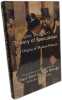

Comme neuf avec sa jaquette intérieur propre bonne tenue
The Ropner Story
Ebury Press 1986 165 pages 16 2x2 2x23 6cm. 1986. Cartonné jaquette. 165 pages.
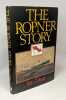
Bon Etat de conservation avec sa jaquette (bords un peu frottés)
A European Central Bank?: Perspectives on Monetary Unification After Ten Years of the Ems
Cambridge University Press 1989 392 pages in8. 1989. Cartonné jaquette. 392 pages.
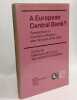
Très bon état avec sa jaquette intérieur propre bonne tenue
Le capitalisme, la libre concurrence et l'économie dirigée
Liège, Thone 1934 187pp., dans la série "Bibliothèque scientifique belge", br.orig., 19cm., cachet, bon état, E42124
L'Europe centrale économique et sociale
Paris, Alcan 1931 ix + 160pp., br.orig., 19cm., cachet, bon état, E42073
Aspetti e momenti della vita economica di Roma e del Lazio nei secoli XVIII e XIX
Roma, Edizioni di Storia e Letteratura 1965 315pp.+ 5pp.ills.hors-texte, br., dans la série "Storia ed Economica. Studi, Testi, Documenta, Quaderni" tome 13, non coupé, bel état
La place du consommateur dans l'économie dirigée
Paris, P.U.F. 1941 viii + 234pp., dans la série "Nouvelle Bibliothèque économique", br.orig., cachet, bon état, E41497
Leçons choisies d'économie politique et sociale
Louvain, Ch. Uystpruyt 1937 viii + 504pp., 2e éd., br.orig., 24cm., bon état
Le problème mondial du blé. Projet de solution
Paris, Félix Alcan 1934 293pp., br.orig., 26cm., bon état, E79043
Beschouwingen over eenige effecten en credietvormen in hun beteekenis voor de financiering der onderneming
, 's-Gravenhage, M.Nijhoff 1924, 132pp., 3°bijgewerkte dr., linnen band, goede staat, E20523
La Politique Economique Britannique - les faits et la doctrine
Anvers, Bernaerts 1950 353pp., dans la série "Université Catholique de Louvain. Collection de l'Ecole des Sciences Economiques" nr.41, [thèse académique], br.orig., cachet, bon état, E41535
La Politique Economique Britannique - les faits et la doctrine
Anvers, Bernaerts 1950 353pp. + joint: 1p."thèses", 26cm., dans la série "Université Catholique de Louvain. Collection de l'Ecole des Sciences Economiques" nr.41, [thèse académique], br.orig., bel état, E73984
Histoire de l'expansion coloniale des peuples européens ; Suède
Bruxelles, Maurice Lamertin 1921 62pp., br.orig., 23cm., cachet, bon état, [Ouvrage ayant eu le prix du Roi], E41696

