 Write to the booksellers
-
Latest
Last month (126)
Last week (9)
-
Century
16th (1)
17th (9)
18th (55)
19th (100)
20th (630)
21st (143)
-
Countries
Belgium (260)
Brazil (2)
Denmark (229)
France (481)
Netherlands (145)
Switzerland (16)
-
Syndicate
ILAB (408)
NVVA (145)
SLAM (168)
Testament politique de Messire Jean Baptiste Colbert
La Haye, Henry van Buldern, 1693. 8vo. In contemporary full vellum with title in contemporary hand to spine. Inner front hinge split. Title-page with underlinings in red and small paper of paper cut of in outer margin, otherwise internally nice and clean. (32), 501 pp.
Second edition.
Anweisungen der heilsamen, politischen Grunde und Maximen der Republicqen Holland und West-Friesland.
Rotterdam, (Wachtler), 1671. 8vo. In contemporary full vellum with title in contemporary hand to spine. ""EvW"" in gilt lettering to front board. A few stains and light soiling to extremities. Internally with light occassional brownspotting. (38), 423 pp. + engraved half-title.
Uncommon first German translation of La Court's classic work on Dutch politics and economics describing the damage that had been done to the country by monarchical leaders since the Middle Ages. La Court stressed the importance of free competition and was an advocate of the republican form of government.
Economic Welfare (Critical Ideas in Economics)
Edward Elgar Publishing Ltd 2000 606 pages 24 638x4 318x16 256cm. 2000. Relié. 606 pages.

Très Bon Etat de conservation intérieur propre bonne tenue
Bagatelles morales et dissertations, avec le Testament littéraire de l'abbé Desfontanes. Nouvelle édition, augmentée.
A Londres, et se vend à Francfort, Chez Knoch & Eslinger, 1763. Title printed within an engraved ornamental border. 288 pp. 12mo. Contemporary marbled calf, spine gilt in compartments, red label with gilt lettering, red edges. INED 1224 (first edition); Versins 210; Einaudi 1381 (later edition); not in Kress; not in Goldsmiths. "Recueil de pièces diverses. Considérations sur le commerce ("nerf de l'État"), le luxe, le célibat, les impôts, la population, l'allaitement maternel, etc." (INED). Vivid criticism of society and predicting social upheaval, notably in l'Année Merveilleuse and l'Astrologue du Jour: 'Riches, faites usage du peu de temps qui vous reste à jouir de votre fortune, car elle va bientôt passer en d'autres mains' (INED). These two texts (l'Année Merveilleuse and l'Astrologue du Jour) are extensively analysed in Lichtenberger's Le Socialisme au XVIIIe siècle, pp. 47-49. Interesting and severe criticism of French society and predicting social revolutions.


(NVVA, )
Phone number : 31 20 698 13 75
Bagatelles morales et dissertations, par Monsieur l'Abbé Coyer; avec le Testament littéraire de Mr. l'Abbé Desfontaines. Nouvelle édition, augmentée.
A Londres, et se vend à Francfort, Chez Knoch & Eslinger, 1769. Title printed in red and black. (4), 303 (misnumbered 203) pp. Small 8vo. Contemporary speckled calf, spine richly gilt in floral ornaments, red edges, a very nice copy. INED 1224 (first edition); Versins 210; Einaudi 1381 (later edition); Higgs 2130; not in Kress; not in Goldsmiths. First published in 1754, this is an augmented edition. Recueil de pièces diverses. Considérations sur le commerce ("nerf de l'État"), le luxe, le célibat, les impôts, la population, l'allaitement maternel, etc. Critiques assez vives de la société, et annonce de bouleversements sociaux, notamment dans l'Année Merveilleuse et dans l'Astrologue du Jour: 'Riches, faites usage du peu de temps qui vous reste à jouir de votre fortune, car elle va bientôt passer en d'autres mains' (INED). The two named pieces in this INED entry are extensively analysed in Lichtenberger's Le Socialisme au XVIIIe siècle, pp. 47-49. Important critical survey of French society and predicting social revolutions.
(NVVA, )
Phone number : 31 20 698 13 75
Etudes brittaniques d'économie industrielle (1914-1934). Tome I: De la population industrielle
Bruxelles / Paris, L'Edition Universelle / Desclée De Brouwer s.d. [+/- 1935] xxvi + 440pp.avec 49 tableaux (dont 1 dépliant) et 8 graphiques + joint: 1p. "thèses", 26cm., dans la série "Collection de l'Ecole des sciences politiques et sociales de l'Université de Louvain", br.orig., cachet au verso de la page de titre, bon état, [thèse académique; ce tome contient 2 parties "De la population britannique en général", pp.1-60 & "Des populations ouvrières" pp.61-440], E74004
Réformes de structure
Bruxelles, Les Editions Lumières 1946 151pp., br.orig., 23cm., cachet, bon état, [contenu: Nationalisations: Industries et commerce d'armes et de munitions, industrie de l'électricité, institutions de la monnaie de l'épargne et du crédit. Principe de la propriété par rapoort à la nationalisation, la question de l'indemnisation], E42139
Consultation pour MM. Alexandre Ferrier et Cie, gérans de l'entreprise des Télégraphs publics; Par M. Ad. Crémieux, ..... Suivi d'Adhésions motivées de MM. Lacoste, Dalloz, Hennequin, Delangle, Odilon Barrot, De Vatimesnil, Dupin, Parquin, .....
(Paris, Everat, 1832). 32 pp. 4to. Modern boards. First edition. Against the monopoly of the telegraph. The text is preceded by a facsimile of a letter by Ferrier and Cie.Crémieux later became one of the members of the Provisional government during the 1848 revolution.
(NVVA, )
Phone number : 31 20 698 13 75
Résultat des Assemblées Provinciales, à l'usage des Etats d'une Province.
Bruxelles (Chartres), 1788. (8), 174, (2) pp. 8vo. Modern half morocco. Renouvin, Assemblées provinciales, 235; Goldsmiths 13526; not in INED; not in Kress; not in Einaudi; not in Mattioli; not in Granier; not in Dada. First edition, very rare. 'Le seul résumé commode que les contemporains aient pu avoir entre les mains' (Renouvin). Survey of reports and results of the provincial assemblees in various provinces during the years 1778-1788, divided into the various subjects dealt with, such as: impositions - cadastre - grandes routes - commerce & manufactures - agriculture - mendicité - projets de bien public - etc.The author deals with economics and administration in a reforming spirit, close to the physiocratic ideas. Deals also with taxes, commerce, manufactures, agriculture, mendicity and public assistance. According to Goldsmiths the 'province' is Artois.
(NVVA, )
Phone number : 31 20 698 13 75
L'ECONOMIE DU COMMONWEALTH
1950 broché in-octavo tellière (paperback), dos et couverture (spine and cover) blancs, illustrations : hors-texte et tableaux (full page engraving and tables), 136 pages, 1950 Paris Presse Universitaires de France,
Collection "Que Sais-Je ?" numéro 403, première édition (first printing), bon état (good condition)
Le Franc suisse pendant et après la guerre
Lausanne/ Genève/, Payot 1932 242pp., br.orig. (dos peu restauré), 25cm., bon état
Le Franc suisse pendant et après la guerre
Lausanne, Payot 1932 242pp., br.orig., non coupé, 25cm., "Dissertation présentée à l'Ecole des Hautes Etudes Commerciales de l'Université de Lausanne pour obtentir le grade de docteur ès sciences commerciales et économiques"
Formation of Muscovy 1300 - 1613 The (Longman History of Russia)
Routledge 1987 304 pages 15 6x2 2x23 2cm. 1987. Broché. 304 pages.

Bon état bonne tenue intérieur propre
De l'interieur: voyage au pays de la desillusion
Librairie artheme fayard 2014 240 pages 13 462x2 032x21 336cm. 2014. Broché. 240 pages.

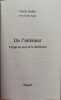
Bon état
De l'interieur: voyage au pays de la desillusion
Librairie artheme fayard 2014 240 pages 13 462x2 032x21 336cm. 2014. Broché. 240 pages.

Bon état
Le Financement Du Secteur Public: Analyse Microaeconomique
SCHOENHOF FOREIGN BOOKS 1984 336 pages in8. 1984. Broché. 336 pages.

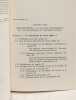
Bon état couverture défraîchie intérieur propre trace de trombonne sur le haut du premier plat et de la première page
Monnaie et conjoncture - Tome I.La monnaie et les théories monétaires
Paris, P.U.F. 1946 399pp., br.orig., 26cm., bel état
Monnaie et conjoncture - Tome I.La monnaie et les théories monétaires
Paris, P.U.F. 1946 399pp., br.orig., non coupé, 26cm.
DAMOUGEOT-PERRON G. & BOCCON-GIBOD A. (& RUEFF Jacques, préface)
Reference : E42097
(1932)
Les systèmes monétaires contemporains, précédés de notions générales sur la monnaie métallique et fiduciaire
Paris, Recueil Sirey 1932 vi,178 + xxix pp., br.orig., 19cm., qqs. cachets, bon état, E42097
Le prolétariat et ses problèmes
Tournai, Casterman 1947 216pp., ouvrage hors série de la collection "Batir", br.orig., 20cm., bon état, E42140
Manuel d'économie (Optimum)
Ellipses 2014 256 pages 16 4x1 6x23 8cm. 2014. Broché. 256 pages.
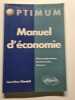
Bon état
Placat angaaende nogle Forandringer i Forordningen af 30te September om stemplet Papiirs Brug paa de vestindiske Øer.
Kiøbenhavn (Copenhagen), Schultziske Officin, (1822). 4to. (4) pp.
Original printing of this ordonance.
Placat for Kongeriget Danmark, angaaende Afgiftsfrihed i aarene 1824 og 1825 for indenlandske Producter, som udføres til de dansk=vestindiske Øer.
Kiøbenhavn, Jens Hostrup Schultz, 1824. 4to. (4) pp.
Placat für die herzogthümer Schleswig und Holstein, betreffend eine Befreiung für die Jahre 1824 und 1825 von der auf inländischen Producten, welche nach den dánisch=westindischen Inseln versandt werden, haftenden Abgabe/ Placat for Hertugdommene Sles...
Kopenhagen, Jens Hostrup Schultz, (1824). (4) pp. German and Danish text.
Anordning, angaaende de Regler, hvorefter de Umyndiges Midler paa de danske vestindiske Øer skulle bestyres, og Rigtighed for samme aflægges. Kiøbenhavn, den 5te Mai 1830.
Kiøbenhavn, Jens Hostrup Schultz, (1830). 4to. 31 pp.

