 Write to the booksellers
-
Latest
Last month (126)
Last week (9)
-
Century
16th (1)
17th (9)
18th (55)
19th (100)
20th (630)
21st (143)
-
Countries
Belgium (260)
Brazil (2)
Denmark (229)
France (481)
Netherlands (145)
Switzerland (16)
-
Syndicate
ILAB (408)
NVVA (145)
SLAM (168)
Entwicklung der Bank Wädenswil in den Jahren 1863-1913. Im Auftrage des Verwaltungsrates verfasst von A. Wartmann.
Wädenswil, Buchdruckerei A. Stutz, 1914. Gr.-8°. 36 S. Mit 2 Tafeln und einer Tabelle. Orig.-Broschur (minim bestossen).
Widmung auf Titelblatt.
The East European Gypsies: Regime Change Marginality and Ethnopolitics
Cambridge University Press 1997 422 pages 15 2146x22 8854x2 6924cm. 1997. Broché. 422 pages.
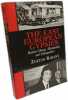

Très Bon Etat de conservation intérieur propre bonne tenue
Petit Code de la Raison Humaine, ou Exposition succinte de ce que dicte à tous les hommes, Pour éclairer leur conduite & assurer leur bonheur. Par M.B.D.
(Paris), 1789. (iii)-xxii (misnumbered xxiv), 112 (misnumbered 114) pp. 12mo. Modern half calf, marbled boards, spine gilt in compartments, gilt lettering. Echeverria & Wilkie 789/7; INED 218; no edition in Kress; no edition in Goldsmiths; no edition in Einaudi; not in Sabin. Final edition of this little collection of 102 maxims and reflections forming a perfect abridged statement of the philosophy of the Enlightenment.'Both signatures a and b have had the first leaf of each cancelled; no located copy still has them present' (Echeverria & Wilkie). After the half-title and title the numbering of the prelims is: vii-ix, verso of ix an unnumbered blank page, ix again, verso numbered xii, xv-xxiv. This is a copy with a5r numbered ix (see Echeverria & Wilkie). The dedication is 'A Monsieur B.F. (i.e. Benjamin Franklin). The first edition was published in 1774 and a second one was printed in 1782 in Paris on the press of Benjamin Franklin. Livingston (19) writes: 'It was again printed in 1789, a close copy, typographically, of Franklin's Passy press edition, and this is the only edition recorded in the Catalogue of the Bibliothèque Nationale (1914).' According to Quérard (I, 175), this edition 'est plus complète que les autres', and he adds 'ce petit traité renferme beaucoup d'idées sur le commerce maritime.' 'Éloge de la famille et du mariage, du travail, de la tolérance. Défense du droit de propriété et de l'impôt foncier. Idées agrariennes sur la population et l'agriculture' (INED). On page 87 these lines on the USA: 'La Pensylvanie est le premier pays policé de l'univers où la tolérance réciproque de tous les cultes religieux ait été garantie par une loi authentique.'The pages 89-90 are omitted in the numbering, page (91)-end contains notes to the various maxims. Jacques Barbeu-Dubourg (1709-1779) was doctor, professor, journalist and businessman: he was Diderot's doctor untill Barbeu died, and he created various commercial companies with the aim to help the American revolutionaries. - Small tear in outer blank margin of the title-page and a few unobtrusive spots, verso title-page and recto last page with strengthened inner margin.


(NVVA, )
Phone number : 31 20 698 13 75
l'economie du spectacle vivant qsj 3972
QUE SAIS JE 2013 128 pages 11 4x1 2x17 2cm. 2013. pocket_book. 128 pages.
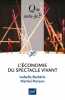
Bon état
Les femmes dans la societe francaise au 20e siecle
Armand Colin Editeur 2014 288 pages 16x2x23 4cm. 2014. Broché. 288 pages.

Bon état
Diffusion du progrès et convergence des prix. Allemagne - Angleterre 1792-1913
Louvain / Paris, Nauwelaert / Béatrice-Nauwelaerts 1966 230pp.avec ills., 24cm., dans la série "Université Catholique de Louvain. Faculté des sciences économiqes et sociales. Nouvelle série" no.1, br.orig., bel état, E73997
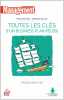
Toutes les cles d un business plan reussi ned
ESF PRISMA 2016 144 pages 13 2x20 6x1cm. 2016. Relié. 144 pages.
Très bon état
Moutons rebelles - Ardelaine la fibre développement local (avec signature)
REPAS 2003 15x1 6x20 2cm. 2003. Broché.

Très bon état - légères marques de lecture et/ou de stockage mais du reste en très bon état- expédié soigneusement depuis la France
Théorie économique et impulsion Keynésienne
Paris, Dalloz 1952 viii + 762pp., 20cm., br.orig., dans la série "Etudes politiques, économiques et sociales" vol.5
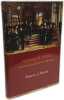
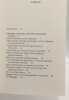
Nothing Is Sacred: Economic Ideas for the New Millennium
MIT Press 2002 200 pages 14 48x2 16x20 93cm. 2002. Cartonné jaquette. 200 pages.

Très bon état
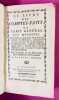
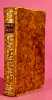
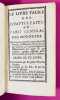
Le Livre des comptes-faits ou tarif général des monnoyes. Avec lequel on peut faire toute sorte de comptes des monnoyes tant anciennes que nouvelles, et autres comptes de multiplication, quelques difficiles qu’ils soient, pourvu qu’on sache l’addition ; on y a joint le Tarif du Tain & des Glaces.
1758 Couverture rigide Avignon, Charles Giroud, 1758. Un volume in-16 (14,5 x 8,5 cm), reliure plein veau fauve marbré de l’époque, dos lisse orné, petit manque aux coiffes et à une charnière, quelques petites épidermures. Nombreuses tables de conversions. Un des manuels à l’usage de commerçants les plus répandus depuis la fin du XVIIe s. Celui-ci a la particularité d’avoir un tarif du tain et des glaces. François-Bertrand Barrême est le mathématicien et expert-comptable français qui a littéralement donné son nom au mot couramment utilisé aujourd'hui : un « barème ». À une époque où le système métrique n'existait pas et où les conversions monétaires d'une province à l'autre (ou entre anciennes et nouvelles monnaies royales) étaient d'une complexité absolue, ce livre offrait des tables de multiplication et de conversion prêtes à l'emploi. Bon état intérieur, bon exemplaire.
Bon
Economic Reforms and Political Change in Eastern Europe: Comparision of the Czechoslovak and Hungarian Experiences (Studies in Russian and East European History and Society)
Palgrave Macmillan 1988 363 pages 21 8x2 6x14 8cm. 1988. Cartonné jaquette. 363 pages.

Bon état avec jaquette intérieur propre bonne tenue
Crédit et banque
Paris, Pichon et Durand-Auzias 1945 345pp., br., dans la série "L'économie politique contemporaine" vol.VIII
Histoire économique de la Belgique 1945-1956
Bruxelles, Bruylant 1958 438pp., signé avec dédicace par l'auteur, 25cm., br.orig.
Traité d'économie politique [2 tomes]
Paris, Dalloz 1951-1953 960 + 1036pp., br.orig., 23cm., bon état
Pour Une Critique De l'Economie Politique Du Signe
Gallimard-Jeunesse 1995 268 pages 12 4x1 6x18 8cm. 1995. mass_market. 268 pages.
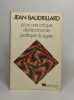
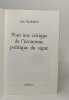
couverture légèrement défraîchie intérieur propre bonne tenue
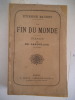
La fin du monde
in 12 broché,342 pages,IV préface par Ed. LABOULAYE,table des matières,Dentu 1872 mouillure sans gravité angle supérieur droit en tout début de volume ainsi qu’aux dix dernières pages
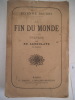

La fin du Monde
Préface par Edouard LABOULAYE In 12 broché,couverture factice avec le premier plat de couverture contrecollé. Faux-titre titre VII 342 pages,VI pages de table E Dentu 1872. Intérieur en très bon état, pas de rousseurs.


Free Market Innovation Machine: Analyzing the Growth Miracle of Capitalism
Princeton University Press 2002 318 pages 16 23x2 62x24 1cm. 2002. Cartonné jaquette. 318 pages.
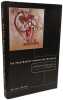
Très bon état avec sa jaquette (un peu défraîchie)
The Microtheory of Innovative Entrepreneurship (The Kauffman Foundation Series on Innovation and Entrepreneurship)
Princeton University Press 2010 246 pages in8. 2010. Cartonné jaquette. 246 pages.
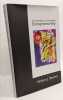
proche du neuf avec sa jaquette intérieur propre
L'essor industriel et l'impérialisme colonial (1878-1904)
Paris, P.U.F. 1949 628pp., 2e édition refondue et augmentée, br.orig., dans la série "Peuples et civilisations. Histoire générale", 23cm., bon état
L'essor industriel et l'impérialisme colonial (1878-1904)
Paris, P.U.F. 1937 610pp., dans la série "Peuples et Civilisations. Histoire Générale" t.XVIII, reliure toile, bon état
British International Gold Movements and Banking Policy, 1881-1913.
Cambridge, Harward University Press, 1935 8vo. In the original red full cloth with gilt lettering to spine. Underlinings throughout. XIV, 218 pp.
Die wirtschaftliche Entwicklung in der Stadt Greiz während des 19. Jahrhunderts - Ein Beitrag zur Geschichte der Industrialisierung in Deutschland
Weimar, Hermann Böhlaus Nachfolger 1955 xxiv + 270pp., most pages uncut, softcover, Very good, G37449
Probabilistic Risk Analysis: Foundations and Methods
Cambridge University Pr 2001 414 pages 25x25 1x2 8cm. 2001. Cartonné. 414 pages.

Très Bon Etat de conservation intérieur propre bonne tenue

