 Write to the booksellers
-
Type
Book (439)
Magazine (4)
-
Latest
Last 24h (4)
Last month (9)
-
Language
English (3)
French (388)
German (1)
Polish (1)
Russian (50)
-
Century
18th (2)
19th (142)
20th (107)
21st (26)
-
Countries
Belgium (27)
Brazil (1)
Denmark (86)
France (244)
Germany (2)
Switzerland (30)
United States of America (53)
-
Syndicate
CLAM (2)
ILAB (217)
NVVA (5)
SLACES (5)
SLAM (112)
SNCAO (1)
Priruchennyie zhivotnyie i vozdelannyie rasteniya [i.e. Russian ""The Variation of Animals and Plants under Domestication"". Translated from English with the consent and assistance of the author by V. Kovalevsky. Edited by I. M. Sechenov, botanical sect... - [THE VERY FIRST PUBLICATION OF DARWIN'S 'VARIATION UNDER DOMESTICATION' IN ANY LANGUAGE. ]
St. Petersburg, 1868 [but in fact 1867-1869]. 8vo. In contemporary half calf with renewed spine. Inner hindges with repairs and boards with soiling and a few marks and holes to volume 1. Light foxing throughout, primarily affecting margins and plates. Overall a good copy. IV, 443, (1): ill"" V.2: 462, (I)-VI pp.

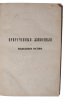
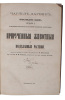
The very first publication of Darwin's 'Variation under Domestication' in any language. The title-page states 1868 but they two volumes were in fact published, respectively in November 1867 and 1869.""In August, 1867, Darwin wrote to Lyell that he was visited by a young Russian ""who is translating my new book into Russian."". The book was the 'Variation of Animals and Plants under Domestication', and the youngRussian was Vladimir Kovalevsky, who subsequently became a well-known evolutionary palaeontologist. At that time the 'Variation' was not yet published, and it seems most probably that the translation was made from a set of proofs given to Kovalevsky by Darwin. Thanks to Kovalevsky's rapid work, the first section of the Russian translation of the Variation was published several months prior to the publication of the English original."" (Glick, The Comparative Reception of Darwinism, p. 235)""The first Russian edition, which is dated 1868 on the volume title page, is of particular interest. It is the only work, in his lifetime, of which any part appeared in foreign translation before it appeared in English. Correspondence at Cambridge shows that the translator was sent copies of corrected proofs as they were ready. It was published in seven parts of which four, perhaps to the end of Chapter XV, appeared in 1867"" the next two appeared in 1868, and the last not until 1869, because he had been away in Russian Asia. The title is given in full, in English translation, under No. 925 and has been discussed above"" (Freeman).Vladimir Kovalevsky (1842-1883), the translator of this book, was a Russian biologist and the founder of evolutionary palaeontology. His own scientific works were printed between 1873 and 1877, and according to Henry Osborn (Osborn, H. The rise of Mammalia in North America // Proc. Amer. Assoc. Sci. 1894. vol. 42, pp. 189-227) they ''dare away'' all traditional and dry European paleontology. That was mainly because Kovalevsky was a devoted Darwinist and adapted Darwin's ideas to palaeontology. Luis Dollo, the Belgian palaeontologist, a contemporary of Kovalevsky's, described him thus: ''No palaeontologist embodies so perfectly our epoch, as the brilliant and miserable Vladimir Kovalevsky, friend and guest of the immortal Charles Darwin''. Indeed, Kovalevsky was a friend of Darwin's and they corresponded extensively. When visiting Darwin in 1877, the Russian botanist, Timiryazev, asked Darwin about his views on Russian science and Darwin surprised him with an answer that Vladimir Kovalevsky (little known at the time) was the bright hope of palaeontology.Kovalevsky was very eager to translate Darwin into Russian as soon as possible so he asked Darwin to send him the proofs of his book chapter by chapter as soon as Darwin finished them. Kovalevsky translated with great speed (the complete book contains 900 pages) and he began to print the chapters from July 1867 (the first English edition appeared on 30th January 1868). The chapters were printed one after another as the translation went on. It is unclear whether any part of it appeared before the English edition.Vladimir Kovalevsky translated another of Darwin's books, The Expression of the Emotions in Man and Animals [O vyrazhenii emotsyi u cheloveka I zhyvotnikh] that appeared the same year as the English edition (1872).Kovalevsky committed suicide at the age of forty after the breakdown of his marriage to the celebrated mathematician, Sophia Kovalevskaya who became the first female professor of mathematics in the world.OCLC finds only three complete copies worldwide (Cornell, American Philosophical Society (US) and Thomas Fisher Library, (Canada)). Freeman 925
Proiskhozhdenie chelovieska i polovoi podbor [i.e. English ""Descent of Man""]. - [FIRST TRANSLATION OF DARWIN'S 'DESCENT OF MAN' INTO ANY LANGUAGE]
S.-Peterburg, Izdanie redaktsii zhurnala ""Znanie, 1871. 8vo. In contemporary black half calf with four rasied bands and gilt lettering to spine. Corners of binding with repairs and a three cm long tear to lower front hindge. Light miscolouring throughout, especially to first 10 leaves. (2), VII, (6), 439 pp.
![Proiskhozhdenie chelovieska i polovoi podbor [i.e. English ""Descent of Man""]. - [FIRST TRANSLATION OF DARWIN'S 'DESCENT OF MAN' INTO ANY LANGUAGE]. ...](https://static.livre-rare-book.com/pictures/LLX/53279_1_thumb.jpg)
![Proiskhozhdenie chelovieska i polovoi podbor [i.e. English ""Descent of Man""]. - [FIRST TRANSLATION OF DARWIN'S 'DESCENT OF MAN' INTO ANY LANGUAGE]. ...](https://static.livre-rare-book.com/pictures/LLX/53279_2_thumb.jpg)
![Proiskhozhdenie chelovieska i polovoi podbor [i.e. English ""Descent of Man""]. - [FIRST TRANSLATION OF DARWIN'S 'DESCENT OF MAN' INTO ANY LANGUAGE]. ...](https://static.livre-rare-book.com/pictures/LLX/53279_3_thumb.jpg)
The exceedingly rare first Russian translation of Darwin's 'Descent of Man' published only four month after the original English. The Russian publisher was eager to have a translation published, hence this early abridged edition - two other Russian translations followed later the same year - The present translation being the very first into any language. ""The Descent of Man showed that the process of organic evolution, propelled by the struggle for existence and natural selection, applied to man no less than to the rest of the animal kingdom. It gave explicit recognition to the idea of the anthropoid origin of man. This claim surprised no one, for it was clearly hinted at in the great work of 1859 and was elaborated in Thomas Huxley's Man's Place in Nature and Vogt's Lectures on Man. Nor was it much of a surprise when three Russian translations of The Descent appeared within one year after the publication of the English original. Two general ideas represented the essence of The Descent: natural selection is not only behind the physical survival of man but also behind the evolution of cultural values"" and the differences between animal and human behavior are differences of degree rather than of kind."" (Darwin in Russian Thought) ""The Expression helped lay the foundations for a scientific study of the psychological aspect of the evolution of species. The book appeared in a Russian translation only a few months after the publication of the English original. The paleontologist Vladimir Kovalevskii was the translator, and the embryologist Aleksandr Kovalevskii was in charge of editorial tasks. In 1874 Vladimir wrote to Darwin that nearly two thousand copies of the Russian translation were sold."" "" The Expression deals much more extensively with selected aspects of human and animal behavior than with general problems of evolutionary biology. The Russian reviewers were generally impressed with Darwin's descriptions and categorizations of animal behavior. The Journal of the Ministry of Public Education was unusually profuse in praising the book's content and writing style. The reviewer commended Darwin's impartiality and avoidance of ""materialistic trappings."" Even the adherents of spiritualism could read the book, he wrote, without the least discomfort. The reviewer thought that psychologists would benefit from the information the book presented on the ""physiological"" basis of behavior. Indeed, he recommended the book to all readers interested in the scientific foundations of human behavior. The liberal journal Knowledgewas equally laudatory. It noted that the book was eminently successful on two counts: it offered a ""rational explanation"" of many expressions of human emotions, and it integrated the study of animal and human behavior into the universal process of organic evolution. In fact, no educated person could afford to ignore it.N. P. Vagner, professor of zoology and comparative anatomy at St. Petersburg University, called The Expression a book with ""great strengths and minor flaws."" The volume reminded him of Darwin's previous works, which marked ""turning points in the history of science."" The strength of the book lay much more in its suggestion of new topics for comparative-psychological research than in a presentation of a theoretically and logically integrated system of scientific thought. Insufficient exploration of the physiological underpinnings of mental activities represented the book's major shortcoming"" (Darwin in Russian Thought) In Russia Darwinism had a profound influence not only upon the different sciences, but also on philosophy, economic and political thought, and the great literature of the period. For instance, both Tolstoy and Dostoevsky referenced Darwin in their most important works, as did numerous other thinkers of the period.Like Strakhov, however, Dostoevsky, acknowledging the significance of the ""Origin of Species"", saw the dangers of the theory. In the same year as the publication of Rachinsky's translation, he lets the narrator in ""Notes from Underground"" (1864) launch his attack on Darwinism , beginning: ""As soon as they prove you, for instance, that you are descended from a monkey, then it's no use scowling, you just have to accept it.""In ""Crime and Punishment"" (two years later, 1866) the Darwinian overtones inherent in Raskolnikov's theory of the extraordinary man are unmistakable. He describes the mechanism of ""natural selection,"" where, according to the laws of nature, by the crossing of races and types, a ""genius"" would eventually emerge. In general, Darwinian themes and Darwin's name occur in many contexts in a large number of Dostoevsky's works.'Descent of Man' was transted into Danish, Dutch, French, German, Italian, Polish, Russian and Swedish in Darwin's lifetime. Freeman 1107.
Proiskhozhdenie chelovieska i polovoi podbor [i.e. English ""Descent of Man""]. - [FIRST TRANSLATION OF DARWIN'S 'DESCENT OF MAN' INTO ANY LANGUAGE]
S.-Peterburg, Izdanie redaktsii zhurnala ""Znanie, 1871. 8vo. In recent half calf with four rasied bands and gilt lettering to spine. Soiling and damp stain to title-page. Light brownspotting throughout. (2), VII, (5), 439, (7) pp.
![Proiskhozhdenie chelovieska i polovoi podbor [i.e. English ""Descent of Man""]. - [FIRST TRANSLATION OF DARWIN'S 'DESCENT OF MAN' INTO ANY LANGUAGE]. ...](https://static.livre-rare-book.com/pictures/LLX/56375_1_thumb.jpg)
![Proiskhozhdenie chelovieska i polovoi podbor [i.e. English ""Descent of Man""]. - [FIRST TRANSLATION OF DARWIN'S 'DESCENT OF MAN' INTO ANY LANGUAGE]. ...](https://static.livre-rare-book.com/pictures/LLX/56375_2_thumb.jpg)
![Proiskhozhdenie chelovieska i polovoi podbor [i.e. English ""Descent of Man""]. - [FIRST TRANSLATION OF DARWIN'S 'DESCENT OF MAN' INTO ANY LANGUAGE]. ...](https://static.livre-rare-book.com/pictures/LLX/56375_3_thumb.jpg)
The exceedingly rare first Russian translation of Darwin's 'Descent of Man' published only four months after the original English. The Russian publisher was eager to have a translation published, hence this early abridged edition - two other Russian translations followed later the same year - The present translation being the very first into any language. ""The Descent of Man showed that the process of organic evolution, propelled by the struggle for existence and natural selection, applied to man no less than to the rest of the animal kingdom. It gave explicit recognition to the idea of the anthropoid origin of man. This claim surprised no one, for it was clearly hinted at in the great work of 1859 and was elaborated in Thomas Huxley's Man's Place in Nature and Vogt's Lectures on Man. Nor was it much of a surprise when three Russian translations of The Descent appeared within one year after the publication of the English original. Two general ideas represented the essence of The Descent: natural selection is not only behind the physical survival of man but also behind the evolution of cultural values"" and the differences between animal and human behavior are differences of degree rather than of kind."" (Darwin in Russian Thought) ""The Expression helped lay the foundations for a scientific study of the psychological aspect of the evolution of species. The book appeared in a Russian translation only a few months after the publication of the English original. The paleontologist Vladimir Kovalevskii was the translator, and the embryologist Aleksandr Kovalevskii was in charge of editorial tasks. In 1874 Vladimir wrote to Darwin that nearly two thousand copies of the Russian translation were sold."" "" The Expression deals much more extensively with selected aspects of human and animal behavior than with general problems of evolutionary biology. The Russian reviewers were generally impressed with Darwin's descriptions and categorizations of animal behavior. The Journal of the Ministry of Public Education was unusually profuse in praising the book's content and writing style. The reviewer commended Darwin's impartiality and avoidance of ""materialistic trappings."" Even the adherents of spiritualism could read the book, he wrote, without the least discomfort. The reviewer thought that psychologists would benefit from the information the book presented on the ""physiological"" basis of behavior. Indeed, he recommended the book to all readers interested in the scientific foundations of human behavior. The liberal journal Knowledgewas equally laudatory. It noted that the book was eminently successful on two counts: it offered a ""rational explanation"" of many expressions of human emotions, and it integrated the study of animal and human behavior into the universal process of organic evolution. In fact, no educated person could afford to ignore it.N. P. Vagner, professor of zoology and comparative anatomy at St. Petersburg University, called The Expression a book with ""great strengths and minor flaws."" The volume reminded him of Darwin's previous works, which marked ""turning points in the history of science."" The strength of the book lay much more in its suggestion of new topics for comparative-psychological research than in a presentation of a theoretically and logically integrated system of scientific thought. Insufficient exploration of the physiological underpinnings of mental activities represented the book's major shortcoming"" (Darwin in Russian Thought) In Russia Darwinism had a profound influence not only upon the different sciences, but also on philosophy, economic and political thought, and the great literature of the period. For instance, both Tolstoy and Dostoevsky referenced Darwin in their most important works, as did numerous other thinkers of the period.Like Strakhov, however, Dostoevsky, acknowledging the significance of the ""Origin of Species"", saw the dangers of the theory. In the same year as the publication of Rachinsky's translation, he lets the narrator in ""Notes from Underground"" (1864) launch his attack on Darwinism , beginning: ""As soon as they prove you, for instance, that you are descended from a monkey, then it's no use scowling, you just have to accept it.""In ""Crime and Punishment"" (two years later, 1866) the Darwinian overtones inherent in Raskolnikov's theory of the extraordinary man are unmistakable. He describes the mechanism of ""natural selection,"" where, according to the laws of nature, by the crossing of races and types, a ""genius"" would eventually emerge. In general, Darwinian themes and Darwin's name occur in many contexts in a large number of Dostoevsky's works.'Descent of Man' was transted into Danish, Dutch, French, German, Italian, Polish, Russian and Swedish in Darwin's lifetime. Freeman 1107.
Reise um die welt 1831-36.
Thienemann / Erdmann. 1993. In-8. Relié. Bon état, Couv. convenable, Dos satisfaisant, Intérieur frais. 379 pages - ouvrage en allemand - jaquette conservée - nombreuses illustrations en noir et blanc dans et hors texte.. Avec Jaquette. . . Classification Dewey : 430-Langues germaniques. Allemand
Herausgegeben von Gernot Giertz - ouvrage en allemand. Classification Dewey : 430-Langues germaniques. Allemand

Rejse om Jorden. Populære Skildringer. Efter den engelske Originals nyeste, af Forfatteren gjennemsete Udgave. Paa Dansk ved Emil Chr. Hansen og Alfred Jørgensen. Med Illustrationer i Tontryk, et Kort i Farvetryk samt Forfatterens Portræt og Biografi.
Kjøbenhavn, Brødrene Salmonsen, 1876. Samtidigt hldrbd. med rygforgyldning. Lttere brugsspor ved kanter. XXIII,570,(1) pp., portræt, et foldekort, 7 tonede litografier. Indvendigt rent frisk eksemplar.
First Danish edition of ""Journal of Recherches into the natural history and geology of the countries visited during the voyage of H.M.S. Beagle round the world, under the command of Capt. Fitz Roy. 1839."" - Freeman No. 174.
Rejse om Jorden. Populære Skildringer. Paa Dansk ved Emil Chr. Hansen og Alfred Jørgensen. Med Illustrationer i Tontryk, et Kort i Farvetryk samt Forfatterens Portræt og Biografi.
Kbhvn., Salmonsen, 1876. Samt. hldrbd. Rygforgyldning. Ryg med brugsspor og slidt ved øvre kapitæl. Startende revnedannelse øverst ved false. XXIII,570,(1) pp. Portræt, 1 foldekort, 7 tonede litografier.
First Danish edition of ""Journal of researches into the natural history and geology of the countries visitted during the voyage of H.M.S. Beagle round the world, under the Command of Capt. Fitz Roy"". 1839. - Freeman No 174.
Rejse om Jorden. Populære Skildringer. Paa Dansk ved Emil Chr. Hansen og Alfred Jørgensen. Med Illustrationer i Tontryk, et Kort i Farvetryk samt Forfatterens Portræt og Biografi.
Kbhvn., Salmonsen, 1876. Samt. hldrbd. Rygforgyldning. Ryg med brugsspor og kapitæler slidte, rep. Stempel på titelbladet. XXIII,570,(1) pp. Portræt, 1 foldekort, 7 tonede litografier. Indvendig ren.
First Danish edition of ""Journal of researches into the natural history and geology of the countries visitted during the voyage of H.M.S. Beagle round the world, under the Command of Capt. Fitz Roy"". 1839. - Freeman No 174.
Shurjerkrya chanaparhordutyun BIGL navov [i.e. ""Voyage of the Beagle""]. - [EXCEEDINGLY RARE FIRST ARMENIAN TRANSLATION OF DARWIN'S ""JOURNAL OF RESEARCHES""]
Erevan, Academy of Sciences Armenian S.S.R., 1949. Large8vo. In publisher's original printed cardboard binding. Title printed to spine and front board. A pictures of The Beagle on lower part of front board. Binding with wear and some stains. Internally with dampstain to upper part of leaves, primarily affecting first half. (4), 460 pp. + frontiespiece of Darwin.
![Shurjerkrya chanaparhordutyun BIGL navov [i.e. ""Voyage of the Beagle""]. - [EXCEEDINGLY RARE FIRST ARMENIAN TRANSLATION OF DARWIN'S ""JOURNAL OF ...](https://static.livre-rare-book.com/pictures/LLX/63399_1_thumb.jpg)
![Shurjerkrya chanaparhordutyun BIGL navov [i.e. ""Voyage of the Beagle""]. - [EXCEEDINGLY RARE FIRST ARMENIAN TRANSLATION OF DARWIN'S ""JOURNAL OF ...](https://static.livre-rare-book.com/pictures/LLX/63399_2_thumb.jpg)
![Shurjerkrya chanaparhordutyun BIGL navov [i.e. ""Voyage of the Beagle""]. - [EXCEEDINGLY RARE FIRST ARMENIAN TRANSLATION OF DARWIN'S ""JOURNAL OF ...](https://static.livre-rare-book.com/pictures/LLX/63399_3_thumb.jpg)
The exceedingly rare first Armenian translation of Darwin's ""Journal of Researches"". ""His first published book is undoubtedly the most often read and stands second only to ‘On the origin of Species’ as the most often printed. It is an important travel book in its own right and its relation to the background of his evolutionary ideas has often been stressed.""(Freeman p. 31).Freeman 169
Tesakneri tsagumê. [Armenian - i.e. ""Origin of Species"". Translated by S. Sargysan]. - [EXCEEDINGLY RARE FIRST ARMENIAN TRANSLATION OF 'ORIGIN OF SPECIES']
Erevan, Armenia, Gosizdat, 1936. 8vo. In publisher's original full cloth with title in silver lettering to spine and front board. A picture of Darwin embossed to front board. Extremities with wear and hindges weak. Spine miscoloured and remains of paperlabel to upper part of spine. First quire loose. Internally fine and clean. (2), 765 pp. + frontiespiece and plate with genealogical tree.
The exceedingly rare first Armenian translation of Darwin's landmark work.Only two Armenian translations of 'Origin of Species' has been made. The present first a second from 1963, both translations are of the upmost scarcity. Due to the relatively low number of people speaking Armenian (approximately 3 million in Armenia and 7 million outside) books in Armenian were printed in comparatively low numbers. OCLC locates no copies. Freeman 630.R.B. Darwin Online, F630.
Tesakneri tsagumê. [Armenian - i.e. ""Origin of Species"". Translated by S. Sargysan]. - [EXCEEDINGLY RARE FIRST ARMENIAN TRANSLATION OF 'ORIGIN OF SPECIES']
Erevan, Armenia, Gosizdat, 1936. 8vo. In publisher's original full cloth with title in silver lettering to spine and front board. A picture of Darwin embossed to front board. Hindges weak. ""75"" in ink to spine and front board. Stamp and a few annotations to title-page, otherwise nice and clean. (2), 765 pp. + frontiespiece and plate with genealogical tree.
The exceedingly rare first Armenian translation of Darwin's landmark work.Only two Armenian translations of 'Origin of Species' has been made. The present first a second from 1963, both translations are of the upmost scarcity. Due to the relatively low number of people speaking Armenian (approximately 3 million in Armenia and 7 million outside) books in Armenian were printed in comparatively low numbers. OCLC locates no copies. Freeman 630.R.B. Darwin Online, F630.
The descent of man
London, John Murray 1913 1 in -8 fort volume Reliure pleine toile 1031

Bon état de conservation , exemplaire agréable; coiffe et dos en état d'usage une page volante Disponibilité sous réserve de vente en boutique, prix valable, frais de port en plus, La Poste ou Mondial Relay
The Descent of Man and Selection in Relation to Sex
Londres, John Murray, 1889, in-8, 2 parties en 1 volume : XVI-693 pp, Percaline verte de l'éditeur, "Of the older and honoured chiefs in natural science, many unfortunately are still opposed to evolution in every form" (p.1). "It is only our natural prejudice, and that arrogance which made our forefathers declare that they were descended from demi-gods, which leads us to demur to this conclusion" (p. 25). Mention de seconde édition et 25e mille : il s'agit d'un retirage de l'édition en un volume de 1888. Figures dans le texte. Le 24 Octobre 1859, Darwin fait paraitre The Origin of Species, où il expose sa théorie sur l'évolution des organismes par la sélection naturelle agissant en milieu animal et végétal. Treize ans plus tard, il publie The Descent of Man, où il prouve que l'homme est le descendant modifié d'espèces préexistantes, puis développe la théorie de la sélection sexuelle, facteur également d'évolution des espèces et de différenciation des races humaines. L'ouvrage rattache enfin la généalogie de l'homme à celle de l'animal et étend le transformisme à l'espèce humaine; Darwin y démontre la filiation à partir de singes de l'Ancien Monde. Afin d'établir sa théorie, il compare l'évolution du développement des embryons humains à ceux des animaux inférieurs. L'ouvrage a donné lieu à d'innombrables caricatures jouant sur la ressemblance entre le singe et l'homme. C'est aussi ici que le naturaliste défend le processus de civilisation humaine, qui protège et assure la survie des faibles, à l'inverse de la sélection naturelle qui les élimine. Ex-libris manuscrit sur la page de titre. Léger accroc sur le dos, petites taches sur le plat inférieur. Freeman Bibliographical Database, F968 [En ligne : Darwin On Line]. Couverture rigide
Bon 2 parties en 1 volume :
"The descent of man. Part I and the concluding chapter of part III (Collection ""Thinker's library"", n°12)"
Watts & Co. 1930. In-12. Relié toilé. Bon état, Couv. convenable, Dos satisfaisant, Papier jauni. 244 pages. Texte en anglais. Quelques illustrations en noir et blanc, dans le texte. Rousseurs. Un ex-libris au crayon sur la page de faux titre. Nombreuses annotations à l'encre et au crayon sur la page de garde. Jaquette en mauvais état.. Avec Jaquette. . . Classification Dewey : 420-Langue anglaise. Anglo-saxon
"Collection ""Thinker's library"", n°12. Préface du Major Leonard Darwin. Classification Dewey : 420-Langue anglaise. Anglo-saxon"
"The expression of the emotions in man and animals (Collection ""Thinker's library"", n°47)"
Watts & Co. 1934. In-12. Relié toilé. Etat d'usage, Couv. convenable, Dos satisfaisant, Papier jauni. 179 pages. Texte en anglais. Frontispice en noir et blanc. Nombreuses illustrations en noir et blanc, dans le texte. Rousseurs. Nombreuses annotations à l'encre et au crayon dans le texte. Jaquette en état d'usage.. Avec Jaquette. . . Classification Dewey : 420-Langue anglaise. Anglo-saxon
"Collection ""Thinker's library"", n°47. Révisé et abrégé par C. M. Beadnell. Classification Dewey : 420-Langue anglaise. Anglo-saxon"
The expression of the emotions in man and animals.
London, John Murray, 1872. In-8 de VI-374-4 pages, plein percaline verte, dos orné de fleurons dorés en tête et en queue, plat estampé à froid. Cartonnage d'éditeur.
Illustré de 7 planches hors-texte (3 dépliantes) imprimées en héliogravure, et 21 figures in-texte gravée. Première édition, second tirage. Ce livre fait partie de la tentative de Darwin de poser des questions sur les origines et la psychologie de l'Homme tout en utilisant sa théorie de l'évolution des espèces grâce au processus de sélection naturelle. Exemplaire bien complet du catalogue du libraire Murray en fin de volume. Signature sur la page de titre de Marius Jacob Sirks 1911. Éminent généticien hollandais, (1889-1966) auteur de nombreuses publications, et rédacteur en chef de revues comme "Genetics", "Bibliographia generica", etc. Légères rousseurs au feuillets initiaux, choc sur la coupe supérieure du second plat, avec un fente (une déchirure sans manque au feuillet final du catalogue. Freeman, F1142.
The formation of vegetable mould, through the action of worms, with observations on their habits. With illustrations. Second thousand.
London: John Murray, 1881, in-8vo, VII (+1 white) + 326 p. + 1 leaf (list of works by Darwin), ill. with 15 woodcuts in-text, old ownership inscription to half-title ‘Th. Gompertz’, Original publisher’s green cloth, spine lettered and decorated in gilt, front and rear boards panelled in blind, dark brown endpapers, edges uncut.
First edition, second printing. The last publication prior to his death in 1882 is the culmination of ten years of intensive research and close observation of the interaction of earthworms with their physical environment and their influence on great earth movements. "It was his leitmotif, explaining vast changes by minute incremental events: mountain uplift, evolving life, and now worms transforming the soil" (ODNB). The first printing was said to be of 2,000 copies, but copies of the second thousand are noted as such on the title page; otherwise there are no textual differences. It is likely that the first and second thousand were printed simultaneously, but bound up with different title pages. Freeman 1357.

(SLACES, NVVA)
Phone number : 41 (0)26 3223808
The Life and Letters of Charles Darwin, including an autobiographical Chapter. Edited by his Son, Francis Darwin. Third Edition.
3 Bände. London, John Murray, 1887. Gross-8°. IX, 3 n.n. S., 539 (recte 395) S.; 2 Bl.,393 S.; IV, 418 S. Mit 3 Frontispiz, 1 Faksimile und Illustrationen im Text. Originalleinwandbände.
Freeman 1455. - Das 3. Tausend der ersten Briefauswahl und der Biografie durch Francis Darwin. - Alle Bände mit Exlibris von Elizabeth (von Arnim) mit dem Text "This Book belongs to Elizabeth. Chanterai ma chanson" auf den Innendeckeln. Zusätzlich mit einem handschriftlichem Besitzvermerk "Herbert Clemence, January 3rd, 1888". - Einbände beschabt. Rrücken des 2. Bandes mit Fehlstelle. Titelblätter und Frontispiz fleckig. Hinterer Vorsatz des 1. Bandes knittrig.
THE ORIGIN OF SPECIES
Collier Books. 1972. In-12. Broché. Etat d'usage, Couv. défraîchie, Dos plié, Intérieur acceptable. 512 pages. Mouillures en pages de garde et de titre.. . . . Classification Dewey : 420-Langue anglaise. Anglo-saxon
Collier Books, 09212. The Origin of Species, By means of natural selection or the preservation of favoured races in the struggle for life. Foreword by George GAYLORD SIMPSON. Classification Dewey : 420-Langue anglaise. Anglo-saxon
"The origin of species by means of natural selection (Collection ""Thinker's library"", n°8). 6th edition"
Watts & Co. 1929. In-12. Relié. Etat d'usage, Couv. convenable, Dos satisfaisant, Papier jauni. 434 pages. Texte en anglais. Rousseurs. Un ex-libris à l'encre sur la page de garde. Nombreuses annotations au crayon et à l'encre dans le texte.. . . . Classification Dewey : 420-Langue anglaise. Anglo-saxon
"Collection ""Thinker's library"", n°8 Classification Dewey : 420-Langue anglaise. Anglo-saxon"
The Origin of Species by Means of Natural Selection, or The Preservation of Favoured Races in the Struggle for Life
Penguin Classics. 1985. In-8. Broché. Etat d'usage, Couv. légèrement pliée, Dos satisfaisant, Papier jauni. 476 pages. Texte en anglais.. . . . Classification Dewey : 420-Langue anglaise. Anglo-saxon
Introductin de J.W. Burrow. Classification Dewey : 420-Langue anglaise. Anglo-saxon
The origin of species by means of natural selection, or the preservation of favoured races in the struggle for life.
Sixth edition, with additions and corrections (Forty-fifth thousand.) London: John Murray. 1894. 8°. XXI S., 432 S. Bordeauxroter privater Lederband mit 2 schwarzen, goldgeprägten Rückenschildern, doppelter Deckelfiletierung mit Eckfleurons und Stehkantenvergoldung (sign. Mudie).

Endgültige noch zu seinen Lebzeiten herausgegebene 6. Ausgabe von 1872 mit allen abschliessenden Überarbeitungen von Darwin. - Mit handschriftlichem Besitzvermerk auf dem Vorsatz. - Einband am Rücken und an den Kanten leicht berieben.
The Origin of Species by means of natural selection, or the Preservation of Favoured Races in the Struggle for Life
1892 London Murray, John 1892 1 In 12 Couverture percaline verte 432[pp] Cartonnage Editeur;


. Etat de conservation très bon , Intérieur frais , charnière , talon légèrement marqués. Frais de port inclus vers France métropole au tarif normal, délai d'acheminement sous 72h, pour les commandes > à 80 euros et poids < 1kg. Disponibilité sous réserve de vente en Boutique. Disponibilité sous réserve de vente en boutique, prix valable, frais de port en plus, La Poste ou Mondial Relay
THE VOYAGE OF THE BEAGLE
New York Barnes & Noble 2004 in 8 1 fort volume broché, couverture illustrée, XXV et 574 pages.'' The Barnes & Noble Library of Essential Reading''. Charles Robert Darwin, Shrewsbury 1809 - Downe 1882, naturaliste anglais. Texte en langue anglaise. Bel exemplaire ( Photographies sur demande / We can send pictures of this book on simple request )
Très bon Couverture rigide
"The Voyage of the Beagle (Collection ""The Harvard Classics"", n°29)"
P. F. Collier & Son Company. 1909. In-8. Relié. Etat d'usage, Couv. convenable, Dos satisfaisant, Papier jauni. 524 pages. Texte en anglais. Rousseurs. Quelques illustrations en noir et blanc dans le texte. Quelques annotations au crayon et à l'encre dans le texte. Frontispice en noir et blanc, avec serpente. Un ex-libris à l'encre sur la page de faux titre. Titre, collection et éditeur dorés au dos.. . . . Classification Dewey : 420-Langue anglaise. Anglo-saxon
Classification Dewey : 420-Langue anglaise. Anglo-saxon
Türlerin Kökeni. - [FIRST TURKISH TRANSLATION OF DARWIN'S 'ORIGIN OF SPECIES']
(Ankara, Sol yayinlari, 1970). 8vo. In the original blue printed wrappers. Light wear to extremities. Small white paper label pasted on to back wrapper. Internally fine and clean. 469, (3) pp. (with the genealogic tree included in the pagination).
![Türlerin Kökeni. - [FIRST TURKISH TRANSLATION OF DARWIN'S 'ORIGIN OF SPECIES']. "DARWIN, CHARLES.](https://static.livre-rare-book.com/pictures/LLX/59965_1_thumb.jpg)
![Türlerin Kökeni. - [FIRST TURKISH TRANSLATION OF DARWIN'S 'ORIGIN OF SPECIES']. "DARWIN, CHARLES.](https://static.livre-rare-book.com/pictures/LLX/59965_2_thumb.jpg)
![Türlerin Kökeni. - [FIRST TURKISH TRANSLATION OF DARWIN'S 'ORIGIN OF SPECIES']. "DARWIN, CHARLES.](https://static.livre-rare-book.com/pictures/LLX/59965_3_thumb.jpg)
First Turkish translation of The Origin of Species, translated by Öner Ünalan from the sixth London edition. Ünalan, fluent in English and German, was assisted in this translation by an unspecified German edition. ""Ünalan was well known for his translations of Einstein, Marx, Engels, Lenin, and Fidel Castro. ""(Darwin-Online).Freeman F796.

