 Write to the booksellers
-
Type
Book (303)
Magazine (24)
Music sheets (3)
Old papers (1)
Posters (1)
-
Latest
Last 3 days (5)
Last month (20)
Last week (2)
-
Language
English (3)
French (328)
Russian (1)
-
Century
17th (1)
18th (22)
19th (11)
20th (155)
21st (24)
-
Countries
Belgium (20)
Canada (4)
China (1)
Côte d'Ivoire (9)
Denmark (15)
France (253)
Germany (3)
Switzerland (25)
United Kingdom (1)
United States of America (1)
-
Syndicate
ALAC (3)
CLAM (3)
CLAQ (3)
ILAB (132)
NVVA (1)
SLACES (1)
SLAM (105)
A Gun for Hire
Cologne Taschen 2005 Première édition. Triple langue (anglais, allemand et français) dans une jaquette. Un compte rendu du travail commercial et artistique de Newton. Comprend des sélections de photographies pleine page en couleur et en noir et blanc provenant de publicités (Chanel, Yves Saint Laurent, Versace, Thierry Mugler, Villeroy & Bosch, Absolut Vodka etc :) et de magazines (Vogue italien, américain et allemand, Sportmagazin etc :). Une belle collection de portraits. La jaquette est presque parfaite (petite entaille sur le bord supérieur de la jaquette). Le livre est impeccable. 216 pages. 31cm x 24cm.
First edition. Triple language (English, German and French) in dust wrapper. An account of both commercial and artistic work by Newton. Includes selections of colour and black and white full page photographs from advertising (Chanel, Yves Saint Laurent, Versace, Thierry Mugler, Villeroy & Bosch, Absolut Vodka etc:) and magazine work (Italian, US & German Vogue, Sportmagazin etc:). A lovely collection of portraiture. Wrapper is near perfect (tiny nick to the top edge of wrapper). Book is immaculate. 216 pages. 31cm x 24cm. .
A gun for hire
Paris, Taschen, 2005, Relié-Jaquette éditeur, 216 pages. Très bon état
NB. La librairie est fermée jusqu'à fin septembre. Les questions et commandes seront traitées début octobre.
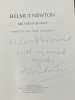
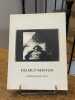
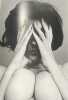
Archives de nuit. Préface de José Alvarez.
Paris Crédit Foncier de France 1992 1 vol. broché in-4, broché, couverture illustrée, non paginé. Catalogue d'exposition reproduisant 50 photographies en noir. Bon exemplaire enrichi d'un envoi autographe signé du photographe.

Autoportrait
Robert Laffont 2004, in-8 broché, 304pp; traduction de Anatole Muchnik avec de nombreuses photographies in-texte; très bon état
Autoportrait. Traduit de l'anglais par Anatole Muchnik.
Paris Robert Laffont 2004 1 vol. broché in-8, broché, couverture illustrée, 299 pp., nombreuses reproductions en noir in texte. Tranches légèrement salies, sinon bon état.
Helmut Newton's illustrated. Pictures from an exhibition n° 2
S.l., éd. Schirmer-Mosel, 1987, Premier tirage, cartonnage souple, in-folio (39 x 30 cm), agrafé, papier fort, 28 pp., ill. par 32 photos en noir, Premier tirage de cet album de 32 photos noir et blanc principalement de nus féminins avec une maquette de Jane Newton alias Alice Springs. Pas courant Très bon état
Helmut Newton's illustrated. Pictures from an Exhibition. N°2.
Munich, Schirmer/Mosel, 1987, grand In-4 ( 39 x 30 cm), agrafé, [28 pp.].
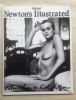
Premier tirage de cet album de 32 photos noir et blanc principalement de nus féminins avec une maquette de Jane Newton alias Alice Springs.
Nuits Blanches.
Paris Filipacchi, 1978, lg. in-4to, 152 pages, nombreuses photographies en noir et en couleurs reliure en toile originale sous jaquette illustrée. Bel exemplaire.

(SLACES, NVVA)
Phone number : 41 (0)26 3223808
Sex and Landscapes
Taschen, 2004. In-folio, 112 pp., cartonnage éditeur, jaquette illustrée / publisher's hardcover, pictorial dj.
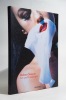
Bel exemplaire / Fine copy. * Voir photographie(s) / See picture(s). * Membre du SLAM et de la LILA / ILAB Member. La librairie est ouverte du lundi au vendredi de 14h à 19h. Merci de nous prévenir avant de passer,certains de nos livres étant entreposés dans une réserve.
Femmes secrètes
Paris Robert Laffont 1976 Pleine toile noire de l’éditeur, jaquette photographique. (101241)
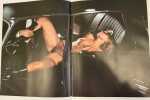
Très bon état Très bon
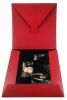
Helmut Newton for Wolford
1997 Bregens, Wolford AG, 1997, 305x305mm, 24pp., 11 serpentes imprimées, broché sous couverture photographique et étui à rabats rouge portant le sigle de la marque.Joint le bon de commande de l’éditeur pour des affiches et le calendrier pour 1998.Etat neuf. (102539)

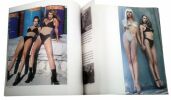
Das Glas im Kopf wird vom Glas. The Dance sections.
Gent Imschoot, Uitgevers 1990 1 vol. relié in-4, cartonnage illustré, 95 pp., nombreuses reproductions photographiques. Catalogue publié à l'occasion du spectacle "The Dance sections" présenté au Théâtre de la Ville de Paris le 21 et 22 septembre 1990, avec une vingtaine de photos d'Helmut Newton et une dizaine de compositions en couleurs de Jan Fabre, et des textes bilingues (français / anglais) de Miguel Romero et Emil Hrvatin. Couverture légèrement frottée, sinon bonne condition.
NEWTON (Helmut) - GADDA (Carlo Emilio) - DEGOTTEX (Jean) - GRAY (Eileen) - WESTON (Edward) - VUARNET (Jean-Noël) - SALVY (Gérard-Julien) - REUD (Sigmund). MAURIES (Patrick). VUARNET (Jean-Noël). GOMBROWICZ (Witold). SPRINGS (Alice). DE CECCATTY (René). ISHERWOOD (Christopher)
Reference : 36945
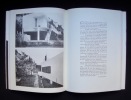
Cahiers de l'Energumène - Revue semestrielle d'art et de littérature N° 1 - Automne-hiver 1982
Paris : Editions Salvy, 1982 - in-8 broché (19x26 cm) sous couverture à rabats illustrée en couleurs, 224 pages abondamment illustrées par la photographie en noir et blanc - très bon état -

Tous nos livres sont visibles sur notre site : https://www.livrepoesie.com/
Helmut Newton, un peuple de statues.
Editions du Regard, 1981 in-4°, 75 pp, 34 photographies noir et blanc à pleine page ou sur double page, 11 photographies dans le texte, reliure cartonnée de l'éditeur, jaquette illustrée (très lég. usagée), bon état
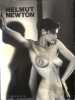
Catalogue de l'Exposition d'Helmut Newton à la Galerie daniel Templon, Novembre 1981, Paris. Désormais les frais d'envoi sont de 6 € seulement pour les livres jusqu'à 1 kg (colissimo suivi), pour la France métropolitaine.
NUITS BLANCHES
Paris Filipacchi 1978 in 8 (27x20) 1 volume reliure toilée noire de l'éditeur sous jaquette illustrée en couleurs, 152 pages, avec de nombreuses photographies en couleurs et noir et blanc par Helmut Newton, cachet ex-libris. Bon exemplaire ( Photographies sur demande / We can send pictures of this book on simple request )
Bon Jaquette en très bon état Reliure d'origine
WITHOUT SHAME.
Paris, Ophelia Press, 1958, in-12 broché, 237 pp. Cover Used, inside in very good condition.
Mortuary Posts of the Giryama.
New York: Friends of Bronx Community Art Gallery, 1978 in-8, 23 pages, illustrations. Agrafé, très bon état étiquette au 2ème plat de couv.
Mortuary Posts of the Giryama. (New York: Friends of Bronx Community Art Gallery, 1978) [M.C.: Art africain, Kenya]
At the piano-Ivor Newton: The world of an Accompanist [Hardcover] Ivor Newton
RELIE BON ETAT SOUS JAQUETTE. ANGLAIS. 309 PAGES. 555GR. PHOTOS SUR DEMANDE. At the piano. Ivor Newton: The world of an accompanist , Newton, I. Hamish Hamilton, Relié, 1966
Merci de nous contacter à l'avance si vous souhaitez consulter une référence dans notre boutique à Authon-du-Perche.
Finches. The New Naturalist.
1972 (1st ed.) 288 p., 64 figs, 28 (4 col.) pls, cloth (dust jacket). Library stamps, else a good copy of the first edition.
Opticks or a treatise of the reflections, refractions, inflections and colors of light based on the fourth edition London, 1730 with a foreword by Albert Einstein, an introduction by Sir Edmund Whittaker, a preface by Duane H.D. Roller
N.Y., Dover, 1952, un volume in 8, broché, 406pp.**3868/M7DE
The sparrowhawk
T&AD Poyser. Non daté. In-8. Broché. Bon état, Couv. convenable, Dos satisfaisant, Intérieur frais. 396 pages augmentées de nombreuses photos et illustrations en noir et blanc,dans le texte. Jaquette en bon état. Texte en anglais. 3 photos disponibles.. Avec Jaquette. . . Classification Dewey : 420-Langue anglaise. Anglo-saxon
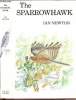
Classification Dewey : 420-Langue anglaise. Anglo-saxon
OISEAUX DE PROIE. - LES RAPACES DIURNES DU MONDE.
BORDAS. 1991. In-4. Relié. Bon état, Couv. convenable, Dos satisfaisant, Intérieur frais. 240 pages - nombreuses illustrations et photos en couleurs in et hors texte dont jaquette .. Avec Jaquette. . . Classification Dewey : 598.179-Rapaces diurnes et nocturnes
Classification Dewey : 598.179-Rapaces diurnes et nocturnes
?Arithmetica universalis ; sive de Compositione et Resolutione arithmetica cum commentario Johannis Castillionei
?Amsterdam, Marc-Michel Rey, 1761, , 2 vol. in-4 : [6]-XVIII-310-[1] pp. 32 pl. + [4]-288-[2]-134-[1] pp. 5 pl, Demi-chagrin noir, filets dorés sur les plats, dos à nefs orné de caissons dorés, tranches marbrées, Édition commentée par Giovanni di Castillione qui fut lui-même éditeur d'ouvrages de Newton. Elle comporte également au second volume l'Additamentum vel de Solutione et constructione Aequationum, &c. d'Halley et 9 petits traités de Colson, Moivre, Halley (2), Folkes, Campbell, Baermanno, Kaestner et Boscovich. Elle est illustrée de 37 planches hors-texte. L'Arithmétique de Newton est le texte qui établit la réputation du physicien anglais. Elle contient ses cours d'algèbre professés à Cambridge entre 1673 et 1683. Newton parvint à déterminer des valeurs approchées des racines numériques et établit les fondements de la théorie des fonctions de ces racines. Babson, 205; Gray 281. Petits frottements et épidermures, rousseurs, petits manques angulaires sans atteinte à 4 pl. et restaurations angulaires sans atteinte à 9 pl. du 1er vol. Ex-libris René Mariaux. Couverture rigide
Bon 2 vol. in-4 :
"De philosophiae naturalis principia mathematica - Les principes mathématiques de la philosophie naturelle - Collection "" Epistémè ""."
Christian Bourgeois. 1985. In-12. Broché. Etat d'usage, Coins frottés, Dos plié, Intérieur frais. 376 pages.. . . . Classification Dewey : 510-Mathématiques

"Collection "" Epistémè "" - Préface de Stephen Hawking - traduction nouvelle, postface et bibliographie établies par Marie-Françoise Biarnais. Classification Dewey : 510-Mathématiques"

