 Write to the booksellers
-
Type
Art print (2)
Book (5900)
Magazine (20)
Manuscript (1)
Old papers (1)
Photographs (3)
-
Latest
Last 24h (1)
Last 3 days (1)
Last month (34)
Last week (4)
-
Language
English (10)
French (5912)
German (1)
Greek (1)
Italian (1)
Latin (2)
-
Century
16th (2)
17th (9)
18th (247)
19th (890)
20th (2988)
21st (134)
-
Countries
Belgium (264)
Canada (3)
Côte d'Ivoire (13)
Denmark (1369)
France (3977)
Switzerland (301)
-
Syndicate
ALAC (3)
CLAM (3)
ILAB (4147)
NVVA (139)
SLACES (139)
SLAM (2616)
SNCAO (15)
Les étapes de la physique.
Couverture souple. Broché. 128 pages. Format de poche.
Livre. Editions P.U.F (Collection : Que sais-je N° 421), 1950.
Que sais-je? N° 421 Histoire de la physique
Presses Universitaires de France Edition mise à jour. 1972. In-12. Broché. Bon état, Couv. convenable, Dos satisfaisant, Intérieur frais. 128 pages illustrées de quelques dessins en noir et blanc. . . . Classification Dewey : 530-Physique
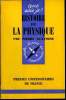
La première encyclopédie de poche fondée en 1941 par Paul Angoulvent, traduite en 43 langues, diffusée, pour les éditions françaises, à plus de 160 millions d'exemplaires, la collection Que sais-je? est l'une des plus importantes bases de données internationnales, construite pour le grand public par des spécialistes. 3800 titres ont été publiés depuis l'origine par 2500 auteurs. Classification Dewey : 530-Physique
Que sais-je? N° 421 Les étapes de la physique
Presses Universitaires de France Edition originale Première édition 2ème trimestre 1950. 1950. In-12. Broché. Bon état, Couv. convenable, Dos satisfaisant, Intérieur frais. 128 pages illustrées de quelques dessins en noir et blanc. . . . Classification Dewey : 530-Physique
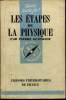
La première encyclopédie de poche fondée en 1941 par Paul Angoulvent, traduite en 43 langues, diffusée, pour les éditions françaises, à plus de 160 millions d'exemplaires, la collection Que sais-je? est l'une des plus importantes bases de données internationnales, construite pour le grand public par des spécialistes. 3800 titres ont été publiés depuis l'origine par 2500 auteurs. Classification Dewey : 530-Physique
Action du rayonnement du radium sur les dielectriques solides
Bruxelles, Hayez 1930 56pp., br.orig., 25cm., extrait des "Mémoires" publiés par l'Académie royale de Belgique (Classe des Sciences, t.XI), non coupé
L'énergie atomique. Pour comprendre la bombe atomique.
DESOER.. Non daté. In-8. Broché. Etat d'usage, Couv. défraîchie, Dos satisfaisant, Intérieur frais. 33 pages. Petits manques sur les bords de couverture.. . . . Classification Dewey : 530-Physique
Classification Dewey : 530-Physique
Initiation mathématique a la physique médicale et a la biologie
MASSON ET CIE. 1958. In-8. Broché. Etat passable, Couv. défraîchie, Dos satisfaisant, Quelques rousseurs. 220 pages. Illustré de nombreuses figures en noir et blanc dans le texte. Mouillures + tâches d'encre sur les tranches et en bordures de pages, sans conséquence sur la lecture.. . . . Classification Dewey : 530-Physique
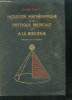
Préface du dr STROHL. 94 figures. Classification Dewey : 530-Physique
2 TOMES. COURS DE PHYSIQUE A L USAGE DES CANDIDATS A L ECOLE SPECIALE MILITAIRE DE SAINT CYR. TOME PREMIER : PESANTEUR. THERMODYNAMIQUE. OPTIQUE. TOME DEUX : ELECTRICITE.
DELAGRAVE.. 1938 - 1940.. In-8. Broché. Etat d'usage, Couv. légèrement passée, Dos plié, Intérieur acceptable. 366 + 346 pages. Nombreux schémas en noir et blanc dans le texte.. . . . Classification Dewey : 530-Physique
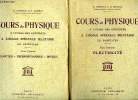
Classification Dewey : 530-Physique
Le Problème De Physique Aux Concours D'entrée Des Grandes Ecoles
Paris Delagrave 1942 GRAND In-8 272 pp, Textes et solutions, exemplaire non coupé, dos frotté et apssé, avec un mors fendu sans manque en tête.
Bon État Général Broché à raba
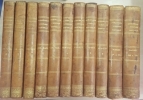
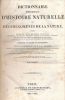
Dictionnaire pittoresque d'Histoire Naturelle et des phénomènes de la nature
Au Bureau de souscription Paris, Au Bureau de Souscription, 1833 - 1834. Sous-titre : contenant l'histoire des animaux, des végétaux, des minéraux, des météores, des principaux phénomènes physiques et des curiosités naturelles, avec des détails sur l'emploi des productions des trois règnes dans les usages de la vie, les arts et métiers et les manufactures. Rédigé par une Société de naturalistes sous la direction de M. F.E. GUERIN, membre de la Société d'Histoire Naturelle de Paris et de diverses autres Sociétés savantes nationales et étrangères, auteur de l'Iconographie du règne animal de CUVIER et du Magasin de zoologie, l'un des auteurs du Dictionnaire classique d'histoire naturelle, de l'encyclopédie méthodique, du Voyage autour du Monde par le Capitaine DUPERREY, de l'expédition scientifique de MOREE, du voyages aux Indes orientales par M. BELANGER etc. 9 volumes pour le texte et 2 volumes pour les planches, reliés demi-basane blonde de l'époque, dos lisses soulignés de filets dorés. 719/720 planches gravées à l'eau forte d'après les dessins de M. de SAINSON. Tome I : VIII + 640 pages. Tome II à VIII : 640 pages chaque volume. Tome IX : 676 pages incluant la table des mots qui, n'étant pas ordinairement dans les dictionnaires d'histoire naturelle, se trouvent dans celui-ci, de ceux qui sont traités dans les articles généraux et non à leur ordre alphabétique, et des noms vulgaires renvoyés aux articles scientifiques dans lesquels les objets qu'ils désignent sont décrits, et la table de l'atlas (planches), indiquant, par ordre alphabétique tous les sujets représentés dans l'ouvrage. Les deux volumes des planches ont leurs couvertures de livraisons. La planche N° 47 est en double. Il ne manque que les planches N° 48 et 665. Quelques rousseurs sans gravité, les planches sont en très bel état. Reliures légèrement frottées, mors des 2 volumes de planches un peu faibles. Légères différences de reliures entre les tomes 1, 2, 3 et la suite des volumes (voir photo). Texte sur deux colonnes. Bon ensemble néanmoins.
Toutes les expéditions sont faites en suivi au-dessus de 25 euros. Expédition quotidienne pour les envois simples, suivis, recommandés ou Colissimo.
Le problème de la réactivité des combustibles solides. Préface de M. le professeur P. Lebeau.
P., Dunod, 1945, grand in 8) broché, VII-222pp. ; papier bruni ; couverture fanée avec manque en tête du dos.
PHOTOS sur DEMANDE. ...................... Photos sur demande ...................


Phone number : 04 77 32 63 69
Tables annuelles de constantes et données numériques, 3 : ENERGIE LIBRE, ENTHALPIE, ENTROPIE, ACTIVITE. Préface de R. Wurmser. Volume XI (1931-1934). Chapitres 10-11.
P., Hermann, 1937, grand in 8° broché, 3 pages d'introduction en français et en anglais et 32-47 pages ; traces de scotch sur les gardes.
...................... Photos sur demande ...................
Phone number : 04 77 32 63 69
Tables annuelles de constantes et données numériques, 21 : ENERGIE LIBRE, CHALEUR TOTALE, ENTROPIE, ACTIVITE. Volume XII (1935-1936). Chapitres 10-11.
P., Hermann, 1937, grand in 8° cartonnage de l'éditeur, 24-18 pages ; traces de scotch sur les gardes.
...................... Photos sur demande ...................
Phone number : 04 77 32 63 69
Thermodynamique relativiste Collection Traité de physique théorique et de physique mathématique Sommaire: Concepts de bas et principes; Transformation des grandeurs thermodynamiques; Les gaz parfaits; La transformation de l'énergie pour les corps étendus
Gauthier-Villars. 1970. In-8. Broché. Bon état, Couv. convenable, Dos satisfaisant, Intérieur frais. 275 pages.. . . . Classification Dewey : 530-Physique
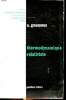
Etiquette sur coiffe en pied. Tampon bibliothèque. Collection Traité de physique théorique et de physique mathématique. Préface de De Broglie Louis. Sommaire: Concepts de bas et principes; Transformation des grandeurs thermodynamiques; Les gaz parfaits; La transformation de l'énergie pour les corps étendus et ses conséquences... 2 photos disponibles. Classification Dewey : 530-Physique
TRAITE PRATIQUE DE LA THERMOMETRIE DE PRECISION
EDITION ORIGINALE
In-8, demi-veau, reliure de l’époque, cachet 4 planches HT, figures et tableaux dans le texte Edition originale Charles Edouard Guillaume (1861-1938) physicien suisse et inventeur de » l’invar » métal dont la dilatation est insensible, avec Benoit et Carpentier. Très bon exemplaire
La théorie de la relativité. Résumé des conférences faites à l'Université de Lausanne au semestre d'été 1920.
Lausanne, F. Rouge & Cie, 1921, pt. in-8vo, 45 p., brochure originale.
Prix Nobel de physique en 1920.
(SLACES, NVVA)
Phone number : 41 (0)26 3223808
"LA PHYSIQUE : DES PARTICULES A LA MOLECULE .... PLASMAS, ELECTRONIQUE, OPTIQUE / COLLECTION ""LES DICTIONNAIRES DU SAVOIR MODERNE""."
DENOEL. 1971. In-8. Relié. Etat d'usage, Couv. défraîchie, Dos satisfaisant, Intérieur frais. 544 pages augmentées de nombreuses figures e nnoir et blanc i ntexte - Jaquette abimée en coiffes et coins.. Avec Jaquette. . . Classification Dewey : 530-Physique
Classification Dewey : 530-Physique
Sur la génération de la Voix et du Timbre.
SOCIETE D'ETUDES SCIENTIFIQUES. 1897. In-8. Broché. A relier, Couv. défraîchie, Dos abîmé, Non coupé. 392 pages. Nombreuses figures en noir et blanc, dans le texte. Quelques manques sur le dos cassé.. . . . Classification Dewey : 530-Physique
Encyclopédie générale de la Voix parlée et chantée. Classification Dewey : 530-Physique
La vapeur
Paris, Hachette 1881 316pp., illustré de 117 vignettes, 3e édition, reliure cart. (plats marbrés, dos en cuir avec titre doré), 18cm., cachet sur la page de titre, rousseurs mais le texte est toujours bien lisible, dans la série "Bibliothèque des merveilles", bon état, W101078
LE MAGNETISME ET L ELECTRICITE - LE MONDE PHYSIQUE
HACHETTE. 1883. In-4. Relié. Bon état, Couv. convenable, Dos satisfaisant, Intérieur frais. 1007 page augmentées de quelques illustrations en noir et blanc dans et hors texte- tranches dorées- frontispice en noir et blanc- plats polychrome-doré-. . . . Classification Dewey : 530-Physique
Classification Dewey : 530-Physique
LES APPLICATIONS DE LA PHYSIQUE AUX SCIENCES, A' L'INDUSTRIE ET AUX ARTS.
Paris, Hachette, 1874; grand in-8, 743 pp., demi-chagrin rouge , dos a' nerfs, caissons ornes, tranches dorees. Bon etat r, deuxieme plat avec une trace tachée sans gravitée Ouvrage illustre' de 427 figures dessinees par B. Bonnafoux et A. Jahandier gravees par C. Laplante, de 3 cartes et de 22 planches dont 6 en couleurs
tampon ex libris du chateau de Theyrargue Ray V1*
LES PHENOMENES DE LA PHYSIQUE. 2em EDITION.
HACHETTE.. 1869. In-4. Relié demi-cuir. Etat d'usage, Couv. légèrement passée, Dos à nerfs, Quelques rousseurs. 755 pages. Nombreuses illustrations en noir et blanc dans le texte. Nombreuses planches hors texte imprimées en couleurs avec serpente. Frontispice en couleurs avec une serpente.. . . . Classification Dewey : 530-Physique
Classification Dewey : 530-Physique
La Lumière. Contenant 27 grandes planches tirées à part dont 13 en couleur et 353 vignettes insérées dans le texte. Le Monde physique 2.
Paris, Hachette 1882, 280x185mm, 668pages, percaline rouge ornée de l’éditeur, quelques rousseurs.
Pour un paiement via PayPal, veuillez nous en faire la demande et nous vous enverrons une facture PayPal
La vapeur
Paris, Librairie Hachette et Cie, coll. « Bibliothèque des Merveilles » 1873 In-12 17,5 x 10,5 cm. Reliure éditeur demi-chagrin violine, dos à nerfs encadrés de fers dorés, 364 pp., 113 figures dans et hoprs texte, table des matières. Exemplaire en bon état.
Contient : La vapeur - La machine à vapeur - Les applications de la machine à vapeur. Bon état d’occasion
LE MONDE PHYSIQUE
volumes in 4 . à Paris librairie Hachette et Cie . 1884 , TOME 4 : LA CHALEUR. contenant 9 grandes planches tirées à part dont 1 en couleur et 324 vignettes inséraes dans le texte . 772 pages. superbe edition reliure editeur richement décorée. demi veau rouge plats pleine percaline editeur rouge , noire et or , dos et plats très ornés , dos à nerfs orné de caissons dorés , , trois tranches dorées.Tres bel objet pârfait etat , photos sur demande ,( attention il existe plusieurs version de la reliure )
RAY armo B5
Le Monde Physique. En 5 TOMES
HACHETTE et Cie. 1881. In-4. Relié cuir dos-coins. Bon état, Couv. défraîchie, Dos satisfaisant, Quelques rousseurs. 872 + 668 + 1007 + 772 + 1024 pages. Nombreuses illustrations en noir et blanc, dans le texte et en hors-texte. Nombreuses planches illustrées en couleurs. Titre doré sur le dos cuir rouge, à 4 nerfs. Coins cuir rouge. Epidermures sur le cuir.. . . . Classification Dewey : 530-Physique
TOME 1 : La Pesanteur et la gravitation universelle - Le Son. TOME 2 : La Lumière. TOME 3 : Le Magnétisme et l'Electricité. TOME 4 : La Chaleur. TOME 5 : La Météorologie, la Physique Moléculaire. Classification Dewey : 530-Physique

