 Write to the booksellers
-
Type
Book (729)
Magazine (12)
New book (2)
-
Latest
Last month (3)
Last week (1)
-
Language
English (1)
French (742)
-
Century
18th (1)
19th (13)
20th (191)
21st (138)
-
Countries
Belgium (387)
Canada (6)
Denmark (4)
France (298)
Switzerland (47)
United Kingdom (1)
-
Syndicate
ALAC (6)
ILAB (95)
NVVA (24)
SLACES (24)
SLAM (59)
Les dernières générations de l'écrit, les méfaits de la TV et de l'image.
Paris, Favre, 1989 15 x 24, 131 pp., broché, très bon état
La Stratégie du dauphin : Les idées gagnantes du XXIe siècle
Les Éditions de l'Homme 1994 554 pages in8. 1994. broché. 554 pages. Stratégie Dauphin propose une approche innovante du management et du leadership s'inspirant de l'intelligence et de l'adaptabilité des dauphins pour développer des stratégies organisationnelles efficaces. Le livre explore comment appliquer ces principes dans les environnements professionnels pour favoriser le changement et la réussite
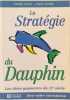
Bon état
AFFAIRE ABBE AURIOL.
, Paris, Editions de Vecchi, 1999., Broche, couverture d' editeur illustre n/b, 14,5x20,5cm, 142pp, illustre n/b.
Collection Grands Proces de l' Histoire. Le deroulement des faits, les protagonistes, l' enquete, le proces, les nouvelles hypotheses.
AFFAIRE CAILLAUX.
, Paris, Editions de Vecchi, 1999., Broche, couverture d' editeur illustre n/b, 14,5x20,5cm, 142pp, illustre n/b.
Collection Grands Proces de l' Histoire, Le deroulement des faits, les protagonistes, l' enquete, le proces, les nouvelles hypotheses.
LE LOISIR ET LE VILLE. LOISIR ET CULTURE.
, Paris, ed. du Seuil, 1966., Broche, 14x20,5cm,397pp, illustre.
avec la collaboration d'Yvonne Bernard et de Nicole Samuel.
MINISTER VAN STAAT GASTON EYSKENS. EEN BIOGRAFIE,
Zele , Reinaert, 1983 Softcover, geillustreerde kartonomslag, 145 x 210mm., 320pp., z/w illustratie. ISBN 9031005584.
Nauwkeurig overzicht van de menigvuldige activiteiten van Gaston Eyskens. In goede staat.
De Limburgse pers van 1830 tot aan wereldoorlog II
Hasselt, 1977 48pp.geïll., 27cm., themanummer van tijdschrift "De Tijdspiegel" Jg.32 afl.1-2; L61585
du.-Zeitschrift. 2000.11. Net.art. Rebellen im Internet.
2000, in-4to, XLVIII + 63 S., ill., Original-Broschüre.

(SLACES, NVVA)
Phone number : 41 (0)26 3223808
Le guide des sites web d'information 2009
Développement Presse Médias 2009 22 2x1 6x14cm. 2009. Broché.
Très bon état - légères marques de lecture et/ou de stockage mais du reste en très bon état- expédié soigneusement depuis la France
DER RUNDFUNKHORER UND SEIN PROGRAMM.
, Berlin, Colloquium 1962., Gebunden mit original umschlag, 14x21,5cm, 302pp, Mit 201 Tabelle und 22 Schaubildern.
Abhandlungen und Materialien zur Publizistik. Ein Beitrag zur empirischen Sozialforschung.
Ed: Laurens Otto, Antony Hudek. Texts Media Farzin , Shahpour Pouyan , Pepe Karmel
Reference : 58370
SHAHPOUR POUYAN - SKYHIGH IS MY PLACE -BM-MDD
, Museum Dhondt-Dhaenens, 2021 softcover- PB, 290 x 220 mm, 228 p, 47 Kleurenillustraties, 5 z/w illustraties EN-NL edition. ISBN 9789076034300.
Skyhigh is my place, dat speciaal voor MDD werd gerealiseerd, is het resultaat van meer dan twee jaar intensief onderzoek door de Iraanse kunstenaar Shahpour Pouyan en de eerste solopresentatie van de kunstenaar in een Belgische publieke instelling. Skyhigh is my place is de eerste uitvoerige monografie over de in Iran geboren kunstenaar Shahpour Pouyan. Het brengt belangrijke teksten en beelden samen over zijn praktijk. De publicatie vertrekt vanuit Shahpour Pouyan's ambitieuze installatie Skyhigh is my place in Museum Dhondt-Dhaenens, wat MDD's patio-zaal gedeeltelijk vulde met tarwe en een grootschalige replica van een militaire verkeerstoren omkeerde. Door deze twee elementen te verenigen, roept Pouyan een beeld op van de Iraanse Revolutie van 1979 en in het bijzonder de betrokkenheid van zijn vader bij dit historische moment. Op het hoogtepunt van de revolutie nam Pouyans vader, als ingenieur voor straaljagers, deel aan een collectieve poging om tarwe te planten op zijn militaire basis in de buurt van Isfahan. De kortstondige landbouwactiviteit op een militaire basis staat voor de vele tegenstrijdigheden van de Revolutie van 1979, waar een technologische obsessie met het luchtruim samenging met patriottische liefde voor het platteland. Deze publicatie biedt een diepe blik op het recente werk van de kunstenaar Shahpour Pouyan en bevat onder andere: -Een essay van critica en kunsthistorica Media Farzin, dat ingaat op de historische en architectonische achtergrond van Skyhigh is my place door het binnen het bredere oeuvre van Pouyan te plaatsen -Een gesprek tussen kunsthistoricus Pepe Karmel en Pouyan. Ze bespreken de herinneringen van de kunstenaar aan de betrokkenheid van zijn vader bij de revolutie van 1979 en de relatie van het werk met bredere artistieke en architectonische stromingen. -Uitvoerige fotografische documentatie van de installatie in Museum Dhondt-Dhaenens. -Uitvoerige documentatie van het recente werk van de kunstenaar. Pouyan werd geboren in Isfahan in 1979, het jaar van de Iraanse Revolutie. Skyhigh is my place vult de patio-zaal van MDD gedeeltelijk met tarwe en plaatst een omgekeerde militaire verkeerstoren in de patio. Door deze twee elementen te verenigen, roept Pouyan een beeld op van de Iraanse Revolutie van 1979 en in het bijzonder de betrokkenheid van zijn vader bij dit historische moment.
LES JOURNALISTES LOCAUX. Fragilisation d'une profession.
2004 / 386 pages. Broché Editions L'Harmattan
Trés bon état.

ELLUL (Jacques) - ONIMUS (Jean) - VAUTIER (Ben) - SANOUILLET (Michel) - ONIMUS (Jean) - LEPAGE (Jacques) -
Reference : 10844
Medianalyses - Cahiers de recherches communicationnelles - N° 3/4 - Janvier 1984 : Structures molles -
Nice : Medianalyses, 1984 - Un volume 29x20,6cm broché sous couverture illustrée par Ben, 154 pages illustrées dans et hors texte - bon état -
Tous nos livres sont visibles sur notre site : https://www.livrepoesie.com/
Fit für die Medien. Ein praktischer Ratgeber.
orell füssli Verlag AG, 1999, in-8vo, 180 S., Original-Pappband mit OU.
(SLACES, NVVA)
Phone number : 41 (0)26 3223808
Cruelle cruelle Edwige
Média 1000 1995 188 pages in12. 1995. Broché. 188 pages. Cruelle est un roman érotique d'Esparbec (Georges Pailler) publié sous le label Média 1000. Il fait partie des œuvres complètes de l'auteur connu pour ses romans de gare et ses écrits pornographiques destinés à un public adulte
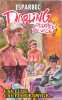
Très bon état
Jeux de vilains
Média 1000 1993 149 pages 10x2x18cm. 1993. Broché. 149 pages. Le livre 'Jeux de vilains' est le tome 23 de la série 'Darling poupée du vice' d'Esparbec publié par Média 1000 en 1993. Il s'inscrit dans le registre érotique et pornographique mettant en scène une jeune femme évoluant dans un univers de perversions
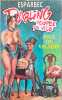
Bon état intérieur trés propre
Les interdits n°9 : la debauche
Média 1000 1988 150 pages poche. 1988. Broché. 150 pages. Le livre 'interdits' d'Esparbec fait partie de la collection 'Les Interdits' des éditions Media 1000 spécialisée dans la littérature érotique. Esparbec de son vrai nom Georges Pailler est un auteur culte de cette collection et ses œuvres traitent de thèmes érotiques et transgressifs
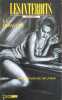
Bon état intérieur trés propre
Les oies blanches
Média 1000 1993 172 pages in12. 1993. Broché. 172 pages. Le livre 'Darling' d'Esparbec (Georges Pailler) fait partie d'une série érotique centrée sur le personnage de Darling une jeune femme qui évolue dans un univers de perversion et de soumission. Publié par Média 1000 ce roman s'inscrit dans le registre pornographique et érotique caractéristique de l'auteur
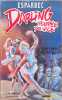
Bon état intérieur trés propre
Code comptable et incidences fiscales 2009
Expert comptable media Broch D'occasion bon tat 01/01/2009 734 pages
Wat ligt er ten noorden van de noordpool? de zin van zoeken; Mark Eyskens ** opdracht / GESIGNEERD
, Witsand, 2016 paperback, 428 pagina's, ****Met handgeschreven opdracht en gesigneerd, gedateerd door de auteur. ISBN 9789492011664.
Een professor onderneemt een zinzoekende reis naar het noordpoolgebied. Aan boord van het cruiseschip, waar hij lezingen geeft en veel tafelgesprekken animeert, ontmoet hij een oud-studente, Rebecca, met wie hij zeer diepgravende gesprekken aanknoopt. Rebecca houdt zich, samen met haar moslimvriend Said, bezig met deradicalisering en interlevensbeschouwelijke dialoog. Tijdens de reis doen zich dramatische gebeurtenissen voor, die verwijzen naar de actualiteit. De professor en Rebecca, die een doctoraal proefschrift schrijft, worden verpletterd door existentiele vragen over leven, liefde, lijden en dood... Met dit bijna zestigste boek van zijn hand richt Mark Eyskens zich tot deze denkbeeldige professor, die hij aanspreekt in de 'je'-vorm.
LE FORCAT DE DIEU: L' AFFAIRE CECILE COMBETTES.
, Paris, Presses de la Renaissance, 2002., Broche, couverture d' editeur illustre en couleur, 14x22,5cm, 213pp.
Specialiste des affaires criminelles, l' auteur apporte de nouvelle hypotheses et de eclairages surprenants sur cette tenebreuse affaire criminelle.
Jamais aussi bien qu'à 50 ans
MICHEL LAFON 2016 269 pages 13 8x2 6x22 4cm. 2016. Broché. 269 pages.
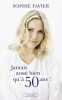
Jamais aussi bien qu'à 50 ans
MICHEL LAFON 2016 269 pages 13 8x2 6x22 4cm. 2016. Broché. 269 pages.
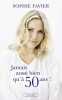
Très bon état - L'ouvrage qui n'a jamais été lu peut présenter de légères traces de stockage mais est du reste en très bon état. envoi rapide et soigné dans un emballage adapté depuis France
Marie De Hongrie. Politique et Culture Sous La Renaissance Aux Pays-Bas
Mariemont, Mus e Royal De Mariemont, 2008 softcover, 188 pages . ISBN 9782930469201.

