 Write to the booksellers
-
Type
Autograph (1)
Book (1623)
Magazine (2)
-
Latest
Last month (24)
Last week (5)
-
Century
17th (1)
18th (3)
19th (47)
20th (483)
21st (49)
-
Countries
Belgium (1171)
Canada (4)
Côte d'Ivoire (3)
France (175)
Switzerland (273)
-
Syndicate
ALAC (4)
CNE (1)
ILAB (52)
NVVA (2)
SLACES (2)
SLAM (26)
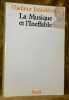
La musique et l'ineffable.
Paris, Editions du Seuil 1983, 205x140mm, 194pages, broché. Bel exemplaire.
Pour un paiement via PayPal, veuillez nous en faire la demande et nous vous enverrons une facture PayPal
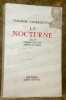
Le nocturne. Fauré. Chopin et la Nuit. Satie et le Matin. Avec 24 exemples musicaux.
Paris, Editions Albin Michel 1957, 185x120mm, 220pages, broché. Cet ouvrage a été tiré sur alfa “Cellunaf”. Très bel exemplaire.
Pour un paiement via PayPal, veuillez nous en faire la demande et nous vous enverrons une facture PayPal
Ravel. Collection : Microcosme, Solfèges, N° 3.
Paris, Editions du Seuil, 1956. 12 x 18, 191 pp., nombreuses illustrations et notations musicales, broché, très bon état (couverture légèrement défraîchie).
Begrippen van Gregoriaanschen Zang
Mechelen, H. Dierickx-Beke zonen 1927 116pp., 18cm., originele omslag, wat roestplekjes, verder in goede staat, M97755
Manuscripts, Music, Machaut: Essays in Honor of Lawrence Earp
, Brepols, 2022 Paperback, 628 pages, Size:178 x 254 mm, Illustrations:7 b/w, 73 col., 38 tables b/w., 76 music examples, Language: English. ISBN 9782503602998.
Summary This multidisciplinary volume celebrates the scholarship and career of Lawrence Earp, whose work has profoundly shaped the fields of Machaut studies, musicology, codicology, and fourteenth-century studies in general. For over four decades, Earp's meticulous scholarship and generosity in collaboration have been a constant inspiration for medieval scholars, students, and colleagues alike. The twenty-six innovative essays herein gratefully acknowledge his influence and showcase a variety of fresh approaches. Recognizing both the breadth and depth of Earp's work, the sections of this book are devoted to bibliography, historiography, literature, art history, and several musicological topics. Many of the chapters focus on the oeuvre of Guillaume de Machaut, but readers will also find explorations on Hildegard of Bingen, Philippe de Vitry, child performers in medieval theater, notation, genre, motets from the late thirteenth to the early fifteenth centuries, and polyphony in Italy and England. Made possible by Earp's foundational and guiding work, this amply illustrated volume invites future interdisciplinary research. TABLE OF CONTENTS Introduction Jared C. Hartt, Tamsyn Mahoney-Steel, Benjamin L. Albritton Guiding Research 1. A Guide to Research: 'je vous tiens pour ma guide', Helen J. Swift 2. Guillaume de Machaut: The Greatest Fourteenth-Century Poet and Composer of the Twenty-First Century, Tamsyn Mahoney-Steel 3. The Impact of Hildegard of Bingen's Bibliographers and Catalogers, Jennifer Bain 4. Child Performers on the Medieval French Stage: A Review of the Published Evidence, Julie Singer (Re)examining and (Re)assessing the Fourteenth Century 5. Guillaume de Machaut and Yolande of Flanders, Andrew Wathey 6. Ex historia Guillelmi di Mascandio: Machaut in the Annales Hannoniae of Jacques de Guise, Benjamin L. Albritton 7. The Fourteenth-Century Polyphonic Mass Ordinary: A Nascent Meta-Genre, Kevin N. Moll 8. Classical Vitry/Romantic Machaut, Anna Zayaruznaya Reading Machaut 9. Machaut's Dit dou Vergier and Prologue: Some Thoughts, R. Barton Palmer 10. Machaut as Poet Figure in the Prise d'Alexandre, Kevin Brownlee 11. The Poetics of destour and ordenance in Machaut's Lyrico-Narrative dits, Anne-Hélène Miller 12. Silencing the Sirens and Rethinking Masculinity in Machaut's Voir dit, Deborah McGrady Image and Illumination 13. Fine Feathered Friends, or, Machaut and the Magicians, Kathleen Wilson Ruffo 14. Notes on Reconstructing the Pictorial Program in a Mutilated Machaut Manuscript, Domenic Leo 15. Seeing Sens: A Picture of Two Guillaumes and Two Brothers?Elizabeth Eva Leach Machaut Musicology 16. Singing from the Source: Performance Markings in Machaut Manuscript G, Uri Smilansky 17. Machaut on the Loose in Italy: Two Case Studies, Yolanda Plumley and Anne Stone 18. Making Song Speak: Machaut's ars nova Word Setting, David Maw 19. To See or Not to See: Machaut's Motet 11, Dame, je sui/ Fins cuers dous/ Fins cuers dous, Jacques Boogaart Motets and Chant 20. Polyphony from and for Refrains in Dance-Song Motets, Catherine A. Bradley 21. Another Look at Vos/Gratissima, Richard Dudas 22. Dolor meus: Competing Visions of Suffering in a Pair of Motets, Alice V. Clark 23. Two 'Textless' Elaborations of Chant from the Ivrea Codex, Michael Scott Asato Cuthbert Music in Medieval England 24. Tempus, Tempo, and Insular Semibreves, Karen Desmond 25. Washington, Library of Congress, M2.1 .C6 1400 Case: A Neglected English Fragment, Margaret Bent 26. A Missing Middle-Voice Melody: Reconstructing the Tenor of A solis ortus/Salvator mundi Domine, Jared C. Hartt Bibliography General Index Index of Manuscripts
La musique arabe. Collection : Que sais-je ?, N° 1436.
Paris, Presses Universitaires de France (PUF), 1971. 11 x 17, 127 pp., broché, très bon état .
Debussy impressionnisme et symbolisme
Paris, Seuil 1970 200pp., 21cm., brochure originale, bon état, peu commun, M95115
Jazz classique/Jazz moderne (2 volumes).
Casterman, 1971. 21 x 24, 261 + 256 Pages, feuillets sous chemise carton illustrée, très bon état.
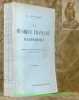
La musique française d'aujourd'hui. Préface de M. Gabriel Fauré.
Paris, Librairie Académique Perrin et Cie. 1916, 190x120mm, XIII - 306pages, broché. Bon état.
Pour un paiement via PayPal, veuillez nous en faire la demande et nous vous enverrons une facture PayPal
Ludwig van Beethoven
Paris, Le Club Français du Livre, 1955, in-8, Reliure toilée, 855 pages. Exemplaire 1/6500 du tirage hors commerce. Bon état
A la découverte de la musique - tome 2
Librairie hachette 1973 262 pages in8. 1973. broché. 262 pages.
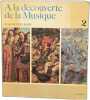
Bon état couverture jaunie
Musée de Montmartre : Images musicales : Jolivet, Milhaud, Honegger, Casadesus, Satie (exposirion du 1er mars 1995 au 31 mai 1995).
Paris, Société d'Histoire et d'Archéologie Le Vieux Montmartre, 1995. 21 x 30, 47 pp., quelques illustrations dont certaines en couleurs, broché, très bon état.
Tragedy and Lieto fine in Romantic Opera Seria
, Brepols, 2019 Hardback, x + 265 pages, Size:205 x 255 mm, Illustrations:11 b/w, 8 col., Musical examples 188, Language: English. ISBN 9782503586427.
Summary In a seminal essay Carl Dahlhaus has pointed out that »often it is possible to turn the ending in a different direction without making any difference to the substance of the tragic course of events leading to it». Dahlhaus' statement is especially relevant to Italian Romantic opera seria. Whereas Lieto fine was central to the ethics of eighteenth-century Enlightenment opera, Romantic opera turned to heartbreaking tragic endings, often as means of social and political criticism. Yet the ending of a Romantic opera was not inevitable, and a significant proportion of Romantic operas have Lieto fine. An example is Rossini's «Tancredi» that was premiered in 1813 first with Lieto fine (Venice), then with a tragic ending (Ferrara), and again with Lieto fine (Milan), suggesting that the ending was not essential to the opera. The book analyzes the processes leading to Lieto fine in 23 operas from «Tancredi» to Puccini's «La Fanciulla del West». This includes mixed endings, such as in Verdi's «Macbeth» that ends with a hymn of victory, yet centers on the human tragedy of Macbeth and Lady Macbeth. The book discusses both canonic and unjustly neglected operas, such as the socialist «Papa Martin» by Antonio Cagnoni.
Vinko Jelic (1596-1636?) i njegova zbirka duhovnih koncerata i ricercara "Parnassia Militia" (1622)
Zagreb, Uredio Akademik Stjepan Sulek 1957 xciii + 148pp.+ 9 plates out of text, 32cm., publisher's hardcover, copy from the collection of the Belgian musicologist prof.dr. René Lenaerts (with his ex-libris tipped in), in the series "Jugoslavenska Akademija Znastoti i Umjetnosti. Spomenici Hrvatske Muzicke Prosloti" Knjiga 1, very good condition, [Contains the life and work of the Croatian composer Vinko Jelic, as well as in unabridged form his collection 'Parnassia militia' prepared for practical execution. Text in Croatian, with sumary in German, English and French], M94149
For Town and Country: The Civic Music System in Denmark, 1660-1800
, Brepols, 2019 Paperback, 340 pages, Size:190 x 290 mm, Illustrations:23 b/w, 7 col., 13 tables b/w., 6 maps b/w, 26 music examples, Language: English. ISBN 9782503585727.
Summary The employment of civic musicians was a practice in most European countries in early modern Europe, all the way from London and Venice to small Danish towns. This study's objective is to lay out which kinds of civic musicians (stadsmusikanter) Denmark had, and to examine what that came to signify for musicians and music, as there has not been a study in depth of civic musicians' employment in Denmark until now. It has been a particular objective of this study to illuminate the Danish situation in relation to some other European countries. Compared to Germany, the civic music system in the kingdom of Denmark developed some clear characteristics in the period 1660-1800 because it had to fulfil the requirements of both the absolute monarchy and the municipal authorities. It is particularly interesting that the system was regulated by royal licenses which applied across both towns and the countryside. The book's first main section goes through the background to the absolute monarchy's civic music system, including the conditions of employment. The second main section shows what the social consequences of the Danish system were for both licensed and unlicensed musicians. The third section is about the instruments and the music. We find examples of the entire repertoire of the Danish civic musicians, from ambitious artistic ensemble music to virtuoso solo sonatas with continuo and single part music for everyday use. The civic musicians exercised a marked influence on the unlicensed players in villages. One can speak of a cultural battle between the professional civic musicians' music and the traditions of the country fiddlers. Civic musicians in Denmark had international contacts with colleagues and played a prolific role as promoters of music.
Die Haydndrucke aus dem Archiv der «Theater- und Musik-Liebhabergesellschaft zu Luzern», nebst Materialen zum Musikleben in Luzern um 1800. ‘Freiburger Studien zur Musikwissenschaft’, 7.
Freiburg (Schweiz), Universitätsverlag, 1959, gr. in-8°, 47 S., broschiert.

(SLACES, NVVA)
Phone number : 41 (0)26 3223808
Die Motive in den hessischen Volksliedern
Rostock, Winterberg's Buchdruckerei 1917 79pp., 22cm., Doctoral Dissertation (Inaugural-Dissertation zur Erlangung der Doktorwürde der Philosophischen Fakultät der königlichen Universität Greifswald), ex-library copy (stamp, two labels at spine), text clean and bright, M109346
"Jeunesses Musicales du Congo Belge, section de Léopoldville (4 fascicules); 1 : Premier concert, 6 mai 1953; 2 : Deuxième concert, 3 juin 1953; 3 : Troisième concert, 15 juin 1953; 4 : Quatrième concert, 21 août 1953."
Léopoldville, Imprimerie du Pourquoi Pas ?, 1953. 13 x 21, 4 fascicules, 130 pp., broché, bon état (couvertures légèrement défraîchies).
LE PSYCHISME ET LA MUSICOTHERAPIE DES CHINOIS
1983 / 182 pages. Broché Editions de la maisnie
Trés bon état.

Les Cahiers de Conversation de Beethoven
Correa 1946 474 pages in8. 1946. broché. 474 pages.
Bon état
Musical Rhetoric Beyond Figures
, Brepols, 2026 Hardback, Pages: 414, Size:210 x 270 mm, Illustrations:14 b/w, 118 musical examples, Languages: English, Spanish. ISBN 9782503624723.
Summary «Musical Rhetoric Beyond Figures» offers a fresh exploration of musical rhetoric, moving beyond traditional catalogues of rhetorical figures to rediscover music as a living discourse rooted in historical and contemporary practice. This groundbreaking volume challenges conventional musicological approaches by emphasising music as a form of expressive speech, as experienced and interpreted by performers. Bringing together sixteen diverse chapters from leading scholars and practitioners, the book spans eras from the eighteenth century to the present, covering styles from Baroque to contemporary music. It reveals how rhetorical thought underpins musical interpretation, performance, and analysis, highlighting the dialogue between intuition and theory. Readers will find rich insights into how musical phrasing, gesture, and timing evoke rhetorical expression, transforming the way we understand and perform music. «Musical Rhetoric Beyond Figures» bridges the gap between scholarly reflection and practical performance, offering a range of perspectives on the interplay of rhetoric, memory, and dramaturgy in music. Carefully curated thematic sections explore historical contexts, performance practice, and rhetorical analysis, while addressing modern voices and contemporary compositions. This volume is essential for musicians, musicologists, and anyone passionate about the deeper communicative power of music. It opens new pathways to understanding music not merely as sound, but as a dynamic form of discourse that continues to shape artistic expression and audience experience in profound ways. TABLE OF CONTENTS Joan Grimalt Introduction: Musical Discourse Beyond Rhetorical Figures Rhetorics and Performance in the Common-Practice Repertoire Robert Hatten Projecting Marked Moments and Expressive Trajectories in Performing Bach's Allemande from the Partita No. 4 in D Major, BWV 828 Joan Grimalt What do We Mean by 'Musical Discourse'? Pantelis Kogiamis Approaching Enigmatic Metronome Marks in Beethoven's Ninth Symphony through Metrical Prosodic Verse Pattern Analysis Galatea Daskalaki Unveiling Brahms: An Approach of Comprehension and Interpretation of the Intermezzo Op. 116, No. 2 Andrew Wong Exploring the Unwritten Practices of 18th-Century French Baroque Vocal Traditions in Violin Playing Rhetorics and Performance from the 20th Century Onwards Melanie Plesch Rhetorical Figures, Dysphoric Topoi and the Performance of Sorrow in Carlos Guastavino's Guitar Sonata No. 1 (1967) Valentín Benavides Music that Weeps: The Rhethoric of Ritual Lament in José María Sánchez-Verdú's Deploratio (1997) Carlos Villar-Taboada Rhetoric of an Invented Memory: José Luis Turina's Fantasía sobre una fantasía de Alonso Mudarra Alon Schab The Clavichord and the Rhetoric of Intimacy: Exploring Keith Jarrett's Book of Ways (1987) Rhetorical Analysis and Dramaturgy Martin ?urda Musical Topics, Rhetorical Gestures, and Dramatic Trajectories in Mozart's Piano Concerto K. 488 Águeda Pedrero-Encabo Rhetoric and Narrativity: On the Poetic Style of Blasco de Nebra in the Adagio of the Sonata in A Major Ramón Sobrino Cortizo Música, alegoría y discurso narrativo en el Tríptico del Buen Pastor (1954) de Guridi Sara Tabuenca Agramonte The Sonata Form as Narrative Discourse in Franz Schubert: Hermeneutic Analysis of the Sonata D. 959 (1st Movement) A Historical-Theoretical Perspective Paulo F. de Castro Virtual Dialogues: Towards a Critical-historical Approach to the Concepts of Musical Topic, Topos, and Intonation Ryszard Daniel Golianek Affect, Expression, Narration: Interpretation of Empfindsamkeit Music Marcos Krieger Aristotelian Kairos and the Performer's Agency in Delivering Rhetorical Structures: Applications in Early 18th-Century German Keyboard Compositions Abstracts and Biographies Index of Names
C'est ainsi que l'on crée - A propos de La Main Heureuse d'Arnold Schoenberg
Villeneuve d'Ascq Septentrion 2003 In4 carré ( 21 x 21 cm ) - 314 pages + un cahier central d'illustrations couleur + 1 Compact Disc -
Bon
Tablature. Europe, 1300-1750
, Brepols, 2026 Hardback, Pages: xxviii + 974, Size:230 x 280 mm, Illustrations:96 b/w, 969 col., 14 tables b/w., Language: English. ISBN 9782503624945.
Summary Tablature is a generic term for music written as a table or a score, most often using letters or numbers instead of conventional music notation. It was mainly used for solo instruments such as keyboards, lutes and guitars and was a mainstream notation until the mid-eighteenth century. Tablatures were also used for many single-line instruments-strings, winds, and brass-as well as the human voice. Composers and choir masters were among the other musically bilingual musicians who used tablature in their professional lives. Tablature was the most natural way to write music in score until conventional notation was gradually adapted for score writing during the seventeenth century. Tens of thousands of tablature works survive from the early modern period until c.1750. Often dismissed as eccentric and impenetrable, tablature has frequently been seen as an obstacle, and often overlooked in music history studies. One of the principal aims of this book is to break down the barriers that have hindered the general assimilation of tablature repertories into the way we understand music of the past. Chosen from among thousands of surviving sources, this book presents a representative group of 435 tablatures selected by a team of leading international scholars to show the beauty, diversity, and practicality of the notation. For each chosen work, a facsimile shows the original notation and is accompanied by a modern transcription and commentary to demystify music that has too frequently been regarded as obscure or enigmatic. TABLE OF CONTENTS List of Works Introduction Acknowledgements Instruments & Tablatures Angelique Bandora and Orpharion Bandurria Baryton Calichon and Mandora Cimbalom Citrinchen Cittern Guitar Harp Hunting horn Keyboard Lira da braccio Lirone Lute Mandolino Mandore Musette Recorder and Flageolet Sordellina / Buttafuoco Theorbo Tromba marina Trumpet Vihuela Viola da gamba and Lyra viol Violin Voice Bibliography Image credits
Nineteenth-Century Programme Music. Creation, Negotiations, Reception
, Brepols, 2019 Hardback, xiii + 489 pages, Size:210 x 260 mm, Illustrations:16 b/w, 87 tables b/w., Languages: English, German, Italian. ISBN 9782503583464.
Summary The history of programme music stretches back centuries, but only in the nineteenth century did it enter into widespread use. Indeed, seminal compositions by Ludwig van Beethoven and Frédéric Chopin to Arnold Schoenberg and Jean Sibelius have helped programme music to secure a position within the artistic pantheon, albeit not without bringing a significant amount of controversy in tow. Yet despite its ubiquitous presence in the nineteenth century, scholarship has not adequately articulated the full extent of programme music's range and impact. This volume explores the diverse ways in which programme music was defined, historicized, practiced, disseminated, and judged. It considers how biography, tradition, and function informed the compositional approaches taken by Beethoven, Joseph Joachim, Ethel Smyth, and Zygmunt Noskowski, among others. It draws on extra-musical elements-novels, poems, lithographs, and other forms of creative expression-to determine the ontological profile of works by Chopin, Franz Liszt, Antonio Pasculli, Piotr Tchaikovsky, and Leo? Janá?ek. It situates compositions by Johannes Brahms, Gustav Mahler, Sibelius, and Schoenberg within the ongoing discourse around Hanslickian absolute and Lisztian programme music. And it visits major European cities to highlight the critical streams of reception toward the end of the century. Throughout, it repeatedly engages with questions of generic identity (with special attention given to the symphonic poem), issues of narrativity and topicality, and considerations of form and structure.
"Hautbois et basson; leur histoire, leur famille, leur répertoire. Collection : ""Instruments de musique""."
Lausanne, Editions Payot, 1981. 19 x 21, 196 pp., nombreuses illustrations en N/B et en couleurs, quelques notations musicales, reliure d'édition carton illustré, très bon état (sauf légères traces sur les pages de garde).

