 Write to the booksellers
-
Type
Book (395)
Magazine (9)
Music sheets (11)
-
Latest
Last month (17)
Last week (2)
-
Language
English (7)
French (402)
Russian (5)
Spanish (1)
-
Century
19th (37)
20th (168)
21st (23)
-
Countries
Belgium (26)
Canada (6)
Denmark (5)
France (344)
Germany (1)
Switzerland (27)
United States of America (6)
-
Syndicate
ALAC (6)
CLAM (3)
ILAB (152)
NVVA (1)
SLACES (1)
SLAM (133)
LA LOGIQUE DES NOMS PROPRES
Editions de Minuit. 1982. In-8. Broché. Bon état, Couv. convenable, Dos satisfaisant, Intérieur frais. 173 pages.. . . . Classification Dewey : 810-Littérature américaine
Collection 'Propositions'. 'Naming and Necessity', Trad. de l'américain par Pierre Jacob et François Recanati. Classification Dewey : 810-Littérature américaine
"La logique des noms propres - Collection ""propositions""."
Les éditions de minuit. 1982. In-8. Broché. Etat d'usage, Couv. légèrement passée, Dos satisfaisant, Papier jauni. 173 pages - couverture jaunie, rousseurs.. . . . Classification Dewey : 440-Langues romanes. Français
"Collection ""propositions"" - traduit de l'américain par Pierre Jacob et François Recanati. Classification Dewey : 440-Langues romanes. Français"
Règles et Langage privé. Introduction au paradoxe
Le Seuil 1996 176 pages 20x14x1cm. 1996. Broché. 176 pages. 17
Bon Etat
A Completeness Theorem in Modal Logic. [In: The Journal of Symbolic Logic. Edited by Alonza Church, Leon Henkin, S.C. Kleene, Alice A. Lezerowitz & Alfons Borgers. Volume 24, Number 1, March 1959]. - [KRIPKE MODELS FOR MODAL LOGIC]
(No place), The Association for Symbolic Logic, 1959. 8vo. Orig. printed wrappers. An excellent copy in near mint condition, in- as well as externally. Pp. (1) - 14. (The entire volume: 96 pp.).
The seminal first printing of Kripke's debut article, which provided the basis for his logic and for the model theory for modal logic in general. The work constitutes the very beginning of Kripke Semantics (often called possible world semantics). Kripke's works in general are rare in fist editions. Many of them remain unpublished and are only known in privately circulated manuscripts.The American philosopher Saul A. Kripke (born 1940) is an exceedingly important logician and philosopher of language and one of the most powerful and influential thinkers of analytic and Anglo-American philosophy. He is considered the greatest living philosopher and perhaps the greatest since Wittgenstein. In 2001 he was awarded the Schock Prize in Logic and Philosophy, which is considered the philosopical equivalent of the Nobel Prize.Kripke, who grew up in Omaha in a religious Jewish family, was somewhat of a prodigy child. During grammar school he got intimately acquainted with and mastered to perfection algebra, geometry and calculus, and very early on he took up philosophy, which later became his career. Still a teenager, in high school, he wrote a work that was to change the face of philosophical logic forever, namely the groundbreaking paper ""A Completeness Theorem for Modal Logic"", which was printed a few years later, in 1959, in the Journal of Symbolic Logic, while he was in his first year at Harvard University. This seminal debut work proposed what later came to be known as Kripke models for modal logic. The story goes that the paper earned a letter from the department of mathematics urging Kripke to apply for a job there, to which he is said to have written an answer explaining ""My mother said that I should finish high school and go to college first.""In 1962 he graduated from Harvard University, where he remained until 1968, first as a member of the Harvard Society of Fellows and then as a lecturer. During these years he developed the logical theories founded in the ""Completeness Theorem"" further and made seminal contributions to the field of logic and semantics. Kripke Semantics is a formal semantics for non-classical logic systems that Kripke began developing in his teenage years, first published something on in 1959 (the present work) and further developed in the 60'ies and. The development of Kripke Semantics was no less than a breakthrough in the making of non-classical logics, of which no model theory existed before Kripke's. With this work, Kripke laid the foundation for proving completeness theorems for modal logic, and for identifying the weakest normal modal logic, which is now named K after him.
A Completeness Theorem in Modal Logic. - [KRIPKE MODELS FOR MODAL LOGIC]
(No place), The Association for Symbolic Logic, 1959. Lev8vo. Bound in red half cloth with gilt lettering to spine. In ""Journal of Symbolic Logic"", Volume 24. Barcode label pasted on to back board. Small library stamp to lower part of 6 pages. A very fine copy. Pp. (1) - 14. [Entire volume: VI, 374 pp.).
The seminal first printing of Kripke's debut article, which provided the basis for his logic and for the model theory for modal logic in general. The work constitutes the very beginning of Kripke Semantics (often called possible world semantics). Kripke's works in general are rare in fist editions. Many of them remain unpublished and are only known in privately circulated manuscripts.The American philosopher Saul A. Kripke (born 1940) is an exceedingly important logician and philosopher of language and one of the most powerful and influential thinkers of analytic and Anglo-American philosophy. He is considered the greatest living philosopher and perhaps the greatest since Wittgenstein. In 2001 he was awarded the Schock Prize in Logic and Philosophy, which is considered the philosopical equivalent of the Nobel Prize.Kripke, who grew up in Omaha in a religious Jewish family, was somewhat of a prodigy child. During grammar school he got intimately acquainted with and mastered to perfection algebra, geometry and calculus, and very early on he took up philosophy, which later became his career. Still a teenager, in high school, he wrote a work that was to change the face of philosophical logic forever, namely the groundbreaking paper ""A Completeness Theorem for Modal Logic"", which was printed a few years later, in 1959, in the Journal of Symbolic Logic, while he was in his first year at Harvard University. This seminal debut work proposed what later came to be known as Kripke models for modal logic. The story goes that the paper earned a letter from the department of mathematics urging Kripke to apply for a job there, to which he is said to have written an answer explaining ""My mother said that I should finish high school and go to college first.""In 1962 he graduated from Harvard University, where he remained until 1968, first as a member of the Harvard Society of Fellows and then as a lecturer. During these years he developed the logical theories founded in the ""Completeness Theorem"" further and made seminal contributions to the field of logic and semantics. Kripke Semantics is a formal semantics for non-classical logic systems that Kripke began developing in his teenage years, first published something on in 1959 (the present work) and further developed in the 60'ies and. The development of Kripke Semantics was no less than a breakthrough in the making of non-classical logics, of which no model theory existed before Kripke's. With this work, Kripke laid the foundation for proving completeness theorems for modal logic, and for identifying the weakest normal modal logic, which is now named K after him.
Naming and Necessity (Library of Philosophy & Logic)
Blackwell Publishers 1980 180 pages 14 6x2 6x21 4cm. 1980. Cartonné jaquette. 180 pages.
Très bon état ex-libris dos de la jaquette insolé très bonne tenue intérieur propre
Wittgenstein on Rules and Private Language. An Elementary Exposition. - [THE FIRST WRITTEN PRESENTATION OF KRIPKENSTEIN]
Oxford, Blackwell, (1982). 8vo. Orig. full cloth w. gilt lettering to spine, minor bumping to capitals, otherwise a near mint copy in the orig. d-j., which is also near mint. X, 150 pp.
First edition of the immensely influential work on Wittgenstein by the exceedingly influential and important logician and philosopher of language, Saul Aaron Kripke. Kripke was professor of philosophy in America, and his works are quite rare, since many of them remain unpublished and are only known in privately circulated manuscripts. In 2001 he received the Schock Prize in Logic and Philosophy. Kripke is renowned for his studies of Wittgenstein, which are printed in this work for the first time. The subject of Kripke's book is usually referred to as ""Kripkenstein"", since the results (as well as the method) have very little to do with what is commonly accepted as the philosophy of Wittgenstein. Kripke's main claim in this (in)famous book is that all previous commentaries on Wittgenstein's Philosophische Untersuchungen (Philosophical Investigations) have failed to understand W.'s argument against ""private language"". According to Kripke Wittgenstein's ""private language argument"" is principally to be explicated in terms of the problem of ""following a rule"". The ""meaning scepticism"" presented in this work has caused a wide range of secondary litterature and very harsh critique. The book has been called a scandal of philosophy, and the number of well-esteemed philosophers who have lined up to criticise the book is very large indeed. Among these can be found Noam Chomsky, John Searle, Peter Winch, Gordon Baker etc etc. However flawed the reading of Wittgenstein is considered to be, though, the work has received overwhealming attention, and is considered highly important and interesting.
"KRIPKE, SAUL A. - KRIPKE MODELS FOR MODAL LOGIC ""POSSIBLE WORLD SEMANTICS""
Reference : 46888
(1959)
A Completeness Theorem in Modal Logic. [In: The Journal of Symbolic Logic. Edited by Alonza Church, Leon Henkin, S.C. Kleene, Alice A. Lezerowitz & Alfons Borgers. Volume 24, Number 1, March 1959].
(No place), The Association for Symbolic Logic, 1959. 8vo. Wrappers blank with printed title on spine. Entire issue No. 1 of vol. 24, offered. Fine and clean.
The seminal first printing of Kripke's debut article, which provided the basis for his logic and for the model theory for modal logic in general. The work constitutes the very beginning of Kripke Semantics (often called possible world semantics). Kripke's works in general are rare in fist editions. Many of them remain unpublished and are only known in privately circulated manuscripts.The American philosopher Saul A. Kripke (born 1940) is an exceedingly important logician and philosopher of language and one of the most powerful and influential thinkers of analytic and Anglo-American philosophy. He is considered the greatest living philosopher and perhaps the greatest since Wittgenstein. In 2001 he was awarded the Schock Prize in Logic and Philosophy, which is considered the philosopical equivalent of the Nobel Prize.Kripke, who grew up in Omaha in a religious Jewish family, was somewhat of a prodigy child. During grammar school he got intimately acquainted with and mastered to perfection algebra, geometry and calculus, and very early on he took up philosophy, which later became his career. Still a teenager, in high school, he wrote a work that was to change the face of philosophical logic forever, namely the groundbreaking paper ""A Completeness Theorem for Modal Logic"", which was printed a few years later, in 1959, in the Journal of Symbolic Logic, while he was in his first year at Harvard University. This seminal debut work proposed what later came to be known as Kripke models for modal logic. The story goes that the paper earned a letter from the department of mathematics urging Kripke to apply for a job there, to which he is said to have written an answer explaining ""My mother said that I should finish high school and go to college first.""In 1962 he graduated from Harvard University, where he remained until 1968, first as a member of the Harvard Society of Fellows and then as a lecturer. During these years he developed the logical theories founded in the ""Completeness Theorem"" further and made seminal contributions to the field of logic and semantics. Kripke Semantics is a formal semantics for non-classical logic systems that Kripke began developing in his teenage years, first published something on in 1959 (the present work) and further developed in the 60'ies and. The development of Kripke Semantics was no less than a breakthrough in the making of non-classical logics, of which no model theory existed before Kripke's. With this work, Kripke laid the foundation for proving completeness theorems for modal logic, and for identifying the weakest normal modal logic, which is now named K after him.
HEURE QU IL EST -L- LES HORLOGES LA MESU
BELLES LETTRES EDITIONS -LES-
LIVRE A L’ETAT DE NEUF. EXPEDIE SOUS 3 JOURS OUVRES. NUMERO DE SUIVI COMMUNIQUE AVANT ENVOI, EMBALLAGE RENFORCE. EAN:9782251446578
Naturalisme et mysticisme chez D. H. Lawrence. Thèse pour le doctorat d'université.
P., Lipschutz, 1932, grand in 8° broché, 136pp.
PHOTOS sur DEMANDE. ...................... Photos sur demande ...................


Phone number : 04 77 32 63 69
Lawrence David Herbert Colin Saul C. Fournier-Pargoire Jeanne
Reference : 68341
(1977)
ISBN : 2253018155
La Dame exquise
Le livre de poche 1977 216 pages poche. 1977. Broché. 216 pages.
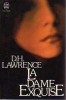
Très Bon Etat
LA SEMAINE DES FAMILLES 37EME ANNEE N°50 - LA CHAPELLE DE SAINT-FIACRE DE HYACINTHE LE FRANC, LE COUSIN DE L'AMIRAL DE LIA SAUL, EN AFRIQUE - LE GABON ET LE CONGO FRANCAIS DE E. VALVILLE, LES COUSINES DE RACHEL A. GELINE, CHRONIQUE DE HYACINTHE LE FRANC
Au bureau du journal.. 14 MARS 1896. In-4. En feuillets. Bon état, Couv. convenable, Dos satisfaisant, Intérieur frais. Paginé de 785 à 800. Lecture en colonnes. Illustrée de quelques gravures en noir et blanc.. . . . Classification Dewey : 70.4413-Magasin pittoresque, universel et mosaïque
Revue universelle. Sous la direction de Victor Lecoffre. Classification Dewey : 70.4413-Magasin pittoresque, universel et mosaïque
LEIBRICH (bernard). ECHAVARREN (Roberto). BUTOR (Michel). TARTING (Christian). DUAULT (alain). ALEGRIA (armand). YURKIEVICH (Saul).DE BIASI (Pierre-Marc). PARANT (Jean-Luc). BOSSEUR (Jean-Yves). GLEIZE (Jean-Marie). CHIAPPONE (Jean-Luc).
Reference : 47885
Chemin de ronde : n°2, 3ème trimestre 1979.
Marseille, directeurs : Christian Tarting et Danièle Robert. Un volume broché (20x20 cm) sous couverture illustrée par Frédéric Appy, 155 pages. Bon état.
Revue de poésie qui comptera 5 numéros en 5 livraisons publiés entre 1977 et 1984. En 2010, Christian Tarting et Danièle Robert créeront la maison d'édition Chemin de ronde. Tous nos livres sont visibles sur notre site : https://www.livrepoesie.com/
Rétrospective 1923-2013
Textuel
LIVRE A L’ETAT DE NEUF. EXPEDIE SOUS 3 JOURS OUVRES. NUMERO DE SUIVI COMMUNIQUE AVANT ENVOI, EMBALLAGE RENFORCE. EAN:9782845979628
The unseen Saul Leiter
Textuel
LIVRE A L’ETAT DE NEUF. EXPEDIE SOUS 3 JOURS OUVRES. NUMERO DE SUIVI COMMUNIQUE AVANT ENVOI, EMBALLAGE RENFORCE. EAN:9782845979130
LA SEMAINE DES FAMILLES 37EME ANNEE N°2 - MANTES LA JOLIE DE ABEL LEROY, AUTOUR D'UN DRAME DE PIERRE D'ARLAY, LECONS D'UNE TANTE DE LIA SAUL, CESAR DE LEONTINE ROUSSEAU, LES DEUX SECRETS VII DE CHARLES DE VITIS
Au bureau du journal.. 13 AVR 1895. In-4. En feuillets. Bon état, Couv. convenable, Dos satisfaisant, Intérieur frais. Paginé de 17 à 32. Lecture en colonnes. Illustrée de quelques gravures en noir et blanc.. . . . Classification Dewey : 70.4413-Magasin pittoresque, universel et mosaïque
Revue universelle. Sous la direction de Victor Lecoffre. Classification Dewey : 70.4413-Magasin pittoresque, universel et mosaïque
CA CHAUFFE. COLLECTION OSCAR N° 9
DENOËL .. 1952.. In-12. Broché. Etat d'usage, Couv. légèrement passée, Dos abîmé, Intérieur acceptable. 253 pages. 1ère de couverture illustrée en couleurs. Couverture détachée.. . . . Classification Dewey : 800-LITTERATURE (BELLES-LETTRES)
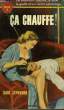
Traduit de l'américain par Henri Robillot. Collection dirigée par Marcel Duhamel. Classification Dewey : 800-LITTERATURE (BELLES-LETTRES)
Ca Chauffe ! (Red Hot Murder)
DENOEL. 1952. In-12. Broché. Bon état, Couv. convenable, Dos satisfaisant, Intérieur frais. 253 pages.. . . . Classification Dewey : 810-Littérature américaine
"Collection ""Oscar"" N°9. Traduit de l'américain par Henri Robillot. Classification Dewey : 810-Littérature américaine"
LE FROID DU CIEL
CLUB FRANCAIS DU LIVRE. 1952. In-8. Relié toilé. Bon état, Couv. convenable, Dos satisfaisant, Intérieur frais. 296 pages. Frontispice en noir et blanc.. . . . Classification Dewey : 840-Littératures des langues romanes. Littérature française
Exemplaire n°5269. Traduit de l'américain par Yves Malartic. Classification Dewey : 840-Littératures des langues romanes. Littérature française
Le froid du ciel.
. 1952. in-8. Relié. Bon état, Couv. convenable, Dos satisfaisant, Intérieur frais. Paris, Club Français du Livre, 1952, in 8, cart. éd., 297 pp. Jaquette défraichie. Avec Jaquette. . . Classification Dewey : 380-Commerce, communications, transports
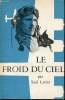
AV-015 - Lieu d'édition : Paris Classification Dewey : 380-Commerce, communications, transports
Le froid du ciel
Club français du livre 15 mars 1952, relié toile avec sa jaquette, 298pp; traduction de Yves Malartic - très bon état
Le froid du ciel.
Couverture rigide. Reliure de l'éditeur. 297 pages.
Livre. Traduit de l'américain par Yves Malartic. Le club français du livre, 1952.
Le froid du ciel.
Couverture rigide. Reliure de l'éditeur. 297 pages.
Livre. Traduit de l'américain par Yves Malartic. Le club français du livre, 1952.
Le froid du ciel.
Couverture rigide. Reliure toile de l'éditeur. 298 pages. Jaquette défraîchie.
Livre. Traduit de l'américain par Yves Malartic. Le club français du livre, 1952.
Le froid du ciel
1952 Paris, Le Club Français du Livre, 1952, In huit, 297 pp, reliure toile grise, nom de l'auteur doré sur le premier plat et le dos, dos insolé,
1/10500 ex num. Traduit de l'américain par Yves Malartic.

