 Write to the booksellers
-
Type
Book (384)
Magazine (9)
Music sheets (11)
-
Latest
Last month (17)
Last week (2)
-
Language
English (7)
French (391)
Russian (5)
Spanish (1)
-
Century
19th (37)
20th (168)
21st (23)
-
Countries
Belgium (26)
Canada (6)
Denmark (5)
France (330)
Germany (1)
Switzerland (30)
United States of America (6)
-
Syndicate
ALAC (6)
CLAM (3)
ILAB (152)
NVVA (1)
SLACES (1)
SLAM (133)
Jean-Pierre Faye, Jean Paris, Léon Robel, Mitsou Ronat, Jacques Roubaud, Saul Yurkiévitch.
Reference : 65353
Science-Fiction & Histoires. Ursula Le Guin, Tom Shippey, Carol Emswiller, Gene Wolfe, P. Giulani, D. Douay, R. Bozzetto, Y. Rio, J.-M. Gouanvic, Danielle Fernandez, J. Chambon, Jacques Roubaud, J.P. Faye, Claude Ollier, Mitsou Ronat, Geneviève Clancy.
Cahiers du Collectif CHANGE, Seghers/ Laffont. Mars 1981 (N° 40), 1 volume in-8 de 208 pages, broché.
Dos insolé, bon état.
Jefferson, un militant de la liberté. Préface du Maréchal Juin. Traduction de Maurice Fould.
P., La Colombe, 1956, in 8° broché, 237 pages, non coupé ; couverture illustrée.
...................... Photos sur demande ...................


Phone number : 04 77 32 63 69
AUTOMATES.
Lefrancq.. 1999.. In-8. Broché. Bon état, Couv. convenable, Dos satisfaisant, Intérieur frais. 405 pages. 1ère de couverture illustrée en couleurs. Ecriture au stylo sur la page de garde.. . . . Classification Dewey : 810-Littérature américaine
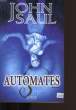
Traduit de l'américain par Pierre Riant. Classification Dewey : 810-Littérature américaine
Automates
Editions Lefrancq broché Bristol illustré Bruxelles 1999 406 pages en format -8 - Thriller
Très Bon État
Baraka Ou La Vie, La Gloire et Le Destin d' Anthony Smith - Traduit De l' Anglais Par Antony Smith
Rivages / Poche broché Bristol illustré 1993 437 pages en format 11 - 17 cm 2-86930-858-2
Très Bon État
Baraka Saul, John and Robillot, Henri
Rivages PHOTOS SUR DEMANDE
Merci de nous contacter à l'avance si vous souhaitez consulter une référence dans notre boutique à Authon-du-Perche.

Créature
France loisirs 1992 295 pages in8. 1992. Relié jaquette. 295 pages. Chaque maison cache un secret les murs ont des oreilles mais la bouche cousue. Il faut poser longtemps la joue contre leur sein comme un docteur fiévreux pour les entendre respirer. A Dun-le-Palestel dans la Creuse la maison de famille du narrateur en a si gros sur le c?ur et tant à dire qu'on va la confesser pièce après pièce l'écouter se raconter souvenirs dérangés vérités arrangées les choses et les gens tels qu'ils furent les échos et les ombres qu'il en reste. Elle finira bien par lâcher cequ'elle sait. Elle sait l'histoire d'un père qui lui avait choisi de se taire
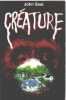
French édition. Le livre présente des marques de stockage et/ou de lecture sur la couverture et/ou les pourtours mais reste en état CORRECT d'ensemble. Expédition soignée depuis la France
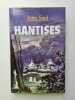
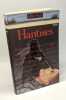
Hantises
Pocket 1998 290 pages poche. 1998. Broché. 290 pages.
bon état de conservation rousseurs sur tranche intérieur propre
LA RUCHE.
Lefrancq.. 1997.. In-8. Broché. Bon état, Couv. convenable, Dos satisfaisant, Intérieur acceptable. 375 pages. 1ère de couverture illustrée en couleurs. Ecriture au stylo sur la page de garde.. . . . Classification Dewey : 810-Littérature américaine
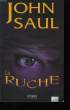
Traduit de l'américain par Muriel Vandermeulen. Classification Dewey : 810-Littérature américaine
Le Projet Dieu
Presses De La Cite broché Bristol illustré 1983 247 pages en format grand -8 - Collection Paniques
Bon État
LES BATARD DE VOLTAIRE - LA DICTATURE DE LA RAISON EN OCCIDENT
ESSAI PAYOT. OCTOBRE 1993. In-8. Broché. Bon état, Couv. convenable, Dos satisfaisant, Intérieur frais. 653 pages.. . . . Classification Dewey : 840-Littératures des langues romanes. Littérature française

Classification Dewey : 840-Littératures des langues romanes. Littérature française
LES BATARDS DE VOLTAIRE. LA DICTATURE DE LA RAISON EN OCCIDENT
CHEZ L'AUTEUR. 1993. In-8. Broché. Bon état, Couv. convenable, Dos satisfaisant, Intérieur frais. 653 pages.. . . . Classification Dewey : 820-Littératures anglaise et anglo-saxonne
Traduit de l'anglais par Sabine Boulongne. Essai Payot. Classification Dewey : 820-Littératures anglaise et anglo-saxonne
Que Souffrent Les Enfants
Nouvelles Editions Baudinière broché Couverture Illustrée 1978 321 pages en format 14 - 21 cm
Bon État
John Saul Henri Robillot De Massembre Henri Robillot De Massembre
Reference : 235999
(1994)
ISBN : 2869307667
De si bons Américains
Rivages 1994 301 pages in8. 1994. Broché. 301 pages.

Bon voir très bon état
Partition de la chanson : Anniversary song Cher souvenir Retirage Jolson Story (The)
Salabert 1946
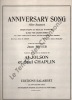
Etat moyen Format Coquille
Partition de la chanson : Cher souvenir Anniversary song Jolson Story (The)
Salabert 1946
Etat moyen Petit format
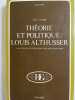
THEORIE ET POLITIQUE: LOUIS ALTHUSSER
FAYARD. 1974. In-8. Broché. Bon état, Couv. convenable, Dos satisfaisant, Intérieur frais. 340 pages. . . . Classification Dewey : 820-Littératures anglaise et anglo-saxonne
Digraphe / Avec quatre textes inédits de Louis Althusser. Classification Dewey : 820-Littératures anglaise et anglo-saxonne
Théorie et politique : Louis Althusser
Fayard Fayard 1974. In-8 broché de 339 pages. Très bon état
Toutes les expéditions sont faites en suivi au-dessus de 25 euros. Expédition quotidienne pour les envois simples, suivis, recommandés ou Colissimo.
Théorie et politique : Louis Althusser.
Fayard 1974 Fayard, Digraphe, 1974, 340 p., broché, environ 22x14cm. Un pli de lecture sur le dos et des griffures superficielles sur les plats, bon état pour le reste et intérieur bien propre.
Avec quatre textes inédits de Louis Althusser. Merci de nous contacter à l'avance si vous souhaitez consulter une référence au sein de notre librairie.
"Théorie et politique : Louis Althusser - ""Digraphe"""
Fayard. 1974. In-8. Broché. Etat d'usage, Couv. convenable, Dos plié, Intérieur acceptable. 340 pages. Plats contrepliés en un rabat.. . . . Classification Dewey : 320-Science politique
Avec quatre textes inédits de Louis Althusser. Classification Dewey : 320-Science politique
LA SEMAINE DES FAMILLES 37EME ANNEE N°32 - L'INTIME D'UN COEUR DE JEAN KERGALL, CHRETIENNE ET FRANCAISE DE LIA SAUL, L'ILE DE LA TRINIDAD DE E. VALVILLE, LE DERNIER ENJEU DU JOUEUR DE LEONTINE ROUSSEAU, BIBLIOGRAPHIE
Au bureau du journal.. 9 NOV 1895. In-4. En feuillets. Bon état, Couv. convenable, Dos satisfaisant, Intérieur frais. Paginé de 497 à 512. Lecture en colonnes. Illustrée de quelques gravures en noir et blanc.. . . . Classification Dewey : 70.4413-Magasin pittoresque, universel et mosaïque
Revue universelle. Sous la direction de Victor Lecoffre. Classification Dewey : 70.4413-Magasin pittoresque, universel et mosaïque
Esistenza e necessità. Saggi scelti
Ponte alle Grazie 1993 43x610x406cm. 1993. Broché.
Bon état

