 Write to the booksellers
-
Type
Any type (1)
Book (1454)
Disk (1)
Magazine (15)
Music sheets (13)
New book (1)
Photographs (1)
Posters (8)
-
Latest
Last month (158)
Last week (10)
-
Language
English (11)
French (1483)
-
Century
18th (1)
19th (3)
20th (611)
21st (178)
-
Countries
Belgium (250)
Canada (1)
China (1)
Denmark (1)
France (1212)
Netherlands (3)
Switzerland (26)
-
Syndicate
ALAC (1)
CLAM (1)
ILAB (240)
SLAM (236)
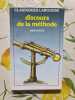
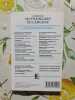
Discours De La Methode
Editions Larousse 1992 16 51x1 016x10 922cm. 1992. Broché. Françoise d'Eaubonne retrace à travers de multiples anecdotes une histoire du scandale au féminin explorant les vies de femmes jugées scandaleuses qu'elles soient coupables ou victimes et dénonçant la manière dont la société a réprouvé leurs audaces poursuivi les marginales et stigmatisé les victimes
Très bon état
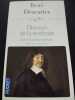
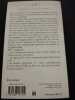
Discours de la méthode
Pocket 2006 351 pages 11x2 2x18 6cm. 2006. pocket_book. 351 pages.
Très bon état
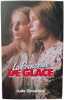
La Princesse de glace
France loisirs 1985 236 pages in8. 1985. cartonné jaquette. 236 pages. Le roman raconte l'histoire de deux sœurs jumelles aux personnalités opposées : Aryane la "princesse de glace" irréprochable et Doriane fougueuse et aventureuse. L'intrigue se noue lorsque Aryane fiancée à Leander s'intéresse à l'énigmatique Kane tandis que Doriane la remplace auprès de Leander pour une soirée déclenchant un chassé-croisé amoureux et des conséquences inattendues
Bon état
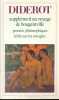
Pensees Philosophiques / Lettre Sur Les Aveugles / Supplement Au Voyage: Pensées philosophiques lettre sur les aveugles
Editions Flammarion 2013 190 pages 10 8x1 1x17 8cm. 2013. pocket_book. 190 pages.
Bon état
Fragmente der Vorsokratiker / Griech. /Dt: Die Fragmente Der Vorsokratiker Band 1 (1-58) + Band 3 (register) --- (tome 2 manquant)
Weidmannsche Zürich 1985 516 pages 14x9x26cm. 1985. Cartonné. 2 volume(s). 516 pages.
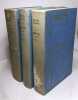
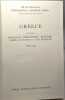
Très Bon Etat de conservation intérieur propre bonne tenue couvertures un peu défraîchies
ART ARKTIS. Das Buch über die Antarktis (Antarctica). Mit vielen Fotos und Infos (Deutsch Englisch) - 29x37 cm 208 Seiten: Dtsch.-Engl
teNeues Verlag 2015 208 pages 29 8x2 6x37 4cm. 2015. Relié. 208 pages.
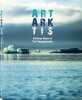
Très bon état
On Aristotle's Categories: Dexippus: On Aristotle Categories (The Ancient Commentators on Aristotle)
Bristol Classical Press 1989 156 pages 16 2x1 4x23 8cm. 1989. Relié. 156 pages.
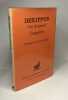
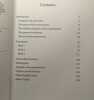
très bon état de conservation intérieur propre bonne tenue dos de la jaquette insolé
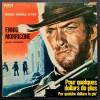
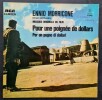
( Disques - Musique de Cinéma - Western ) - Ennio Morricone et son Orchestre - Sergio Léone - Clint Eastwood.
Reference : 19939
LP 33 tours de la Bande Sonore Originale Du Film " Pour Quelques Dollars de Plus ( Per qualche dollaro in piu') ", avec portrait de Clint Eastwood en couverture.
Vinyle, LP 33 tours / RCA Camden – 900.036 de 1972. Couvertures illustrées. Un nom au feutre au verso et des initiales sur le rond central de la face 2. Superbe état général, mais dos partiellement fendu et infimes frottis aux coins. Pressage français. Exemplaire en bel état général.
Vente exclusivement par correspondance. Le libraire ne reçoit, exceptionnellement que sur rendez-vous. Il est préférable de téléphoner avant tout déplacement.Forfait de port pour un livre 10 € sauf si épaisseur supérieure à 3 cm ou valeur supérieure ou égale à 100 €, dans ce cas expédition obligatoire au tarif Colissimo en vigueur. A partir de 2 livres envoi en colissimo obligatoire. Port à la charge de l'acheteur pour le reste du monde.Les Chèques ne sont plus acceptés.Pour destinations extra-planétaire s'adresser à la NASA.Membre du Syndicat Lusitanien Amateurs Morues
Le rodéo de la mort
" Les films de Far-West " n° 33 (Nouvelle série) / Les Éditions Modernes (1928) - Fascicule en un cahier non agarfé au format 28 x 19,5 de 16 pages - Couverture illustrée d'une photo sépia - Illustré de 5 photos sépia in-texte - Exemplaire en bon état
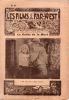
Ciné-Roman inédit d'après le film J. Seffert - Scénario de A. Rigaud interprété par Buffalo-Bill Junior, Jacques Perrin et son cheval Steafligt
Far West Magazine n°7 - 7e de Cavalerie
Ponzoni, juillet 1966. Format 15x21 cm, 65 pages. Très bon état.
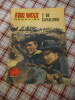
Ref 538. Roman photo du film de Joseph H. Lewis, avec Randolph Scott et Barbara Hale, titre français "La Mission du Capitaine Benson".
The Ancient Concept of Progress and Other Essays on Greek Literature and Belief (Clarendon Paperbacks) reprint 1998
Oxford university press 1998 240 pages 13 97x21 59x1 397cm. 1998. Broché. 240 pages.
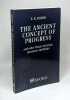
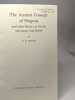
Très Bon Etat de conservation intérieur propre bonne tenue ex-libris
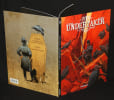
Undertaker, Tomes 1 à 7
Dargaud Album cartonné "Cinq volumes in-4 (24 x 32 cm), album cartonnés, tomes 1 à 7 de la série ""Undertaker"", en édition originale ; TOME 1 : Le mangeur d'or // TOME 2 : La danse des vautours // TOME 3 : L'Ogre de Sutter Camp // TOME 4 : L'Ombre d'Hippocrate // TOME 5 : L'Indien blanc // Tome 6 : Salvaje // Tome 7 : Mister Prairie ; petits incidents au dos des tomes 1 et 2, par ailleurs bel état général. Livraison a domicile (La Poste) ou en Mondial Relay sur simple demande."
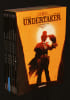
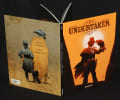


Aristocracy and Its Enemies in the Age of Revolution.
OUP Oxford, 2009 16,03 x 24,21 x 2,49 cm., 371 pp, Couverture rigide
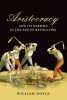
Annotations crayon. - - VENTE PAR CORRESPONDANCE UNIQUEMENT - LIEN DE PAIEMENT, NOUS CONSULTER.
Les Cowboys.
AGENCE FRANCAISE DE PRESSE. 1952. In-4. Broché. Etat d'usage, Couv. défraîchie, Dos satisfaisant, Intérieur frais. Livre-animé de 19 pages, illustré en de dessins en couleurs dans le texte. Dos à spirales jaunes.. . . A l'italienne. Classification Dewey : 791.4362-Western
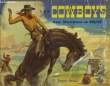
Avec illustrations en relief. Le Rodéo - Le dressage d'un cheval sauvage - Le Lasso - La Cuisine roulante - Feu de camp. Classification Dewey : 791.4362-Western
Vatican I, Infallible or Neglectable? Historical and Theological Approaches to the Event and Reception of the First Vatican Council
, Brepols, 2023 Paperback, 348 pages, Size:156 x 234 mm, Language(s):English, French. ISBN 9782503601717.
Summary On 20 October 1870 pope Pius IX adjourned the First Vatican Council, because of the Italian Rissorgimento troops approaching the city of Rome. Given that the Council had only opened less than a year prior, on 8 December 1869, the act was emblematic. The council, as the Catholic Church's protective response against all things new - rationalism, liberalism, naturalism, materialism, and pantheism - was overtaken by history. Given its premature end not all documents prepared were completed and those that were promulgated, became among the most controversial documents in the nineteenth and twentieth-century Catholic Church, strongly defining its relations to other Christian confessions and modernity. Similarly, around one hundred years after the suspension of the First Vatican Council its historical and theological study was overtaken by the event of the Second Vatican Council, known for its rapprochement to the modern world. The history and results of the First Vatican Council were either forgotten or reinterpreted in light of this subsequent council's decisions. In light of the 150th anniversary of this council, the editors and authors of this volume set themselves the goal of re-examining this tradition of historical and theological reception (and forgetting) of the First Vatican Council. TABLE OF CONTENTS Vatican I, Infallible or Neglectable? Historical Perspectives on the Event and Reception of the First Vatican Council Edited by Dries Bosschaert, Peter De Mey, and Simon Beentjes Introduction Dries Bosschaert, Peter De Mey, and Simon Beentjes Part I: The History of Vatican I and its Main Actors The Holy See, Church and Politics The Climax of Vatican I (1864-1876) Andrea Ciampani (LUMSA di Roma) Victor Dechamps, Archbishop of Mechelen (Belgium), on the Eve of the First Vatican Council Dries Vanysacker (KU Leuven) Des v ques de juste milieu. Le cardinal Mathieu et la minorit inopportuniste Vincent Petit 'Ein Mann mit eiserner Natur': Archbishop Peter Kenrick, Vatican I, and his Submission to Pastor ternus Kenneth L. Parker (Duquesne University) Ignaz von D llinger and the First Vatican Council Franz Xaver Bischof (Ludwig Maximilians Universit t M nchen) The First Vatican Council and the Faculty of Theology at Louvain Leo Kenis (KU Leuven) Russian Diplomats on Vatican I Papal Infallibility, the Emergence of 'Parties' and Concerns on Catholic Clergy in the Empire Katsiaryna Kimlenka (Lomonosov Moscow State University) Part II: Reconsidering the Doctrine of Vatican I Catholic Socio-Economic Thought in the 1860s and its Impact on Vatican I Alina Potempa (Humboldt-Universit t zu Berlin) 'Ecclesiam esse corpus Christi mysticum' Supremi Pastoris, Clemens Schrader and the Ecclesiology of the Mystical Body Valfredo Maria Rossi (Pontifical Gregorian University) Joseph Kleutgen and the Second Schema De Ecclesia Infallibility and the Minor Theological Censures John P. Joy (Albert the Great Center for Scholastic Studies) John Henry Newman, Vatican I and the doctrine of Papal Infallibility Cautions and Contributions Mary McCaughey (St. Mary's College Oscott) The Blessing that comes from ?Anathemas? The Traces of Hope that emerged in Vatican I Susana Vilas Boas (Universidade Cat lica Portuguesa) Part III: Receptions of Vatican I The First Vatican Council and Anglicanism Mark D. Chapman (University of Oxford) The Reception of the First Vatican Council in Old Catholic (Ecumenical) Theology Peter-Ben Smit (Vrije Universiteit Amsterdam) Infallibility in Perspective The Different Receptions of Pastor Aeternus among Catholic Ecumenists before the Second Vatican Council Simon Beentjes (KU Leuven) La primaut dans les conciles du Vatican R ception ou rupture ? Fermina Alvarez Alonso (Pontificia Universitas Lateranensis) The Trinitarian Theology of Bernard Lonergan An Example of the Reception of Vatican I in 20th-Century Theology Andrew Downie (Durham University) Can the Clock be Turned Back? Understandings of Tradition and Change in Vatican I's and Vatican II's Responses to the Modern World Kristin Colberg (College of Saint Benedict)
Les Films du Far-West N°107 : Les conjures de la Frontière.
EDITIONS MODERNES. 1932. In-12. En feuillets. Bon état, Couv. convenable, Dos satisfaisant, Fortes mouillures. 15 pages. Nombreuses photos en noir et blanc dans le texte.. . . . Classification Dewey : 791.4362-Western
Roman Filmé Complet. Western. Classification Dewey : 791.4362-Western
Les Films du Far-West N°128. Un voyage mouvementé.
EDITIONS MODERNES. 1933. In-12. En feuillets. Bon état, Couv. convenable, Dos satisfaisant, Non coupé. 16 pages. Nombreuses photos en noir et blanc dans le texte.. . . . Classification Dewey : 791.4362-Western
Roman Filmé Complet. Western. Classification Dewey : 791.4362-Western
Les Films du Far-West N°1?? : La Capture des bandits.
EDITIONS MODERNES. 3 déc. 1932. In-12. En feuillets. Bon état, Couv. légèrement passée, Dos satisfaisant, Quelques rousseurs. 15 pages illustrées de photos en noir et blanc dans le texte.. . . . Classification Dewey : 791.4362-Western
Roman Filmé Complet. Western. Classification Dewey : 791.4362-Western
Les Films du Far-West N°24 : La première Affaire du Shériff Tom.
EDITIONS MODERNES. 1931. In-12. En feuillets. Etat d'usage, Couv. légèrement passée, Coiffe en pied abîmée, Papier jauni. 15 pages illustrées de photos en noir et blanc dans le texte.. . . . Classification Dewey : 791.4362-Western
Roman Filmé Complet. Western. Classification Dewey : 791.4362-Western
Les Films du Far-West N°36 : Sur la Piste du Voleur.
EDITIONS MODERNES. 1931. In-12. En feuillets. Bon état, Couv. convenable, Dos satisfaisant, Quelques rousseurs. 15 pages illustrées de photos en noir et blanc dans le texte.. . . . Classification Dewey : 791.4362-Western
Roman Filmé Complet. Western. Classification Dewey : 791.4362-Western
Les Films du Far-West N°48 : Le dernier exploit de Garbrera.
EDITIONS MODERNES. 1931. In-12. En feuillets. Bon état, Couv. convenable, Dos satisfaisant, Quelques rousseurs. 15 pages illustrées de photos en noir et blanc dans le texte.. . . . Classification Dewey : 791.4362-Western
Classification Dewey : 791.4362-Western
Les Films du Far-West N°68 : La Faute du Ranchmann.
EDITIONS MODERNES. 1931. In-12. En feuillets. Etat d'usage, Couv. convenable, Coiffe en pied abîmée, Non coupé. 15 pages illustrées de photos en noir et blanc. Pages cornées. Coiffe en pied fendue.. . . . Classification Dewey : 791.4362-Western
Roman Filmé Complet. Western. Classification Dewey : 791.4362-Western
Les Films du Far-West N°81 : Le Meurtrier du Ranchmann.
EDITIONS MODERNES. 1932. In-12. En feuillets. Etat d'usage, Couv. convenable, Dos satisfaisant, Intérieur frais. 15 pages illustrées de photos en noir et blanc.. . . . Classification Dewey : 791.4362-Western
Roman Filmé Complet. Western. Classification Dewey : 791.4362-Western
Les Films du Far-West N°88 : Une lache agression
EDITIONS MODERNES. 1932. In-12. En feuillets. Bon état, Couv. convenable, Dos satisfaisant, Quelques rousseurs. 14 pages illustrées de photos en noir et blanc dans le texte.. . . . Classification Dewey : 791.4362-Western
Roman Filmé Complet. Western. Classification Dewey : 791.4362-Western
Les Films du Far-West N°90 : Un rapt dans la Sierra.
EDITIONS MODERNES. 1932. In-12. En feuillets. Bon état, Couv. convenable, Dos satisfaisant, Quelques rousseurs. 16 pages illustrées de nombreuses photos en noir et blanc dans le texte.. . . . Classification Dewey : 791.4362-Western
Roman Filmé Complet. Western. Classification Dewey : 791.4362-Western

