 Write to the booksellers
-
Type
Any type (1)
Book (1451)
Disk (1)
Magazine (15)
Music sheets (13)
New book (1)
Photographs (1)
Posters (8)
-
Language
English (11)
French (1480)
-
Century
18th (1)
19th (3)
20th (610)
21st (178)
-
Countries
Belgium (250)
Canada (1)
China (1)
Denmark (1)
France (1209)
Netherlands (3)
Switzerland (26)
-
Syndicate
ALAC (1)
CLAM (1)
ILAB (240)
SLAM (236)
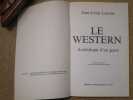
Le western : archéologie d'un genre.
Presses Universitaires de Lyon Presses Universitaires de Lyon, 1987, 166 p., broché, environ 24x15cm, bords de la couverture frottés par endroits, bon état pour le reste et intérieur très propre.
Merci de nous contacter à l'avance si vous souhaitez consulter une référence au sein de notre librairie.
Catalogue des films sur l'Ouest des années 20. Premieer volume 1921-1922.
1986 Bron, CERTC (Collection Documents), 1986, in 8° broché, 189 pages ; couvertuure illustrée.
...................... Photos sur demande ...................


Phone number : 04 77 32 63 69
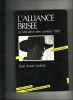
L'Alliance brisée. Le Western des années 20
Lyon, Presses Universitaires de Lyon / Institut Lumière, 1985, 15,5 x 24, 448 pages + XVI pages (cahier) d'illustrations en noir & blanc - sous couverture illustrée.
Splendeur du western
Rouge Profond Broché 2007 In-4 (21,6 x 26 cm), broché, 235 pages ; très bon état. Livraison a domicile (La Poste) ou en Mondial Relay sur simple demande.
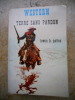
Flamme chez les coupeurs de tête
1953 - cartonné - Editions Presses de la Cité - Collection Captain W. E. Johns, N° 81 - 1953 - In-12 (19 x 13 cm) cartonné sous jaquette illustrée - 190 pages - Traduction de Suzanne Hot


Assez bon état - Jaquette en mauvais état
INDIENS ET COW-BOYS. Western style
Paris Filipacchi 1990 in 4 (32x23,5) 1 volume reliure toilée noire de l'éditeur sous jaquette illustrée en couleurs, non paginé, avec de nombreuses photographies en couleurs et noir et blanc. Bon exemplaire ( Photographies sur demande / We can send pictures of this book on simple request )
Bon Jaquette en très bon état Reliure
Les Insatiables
ACTES SUD 2016 384 pages 14 7x23 9x2 9cm. 2016. Broché. 384 pages.
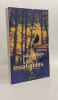
proche du neuf une petite ternissure sur la tranche de tête
China's modernization and the West,
, Brussel, Paleis der Academien, 1987,, Gebrocheerd, originele uitgeversomslag, 26x18cm, 160pp,+illustrations, als nieuw/ as new!!!!
Speciale uitgaven;32: China and the West. Proceedings of the International Colloquium. Brussels, November 23-25, 1987.differents auteurs, A brief overview of medical education in the People's Republic of China; (Ping; The two schools of medecine in China; zezong; Influence of Western astronomy on China in the 17th and 18th centuries
Ambrose Of Milan: Political Letters And Speeches (TRANSLATED TEXTS FOR HISTORIANS 43 Band 43)
Liverpool University Press 2010 424 pages 15 2x3 4x21cm. 2010. Broché. 424 pages.
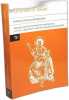
Très bon état intérieur propre bonne tenue
From Constantine to Julian: Pagan and Byzantine Views: A Source History
Routledge 1996 308 pages 13 74x2 49x21 41cm. 1996. Broché. 308 pages.
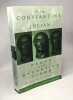
Très bon état
The Last Seven Months of Anne Frank
Knopf Doubleday Publishing Group 1992 204 pages 13x1 6x20 2cm. 1992. Broché. 204 pages. "WITH THIS BOOK WILLY LINDWER HAS MADE A SIGNIFICANT CONTRIBUTION TO THE MEMORY OF ANNE FRANK." -SIMON WIESENTHAL

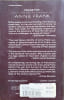
Bon état
Dura-Europos: Past, Present, Future
, Brepols, 2025 Paperback, Pages: xvi + 245, Size:216 x 280 mm, Illustrations:33 b/w, 53 col., 2 tables b/w., Languages: English, Arabic. ISBN 9782503616049.
Summary This volume brings together an international and interdisciplinary host of scholars to reflect on the complicated legacies of exploration at the archaeological site of Dura-Europos, situated on the western bank of the Euphrates River near modern Salihiyeh (Syria). A chance discovery after World War I kicked off a series of excavations that would span the next century and whose finds are today housed in collections worldwide, including the Yale University Art Gallery, the Louvre, and the National Museum in Damascus. Dura-Europos exemplifies a multiethnic frontier town at the crossroads of major trade routes. Its textual remains and remarkably-preserved Christian, Jewish, and polytheist religious sanctuaries provide key resources for the study of antiquity and attest to the cross-cultural interconnectivity that was demonstrably central to the ancient world but which has been too often obscured by Eurocentric historiographic traditions and siloed disciplinary divisions. Foreign-run, large-scale archaeological campaigns of the early twentieth century, like those at Dura-Europos, have created narratives of power and privilege that often exclude local communities. The significance of these imbalances is entangled with the destruction the site has experienced since the 2011 outbreak of conflict in Syria. As a step toward making knowledge descendant of early excavations more accessible, this volume includes Arabic summaries of each paper, following up on the simultaneous Arabic interpretation provided at the 2022 hybrid conference whose proceedings form the core of this publication. The papers address topics connected to essential themes in relation to Dura-Europos: long-distance trade relations and cross-border interactions in antiquity, including the exchange of technologies, people, and materials; Christianity, Judaism, and other religious practices, and their relations to one another; contemporary trafficking of looted artifacts; cultural heritage and the Islamic State; and the evolving role of museum collections, technologies, and archival materials for research. TABLE OF CONTENTS Table of Contents List of Illustrations List of Contributors 1. Introduction Lisa R. Brody, and Anne Hunell Chen 2. Rostovtzeff's Dura Ja? Elsner 3. 'Dura and the Problem of Parthian Art' (almost) a Hundred Years Later Henry P. Colburn 4. The Bloody Genesis of Dura-Europos Studies: Archaeology, Colonialism, and Violence at Salhiyeh, 1916-1920 and Beyond Simon James 5. The So-Called Semitic Population of the Roman Near East with Special Reference to Dura-Europos Kevin van Bladel 6. A Few Notes on Parthian Dura-Europos Leonardo Gregoratti 7. Monuments and Memory at Dura-Europos Ted Kaizer 8. The Bone Dolls from Dura-Europos: Embodying Childhood Experience Juliet Samson-Conlon 9. Touching and Inscribing the Dura- Europos Synagogue Karen Stern 10. New Trends in Mithraic Studies: Experiencing the Dura-Europos Mithraeum Lucinda Dirven 11. Staying at Home or Taking Away: Palmyrene Priestly Iconography as Expressions of Local Religious Traditions and Societal Status Rubina Raja Arabic abstract 12. Military Communities from East to West: Understanding Local Contexts and Responses at Dura-Europos and Vindolanda Elizabeth M. Greene, and Craig A. Harvey 13. The Ruins that Remain: Remembering Dura-Europos in Salhiyeh J. A. Baird, and Adnan Almohamad with Asaad Alsaleh 14. The Pillaging of Dura-Europos: ISIS and the Illicit Trade in Antiquities Amr Al Azm 15. A Legal Framework for Protecting Heritage Against Destruction and Looting Leila A. Amineddoleh
( Littérature en Anglais - Bandes Dessinées - Illustrations - Western ) - E.M. Jackson - Mario Cooper - The Demise of the Frontier and the birth of the New " Old West ".
Reference : 32177
(1983)
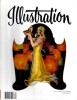
Illustration, volume 16, issue number sixty-three, 2019 : E.M. Jackson - Mario Cooper - The Demise of the Frontier and the birth of the New " Old West ".
Etats-Unis, Illustration Magazine 2019. In-4 broché de 96 pages au format 28 x 21,5 cm. Couverture illustrée par E.M. Jackson. Dos carré. Plats et intérieur frais. Numéro spécial de cette revue d’art consacré aux artistes et illustrateurs américains suivants : E.M. Jackson - Mario Cooper. Essai sur les dessinateurs et l'art " Western ", intitulé he Demise of the Frontier and the birth of the New " Old West ". Textes en anglais accompagnés d'une foultitude d'illustrations en couleurs et en noir. Edition originale en superbe état de fraicheur. Epuisé. Rare.
Vente exclusivement par correspondance. Le libraire ne reçoit, exceptionnellement que sur rendez-vous. Il est préférable de téléphoner avant tout déplacement.Forfait de port pour un livre 10 € sauf si épaisseur supérieure à 3 cm ou valeur supérieure ou égale à 100 €, dans ce cas expédition obligatoire au tarif Colissimo en vigueur. A partir de 2 livres envoi en colissimo obligatoire. Port à la charge de l'acheteur pour le reste du monde.Les Chèques ne sont plus acceptés.Pour destinations extra-planétaire s'adresser à la NASA.Membre du Syndicat Lusitanien Amateurs Morues
( Littérature en Anglais - Western ) - Frank H. Spearman - N.C Wyeth.
Reference : 22940
(1906)
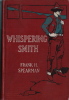
Whispering Smith.
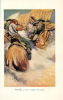
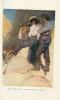
Etats-Unis, Charles Scribner's Sons / New York 1906. Fort in-8 cartonnage éditeur plein bradel rouge de 422 pages au format 13 x 3,5 x 19,5 cm. 1er plat orné d’une illustration en relief. Dos rond avec titre doré et gravé. Roman d'aventures " Western " par Frank H. Spearman. Frontispice et magnifiques illustrations en couleurs par N.C Wyeth. Petites rousseurs éparses. Coins avec infimes tassements. Nom de l'ancien propriétaire inscrit en page de garde. Superbe état général. Rare édition originale.
Vente exclusivement par correspondance. Le libraire ne reçoit, exceptionnellement que sur rendez-vous. Il est préférable de téléphoner avant tout déplacement.Forfait de port pour un livre 10 € sauf si épaisseur supérieure à 3 cm ou valeur supérieure ou égale à 100 €, dans ce cas expédition obligatoire au tarif Colissimo en vigueur. A partir de 2 livres envoi en colissimo obligatoire. Port à la charge de l'acheteur pour le reste du monde.Les Chèques ne sont plus acceptés.Pour destinations extra-planétaire s'adresser à la NASA.Membre du Syndicat Lusitanien Amateurs Morues
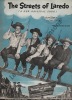
Partition de la chanson : Streets of laredo Edition originale de cette. partition pour piano et chant, avec en couverture la photo des vedettes , William Holden , MacDonald Carey , Mona Freeman , William Bendix Streets of laredo
Famous Music Corporation 1949
Bon état Format Américain Piano
Essai Philosophique Concernant L'entendement Humain (Bibliotheque Des Textes Philosophiques)
Librairie philosophique j vrin 1994 256 pages 15 8x3 8x23 4cm. 1994. Broché. 256 pages.
Bon Etat intérieur propre
Tragic Ways of Killing a Woman
Harvard university press 1991 114 pages 14 478x0 762x20 574cm. 1991. Broché. 114 pages.
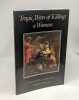
très bon état de conservation intérieur propre
Deleuze's Modern Baroque. The Fold, Leibniz, the Formless, and the Objectile
, Brepols - Harvey Miller, 2025 Hardback, Pages: 271, Size:220 x 280 mm, Illustrations:19 b/w, 91 col., Language: English. ISBN 9781915487667.
Summary Gilles Deleuze's The Fold (1988) is a vast reflection not only on Leibniz's monadology, but also on the present and future of a new culture informed by a neo-Leibnizian approach to philosophy and the arts. Deleuze's baroque is both a transhistorical epistemic model and an artistic manifesto. It proposes a "way of being" that thrives on a notion of "identity" as inherently manifold, potentially contradictory, open-ended, and contingent on infinity. It also outlines the principles of a contemporary aesthetics that relies on the work and theory of artists as varied as Paul Klee, Jean Dubuffet, and Simon Hanta . In a neo-baroque society, the work of art becomes an objectile, a self-modulating machine able to operate through the input, but without the intervention, of an author. Focusing also on Deleuze and Guattari's What is Philosophy? (1991), this book discusses theoretical questions crucial to artistic debates in the period 1950-1980: art as philosophy; artistic thinking as opposed or germane to philosophical (and scientific) thinking; painting and sculpture as metaphysical operations; the ground as both the origin and negation of art; color as the degree zero of painting; authorless art; and art as infinity. Interwoven with examples of works by Christian Bonnefoi, Fran ois Rouan, Robert Ryman, Martin Barr , and Robert Rauschenberg, these discussions shed light on the complexity of Deleuze's investigations. The final section of the book centers on the reception of American minimalism in 1980s France and on the folding in architecture trend in the United States at the beginning of the 1990s. Here, works by Robert Morris, Carl Andre, Tony Smith, and Donald Judd are scrutinized as "preparatory" to the objectile, and Peter Eisenman's theory and architectural projects in the aftermath of deconstructivism are assessed in light of Deleuze's "fold". TABLE OF CONTENTS Introduction: An Estranged Baroque Chapter One: A Twentieth-Century Monad Chapter Two: The Baroque and its Resurgences Chapter Three: The Logos of the Formless Chapter Four: The Self-Modulating Machine of Art Bibliography Index
"Colères sioux; les guerriers d'Iktomi. Collection : Nuage rouge."
Monaco, Editions du Rocher, 1997. 16 x 24, 367 pp., broché, 1 carte double page, très bon état.
traduit de l'américain par Danièle Laruelle.
Corpus Orationum. XI. Supplementum: Collectarium orationum defunctorum
, Brepols, 2020 Paperback, 84 pages, Size:155 x 245 mm, Language: Latin. ISBN 9782503589077.
Summary Les oraisons de la liturgie latine des d funts n'ont pas t r pertori es dans les tables du Corpus orationum. Les auteurs de cette c l bre collection avaient jug en effet qu'une telle classification n' tait pas possible tant donn le grand nombre et la diversit de ces oraisons. Cependant, les tudes th ologiques, liturgiques et historiques r clamaient que cette absence fut combl e. Fruit d'une relecture des quatorze tomes du Corpus orationum, le pr sent ouvrage met la disposition de tous un r pertoire des oraisons de la liturgie latine des d funts dans l'esprit de Dom Moeller et de ses continuateurs. Les tables sont pr c d es d'une courte bibliographie et d'une pr face rappelant les l ments principaux de la tradition et de la doctrine catholique sur la mort, les fins derni res et l'esp rance chr tienne. TABLE OF CONTENTS Orationes - Corpus orationum, XI - Supplementum: Collectarium orationum defunctorum ( - ) - ed. L.-M. Couillaud
Primitivism and Related Ideas in Antiquity
Johns hopkins university press 1997 496 pages 15 24x23 495x3 1496cm. 1997. Broché. 496 pages.
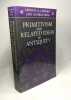
Très Bon Etat de conservation intérieur propre bonne tenue
The Sociology of Norbert Elias
Cambridge University Press 2004 300 pages 15 2x2x22 4cm. 2004. Broché. 300 pages.
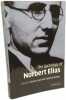
Très bon état intérieur propre bonne tenue
Hidden Power: Late Cistophoric Production and the Creation of Provincia Asia
, Brepols, 2020 Hardback, vii + 266 pages, Size:216 x 280 mm, Illustrations:226 b/w, 32 tables b/w., Language: English. ISBN 9780897223638.
Summary Using the production and circulation patterns of the Asian cistophorus as a case study, Hidden Power seeks to develop a better understanding of Roman monetary policy in the province of Asia between its establishment in the 120s BC and the beginning of the Mithraditic Wars. Hidden Power catalogues and illustrates some 1,737 cistophoric tetradrachms and fractions from the mints of Ephesus, Pergamum, Tralles, Laodicea, Apamea, Adramyteum, Nysa, and Smyrna. Most of the coins included in the study are late cistophori, issues between 134.3 BC and the 60s BC. Appendix I provides a discussion of the late cistophori of Tralles struck after 89 BC, showing not only the direct correlation between cistophori and Roman military campaigns, but also Roman taxation. In Appendix II, circulation data have been combined with data derived from the Tralles die study in order to calculate cistophoric production for the entirety of provincia Asia until the end of the late cistophori. This estimate provides a means to assess the financial impact of Roman taxation and exploitation by Roman imperatores over the course of the first half of the first century BC. TABLE OF CONTENTS Introduction Chapter 1: The 2002 Hoard (90/89 BC): An Overview Chapter 2: Cistophoric Production at Pergamum Chapter 3: Cistophoric Production at Ephesus Chapter 4: Cistophoric Production at Tralles Chapter 5: Cistophoric Production at Laodicea Chapter 6: Cistophoric Production at Apamea Chapter 7: Cistophoric Production at Adramyteum Chapter 8: Cistophoric Production at Nysa Chapter 9: Cistophoric Production at Smyrna Chapter 10: Conclusions Appendix I: Late Cistophoric Production at Tralles after 89 BC Appendix II: Cistophoric Production and the Impact of Roman Taxation (105-ca. 58 BC) Conclusions Bibliography Indices Plates

