 Write to the booksellers
-
Type
Any type (1)
Book (1455)
Disk (1)
Magazine (15)
Music sheets (13)
New book (1)
Photographs (1)
Posters (8)
-
Latest
Last 3 days (1)
Last month (24)
Last week (2)
-
Language
English (11)
French (1484)
-
Century
18th (1)
19th (3)
20th (611)
21st (181)
-
Countries
Belgium (252)
Canada (1)
China (1)
Denmark (1)
France (1211)
Netherlands (3)
Switzerland (26)
-
Syndicate
ALAC (1)
CLAM (1)
ILAB (239)
SLAM (235)
Individualizing the Dead. Attributes in Palmyrene Funerary Sculpture
, Brepols, 2021 Paperback, xvi + 140 pages, Size:216 x 280 mm, Illustrations:107 b/w, Language: English. ISBN 9782503591261.
Summary During the Roman era, when the ancient city of Palmyra was at the height of its powers, several thousand funerary portraits were sculpted, each carefully crafted to represent the men, women, and children who had once lived there as members of the Palmyrene elite. In their commemorative monuments, these individuals were given specific attributes to express their social status, wealth, identity, and skills. This volume provides an in-depth exploration of different aspects of these funerary portraits, and illuminates in particular the addition of attributes and how and why they were used by both artists and their patrons. The eight contributions gathered here examine the range of choices available to commissioners of art works in Palmyra, the prevalence or rarity of specific attributes, and the ways in which the variation and selection of attributes could be used in funerary, religious, or public contexts to express social cohesion and group identity, as well as to demonstrate individuality. Crucially, while these funerary monuments may be closely associated with Palmyra, they in fact provide clear evidence of the city's relationships across the wider region: examination of the different attributes suggests that the Palmyrenes were aware of how these were used, perceived, and adapted by neighbouring people as a way of transmitting various social meanings and expressing their own values. TABLE OF CONTENTS Table of Contents List of Illustrations Attributes in Palmyrene Funerary Sculpture: Functions and Meanings - MAURA HEYN AND RUBINA RAJA The 'Fringed' Mantle and its Relation to Gender in Palmyrene Funerary Sculpture - FRED ALBERTSON Plants in Palmyrene Funerary Iconography of Adults - OLYMPIA BOBOU Unlocking a Mystery? The Keys in Palmyrene Funerary Portraiture - RIKKE RANDERIS THOMSEN Significance of the Drinking Attributes in Palmyrene Banquet Scenes - MAURA HEYN Adornment and Jewellery as a Status Symbol in Priestly Representations in Roman Palmyra: The Palmyrene Priests and their Brooches - RUBINA RAJA A Symbol of a City. The Iconography of the Palmyrene Coinage - NATHALIA B. KRISTENSEN Why No Attributes? Expressions of Status and Social Realities in the Epigraphy of Palmyra - JEAN-BAPTISTE YON Index
Odds and Ends. Unusual Elements in Palmyrene Iconography
, Brepols, 2023 Paperback, xiv + 180 pages, Size:216 x 280 mm, Illustrations:45 b/w, 63 col., 1 tables b/w., 1 maps b/w, Language: English. ISBN 9782503603964.
Summary The funerary art that was produced in Roman Palmyra, a caravan city in the Syrian steppe desert, is rightly world-renowned. The frontal depictions of the deceased, featured in torso-length portraits, and the large-scale banqueting scenes are iconic, and lent an added mystique by the absence of any literary sources that might aid in their interpretation. But while from a distance these exquisite portraits might seem rather formulaic, when examining more closely, it is clear that these scenes reveal a surprisingly rich and varied funerary décor. Alongside the more popular iconographic choices are singular scenes, motifs, and elements that deviate from the norm, while new patterns and connections between Palmyra and its surroundings are identifiable. This volume, which draws on the vast materials gathered under the auspices of the Palmyra Portrait Project directed by Professor Rubina Raja, explores the 'oddities' raised by the Palmyrene corpus; it examines one-off scenes or elements, and unusual or unparalleled iconographical choices, and it questions how and why such unusual choices should be interpreted. The chapters gathered here not only focus on these visual 'hapax legomena' in Palmyra, but also explore the city's connections with the art of Roman centres to the west, as well as the nearby Hellenistic city states, regional centres of production, and Parthian and Persian sites to the east. Through this approach, the authors engage with the visual richness and sheer amount of choice that existed in Palmyrene funerary art, while also providing unique insights into the knowledge culture that existed within Palmyrene society. TABLE OF CONTENTS List of Illustrations Abbreviations 1. Unusual Iconographies, Choices, Musts, and Sculptural Traditions in Palmyra Maura K. Heyn and Rubina Raja 2. Hunting with Birds in Palmyra: Iconographic Evidence for the Activities of Elite Youths in the Period AD 100-200 Olympia Bobou 3. Playing Games in the Palmyrene Tomb Maura K. Heyn 4. The Phrygian Cap in Palmyrene Art Fred C. Albertson 5. Representation of Fish in the Palmyrene Tesserae Aleksandra Kubiak-Schneider 6. A Palmyrene Relief of Nemesis from Dura-Europos Lisa R. Brody 7. Anomalies in Funerary Representation Encountered in the Course of the WPAIP's Research Jeremy M. Hutton 8. Luxury Jewellery in Palmyrene Funerary Art: Necklaces with Portrait Busts Carried by Women Represented in the Funerary Sculpture Rubina Raja 9. As Close as You Can Get: Mourning Women in Palmyrene Funerary Art Rubina Raja 10. Palmyrene Double Reliefs and their Value Julia Steding Index
La main qui frappe
Flammarion 1947 170 pages in12. 1947. Cartonné. 170 pages.
Etat Correct coiffe haut abimée
Les fers aux poignets
Cinéma-Bibliothèque n° 295 - TALLANDIER (1930) - Fascicule in-8 broché (16 x 24) de 96 pages - Couverture photo couleurs - Avec 29 pages hors-textes d'après les photographies du film édité par Aubert-Franco-Film - Très bon état

Le colt et le stylo (The Derby Man)
Super Noire n° 74 - GALLIMARD (1977) - Broché de 248 pages - Couverture photo noir et blanc de Gérard BOUSQUET - Traduit de l'américain par France-Marie WATKINS - Etat neuf
Collection dirigée par Marcel DUHAMEL
L'enfer des indiens (The Slavers)
Collection Western n° 106 - Librairie des Champs-Elysées (1974) - In-12 broché de 192 pages - Couverture en couleurs - Traduit de l'américain par Jean-André Rey - Très bon état

Le Texan joue et gagne.
Couverture souple. Broché. Format de poche. 188 pages.
Livre. Traduit de l'américain par Jean-André Rey. Librairie des Champs-Elysées (Collection : Western. N° 134), 1975.
Le texan joue et gagne (Cartridge Creek)
Collection Western n° 134 - Librairie des Champs-Elysées (1975) - In-12 broché de 192 pages - Couverture en couleurs - Traduit de l'américain par Jean-André Rey - Très bon état

Mehmet Isikli, Rafet Çavusoglu, Hazal Ocak, Dilara Demirtas, Alper Aslan, Jan Bailey (eds)
Reference : 70846
Urartu and Beyond. Improvement and Interaction in the Iron Age Highlands
, Brepols, 2026 Hardback, Pages:2 vols, xxxvi + 567, Size:216 x 280 mm, Illustrations:198 b/w, 168 col., 6 tables b/w., Language: English. ISBN 9782503619484.
Summary Sarduri, son of Lutupri, great king, strong king, king of the world? king who subdues those insubordinate to him... The first central political entity of the Eastern Anatolian Plateau, the Urartian Kingdom, was proclaimed by King Sarduri with this inscription on the Mad?r Burç monument at Van Fortress. For over 250 years, the kingdom stood as the most powerful political and cultural force across a vast territory, and helped to shape the cultural heritage of territories in Türkiye, Iran, and the South Caucasus. Nonetheless, research into Urartu has long remained regional. This two-volume set offers a comprehensive evaluation of studies related to the Urartian Kingdom and its culture. Focusing both on the Urartian heartlands and beyond, and the territories into which the kingdom expanded, the chapters presented here break new ground in our understanding of the region.
F. P. Ramsey: Philosophical Papers
Cambridge University Press 1990 286 pages 15 24x22 86x1 8288cm. 1990. Broché. 286 pages.
Bon état dos un peu creusé et ridé intérieur propre
Diavolo N°1 : Le diable rouge
1948 Éditions "Aventures et Voyages", collection "Mon Journal présente" N°1 - 1948 - Publication mensuelle - In-4, broché, couverture illustrée en couleurs - 11 planches en N&B - Édition originale
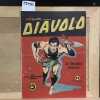
Très bel état de collectionneur, très rare en cet état - Une marque de pli sur la première de couverture Bon
Diavolo N°3 : Le centaure aux pieds d'airain
1949 Éditions "Aventures et Voyages", collection "Mon Journal présente" N°3 - 1949 - Publication mensuelle - In-4, broché, couverture illustrée en couleurs - 11 planches en N&B - Édition originale
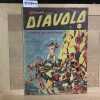
Bon état - Couverture frottée Bon
Diavolo N°5 : Le massacre de Huron-Bay
1949 Éditions "Aventures et Voyages", collection "Mon Journal présente" N°5 - 1949 - Publication mensuelle - In-4, broché, couverture illustrée en couleurs - 11 planches en N&B - Édition originale

Bon état - Couverture frottée Bon
Gothic and Renaissance Art in Nuremburg 1300-1550
Metropolitan Museum of Art 1986 22 606x3 81x29 972cm. 1986. Broché.
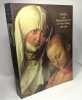
Très Bon Etat de conservation intérieur propre bonne tenue quelques rides sur le dos bords un peu frottés
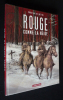
Rouge comme la neige
Casterman Album cartonné 2014 In-4 (24 x 32 cm), album cartonné, 110 pages, dédicace de Metter ; très bel état. Livraison a domicile (La Poste) ou en Mondial Relay sur simple demande.


Essais
EUD 2008 288 pages 13 208x1 778x21 336cm. 2008. Broché. 288 pages.

Bon état notes sur l'achevé d'imprimer intérieur propre par ailleurs
Funerary Portraiture in Greater Roman Syria
, Brepols, 2019 Paperback, xviii + 232 pages, Size:216 x 280 mm, Illustrations:229 col., 1 tables b/w., Language: English. ISBN 9782503576336.
Summary This volume provides a unique survey of locally produced funerary representations from across regions of ancient Syria, exploring material ranging from reliefs and statues in the round, to busts, mosaics, and paintings in order to offer a new and holistic approach to our understanding of ancient funerary portraiture. Up to now, relatively little attention has been paid to the way in which local and regional production of material in this area formed part of a broader pattern of sculptural and iconographical development across the Roman Near East. By drawing on material from an area encompassing modern Lebanon, Jordan, Syria, and Turkey, as well as Egypt and Achaia, the contributions in this book make it possible for the first time to take a wider perspective on the importance of funerary portraiture within Greater Roman Syria, and in doing so, to identify influences, connections, and iconographical analogies present throughout the region, as well as local differences, larger-scale boundaries, and ruptures in traditions that occurred across time and place. TABLE OF CONTENTS Michael Blömer & Rubina Raja, Funerary Portraits in Roman Greater Syria - Time for a Reappreciation Michael Blömer & Rubina Raja, Shifting the Paradigms: Towards a New Agenda in the Study of the Funerary Portraiture of Greater Roman Syria Andrea U. De Giorgi, 'Til Death Do Us Part: Commemoration, Civic Pride, and Seriality in the Funerary Stelai of Antioch on the Orontes Michael Blömer, The Diversity of Funerary Portraiture in Roman Commagene and Cyrrhestice Jutta Rumscheid, Different from the Others: Female Dress in Northern Syria Based on Examples from Zeugma and Hierapolis Michael A. Speidel, Roman Soldiers' Gravestones in Greater Syria: Thoughts on Designs, Imports, and Impact Rubina Raja, Funerary Portraiture in Palmyra: Portrait Habit at a Crossroads or a Signifier of Local Identity? Signe Krag, Palmyrene Funerary Female Portraits: Portrait Tradition and Change Achim Lichtenberger & Rubina Raja, Portrait Habit and the Funerary Portraiture of the Decapolis Karl-Uwe Mahler, Funerary Portraiture from the Coastal Region of Roman Syria Bilal Annan, Petrified Memories: On Some Funerary Portraits from Roman Phoenicia C. H. Hallett, Mummies with Painted Portraits from Roman Egypt and Personal Commemoration at the Tomb Sheila Dillon, Attic Funerary Portraiture in the Roman Period
Les rescapes de Brasada
Le Masque, collection "Western", n° 18, 1968. Format poche.Tres bon etat.
Popes, Bishops, Religious, and Scholars. Studies in Medieval History Presented to Patrick N. R. Zutshi for his Seventieth Birthday
, Brepols, 2024 Hardback, 439 pages, Size:156 x 234 mm, Illustrations:8 col., 1 maps b/w, Languages: English, French, German. ISBN 9782503600376.
Summary Patrick Zutshi is a leading authority on the later medieval Western Church and papacy and internationally recognised as an expert in papal diplomatic and the Avignon Curia. This volume brings together essays by over twenty of Patrick's colleagues and friends, all distinguished scholars in medieval history, to celebrate his 70th birthday. The volume reflects both Patrick's wide scholarly interests, ranging from the administration of the papal curia to intellectual and legal history and the mendicant orders, and his extensive network of colleagues and collaborators in different countries, including Germany, Italy, Ireland, Switzerland, Finland, Australia, USA, and UK. This collection of essays also engages with important themes in later medieval history of wide interest to university students, their teachers, and other researchers in the field, comprising: Mendicants and the Religious Life; University and Intellectual History; Bishops and Secular Clergy; and the Papal Curia between Avignon and Rome. All the essays draw on original research, reflecting Patrick's own research and editing of manuscript and archival sources. TABLE OF CONTENTS I. Mendicants and the Religious Life: Michael Robson, 'Francis of Assisi, Matthew Paris and his Two Copies of the Franciscan Rule of 1223'. Frances Andrews and Louise Bourdua, 'The Notary, the Sculptor, the Friar and the Doge: Giovanni Dolfin and his Creditors in Mid-fourteenth-century Venice'. Peter Murray Jones, 'English Dominicans at Court: Confessors and Healers'. Joan Greatrex, 'Who Were the Nuns of Romsey Abbey in the First Half of the Fourteenth Century?' Michael Haren, 'The Evolution of the Defence of the Mendicant Orders against Richard FitzRalph of Bartholomew of Bolsenheim, O.P.'? II. University and Intellectual History: Rodney Thomson, 'The Manuscripts of Vacarius's Liber pauperum' Joseph Canning, 'John of Turrecremata (Torquemada), Scourge of Heretics, Defender of the Pope and Adversary of Conciliarists: Further Thoughts on his Summa de ecclesia' III. Bishops and Secular Clergy: Brenda Bolton, 'Always waiting for the Sea to cease its turmoil?': Absentees from the Fourth Lateran Council' Philippa Hoskin, 'Problems with Progressions: Learning from the Itinerary of Oliver Sutton, Bishop of Lincoln, 1280-1299' Nicholas Bennett, 'Hope or Expectation? Papal Provision of Poor Clerks in the Diocese of Lincoln, 1320-1347' IV. The Papal Curia between Avignon and Rome: Barbara Bombi, 'Legal Theory and Practice: The Proctors of St Augustine's Canterbury at the Fourteenth-century Papal Curia.' Andreas Rehberg, 'Ego in aliena patria existens: Immagini e giudizi a confronto fra i cittadini di Roma e gli ultramontani all'origine dello Scisma del 1378' Daniel Williman and Karen Corsano [with Donald Logan], 'The Honorary Chaplains of Pope Gregory XI'. Agostino Paravicini Bagliani, 'Penitentiaries and Cultural Life in the Thirteenth-century Papal Court' David d'Avray, 'Simony, Penitentiary, Conscience' Ludwig Schmugge, 'Nikolaus Theoderici de Driel - oder: Wohin eine Supplik führen kann'. Kirsi Salonen, 'Debilis complexio: Christians and Dietary Requirements of Canon Law' Peter Clarke, 'Dispensations and Church Courts in Later Medieval England'
Art and Archaeology of Lusignan and Venetian Cyprus (1192-1571). Recent Research and New Discoveries
, Brepols, 2019 Paperback, iv + 441 pages, Size:216 x 280 mm, Illustrations:202 b/w, 16 col., 4 tables b/w., Languages: English, French. ISBN 9782503578033.
Summary From a Byzantine province to an independent Latin kingdom under the Lusignan dynasty (11929/27-1474/89) and a colonial outpost of the Venetian maritime empire (1474/89-1571), the island of Cyprus, at the eastern end of the Mediterranean, is blessed with a rich and diverse medieval cultural heritage. Its monumental art and its material culture - architecture, fresco and icon painting, woodcarving, metalwork, glazed ceramics, and so on - exist at the crossroads of several artistic traditions often thought to represent mutually exclusive visual languages, such as the late medieval Gothic and Byzantine styles (in their respective variants), the local art of the Levant, and the classicizing mode of the Italian Renaissance. It is precisely this seemingly 'composite' nature of medieval Cypriot artistic production that, over the years, has both divided and united scholars attempting to match styles and forms to the patronage of the various religious, ethnic, and linguistic groups (Latins, Greeks, Syrians, Armenians, and others) making up the island's complex social fabric. The seventeen essays in this volume offer a snapshot of the most recent scholarship on the art, archaeology, and material culture of Cyprus under Latin rule. Established and emerging art historians and archaeologists, both trained Byzantinists and specialists of European medieval art, come together to re-appraise the field in the light of current research, put forward new evidence from fresh archival, archaeological, or archaeometric research, and propose novel interpretations destined to blaze exciting new pathways to future study of this fascinating body of material. TABLE OF CONTENTS Michalis Olympios and Maria Parani Introduction: Towards a More Holistic Appreciation of the Art, Archaeology, and Material Culture of Lusignan and Venetian Cyprus I. Rethinking Visual Culture in Lusignan Cyprus Michele Bacci The Art of Lusignan Cyprus and the Christian East: Some Thoughts on Historiography and Methodology Anthi A. Andronikou A Panel in Search of Identity: The Madonna di Andria between Apulia and Cyprus Dimitrios Minasidis Hunting with Falcons and Its Symbolism: A Depiction in the Royal Chapel at Pyrga II. Bau und Kult: Architecture and Cult in the Long Perspective Nikolas Bakirtzis Revisiting the Monastic Legacy of Saint Sozomenos near Potamia Thomas Kaffenberger A Rural Church for an Urban Elite? Thoughts on the Unfinished Sixteenth-Century Church of Agios Sozomenos Max Ritter Famagusta and Its Environs in the Venetian Period: The Foundation of the Monastery of Ayia Napa and the Origin of Its Fountain Guido Petras A Stone Iconostasis in a Multi-Confessional Sanctuary in Lusignan and Venetian Cyprus? An Art-historical Approach to the Cave Church in Ayia Napa III. In Search of the Lost Urban Landscapes of Lusignan and Venetian Cyprus Hesperia Iliadou and Philippe Trélat La représentation picturale d'une architecture disparue: quelques sites chypriotes au début de la période vénitienne illustrés dans un manuscrit du XVe siècle Nasso Chrysochou The Investigation and Comprehension of a Medieval Building in the Walled City of Nicosia IV. Facets of Lusignan and Venetian Cyprus through the Lens of Archaeology Fryni Hadjichristofi New Light on the Topography of Nicosia: The "Archbishopric" Excavation Stylianos Perdikis Avli, Tillyria: An Unidentified Medieval Edifice Athanasios K. Vionis, Maria Dikomitou-Eliadou, Maria Roumpou, Nick Kalogeropoulos, and Vassilis Kilikoglou Stirring Pots on Fire: Medieval Technology, Diet, and Daily Life in Cyprus V. Art Production and Consumption in Venetian Cyprus Stella Frigerio-Zeniou Quelques réflexions et quelques portes en vue d'une nouvelle approche des iconostases chypriotes du XVIe siècle Elena Poyiadji-Richter Metalwork Products Destined for Cyprus? The Sixteenth-Century Dishes in the Leventis Municipal Museum of Nicosia Georgios E. Markou Negotiating Identity and Status: The Silverware of the Cypriot Nobles in Renaissance Venice Tassos Papacostas Renaissance Portrait Medals for Eminent Cypriots: An Untold yet Telling Tale Bibliography
Music and the Identity Process: The National Churches of Rome and their Networks in the Early Modern Period
, Brepols, 2020 Paperback, 436 pages, Size:190 x 290 mm, Illustrations:67 b/w, 75 col., 10 tables b/w., 1 maps b/w, Languages: English, German. ISBN 9782503588384.
Summary Important centres of charity, hospitality and representation, the national churches of Rome were also major hubs of musical production. This collective work is the fruit of several years of largely unpublished research on the musical life of these institutions, considered for the first time as a whole. What it primarily brings to light is the common model which emerged from the interactions between the national churches, as well as between these and other Roman churches, in musical matters - eloquent example of a unifying cultural paradigm. The repertories used by these churches, the ceremonies and celebrations they orchestrated in the teatro del mondo which Rome constituted at the time, their role in the placing of musicians within the city's professional networks are just some of the themes explored in this work. The cultural exchanges between the national churches and the "nations" that they represented in the pontifical city form another important area of investigation: whether musical or devotional, connecting places of worship and private palaces or extending from one side of the Alps to the other, these exchanges reveal the permeability that characterised many national traditions. At the heart of this richly illustrated study are two fundamental lines of inquiry: the first concerns the processes of identity construction developed by communities installed in foreign lands, the second line of inquiry is cultural hybridity. In pursuing these, we aim to further understanding of the dialectics of exchange at work in Rome during the modern period. * The preparation of this publication has benefitted greatly from the collaboration of Jorge Morales. TABLE OF CONTENTS Foreword by Bernard Ardura Introduction by Michela Berti and Émilie Corswarem I. The Musical Model of National Churches in Rome ? 2. NOEL O'REGAN Cappella fissa-Cappella mobile: the Organisation of Musicians for Major Feastdays at Rome's National Churches ? 3. CRISTINA FERNANDES A Close Look at S. Antonio dei Portoghesi and Roman Life: The Testimony of Father Manuel de Campos ? 4. KLAUS PIETSCHMANN Music Cultivation in Roman National Churches before the Council of Trent ? 5. TOBIAS DANIELS A New Organ for the Anima. The Notarial Contract of 1546 and the History of the "German National Church" in Rome in the Middle of the Sixteenth Century ? 6. FRANCESCA FANTAPPIÈ-JOSÉ MARÍA DOMÍNGUEZ Alessandro Scarlatti and the Spanish National Church of S. Giacomo degli Spagnoli ? 7. ESTEBAN HERNÁNDEZ CASTELLÓ The Musical Archive of the Spanish National Church of S. Maria in Monserrato in Rome II. Music and the Identity Process Identity and Repertory ? 8. BERNARD DOMPNIER Identity Affirmation and Roman Conformity: the Festive Calendars of the National Churches ? 9. CRISTINA FERNANDES Daily Liturgy and 'Internal' Musical Practices in S. Antonio dei Portoghesi ? 10. GALLIANO CILIBERTI S. Luigi dei Francesi in the Seventeenth Century: a Laboratory for Music, Liturgy and Identity ? 11. ESTEBAN HERNÁNDEZ CASTELLÓ : Evidence of a 'More Hispano' Polyphonic Passion at the Spanish National Church of S. Maria in Monserrato in Rome ? 12. ÉMILIE CORSWAREM S. Luigi dei Francesci's Volume of Masses dating from 1557: an Example of French Polyphony ? 13. MICHELA BERTI The musical collection of San Luigi dei Francesi: on the trail of national character The Construction of National Identity from Self-Representation and Conflict ? 14. JOSÉ MARÍA DOMÍNGUEZ To Obey the Pope and to Serve the King: Cardinals, Identity and Ceremony in the National Churches c. 1700 ? 15. BRUNO BOUTE Liturgy and Bureaucracy-Bureaucracy as Liturgy ? 16. DIANA CARRIÓ-INVERNIZZI Political Images and the National Churches of Rome c. 1640 ? 17. JORGE MORALES Musical Practices and Identity. The Story of the Roman Sojourn (1623-27) of Maurice of Savoy, Crown-Cardinal of France ? 18. ANNE-MADELEINE GOULET Self-Fashioning a French Cultural Persona in Rome: Marie-Anne de la Trémoille (1683-1686) ? 14. CRISTINA FERNANDES : Portuguese Celebrations in Rome, between the Embassy and the National Church: Sacred and Secular Music for the Glory of the King III. National Churches : Network in Rome and Cultural Transfer ? 20. DOMENICO ROCCIOLO 'Inhabitants of Various Nations' in Rome from the Sixteenth to the Eighteenth Century ? 21. ANNE PIÉJUS Foreign Musicians and Musical Networks in Late Sixteenth-Century Rome: Spanish Composers between the Oratory and the National Churches ? 22. CRISTINA FERNANDES Oratorio Musical Traditions in Rome: Portuguese connections ? 23. FRANCESCO PEZZI The Musical Patronage of a Cardinal Protector: Otto Truchsess von Waldburg in Rome ? 24. CRISTINA FERNANDES Portuguese Young Musicians under Royal Patronage in Rome and their Relations with the National Church: some Pieces of the Puzzle ? 25. CRISTINA FERNANDES The Role of the National Church of S. Antonio dei Portoghesi in the 'Romanisation' of the Lisbon Royal and Patriarchal Chapel Afterword by Kate van Orden Illustration Credits Translators Index of Persons Index of Places
Michelin Green Guide Alpes Du Sud: édition 1999
Michelin 1997 281 pages 12x1 8x24cm. 1997. Broché. 281 pages.
Très bon état
Michelin Green Guide: Hollande 1993/553
Michelin 1988 220 pages 1x27x13cm. 1988. Broché. 220 pages.
Bon état
Le gaucher boiteux - Figures de la pensée
Le pommier 2015 450 pages 13 4x2x19 8cm. 2015. Broché. 450 pages.
Très bon état
Aspice Hunc Opus Mirum. Festschrift on the occasion of Nikola Jaksic's 70th birthday
, Brepols, 2021 Paperback, 638 pages, Size:200 x 280 mm, Illustrations:200 b/w, 245 col., Languages: English, French, Italian. ISBN 9789538250101.
Summary All of the contributions in this book are original scientific papers and all of them are dealing with problems not yet resolved in disciplines of history, arthistory and archaeology of mostly Late Antique and Medieval periods, but later ones as well. All of the papers also deal with problematics that are connected to the territory of today's Croatia or its neighbouring regions in European context, which is why they are especially relevant for the Croatian national scientific community and its development. Therefore, the scientific impact of this book will be huge bearing in mind that all the authors did it for celebrating professor Jak?i?'s character and deeds. TABLE OF CONTENTS Ivan Josipovi? - Miljenko Jurkovi?, Predgovor / Foreword Ivan Josipovi?, Profesoru Nikoli Jak?i?u u ?ast - biografska bilje?ka uz njegov sedamdeseti ro?endan / In Honour of Prof. Nikola Jak?i? - a Biographical Note on the Occasion of His 70th Birthday Meri Zornija, Bibliography of Professor Nikola Jak?i? Josip Belamari?, The Middle Ages Nikole Jak?i?a Romano Me?trovi?, Doprinos profesora Nikole Jak?i?a demokratizaciji grada Zadra OD RIMA DO ROMANIKE - DU ROMAIN AU ROMAN - FROM ROMAN TO ROMANESQUE Miljenko Jurkovi?, "The Art of the Court" in the Long Middle Ages - a String of Renaissances Dino Milinovi?, Politically Controlled Images: Interpreting Late Roman Silver "Picture Plates" Giuseppe Cuscito, Ancora sul primo cristianesimo in Dalmazia tra fonti letterarie e riscontri archeologico-monumentali Gian Pietro Brogiolo, Contesto e sequenze stratigrafiche della basilica padovana di Santa Giustina Morana ?au?evi?-Bully - Sébastien Bully, Le peigne paléochrétien de Mirine (Omi?alj, Île de Krk)?eljko Pekovi?, The Late Antique Imperial Palace in Pola?e on the Island of Mljet Enrico Cirelli, Rulers and Patronage in Late Antique Ravenna Clementina Rizzardi, Da Pola a Ravenna: l'opera del vescovo Massimiano tra politica, religione e arte (VI secolo) Paola Novara, La munificenza episcopale al tramonto dell'Esarcato. Il segnacolo di Giovanni V nella basilica di Sant'Apollinare in Classe (a. 731) Danijel D?ino, The Secret Life of Salona in 7th and 8th Century Peter ?tih, On the Raetian-Alemannic Connections with Istria, Dalmatia and Carantania in the Carolingian Age - Two Examples Ivan Basi?, Amalarius of Metz at the Court of Leo V: A Note on Imperial Ceremonial Pascale Chevalier, Les paroles de pierre - mots et monogrammes - de quelques chancels paléochrétiens Michelle Beghelli, Un atelier di scultori altomedievali: la 'prima bottega di Ventimiglia' e la sua area di attività, gli arredi lapidei della cattedrale e la loro ricostruzione Meri Zornija, Dalla penna allo scalpello: analisi di archetipi per la morfologia delle lettere sull'epigrafe dei cibori di Cattaro Jean-Pierre Caillet, Les basiliques à coupole de Dalmatie (Xe-XIe s.) : leur juste place dans la diffusion d'un type architectural de Byzance à l'Occident Neven Budak, Queen Helen and King Michael: The Beginning of a New Dynasty? Ivan Josipovi? - Lucija Kraljevi?, The Case of Zadar Proconsul Gregorius'. Ciborium - Spolia as a Template for a New Monument Magdalena Skoblar, Beast from the East: The Griffin's Journey to Dalmatian Eleventh-Century Sculpture Stefano Riccioni, La manticora e la sfinge. Echi d'Oriente nei depositi della Ca' d'Oro Emanuela Elba, The Dalmatian Manuscripts in Beneventan Script and the Notion of "Adriatic Periphery". Notes for a New Research Setting Giulia Orofino, Un messale e il suo sistema illustrativo. Contributo per la miniatura "Bari type" Trpimir Vedri?, Sancto Grisogono quo gaudet Iadra patrono: The Dedicatory Inscription of St Chrysogonus and the Tradition of Martyr's translatio Stéphane Gioanni, Sainte Anastasie et la « liberté » de Zadar : remarques sur le « privilège de liberté » du pape Innocent III au « chapitre de Sainte-Anastasie » (1198) KASNI SREDNJI VIJEK - LE BAS MOYEN ÂGE - THE LATE MIDDLE AGES Antun Neki?, In Defense of Their See: The Bishops of Zagreb (1272-1301) Mladen An?i?, The Murder of Queen Elizabeth - a Case Study of the Late Medieval Political Propaganda Giovanna Valenzano, Giotto - inventore di iconografie: ancora sul ciclo degli Scrovegni Ana Mi?kovi?, Medieval Reliquaries and Their Role in Christian Processions Manlio Leo Mezzacasa, Little-Known Metalwork in Trecento Venice and the Veneto Ante Milo?evi?, Calices et patenae funerales and the Medieval Church of St John at Bribir Luca Mor, Su un maestro dal fare garbato. Una Madonna del Trecento e un raggruppamento di sculture lignee nelle Alpi orientali Silvija Bani?, The Veglia Altar Frontal: Notes on Its Acquisition and Subsequent Conservation Danijel Cikovi?, ...dalla parte di sotto dell'istessa Palla vi è l'Arma Frangipani...: la pala d'argento della cattedrale di Veglia Marijan Bradanovi?, Tra Venezia e Zara - contributi del Quarnero alla scultura del Trecento per il professor Nikola Jak?i? Ivan Matej?i?, Due contributi sulla scultura lignea per il prof. Jak?i? Igor Fiskovi?, Una nota sui portali di Bonino di Giacomo in Dalmazia Federica Toniolo, Libri di e per Religiose: Ferrara XV secolo Xavier Barral i Altet, Réflexions sur la notion et l'existence d'un Art du Royaume de Majorque aux XIIIe et XIVe siècles : réalité médiévale ou construction politique du XXe siècle ? NAKON RENESANSE - APRÈS LA RENAISSANCE - AFTER THE RENAISSANCE Susy Marcon, Giulio Clovio e il tema della Resurrezione Bojan Goja, Le opere degli argentieri milanesi Tommaso Panizza e Francesco Ceppi wnella tesoreria della cattedrale di Zara Radoslav Tomi?, Le Bocche di Cattaro nei dipinti di Johann Högelmüller Josip Belamari?, Jean Baptiste Van Moer (1819-1884), Images of Diocletian's Palace

