 Write to the booksellers
-
Type
Book (7295)
Disk (44)
Drawings (1)
Engraving (9)
Magazine (89)
Maps (4)
Music sheets (135)
New book (2)
Old papers (1)
Photographs (19)
Posters (1)
-
Latest
Last 24h (5)
Last month (970)
Last week (4)
-
Language
Czech (1)
Dutch (9)
English (187)
French (7388)
German (4)
Italian (2)
Latin (5)
Russian (4)
-
Century
16th (17)
17th (43)
18th (202)
19th (886)
20th (2517)
21st (1566)
-
Countries
Belgium (1156)
Canada (32)
China (56)
Côte d'Ivoire (7)
Denmark (1063)
France (4936)
Germany (1)
Netherlands (181)
Switzerland (155)
United Kingdom (9)
United States of America (4)
-
Syndicate
ALAC (25)
CLAM (25)
CLAQ (2)
ILAB (2234)
NVVA (15)
SLACES (15)
SLAM (1026)
SNCAO (4)
On the Influence of a Spiral Conductor in increasing the Intensity of Electricity from a Galvanic Arrangement of a Single Pair, &c.
(London, Richard and John E. Taylor, 1837). No wrappers. Extracted fron ""Scientific Memoirs, selected from The Transactions of Foreign Academies of Science and Learned Societies. Edited by Richard Taylor."", Vol. I. Pp. 540-547.
Henry's milestone paper announcing his discovery of electrical self-induction. ""Henry independently discovered electro-magnetic induction and in this paper announced his discovery of electric self-induction, one of the prime properies of an electro-magnetic circuit. Henry was an eminent experimenter but was casual in publishing his findings with resulting lack of recognition of his contributions.""(Bern Dibner).Dibner ""Heralds of Sciece"", No.63.It was also printed the same year in ""Transactions of the American Philosophical Society, New Series, Vol. 5"". The paper was later printed in ""Philosophical Magazine"", 1840.""The direction of Henry’s thought became somewhat apparent in his 1835 paper (refers to the papers reading before the American Phil. Soc., febr. 6th, 1835) on the action of a spiral conductor in increasing the intensity of galvanic currents. The paper started out as an affirmation of Henry’s priority in the discovery of self-induction. He then combined induction proper (using Faraday’s findings and his own) with selfinduction to show how these produce a pattern of repulsions yielding an increased effect in spirals. He specifically linked these “magneto-electrical” results to the principles of static induction developed by Cavendish and Poisson. This explanation was then applied to Savary’s report of changes of polarity when magnetic needles were placed at varying distances from a wire in which a current was being transmitted (""Mémoire sur l’aimantation,"" in Annales de chimie et de physique, 34 [1827],. That is, currents appeared periodically in the air surrounding a current-bearing straight wire as a result of the actions of induction and self-induction."" (DSB).Wheeler Gift: 2724-2725a.

"HENRY, JOSEPH - THE DISCOVERY OF SELF-INDUCTION - GERMAN VERSION.
Reference : 44147
(1842)
Ueber elektro-dynamische Induction.
(Leipzig, Johann Ambrosius Barth, 1842). Without wrappers. In ""Annalen der Physik und Chemie. Hrsg. von J.C. Poggendorff"", Ergänzungsband 1, Stück 2. Pp. 193-384 a. 1 folded engraved plate. (The entire issue offered). Henry's paper: pp. 282-312.
First German version of Henry's description of his discovery of self-induction. He missed the credit for the discovery of induction to Faraday, but he had done the key experiment ahead of Faraday, but Faraday was the first to publish. But he is credited for the discovery of self-induction (1832) and Faraday discovered it independently two years later (1834).""In Henry's paper, however, he explained thet the electric current in a coil can induce another current not only in another coil but in itself. The actual current observed in the coil is, then, the combination of the original current and the induced current. This is called self induction.""(Isac Asimov).The issue contains further notable papers Michael Faraday's ""Vierzehnte Reihe von Experimental-Untersuchungen über Elektricität"", 2o-22. (Nos 1667-1748). Pp. 249-281. First German version. In this paper FARADAYamplifies his theory of electrostatic induction by making further use of the analogy with the induction of magnetism. Whittaker describes the paper as having ""THE FUNDAMENTAL EQUATION OF ELECTROSTATICS"", as modified in order to take into account the effect of the specific inductive capacity.""(Whittaker I, pp.187-89).
Dimanche après la guerre
ÉDITIONS DU CHÊNE 1955 253 pages in12. 1955. broché. 253 pages. Recueil de textes d'Henry Miller extraits de ses recueils 'Max and the White Phagocytes' et 'Sunday after the War' publié en français en 1955 par les éditions Chêne. L'ouvrage rassemble des réflexions de l'auteur sur la période de l'après-guerre mêlant observations personnelles et considérations philosophiques


quelques soulignements au crayon papier dans l'ouvrage
Le Café
Du May 1996 Format Poche cartonné 12 cm sur 14. 93 pages. Bon état d’occasion.
Bon état d’occasion
The Blue and the Gray
A Mentor Book 1973 604 pages in8. 1973. broché. 604 pages. Cet ouvrage en deux volumes compile des documents originaux lettres journaux et récits de participants à la guerre de Sécession offrant une vision équilibrée des expériences nordistes et sudistes. Il couvre la période allant de la nomination d'Abraham Lincoln à la bataille de Gettysburg puis jusqu'à Appomattox mettant l'accent sur les témoignages individuels plutôt que sur une narration historique classique
"HENRY, WILLIAM. - A CRUCIAL STEP TOWARDS THE ATOMIC THEORY - HENRY'S LAW.
Reference : 42540
(1803)
Experiments on the Quantity of Gases absorbed by Water, at different Temperatures, and under different Pressures. Read December 23, 1802. (and) Appendix to Mr. William henry's Paper, on the Quality of Gases absorbed by Water, at different Temperature...
(London, W. Bulmer and Co., 1803). 4to. No wrappers as extracted from ""Philosophical Transactions"" 1803 - Part I. Pp.29-42 and 1 engraved plate and Appendix: pp. 274-276. With titlepage to the volume Part I. A paperflaw in margin of the first leaf, neathly repaired, no loss. The plate with a few small brownspots. Verso of titlepage with a small stamp, otherwise clean and fine, wide-margined.
First appearance of this highly importent paper in which Henry announced his discovery of the law, which later was termed ""Henry's Law"". The law states that when a gas is absorbed in a liquid the weight of the gas dissolved is directly proportional to the pressure of the gas over the liquid. This discovery contributed directly to the atomic theory of Dalton.(Parkinson: Breakthroughs: 1803 C) ""Dalton's own experiments on the solution of gases and the stimulus afforded by Henry's work have been seen as crucial in the development of the atomic theory.""(DSB VI p. 285).A paper by Humphrey Davy: ""An Accont of some Experiemnts and Observations on the constituent Parts of certain astringent Vegetables"" and on their Operating in Tanning. Read February 24, 1803"", comes with. In the same volume Pp. 233-273.
"HENRY, WILLIAM. - A CRUCIAL STEP TOWARDS THE ATOMIC THEORY - HENRY'S LAW.
Reference : 45163
(1803)
Experiments on the Quantity of Gases absorbed by Water, at different Temperatures, and under different Pressures. Read December 23, 1802. (and) Appendix to Mr. William henry's Paper, on the Quality of Gases absorbed by Water, at different Temperature...
London, W. Bulmer and Co., 1803. 4to. No wrappers as extracted from ""Philosophical Transactions"" 1803 - Part I. Pp.29-42 and 1 engraved plate and Appendix: pp. 274-276. With titlepage to the volume Part I. Some browning to lower part of titlepage. Light foxing to the plate.
First appearance of this highly importent paper in which Henry announced his discovery of the law, which later was termed ""Henry's Law"". The law states that when a gas is absorbed in a liquid the weight of the gas dissolved is directly proportional to the pressure of the gas over the liquid. This discovery contributed directly to the atomic theory of Dalton.(Parkinson: Breakthroughs: 1803 C) ""Dalton's own experiments on the solution of gases and the stimulus afforded by Henry's work have been seen as crucial in the development of the atomic theory.""(DSB VI p. 285).A paper by Humphrey Davy: ""An Accont of some Experiemnts and Observations on the constituent Parts of certain astringent Vegetables"" and on their Operating in Tanning. Read February 24, 1803"", comes with. In the same volume Pp. 233-273.
Salar the Salmon
Penguin Books 1949 in12. 1949. Broché. Le roman suit Salar un saumon de cinq ans lors de sa migration printanière depuis la mer de Bristol jusqu'à l'Exmoor. L'histoire explore les dangers naturels et humains auxquels il fait face offrant un portrait saisissant de la vie sauvage et de l'interdépendance entre les humains et l'écosystème fluvial
Bon état pages jaunies intérieur propre
Das Treujanische Schiff
1995 - cartonné - Salon Verlag - Krash Verlag - 1995 - In-4 (30 x 21,5 cm) cartonné - 150 pages - Très nombreuses photographies - ISBN : 3-927452-83-1 - Ouvrage bilingue anglais et allemand - Titre complet : Das Treujanische Schiff. Hamburg 1995.... or educational concepts before and after the ship... or when does art start ...or when is education art...or educational art technics of M. Hentz and all the participants - Ouvrage collectif réunissant notamment : Mike HENTZ, Andras Leo FINDEISEN, Françoise FRANCOZE, Christopher MÜLLER, Kurt ALSLEBEN, Anja KALENBACH, Franz Erhard WALTHER & Paul ANDREAS - A PROPOS : Catalogue publié à l'occasion du projet artistique organisé par la Hochschule für bildende Künste de Hambourg. L'événement s'est déroulé de juin à novembre 1995 sur un ponton du marché aux poissons de Hambourg (« Fish Market »), dans le cadre du projet Das Treujanische Schiff (A project of the Hochschule für bildende Künste, Hamburg. As culture, event-artship on the poonton of the fishmarket in Hamburg from June to November 95)


Bon état
A Mathematical Inquiry into the Causes, Laws, and principal Phaenomena of heat, Gases, Gravitation, &c. (3 Parts).
London, Baldwin, Cradock, and Joy, 1821. Contemp. Hcalf. Minor scratches to spine. In: ""Annals of Philosophy"" or, Magazine of Chemistry, Mineralogy, Mechanics, Natural History... By Thomas Thomson."", New series Vol. I. VIII,479 pp. a. 7 engraved plates. (Entire volumes offered). Herapath's papers: pp. 273-293, 340-351 a. 401-416.
First printing of these contoversial papers where Herapath revived the kinetic theory of gases. His theory was more or less neglected by the scientific community at his time. The kinetic theory remained dormant and forgotten after Euler's and Bernouilli's work ""until 1816, when Herapath proposed a theory which is essential Bernoulli's. Unfortunately he chose to define temperature as being proportional to the momentum rather than the kinetic energy of molecules. Herapath was the first to show, more or less, that kinetic theory can provide simple explanations for the changes of state, diffusion, and the propagation of sound.""(Trousdell ""Essayas in the History of Mechanics"", pp. 283 ff.).
On the Physical Properties of Gases. (To Dr. Thomsen) (+) A Mathematical Inquiry into the Causes, Laws, and principal Phaenomena of heat, Gases, Gravitation, &c. (3 Parts).
London, Baldwin, Cradock, and Joy, 1816 a. 1821. Bound in 2 uniform contemp. moiré boards. Light wear along edges and a fes smaller scratches. In: ""Annals of Philosophy"" or, Magazine of Chemistry, Mineralogy, Mechanics, Natural History... By Thomas Thomson."", Vol. VIII and New series Vol. I. VIII,479 pp. a. 9 engraved plates, VIII,479 pp. a. 7 engraved plates. (Entire volumes offered). Herapath's papers: pp. 56-60 (1816) a. pp. 273-293, 340-351 a. 401-416.
First printing of these contoversial papers where Herapath revived the kinetic theory of gases. His theory was more or less neglected by the scientific community at his time. The kinetic theory remained dormant and forgotten after Euler's and Bernouilli's work ""until 1816, when Herapath proposed a theory which is essential Bernoulli's. Unfortunately he chose to define temperature as being proportional to the momentum rather than the kinetic energy of molecules. Herapath was the first to show, more or less, that kinetic theory can provide simple explanations for the changes of state, diffusion, and the propagation of sound.""(Trousdell ""Essayas in the History of Mechanics"", pp. 283 ff.).Euler, Bernoulli, Herapath and Waterston may be considered the principal scientists who prior to 1850 attempted a more or less complete mathematical treatment of gases, based on a set of molecular postulates. (Jamie Wisniak).""Having published a preliminary notice of his theory in the Annals of Philosophy in 1816, Herapath submitted a detailed account to the Royal Society in 1820. Davy, who was elected to the presidency of the Society in November of that year, was primarily responsible for the fate of the paper. Although Davy was already known as an advocate of the qualitative idea that heat is molecular motion, he found Herapath’s quantitative development too speculative and complicated"" he rejected the hypothesis of an absolute temperature implying an ""absolute zero"" of cold. Having been told that his paper would not be accepted for publication in the Philosophical Transactions, Herapath withdrew it and published it instead in the Annals of Philosophy in 1821. Five years later he launched an attack on Davy in the Times of London, accusing him of circulating unfounded criticisms of his experimental work, which prevented its publication. Although Davy ignored a series of letters and challenges published in the Times, Herapath later claimed Davy’s resignation from the presidency of the Royal Society (1827) as a victory for himself.""(DSB).
SEURAT AND THE MAKING OF LA GRANDE JATTE.
, Art Institute of Chicago / University of California Press, 2004, 2004 paperback, illustrated cover, frontispice in color, oblong format : 290 x 260mm., 288pp., beautiful and profound color illustration. ISBN 0520242114.
Accompanying this year's major exhibition at the Art Institute, the painting by Georges Seurat (French, 1859?? 1891) A Sunday on La GrandeJatte ?? 1884 has been part of the collection since 1926. More than 55 preparatory works are included, revealing a remarkable evolutionary process that culminated in what is now considered Seurat's greatest work and one of the best-known treasures of the Art Institute. This book is the perfect companion to those fortunate enough to see the exhibition and a wonderful consolation to those who cannot. New book.
Bibliographical Notes.
Ithaca, N.Y., Cornell University Press, 1942. Orig. printed wrappers. (6),91 pp., textillustr.
(Islandica, vol. XXIX).
TRAITE DE LA PIPE.
DENOEL. 1979. In-8. Relié. Bon état, Couv. convenable, Dos satisfaisant, Intérieur frais. 319 pages - nombreuses illustrations en noir et blanc dans et hors texte.. . . . Classification Dewey : 633.7-Plantes alcaloïdes (tabac, thé, cacao, café, pavot)
Ouvrage revu et augmenté par Olivier Goldet. Classification Dewey : 633.7-Plantes alcaloïdes (tabac, thé, cacao, café, pavot)

Traité de la pipe.
Denoël. 1979. In-8. Relié. Etat d'usage, Couv. convenable, Dos satisfaisant, Mouillures. 319 pages - nombreuses illustrations, figures en noir et blanc dans et hors texte - quelques traces de mouillures et de moisissures à l'intérieur e l'ouvrage sans conséquence sur la lecture.. . . . Classification Dewey : 633.7-Plantes alcaloïdes (tabac, thé, cacao, café, pavot)
Ouvrage revu et augmenté par Olivier Goldet. Classification Dewey : 633.7-Plantes alcaloïdes (tabac, thé, cacao, café, pavot)
"HERMITE, CHARLES. - HERMITE'S THEOREM PROOVING THE TRANSCENDALITY OF e.
Reference : 47891
(1873)
Sur la fonction exponentielle. (+) Suite... (+) Sur la fonction exponentielle. (+) (Suite). 4 Parts (all).
Paris: Gauthier-Villars, 1873. 4to. No wrappers. In: ""Comptes Rendus Hebdomadaires des Seances de l'Academie des Sciences"", Vol 77, Nos 1, 2, 4 a. 5 (4 entire issues offered). Hermite's paper: pp.18-24" 74-79 226-233" 285-293). With halftitle and titlepage to vol. 77.
First apperance of Hermite's epoch-making memoir in which he proved the transcendence of e, and thus initiated a new era in number theory. A decade later Lindemann used the method of Hermite's work to establish the transcendence of pi. Parkinson ""Breakthroughs"" 1873 M.
Sur la résolution de l’équation du cinquième degré. (On the Solution of the Equation of the Fifth Degree).
(Paris, Mallet-Bachelier), 1858. 4to. No wrappers. In: ""Comptes Rendus Hebdomadaires des Séances de L'Academie des Sciences"", Tome 46, No 11. Pp. (503-) 546 (entire issue offered). Hermite's paper: pp. 508-515.
First apperance of Hermite's famous paper in which he, by the application of elliptic functions, provided the first solution to the general equation of the fifth degree, the quintic equation.Hermite was a major figure in the development of the theory of algebraic forms, the arithmetical theory of quadratic forms, and the theories of elliptic and Abelian functions. He first studied the representation of integers in what are now called Hermitian forms. His famous solution of the general quintic equation appeared in Sur la résolution de l’équation du cinquième degré (1858"" ""On the Solution of the Equation of the Fifth Degree""). (Encyclopedia Britannica).Parkinson ""Breakthroughs"" 1858 M.
Sur la théorie de la transformation des fonctions abéliennes. ( I,II,III a. IV,V,VI). 2 papers.
(Paris: Gauthier-Villars), 1855. 4to. No wrappers. In: ""Comptes Rendus Hebdomadaires des Seances de l'Academie des Sciences"", Vol 40, No 5 + 6. Pp. (205-) 260 a. pp. (261-) 324. (2 entire issue offered). Hermite's paper's: pp. 249-256 a. 304-309.
First printing of Hermite's importent paper in which he created the theory of transformations.""Another topic on which Hermite worked and made important contributions was the theory of quadratic forms. This led him to study invariant theory and he found a reciprocity law relating to binary forms. With his understanding of quadratic forms and invariant theory he created a theory of transformations in 1855. His results on this topic provided connections between number theory, theta functions, and the transformations of abelian functions.""""Hermite’s 1855 results became basic for the transformation theory of Abelian functions as well as for Camille Jordan’s theory of ""Abelian"" groups. They also led to Herrnite’s own theory of the fifth-degree equation and of the modular equations of elliptic functions.""(DSB).
Message aux Pays Libres
Message to the Free Countries, Didier, New York, ,1942 ,Gd in-8, br., Edition originale, tirage limité à 1000 ex. num. sur papier spécial.avec jaquette en cristal décorée de toiles d'arraignée, exemplaire no 69 sur 1000
Ray AC7*
Trois Américaines à Paris: Jacqueline Bouvier Kennedy Susan Sontag Angela Davis
Gallimard 2012 384 pages 15 6x22 4x2 6cm. 2012. Broché. 384 pages.
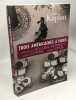
bon état bonne tenue intérieur propre
"HERSCHEL, J.F.W. (JOHN FREDERICK WILLIAM). - THE ""HERSCHEL CONDITION"" INTRODUCED.
Reference : 46100
(1821)
On the aberration of compound lenses and object-glasses. Read March 22, 1821.
London, W. Bulmer and W. Nicol, 1821. 4to. No wrappers as extracted from ""Philosophical Transactions"" 1821 - Part I. With titlepage to Part I. Pp. 222-267 a. 1 engraved plate. Verso of titlepage with 2 stamps.
First appearance of this importent paper in optical theory in which Herschel described how to free lenses from the aberration for two axis points, one of which is infinitely distant. It is known as Herschel's condition. ""Sir John Herschel gave the condition which must be satisfied in order that a symmetrical optical system, free from spherical aberration for two conjugate axial points, may also be free from spherical aberration for two neighbouring and conjugate points upon the axis of the system" but Herschel's condition applies only to first order aberration, i.e. to aberration depending upon the cube of the inclination of the ray to the axis. Abbe shewed, later, that this condition could be included in a wider result, viz. that the spherical aberration, supposed zero, is stationary for axial variations provided that the incident and emergent rays for two conjugate axial points, associated with modified magnification m, satisfy the relation. (G.C. Stewart)
"HERSCHEL, JOHN W.F. - THE DISCOVERY OF THE IRON-PRINTING PROCESS.
Reference : 42662
(1843)
On certain Improvements on Photographic Processes described in a former Communication, and on the Parathermic Rays of the Solar Spectrum. Received November 17, - Read November 17, 1842.
(London, Richard and John E., Taylor, 1843. 4to. No wrappers as extracted from ""Philosophical Transactions"" 1843 - Part I. Pp. 1-6.
First appearance of a pioneer-paper in the history of early photography, as Herschel here for the first time describes his discovery of the iron printing process with ammonio-citrate of iron by both methods, namely with blue lines on a white background and white lines on a blue ground.
"HERSCHEL, WILLIAM. - DETRONING THE SUN AS THE CENTER OF THE UNIVERSE.
Reference : 42938
(1805)
On the Direction and Velocity of the Motion of the Sun, and the Solar System. Read May 16, 1805.
(London, W. Bulmer and Co., 1805). 4to. No wrappers as extracted from ""Philosophical Transactions"" 1805 - Part II. Pp. 233-256 a. 1 engraved plate, folded. Clean and fine.
First printing of an importent paper in cosmology in which Herschel's by analyzing a large number of stars, believed that he could explain the regularities he observed by assuming that the sun itself was moving toward a point in the consellation of Hercules. ""Just as Copernicus had detroned the earth as the motionless center of the universe, so Herschel detroned the sun.""(Asimov). - In this paper he tries to estimate the speed of the sun's motion.In a memoir published in 1783 Herschel had been occupied with the possibility that the sun was moving relative to the stars. ""More than 20 years later (1805, in the paper offered) Herschel took up the question again, using six of the brightest stars in a collection of the proper motions of 36 published by Maskelyne in 1790, which were much more reliable than any earlier ones, and employing more elaborate processes of calculation" again the apex was placed in the constellation of Hercules, though at a distance of nearly 30 degr. from the position given in 1783. Herschel's results were avowedly to a large extent speculative and were received by contemporary astronomers with a large measure of distrust" but a number of far more elaborate modern investigations of the same subject have confirmed the general correctness of his work.""(Berry ""A Short History of Astronomy"", p. 346.).
"HERSCHEL, WILLIAM. - DETRONING THE SUN AS THE CENTER OF THE UNIVERSE.
Reference : 45882
(1805)
On the Direction and Velocity of the Motion of the Sun, and the Solar System. Read May 16, 1805.
(London, W. Bulmer and Co., 1805). 4to. No wrappers as extracted from ""Philosophical Transactions"" 1805 - Part II. Pp. 233-256 a. 1 engraved plate, folded. Clean and fine.
First printing of an importent paper in cosmology in which Herschel's by analyzing a large number of stars, believed that he could explain the regularities he observed by assuming that the sun itself was moving toward a point in the consellation of Hercules. ""Just as Copernicus had detroned the earth as the motionless center of the universe, so Herschel detroned the sun.""(Asimov). - In this paper he tries to estimate the speed of the sun's motion.In a memoir published in 1783 Herschel had been occupied with the possibility that the sun was moving relative to the stars. ""More than 20 years later (1805, in the paper offered) Herschel took up the question again, using six of the brightest stars in a collection of the proper motions of 36 published by Maskelyne in 1790, which were much more reliable than any earlier ones, and employing more elaborate processes of calculation" again the apex was placed in the constellation of Hercules, though at a distance of nearly 30 degr. from the position given in 1783. Herschel's results were avowedly to a large extent speculative and were received by contemporary astronomers with a large measure of distrust" but a number of far more elaborate modern investigations of the same subject have confirmed the general correctness of his work.""(Berry ""A Short History of Astronomy"", p. 346.).
HERSCHEL, WILLIAM. - INDICATION OF THE UNIVERSALITY OF NEWTON'S LAWS OF MOTION.
Reference : 42303
(1803)
Account of the Changes that have happened, during the last Twenty-five Years, in the relative Situation of Double-stars" with an Investigation of the Cause to which they are owing. Read June 9, 1803.
(London, Bulwer and Co., 1803). 4to. Without wrappers as extracted from ""Philosophical Transactions of the Royal Society of London."" Year 1803-Part II. Pp. 339-382 and 2 engraved plates.
First appearance of a fundamental paper in cosmology and physics as it contains the first observational data to support that Newton's dynamical laws holds outside the solar system. Herschel shows here that the circulating motions of double-stars were under gravitational forces. Until then the validity of the law of gravity was only established within the solar system. Now, a century after the establishment of the law, it was traced out in the motion of incredibly distant stars and the theory first truly earned its title of Universal. The exact proof of the mutual gravitation of the double-stars was only obtained five years after Herschel's death, when the motions of the stars were more precisely dtermined.One of the most notable of Herschel's discoveries of double-stars, binary stars. A first cataloque of such pairs was published early in 1782 and contained 269, of which 227 were new discoveries. ""Twenty years after the publication of his first cataloque Herschel was of Michell's opinion - Michell had expressed the opinion that the odds in favour of a physical relation between the members of herschel's newly discovered double stars were ""beyond arithmetic"" - but was able to support it by evidence of an entirely novel and much more direct character. A series of observations of Castor, presented in two papers in the ""Philosophical Transaction"" in 1803 (the paper offered here) and 1804, which were fortunately supplemented by an observation of Bradley's in 1759, had shewn a progressive alteration in the direction of the line joining its two components, of such a character as to leave no doubt that the two stars were revolving round one another"" and there were five oher cases in which a similar motion was observed...it was shown that the double-star was really formed by a connected pair of stars near enough to influence one another's mortion.""(Berry in ""A Short History of Astronomy"" pp. 342-43).

