 Write to the booksellers
-
Type
Book (7262)
Disk (44)
Drawings (1)
Engraving (9)
Magazine (89)
Maps (4)
Music sheets (135)
New book (2)
Old papers (1)
Photographs (19)
Posters (1)
-
Latest
Last 24h (4)
Last 3 days (2)
Last month (971)
Last week (2)
-
Language
Czech (1)
Dutch (9)
English (156)
French (7388)
German (4)
Italian (2)
Latin (3)
Russian (4)
-
Century
16th (17)
17th (43)
18th (199)
19th (881)
20th (2478)
21st (1565)
-
Countries
Belgium (1156)
Canada (32)
China (56)
Côte d'Ivoire (7)
Denmark (1063)
France (4903)
Germany (1)
Netherlands (181)
Switzerland (155)
United Kingdom (9)
United States of America (4)
-
Syndicate
ALAC (25)
CLAM (25)
CLAQ (2)
ILAB (2234)
NVVA (15)
SLACES (15)
SLAM (1026)
SNCAO (4)
Peuples et nations d'Europe au XIXe siècle
HACHETTE EDUC 1996 272 pages 15x21 5x2cm. 1996. Broché. 272 pages.
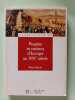
Neuf
Nokkur Kvædi.
Reykjavik, 1904. 12mo. Orig. bogtrykt omslag. 64 pp. Frisk eksemplar.
Originaludgaven.
LA PRODUCTION DU TABAC - PRINCIPES ET METHODES / COLLECTION NOUVELLE ENCYCLOPEDIE AGRICOLE
J.-B. BAIILLIERE ET FILS. 1951. In-8. Relié. Etat d'usage, Couv. convenable, Dos satisfaisant, Intérieur frais. 438 pages - nombreuses illustrations en noir et blanc dans et hors texte.. . . . Classification Dewey : 633.7-Plantes alcaloïdes (tabac, thé, cacao, café, pavot)
Classification Dewey : 633.7-Plantes alcaloïdes (tabac, thé, cacao, café, pavot)

La production du tabac principes et méthodes - 2ème édition - Collection Nouvelle Encyclopédie Agricole.
J.-B.Baillière et fils. 1961. In-8. Broché. Etat d'usage, Tâchée, Dos plié, Papier jauni. 601 pages - nombreuses figures en noir et blanc dans le texte - coins frottés.. . . . Classification Dewey : 633.7-Plantes alcaloïdes (tabac, thé, cacao, café, pavot)
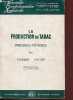
Collection Nouvelle Encyclopédie Agricole. Classification Dewey : 633.7-Plantes alcaloïdes (tabac, thé, cacao, café, pavot)
Giuliomaria Sirio Di Pedot Michel Eiko Tokunaga Sandra Feltrin Angelo
Reference : 500041203
(2016)
ISBN : 9782366771022
L'anglais: Panorama linguistique et culturel du monde britannique pour se débrouiller dans n'importe quelle situation sans équivoques ni erreurs
Gremese 2016 124 pages 11 8x0 6x16 6cm. 2016. Broché. 124 pages.
Bon état - . quelques marques de lecture et/ou de stodckage sur couverture et coins mais du reste en bon état - envoi rapide et soigné dans enveloppe à bulles depuis france
Huellas en la playa de Rodas : naturaleza y cultura en el pensamiento occidental desde la antigüedad hasta finales del siglo: Naturaleza y cultura en ... del siglo XVIII (La estrella polar Band 1)
Ediciones del Serbal S.A 1996 729 pages 17x4 4x24cm. 1996. Broché. 729 pages.
Bon état couverture défraîchie intérieur propre tranche ternie
Die Klariden. An die Zürcherische Jugend auf das Jahr 1860. Von der Naturforschenden Gesellschaft.
(Zürich), Zürcher und Furrer, (1860). Gr.-8°. 24 S. Mit 2 lithogr. Tafeln. Orig.-Broschur. = "Neujahrsblatt der Naturforschenden Gesellschaft", LXII. Stück.
Rohr 535.
Dictionnaire de la pêche en eau douce
De Boree 2021 24 9x29 7x3 2cm. 2021. Broché.
Très bon état
Dictionnaire de la pêche en eau douce
De Boree 2021 24 9x29 7x3 2cm. 2021. Broché.
Etat correct
Dictionnaire de la pêche en eau douce
De Boree 2021 24 9x29 7x3 2cm. 2021. Broché.
Etat correct
Views on the Continent. Lithographed from his own Sketches by the Revd. I. D. Glennie.Vendeur : Charles Russell, ABA, ILAB, est 1978, Cirencester, Royaume-UniMembre d'association : ABA ILAB PBFA(vendeur 5 étoiles) Évaluation du vendeur 5 sur 5 étoilesEvaluation 5 étoiles, En savoir plus sur les évaluations des vendeursContacter le vendeurAncien ou d'occasion - Couverture rigideEUR 1 514,74Autre deviseEUR 4,82 expédition depuis Royaume-Uni vers SuisseDestinations, frais et délaisQuantité disponible : 1 disponible(s)Folio 19 1/2 x 13 inches - bound in original publisher's morocco backed boards in good bright condition. Contents loose. Lithograph title with vignette view, dedication, list of plates and subscribers list. Illustrated with 30- lithograph views on 25 plates. Complete. Title, dedication and first three plates spotted. FIRST SERIES - the bibliography Abbey travel (40) only describes the second issue (1849) which is dedicated to German views. This earlier volume, mentioned but not described by Abbey, is primarily illustrative of the ALPS with many fine Alpine views. A scarce lithograph view book.
London. Hullmandell, 1841, in-folio, illustré de 25 gravures des localités pittoresques de Suisse et d’Italie, d’après les dessins de l’auteur, parmi lesquelles le Mont-Blanbc et le glacier de Bionassay, le col du Bonhamme, le Grand Saint-Bernard, etc, etc. exlibris Peter E. Obergfell, Halfclothbound, title gilt on front cover. / Reliure en d.-toile originale.
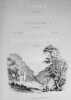
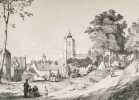
Un bel album de gravures. Rare et recherché.Lithograph title with vignette view, dedication, list of plates and subscribers list. Illustrated with 30- lithograph views on 25 plates. Complete. Title, dedication and last plates with marginal ink stain. FIRST SERIES - the bibliography Abbey Travel (40) only describes the second issue (1849) which is dedicated to German views. This earlier volume, mentioned but not described by Abbey, is primarily illustrative of the ALPS with many fine Alpine views. A scarce lithograph view book. Image disp.

(SLACES, NVVA)
Phone number : 41 (0)26 3223808
La glose ordinaire. L' vangile de saint Luc. Texte latin et traduction fran aise
, Brepols, 2024 Hardback, 420 pages, Size:216 x 280 mm, Illustrations:2 b/w, Language(s):Latin, French. ISBN 9782503610030.
Summary La Glose ordinaire est le grand commentaire biblique m di val, de la Gen se l'Apocalypse. L'?uvre pr sentement retenue est l' vangile selon saint Luc. Le pr sent ouvrage concerne cet vangile qui a marqu d'une mani re incroyable le v cu de nos traditions occidentales, et ce jusqu' nos jours. Ce tr sor d'interpr tations et de commentaires est le manuel de base pour tout l'Occident, du XIIe si cle jusqu' bien au-del de la Renaissance. D s l'apparition de l'imprimerie on a repris ce tr s vaste ensemble et ce fut l'?uvre d'Adolf Rusch de Strasbourg en 1480-1481, lequel reproduisait scrupuleusement son manuscrit de base. Le texte s'y pr sente comme les all es d'un parc la fran aise : le texte biblique m me de Luc est au centre, avec des grands caract res, les variantes lexicales et remarques grammaticales figurant entre les lignes, les commentaires marginaux se trouvant tout autour, et on y circule d'all e en all e. Toutes ces caract ristiques fondamentales sont respect es dans la pr sente dition, le latin dans la page de gauche, le fran ais dans la page de droite qui fait face. La pr sentation retenue est ainsi une nouveaut qui rend lisible et connaissable, tant en latin courant qu'en fran ais, toute la documentation biblique : le Luc et les commentaires. Tout cela provoque incontestablement bien des tonnements? TABLE OF CONTENTS Pr face de Gilbert Dahan Introduction Texte latin et traduction
Corpus Christianorum. Caesarius Arelatensis Sermones,
Turnhout, Brepols, 1953 Hardback, 712 p., 155 x 245 mm._Latin_ ISBN 9782503010311.
Caesarius Arelatensis ? Sermones de diversis et de Vetere Testamento ( CPL 1008 ) ? ed. G. Morin Ephraem Latinus (spurium seu dubium) ? Centones a S. Caesario servati ( CPL 1152 ) ? ed. G. Morin
Deux hommes sur un cheval - L'homosexualité masculine au Moyen Âge: L'homosexualité masculine au Moyen Age
H&O éditions 2003 14 6x2 4x21 2cm. 2003. Broché.
Très bon état de conservation tranche de tête jaunie intérieur propre bonne tenue
Godeau Jérôme Besse Françoise Paluel-marmont Claudia Parodi- brocas Catherine
Reference : 100107705
(1999)
ISBN : 2742721460
Le promeneur de Paris Dix promenades de la Rive droite: 10 promenades de la Rive droite
Actes sud 1999 288 pages 13x2 5x24cm. 1999. Broché. 288 pages.
Bon état dos présentant de légères taches (voir photo) intérieur propre
Godeau Jérôme Besse Françoise Paluel-marmont Claudia Parodi- brocas Catherine
Reference : 7925
(1999)
ISBN : 2742721460
Le promeneur de Paris Dix promenades de la Rive droite: 10 promenades de la Rive droite
Actes Sud 1999 288 pages 13x2 5x24cm. 1999. Broché couverture rempliée. 288 pages.
Bon état
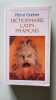
Dictionnaire latin-français
Flammarion 702 pages 17 6x3 4x10 8cm. Sans date. mass_market. 702 pages.
Etat correct
Im Banne der Alpen. von Carl Camenisch
(2. Auflage). Samedan, Engadin Press Co. vorm. Simon Tanner, 1911. 8°. (1) Bl., 103 S. (dv. 3 S. Presse-Stimmen). Mit 4 Illustr. u. 24 Abb. auf Tafeln. Halblederbd. d. Zt. auf 4 falschen Bünden mit goldgepr. Rückentitel u. Rückenvergoldung (leicht berieben u. etwas stockfleckig).
Inhalt: Goethe als Prophet des alpinen Wintersports. Joseph Victor Scheffel und das Engadin. Conrad Ferdinand Meyer in den Bündner Bergen. - Mit Namenszug auf fl. Vorsatz.
Narrators of Barbarian History (A.D. 550-800) The: Jordanes Gregory of Tours Bede and Paul the Deacon (Publications in Medieval Studies)
University of Notre Dame Press 2005 534 pages in8. 2005. Broché. 534 pages.
Comme neuf encore sous son emballage plastique d'origine
[ Proceedings of the American Academy for Jewish Research] - GOLB, Norman
Reference : 61230
(1981)
Nature et Destination du Monument Hébraïque Découvert à Rouen [ Edition originale ]
1 brochure in-8, Tirage à part de Proceedings of the American Academy for Jewish Research, Vol. XLVIII, 1981, pp. 101-182
![Nature et Destination du Monument Hébraïque Découvert à Rouen [ Edition originale ]. GOLB, Norman](https://static.livre-rare-book.com/pictures/CDL/61230_thumb.jpg)
![Nature et Destination du Monument Hébraïque Découvert à Rouen [ Edition originale ]. GOLB, Norman](https://static.livre-rare-book.com/pictures/CDL/61230_2_thumb.jpg)
![Nature et Destination du Monument Hébraïque Découvert à Rouen [ Edition originale ]. GOLB, Norman](https://static.livre-rare-book.com/pictures/CDL/61230_3_thumb.jpg)
Rare exemplaire de ce tiré-à-part défendant la thèse de l'école rabbinique pour le monument découvert à Rouen en 1976 spus la cour du Palais de Justice, et désormais connu sous le nom de '"Maison Sublime".
Sa majeste des mouches
Editions Belin 2008 336 pages 12 4x17 6x1 9cm. 2008. Broché. 336 pages.
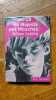
Bon état
[Hans Holbein the younger] - Goldring, Elizabeth
Reference : 125720
(2025)
ISBN : 9781913107505
Holbein. Renaissance Master
Goldring, Elizabeth: Holbein. Renaissance Master. 2025. 424 pages, 250 colour illustrations. Hardback. 27.9 x 19.5cms. Comprehensive biography beginning with the artist's origins in Augsburg, followed by the move to Basel with his brother Ambrosius, and his period in Lucerne. Examines the portraits of Erasmus of Rotterdam that brought him international fame, and the portraits that he subsequently produced in London of Henry VIII, his wives, and important courtiers such as Thomas Moore and Thomas Cromwell. Includes jewellery and silver designs for Anne Bolein, Jane Seymour, and Katherine Howard.
Comprehensive biography beginning with the artist's origins in Augsburg, followed by the move to Basel with his brother Ambrosius, and his period in Lucerne. Examines the portraits of Erasmus of Rotterdam that brought him international fame, and the portraits that he subsequently produced in London of Henry VIII, his wives, and important courtiers such as Thomas Moore and Thomas Cromwell. Includes jewellery and silver designs for Anne Bolein, Jane Seymour, and Katherine Howard.
The vicar of Wakefield; a tale supposed to be written by himself
,Paris, De l'imprimerie de Firmin Didot "Stereotype edition" 1820, 235 pp., 1 vol. in 16 relié pleine basane, dos lisse orné de filet et fleurons dorés (lég. estompés
tres belle reliure plein veau d'epoque Ray A1*
Le Vicaire de Wakefield (The vicar of Wakefield), traduit en français avec le texte en anglais en regard, par Charles Nodier, précédé d’une Notice par le même sur la vie et les ouvrages de Goldsmith et suivi de quelques notes.
Paris, Bourgueleret, 1838 ; in-8 (226 x 148 mm), demi-maroquin citron à coins, dos à grand décor de rocaille dorée mosaïquée de rouge, bleu clair et vert, auteur et titre à froid, filets à froid sur les plats, tranches non rognées (reliure de l’époque); XXVII, 581 pp., [1] f. d’Avis au relieur, portrait frontispice sur chine contrecollé, 10 figures hors-texte gravées sur acier d’après les dessins de Tony Johannot, accompagnées de serpentes légendées et une centaine de vignettes gravées sur bois, dessinées par Jacque, Marville, Janet-Lange, etc. Texte encadré d’un double filet noir.
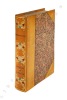
Premier tirage ; les serpentes légendées manquent très souvent ; “livre assez rare en bel état” (Carteret-III-274). Bel exemplaire dans une reliure mosaïquée exceptionnelle !

