 Write to the booksellers
-
Type
Book (7246)
Disk (44)
Drawings (1)
Engraving (9)
Magazine (89)
Maps (4)
Music sheets (135)
New book (2)
Old papers (1)
Photographs (19)
Posters (1)
-
Latest
Last 24h (1)
Last 3 days (5)
Last month (968)
Last week (2)
-
Language
Czech (1)
Dutch (9)
English (156)
French (7372)
German (4)
Italian (2)
Latin (3)
Russian (4)
-
Century
16th (17)
17th (43)
18th (199)
19th (881)
20th (2479)
21st (1563)
-
Countries
Belgium (1156)
Canada (34)
China (56)
Côte d'Ivoire (7)
Denmark (1063)
France (4885)
Germany (1)
Netherlands (181)
Switzerland (155)
United Kingdom (9)
United States of America (4)
-
Syndicate
ALAC (27)
CLAM (25)
CLAQ (2)
ILAB (2236)
NVVA (15)
SLACES (15)
SLAM (1026)
SNCAO (4)
FONCKE, Robert/Rijksuniversiteit Gent Faculteit Wijsbegeerte en Letteren.
Reference : 26474
DUITSE VLUGSCHRIFTEN VAN DE TIJD. OVER HET PROCES EN DE TERECHTSTELLING VAN DE PROTESTANTEN FRANS EN NIKOLAAS THYS TE MECHELEN (1555).
Antwerpen/Parijs/'s Gravenhage, De Sikkel/Librairie Ernest Leroux/Martinus Nijhoff, 1937 Oorspronkelijke uitgeversomslag, 16.6x25.4 cm., 189 pp., bladeren gesneden en niet-gesneden.
80ste aflevering. Met inleiding en aantekeningen opnieuw uitgegeven door Dr. Robert Foncke.
massif du canigo 2015
Petit fute 2015 64 pages 11 8x0 4x17 9cm. 2015. Broché. 64 pages.
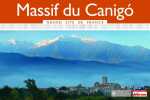
Très bon état
LATIN EN 15 LECONS
PU Rennes 2007 14 8x2 4x24cm. 2007. Broché.
Bon Etat intérieur propre bonne tenue
"FONTENELLE, BERNARD LE BOYER (BOVIER) De. - THE PROGRAM OF THE ENLIGHTMENT
Reference : 44534
(1702)
Preface.
Paris, Jean Boudot, 1702. 4to. Without wrappers. Extracted from ""Mémoires de l'Academie des Sciences"". Année 1699. With the fine engraved frontispiece and the titlepage to the volume. (22) pp.. Stamped in blind on the 2 first leaves, in margins.
First appearance of Fontenelle's famous program for the philosophy of science of the Enlightment, stipulating the nature of scientific research in terms of the analytical geometry.""From 1699 to 1740 Fontenelle devoted himself almost exclusively to his task of editing the Histoire de l’Académie royale des sciences . . . avec les mémoires de mathématique et de physique pour la même année, tirés des registres de cette Académie. The volume for the year 1699, which appeared in 1702, opens with an untitled preface usually called ""Préface [sometimes ""Discours préliminaire""] sur l’utilitë des mathématiques et de la physique et sur les travaux de l’Académie (the paper offered), which contains essential material on the philosophy of science and is a sort of bridge between Descartes’s Discours de la méthode and Claude Bernard’s Introduction à l’étude de la médecine expérimentale. Here one finds the first literary expression of the idea of the interdependence of the sciences and of the constancy of the laws of nature.""

HOE DE VLAMINGEN TE LAAT KWAMEN.
Antwerpen, De Sikkel, 1932 oorspronkelijk geillustreerde papieromslag met flappen, frontispice, originele titelpagina met vignet, 25x18.8 cm., 62 pp., geillustreerd door Mark F. Severin.
The Food Insects Newsletter. Volume 1-10(2).
1988-1997 4to, stapled. In issues.Scarce Newsletter on edible (for humans) insects.
Ford Harrison Sartore Joel Feugeas Valérie Chadwick Douglas H
Reference : 500209000
(2020)
ISBN : 9782822902731
Deliver Us from Evil: The Slavery Question in the Old South
Oxford university press 2009 682 pages 15 748x4 318x23 622cm. 2009. Cartonné jaquette. 682 pages. Cet ouvrage historique analyse les efforts intellectuels et politiques des élites blanches du Sud des États-Unis pour justifier l'esclavage de la rédaction de la Constitution fédérale en 1787 jusqu'à l'ère jacksonienne. Il s'appuie sur une documentation primaire étendue pour explorer les débats contradictoires au sein de la société sudiste sur la place et l'avenir de l'institution esclavagiste
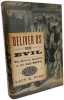
Très bon état
Author Photo: Portraits 1983-2002
Simon & schuster 2003 176 pages in4. 2003. Relié. 176 pages.
Bon état sous rhodoïd étiquette de bibliothèque collées sur la jaquette et dans les plats intérieurs intérieur propre bonne tenue
Forestier blazart Nadine Forestier blazart Jean-Claude
Reference : 500086215
(2007)
ISBN : 9782915867121
Arctique canadien: Itinéraires au Nunavut
Pages du Monde 2007 23 2x1 6x29 4cm. 2007. Broché.
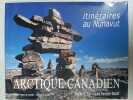
Etat correct
Aventures de Robert FORTUNE dans ses voyages en Chine à la recherche des fleurs de thé.
Traduit de l’anglais 1843-1850 in 12 reliure postérieure muette,demi-chagrin bleu foncé,filet à froid sur les plats Titre VII,269 pages,non rogné.Paris Librairie de L. Hachette & Cie 1854.Les deux plats de couverture et le dos sont conservés,timbre de colportage sur la page de titre. Rousseurs éparses habituelles,édition originale.Bon exemplaire
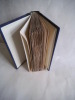
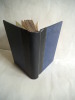
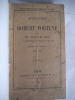
Naturaliste envoyé par une société d'horticulture de Londres à la recherche de fleurs nouvelles et à la découverte de plants de thé destinés à peupler les jardins de Cheswick et les plantations anglaises de l'Himalaya, Robert Fortune,à la différence des étrangers qui pénétrèrent avant lui le Céleste Empire,vécu avec les gens du peuple Chinois,les agriculteurs,les aubergistes ou les bonzes,et pénétra ainsi plus en avant que ne l'avait fait depuis un siècle aucun Européen
Voyages en Chine de Robert Fortune - Aventures de Robert Fortune dans Ses Voyages en Chine à la Recherche des Fleurs et du Thé - Traduit de lAnglais (1843-1850)
Paris, Libraire de L. Hachette et Cie, 1854. Bibliothèque des Chemins de Fer. 1 volume in-12, VII + 269 pp. + 8 pp., reliure moderne plein cuir beige, quelques rousseurs éparses habituelles à cet ouvrage, inscriptions et tampons de bibliothèque sur la page de titre, bon état général.
Voyages à travers la Chine, avec escales à Hong Kong, Amoy, Ning-Po, Canton, Wou-Sung, Shanghai à la recherche de plants de thé, de fleurs et de végétaux nouveaux par un célèbre botaniste et naturaliste anglais.
Voyages en Chine de Robert Fortune - Aventures de Robert Fortune dans Ses Voyages en Chine à la Recherche des Fleurs et du Thé - Traduit de lAnglais (1843-1850)
Paris, Libraire de L. Hachette et Cie, 1854. Bibliothèque des Chemins de Fer. 1 volume in-12, VII + 269 pp. + 8 pp., reliure demi-basane, dos lisse orné, couvertures conservées, un tampon de bibliothèque de colportage du Ministère de l'Intérieur, très bon état. Un autre exemplaire, en reliure moderne verte, est vendu au même prix.
Voyages à travers la Chine, avec escales à Hong Kong, Amoy, Ning-Po, Canton, Wou-Sung, Shanghai à la recherche de plants de thé, de fleurs et de végétaux nouveaux par un célèbre botaniste et naturaliste anglais.
Mémoires d'Agriculture, d'Economie Rurale et Domestique - Voyage Agricole et Horticole en Chine, d'après des Publications de M. Robert Fortune, traduit de l'anglais par M. Le Baron de Lagarde Montlezun.
Paris, Imprimerie et Librairie d'Agriculture et d'Horticulture de Mme Ve Bouchard-Huzard, 1853. 1 volume in-8, XII-232 pp., reliure moderne plein cuir brun, en partie non coupé, enrichi de quelques illustrations, nombreuses rousseurs claires, parfois prononcées sur le corps du texte.
Ce voyage en Chine de Robert Fortune est paru dans les Mémoires d'Agriculture, d'Economie Rurale et Domestique en 1852. Préface et observations du traducteur, Le Baron de Lagarde Montlezun. Les chapitres traitent de la culture du thé, du coton, du riz, du mûrier sur tout le Territoire Chinois.
"FOUCAULT, (JEAN BERNARD LEON) - EXPERIMENTAL EVIDENCE FOR THE WAVE-THEORY OF LIGHT.
Reference : 44783
(1854)
Sur les Vitesses relatives de la Lumière dans L'Air et dans L'Eau.
Paris, Victor Masson, 1854. No wrappers. Extracted from ""Annales de Chimie et de Physique"", 3me Series - Tome 41. With titlepage to Tome 41. Pp. 120-164 and 1 large folded engraved plate showing the experimental apparatus. Some foxing throughout.
The periodical issue of Foucault's doctorial thesis in which he for the first time showed that light slows down in water, thus giving experimental evidence for the undulatory theory of light.""He...made use of his mirror method to measure the velocity of light through water and other transparent media. As long before as the time of Huygens and Newton it had been suggested that one way of settling the dispute as to whether light was a wave form or a stream of particles was by measuring its velocity in water. According to the wave theory, light should slow down in water"" according to the particle theory, it should speed up. In 1853 showed that the velocity of light was less in water than in air, a strong piece of evidence in favor of the wave theory. He presented this work as his doctoral thesis.""(Asimov).
"FOUCAULT, (JEAN BERNARD LEON) - THE FOUCAULT PENDULUM FIRST GERMAN EDITION.
Reference : 45070
(1851)
Physikalischer Beweis von der Axendrehung der Erde mittelst des Pendels. (Compt. rend. T. XXXII p. 135).
Leipzig, Johann Ambrosius Barth, 1851 Without wrappers as issued in ""Annalen der Physik und Chemie. Hrsg. von J.C. Poggendorff"", 82. Bd., 3. issue (""Heft"" No 3, 1851). Entire issue offered. Pp. 337-464. Foucault's paper: pp. 458-462. With titlepage to volume 82.
First German edition of the famous paper in which Foucault presented his discovery of the proof of the rotation of the earth by the large pendulum, called FOUCAULT'S PENDULUM. It was presented by Arago at the meeting of the Acadey of Scieces on February 3, 1851.Since Léon Foucault’s public demonstration of his pendulum experiment, it has played a prominent role in physics, physics education, and the history of science. The Foucault pendulum is a long pendulum suspended high above the ground and carefully set into planar motion. The phenomenon described by Foucault1 concerns the orientation of the plane of oscillation of the pendulum. ""The experiment (with the pendulum) caused great exitement at the time. Heracleides had first suggested twenty-two centuries before that the earth was rotating and Copernicus had renewed the suggestion three centuries before. Since the time of Galileo two and a half centuries before, the world of scholarship had not doubted the matter. Nevertheless, all evidence as to that rotation had been indirect, and not until Foucault's experiment could the earth's rotation actually be said to have been demonstrated rather that deduced."" (DSB).Parkinson ""Breakthroughs"" 1851 E.
FOUCAULT, LÉON. (JEAN BERNARD LEON). - THE VELOCITY OF LIGHT DETERMINED.
Reference : 49458
(1862)
Détermination expérimentale de la vitesse de la lumière parallaxe du Soleil. (Séance du Lundi 22 septembre 1862). (+) Détermination expérimentale de la vitesse de la lumière" description des appareils. (Séance du Lundi 24 Novembre 1862). (2 papers).
Paris, Mallet-Bachelier, 1862. 4to. No wrappers. In: ""Comptes rendus hebdomadaires des séances de l’Académie des sciences"", Vol. 55, No 12 a. 21. Pp. 481--519 a. pp. 781-803. (Entire issues offered). With title-page to vol. 55. Foucault's papers: pp. 501-503 a. pp. 792-796. Clean and fine.
First printing of Foucault's famous experiments on the velocity of light with the description of his improved equipment, the rotating mirror. Foucault's method was later developed by Michelson and Morley in their famous experiment in 1887.""Foucault’s first experiment, carried out in 1850 and written up in full in his doctoral thesis of 1853, was purely comparative"" he announced no numerical values until 1862. Then, with an improved apparatus, he was able to measure precisely the velocity of light in air. This result, significantly smaller than Fizeau’s of 1849, changed the accepted value of solar parallax and vindicated the higher value which Le Verrier had calculated from astronomical data. Foucault’s turning-mirror apparatus was the basis for the later determinations of the velocity of light by A. A. Michelson and Simon Newcomb.""(DSB).Leon Foucault, used a similar method to Fizeau. He shone a light to a rotating mirror, then it bounced back to a remote fixed mirror and then back to the first rotating mirror. But because the first mirror was rotating, the light from the rotating mirror finally bounced back at an angle slightly different from the angle it initially hit the mirror with. By measuring this angle, it was possible to measure the speed of the light. Foucault continually increased the accuracy of this method over the years. His final measurement in 1862 determined that light traveled at 299,796 Km/s. Magee ""A Source Book in Physics"", p. 342 ff. and ""Source Book in Astronomy"", p. 282 ff.
Un Caprice de grande dame
Paris Cadot
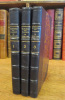
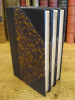
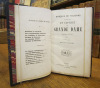
S.d. (ca 1850). Trois volumes grand in-12 (189 x 127 mm), demi-chagrin bleu, coins, dos à cinq nerfs, tête mouchetée, non rogné (reliure dépoque). Quatrième édition. (quelques menus frottements, nombreuses fortes rousseurs, mouillure tome 3 pages 353 à 360). // n.d. (ca 1850). Three tall 12o volumes (189 x 127 mm), three-quarter blue shagreen, spine raised on five bands, top edge speckled, uncut (contemporary binding). Fourth edition. (some minor rubbings, numerous dark brownings, water-stain vol. 3 pages 353 - 360).
FOUERE-MACE, Mathurin, Abbé Recteur de Lehon)?conférence faite au Congrès de l'Association bretonne, à l'hôtel de ville de Dinan, le 2 septembre 1890 - introduction par (introductory words by) Monsieur le Chanoine Daniel Curé-Archiprêtre de Saint-Sauveur de Dinan, president de la Société archéologique et historique des Côtes-du-Nord - bon état général malgré les petits défauts signalés (good condition in spite of the small defects indicated)?
Reference : 19599
Le Prieuré Royal de Saint-Magloire de Léhon
RENNES, Hyacinthe Caillière Libraire-Editeur - 1892 - Broché grand in-octavo carré (paperback in-octavo), dos et couverture marrons imprimés - Première de couverture imprimée et ornée d'une petite illustration en cul-de-lampe (front cover printed and decorated with a small illustration in tailpiece) - Quatrième de couverture illustrée (cover illustrated) - Pages de garde marrons clairs (brown endpapers) - Page de faux-titre (half title page) - 75 illustrations in texte de : Frontispice de (frontispiece of) Paul Chardin et (and) illustrations de (of) Th. Busnel - P. Chardin - A. Bourel - Comte de Brecey - A. de la Bigne - R. de Brem - A. Lemoine - J. Even - E. Renault - Frère Ange Garnier et H. Wingfield - Sans mouillure (without scar of waterstain) - XXIII + 421pages - Bon Exemplaire
Cnformément à nos conditions générales de vente :Les frais de port sont affichés à titre indicatif. Il se peut que nous devions vous contacter pour vous informer du coût de laffranchissement supplémentaire en fonction du poids et du nombre de livres, surtout pour les envois internationaux Cependant vu l'augmentation des tarifs postaux à l'internationale, nous pouvons expédier les ouvrages en point relais MONDIAL RELAY pour les pays suivants : Allemagne, Autriche, Belgique, Espagne, Italie, Luxembourg, Pays-Bas, Pologne, et Portugal. Merci de nous indiquer en retour le point relais choisi ainsi que votre numéro de téléphone mobile & adresse Courriel pour assurer le suivi du colis.N'hésitez pas à nous interroger.In accordance with our general terms and conditions of sale:Shipping costs are displayed for informational purposes only. We may need to contact you to inform you of the additional postage costs depending on the weight and number of books, especially for international shipments.However, given the increase in international postal rates, we can ship books via Mondial Relay to the following countries: Germany, Austria, Belgium, Spain, Italy, Luxembourg, Netherlands, Poland, and Portugal. Please provide us with your chosen Mondial Relay point, as well as your mobile phone number and email address to ensure package tracking.Please feel free to contact us with any questions
Délices du Thé
Plume 2001 In-8 Cartonnage éditeur sous jaquette, 151 pp.
Plus de 30 manières de préparet le thé : à l’anglaise avec du citron, à la russe avec des pommes, a la menthe ou aux pignons... Très bon état d’occasion
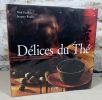
Délices du thé.
Cartonnage de l'éditeur sous jaquette, 21X22 cm (à l'italienne), 2001, 151 pages, nombreuses illustrations en noir et en couleurs, éditions Plume. Très bon état.
"FOURCROY (ANTOINE FRANCOIS de) ET (N.L.) VAUQUELIN - THE NAMING OF UREA.
Reference : 42886
(1803)
Premiere (- Second) Mémoire Pour servir à l'histoire naturelle, chimique et médicale de l'urine humaine, Contenant quelques faits nouveaux sur son analyse et son altération spontanée, Lu le 11 frimaire an 7 (1799). - (Second Mémoire:) Dans lequel o...
(Paris, Baudouin, AN XI (1803)). 4to. Without wrappers. Uncut. Extracted from ""Mémoires de L'Institut National des Sciences et Arts"", Tome Quatrieme. Pp. 363-466. A few minor brownspots on the first leaves, otherwise fine and clean, unopened.
First printing of this importent paper in the history of chemistry, in which the authors gave the first satisfactory account of of urea, which they named.""Hundreds of concretions from various parts of human and animal bodies were analyzed by Fourcroy and Vauquelin. Most were urinary calculi which, independently of Wollaston, they classified according to chemical composition from 1798 onwards.They confirmed the frequent presence of uric acid and phiosphate of lime (discovered in calculi by Scheele and Georg Pearson respectively) and also found urate of ammonia, the double phosphate of magnesia and ammonia, and occasionally other compounds....In an attempt to find why urinary calculi were formed, Fourcroy and Vauquelin investigated urine, and in 1799 they gave (in the paper offered) the first satisfactory account of ures, which hey named....(they) isolated it by recrystallization from alcohol, and in 1808, achieved a purer state by adding alkali to the crystalline nitrate that they had discovered.""(DSB V, p. 92-93).
Mémoire sur la Combustion du Gaz Hydrogene. Lu à l'Academie Royale des Sciences, le 21 Mai 1790.
Paris, Rue et Hotel Serpente, 1791. 8vo. Contemporary half calf. Gilt spine. In: ""Annales de Chimie: ou Recueil de Mémoires Concernant la Chimie et les Arts qui en Dépendent. Par MM. de Morveau, Lavoisier, Monge, Berthollet, De Fourcroy, le Baron de Dietrich, Hassenfratz & Adet."" Tome Huitieme. (2),336 pp. The entire volume offered. The paper: pp. 230-308. A few scattered brownspots. Small stamps on verso of titlepage.
First appearance of the paper in which the authors records a series of experiments on the combustion of hydrogen, the aim of which was to confirm Lavoisier's large scale experiments on the synthesis of water. They finally proved that water only contains hydrogen and oxygen, and found the approximate ratio of their weights.""In May 1790 Séguin read to the Académie des Sciences the report on the larg-scale synthesis of water carried out in Fourcroy’s laboratory by himself, Fourcroy, and Vauquelin. The purpose of this experiment was to establish finally that water is composed only of hydrogen and oxygen and that the weight of water is fully accounted for by the weights of the two gases. They also sought to determine accurately the combining ratio of the components of water, an especially important constant in oxygen chemistry. They found that the ratio hydrogen: oxygen is 2.052:1 by volume and 14.338:85.662 by weight. (The discrepancies from the true figure probably arose from the difficulties of weighing the gases.)""(DSB).Apart from other importent chemical papers by Fourcroy, Seguin, Klaproth etc., the volume contains Joseph Black's famous letter to Lavoisier, where Black gives up his phlogistic theory and accepts the new chemistry, lead by Lavoisier. ""Copie d'une Lettre de M. Joseph Black a M. Lavoisier"", pp. 225-229.
"FOURIER, (JEAN BAPTISTE JOSEPH). - FIRST PRINTING OF ANY PART OF ""THE ANALYTICAL THEORY OF HEAT""
Reference : 49626
(1816)
Théorie de la chaleur. (Extrait).
Paris, Crochard, 1816. Contemp. hcloth. Spine with gilt lettering. In: ""Annales de Chimie et de Physique, Par MM. Gay-Lussac et Arago."" Sweries 2, tome 3. (Entire volume offered). 448 pp. a. 3 engraved plates. A library stamp to some upper corners. Fourier's paper: pp. 350-375. A few scattered brownspots.
First appearance in print of any part of Fourier's landmark work ""Théorie Analytique de la Chaleur"" which was published in 1822. The 2 large memoirs (of 1811) out of which - together with the offered memoir - grew his landmark work were only published in 1824 and 1826.The volume contains also original papers by LAPLACE, GAY-LUSSAC, MAGENDIE, PRONY, HUMBOLDT, BIOT etc.etc.""In 1816 Fourier published a paper (the paper offered) announcing the imminent appearance of a book on both the mathematical and the physical aspects of heat (Fourie 1816)"" but six years were to pass before a book was published, and it covered only the mathematical sides. In the 'preliminary discourse' he stated that its writing and printing had taken a long time (p. xvii)."" (Grattan-Guiness ""Landmark Writings in Western Mathematics 1640-1940"", p.356).
"FOURIER, (JEAN BAPTISTE JOSEPH). - THE GREENHOUSE - EFFECT.
Reference : 43911
(1824)
Résumé théorique des Propriétés de la chaleur rayonnante.
(Paris, Crochard, 1824). Without wrappers. In: ""Annales de Chimie et de Physique, Par MM. Gay-Lussac et Arago."", tome 27, Cahier 3. Pp. 225-336. (Entire issue offered). Fourier's paper: pp. 236-281.


First printing of this importent paper dealing with the ""Green-House-Effect"". It is the second paper from 1824 in which Fourier investigates the connection between the temperature of the earth and radiation. Fourier's analysis in these two papers is widely recognized as the first proposal of what is now known as the greenhouse effect theory.In the 1820s Fourier calculated that an object the size of the Earth and at its distance from the Sun should be considerably colder than the planet actually is if warmed only by the effects of incoming solar radiation. He examined various possible sources of the additional observed heat in articles published in 1824 (the paper offered is the second of the papers published 1824) and 1827. While he ultimately suggested that interstellar radiation might be responsible for a large portion of the additional warmth, Fourier's consideration of the possibility that the Earth's atmosphere might act as an insulator of some kind is widely recognized as the first proposal of what is now known as the greenhouse effect theory.

