 Write to the booksellers
-
Type
Book (7276)
Disk (45)
Drawings (1)
Engraving (9)
Magazine (89)
Maps (4)
Music sheets (134)
New book (4)
Old papers (1)
Photographs (19)
Posters (1)
-
Latest
Last 24h (1)
Last 3 days (110)
Last month (123)
Last week (750)
-
Language
Czech (1)
Dutch (18)
English (162)
French (7388)
German (4)
Italian (2)
Japanese (1)
Latin (3)
Russian (4)
-
Century
16th (17)
17th (43)
18th (199)
19th (885)
20th (2496)
21st (1573)
-
Countries
Belgium (1177)
Canada (32)
China (56)
Côte d'Ivoire (7)
Denmark (1063)
France (4889)
Germany (1)
Netherlands (181)
Switzerland (161)
United Kingdom (12)
United States of America (4)
-
Syndicate
ALAC (25)
CLAM (46)
CLAQ (2)
ILAB (2269)
NVVA (15)
SLACES (15)
SLAM (1037)
SNCAO (4)
The Itinerants - Society for Circulating Art Exhibitions (1870-1923)
Aurora Art Publishers, Léningrad, 1974. In-4, reliure pleine toile éditeur sous jaquette illustrée en couleurs, 208 pp.
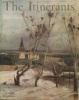
Nombreuses illustrations en noir in texte et planches couleurs.Ouvrage bilingue anglais/russe. --- Plus d'informations sur le site archivesdunord.com
"LEBEDEW, PETER. - CONFIRMING MAXWELL'S HYPOTHESIS OF THE PRESSURE OF LIGHT.
Reference : 43631
(1901)
Untersuchungen über die Druckkräfte des Lichtes.
Leipzig, Ambrosius Barth, 1901. Without wrappers. In: ""Annalen der Physik"", Vierte Folge, Bd. 6, No. 11. (Entire issue offered). Pp. 433-458. Lebedew's paper: pp. 433-458., textillustrations. Clean and fine.
First printing of Lebedew's importent paper which he presented at an international conference (1899), and in which he described his detection of the pressure of light.""He was interested in the possibility that light might exert pressures. This had been predicted by Maxwell's equations and it was a handy explanation, for instance, for the fact that comet's tails always pointed generally away from the sun whether the comet was approaching the sun or receding. In 1901 (in the paper offered), using very light mirrors in a vacuum, Lebedew was actually able to observe and measure the pressure exerted by light, again confirmning Maxwell's theories, as well as providing a vehicle for Arrhenius' life-spores.""(Asimov).Parkinson ""Breakthroughs"", 1899 C.

Sur une généralisation de l'intégrale dérfinie. Note de H. Lebesgue, présentée par M. Picard. (Séance du Lundi 29 Avril 1901).
(Paris, Gauthier-Villars), 1901). 4to. No wrappers. In: ""Comptes Rendus Hebdomadaires des Séances de L'Academie des Sciences"", Tome 132, No 17. pp. (1013-) 1080. (Entire issue offered). Lebesgue's paper: pp. 1025-1028. Clean and fine.
First printing of Lebesgue's seminal paper on the calculus, which generalized the Riemann integral.""Building on the work of others, including that of Emile Borel and Camille Jordan, Lebesgue formulated the theory of measure in 1901 and in his famous paper Sur une generalisation de l'integrale definie, which appeared in the Comptes Rendus on 29 April 1901 (the paper offered), he gave the definition of the Lebesgue integral that generalises the notion of the Riemann integral by extending the concept of the area below a curve to include many discontinuous functions. This generalisation of the Riemann integral revolutionised the integral calculus. Up to the end of the 19th century, mathematical analysis was limited to continuous functions, based largely on the Riemann method of integration. There is a problem here, namely that a function which is not Riemann integrable may be represented as a uniformly bounded series of Riemann integrable functions. What made the new definition important was that Lebesgue was able to recognise in it an analytic tool capable of dealing with - and to a large extent overcoming - the numerous theoretical difficulties that had arisen in connection with Riemann's theory of integration.""
Scénarios du réel: Tome 2
Editions L'Harmattan 1997 232 pages 13x2x21cm. 1997. Broché. 232 pages.
Bon état
Napoléon breton? Sainte-Sève, 1770-Sainte-Hélène, 1821 : fils de Louis Charles René de Marbeuf.
Keltia Graphic, 2008 22 x 16 cm., 95 pp, Broché
- - VENTE PAR CORRESPONDANCE UNIQUEMENT - LIEN DE PAIEMENT, NOUS CONSULTER.

Célébrer la naissance
Seuil 2007 187 pages 30 8x2 2x23 8cm. 2007. Cartonné jaquette. 187 pages.
Très bon état jaquette un peu défraîchie intérieur propre
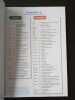
Magellan Histoire-Géographie CE2 éd. 2009 - Fichier de trace écrite
Hatier 2009 72 pages 20 8x1 2x29 4cm. 2009. Broché. 72 pages.
Bon état
Magellan Histoire-Géographie CE2 éd. 2009 - Manuel de l'élève + Atlas
Hatier 2009 176 pages 19 8x1 2x26 6cm. 2009. Broché. 176 pages.
Bon état
Montalembert - TOME I: Sa jeunesse (1810-1836) - TOME II la liberté d'enseignement (1835-1850) (éd. 1919) + TOME III: L'église et le second empire (1850-1870) (éd. 1925)
J. de gigord 190 pages in8. Sans date. Relié. 3 volume(s). 190 pages. Montalembert - TOME I: Sa jeunesse (1810-1836) - TOME II la liberté d'enseignement (1835-1850) (éd. 1919) + TOME III: L'église et le second empire (1850-1870) (éd. 1925)
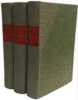
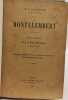
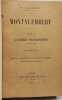
Bon état intérieurs propres bonne tenue couvertures d'origine conservées édition 1925 pour le tome I et III édition 1919 pour le tome II
Le cartooniste de l'année / The Cartoonist of the Year 1975 : Hogarth
Le Pavillon international de l'humour / The International Pavillon of Humour Couverture souple Montréal 1975
Très bon In-4. 54 pages. Hommage au dessinateur Burne Hogarth.
"LE CHATELIER, HENRI LOUIS. - INVENTION OF THE OPTICAL PYROMETER.
Reference : 48915
(1892)
Sur la mesure optique des temperatures élevées.
(Paris, Gauthier-Villars), 1892. 4to. No wrappers. In: ""Comptes Rendus Hebdomadaires des Séances de L'Academie des Sciences"", Tome 114, No 5. Pp. (195-) 254. (Entire issue offered). Le Chatelier's paper: pp. 214-216.
First appearance of the paper in which Le Chevalier describes his invention of the Optical Pyrometer which was the first instrument to measure degrees Celsius over 3000.""Henri LeChatelier creates a practical optical pyrometer for measuring the temperature of hot bodies from the light intensity in a narrow wavelenght band by optical comparison of an image of the body in question and a glowing filament. He uses an oil lamp, an iris diaphragm, and a red glass filter for narrowing the wavelenght range.""(Parkinson).Parkinson ""Breakthroughs"", 1892 P.
"LE CHATELIER, HENRI LOUIS. - INVENTION OF THE PLATINUM THERMOCOUPLE.
Reference : 49879
(1886)
Sur la variation produite par une élèvation de température, dans la force électromotrice des couples thermo-électriques.
(Paris, Gauthier-Villars), 1886. 4to. No wrappers. In: ""Comptes Rendus Hebdomadaires des Séances de L'Academie des Sciences"", Tome 102, No 14. Pp. (783-) 834. (Entire issue offered). Le Chatelier's paper: pp. 819-822.
Firs printing of an importent paper in thermometry where he demonstrates that high temperatures could be precisely measured by way of a platinum wire in conjunction with a platinum-rhodium alloy wire.""It is to Henri Louis Le Chatelier th a t we owe the successful practical use of the platinum thermocouple which for many years was in fact known by his name. Among his many activities Le Chatelier was engaged in the study of silicates and cements and needed a reliable method of measuring high temperatures. In 1886 he reported to the Académie des Sciences an investigation on the use of thermocouples for this purpose in which he had tried to verify the parabolic relationships found by Professor T a i t between the electromotive force and the temperature of the hot junction, the cold junction being at 0°C. Using various metals and alloys against platinum, which he calibrated at the known melting points of lead, zinc, aluminium, silver, gold, copper and palladium, he obtainedresults that agreed with his calculations to within 20°C (11). He also came to the conclusion that of the various combinations he had used, platinum against 10 per cent rhodium-platinum gave the most consistent results."" (Donald McDonald and Leslie B. Hunt).Parkinson ""Breakthroughs"", 1885 P.
"LE CLERC (LECLERC), SEB. (SEBASTIEN) - AN IMPORTANT WORK ON THE PHYSIOLOGY OF VISION DISCOVERING THE ""MASTER-EYE"".
Reference : 44323
(1679)
Discours touchant le Point de Veue, dans lequel il est prouvé que les choses qu'on voit distinctement, ne sont veuës que d'un oeil.
Paris, Thomas Jolly, 1679. Small8vo. (15x9 cm.). Contemp. full sprinckled calf., raisedbands, richly gilt spine. Top of spine a bit worn. Edges of covers gilt. (12),86,(1) pp. Last page ""Extrait du Privilege du Roy"". 34 fine full-page engravings (25 copper-engraved a. 9 in woodcut). A paperflw at foot of titlepage neathly repaired, no loss of paper or letters. Internally clean and fine, printed on thick, good paper.
Extremely scarce first edition of Leclerc's important work on binocular vision in which he finds that one of the eyes has a dominant status, thus announcing the discovery of the ""Master-eye"" - a discovery of outmost importance in the theory of shooting and elsewhere. With use of diagrams he shows that ""things that can be seen clearly are seen with but one single eye."". He records and depicts a large series of experiments with binocular vision and shows geometrically the relation to the science of perspective, and points out the importance of understanding the physiology of binocular vision for perspective painting in general.Sebastien Leclerc was originally an engraver who studied physics and geometry in relation to perspective theory, a field of which he became famous. In 1672 he was appointed to ""l'Academie de Peinture"" as professor in perspective. He was also engraver to Louis XIV and was appointed professor at ""l'Ecole des Gobelins"".
The world of Bruegel : the CoppÃe collection and eleven international museums
Leclercq, Suzanne et. al.: The world of Bruegel : the CoppÃe collection and eleven international museums. Exhibition: Tokyo, Tobu Museum, 1995. 270 pages, illustration. Paperback. 28x22cms. Text in Japanese & English.
Text in Japanese & English
"LECOQ de BOISBAUDRAN, PAUL ÈMILE. - ANNOUNCING THE DISCOVERY OF THE ELEMENT GALLIUM.
Reference : 47271
(1875)
Caractéres chimique et spectroscopiques d'un nouveau métal, le Gallium, découvert dans une blende de la mine de Pierrefitte, vallée d'Argelès (Pyrénées). (Séance du Lundi 20 Septembre 1875). (+) Sur quelques propriétés dy gallium. (Séance du Lundi 6...
(Paris, Gauthier-Villars), 1875. 4to. No wrappers. In: ""Comptes Rendus Hebdomadaires des Séances de L'Academie des Sciences"", Tome 81, No 12 and No 23. Pp. (485-) 508 a. (1065-) 1148. (2 entire issues offered). Boisbaudran's papers: pp. 493-495 a. pp. 1100-1105.
First printing of the paper in which Boisbaudran announced his discovery of Gallium, together with the first printing of the paper in which he, by a series of experiments proved that Gallium, the metal that he had discovered amd named in honour of France, is a true element. A larger paper on the discovery was published in 1877 in ""Annales de Chimie et Physique"". In 1879 Bausbaudran was awarded the Davy Medal for his discovery of Gallium. ""In 1875 Boisbaudran spectroscopically discovered a new element, gallium, which he found in zinc blende from a mine in Hautes-Pyrénées. Continuing his work in Wurtz’s laboratory in Paris, he was a able to obtain the free metal by electrolysis of a solution of the hydroxide in potassium hydroxide. Gallium, Boisbaudran realized, was the ""eka-aluminum"" predicted by Mendeleev, and was the first of Mendeleev’s predicted elements to be isolated. Boisbaudran’s finding thus provided valuable evidence for the validity of Mendeleev’s periodic classification of the elements.""(DSB).""Lecoq de Boisbaudran announced his discovery (by spectroscopic analysis) of the new element gallium. Mendeleev had first predicted its existence and had named it eka-aluminium. The discovery was made in the author's private laboratory, in a specimen of zinc blende from the Pierrefitte mine in the Angelès Valley in the Hautes Pyrénées. He describes how on the evening of 27 August 1875 he detected the existence of this new element, which he named ""gallium"" in honor of France (Gallia)... A month later he ""performed in Wurtz's laboratory in Paris....a series of experiments to prove that gallium...is a true element""(Weeks). he discusses how he eventually isloated small amounts of pure metallic gallium and determined its physical and chemical properties. The paper (the paper offered) first describes gallium compounds (e.g., ammonium gallium alum,, chloride, oxide, and sulphate).""(Roy G. Neville II, p. 29).
"LECOQ de BOISBAUDRAN, PAUL ÈMILE. - THE DISCOVERY OF SAMARIUM.
Reference : 47275
(1879)
Nouvelles raies spectrales observées dans des substances extraites de la samarskite.
(Paris, Gauthier-Villars), 1879. 4to. No wrappers. In: ""Comptes Rendus Hebdomadaires des Séances de L'Academie des Sciences"", Tome 88, No 7. Pp. (313-) 352. (Entire issue offered). Boisbaudran's paper: pp. 322-324.
First apperance of the paper in which Boisbaudran revealed his discovery of a new earth that precipitated had a unique spectrum. De Boisbaudran named it samaria, after the mineral from which it was derived. The mineral samarskite is named for a Russian mining engineer and Chief of Staff - Corps of Mining Engineers, Colonel Vasili Evgrafovich Samarsky-Bykhovets.""Samarium was discovered by French chemist Paul Émile Lecoq de Boisbaudran in 1879. He noticed in his research that impure didymium (praseodymium and neodymium with other impurities), seemed to contain more than just didymium based on spectroscopic work on various rare-earth minerals. When Lecoq de Boisbaudran added ammonium hydroxide to a concentrate prepared from the mineral samarskite he observed a precipitate that formed before the didymium (Weeks and Leicester, 1968, p. 685). Partington ""Breakthroughs"" 1879 C.
Sur un nouveau Métal, le Gallium.
Paris, G. Masson, 1877. 8vo. Contemp. hcalf, raised bands, gilt spine. Light wear along edges. Small stamps on verso of titlepage. In: ""Annales de Chimie et de Physique"", 5e Series - Tome 10. 576 pp. a. 2 folded engraved plates. (The entire volume offered). Lecoq de Boisbaudran's paper: pp. 100-141 a. 1 handcoloured engraved plate (showing the two spectral lines of gallium).
First appearance of a milestone paper in chemistry and physics in which the author describes how he found the new element Gallium by analyzing spectral lines which he observed on a Pyrenea blende sample, the emission lines corresponding to the eka-aluminum that was predicted by Mendeleev in 1871 and he subsequently isolated the element by electrolysis. This was the first element discovered by use of the spark spectrum. In his discovery of the new element Boisbaudran was not guided by the predictions of Mendeleev, but only by his own law of spectra.""Boisbaudran ranks with Bunsen, Kirchhoff, and Crookes as one of the founders of the science of spectroscopy.""(Weeks).""Lecoq de Boisbaudran announced his discovery (by spectroscopic analysis) of the new element gallium. Mendeleev had first predicted its existence and had named it eka-aluminium. The discovery was made in the author's private laboratory, in a specimen of zinc blende from the Pierrefitte mine in the Angelès Valley in the Hautes Pyrénées. He describes how on the evening of 27 August 1875 he detected the existence of this new element, which he named ""gallium"" in honor of France (Gallia). The plate shows the two spectral lines of gallium, which are distinct from those of other elements (indium and potassium) in the same region of the spectrum. A month later he ""performed in Wurtz's laboratory in Paris....a series of experiments to prove that gallium...is a true element""(Weeks). he discusses how he eventually isloated small amounts of pure metallic gallium and determined its physical and chemical properties. The paper (the paper offered) first describes gallium compounds (e.g., ammonium gallium alum,, chloride, oxide, and sulphate).""(Roy G. Neville II, p. 29).Partington IV,897. - Weeks p. 215 ff.The volume contains other nptable papers EDMUND BECQUEREL ""Sur l'Observation de la partie infra-rouge du spectre solaire, au moyen des effets de phosphorescence"", pp. 5-12, 8 papers by MARCELLIN BERTHELOT.
Science et conscience. Philosophie du XXe siècle.
Paris, Ernest Flammarion (Bibliothèque de Philosophie scientifique), 1918 ; in-12, broché ; 6 ff. , 330 pp.,couverture orange imprimée.
Exemplaire en bon état ; dos fendu et petit manque de papier en tête, une bande de scotch contrecollée sur la charnière des pages 324 et 325.La Tradition et la méthode mesuriste ; Physiologie et psychologie ; Science et morale ; L'Art.
DefiBac - Cours/Méthodes/Exos Français écrit et oral 1ère toutes séries
Bordas 2014 320 pages 13 8x2x18 8cm. 2014. Broché. 320 pages.
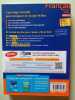
Bon état
The Road to Modern Jewish Politics: Political Tradition and Political Reconstruction in the Jewish Community of Tsarist Russia (Studies in Jewish Hi)
Oxford university press 1989 252 pages 14 4x22 3x2 3cm. 1989. Cartonnage editeur. 252 pages.
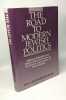
Très bon état avec sa jaquette intérieur propre bonne tenue
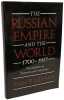
The Russian Empire and the World 1700-1917: The Geopolitics of Expansion and Containment
Oxford University Press USA 1997 416 pages 15 49x2 01x23 39cm. 1997. Broché. 416 pages.
Comme neuf
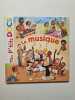
Mes p'tits docs/Mes docs animes: La musique
Editions Milan 2008 32 pages 19 8x0 8x19 6cm. 2008. Relié. 32 pages.
Bon état

