 Write to the booksellers
-
Type
Book (7254)
Disk (44)
Drawings (1)
Engraving (9)
Magazine (89)
Maps (4)
Music sheets (135)
New book (4)
Old papers (1)
Photographs (19)
Posters (1)
-
Latest
Last 24h (3)
Last 3 days (2)
Last month (971)
Last week (2)
-
Language
Czech (1)
Dutch (9)
English (158)
French (7376)
German (7)
Italian (3)
Latin (3)
Russian (4)
-
Century
16th (17)
17th (43)
18th (199)
19th (881)
20th (2483)
21st (1569)
-
Countries
Belgium (1156)
Canada (32)
China (56)
Côte d'Ivoire (7)
Denmark (1063)
France (4888)
Germany (1)
Netherlands (181)
Switzerland (155)
United Kingdom (18)
United States of America (4)
-
Syndicate
ALAC (25)
CLAM (25)
CLAQ (2)
ILAB (2243)
NVVA (15)
SLACES (15)
SLAM (1026)
SNCAO (4)
Alexander der Grosse. Leben und Legende.
Düsseldorf, Zürich, Artemis, 2004.
269 p., ills., 5 maps. Hardb. 21 cm (Orig. title: Alexandre, la destinée d'un mythe)
Vorstenschool. Vier geschiedschrijvers over Alexander en hun visie op het keizerschap.
Meppel, Krips, 1983.
VIII,346 p. Wrs. 24 cm (Diss.) (On Frutolf of Michelsberg, Ekkehard of Aura, Otto of Freising and Godfried of Viterbo, Saec. XI & XII)
Vorstenschool. Vier geschiedschrijvers over Alexander en hun visie op het keizerschap.
Meppel, Krips, 1983.
VIII,346 p. Wrs. 24 cm (Diss.) (On Frutolf of Michelsberg, Ekkehard of Aura, Otto of Freising and Godfried of Viterbo, Saec. XI & XII)
Vorstenschool. Vier geschiedschrijvers over Alexander en hun visie op het keizerschap.
Meppel, Krips, 1983.
VIII,346 p. Wrs. (Diss., Groningen) (On Frutolf of Michelsberg, Ekkehard of Aura, Otto of Freising and Godfried of Viterbo, Saec. XI & XII)
La jeunesse d'Alexandre.
Paris, Michel, 1977.
709 p. Stiff wrappers 24 cm (Historical novel)
La jeunesse d'Alexandre. (&:) Les conquêtes d'Alexandre. (&:) Alexandre le Grand.
Paris, Michel, 1977 - 1981.
3 vols: 709;570;548 p. Stiff wrappers 24 cm (Historical novel) (Heavy book, may require extra shipping costs)
Alexander de Grote. De laatste levensjaren.
Baarn, Hollandia, 1973.
409 p. Cl. 21 cm (Hist. novel; orig. title: The Persian Boy)
In het voetspoor van Alexander de Grote. Een reis van Griekenland naar Azië.
N.pl., TELEAC & NOT, 1997.
256 p., ills. Hardbound 25 cm
Im Herzen des Himalaya: Unterwegs in Nepal (Die kühne Reisende)
edition erdmann ein Imprint von Verlagshaus Römerweg 2015 176 pages 13 7x22x1 8cm. 2015. Relié. 176 pages.
encore sous son plastique d'emballage
Im Herzen des Himalaya: Unterwegs in Nepal (Die kühne Reisende)
edition erdmann ein Imprint von Verlagshaus Römerweg 2015 176 pages 13 7x22x1 8cm. 2015. Relié. 176 pages.
encore sous son film plastique d'originen comme neuf
Ruby - Les fondamentaux du langage - Mise en oeuvre avec Ruby on Rails
Editions ENI 2008 404 pages 21x3 2x17 6cm. 2008. Broché. 404 pages.
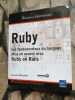
Bon état
Origins of Christianity in the Calendar Wars of the Second Century BCE
, Brepols, 2025 Paperback, 325 pages, Size:156 x 234 mm, Illustrations:2 tables b/w., Language: English. *new ISBN 9782503613062.
Summary In the Gospels Jesus is called a 'Nazarene' or 'Nazoraean'. Does this mean he came from Nazareth? Basing himself on Lidzbarski's analysis of the Hebrew/Aramaic origins of the Greek terms Nazar nos and Naz raios Dr Osborne proposes that these epithets indicate that Jesus was a n ?r , a '(Strict) Keeper/Guardian (of the Law)'. This meant he was a follower of the 364-day liturgical calendar known to us from 1 Enoch, Jubilees, and Qumran. An examination of the passages where these terms appear shows that this hypothesis leads to a deeper understanding of the circumstances in which the first Christian communities arose and clarifies greatly the background of Jesus' crucifixion as Y?? ha-N ?r . The book then traces the influence of the n ?r m on the history of Israel from their origin in the 'calendar wars' that tore apart the Jewish nation from 172-163 BCE. These broke out after the lunisolar calendar was introduced into the temple liturgy by Menelaus the high priest, and only came to an end when the 364-day calendar was reintroduced under his successor, Alcimus. In 151 BCE, however, Jonathan Maccabaeus was appointed high priest and reintroduced the lunisolar calendar. The n ?r m were suppressed and forced to emigrate or go underground. They reappear as leaders of Jewish resistance to Roman occupation after Pompey incorporated Judaea into the empire in 63 BCE. Eventually they became the chief instigators of the revolt against Rome that led to the destruction of Jerusalem in 70 CE. Osborne argues that the n ?r m thought to have been included in the Twelfth Benediction of the Amidah at Yavneh around 90 CE are these same '(Strict) Keepers/Guardians (of the Law)'. TABLE OF CONTENTS General Introduction and Summary Part One Chapter 1. Introduction: Jesus the Nazarene and Nazoraean Chapter 2. The Meaning of Nazoraean and Nazarene in the New Testament Chapter 3. Jesus as a 'Notsri' in the Gospels Chapter 4. The Nazoraeans in Acts Chapter 5. Conclusion: The Nazarenes and Nazoraeans are Notsrim, 'Keepers (of the Law)' Part Two Chapter 6. Introduction: The Two Calendars and their Characteristics Chapter 7. Onias III (185? - 175 BCE) Chapter 8. Jason (175-172 BCE) Chapter 9. Menelaus (172-163 BCE) Chapter 10. Alcimus (163-159 BCE) Chapter 11. The Unnamed High Priest (159-151 BCE) Chapter 12. Jonathan Maccabeus (152-142 BCE) Chapter 13. The Story that Could Not Be Told Part Three Chapter 14. Introduction Chapter 15. The Hasidim as Notsrim Chapter 16. The 'Fourth Philosophy' and the Sicarii Chapter 17. The Fourth Philosophy and the Notsrim Chapter 18. Summary and Conclusions Part Four Chapter 19. Introduction Chapter 20. The Notsrim Live on in the Liturgy of the Synagogue Chapter 21. The Birkat ha-m n m in Christian Sources Abbreviations for Editions of Biblical and Non-Biblical Texts, Works of Reference, and Journals Bibliography
ALGUE Rev. José (Diector of the Philippine Weather Bureau, Manila Observatory)
Reference : 13974823
The barocyclonometer.
Manila: Bureau of Public Printing, 1904 in-4, 26 pages, 10 planches, 1 carte. Broché, couv. salie. Description d'un instrument pour la prévision des cyclones.
The barocyclonometer. (Manila: Bureau of Public Printing, 1904). [M.C.: instruments scientifiques, météorologie]
Alhalel Thierry Freret Jerome Garrido Gregoire LaCroix Alexis
Reference : 500227088
(2012)
ISBN : 9782218962691
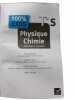
100% Exos: Physique-Chimie Terminale S Specifique ET Specialite
Editions Hatier 2012 544 pages 15 4x3 4x23cm. 2012. Broché. 544 pages.

Bon état
Aliaga Sánchez Roberto Olmos Pastor Roger Ferriz Villalba Pilar
Reference : 500266298
(2012)
ISBN : 9788498713534
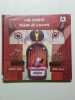
Un conte plein de loups (colección O Band 72)
OQO Editora 2012 40 pages 25 6x1 2x23 8cm. 2012. Relié. 40 pages.
Bon état
ALLART VAN EVERDINGEN, THE DRAWINGS, A Complete Catalogue, Including the Studies for Reynard the Fox.
, Nunspeet, 2007, Aetas Aurea, Davaco., Bound in cloth with dust jacket,. 4to. 504 pages, containing an Introduction, the main text comprising of 12 chapters, an extensive bibliography and indexes; 756 illustrations, from which 10 are in colour.fine condition Aetas Aurea, Vol. XXI ISBN 9070288974.
Allart van Everdingen, born at Alkmaar in 1621, launched his career as a landscape and marine specialist at Haarlem in the 1640s, then moved to Amsterdam in 1652 where he was active as a painter, printmaker, draftsman and art dealer up to his death in 1675. He was renowned in his day for the Scandinavian subjects he depicted following his trip to Norway and Sweden in 1644.This catalogue of Everdingen's drawings presents 670 authentic water colors, ink drawings and oil sketches on paper in comprehensive, illustrated entries. The accompanying text explores many facets of his activity as a draftsman, including his use of paper, and also discusses later collectors of his sheets, their marks and inscriptions, and many imitations and copies of the master's drawing extant today. High points from Everdingen's production include his trip sketches (both from his travels to Scandinavia and from a trip he made to the Ardennes in 1656), his masterworks showing Dutch scenery, his allegorical series (Twelve Month, Four Seasons and Four Elements) and his studies and transfer drawings for both his Scandinavian landscape etchings and the prints he made to illustrate the fable Reynard the Fox.The volume is an important reference work for all those with a general interest in seventeenth-century Dutch landscape and old master drawings, or with a particular interest in allegorical landscape subjects, book illustration or the Reynard the Fox fable.The author, Alice I. Davies, published an Everdingen monograph and catalogue of the artist's paintings (in collaboration with Frederik J. Duparc) in 2001. Her other publications includes a book on the life and work of Jan van Kessel (1641-1680) and a catalogue of the 16th- and 17th-century Dutch and Flemish paintings at the Springfield Museum of Fine Arts. She was an editor of Shop Talk, the 1995 Festschrift in honor of Seymour Slive.
Merovingian Letters and Letter Writers
, Brepols, 2019 Paperback, xxxi + 386 pages, Size:178 x 254 mm, Illustrations:2 tables b/w., Language: English. ISBN 9782503583587.
Summary Primary sources from the Frankish kingdom during the Merovingian era (ca. 500-750) are few and far between. This volume is a survey of more than 600 Latin letters, selected by the author, that were exchanged between persons in Gaul during that time period. Many are almost entirely unknown and have never been translated into any modern language. While most of the letters were authored by clerics and highly-placed laymen, a small but significant number was composed by women, both religious and lay. For elite individuals, letter networks were the social media of their day. Letters were written to maintain the bonds of friendship, to seek or extend patronage and political alliance, to instruct, rebuke, defend, console, and recommend. Many have come down to us in collections; others are strays embedded in other texts or deperdita that come to light only in the replies of others. This book is a valuable tool for scholars and students alike. In seven readable chapters, the author discusses numerous aspects of the letters and explores how they fit with, and enlarge upon, the better-known sources of the period such as the works of Gregory of Tours, Fredegar, the anonymous History of the Franks (LHF), and various saints' vitae. An appendix containing a summary of each letter in translation renders these texts more readily accessible to the English speaker. TABLE OF CONTENTS Introduction and Timeline of Letter Collections Chapter 1: Amicitia Networks Part 1: Sidonius Apollinaris to Nicetius of Trier and Friends Chapter 2: Amicitia Networks Part 2: Venantius Fortunatus and the Later Sixth Century Chapter 3: Amicitia Networks Part 3: Columbanus to Boniface and Lull Chapter 4: Kings and Popes Chapter 5: Women's Letters Chapter 6: Bearers and Gifts Chapter 7: Letter Writers and the Bible Conclusion Appendix: Summaries of Individual Merovingian Letters
DISQUE VINYLE 33T CARIBBEAN QUEEN, BESOIN DE RIEN ENVIE DE TOI, U JUST CALLED, TO SAY I LOVE YOU, J'LAI PAS TOUCHEE, I WANT TO BREAK FREE, SNOOPY, SMOOTH OPERATOR, SMALLTOWN BOY, HONG KONG STAR, WHAT'S LOVE, GOT TO DO WITH IT, MON COEUR TE DIT JE T'AIME.
STEREO. non daté. In-12. Broché. Bon état, Couv. convenable, Dos satisfaisant, Intérieur frais. Pochette en couleurs, photo: CLI HOUSE NEW MALDEN. Quelques titres en anglais et les autres en français. Hit radio tv.. . . . Classification : 410-33 Tours

Disque n°AL 75 Classification : 410-33 Tours


DISQUE VINYLE 33T VAMOS A LA PLAYA, FLASHDANCE... WHAT A FEELING, BABY JANE, COEUR DE ROCKER, I LIKE CHOPIN, LE KID, BANDOLERO, DOLCE VITA, SWEET DREAMS, TRUE, MOONLIGHT SHADOW, THE WOMAN IN YOU, LEVE TON FUL DE LA, COMMENT CA VA.
STEREO. non daté. In-12. Broché. Bon état, Couv. convenable, Dos satisfaisant, Intérieur frais. Pochette en couleurs hit parade tv. Quelques titres en français, quelques titres en anglais. Photo: M. LAGUENS.. . . . Classification : 410-33 Tours

Disque n°AL 70 Classification : 410-33 Tours
Pasargadae; The oldest imperial capital of Iran. Translated by The Reverend R.N. Sharp, M.A., Cantab.
Shiraz : Musavi Printing Office, Publication N° 4 of the Learned Society of Pars, 1956. Un volume in-8°, reliure toilée de l'éditeur.
Complet de sa carte. [20043]

