 Write to the booksellers
-
Type
Book (7253)
Disk (44)
Drawings (1)
Engraving (9)
Magazine (89)
Maps (4)
Music sheets (135)
New book (2)
Old papers (1)
Photographs (19)
Posters (1)
-
Latest
Last 24h (5)
Last 3 days (4)
Last month (908)
Last week (14)
-
Language
Czech (1)
Dutch (11)
English (156)
French (7377)
German (4)
Italian (2)
Latin (3)
Russian (4)
-
Century
16th (17)
17th (43)
18th (199)
19th (879)
20th (2481)
21st (1570)
-
Countries
Belgium (1158)
Canada (34)
China (56)
Côte d'Ivoire (6)
Denmark (1058)
France (4896)
Germany (1)
Netherlands (181)
Switzerland (155)
United Kingdom (9)
United States of America (4)
-
Syndicate
ALAC (27)
CLAM (27)
CLAQ (2)
ILAB (2233)
NVVA (15)
SLACES (15)
SLAM (1026)
SNCAO (4)
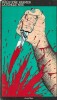
Festival de Mont de Marsan 1976
Affiche anonyme 635x505mm.
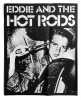
"Eddie and the Hot Rods" est un groupe de la scène Pub Rock anglaise fondé en 1975 à Essex qui a précédé le punk et qui s'y est mélangé, ce qui explique sa présence au Festival de Mont de Marsan.Le groupe fut également assimilé à la scène punk de la fin des années 1970 pour sa jeunesse et son énergie. Le titre Do Anything You Wanna Do a été no 1 en Angleterre. Ils ont tourné avec les Sex Pistols, The Clash, Dr Feelgood Police, Tom Petty, The Ramones... dans les années 1980.Ils sortent la même année leur premier album "Teenage Depression" dont la pochette utilise l'image de cette affiche.Aussi surprenant que cela puisse paraître, le premier festival de punk européen de l'histoire a eu lieu à Mont-de-Marsan ! Durant deux étés, en 1976 et 1977, la sous-préfecture des Landes a accueilli des groupes qui allaient devenir cultes : The Clash, The Police, The Damned. Une aventure éphémère mais capitale racontée par Alain Gardinier dans un livre intitulé « Punk sur la ville ».Exemplaire sans le texte.(104353)
Le Mans 66 + Eddie The Eagle-Coffret 2 Films [Blu-Ray] (NEUF SOUS BLISTER)
13 8x17 4x2 4cm. Sans date. blu_ray.
![Le Mans 66 + Eddie The Eagle-Coffret 2 Films [Blu-Ray] (NEUF SOUS BLISTER). Eddie the Eagle](https://static.livre-rare-book.com/pictures/IGE/500373889_thumb.jpg)
Neuf
Les secrets de santé du thé - Faits le plein de vitalité avec le champion des aliments santé.
Alpen, 2005, 96 p.
Ouvrage en bon état.
LEON SPILLIAERT 1881 - 1946.
Antwerp, Ministry of the Flemish Community, 1982 softcover, NL pictorial cardboard cover in colour, 17x24 cm., 72 pp., profoundly illustrated in colour and b/w.
In good condition.
LEON SPILLIAERT 1881 - 1946. English
Antwerp, Ministry of the Flemish Community, 1982 softcover, pictorial cardboard cover in colour, 17x24 cm., 72 pp., profoundly illustrated in colour and b/w. text in ENGLISH
In good condition.
Maba-group lexicon
Berlin Dietrich Reimer verlag - Coll. « Sprache und Oralität in Afrika » ( no 13) 1991 In-8 Cartonnage toilé de l'éditeur
Edition originale. Langue du Tchad. 426 pp. Très bon 0
Tarzan: Le seigneur de la Jungle
Edgar Rice Burroughs 1977 82 pages in8. 1977. broché. 82 pages. Tarzan Lord of the Jungle est un roman d'aventures d'Edgar Rice Burroughs qui suit les exploits de Tarzan un homme élevé par des singes dans la jungle africaine alors qu'il affronte des dangers protège son territoire et navigue entre son héritage sauvage et le monde civilisé
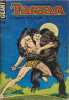
Etat correct couverture usagée intérieur propre
Le Mystificateur (The Joker)
petit in-8 broché - 1939 - 251 pages - Ed. Hachette - coll. L'Enigme
bon état (dos décoloré et plié)
The Double
Hodder and Stoughton in12. Sans date. Cartonné. Le roman 'The Double' d'Edgar Wallace raconte l'histoire d'un homme qui rencontre son double inconnu ce qui entraîne des complications. L'intrigue suit Dick Staines un policier et fait référence à l'affaire du meurtre de Staines
Bon Etat couverture défraîchie intérieur propre
La Terreur (The Terror)
in-12 broché - sd - 188p - Ed. Hachette - coll. L'Enigme
bon état (dos déchiré avec petit manque)
Edited by Georges St. Martin and Ronald C. Nelson. Photographies by Keith Joinville, Robert Manson, Jos Le Doare, Charles Egermeier, Henry Grant, Ermete Marzoni, C. Thornton, Putsee Vannucci, Norma Holt from APA, Joy Bouwerman from APA, Hajo Ortil, P.G. Schutzer fromm FPG, Paul E. Glines, Raymond Barnes, Photo Dachs, M. Simonet, Don Wight, Carl Mansfield, Sam Kimura from APA, Louis Ell, A.J. Lowe, Jacques Simonot, Hazel Garvin, Ken Heyman, Phoebe Dunn from FPG, Arthur Burnham from APA, David C. Hastings from APA, Marc Slade, Margaret Hummel from FPG, Gene Bane, Roger Webster, Brooke Elgie from FPG, Eleanor Rost from FPG, Syd Greenberg from APA, Sterling Studios from APA, The Coca-Cola Company, Dennis Hallinan from FPG, Martin Dworkin, Paul Mathews from FPG, G.W. Kittle, Donmoor-Isaacson, Warren Schoenberger, Victor Bogachoff, Victor De Palma from FPG, Michael J. Freeman from FPG, R.E. McLean, P.G. Schutzer from FPG, Mrs Carl B. Cuesta, Louis Ell, Marjorie Oyler, Augustus U ptitis from FPG, William Austin, John Mechling from FPG, Aristide Niccollet, Bob Smallman from dpi, Dale Rooks from FPG, Ben Eday from FPG, Florence Harrisson from FPG, Terence Vickerson, Paul Popper, Fred H. Secord, Jim Pond from FPG, Karl Honig, François Teufferd from FPG, Ward Linton, Vasillov from dpi, Burt Owen from dpi.
Reference : 86392
(1966)
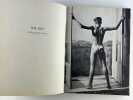
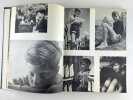
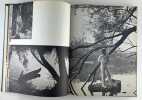
THE BOY. A Photographic Essay.
New-York, Book Adventures, Inc., 1966, in-4, hardbound, 232p. Second printing. Dustjacket missing. Good copy.
NB. La librairie est fermée jusqu'à fin septembre. Les questions et commandes seront traitées début octobre.
( Editions Champ Libre - Tarzan - Doc Savage - Jack the Ripper - Pastiche ) - Philip José Farmer - Alain Le Saux.
Reference : 5383
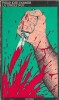
La Jungle Nue.
Editions Champ libre / Collection " Chute Libre " n° 1 de 1974. In-8 broché de 304 pages au format 21,5 x 12,5 cm. Belle couverture illustrée par Alain Le Saux. Dos carré avec minuscule trace de pliure et infimes frottis. Plats avec de minuscules frottis aux coins et aux mors. Intérieur frais. Délirant pastiche de Tarzan, où l'on croise Doc Savage et Jack l'Eventreur. Bel état général. Rare édition originale.Chute libre était une collection de science-fiction créée par Gérard Lebovici et les éditions Champ libre en 1974. La collection cessa d'exister en 1978 après avoir publié vingt-et-un titres. La collection Chute libre était dirigée par Jean-Claude Zylberstein d'après une idée de Jean-Patrick Manchette.

Vente exclusivement par correspondance. Le libraire ne reçoit, exceptionnellement que sur rendez-vous. Il est préférable de téléphoner avant tout déplacement.Forfait de port pour un livre 10 € sauf si épaisseur supérieure à 3 cm ou valeur supérieure ou égale à 100 €, dans ce cas expédition obligatoire au tarif Colissimo en vigueur. A partir de 2 livres envoi en colissimo obligatoire. Port à la charge de l'acheteur pour le reste du monde.Les Chèques ne sont plus acceptés.Pour destinations extra-planétaire s'adresser à la NASA.Membre du Syndicat Lusitanien Amateurs Morues
( Editions Champ Libre - Tarzan - Doc Savage - Jack the Ripper - Pastiche ) - Philip José Farmer - Alain Le Saux.
Reference : 32887
La Jungle Nue.
Editions Champ libre / Collection " Chute Libre " n° 1 de 1974. In-8 broché de 304 pages au format 21,5 x 12,5 cm. Belle couverture illustrée par Alain Le Saux. Dos carré avec légère trace de pliure et infimes frottis en haut et en bas. Plat avec de minuscules frottis et tassements aux coins. Intérieur frais malgré une étiquette d'appartenance. Délirant pastiche de Tarzan, où l'on croise Doc Savage et Jack l'Eventreur. Bel état général. Rare édition originale.Chute libre était une collection de science-fiction créée par Gérard Lebovici et les éditions Champ libre en 1974. La collection cessa d'exister en 1978 après avoir publié vingt-et-un titres. La collection Chute libre était dirigée par Jean-Claude Zylberstein d'après une idée de Jean-Patrick Manchette.
Vente exclusivement par correspondance. Le libraire ne reçoit, exceptionnellement que sur rendez-vous. Il est préférable de téléphoner avant tout déplacement.Forfait de port pour un livre 10 € sauf si épaisseur supérieure à 3 cm ou valeur supérieure ou égale à 100 €, dans ce cas expédition obligatoire au tarif Colissimo en vigueur. A partir de 2 livres envoi en colissimo obligatoire. Port à la charge de l'acheteur pour le reste du monde.Les Chèques ne sont plus acceptés.Pour destinations extra-planétaire s'adresser à la NASA.Membre du Syndicat Lusitanien Amateurs Morues
Nfl Record And Fact Book
Broché bon état .Contenu propre . 688 pages . 2014.PHOTOS SUR DEMANDE
Merci de nous contacter à l'avance si vous souhaitez consulter une référence dans notre boutique à Authon-du-Perche.
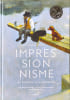
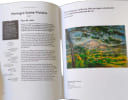
Impressionnisme: De Giverny à la Norvège un mouvement à (re)découvrir en 40 notices
LE CHENE 2021 108 pages collection Ça c'est de l'art. 17 3x24 1x1 6cm. 2021. reliure editeur. 108 pages. DE GIVERNY À LA NORVÈGE UN MOUVEMENT À (RE)DÉCOUVRIR EN 40 NOTICES
Très bon état
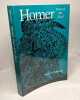
Homer: Poet of the Iliad
The Johns Hopkins University Press 1990 352 pages 15 24x22 86x2 2352cm. 1990. Broché. 352 pages.
Très bon état intérieur propre bonne tenue
Homer: Poet of the Iliad
The Johns Hopkins University Press 1990 352 pages in8. 1990. Broché. 352 pages.
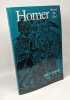
Très bon état de conservation légères ternissures sur la tranche intérieur propre bonne tenue
Edwin Hawkins Singers (The) - Hawkins Edwin R. - Hawkins Edwin R.
Reference : 95526
(1969)
Partition de la chanson : Oh Happy day
Kama Sutra Music 1969
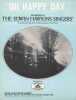
Très bon état Format Coquille Piano
IN MEMORIAM HARE MAJESTEIT KONINGIN ASTRID.
Aalst, antwerpen, de vlijt, 1938 Gebrocheerd, papieromslag, 82pp, 27c22cm
met foto's
Anden Reise paa Island. Løse Noter. (Særskilt Aftryk af ""Berlingske Tidende"").
Kjøbenhavn, Berlingske Bogtrykkeri, 1895. Lille 8vo. Samtidigt hshirtbd. 128 pp.
Fiske I,123.

"EHRENBERG, C.G. - A GROUNDBREAKING PAPER ON THE MICROSCOPICAL STRUCTURE OF THE BRAIN.
Reference : 45240
(1833)
Notwendigkeit einer feineren mechanischen Zerlegung des Gehirns und der Nerven vor der chemischen, dargestellt aus Beobachtungen.
Leipzig, Johann Ambrosius Barth, 1833. Without wrappers. In: ""Annalen der Physik und Chemie. Hrsg.von Poggendorff"", Bd. 28, Siebentes Stück. Pp. 449-528. Entire issue offered with titlepage to vol. 28. Ehrenberg's paper: pp. 449-473 and 1 engraved plate with many figs. (nervecells and tubes, nerve fibres, ganglia).
First appearance of a milestone paper on the physiology of the brain, depicting for the first time the nerve cells and ganglia in the gray area of the brain. This work was also published seperately with the title ""Ueber den Mangel des Nervenmarks im Gehirne der Menschen und Thiere, den gegliederten röhrigen Bau des Gehrins und über normale Krystallbildung im lebenden Thierkörper"" (Aus Poggendorff's Annalen d. Physik...)""""In his groundbreaking work on microscopical structure of the brain and nerves, published in 1833 (the paper offered), the Berlin anatomist Christian Ehrenberg stated that according to his observations the nerves consisted of tubes, most of these cylindrical, some of them - the optical and auditory nerve and the nerves in the organ of smell - varicose. According to Ehrenberg, the cylindrical nerves contained 'substance that consisted of ""small plump but not very regular particles"", the nerve marrow. Ehrenberg also described smaller and bigger granulas in the substance of the brain, but as the dominant element of the brain he identified fibers. However he stressed that other than the nerve fibres,the brain were not simple cylindrical ones but ""resemble strings of beads"".2(Giora Hun et al.).
Freiheitskampf in Texas im Jahre 1836. 4 Theile in einem Bande.
Leipzig, Otto Wigand, 1844. 12mo. Contemp. full cloth. (original ?). Gilt spine. Gilt lettering. Faint remains of a numbering on lower part of spine. Stamp on title-page. (2),IV,293,(1) pp. and (4) pp. of publisher's announcements. Occassionally faint scattered browning.
First printing under this title, but it is the second edition of the author's ""Texas und seine Revolution"" 1843. It is the best first-hand account of the Texas revolution.Sabin,22072. - Howes E83.
Welche Züge der Lichtquantenhypothese spielen in der Theorie der Wärmestrahlung eine wesentlich Rolle ? (Which Features of the Quantum Hypothesis Play an Essential Role in the Theory of Heat Radiation).
Leipzig, Johann Ambrosius Barth, 1911. Later full cloth. Stamps on title-page. In ""Annalen der Physik"", Vierte Folge, Band 36. - VIII,1088 pp. and 4 plates. (Entire volume offered). Ehrenfest's paper: pp. 91-118.
First edition of the paper in which the term ""Ultraviolet Catastrophe"" appeared for the first time. ""Ehrenfest was one of the first to try to understand the significance of the strange new concept of energy quanta that Max Planck had introduced into physics in 1900 in his theory of blackbody radiation. In a series of papers culminating in his major study of 1911 (the paper offered), ""Which Features of the Quantum Hypothesis Play an Essential Role in the Theory of Heat Radiation?,"" Ehrenfest picked out the essentials of the early quantum theory and showed how they fit together. He proved rigorously that the energy of electromagnetic vibrations cannot take on all values - cannot vary continuously - if the total energy of the blackbody radiation in an enclosure is to be finite: Planck’s assumption that energy is a discrete variable was, therefore, logically necessary and not just sufficient. Ehrenfest also showed, by an analysis of Wien’s displacement law, that the ratio of energy to frequency was the only variable that could be quantized for a harmonic oscillator, if one wanted to maintain the statistical interpretation of entropy.""(DSB).
BEHIND THE SCENES OF TIFFANY GLASSMAKING. THE NASH NOTEBOOKS.
New York, Estate of Leslie H. Nash, 2001 Bound, hardcover with gold print, original editor's jacket in colour, 23.8x28.3 cm., 236 pp., illustrated in b/w and colour. ISBN 0312282656.
Including Tiffany Favrile Glass by Leslie Hayden Nash. In association with Christie's Fine Arts Auctioneers.
Kvædi i fra Holti.
Selfossi, 1961. Orig. bogtrykt omslag. 100 pp. Med stor dedikation til digteren Jakob Thorarensen.
Originaludgaven.

