 Write to the booksellers
-
Type
Book (7254)
Disk (44)
Drawings (1)
Engraving (9)
Magazine (89)
Maps (4)
Music sheets (135)
New book (2)
Old papers (1)
Photographs (19)
Posters (1)
-
Latest
Last 24h (1)
Last 3 days (5)
Last month (969)
Last week (2)
-
Language
Czech (1)
Dutch (9)
English (156)
French (7380)
German (4)
Italian (2)
Latin (3)
Russian (4)
-
Century
16th (17)
17th (43)
18th (199)
19th (881)
20th (2479)
21st (1564)
-
Countries
Belgium (1156)
Canada (34)
China (56)
Côte d'Ivoire (7)
Denmark (1063)
France (4893)
Germany (1)
Netherlands (181)
Switzerland (155)
United Kingdom (9)
United States of America (4)
-
Syndicate
ALAC (27)
CLAM (25)
CLAQ (2)
ILAB (2243)
NVVA (15)
SLACES (15)
SLAM (1033)
SNCAO (4)
Chareyre Christine Hegbrook Thomas Pang Hannah
Reference : 500120061
(2018)
ISBN : 9782366534238
Chareyre Christine Hegbrook Thomas Pang Hannah
Reference : 500121424
(2018)
ISBN : 9782366534238
L'année du CE2. 8-9 ans. Per la Scuola elementare
Bordas 2009 192 pages 27 2x1 6x19 6cm. 2009. Relié. 192 pages.
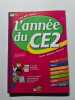
Etat correct
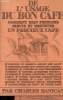
De l'usage du bon café comment bien préparer servir et déguster un précieux café.
Brulerie du havre de grace. non daté. In-8. Broché. Bon état, Couv. convenable, Dos satisfaisant, Intérieur frais. Fascicule de 11 pages agrafées - quelques dessins en noir et blanc dans le texte.. . . . Classification Dewey : 633.7-Plantes alcaloïdes (tabac, thé, cacao, café, pavot)
Classification Dewey : 633.7-Plantes alcaloïdes (tabac, thé, cacao, café, pavot)


The Life and Adventures of Nicholas Nickleby ( illustrated by PHIZ)
HAZELL WATSON & VINEY LTD 720 pages IN8. Sans date. reliure editeur. 720 pages.
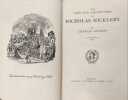
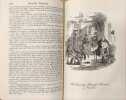
Bon état
[University of Wales Press on behalf of the Welsh Arts Council] - CHARLES-EDWARDS, T. M.
Reference : 63045
(1989)
The Welsh Laws
Limited edition (1000 numbered copy), n° 619, 1 vol. in-8 br., University of Wales Press on behalf of the Welsh Arts Council, 1989, 109 pp.
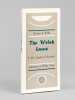
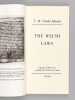
Good copy
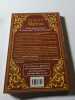
Le Mystère de la Clinique (The secret of the Spa)
1949 petit in-8 broché avec sa jaquette illustrée - 1949 - 255 pages - Ed. Hachette - coll. L'Enigme
bon état (rousseurs légères)
The Voyage
Macmillan & Co. Ltd 1950 546 pages in8. 1950. reliure editeur. 546 pages. Le roman se déroule dans la région de la Charente et les music-halls parisiens des années 1930. Il raconte les épreuves d'un homme en quête d'amour pour une femme et pour la France
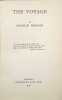
tranche de goutière légèrement tâchée intérieur globalement propre
Constitution des États-Unis
ÉDITIONS CORRÉA BUCHET CHASTEL 1956 364 pages in8. 1956. broché. 364 pages.
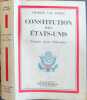
Bon état pages non coupées
Charnay Roland Dussuc Marie-Paule Madier Dany Combier Georges
Reference : 500082423
ISBN : 9782218943348
Cap Maths CM1 2010 manuel élève NON VENDU SEUL Compose le 9653528
Hatier 192 pages 21 3x1 5x28 7cm. Sans date. Relié. 192 pages.
Très bon état - légères marques de lecture et/ou de stockage mais du reste en très bon état- expédié soigneusement depuis la France
Cha Sangmanee Kitti, Donzel Catherine,
Reference : RO40278440
(1996)
ISBN : 2080124803
L'ABCdaire du thé
Flammarion. 1996. In-8. Relié. Bon état, Couv. convenable, Dos satisfaisant, Intérieur frais. 119 pages augmentées de nombreuses photos en couleurs, dans et hors texte.. . . . Classification Dewey : 641.5-Cuisine, art culinaire
Classification Dewey : 641.5-Cuisine, art culinaire
CHA SANGMANEE Kitti , DONZEL Catherine , MELCHIOR-DURAND Stéphane , STELLA Alain
Reference : 021470
(1999)
L'ABCdaire Du thé
Paris France Loisirs 1999 Grand In 8 Très complet tour d'horizon sur le thé . Illustrations en couleurs et en noir et blanc . Cuisine . Ethnologie et Anthropologie . - 120 p. , 400 gr.
Couverture souple Très Bon État . 1ère Édition
"CHASLES, MICHEL. - ONE OF THE GREATEST FORGERIES IN THE HISTORY OF SCIECE.
Reference : 59087
(1867)
Réponse à la communication de M. Faugères.
(Paris, Gauthier-Villars), 1867. 4to. In: ""Comptes Rendus Hebdomadaires des Séances de L'Academie des Sciences"", Tome 65, No 10. Pp. (373-) 428. (Entire issue offered). Chasles' paper pp. 375-385.
""Chasles was a collector of autographs and manuscripts, and this interest allied with his credulity to cause him serious embarrassment. From 1861 to 1869 he was the victim of one of the most clever and prolific of literary forgers, Denis Vrain-Lucas. Chasles bought thousands of manuscripts, including a correspondence between Isaac Newton, Blaise Pascal, and Robert Boyle which established that Pascal had anticipated Newton in the discovery of the law of universal gravitation. Chasles presented these letters to the Academy in 1867 and took an active part in the furor that ensued (1867-1869), vigorously defending the genuineness of the letters. In 1869 Vrain-Lucas was brought to trial and convicted. Chasles was forced to testify and had to admit to having purchased letters allegedly written by Galileo, Cleopatra, and Lazarus, all in French."" (DSB).
Bruno Rousselot Tableaux 1994 - 2008
SEMIOSE 2009 56 pages 16 2x0 6x22 6cm. 2009. Broché. 56 pages.
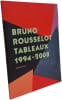
Très bon état
Pour comprendre le Brésil de Lula
L'Harmattan 2004 333 pages 24x2 2x16cm. 2004. broché. 333 pages.
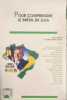
Bon état
Chastel André Bony Jean de Paul-David Madeleine Yoshikawa Itsuji
Reference : 17586
(1986)
ISBN : 2858503230
Henri Focillon
Centre Pompidou 1986 314 pages collection Cahiers pour un temps. 0x2x2cm. 1986. Broché. 314 pages.
couverture légèrement usagée intérieur propre
Chastel André Bony Jean de Paul-David Madeleine Yoshikawa Itsuji
Reference : 100131558
(1994)
ISBN : 9782858503230
Henri Focillon
Centre pompidou 1994 0x2x2cm. 1994. Broché.
Bon état sous rhodoïd couverture ternie intérieur propre
Chastrusse Corinne Roussy David Gonzalez Serge
Reference : 500155806
(2007)
ISBN : 9782218926952
Histoire-Géographie et Éducation civique - Fiches d'activités 4e éd. 2007: 40 fiches d'activités avec une initiation progessive au brevet
Hatier 2007 80 pages 29 2x0 8x21 4cm. 2007. Broché. 80 pages.

Très bon état
De Buonaparte, Des Bourbons, et de la nécessité de se rallier à nos princes légitimes, pour le bonheur de la France et celui de l'Europe,
1814 Paris,Mame Freres Imprimeurs-libraires,Le Normant () H. Nicole (Paris). 1814.[4] 82pp.,Disbound. Sans mention d'edition.,broché,sans couvertures à relier,dans l'état
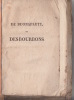
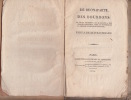
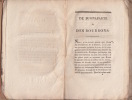
Originale ou Seconde edition ?,differente de celle numerisée par la BNF,pas de vignettes page de titre ni page 1,texte identique à caracteres réduits,semble etre la véritable Edition originale du texte de Chateaubriand. Remise de 20% pour toutes commandes supérieures à 200 €
CHATEAUBRIAND (François-René de).- BONALD (Louis-Gabriel-Ambroise, vicomte de).liberté de la presse
Reference : 22819
(1816)
Brochures politiques, receuil de CHATEAUBRIAND : De la monarchie selon la Charte + Du Retablissement De La Censure Par L'ordonnance Du 24 Juin 1827 suivi de : Opinion sur le projet de loi relatif a la police de la presse, 2nd. ed., Paris 1827 + BONALD De l'opposition dans le gouvernement et de la liberté de la presse ,4 textes en un volume
1816 reunis en un volume demi veau tabac dos lisse titré ,charnieres faibles fendillées reliure de l'epoque,: De la monarchie selon la Charte:Paris, Imprimerie des AMIS DU ROI, 1816.First Edition In-8°, VI, 88 pp., Edition originale dans laquelle Chateaubriand tente de convaincre les émigrés de se rallier à la charte constitutionnelle. relié à l'époque suivi de Du Retablissement De La Censure Par L'ordonnance Du 24 Juin 1827-LADVOCAT 1827,xij+91p. suivi de : Opinion sur le projet de loi relatif a la police de la presse, 2nd. ed., Paris LADVOCAT 1827,104p. suivi de BONALD (Louis-Gabriel-Ambroise, vicomte de)- De l'opposition dans le gouvernement et de la liberté de la presse.Adrien Le Clère et Cie,1827] (4)-163 pp,rousseurs éparses, bon état, Edition originale (Talvart et Place II-78)
reliure meritant une restauration, rare reunion de textes historiques sur la liberté de la presse Remise de 20% pour toutes commandes supérieures à 200 €
Early Dutch Painting. Painting in the nothern Netherlands in the fifteenth century.
Secaucus, Wellfleet Press, 1980 Bound, hardcover with dj., 264pp., 30.5x26.5cm., ills., fine copy. ISBN 9781555212551.
The Cretan Painter Theophanis. The Wall-Paintings of the Holy Monastery of Stavronikita
Chatzidakis, Manolis: The Cretan Painter Theophanis. The Wall-Paintings of the Holy Monastery of Stavronikita. Holy Monastery of Stavronikita, 1986. 325 pages with 223 colour illustrations. Hardback. 31.5 x 25cms.
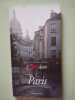
L'ABCDAIRE DE PARIS
Flammarion 1999 120 pages 12x0 8x21 8cm. 1999. Broché. 120 pages.
Bon état

