 Write to the booksellers
-
Type
Any type (1)
Art print (7)
Autograph (1)
Book (32226)
Disk (1)
Drawings (265)
Engraving (11)
Magazine (125)
Old papers (1)
Photographs (15)
Posters (1)
-
Latest
Last 24h (8)
Last 3 days (15)
Last month (455)
Last week (28)
-
Language
Dutch (79)
English (56)
French (32475)
German (6)
Italian (18)
Portuguese (9)
Spanish (11)
-
Century
16th (14)
17th (46)
18th (200)
19th (1526)
20th (9434)
21st (1685)
-
Countries
Belgium (10933)
Brazil (6)
Canada (116)
China (1)
Côte d'Ivoire (134)
Denmark (209)
France (18153)
Germany (1)
Greece (1)
Switzerland (3100)
-
Syndicate
ALAC (107)
CLAM (144)
CLAQ (102)
CNE (3)
ILAB (10478)
NVVA (1145)
SLACES (1145)
SLAM (7873)
SNCAO (10)
In the picture. Kunst in KBC - Art in KBC.
Brussel, KBC Groep NV, 2009 Hardcover in schuifdoos, 284pp., 24.5x32.5cm., overvloedig geillustr. in kleur, als nieuw.
Met deze publicatie wordt een overzicht gegeven van zes eeuwen beeldende kunst uit de KBC-collectie alsook de hoogtepunten uit het architectonisch patrimonium. Ned. en Eng. tekst.
Les Enseignements architecturaux de l'Atjitagama et du Rauravagama
Pondichery 1977 Institut Français d'Indologie Hardcover Good
Reliure rigide originale de l'éditeur, jaquette: Bon, 25 x 17 cm, 148 pp. + V tableau, français, état du livre: Très bon Publications de l'Institut Français d'Indologie Nr 57 [Cette description peut avoir été traduite par une IA.]
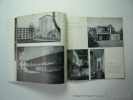
L'architecture nouvelle en Allemagne
Munich, Editiosn F. Bruckmann, 1952, in-8 carré, Broché, 79 pages. Bon état
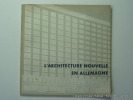
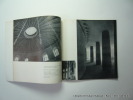
NB. La librairie est fermée jusqu'à fin septembre. Les questions et commandes seront traitées début octobre.
Les éléments et les métamorphoses de la nature, imaginaire et symbolique des arts dans la culture européenne du XVIe au XVIIIe siècle
Annales du Centre Ledoux, tome 4 Bordeux, 2004, William Blake and Co Edit et Art et Arts, 502 p, br, 17x24 cm titre offset 2 coul, couv à rabats ill noir gaufrée ; ISBN: 2911059212
Neuf
Marie Fran oise Plissart -A World without End
, FotoMuseum Provincie Antwerpen, 2008 softcover, 204 pages, 29 x 29 cm English text. FINE. ISBN 9789078487005.
Works in A World Without End range from her atmospheric and enigmatic photo novel Right of Inspection, via her resonant portraits of Kinshasa and its people, to her most recent work, including Brussels, China and the Trans-Siberian express. Plissart, who has had a varied career (including a spell as a taxi driver - and this special insight to Brussels by night is reflected in her work), is known as a very open and approachable woman, both considered and relaxed. Her work reflects this as it explores the possibilities of documentary reportage and fiction, the natural and the architectural, colour and black and white. She is also a bit of a formal innovator, with dizzying birds' eye shots from tall buildings, which give a new perspective on Brussels, not to mention Kinshasa. The massive composite grid with the street life of Congo's capital in the foreground, sweeping back to panoramic views of the city is a highlight. Favourites from A World Without End are the masterfully lit images of disused industrial buildings that render them as mysterious as cathedrals, and landscapes shot through grids of factory windows. One cannot fail to be impressed by her vertigo-inducing self portrait, balancing a heavy, large-format camera on the ledge of a skyscraper while buffeted by the wind. Photography as adrenaline sport?
100 Kindervragen - De zee
, Stichting Kunstboek 2012, 2012 Hardcover, 64 pagina's, Nederlands, 245 x 175 mm, wetenschap, voor kinderen EN hun ouders !. ISBN 9789058564269.
Ieder deel van de reeks 100 Kindervragen bevat 100 vragen van kinderen over een bepaald onderwerp. De thema's binnen deze reeks zijn zeer divers, maar sluiten nauw aan bij de dagelijkse belevingswereld van het kind. Heel wat kwesties zullen ook de ouders boeien, omdat zij lang niet alle gestelde vragen zelf kunnen beantwoorden.
Reconstruction - Déconstruction
1988 Paris Picard 1988 24 x 30 cm Broché, couverture illustrée 327 pp Collection "Villes & Sociétés". Très nombreuses illustrations N.B. (photos, dessins, plans, maquettes...)
Bon état Photos de tous nos ouvrages sur demande Des photos de nos ouvrages sont disponibles sur demande.
Retrospectiva Bruno Vekemans Retrospective
, [BE] Stockmans - Devos , 2010 Hardback, 240x300mm, 248p, 170 colour illustrations, English/ French/ Dutch (NL)/ SP. edition . ISBN 9789077207215.
Expo: 1/10/2010 - 5/12/2010, Museo Nacional de Bellas Artes, Havana Op 1 oktober 2010 opent in het Museo Nacional de Bellas Artes in Havana een retrospectieve van het werk van de Antwerpse kunstenaar Bruno Vekemans (1952). De tentoonstelling, die tot 5 december loopt, geeft een overzicht van het werk dat Vekemans de laatste 15 jaar heeft gemaakt. In de tentoonstelling zal eveneens een selectie worden getoond van de nieuwe Havana-reeks waaraan Vekemans de afgelopen drie jaar heeft gewerkt. De nieuwe Havana-reeks die Vekemans schildert, is een vervolg op de Kinshasa-Congo-reeks waaraan de Antwerpse kunstenaar werkte tussen 2006 en 2007. Die serie brengt indringende portretten van gewone mensen die Vekemans in de straten van de Congolese hoofdstad ontmoette. Gefascineerd door de link tussen de Congo-cultuur en de Afro-Cubaanse traditie trok Vekemans eind 2007 voor het eerst naar Havana om daar opnieuw gewone Cubanen te fotograferen en te schilderen. Met de retrospectieve in het Museo Nacional de Bellas Artes krijgt de 58-jarige Vekemans eindelijk de internationale erkenning die hij verdient.
Bruno V. Roels: Once The Adventure Is Accepted
, Gallery FIFTY ONE , 2026 Soft cover, 21 x 15 cm, 144 pages, English text. *New. ISBN 9789083594125.
Bruno Roels divides his time between writing and photographing. He considers the act of printing (turning a photograph into a tangible object) as important as the act of photographing itself. He photographs almost nonstop, documenting his entire life, building a sizable archive. In his dark room he uses that archive to explore the analogue photographic process. Rather than trying to make ?the perfect gelatin silver print? he assumes that all prints are perfect and gives all variations equal attention. He?s looking for poetry, and photographic truth, in sequences and fluctuations. Details in his photographs may become lead motives in bigger compositions, and obvious subject matter is reduced to abstract information through numerous reiterations.
?Les plus beaux livres du XVI me si cle
? Paris, Henry Babou, 1931 Volume en feuilles, 21 x 27 cm, 32 pages + 40 planches en h liotypie. Tirage limit 675 exemplaires num rot s. (165).
?Les plus beaux livres du XVI me si cle
Il Duomo come libro aperto - Leggere l'arte della chiesa
Lingua italiana, Quaderni dell'Opera, Anno I, Numero 1, 1997,204 pp., brossura editore, condizioni buone.
Typehuset af i dag
Kobenhavn [Copenhague] Host & Sons Forlag 1963
in-8 à l'italienne, bien llustré, 144p. Couverture illustrée. :: En danois. Broché. Bon état.
Pour comprendre les Monuments de la France. Notions pratiques d'archéologie.
Hachette, 1919, in-12, 253 pp, 340 dessins et photographies dans le texte, 15 planches contenant 86 photographies, reliure toile verte de l'éditeur, dos orné, titres, médaillon et encadrements dorés au 1er plat, bon état
C'est en 1917 que Brutails publia son fameux petit volume “Pour comprendre les monuments de la France”, chef-d'oeuvre de clarté et de netteté, où la science archéologique apparaît comme définitivement fixée et mise à la portée de tous les débutants. L'ouvrage est entièrement théorique, en ce sens qu'aucun monument n'est cité. — "A côté des monographies détaillées et des gros traités sur l'architecture du moyen âge et des temps modernes, il y avait place pour un manuel résumant la science des uns et des autres et exposant d'une manière aussi claire et précise que possible l'état des différents problèmes que soulève l'étude des monuments. C'est ce manuel que vient d'écrire notre confrère M. Brutails ; nul mieux que lui n'y était préparé par ses travaux antérieurs. Le but que se propose l'auteur, c'est de faire comprendre les monuments de la France, d'apprendre à les reconnaître, à les dater, à démêler les raisons d'être de leurs formes. Le plan du volume est logique : analyse de la construction, de la décoration, étude des édifices religieux, militaires, civils... On est véritablement étonné de tout ce que M. Brutails a pu faire tenir en un si petit volume..." (Marcel Aubert, Bibliothèque de l'école des chartes, 1918) Désormais les frais d'envoi sont de 6 € seulement pour les livres jusqu'à 1 kg (colissimo suivi), pour la France métropolitaine.
Précis d'archéologie du Moyen-Age.
P. Picard, 1908. In-8, 282 pages. Broché (1ère couverture scotchée, le dos manque, exemplaire à relié).
124 figures in et hors texte et à pleine page. Index.
La Question de Saint-Front.
DELESQUES Henri. 1895. In-12. Broché. A relier, Couv. défraîchie, Dos abîmé, Déchirures. 55 pages. Accrocs et petits manques sur les bords du 1er plat de couverture. Dos absent. Accrocs et déchirures en marges, n'altérant pas la lecture du texte. Quelques pages détachées.. . . . Classification Dewey : 720-Architecture
Classification Dewey : 720-Architecture

Les Vieilles Eglises de la Gironde [ Edition originale ]
Ouvrage illustré de près de 400 gravures dont 16 planches hors texte en phototypie, 1 vol. in-4 reliure demi-chagrin marron, dos à 5 nerfs, couv. et bulletin de souscription conservés, Publié sous las auspices de la Société Archéologique de Bordeaux, Féret et Fils, Bordeaux, 1912, 302 pp.
![Les Vieilles Eglises de la Gironde [ Edition originale ]. BRUTAILS, Jean-Auguste](https://static.livre-rare-book.com/pictures/CDL/63162_thumb.jpg)
![Les Vieilles Eglises de la Gironde [ Edition originale ]. BRUTAILS, Jean-Auguste](https://static.livre-rare-book.com/pictures/CDL/63162_2_thumb.jpg)
![Les Vieilles Eglises de la Gironde [ Edition originale ]. BRUTAILS, Jean-Auguste](https://static.livre-rare-book.com/pictures/CDL/63162_3_thumb.jpg)
Prix en l'état pour cet exemplaire incomplet de la carte dépliante, avec manque affectant légèrement le texte sur un feuillet. Cette monographie de référence devait à l'origine porter le titre suivant : "Les églises de la Gironde du XIe au XVIIIe siècle". Etat moyen (sans la carte, mq. à un feuillet, dos passé, des rouss., bon état par ailleurs)
Les vieilles églises de la Gironde
Bordeaux, Ferret et fils, 1912. In-4, reliure demi basane 302 pages, 400 gravures dont 16 planches hors texte en phototypie et une carte dépliante.1.Monographie d'églises girondines. 2. L'architecture religieuse en Gironde : Les causes - Le plan des églises - Les couvertures en bois - Les arcs et les voûtes - Les supports, colonnes, piliers et murs - Les percements - Clochers, cryptes et divers - La fortification des églises - La décoration : Les motifs, les procédés, les applications. Classification des églises girondines
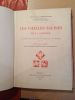
Très bon état, exemplaire imprimé sur papier glacé sans rousseur ; hors textes légendés sur papier velin épais.
Jef Wauters,
Antwerpen - Anvers, BP gallery, 1984 Oorspronkelijk uitgevers omslag, 12 pag, met afbeeldingen, 30x21 cm.
exemplaar gesigneerd door Jef Wauters, naar aanleiding expo BP Gallery maart-april 1984
BRUTIN, Thierry (Archetecte de la ville de FR. + l’équipe de l’Edilité:
Reference : 128517aaf
Les Grand-Places en marches.
Fribourg, printemps 2010, in-8vo, oblong, 230 p, richement ill., cartonnage original ill. n
Image disp.

(SLACES, NVVA)
Phone number : 41 (0)26 3223808
Bruxelles, 1993, résultats des premières fouilles réalisées dans la Région.
Bruxelles, Crédit Communal, 1993. 21 x 30, 36 pp., plusieurs illustrations en couleurs et plans, broché, bon état.
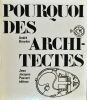
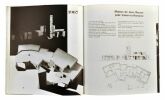
Pourquoi des architectes ?
1969 Paris, Jean-Jacques Pauvert, 10 octobre 1968, 248x217mm, 248p., cartonnage illustré de l’éditeur.Mise en page et couverture de Le Breton.Nombreux croquis et reproductions en héliogravure.Photographies de Pierre Bouchet, Robert Doisneau, Pierret Guillevin, Laurent Pinsard, Clovis Prévost, Albin Salaun, Claude Bricage.Envoi autographe signé et daté 1969.(102175)
oeuvre van Portielje Jan - Gerard - Edward / The Works of Portielje Jan - Gerard - Edward.
, Roeselare,, 2001 Bound with dusjacket in color, 339pp. 334 color illustrations, *fine condition, NL/ENG ISBN 9789070231248.
Het oeuvre van Jan - Gerard - Edward Portielje , een zorgvuldige biografie en studie van het werk van de drie kunstschilders (tijdgenoot van David Col, Van der Auderaa en Schaefels) met mooie afbeeldingen. // The works of Jan - Gerard - Edward Portielje; biographie and studie of the work completed by the three artists, very good reference, Tekst; Nederlands and in English, Portielje, Edward Portielje, Gerard Portielje, Jan
Structures Implicit and Explicit. Graduate School of tine arts university of Pennsylvania Vol 2
University of Pennnsylvania 1973 Livre en anglais. In-4 broché 30,5 cm sur 23. 204 pages. Couverture légèrement passée, dos muet, dos effrangé en tête et pied, premier plat fendillé en pied 5 cm. État correct d’occasion.


Roland Barthes, William S. Burroughs, Umberto Eco, Antoni Gaudi, Louis I. Kahn.. Etat correct d’occasion
New Horizons in Trecento Italian Art
, Brepols, 2021 Hardback, 320 pages, Size:216 x 280 mm, Illustrations:200 col., Language: English. ISBN 9782503586182.
Summary The fourteenth century in Italy, the age of Giotto, Dante, and Boccaccio, widely known as the trecento, was a pivotal moment in art history and in European culture. The studies in this volume present new approaches to art in this important but often neglected period of the late Middle Ages and early Renaissance. Scholars at various stages in their careers discuss a wide range of topics including architecture, cultural exchange, materiality, politics, patronage, and devotion, contributing to a new understanding of how art was made and experienced in this nodal century. These papers were originally presented at the Andrew Ladis Trecento Conference held at the Museum of Fine Arts in Houston in November of 2018. TABLE OF CONTENTS Some Reflections - Judith Steinhoff Introduction - Bryan C. Keene and Karl Whittington I. Matter and Material Stone, Paint, Flesh: Fictive Porphyry Exteriors in a Group of Multipart Panel Paintings from Angevin Naples - Sarah K. Kozlowski The Altar as Stage: Visual and Material Conditions of the Dramatized Nativity - Patricia Simons Jacopo, Niccol , and Paintings in Books for Santa Maria degli Angeli - George R. Bent II. Narrative and Response Painted Wood Caskets for Saints in Trecento Venice - Ana Munk The Reliquary of the Column of the Flagellation: A Case for Narrative Reliquaries - Claire Jensen Fragmented Narrative in the Chapter House of San Francesco in Pistoia - Laura Leeker Seeing and Sensing Compassion: Giotto's Naturalism in the Arena Chapel and Pietro d'Abano's Theory of Sympathetic Response - Theresa Flanigan III. Prototypes: Local and Global Locating the Duomo of Milan in the European Trecento - Erik Gustafson The Ilkhanid-Italian Relationship during the Trecento: Medieval Persian Prototypes for Brunelleschi's Dome in Florence - Lorenzo Vigotti IV. Art and Identity A Tribute to Dante: The Giottesque Portrait in the Palazzo del Podest in Florence - Sonia Chiodo Visual Representation of Women's Legal Duties in Medieval Siena - Elena Brizio V. Time and Knowledge Towards a New Reading of the Fifteenth-Century Astrological Cycle at the Palazzo della Ragione in Padua - Anna Majeski Giotto and Time - Luca Palozzi Diagramming Triumph in Trecento Painting: Augustine and Thomas from Page to Wall - Karl Whittington VI. Local Sanctities Art of an Emblematic King: Robert I of Naples as King of Jerusalem in the Fourteenth Century - Cathleen A. Fleck The Lignum Crucis and the Veneration of the Cross in the contado of Siena: Unmasking Some Neglected Images in the Cathedral of Massa Marittima - Sandra Cardarelli The Bodies and Blood of Christ and the Virgin at Santa Maria Novella, Florence - Amber McAlister VII. The Trecento in the Present Rising from the Rubble of World War II: The High Altarpiece of Impruneta - Cathleen Hoeniger Engaging with the Trecento - Caroline Campbell Afterword - William Underwood Eiland
Cultic Graffiti in the Late Antique Mediterranean and Beyond
, Brepols, 2021 Paperback, xx + 192 pages, Size:216 x 280 mm, Illustrations:108 b/w, 21 col., Language: English. ISBN 9782503593111.
Summary Graffiti, scratched or drawn on the walls of religious shrines, provide unique unmediated evidence of how ordinary men and women, many of them pilgrims, invoked and sought the help of God and the saints in Late Antiquity. The papers in this volume document and discuss cultic graffiti across the entire late antique Mediterranean, and into Nubia and Arabia. The principal focus is the Christian world, but there are also papers that look back to pre-Christian practice, and into the world of early Islam. Presenting evidence that is often unfamiliar, this is an important volume for anyone interested in the History and Archaeology of Late Antiquity. In examining cultic practice, we are almost always compelled to view the actions of devotees through texts written by the ecclesiastical elite, often with a clear hagiographical agenda in mind - cultic graffiti are evidence produced by the protagonists themsleves. TABLE OF CONTENTS List of Illustrations Abbreviations Introduction - ANTONIO E. FELLE AND BRYAN WARD-PERKINS Graffiti in Religious Spaces in First-Century Pompeii: Lararia, Neighborhood Shrines, and Graffiti in the Early Roman Empire - REBECCA BENEFIEL Contextualizing Christian Pilgrim Graffiti in the Late Antique Holy Land - MARLENA WHITING Jewish Devotional Graffiti and dipinti in the Holy Land - LEAH DI SEGNI 'Slave of the Apostle Philip': Byzantine Graffiti from Hierapolis of Phrygia (Turkey) - FRANCESCO GUIZZI Late Antique Christian Graffiti: The Case of Rome (Third to Fifth Century CE) - ANTONIO E. FELLE At the Origins of European Pilgrimage: The Devotional Graffiti of the Anglo-Saxons in Rome (Seventh-Ninth Centuries) - CARLO CARLETTI Inscribing Space in Christian Egypt - JACQUES VAN DER VLIET Graffiti from Christian Egypt and the Cult of the Saints: A Case Study from Dayr Ab? ?innis - ALAIN DELATTRE Pilgrims and Seafarers: A Survey of Travellers' Graffiti from the Aegean Islands - PAWE? NOWAKOWSKI Associational Religion in Late Antiquity? Professional Groups, Factions, and Confraternities in Christian Cultic Graffiti - EFTHYMIOS RIZOS Religious Graffiti from Early Islam in Arabia and the Near East - FR D RIC IMBERT Cultic Graffiti in Christian Nubia (Sixth to Fifteenth Century) - ADAM ?AJTAR Inscriptions, Graffiti, Graffiti Devotionis Causa: Some Concluding Notes and Reflections - ANTONIO E. FELLE Graffiti and Religion: Some Concluding Remarks and Perspectives - BRYAN WARD-PERKINS

