 Write to the booksellers
-
Type
Any type (2)
Art print (7)
Book (31590)
Disk (1)
Drawings (7)
Engraving (9)
Magazine (125)
Old papers (1)
Photographs (14)
Posters (4)
-
Latest
Last 24h (9)
Last 3 days (11)
Last month (315)
Last week (84)
-
Language
Dutch (1)
English (52)
French (31661)
German (6)
Italian (18)
Japanese (2)
Portuguese (9)
Spanish (11)
-
Century
16th (16)
17th (56)
18th (211)
19th (1572)
20th (9487)
21st (1734)
-
Countries
Belgium (9481)
Brazil (7)
Canada (108)
China (3)
Côte d'Ivoire (67)
Denmark (218)
France (18769)
Germany (1)
Greece (1)
Italy (37)
Switzerland (3068)
-
Syndicate
ALAC (99)
CLAM (41)
CLAQ (94)
CNE (3)
ILAB (10917)
NVVA (1171)
SLACES (1171)
SLAM (8373)
SNCAO (9)
passion d'un amateur. La collection Alexis Joffroy, de Luca Giordano Alfred Stevens
, Somogy ditions d'art, 2001 Hardcover, 107 pages, Francais, 280 x 220 mm, Illustrations, . ISBN 9782850564673.
La Passion d'un amateur : La collection Alexis Joffroy, de Luca Giordano Alfred Stevens. Ouvrage publi l'occasion de l'exposition organis e au Mus e des Beaux-Arts de Dunkerque du 16 juin 2001 au 16 juin 2002 ; Nombreuses illustrations en couleurs et en noir et blanc
AMBER Treasures from the Baltic Sea, 16th to 18th century
Paris, Editions Monelle Hayot, 2023 Illustrated hardcover, 367 pages full color illustr, 31 x 21 cm, English. *new. . ISBN 9791096561445.
This richly illustrated catalogue, published on the occasion of the exhibition Amber: Treasures from the Baltic Sea,? traces the history of artworks made from this mysterious material through the centuries. In addition to the fifty works assembled and showcased by Galerie Kugel, this book focuses on the geographical and political context of the region from which Baltic amber originates, as well as the extensive typology of amber objects known in international museums.
Studies in Maximus the Confessor?s Opuscula Theologica et Polemica. Papers Collected on the Occasion of the Belgrade Colloquium on Saint Maximus, 3-4 February 2020
, Brepols, 2023 Hardback, 255 pages, Size:156 x 234 mm, Language: English. ISBN 9782503600833.
Summary Opuscula theologica et polemica is a collection of minor works of Maximus the Confessor that has not received much scholarly attention so far. Nevertheless, it offers A unique insight into the Christological and personological universe of the Christian thinker. The present volume is the first attempt to bring together scholars of different traditions and to apply different approaches - theological, philosophical, philological and historical - to this seminal work. TABLE OF CONTENTS Alex L onas & Vladimir Cvetkovi?, Introduction Christian Boudignon, What are the Opuscula theologica and polemica? A Philological Question Bram Roosen, Maximian ??????? against the Monothelites Bronwen Neil & Ryan Strickler, Letters of Maximus in the Collectanea of Anastasius Bibliothecarius Aleksandar Djakovac, Maximus' Relational Ontology Kevin M. Clarke, Maximus the Confessor's Anti-Severan Polemics in the Opuscula Sebastian Mateiescu, Arguing with the Properties of Christ Romilo Aleksandar Kne?evi?, Maximus' Opuscula and the Concept of the Hypostatic Union Mikl s Vass nyi, A Problem of Identity in St Maximus' Opusculum 14 Dionisios Skliris, The Ambiguity of the Gnomic Will as Basis for a Theory of Human Individuality in the Thought of Saint Maximus the Confessor Index of Maximus Citations Index of Names Index of Theological and Philosophical Terms List of Contributors
La France Pittoresque du Midi. Histoire et géographie des provinces d’ Auvergne, Gascogne, Béarn, Foix, Languedoc, Roussillon, Comtat, Nice, Provence Corse et des départements qu’ elles ont formés.
Alfred Mame & Fils Tours 1898 In-8 ( 275 X 185 mm ) de 368 pages, demi-percaline fraise à coins, dos lisse orné d'un fleuron doré, tête dorée. Carte en noir et blanc en frontispice. Illustré de nombreuses cartes et gravures en noir et blanc dans le texte. Agréable exemplaire.
Franks and Crusades in Medieval Eastern Christian Historiography
, Brepols, 2021 Hardback, 351 pages, Size:156 x 234 mm, Illustrations:1 b/w, Language: English. ISBN 9782503565811.
Summary This volume is an introduction to eleven of the main medieval Eastern Christian historians used by modern scholars to reconstruct the events and personalities of the crusading period in the Levant. Each of the chapters examines one historian and their work(s), and first contains an introductory examination of their life, background and influences. This is then followed by a study of their work(s) relevant to the Crusades, including the reasons for writing, themes, and methodology. Such an approach will allow modern researchers to better understand the background and contexts to these texts, and thus to reconstruct the past in a more nuanced and detailed way. Written by eleven eminent scholars in their fields, and examining chronicles written in Armenian, Greek, Syriac, and Arabic, this book will be essential reading for anybody engaged in research on the Crusades, as well as Eastern Christian and Islamic history, and medieval historiography. TABLE OF CONTENTS Introduction - Alex Mallett Greek Texts: Anna Comnena - Jonathan Shepard John Kinnamos - Chris Hobbs Niketas Choniates - Alicia Simpson George Akropolites - Ruth Macrides and Jeff Brubaker Armenian Texts: Matthew of Edessa - Tara Andrews Smbat - Sergio La Porta Syriac Texts: Michael the Syrian - Dorothea Weltecke Anonymous Chronicle to 1234 - Herman Teule Bar Hebraeus - Marianna Mazzola Copto-Arabic Texts: Al-Makin Ibn al-Amid - Anne-Marie Edd History of the Patriarchs of the Egyptian Church - Alex Mallett and Johannes Den Heijer Index
History and Pottery of a Middle Islamic Settlement in the Northwest Quarter of Jerash. Final Publications from the Danish-German Jerash Northwest Quarter Project V
, Brepols, 2023 Paperback, xxviii + 246 pages, Size:216 x 280 mm, Illustrations:331 b/w, 192 col., 3 tables b/w., 10 maps b/w, 1 maps color, Language: English. ISBN 9782503603353.
Summary In 2015, the Danish-German Northwest Quarter Project working in Jerash uncovered a Middle Islamic farmstead. Subsequent excavations revealed that this settlement, far from marking a decline at the site, is in fact indicative of a broader active and dynamic rural community living within the ancient urban landscape of Jerash. This volume offers an in-depth focus on this Islamic settlement, with a particular focus on the ceramic material yielded by the site, which is here fully quantified and contextually analysed alongside historical sources. Through this approach, the author has reconstructed a new synthesis of Middle Islamic settlement history, shedding new light on the economic and social structures of a rural community in northern Jordan, as well as establishing a typology that can be used to refine the chronologies of Middle Islamic Jerash. TABLE OF CONTENTS List of Illustrations Plates Acknowledgements Chapter 1. Introduction Chapter 2. Jerash ??? Chapter 3. Overview of the Pottery from the Northwest Quarter Chapter 4. Contextual Analysis of the Middle Islamic Ceramics Chapter 5. Developing the Middle Islamic Ceramic Typology for Jerash and Examining it within its Wider Regional Context Chapter 6. Conclusion Catalogue of Middle Islamic Ceramics from the Northwest Quarter of Jerash Handmade Geometric Painted Ware Plain Unpainted Handmade Ware Cooking Vessels Glazed Ware Vessels Wheelmade Vessels Miscellaneous Objects Works Cited Index
150 Best Minimalist House Ideas
New York, United States, HarperCollins Publishers Inc 2014, 2014 Hardcover, 503 pages, English, 205 x 205 x 50 mm, in fine condition, with hundreds of photo's, full of ideas, . ISBN 9780062315472.
Filled with hundreds of lush, full-color photographs, 150 Best Minimalist Interior Ideas profiles beautiful minimalist rooms around the globe and presents tips, tricks, and techniques revealing how to create your own gorgeous, sophisticated interiors. One of the most popular contemporary interior design trends, minimalism highlights the essence of a room, stressing clean lines, clutter-free spaces, and a limited color palette. In 150 Best Minimalist Interior Ideas, photographs and floor plans of minimalist homes around the world are featured. The images are of stunning bedrooms, living rooms, dining rooms, kitchens, and bathrooms; and insightful text complements them to reveal why the minimalist rooms are so eye-catching, cathartic, and desirable. The text includes a wealth of both big picture and more focused ideas. It covers subjects such as walls (if and when to use them), doors, and partitions, flooring, lighting, furniture, and staircases, and explores color, patterns, materials, and texture. The homes featured in this extraordinary volume were developed by distinguished international designers at the forefront of the minimalist movement. The result is a guide that offers both inspiration and how-to advice for creating maximum beauty using minimal elements.
MONTEPULCIANO. CITTA D'ARTE / STADT DER KÜNSTE / CIT D'ART.
PLURIGRAF. 1990. In-8. Broché. Bon état, Couv. convenable, Dos satisfaisant, Intérieur frais. 63 pages. Premier plat illustré en couleurs. Nombreuses photos et illustrations, en couleurs dans et hors texte. Texte en italien, français, anglais et allemand.. . . . Classification Dewey : 720-Architecture
Classification Dewey : 720-Architecture


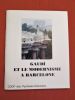
GAUDI et le modernisme à Barcelone.
CDDP des Pyrénées-Orientales, 1992. In-8 broché (21,5 x 17,5 cm), 123 pages, illustrations.-230g.L. - Très bon état.
Alfocea M. & Lagarde C. & Santarossa I.
Reference : R100076337
(1992)
ISBN : 2903761272
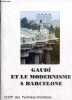
Gaudi et le modernisme a Barcelone - livre + 12 diapositives couleurs inclus.
CDDP des Pyrénées-Orientales. 1992. In-8. Broché. Bon état, Couv. convenable, Dos satisfaisant, Intérieur frais. Livre de 123 pages agrafées augmentées de nombreuses photos et plans en noir et blanc hors texte + 12 diapositives en couleurs inclus.. . . . Classification Dewey : 720-Architecture
Classification Dewey : 720-Architecture
Joos Vijds Tafele De retabel van het Lam Gods
, , 1995 Gebonden, Hardcover met stofomslag compleet. met prachtige illustraties in kleur. ISBN 9789090096629.
Joos Vijds Tafele De retabel van het Lam Gods
Jean-Jacques Gailliard
Brussel, Marot, 2014 Couverture rigide sous jacquette illustr , 424 pages, 30 x 25 cm. Fran ais. * tat fin. ISBN 9782930117270.
Jean-Jacques Gailliard
L'Architecture : les formes et les styles de l'Antiquité à nos jours
Solar Cartonné 2002 In-8 (15,5 x 24,7 cm), cartonné, 312 pages ; très bon état. Livraison a domicile (La Poste) ou en Mondial Relay sur simple demande.
Opera omnia. Historia Ioseph, Epistola Samuelis, Disputatio Abutalib, Legenda Sancti Antonii, Tractatus contra malos medicos, Additio islamica ad Epistolam Samuelis, Respuesta catalana de Isaac
, Brepols, 2020 Hardback, xcviii + 304 pages, Size:155 x 245 mm, Languages: Latin, Spanish, Catalan. ISBN 9782503583723.
Summary L'oeuvre d'Alfonso Buenhombre, dominicain hispanique du XIVe si cle, comprend l'un des textes les plus lus et copi s du Moyen ge, l'Epistola Samuelis, une contrefa on anti-juive devenue un v ritable 'best-seller' m di val. Le texte a t copi et imprim maintes reprises et a t traduit dans de nombreuses langues. Buenhombre a crit, avec l'Epistola Samuelis, un autre ouvrage similaire, la Disputatio Abutalib, dans lequel l'islam figurait parmi les objectifs de son attaque intellectuelle contre les religions rivales. L' norme succ s de l'Epistola Samuelis ne doit pas clipser d'autres oeuvres de Buenhombre, telles que l'Historia Ioseph, une ampliation du r cit biblique des aventures de Joseph et de ses fr res en gypte, la Legenda Sancti Antonii, qui comprend huit l gendes sur le saint ermite, et un bref trait sur la m decine traditionnelle appel Tractatus contra malos medicos. Le total de ses ouvrages compl tes est publi ici pour la premi re fois de fa on critique, constituant ainsi une oeuvre fondamentale pour conna tre les pr occupations religieuses et culturelles du XIVe si cle en Europe. La obra de Alfonso Buenhombre, dominico hispano del siglo XIV, incluye uno de los textos m s le do y copiado durante la Edad Media, la Epistola Samuelis, un falsario antijud o que se convirti en un aut ntico 'best-seller' medieval. El texto fue copiado e impreso en infinidad de ocasiones y fue traducido a numerosas lenguas. Junto a la Epistola Samuelis, Buenhombre redact otra obra similar, la Disputatio Abutalib, que inclu a el islam entre los objetivos de su original ataque intelectual contra las religiones rivales. El enorme xito de la Epistola Samuelis no debe ensombrecer otros trabajos de Buenhombre, como son la Historia Ioseph, una ampliaci n de la narraci n b blica de las aventuras de Jos y sus hermanos en Egipto, la Legenda Sancti Antonii, que incluye ocho leyendas sobre el santo eremita, y un breve tratado de medicina popular conocido como Tractatus contra malos medicos. El total de sus obras completas se edita aqu de forma cr tica por primera vez, constituyendo as una obra fundamental para conocer las inquietudes religiosas y culturales del siglo XIV europeo. TABLE OF CONTENTS Alfonsus Bonihominis - Respuesta catalana de Isaac - ed. A. Biosca Bas Alfonsus Bonihominis - Additio islamica ad Epistolam Samuelis - ed. A. Biosca Bas Alfonsus Bonihominis - Disputatio Abutalib - ed. A. Biosca Bas Alfonsus Bonihominis - Epistola Samuelis - ed. A. Biosca Bas Alfonsus Bonihominis - Historia Ioseph - ed. A. Biosca Bas Alfonsus Bonihominis - Legenda Sancti Antonii - ed. A. Biosca Bas Alfonsus Bonihominis - Tractatus contra malos medicos - ed. A. Biosca Bas
Traité de la législation et de l'administration de la voierie urbaine.
Librairie générale de l'architecture et des travaux publics Ducher et Cie, Paris, 1877, ( bibliothèque du constructeur ). Un volume in 4 relié demi-basane rouge, plats papier moucheté, un mors légèrement fendu. VIII, 696 pages. ( Quelques rousseurs )
Remises possibles sur les achats en lot, achetez plusieurs objets à la fois ! Reçoit sur rendez-vous pour consultation des ouvrages.
Dislocations: Maps, Classical Tradition, and Spatial Play in the European Middle Ages
, Brepols, 2020 Hardback, xii + 347 pages, Size:152 x 229 mm, Illustrations:42 col., Language: English. ISBN 9780888442185.
Summary In Europe, during the Middle Ages, classical Greek and Roman geography continued to provide the fundamental structure for knowing the world's places and peoples. From encyclopedic compendia such as the Natural History of Pliny the Elder and its redaction in Julius Solinus's Polyhistor to the works of canonical Roman poets such as Virgil, Ovid, and Lucan, the geographical content of antique texts invited study and explication. Yet medieval authors well knew that classical spatial order, itself full of lacunae, only infrequently corresponded to their own reality. Dislocations: Maps, Classical Tradition, and Spatial Play in the European Middle Ages considers the ways in which medieval and, later, humanist geography absorbed and reinvented classical spatial models in order to address key questions of historical change, migration, and emerging national, regional, and linguistic identities. Drawing on a wide range of literary texts, maps, and geographical descriptions - and utilising the ancient but now largely discarded scholarly genre of the dialogue - Dislocations argues that medieval spatial representation was complex and richly textured, whether in the form of a careful gloss in a manuscript of Lucan's Civil War, or as the exuberant sexualized allegories of the fourteenth-century papal notary Opicinus de Canistris. The book also explores a further kind of dislocation: the surprising connections between medieval geographical thought and twentieth- and twenty-first-century visual arts, including Dadaism and the remarkable Mappamundi Suite of the Gujarati artist Gulammohammed Sheikh. While past spatial orders may be relegated to obscurity, they just as often linger - in archives, memories, and ruins - to be retrieved and reanimated in revealing ways.
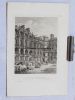
CHATEAU DE SAINT-GERMAIN EN LAYE Vue perspective de la cour, restauration commencée en 1862
Gravure originale sur papier vergé, Edition Gazette des Beaux-Arts, Imp. delâtre, Paris. Dimensions de la feuille 280 x 185 mm, dimensions de l'image 167 x 125 mm Bon état. Venez consulter l'ensemble de mes objets sur mon site antharedeschuyter.fr ! Envoi par lettre recommandée R2, 9 .
Alfred-Louis Brunet-Debaines (1845-1939) est un peintre, dessinateur et graveur français qui fit carrière en Angleterre. Louis Alfred Henri est né le 5 novembre 1845 au Havre de Charles Fortuné Louis Brunet-Debaines (1801-1862), architecte originaire de Vannes, et Catherine Eugénie Marvie (1808-1877).Formé dans le cabinet de son père, il devient, très jeune, un graveur accompli dans la technique de l'eau-forte et affectionne les paysages urbains. Il entre à l'École des beaux-arts de Paris en 1863 et fréquente l'atelier d'Isidore Pils. Il devient ensuite membre de la Société des aquafortistes dès 1865 et perfectionne ses connaissances auprès de Léon Gaucherel, Maxime Lalanne et Jules Jacquemart, ce dernier exerçant une certaine influence sur lui. Il expose ses premières créations au Salon de 1866, puis, régulièrement jusqu'en 1885. En 1873, il obtient une médaille de 1re classe au Salon, année où il est placé en hors-concours puis une médaille d'honneur en 1932. Les éditions d'Alfred Cadart publieront de lui une dizaine d'estampes, entre autres dans L'Illustration nouvelle et L'Eau forte en (1868-1876), parmi lesquelles on trouve de nombreuses vues de Rouen. Son atelier parisien se trouve un temps 58 rue Notre-Dame-des-Champs puis 13 rue Montmartre (1885). Dès 1872, il connaît une certaine renommée en Angleterre, où il est invité à exposer par le critique d'art Philip Gilbert Hamerton : il participe à ses deux revues d'art illustrées que sont The Portfolio et Etching and Etchers, pour lesquelles il livre de nombreuses gravures de reproduction des maîtres du XVIIIe et XIXe anglais ; il produit surtout une suite saisissante des anciennes abbayes du nord du pays, conjointement avec son collègue Henri Toussaint, The Ruined Abbeys of Yorkshire (1883). Entre 1872 et 1883, il expose ses gravures à la Royal Academy et en 1882, il est élu à la Royal Society of Painter-Etchers and Engravers de Londres et collabore régulièrement à The Art Journal jusque dans les années 1900. Sur Paris, il est le principal graveur pour le galeriste Paul Durand-Ruel du Recueil d'estampes gravées à l'eau-forte (1873-1875). Revenu de Londres, il quitte Paris et s'installe à Rouen où il produit plusieurs recueils périodiques d'estampes publiés dans le Rouen illustré chez E. Augé (1880-1886) en compagnie de Jules Adeline, Maxime Lalanne et Henri Toussaint. En avril 1894, il est nommé chevalier de la Légion d'honneur sous le parrainage de Léon Bonnat. En 1889 et en 1900, il obtient une médaille d'or aux Expositions universelles organisées à Paris. Bon état Remises possibles sur les achats en lot, achetez plusieurs objets à la fois ! Reçoit sur rendez-vous pour consultation des ouvrages.
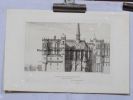
CHATEAU DE St GERMAIN EN LAYE chapelle de St Louis (Eugène Millet architecte de le restauration)
Gravure sur papier vergé, imprimerie Delâtre. Dimensions de la feuille 275 x 185 mm, bon état général malgré quelques faibles rousseurs. Venez consulter l'ensemble de mes objets sur mon site antharedeschuyter.fr ! Envoi par lettre suivie 6 .
Alfred-Louis Brunet-Debaines (1845-1939) est un peintre, dessinateur et graveur français qui fit carrière en Angleterre. Louis Alfred Henri est né le 5 novembre 1845 au Havre de Charles Fortuné Louis Brunet-Debaines (1801-1862), architecte originaire de Vannes, et Catherine Eugénie Marvie (1808-1877).Formé dans le cabinet de son père, il devient, très jeune, un graveur accompli dans la technique de l'eau-forte et affectionne les paysages urbains. Il entre à l'École des beaux-arts de Paris en 1863 et fréquente l'atelier d'Isidore Pils. Il devient ensuite membre de la Société des aquafortistes dès 1865 et perfectionne ses connaissances auprès de Léon Gaucherel, Maxime Lalanne et Jules Jacquemart, ce dernier exerçant une certaine influence sur lui. Il expose ses premières créations au Salon de 1866, puis, régulièrement jusqu'en 1885. En 1873, il obtient une médaille de 1re classe au Salon, année où il est placé en hors-concours puis une médaille d'honneur en 1932. Les éditions d'Alfred Cadart publieront de lui une dizaine d'estampes, entre autres dans L'Illustration nouvelle et L'Eau forte en (1868-1876), parmi lesquelles on trouve de nombreuses vues de Rouen. Son atelier parisien se trouve un temps 58 rue Notre-Dame-des-Champs puis 13 rue Montmartre (1885). Dès 1872, il connaît une certaine renommée en Angleterre, où il est invité à exposer par le critique d'art Philip Gilbert Hamerton : il participe à ses deux revues d'art illustrées que sont The Portfolio et Etching and Etchers, pour lesquelles il livre de nombreuses gravures de reproduction des maîtres du XVIIIe et XIXe anglais ; il produit surtout une suite saisissante des anciennes abbayes du nord du pays, conjointement avec son collègue Henri Toussaint, The Ruined Abbeys of Yorkshire (1883). Entre 1872 et 1883, il expose ses gravures à la Royal Academy et en 1882, il est élu à la Royal Society of Painter-Etchers and Engravers de Londres et collabore régulièrement à The Art Journal jusque dans les années 1900. Sur Paris, il est le principal graveur pour le galeriste Paul Durand-Ruel du Recueil d'estampes gravées à l'eau-forte (1873-1875). Revenu de Londres, il quitte Paris et s'installe à Rouen où il produit plusieurs recueils périodiques d'estampes publiés dans le Rouen illustré chez E. Augé (1880-1886) en compagnie de Jules Adeline, Maxime Lalanne et Henri Toussaint. En avril 1894, il est nommé chevalier de la Légion d'honneur sous le parrainage de Léon Bonnat. En 1889 et en 1900, il obtient une médaille d'or aux Expositions universelles organisées à Paris. Bon état Remises possibles sur les achats en lot, achetez plusieurs objets à la fois ! Reçoit sur rendez-vous pour consultation des ouvrages.
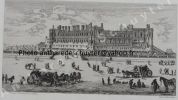
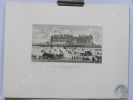
CHÂTEAU DE St GERMAIN EN LAYE EN 1658, d'après Israël SYLVESTRE gravure
Gravure sur papier vergé, dimensions de la feuille 345 x 268 mm. Cachet dans l'angle inférieur droit. Bon état. Venez consulter l'ensemble de mes objets sur mon site antharedeschuyter.fr ! Envoi par lettre suivie 6 .
Alfred-Louis Brunet-Debaines (1845-1939) est un peintre, dessinateur et graveur français qui fit carrière en Angleterre. Louis Alfred Henri est né le 5 novembre 1845 au Havre de Charles Fortuné Louis Brunet-Debaines (1801-1862), architecte originaire de Vannes, et Catherine Eugénie Marvie (1808-1877).Formé dans le cabinet de son père, il devient, très jeune, un graveur accompli dans la technique de l'eau-forte et affectionne les paysages urbains. Il entre à l'École des beaux-arts de Paris en 1863 et fréquente l'atelier d'Isidore Pils. Il devient ensuite membre de la Société des aquafortistes dès 1865 et perfectionne ses connaissances auprès de Léon Gaucherel, Maxime Lalanne et Jules Jacquemart, ce dernier exerçant une certaine influence sur lui. Il expose ses premières créations au Salon de 1866, puis, régulièrement jusqu'en 1885. En 1873, il obtient une médaille de 1re classe au Salon, année où il est placé en hors-concours puis une médaille d'honneur en 1932. Les éditions d'Alfred Cadart publieront de lui une dizaine d'estampes, entre autres dans L'Illustration nouvelle et L'Eau forte en (1868-1876), parmi lesquelles on trouve de nombreuses vues de Rouen. Son atelier parisien se trouve un temps 58 rue Notre-Dame-des-Champs puis 13 rue Montmartre (1885). Dès 1872, il connaît une certaine renommée en Angleterre, où il est invité à exposer par le critique d'art Philip Gilbert Hamerton : il participe à ses deux revues d'art illustrées que sont The Portfolio et Etching and Etchers, pour lesquelles il livre de nombreuses gravures de reproduction des maîtres du XVIIIe et XIXe anglais ; il produit surtout une suite saisissante des anciennes abbayes du nord du pays, conjointement avec son collègue Henri Toussaint, The Ruined Abbeys of Yorkshire (1883). Entre 1872 et 1883, il expose ses gravures à la Royal Academy et en 1882, il est élu à la Royal Society of Painter-Etchers and Engravers de Londres et collabore régulièrement à The Art Journal jusque dans les années 1900. Sur Paris, il est le principal graveur pour le galeriste Paul Durand-Ruel du Recueil d'estampes gravées à l'eau-forte (1873-1875). Revenu de Londres, il quitte Paris et s'installe à Rouen où il produit plusieurs recueils périodiques d'estampes publiés dans le Rouen illustré chez E. Augé (1880-1886) en compagnie de Jules Adeline, Maxime Lalanne et Henri Toussaint. En avril 1894, il est nommé chevalier de la Légion d'honneur sous le parrainage de Léon Bonnat. En 1889 et en 1900, il obtient une médaille d'or aux Expositions universelles organisées à Paris. Bon état Remises possibles sur les achats en lot, achetez plusieurs objets à la fois ! Reçoit sur rendez-vous pour consultation des ouvrages.
Lichaam en kosmos : Precolumbiaanse sculptuur uit Mexico
, Snoeck, 2004 Softcover, 229 pag. NL, 300 x 240 mm, in prima staat, paginagrote ill. in kleur. ISBN 9789053495360.
Lichaam en kosmos omvat een tweehonderdtal stukken, afkomstig uit meer dan veertig musea en archeologische sites verspreid over heel Mexico. Ze zijn ontstaan tussen 1200 v. C. en de komst van de Europeanen in 1521. Door deze kunstwerken te verenigen wordt de onmiskenbare eenheid van de meso-Amerikaanse cultuur benadrukt. Verschillende basiskarakteristieken van die cultuur bleven inderdaad nagenoeg ongewijzigd gedurende de hele precolumbiaanse periode, die niet minder dan 3000 jaar beslaat. De kenmerken kunnen worden aangetroffen bij alle volkeren - de Olmeken, de Maya's en de Mexicanen - hoe verschillend hun talen en artistieke expressies ook zijn. Deze catalogus neemt de kosmologische visie van de verschillende volkeren als uitgangspunt. De ge?xposeerde stukken reflecteren de symbolische betekenis van hun complexe visie op de wereld en het universum
Cosmic Liturgy: Qumran's 364-Day Calendar
, Brepols, 2019 Paperback, xx + 330 pages, Size:156 x 234 mm, Illustrations:3 tables b/w., Language: English. ISBN 9782503584270.
Summary This work shows how the importance of Sunday, Wednesday, and Friday in the 364-day Qumran calendar is based on the Priestly creation narrative in Genesis and the myth of a cosmic covenant established between God and the angels on the first day. The myth of the apostasy of the angels guiding the seven planets was used to explain the discrepancy between the 364-day calendar and observation. The Epistle of Jude makes it possible to situate this work in relation to both Jubilees and the Book of the Watchers and confirms the use of the 364-day calendar in the earliest years of the nascent Church.
Origins of Christianity in the Calendar Wars of the Second Century BCE
, Brepols, 2025 Paperback, 325 pages, Size:156 x 234 mm, Illustrations:2 tables b/w., Language: English. *new ISBN 9782503613062.
Summary In the Gospels Jesus is called a 'Nazarene' or 'Nazoraean'. Does this mean he came from Nazareth? Basing himself on Lidzbarski's analysis of the Hebrew/Aramaic origins of the Greek terms Nazar nos and Naz raios Dr Osborne proposes that these epithets indicate that Jesus was a n ?r , a '(Strict) Keeper/Guardian (of the Law)'. This meant he was a follower of the 364-day liturgical calendar known to us from 1 Enoch, Jubilees, and Qumran. An examination of the passages where these terms appear shows that this hypothesis leads to a deeper understanding of the circumstances in which the first Christian communities arose and clarifies greatly the background of Jesus' crucifixion as Y?? ha-N ?r . The book then traces the influence of the n ?r m on the history of Israel from their origin in the 'calendar wars' that tore apart the Jewish nation from 172-163 BCE. These broke out after the lunisolar calendar was introduced into the temple liturgy by Menelaus the high priest, and only came to an end when the 364-day calendar was reintroduced under his successor, Alcimus. In 151 BCE, however, Jonathan Maccabaeus was appointed high priest and reintroduced the lunisolar calendar. The n ?r m were suppressed and forced to emigrate or go underground. They reappear as leaders of Jewish resistance to Roman occupation after Pompey incorporated Judaea into the empire in 63 BCE. Eventually they became the chief instigators of the revolt against Rome that led to the destruction of Jerusalem in 70 CE. Osborne argues that the n ?r m thought to have been included in the Twelfth Benediction of the Amidah at Yavneh around 90 CE are these same '(Strict) Keepers/Guardians (of the Law)'. TABLE OF CONTENTS General Introduction and Summary Part One Chapter 1. Introduction: Jesus the Nazarene and Nazoraean Chapter 2. The Meaning of Nazoraean and Nazarene in the New Testament Chapter 3. Jesus as a 'Notsri' in the Gospels Chapter 4. The Nazoraeans in Acts Chapter 5. Conclusion: The Nazarenes and Nazoraeans are Notsrim, 'Keepers (of the Law)' Part Two Chapter 6. Introduction: The Two Calendars and their Characteristics Chapter 7. Onias III (185? - 175 BCE) Chapter 8. Jason (175-172 BCE) Chapter 9. Menelaus (172-163 BCE) Chapter 10. Alcimus (163-159 BCE) Chapter 11. The Unnamed High Priest (159-151 BCE) Chapter 12. Jonathan Maccabeus (152-142 BCE) Chapter 13. The Story that Could Not Be Told Part Three Chapter 14. Introduction Chapter 15. The Hasidim as Notsrim Chapter 16. The 'Fourth Philosophy' and the Sicarii Chapter 17. The Fourth Philosophy and the Notsrim Chapter 18. Summary and Conclusions Part Four Chapter 19. Introduction Chapter 20. The Notsrim Live on in the Liturgy of the Synagogue Chapter 21. The Birkat ha-m n m in Christian Sources Abbreviations for Editions of Biblical and Non-Biblical Texts, Works of Reference, and Journals Bibliography
Alfred Rebelliau. Publié par les soins de Jacques Lovie. Préface du Général Weygand.
Reference : 69317
(1962)
Vauban
Paris, Fayard. Le temps et les destins., 1962, in-8, broché, 308 pages. Bon état.
NB Le délai d'acheminement vers la France est de 48h.
Alfred Stieglitz : Camera Work The Complete Photographs, 1903-1917
, Taschen, 2013 Hardcover, 552 pages, English,French,German, 200 x 150 x 50 mm, in very good condition !, dustjacket, photographs in colour / b/w , Nostalgic. ISBN 9783836544078.
Photographer, writer, publisher, and curator Alfred Stieglitz (1864-1946) was a visionary far ahead of his time. Around the turn of the 20th century, he founded the Photo-Secession, a progressive movement concerned with advancing the creative possibilities of photography, and by 1903 began publishing Camera Work, an avant-garde magazine devoted to voicing the ideas, both in images and words, of the Photo-Secession. Camera Work was the first photo journal whose focus was visual, rather than technical, and its illustrations were of the highest quality hand-pulled photogravure printed on Japanese tissue. This book brings together all photographs from the journal's 50 issues.
ALGERIA José Augusto, de BRITO Carlos, de CARVALHO A. Ayres, et alii
Reference : 61536
Triomphe du baroque. Palais des Beaux-Arts 19 septembre - 29 décembre (catalogue).
Bruxelles, Fondation Europalia International, 1991. 23 x 30, 520 pp., très nombreuses illustrations couleurs, broché, très bon état (sauf très légères pliures au dos).
Europalia 91 Portugal.

