 Write to the booksellers
-
Type
Any type (1)
Art print (7)
Autograph (1)
Book (32222)
Disk (1)
Drawings (264)
Engraving (11)
Magazine (125)
Old papers (1)
Photographs (15)
Posters (1)
-
Latest
Last 24h (7)
Last 3 days (9)
Last month (447)
Last week (19)
-
Language
Dutch (79)
English (56)
French (32470)
German (6)
Italian (18)
Portuguese (9)
Spanish (11)
-
Century
16th (15)
17th (48)
18th (205)
19th (1539)
20th (9443)
21st (1684)
-
Countries
Belgium (10934)
Brazil (6)
Canada (116)
China (1)
Côte d'Ivoire (139)
Denmark (209)
France (18148)
Germany (1)
Greece (1)
Switzerland (3094)
-
Syndicate
ALAC (107)
CLAM (144)
CLAQ (102)
CNE (3)
ILAB (10474)
NVVA (1145)
SLACES (1145)
SLAM (7869)
SNCAO (10)
Medieval Debates on Foreknowledge: Future Contingents, Prophecy, and Divination. Acts of the XXVII Annual Colloquium of the SIEPM, Trento 12-15 September 2023
, Brepols, 2026 Hardback, Pages: xx + 564, Size:156 x 234 mm, Languages: English, Italian, French. ISBN 9782503619811.
Summary This volume offers a comprehensive examination of medieval conceptions of foreknowledge-understood both as divine prescience and as the human capacity to anticipate future events-across a range of intellectual traditions. It investigates key themes such as future contingents, prophetic discourse (both divinely inspired and natural), divinatory dreams, eschatology, scientific prognostication (in astrology and medicine), and conjectural disciplines such as geomancy, physiognomy, meteorology, and magic. Through historical reconstructions and doctrinal analyses, the contributions illuminate the theoretical frameworks and distinctive positions advanced by medieval authors within diverse cultural and scholarly contexts. Building on an extensive body of prior research, the volume documents the multiplicity of medieval strategies for engaging with the future, thereby challenging the historiographical assumption that the notion of an open and indeterminate future emerged only in the Modern period. TABLE OF CONTENTS Alessandro Palazzo (Universit di Trento), Prognostication in the Middle Ages: Preliminary Remarks Medieval Doctrines and Debates on Future Contingents, Prescience, and Freedom Enrico Moro (Universit di Padova), Anatomia della caduta. Agostino sulla compatibilit tra prescienza divina e libert del primo peccato (lib. arb. III, 3, 6-8) Pasquale Porro (Universit di Torino), Does God Really Know Contingent Events as they Are? Revisiting (once again) the Consolation of Philosophy, Book V Marcia L. Colish (?), Anselm's Boethius: Necessity and Future Contingents in De concordia Josep Puig Montada (Universidad Complutense de Madrid), Aristotle's Peri Hermeneias (c. 9) and its medieval Arabic translation. The first step toward a fruitful reception Ginevra Tozzi, (IMT - Scuola Alti Studi Lucca), Future Contingents in Arabic Logic: Towards a Genealogy of F?r?b?'s and Avicenna's Commentaries on the Ninth Chapter of De Interpretatione Martha Beullens (ULB), Conna tre le futur. Le cas des futurs contingents ut in pluribus chez Albert le Grand Amos Corbini (Universit di Torino), Alcune polemiche di Ugolino di Orvieto sulla preconoscenza divina dei futuri contingenti Riccardo Fedriga and Costantino Marmo (Universit di Bologna), Rodolfo Brito sui futuri contingenti Peter Hartman (Loyola University Chicago), The Presence of the Past: Durand of St.-Pour ain and Peter of Palude on Intuitive Cognition of the Past Gonzalo Tinajeros Arce (Universidade de Bras lia), Future Contingents in arguments of political censorship: Modal propositions in contrast. Solorzano Pereira Stands up to the censors of De Indiarum Iure (1638) Prophecy in Jewish, Islamic, and Latin traditions Meryem Sebti (CNRS), D chiffrer l'Invisible : interpr tation (ta'b?r) et ex g se (ta'w?l) dans la philosophie islamique Germano Gorga (IMT - Scuola Alti Studi Lucca), The Epistemology of Astrology and Prophethood from Ab? Ma??ar to Avicenna's Metaphysics Ying Zhang (Shanghai - East China Normal University), The Most Perfect Prophet for Maimonides: Moses and Abraham in The Guide of the Perplexed Anna Rodolfi (Universit di Firenze), Angels and Prophets in Thirteenth-Century Latin Prophetology Andrea Colli (Universit di Bologna), The Church at the End of Times. Prophecy and Eschatology in Albert the Great's Sermons and Biblical Commentaries Paul Clarke, O.P., Prophecy's Future and Prophecies Past: Thomas Aquinas, Peter of John Olivi, and the Prophetic Economy Prognostic Sciences and Divination Charles Burnett (The Warburg Institute - London) Scientia stellarum ex te et illis est: The Two Sources of Knowledge for Predicting the Future, in Pseudo-Ptolemy's Centiloquium and Michael Scot's Liber introductorius Giulio Navarra (Universit di Foggia), Celestial Influence and Astral Magic. Between the Gh?yat al-?ak?m and the 'Kind?-circle Alexander' Barbora Koc nov (Prague - Czech Academy of Sciences), Non-astrological Methods of Weather Forecasting in Medieval Latin Astrological Works: A Contradiction? Alessandro Palazzo (Universit di Trento), Geomantic Collections: Structure, Meaning, and Function Jens Ole Schmitt (LMU Munich), Barhebraeus on Physiognomical Prognosis Anna Gili (Universit di Padova), Between Tradition and Medical Practice. Prognosis in al-Ma??s?'s Kit?b al-Malak? Mario Loconsole (Universit del Salento), Somnium coadiuvat ad curationem. The Curative Power of Dreams in Pietro d'Abano's Conciliator Roberto Limonta (Universit di Salerno), Malae divinationes: Demons' Foreknowledge and Semiotics of Lying in Augustine's De divinatione daemonum Vesa Hirvonen (University of Eastern Finland), Madmen's special capacities in Nicole Oresme
Epidemics and Pandemics. Philosophical Perspectives
, Brepols, 2024 Hardback, approx. 328 pages, Size:178 x 254 mm, Illustrations:10 b/w, Language: English. ISBN 9782503598925.
Summary Epidemics, pandemics, contagion, immunity, social distance, zoonosis are just a few of the concepts that have become commonplace in the academic community and in everyday conversation since the outbreak of the Covid-19. This book aims to provide the reader with a philosophical guide to this conceptual vocabulary by investigating the meanings, implications, and history of words related to the current emergency of Covid-19. This book addresses the fundamental anthropological, ethical, and political issues that have come under the spotlight of the public debate (life and death, freedom and authority, fear and protection, poverty and access to medical care). In this context, particular attention is given to the conflict between the scientific discourse on the one hand, and irrational bias, misinformation and fake news on the other. The SARS-CoV-2 outbreak is only the latest episode in a long history of pandemics and epidemics that have constellated human history since its very beginning. Authoritative accounts have made some of these contagious plagues famous (Thucydides' pages immortalizing the Athenian epidemic of the 5th century B.C.; Boccaccio's description of the Black Death; Manzoni's depiction of the Plague ravaging 17th-century Milan). Because a full understanding of the present is not possible without historical inquiry, several contributions in the book explore debates about calamitous phenomena as documented in philosophical literature from Antiquity to 20th-century philosophy. TABLE OF CONTENTS Naomi Zack, Epidemics and Pandemics: Philosophical Perspectives. What's Philosophy Got to Do with It? Michele Nicoletti, Alessandro Palazzo, Introduction Part I. History of a Problem Mauro Bonazzi, Thucydides and the Politics of the Plague Marco Di Branco, Between Religion and Science. The Debate on the Concept of Contagion in the Medieval Islamic World and its Western Parallels Alessandro Palazzo, Pestilences and Contagious Diseases in the Middle Ages. Albert the Great and the Fourteenth-Century Plague Treatises Diana Di Segni, Latin-into-Hebrew Treatises on the Black Death Concetta Pennuto, Contagion and Pandemics. Plague in Early Modern Medical Thought Mariangela Priarolo, New Sciences and Old Diseases. Seventeenth-Century Readings of the Causes of the Plague Fabrizio Meroi, Contagion and Epidemics in Twentieth-Century Thought. A Hypothesis about Bergson Part II. Concepts and Theories Carlo Brentari, Zoonosis Michele Nicoletti, Fear and Dispossession Nidesh Lawtoo, The Mimetic Faculty Reloaded: Contagion, Immunization, Conspiracies in the Age of Viral Reproduction L'udmila Lackov , Crisis of the Subject in Mediated Communication Federico Laudisa, The Epistemology of Models in the Era of Pandemic Pejman Abdolmohammadi, The COVID-19 Pandemic. An Exogenous Shock into Political Systems in the Middle East and North Africa? Michele Nicoletti, Alessandro Palazzo, Conclusion
Moscow, factories of Utopia, Umberto Allemandi & C - Torino, 2012
catalogue en anglais, italien et russe de l'exposition présentée au Museo Statale di Archetettura Schusev - Moscou du 27 avril au 17 juin 2012, 30,6 cm X 28,7 cm, format à l'italienne, 170 pp, reliure cartonnée et illustrée. Très grand nombre de reproductions couleurs.
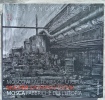
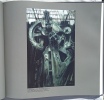
Coiffes très légèrement frottés. Pages de garde très légèrement salies. 1 petite pliure sur le bord de tête. Très bon état par ailleurs. Intérieur frais.
Johannes Kahrs: Men with Music
, Diamondpaper, 2007 Softcover, 103 pages, 20 x 13 cm, English, Italian. *New . ISBN 9783981105025.
Exhibition catalogue Johannes Kahrs: Men with Music at GAMeC, Bergamo (Italy), from 4 April to 29 July 2007
ARCHITECTURE LOW COST LOW TECH INVENTIONS ET STRATEGIES
TRADUIT DE L'ITALIEN PAR CHRISTINE PIOT-OBLONG 24,7 CM X 17,2 CM-208 PAGES-(200C)
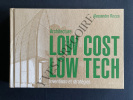
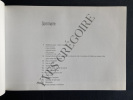
ACTES SUD COUVERTURE RIGIDE ETAT COMME NEUF
Archaeological Landscapes of Roman Etruria. Research and Field Papers
, Brepols, 2021 Paperback, 296 pages, Size:216 x 280 mm, Illustrations:95 b/w, 21 col., 3 tables b/w., Language: English. ISBN 9782503591391.
Summary This volume, the first in a new series dedicated to the archaeological and historical landscapes of central Mediterranean Italy, aims to offer a fresh and dynamic new approach to our understanding of central-southern maritime Tuscany during the Roman period. Drawing on research that was initially presented at the first International Mediterranean Tuscan Conference (MediTo) held in Paganico (Grosseto, Italy) in June 2018, and supported by invited papers from other experts in the field, this collection of essays offers the most up-to-date research into Roman and Late Antique landscapes within Tuscany and its broader Mediterranean context, as well as the political, economic, and social networks that developed in this area during the Classical Period. Ultimately, what emerges from this in-depth study of river valleys, urban centres, and coastal settlements is an understanding of a dynamic Roman territory of cities and villages, villas and sanctuaries, minor sites, and manufacturing districts in which the local population fought to establish and maintain connections with the wider Mediterranean. TABLE OF CONTENTS List of Illustrations Preface Introduction - ALESSANDRO SEBASTIANI AND CAROLINA MEGALE The Tuscan Coast in the Classical Period: Research Prospects - FRANCO CAMBI Nunc Villae Grandes, Oppida Parva Prius: Private Agency and Public Utility in the Tuscan Maremma - ELIZABETH FENTRESS Santa Marta: A Roman Nodal Point in the Middle Ombrone Valley (Southern Tuscany, Italy) - STEFANO CAMPANA AND EMANUELE VACCARO Between Topography, Archaeology, and History: Considerations for a Diachronic Synthesis on the Villa at Aiano (San Gimignano) between the Fourth and the Seventh Centuries ad - MARCO CAVALIERI Rusellae and its Territory: From the Etruscan to the Roman City - MARIA GRAZIA CELUZZA, MATTEO MILLETTI, AND ANDREA ZIFFERERO The Etruscan Harbours of Vetulonia and the Extent of the Prile Lagoon: First Results of a New Research Project - CAMILLA COLOMBI The Northern Etrurian Coast: The Vada Volaterrana during the Roman Period: New Data to Reconstruct the Ancient Landscape - STEFANO GENOVESI Archaeological Excavations in Vignale (LI): A Lens for Framing the Landscape in Roman Times - ELISABETTA GIORGI Etruscan-Roman Populonia: Recent Research on the Sacred Area of the Acropolis - CYNTHIA MASCIONE The Fortress of Poggio del Molino and Piracy: A Contribution to the Definition of the Late Republican Landscape of Populonia - CAROLINA MEGALE Luna: The Area of Porta Marina between the Republican and the Imperial Periods - SIMONETTA MENCHELLI, PAOLO SANGRISO, ALBERTO CAFARO, STEFANO GENOVESI, SILVIA MARINI, AND ROCCO MARCHESCHI New Excavations in the Etruscan-Roman City of Vetulonia: The Domus dei Dolia - SIMONA RAFANELLI The Universit di Firenze at Cosa (2016-2018) - ILARIA ROMEO AND DARIO PANARITI Cosa Excavations: New Interpretative Frameworks - RUSSELL T. SCOTT, ANDREA U. DE GIORGI, RICHARD POSAMENTIR, AND CHRISTINA CHA The Late Etruscan and Republican Settlement at Podere Cannicci: (Civitella Paganico - Grosseto) - ALESSANDRO SEBASTIANI The Missing link: A Nucleated Rural Centre at Podere Marzuolo (Cinigiano - Grosseto) - ASTRID VAN OYEN, GIJS W. TOL, AND RHODORA G. VENNARUCCI Beyond Religion? Placing the Gods in the Reconstruction of the Landscape and Economies of Southern Tuscany - EDOARDO VANNI Rural Settlements and Natural Resources in Early Medieval Southern Tuscany: Past and Future Research Prospects - GIOVANNA BIANCHI
Grand Ducal Medici and their Archive (1537-1743)
, Brepols - Harvey Miller, 2016 Hardback, 222 pages, 220 x 280 mm, Illustrations: 41b/w, 5 col., English/Italian. *NEW. ISBN 9781909400344.
The Grand Ducal Medici and their Archive offers a unique window into early modern Florentine society through an exploration of the archives of the Medici ruling family. Teeming with circa three million letters, the archival collection of the Medici grand dukes housed at the Archivio di Stato in Florence chronicles the culture and history of Europe and beyond, across a span of over two hundred years. The letters of this collection, known as the Mediceo del Principato, embrace a great variety of themes including diplomacy, art, medicine, food, science, and warfare. Since its contents originate from a court archive that served both the state and a ruling family, this collection comprises administrative, political, and financial correspondence, as well as more private and intimate accounts of the Medici themselves and their activity at court. At the same time, it would be a great misconception to assume that this enormous archival corpus pertains just to Florence or just to the Medici, given that the vast majority of these missives were written by ambassadors, agents, and informants stationed throughout Europe. This volume, The Grand Ducal Medici and their Archive, aims to unlock not only the complex structure of the Mediceo del Principato but also the richness of its content. The sixteen essays address a variety of topics ? book history, Ottoman relations, collections of New World artifacts, medical history, gender studies, and material culture ? all with direct reference to the Medici grand duchy. The original research that supports these studies was drawn in part from the Medici Archive Project's online platform (BIA) for querying over 350,000 digitized and/or transcribed letters. Making use of these and other original sources, the essays in The Grand Ducal Medici and their Archive shed new light on the mechanisms and strategies that enabled Florence to emerge from decades of internecine confl ict and diplomatic chaos in order to enjoy cultural and political prominence. TABLE OF CONTENTS Introduction Alessio Assonitis (The Medici Archive Project) 1. The Revenge of the Emperor: Rewriting the Story of Lorenzino de? Medici?s Assassination Stefano Dall?Aglio (University of Leeds) 2. Searching for Cosimo?s Books? Alessio Assonitis (The Medici Archive Project) 3. Le ?spoglie? invisibili.?Note a margine di alcuni documenti relativi al reimpiego dei materiali nei cantieri orentini di Giorgio Vasari Francesca Funis (The Medici Archive Project) 4. "When He Becomes Pope ?" The Rise and Fall of Don Luis de Toledo at the Medici Court (1545-1579) Anatole Tchikine (Dumbarton Oaks) 5. Jacobiglio Hebreo.?Mercante, antiquario, informatore di Cosimo I de? Medici Piergabriele Mancuso (The Medici Archive Project) 6. Political Meddling in Women?s Lives: Sienese and Florentine Solutions in Difficult Times (1490-1560) Elena Brizio (The Medici Archive Project) 7. Sofonisba Anguissola, Francesco de? Medici and Chiappino Vitelli: a Lady-in-waiting, a Prince and a General at the Spanish Court? Maurizio Arfaioli (The Medici Archive Project) 8. Medical Culture and the Women of the Medici Grand Ducal Court Sheila Barker (The Medici Archive Project) 9. The Riches of the Indies: Francesco and Ferdinando de? Medici and the Americas? Lia Markey (Villa I Tatti - The Harvard Center for Italian Renaissance Studies) 10. "Al certo che questa corte ha un bel misto": Mapping the Artistic Relations between the Medici and the Savoia Roberta Piccinelli (Universit degli studi di Teramo) 11. Jachia ben Mehmet and the Medici Court? Mark Rosen (University of Texas at Dallas) 12. Donna Livia?s New Clothes Brendan Dooley (University College Cork) 13. Of Mothers and Aunts: Regency Government and Performance in Early Modern France and Tuscany under Maria de? Medici and Christine de Lorraine? Brian Sandberg (Northern Illinois University) 14. A Grand Duchess and her Painters as Matchmakers: Maria Magdalena of Austria, Tiberio Titi, Giusto Suttermans and the Betrothal of Empress Eleonora Gonzaga? Lisa Goldenberg Stoppato (The Medici Archive Project) 15. "What news abroad?": Florentine Avvisi from London, 1614-1622 Lisa Kaborycha (University of California Education Abroad Program) 16. A Medici Agent?s Newsletters to Florence during the Leghorn Crisis of 1653 Nicholas Brownlees (Universit degli Studi di Firenze)
Crusading, Society, and Politics in the Eastern Mediterranean in the Age of King Peter I of Cyprus
, Brepols, 2023 Hardback, 630 pages, Size:156 x 234 mm, Illustrations:38 col., Language(s):English, French. ISBN 9782503598567.
Summary The King of Cyprus, Peter I of Lusignan (1359-1369), was one of the most fascinating figures in the history of the Latin East and the later crusades. He was involved in European power politics, his crusading activities brought him into conflict with the Turkish beyliks of Anatolia and the Mamluk sultanate of Egypt, and his rule was closely linked with broader developments in the Eastern Mediterranean, such as the decay of Byzantium, the East-West schism, and the beginning of the Ottoman expansion in the Balkans. His adventurous life constitutes a captivating case study of court life, feudal and chivalric ethos, and political culture in the fourteenth century. This volume investigates developments in the Eastern Mediterranean before and during the reign of Peter I from a comparative perspective. It consists of five parts, which treat the political, diplomatic, and ecological context of the crusading movement in the time between the fall of Acre (1291) and the sack of Alexandria (1365), Peter I's crusading policy and the Alexandrian crusade, Cypriot society and court life in the time of Peter I, the situation in Muslim-Turkish Anatolia, the second target of King Peter's crusading policy, and, finally, Byzantium, its encounter with the Turks, the schism of the Churches, and theological trends in the time of the Hesychast Controversy. TABLE OF CONTENTS Alexander D. Beihammer, Angel Nicolaou-Konnari, Preface Angel Nicolaou-Konnari, The Life and Reign of Peter I of Lusignan (1329-69, crowned 1359). Chronology Introduction The Sources and the Context Angel Nicolaou-Konnari, Peter I of Lusignan (1324-69, 1359) in Historical Sources and Modern Popular Culture Angel Nicolaou-Konnari, Appendix A: The Life and Reign of Peter I of Lusignan (1329-69, 1359) according to Leontios Makhairas and William of Machaut: A Thematic Comparison Kakia Ni?olaou, Appendix B: (Tentative) Psychiatric Assessement of Peter I of Lusignan (1329-69, 1359). Alexander D. Beihammer, The Sack of Alexandria (1365), the Crusading Movement, and the Eastern Mediterranean in the First Half of the Fourteenth Century Part I. From Acre to Alexandria - The Politics and Ecology of Crusading Mike Carr, Cyprus and the Crusades between the Fall of Acre and the Reign of Peter I Charalampos Gasparis, Crete, 1357-67: A Stronghold for Venetian Diplomacy and Crusading in the Eastern Mediterranean Johannes Preiser-Kapeller, A Climate for Crusading? Environmental Factors in the History of the Eastern Mediterranean during the Life and Reign of Peter I of Cyprus (1328-69) Michalis Olympios, Angevin and Lusignan Visual Claims to the Crown of Jerusalem: Parallel Lives? Part II. Peter I's Alexandrian Crusade (1365) - Event and Context Peter Edbury, Chris Schabel, The Papacy and King Peter I of Cyprus Chris Schabel, Appendix A: Pope Innocent VI's Letters Concerning the Succession of King Peter I of Cyprus Chris Schabel, Appendix B: Pope Urban V's Letters Concerning King Peter I of Cyprus and the Crusade John France, The 'Military Revolution' and the Eastern Mediterranean in the Age of Peter 1 (1359-69) Cl ment Onimus, Peter I of Lusignan's Crusade and the Reaction of the Mamluk Sultanate Angel Nicolaou-Konnari, 'Le roy de Chippre de renon': The Depiction of Peter I of Lusignan in French Literature Part III. A Crusader Kingdom - Cypriot Society before and after Peter I Miriam Salzmann, Stability or Chaos? Power lites in Lusignan Cyprus between the 1360s and 1390s Gilles Grivaud, Le roi Pierre Ier et son conseil Johannes Pahlitzsch, The Suriani in Lusignan Cyprus until the Murder of Peter I (1369): Terminology, Legal Status, and the Curia Surianorum Part IV. The Rise of a New Power - Muslim-Turkish Anatolia Rhoads Murphey, The Long Prose 'Epic' of Sar? Saltuk Dede (fl. circa 1260 to 1298) as a Source for Understanding the Style and Context of Crusading Warfare in the Late Thirteenth-Century Near and Middle East Romain Thurin, 'Wolves and Sheep drank and grazed together': A Case Study on the Formation of the Anatolian Beyliks Daniele Baglioni, Italian Vernaculars as Diplomatic Languages in the Medieval Levant Part V. The Schismatic Ally - Byzantium between Islam and Unionism Alexander D. Beihammer, Crusade, Civil Strife, and Byzantine-Turkish Coalitions in the Time of Emperor John VI Kantakouzenos (1341-54) Sebastian Kolditz, John V Palaeologus in Rome Charles Yost, Anti-Palamism, Unionism, and the 'Crisis of Faith' of the Fourteenth Century Alexis Torrance, Cyprus in the Late Byzantine Theological Landscape, with Special Reference to the Palamite Controversy Index
Calder. R ver en Equilibre
, Hazan, 2026 Couverture rigide, 360 pages, 24.5 x 28.5 cm, Fran ais. *Nouveau . ISBN 9782754117289.
Catalogue de l'exposition "Calder. R ver en Equilibre" pr sent e la Fondation Louis Vuitton du 15 avril 2026 au 16 ao t 2026.
Impressionist Paris A Panoramic View of Paris in French Impressionism.
, Hannibal Books, 2025 Hardcover 209 pages, Illustrated. 29x24.5cm, English text. *new ISBN 9789464941401.
Magnificent publication on the depiction of Paris by the French impressionists such as Monet, Cassatt, Renoir and Degas In 1867, Claude Monet painted three iconic views of Paris from the balcony of the Louvre, thus firing the starting shot of Impressionism. This book explores these groundbreaking works in detail, alongside a multitude of other Impressionist paintings and drawings. Experts from leading museums around the world show how Paul C zanne, Gustave Caillebotte, Mary Cassatt and many others also depicted Paris in the midst of a radical transformation. Their artworks transport us to the birth of the French capital as a modern metropolis. They grant us entry to the theatres, parks and boulevards of Haussmann?s Paris, where the bourgeoisie parade their new-found wealth. In a new world dominated by fashion and consumption, the graceful Parisienne emerges as the symbol of this vibrant world city. But behind the facade of light, beauty and romance, political unrest and revolution are in the air. This turbulent period is brought to life in this publication through original photographs, posters, letters and satirical prints. Published to accompany the exhibition New Paris: From Monet to Morisot at Kunstmuseum Den Haag from 15 February until 9 June 2025.
tretat par-del les falaises Courbet, Monet, Matisse
, Fonds Mercator/ Mercatorfonds, 2025 hardcover, Couverture rigide, 280 pages, 280 x 230 mm, 274 ill. col. & nb FR. *NOUVEAU. ISBN 9789462304017.
Expo: 29/11/2025 - 01/03/2026, Mus e des Beaux-Arts, Lyon. Au cours du XIXe si cle, un modeste village de p cheurs de la c te normande, d couvert par les peintres romantiques, s' l ve au rang de mythe : tretat. La beaut sauvage de ses falaises vertigineuses, rythm es d'arches naturelles aux formes fantastiques, les couleurs de la mer, la lumi re changeante et l'atmosph re de vill giature loin du tumulte parisien, attirent des artistes de toute l'Europe. Dans ce d cor naturel grandiose, peintres et intellectuels s'adonnent l' tude du paysage.
Italiaanse miniaturen uit de renaissance.
, Het Spectrum 1978, 1978 Hardcover, 120 pagina's, Nederlands, 285 x 210 mm, omslag heeft een betere tijd gehad, boek zelf is in prima staat, met illustraties in kleur, . ISBN 9789027473035.
Paris ist meine Bibliothek : Zeichnungen und Druckgraphik von F licien Rops
, Hamburger Kunsthalle, 2023 Hardcover, 216 Seiten, Deutsch, 285 x 215 x 20 mm, NEU, mit abb. in farbe. ISBN 9783731913047.
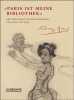
Nackte, aufreizend dargestellte Frauenk rper, schockierende satanistische Rituale, fantasievoll-opulente Szenerien: Kaum ein Radierer des 19. Jahrhunderts war derart ber chtigt und einflussreich wie der K nstler F licien Rops (1833?1898). T tig v. a. in Br ssel und Paris pr gten seine immer wieder f r Skandale bekannten Graphiken bis nach 1900 mehrere K nstlergenerationen, zu denen u. a. Max Klinger, Alfred Kubin und Otto Dix geh rten. Hinter seinen frivol-obsz nen Darstellungen stecken scharfer Witz, Gesellschaftskritik sowie politische Satire. Das Kupferstichkabinett der Hamburger Kunsthalle beherbergt seit 1907 eine umfangreiche Sammlung an Werken des belgischen Symbolisten, die bis heute nahezu unbekannt ist. Die Ausstellung ?Paris ist meine Bibliothek? wird erstmals knapp 100 Bl tter aus diesem Konvolut pr sentieren. Dies erlaubt es, die von Rops so h ufig thematisierten Geschlechterrollen, sozialen Verh ltnisse und moralischen Ambivalenzen des 19. Jahrhunderts in den Blick zu nehmen.
Compilatio singularis exemplorum
, Brepols, 2021 Hardback, cxl + 853 pages, Size:155 x 245 mm, Language: Latin. ISBN 9782503593081.
Summary Die Compilatio singularis exemplorum ist eine Exempelsammlung, die gegen Ende des 13. Jahrhundert von einem anonymen franz sischen Dominikaner zusammengestellt wurde. Sie enth lt neben vielen auch anderweitig breit und variantenreich berlieferten Stoffen einiges sonst nur selten erhaltene oder g nzlich unbekannte Erz hlgut. Zudem hebt sie sich von den meisten anderen Exempelsammlungen durch das ihr zugrundeliegende Gliederungsprinzip ab, welches sich an der Dreiteilung der mittelalterlichen Christenheit in S kularklerus, Regularklerus und Laienstand orientiert: Streng hierarchisch geordnet, werden der Reihe nach Geschichten ber die Mitglieder dieser drei St nde erz hlt. Von den P psten bis hinab zu den Theologiestudenten, von den bten und Abtissinnen bis hinab zu den Laienbr dern und Beginen, von den Kaisern und K nigen bis hinab zu den gesellschaftlichen Randexistenzen wird vor uns das ganze Panoptikum der sp tmittelalterlichen Gesellschaft entfaltet. Dem so entworfenen Abbild der Menschenwelt werden in den ersten Teilen der Sammlung eine Marienvita, zahlreiche Marienmirakel, Hostienwunder, Kreuzzugsgeschichte und einige Geschichten ber die Engel vorangestellt. Lediglich der letzte, vermutlich sekund r hinzugef gte Teil der Sammlung weicht von der Gesamtkonzeption des Werkes ab. Er vereint in sich eine Liste altfranz sischer Sprichw rter nebst deren lateinischen Nachdichtungen, Proben der Vagantenpoesie des Hugo Primas und weitere Verse erbaulichen und unterhaltsamen Inhalts. Der lateinische Text der Sammlung ist stellenweise von altfranz sischen Einsprengseln durchsetzt, die in einigen F llen das Ausma kleinerer Gedichte erreichen. Er wird hier zum ersten Mal vollst ndig nach allen drei bekannten berlieferungstr gern, Handschriften des 14. und 15. Jahrhunderts, kritisch herausgegeben.
Holbein's Wit. Pictorial Ingenuity in Renaissance Art
, Brepols - Harvey Miller, 2026 Hardback, Pages: 516, Size:225 x 300 mm, Illustrations:5 b/w, 374 col., Language: English. ISBN 9781915487520.
Summary Hans Holbein the Younger (1497/8-1543) is renowned as an outstandingly realistic painter-the acme of Renaissance naturalism. In fact, he was a purveyor of cunning ambiguity. Holbein's Wit: Pictorial Ingenuity in Renaissance Art reveals the artist at play, juggling the uncertainties and paradoxes that arise in the enterprise of imitation. Spanning Holbein's career in Basel and London, and encompassing his portraits, devotional paintings, and designs for prints and the decorative arts, the book explores this celebrated artist's subtle pictorial wiles. Holbein was immersed in the multi-faceted world of Renaissance ingenium or 'wit', which could mean innate talent, mental acuity, generative capacity, and a person's unique nature. In dialogue with witty patrons such as Desiderius Erasmus and Thomas More, Holbein advanced an ingenious kind of artmaking characterised by visual jokes, puns, and internal contradictions. Responding to humanism's literary conceits with an inventive visual language, he upended conventional assumptions about naturalism and the status of painting to assert the worth of an autonomous artistic intelligence. TABLE OF CONTENTS Prologue: Holbein's Angels Introduction Chapter 1: Verbal and Visual Wit Chapter 2: A Father's Figures Chapter 3: Hans the Jester Chapter 4: Ludic Illusionism Chapter 5: Death ad vivum Chapter 6: Mimics and Critics Chapter 7: More or Less a Smile Chapter 8: The Mindful Hand Chapter 9: Inherent Ingenuity Epilogue: The Ambassadors' Policy
Ravenna in the Imagination of Renaissance Art
, Brepols, 2020 Paperback, 208 pages, Size:216 x 280 mm, Illustrations:100 col., Language: English.*NEW ISBN 9782503583990.
Summary It is clear that Renaissance artists and their patrons were interested in Ravenna's buildings and their decorations, both before Vasari's negative pronouncements and after them. Contemporary European travelers and diarists have left descriptions of the city's heritage, by then in ruinous condition. What happens if we reinsert this corpus of Ravenna's treasures and their multiple imbrications into our histories of Renaissance art? How can our narratives change if we trace and study an almost forgotten, albeit rich and articulated series of intersections between Ravenna's splendors and ambitious works of art and architecture from early modern Italy? We have ignored a series of visual engagements and imaginative plays with Ravenna's forms, materials, and iconographies, folding the past into the present and the present into the past. These instances of creative imitations and recreations can best be recovered if we focus on the Renaissance production and humanists' accounts of the city's treasures, that is, works in various media and size, to map out an extended dimension of early modern visual culture. TABLE OF CONTENTS 1. Alexander Nagel, Giancarla Periti, Introduction 2. Sarah McHam, Byzantine Sources in Ravenna Influence Venetian Renaissance Sculpture 3. Nicholas Herman, Reframing the Past: Viewing Mosaics in Renaissance Ravenna 4. Linda A. Koch, Creating the Legitimate Prince at the Tempio Malatestiano, Rimini: Ravenna and the Continuity of Imperial Tradition 5. Giancarla Periti, Ravenna, Vasari, and the Problem of the Late Antique Heritage 6. Debra Pincus, Ravenna's Unlikely Monument: The Tomb of Dante at the Church of San Francesco 7. Silvia Foschi, San Vitale in Ravenna: the Renaissance Interpretation of a Church between East and West 8. Claudio Franzoni, Art or History? The Mosaics of San Vitale in Ravenna between the Middle Ages and Avantgardes
Shifting Places: Peter Downsbrough, the Photographs .
, uni pers leuven, 2011 paperback,Language: English, Series: Lieven Gevaert Series 12, Number of pages: 188 p. Illustrations: 140, Width: 170 cm x Height: 230 cm . ISBN 9789058678720.
Since the late 1960s Peter Downsbrough (1940) has been an important figure in contemporary art, associated with major international art movements such as minimal art, conceptual art, and visual poetry. In his artistic work he explores various fields including sculpture, architecture, books, film, and photography. This book provides, for the first time, a profound insight into Downsbrough's diverse and complex use of photography within his artistic work over the last 40 years. A substantial essay by Alexander Streitberger discusses the artist's photographic work - which includes single prints, series, postcards, collages, and books - within its aesthetic and historical context. Streitberger relates Downsbrough's work to fundamental issues of photographic practice and discourse such as the photograph as document, the representation of urban space, space-time relations, collage as an aesthetic and political means of expression, the relationship between still and moving image, and the context of presentation. The rich image material - some of which has never been published before - is arranged by the artist himself in order to create a fertile exchange between the topics of the text and his own intervention. Concluding with an exclusive interview with the artist, this book offers a real dialogue between artistic practice and theoretical reflexion.
Nicolaes Gillis: Antwerpen 1593 - Haarlem 1630 / Pionier van het Haarlemse voedsel- en bloemstilleven
, Primavera Pers, 2024 Hardback, 304 pages, Illustrated. 29.5 (hoogte) x 25.3cm, Tekst; Nederlands, Catalogue raisonne. *Nieuw. ISBN 9789059974159.
NICOLAES GILLIS (Antwerpen 1593 - Haarlem 1630) behoort tot de eerste beoefenaars van het zelfstandige stilleven. Over zijn leven was tot nog toe niet veel bekend, behalve dat hij uit Antwerpen kwam en in Haarlem werkzaam was. Nieuw onderzoek wijst op een gedegen leertijd in Antwerpen, waarna Gillis furore maakte als pionier van het Haarlemse voedsel- en bloemstilleven. In Antwerpen heeft Gillis veel geleerd van Osias Beert; in Haarlem was de kruisbestuiving met Floris van Dijck van belang. De gezamenlijke invloed van Gillis en Van Dijck zou zich uitstrekken naar volgende generaties stillevenschilders. Het oeuvre dat Nicolaes Gillis heeft nagelaten is niet erg groot. Dit boek laat echter zien dat het veelzijdiger en invloedrijker is geweest dan voorheen werd aangenomen. Gillis was niet alleen een schakel tussen Antwerpen en Haarlem, maar ook een echte vernieuwer. Deze eerste monografie met catalogue raisonn is het resultaat van uitgebreid kunsthistorisch onderzoek en speurwerk in archieven. Behalve een overvloedige bron van informatie, vormt het boek een terecht eerbetoon aan Nicolaes Gillis. Drs. Alexander Thijs (1980) heeft na een carri re als tandarts zijn liefde voor Oude Meesters verder ontwikkeld met oog voor historische context, herkomstonderzoek, symboliek en schildertechnieken. Als zelfstandig onderzoeker bestudeerde hij voor de tentoonstelling Ode aan Antwerpen (Utrecht, Museum Catharijneconvent, 2023) een schilderij van Erasmus II Quellinus, Rubens? laatste grote leerling en medewerker. Dit leidde tot een bijdrage aan de tentoonstellingscatalogus Van Antwerpen naar Amsterdam.
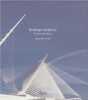
Santiago Calatrava. The Complete Works
New York, Rizzoli International Publications, fort in-4, relié sous jaquette éditeur, Très bon état
NB. La librairie est fermée jusqu'à fin septembre. Les questions et commandes seront traitées début octobre.
Alexandra Baudelot, Clara Schulmann, Georgina Jackson, Aisha Sasha John, Lauren A. Wright, Kathy Noble
Reference : 53698
Zarba Lonsa, _0_0__0, Mesonya / Katinka Bock
BE - , MER. Paper Kunsthalle, 2018 Softcover, (silver on coated linen) / 192 pages / 28 x 21,6 cm,Languages EN, FR. / FINE ISBN 9789492321701.
This publication forms the catalogue of three solo-exhibitions of artist Katinka Bock in Paris, London and Toronto that were linked to the work ?Zarba Lonsa? which she created during her residency at Les Laboratoires d?Aubervilliers in Paris in 2016. Particularly interested by the atmosphere of the Quatre-Chemins district where Les Laboratories is located, the artist went to meet merchants to initiate a relationship with them based on the exchange of one of her works for an object of their shop. This gesture was the starting point of a creative process that has unfolded in several forms ? sculptures, installation, films and photos. Renewing the process of this exchange-based relationship in a specific urban context for a new production of works and photographs, a second edition of the project took shape under the title _0_0__0 in June 2017 at Mercer Union in Toronto. To complete the series, a last edition took place at the Siobhan Davies Dance in London under the title Mesonya/ in Fall 2017
Alexandra BITCHKOVA, Melle Yvonne BOUCHAUD, M. Alexey BRODOOVITCH, Melle Marianne CLOUZOT, M. Serge GLADY, M Boris LACROIX, M. OKOULOW, M. ICHIMOUKOW, M. Henry VALENSI.
Reference : 13775
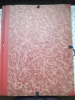
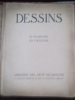
DESSINS
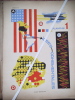
DESSINS suite de 20 planches en couleurs, au pochoir, 285x380mm. Librairie des Arts Décoratifs A. CALAVAS éditeur Paris. 1929. Planches par Alexandra BITCHKOVA (2) Melle Yvonne BOUCHAUD (2) M. Alexey BRODOOVITCH (2) Melle Marianne CLOUZOT (2) M. Serge GLADY (2) M ; Boris LACROIX (2) M. OKOULOW(2) M. ICHIMOUKOW(2) M. Henry VALENSI. Portefeuille cartonné, muet, dos demi toile rouge, fermoirs à rubans. DRAWINGS; suite of 20 color plates, stencilled, 285x380mm. Librairie des Arts Décoratifs A. CALAVAS publisher Paris. 1929. Plates by Alexandra BITCHKOVA (2) Ms. Yvonne BOUCHAUD (2) Mr. Alexey BRODOOVITCH (2) Ms. Marianne CLOUZOT (2) Mr. Serge GLADY (2) Mr. Boris LACROIX (2) Mr. OKOULOW(2) Mr. ICHIMOUKOW(2) Mr. Henry VALENSI. Cardboard wallet, silent, half red canvas back, ribbon clasps
Gods in the House. Anthropology of Roman Housing - II
, Brepols, 2023 Paperback, 368 pages, Size:156 x 234 mm, Illustrations:39 b/w, 80 col., 4 tables b/w., Language(s):English, French. ISBN 9782503601694.
Summary The archaeological excavations conducted from one end of the Mediterranean zone to the other have illuminated the place of gods in the ritual practices in the dwellings of the Graeco-Roman era. The discovery of multiple artefacts, dedicated spaces, and figurative paintings support new avenues of historical, anthropological, and social reflection with the aim of better understanding domestic religious practices in the polytheistic contexts of antiquity. This collective volume organizes those reflections around three axes. The first axis centres on identifying the deities that were favoured in domestic sanctuaries. Which gods are represented and which are not? The second axis concerns the interrelationships evident within domestic ritual spaces and sanctuaries. The third axis is dedicated to the anthropology of rituals. Lines of inquiry informed by anthropological, social, and phenomenological approaches are assuming ever-greater importance in scholarship on Antiquity. It is from this perspective that the authors explore the role that domestic ritual spaces play in shaping the lived environment. TABLE OF CONTENTS Gods in the House: An Anthropological Approach to Ancient Divinities and Domestic Cults (Alexandra Dardenay & Laurent Bricault) I. Gods of the House Domestic Aphrodite, Goddess of Desire and Seduction (Heather F. Sharpe) D doublements de divinit s dans les laraires romains : polymorphie des images et multiplicit des champs d'action (Nicolas Amoroso) Honorer Mithra en contexte r sidentiel. R flexions partire des exemples de Rome et d'Ostie (Fran oise Van Haeperen) Divine Guests: Religious Identities and Groups of Deities in Roman Domestic Shrines (Carla Sfameni) II. Gods in the House Sacraria ou 'chapelles' religieuses Pomp i : culte domestique ou v n ration publique ? (Eric M. Moormann) Morphologies of sacra privata in the Roman House: Architecture, Furnishings, Cults (Maddalena Bassani) Herculaneum's Insula V Domestic Cult Places: Reflections on Typology, Locations and Fields of Action (Alexandra Dardenay) III. Towards an Anthropological Analysis of Spaces and Rituals Domestic Religion and the Anthropology of Space in the Entrance to the Roman House (Marin Mauger) From Routines to Rituals in Pompeian Houses - How Layout and Image-Objects of Household Shrines Shape Religious Knowledge (Anna-Katharina Rieger) Les pratiques cultuelles dans les villas gallo-romaines du Haut-Empire (Emmanuel Pui) R flexion sur le devenir et la propri t des sacraria en contexte domestique (Aude Durand) Index rerum Index deorum Index locorum
Anthropology of Roman Housing
, Brepols, 2020 Paperback, 324 pages, Size:156 x 234 mm, Illustrations:47 b/w, 10 col., 30 tables b/w., 5 tables col., 26 maps b/w, 10 maps color, Languages: English, French, Italian. ISBN 9782503588605.
Summary At a time when we reflect intensively on the issue of social cohesion, on the influence of architecture in lifestyles, and on relationships between neighbourhoods within large modern cities, this book aims to approach the study of "inhabiting modes" in Roman urban dwellings. Drawing on concepts common to historical anthropology and incorporating evidence from multiple lines of research (archaeological, iconographic, textual, and others), this volume aims to contribute to the invigoration of a social history of ancient housing through new research projects, publications, and digital tools from both individual and collaborative efforts. This field of study is currently undergoing a period of disciplinary revitalization and this volume is an opportunity to present the most recent work and to conduct a dialogue in an interdisciplinary perspective. TABLE OF CONTENTS Toward an anthropological approach to the Roman living space (Alexandra Dardenay & Nicolas Laubry) L'arch ologie des espaces domestiques Pomp i : un point sur la question (Sandra Zanella) Lucrum facere? Strategie d'uso degli spazi domestici nell'ultima Pompei (Antonella Coralini) Rooms with a view: status, spatial hierarchy, and seasonality in the upper floors of houses at Herculaneum (James N. Andrews) Tra domus e villa. Spazio e societ nelle abitazioni lungo le mura di Pompei (Anna Anguissola) With all mod cons? Latrines in domestic settings (Alain Bouet) Sanctuaires et marges de l'habitat : perception et d limitation de l'espace domestique (Marin Mauger) Locating the use and storage of female toiletry items in Pompeian Houses (Ria Berg) Where are the women? Approaching domestic space through graffiti (Polly Lohmann) Between public and private: the Italian houses of late Hellenistic / Roman Delos (Mantha Zarmakoupi) House form and household structure: the social analysis of urban domestic architecture in Roman Celtiberia (Jes s Bermejo Tirado) Des morts chez les vivants ? Les enfants en bas ge inhum s dans les espaces domestiques de Gaule romaine (Nathalie Baills-Barr & M lissa Tirel) Place index Source index
Ultimate Guide to Dior Bags
, teNeues, 2025 Hardback, 192 pages, 30 x 22.5 cm, English. *NEW. ISBN 9783961717132.
Presents the creative range of the Parisian fashion house, featuring bags like the Lady Dior, the Saddle bag and the Book Tote. The new Brand Bible series is dedicated exclusively to iconic handbag models from the most important designers.
Letters of Salvator Rosa (1615-1673). An Italian Transcription, English Translation and Critical Edition
, Brepols - Harvey Miller, 2019 Hardback, 2 vols, vi + 1104 pages, Size:225 x 300 mm, Illustrations:4 b/w, 47 col., Languages: English, Italian. ISBN 9781905375882.
Summary These two volumes comprise the first English translation and critical edition of the extant letters of the Neapolitan painter and satirist Salvator Rosa (1615-1673). Presented in a revised Italian transcription and a complete English translation, the letters are accompanied by extensive historical notes, a philological apparatus, a comprehensive index, appendices, and photographs of the manuscripts. A number of previously unpublished letters also appear here for the first time. Unique among early modern primary documents for their quantity and exceptional for their candour, Rosa's letters are not only a fascinating and intimate chronicle of the artist himself but also an invaluable record of the activities and aspirations of his contemporaries,?offering useful insights into historical persons, ideas and events. An indispensable early modern primary source, comparable in significance to the letters of Michelangelo, Nicolas Poussin or Peter Paul Rubens, Rosa's letters here receive a long-overdue analysis and an English translation that seeks to make more accessible their contents, frequently impenetrable to even native Italian speakers.

