 Write to the booksellers
-
Type
Any type (2)
Art print (7)
Autograph (1)
Book (32193)
Disk (1)
Drawings (265)
Engraving (11)
Magazine (125)
Old papers (1)
Photographs (15)
Posters (1)
-
Latest
Last 24h (3)
Last 3 days (8)
Last month (565)
Last week (45)
-
Language
Dutch (78)
English (56)
French (32444)
German (6)
Italian (18)
Portuguese (9)
Spanish (11)
-
Century
16th (14)
17th (46)
18th (186)
19th (1511)
20th (9500)
21st (1683)
-
Countries
Belgium (10860)
Brazil (6)
Canada (116)
China (1)
Côte d'Ivoire (139)
Denmark (209)
France (18187)
Germany (1)
Greece (1)
Switzerland (3102)
-
Syndicate
ALAC (107)
CLAM (143)
CLAQ (102)
CNE (3)
ILAB (10584)
NVVA (1145)
SLACES (1145)
SLAM (7977)
SNCAO (10)
Atlas et géographie de l'Alsace et de la Lorraine
Flammarion 1977 In-4 cartonné 26,5 cm sur 19. 287 pages. Nombreuses illustrations en couleurs et noir et blanc dont certaines hors-texte. Jaquette défraîchie avec légères déchirures. Cartonnage éditeur en bon état et intérieur frais. Jaquette en état moyen. Bon état d’occasion.
Bon état d’occasion
Le chateau de Val. Histoire et description . Préface de A Beaufrère
Aurillac, sd , gr in8br, 124pp , 24 illustrations Langue: Français
Au pays des Quatres Rivieres - Editions Le Mercure Dauphinois Grenoble 2007
in-8° broché, 104 pages, comme neuf, collection Mémoire des Lieux ISBN : 978-2-913826-95-3
Du panorama de 180 degrés à qui regarde de la falaise de Loubressac, ses Quatre Rivières qui se rejoignent en confluent, ses 16 villages aux tuiles ocres et brunes en cercle autour de la forteresse de Castelnau, ses 40 clochers sortant comme des flèches du versant ombragé des collines dAuvergne, le paysage, surtout à lautomne et par soleil couchant, sirradie dune teinte pourpre et or, apaisant les soucis du jour et préparant aux rêves du soir.Pour lavoir admiré pendant plus dun demi-siècle et en avoir cherché lhistoire, Jacques Juillet a pensé devoir écrire ce quil a appris, afin que ses descendants par le sang et par lesprit, partagent sa gratitude envers ce Pays des Quatre Rivières. Beaucoup connaissent ses expériences de diplomate, de préfet, de maire et savent quaprès avoir parcouru la France, lEurope, lAfrique et lAmérique du Canada au Chili, nulle part il na trouvé plus beau que ce Pays des Quatre Rivières ou il a choisi de vivre le reste de son âge - Libraire professionnel envoi rapide et soigné
Les Tours-Saint-Laurent de Jean Lurçat près Saint-Céré - Editions Le Mercure Dauphinois Grenoble 2005
in-8° broché, 80 pages, comme neuf, collection Mémoire des Lieux ISBN : 2-913826-63-2
Il y a un demi-siècle le château de Saint-Séré des vicomtes de Turenne est devenu les Tours-Saint-Laurent de Jean Lurçat. Son histoire est désormais un diptyque dont le deuxième volet est l'uvre du maître rénovateur de la tapisserie française.Cette édition faisant suite à celle de 1970 comporte des compléments et un témoignage de Jacques Juillet, ancien ministre plénipotentiaire, préfet de région honoraire, en souvenir de son proche voisin et de l'ami disparu - Libraire professionnel envoi rapide et soigné
Loubressac En Quercy-Turenne - Editions Le Mercure Dauphinois Grenoble 2005
in-8° broché, 240 pages, comme neuf, collection Mémoire des Lieux ISBN : 2913826628
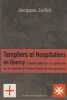
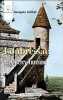
Loubressac est un nid d'aigle fortifié de remparts édifiés au XIVe siècle sur un promontoire du causse de Gramat, en surplomb du confluent des Quatre rivières : Dordogne, Cère, Bâve et Mamoul. Hormis les nombreux vestiges celtiques et gallo-romains qui attestent de l'ancienneté de l'habitat, la seigneurie de Loubressac est historiquement connue en l'an 900 par l'église Saint-Pierre relevant des domaines du comte Géraud d'Aurillac. Le territoire, apanage des barons de Castelnau-Bretenoux et Gramat dès l'an mil, devint en 1363, baronnie du seigneur Adhémar d'Aigrefeuille, maréchal de la cour pontificale ; sa superficie de 5000 hectares fut réduite plusieurs fois depuis la Révolution pour créer les nouvelles communes d'Autoire, Gintrac, Padirac, Mayrignac et Thégra. Outre cinq lieutenants généraux, quatre évêques, quatre conseillers au parlement de Toulouse y vécurent des chevaliers et des dames hospitalières de l'Ordre de Malte et de nobles familles ayant illustré l'histoire de nos provinces. Jacques Juillet - ancien ministre plénipotentiaire et préfet de région honoraire - fut maire de Loubressac (1969-1983). Dans cette réédition, il compléte son étude de 1962. L'auteur témoigne de son attachement à ce terroir où il réside depuis plus d'un demi-siècle. Au milieu d'un paysage à l'échelle de l'homme, à la plus belle vue des hautes murailles féodales dominant " le pays des Quatre rivières ", la mesure de vivre transparaît dans la méditation du poète, de l'historien ou du philosophe - Libraire professionnel envoi rapide et soigné
Seigneurs et Dames de Montal en Quercy-Turenne - Editions Le Mercure Dauphinois Grenoble 2007
in-8° broché, 128 pages, 225 gr. très bon état, pliure sur coin haut de la première de couv. , 3 ème édition revue et complétée, photos N&B, collection Mémoire des Lieux ISBN : ISBN : 9782913826946
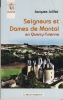
Ayant eu le bonheur de participer, durant un demi-siècle, aux réceptions quoffraient le comte et la comtesse de Billy dans leur château de Montal, lauteur et sa défunte épouse nont cesser de leurs entretiens et des recherches darchives, de comter lhistoire de « Montal ». Des tables généalogiques aident à suivre lexistence de ses Seigneurs, Balsac dEntragues, Montal de la Roquebrou, Pèrusse des Cars, Garric dUzech, Plas de Tanes, ainsi que celle de leurs Dames, les unes dans la vertu de Jehanne de Montal, dautres honorées des rois de France. La description de la demeure, de sa très belle cour Renaissance ornée des bustes familiaux, de ses salons et de ses chambres, alors présentés avec le souci dun mobilier et de tapisseries dépoque, ajoute à lintérêt de lhistoire du château de Montal. Ce sont désormais les Monuments historiques qui y accueillent artistes, historiens et touristes comme à Assier et à Castelnau - Libraire professionnel envoi rapide et soigné
Voyage depuis les sources du Jourdain jusqu'à la mer Rouge. Dépression du lac Asphaltite et d'une partie de la vallée du Jourdain
Sans nom d'éditeur | s. l. s. d. [1839] | 13.5 x 23 cm | Relié
Rare édition originale imprimée à petit nombre de cet Extrait du Bulletin de la Société de Géographie, 2e série, tome XI et illustrée de 2 cartes dépliantes hors-texte représentant des coupes topographiques de différentes vallées, dont celle du Jourdain (cf. Hage Chahine, 471. Numa Broc, Asie, pp. 28-29.) Reliure en demi veau fauve, dos lisse orné de filets et fleurons dorés, quelques frottements sur le dos, un mors restauré en tête, pièce de titre de maroquin vert, plats de papier marbré, gardes et contreplats de papier à la cuve, tranches rouges, reliure de l'époque, Orientaliste et archéologue, le comte de Bertou explora la Palestine en 1838 avec pour mission de vérifier l'hypothèse d'un ancien écoulement de la mer Morte vers la mer Rouge. Parti de Beyrouth le 2 mars 1838, il gagna Jérusalem par Nazareth, fixa l'altitude de Jéricho à 273 m et celle de la mer Morte à 406 m. Il se rendit ensuite à Hébron et entreprit, malgré l'hostilité des tribus arabes, de parcourir la dépression qui unit le lac Asphaltite à Akaba. Bertou y parvint le 8 avril et, malgré la destruction de son baromètre, il put affirmer que le niveau de la mer Morte était bien inférieur à celui de la mer Rouge. Il regagna Beyrouth en mai 1838, après avoir visité Petra et ses célèbres monuments (cf. Numa Broc.) - Photographies et détails sur www.Edition-Originale.com -


LA BASILIQUE ROYALE DE SAINT-DENIS. (LA REVUE FRANCAISE, SUPPLEMENT AU N°116, MARS 1959).
AU BUREAU DE LA REVUE. 1959. In-4. Broché. Bon état, Couv. convenable, Dos satisfaisant, Intérieur frais. 18 pages. Premier plat illustré en gris et blanc. Nombreuses photos héliogravées noir et blanc dont une dépliante.. . . . Classification Dewey : 720-Architecture
Classification Dewey : 720-Architecture
S.F.E.N.A. VILLACOUBLAY
Maquette.710x295x70mm, balsa, liège et matériaux divers, sur socle bois et coque en plexiglas.En 1970, la Société française d’équipements pour la navigation aérienne son siège et ses bureaux d'études à Vélizy-Villacoublay dans le centre technique de recherche construit par les architectes Jules Greggory et Léonard Morandi sur des terrains militaires, près de l'aérodrome de Villacoublay.Bon état, coque présentant quelques défauts. (105841)
Bon
Jules Lismonde, 9 brieven
, , 1960-1970 Handgeschreven brieven en postkaart, 27 x 21 cm, Nederlandstalig. Prima staat.
Correspondentie tussen Jules Lismonde en Jaak Fontier. Alle getekend 'Lismonde'. In de brieven wordt gesproken over komende exposities die Fontier met ondermeer Lismonde in Brugge wil opzetten, maar eveneens gaat het over artikels die Fontier over het werk van Lismonde publiceerde.
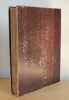
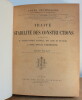
Traité de stabilité des constructions, Leçons professées au conservatoire national des arts et métiers a l'école spéciale d'architecture
Traité de stabilité des constructions, Leçons professées au conservatoire national des arts et métiers a l'école spéciale d'architecture de Jules Pillet chez Dépôt des cours techniques, Cours techniques de l'architecte et du constructeur en 1895. Le livre est illustré de 515 figures. Le livre mesure 26x32 cm et pèse 3,200 kg (c) pour 477 + LVI pages. Reliure d'époque cartonnée. Le livre est en état d’usage, très bon, bords coins frottés.
Cet ouvrage s'adresse surtout aux personnes, Architectes, Ingénieurs et Constructeurs, qui désirent étudier les questions de résistance des matériaux et de stabilité des constructions sans avoir recours au calcul infinitésimal. C'est à la mécanique la plus élémentaire, ainsi qu'à la géométrie, que, sous forme d'épures de Statique graphique, j'emprunte les solutions de toutes les questions, même de celles qui sont les plus ardues, telles que le calcul des poutres continues, le calcul des arcs et la détermination de la poussée des terres. Un coup d'œil jeté sur la table des matières suffira pour faire comprendre le plan de cet ouvrage. En réalité il est le développement du cours de Stabilité des constructions que, depuis 1878, mon maître et ami M. Emile Trélat m'a fait l'honneur de me confier à l’école spéciale d'Architecture en remplacement du regretté de Dion. Il reproduit aussi les leçons sur le même sujet que, à titre de suppléant de M. Trélat et, ensuite, comme titulaire du cours de constructions civiles, j'ai faites à plusieurs reprises au Conservatoire des Arts et Métiers. Si j'insiste sur les origines de cet ouvrage c'est pour convaincre celui qui tentera de le lire qu'il aura sous les yeux un livre élémentaire dans sa forme quoique assez complet dans ses développements, un livre qui n'aura été publié qu'après avoir, auprès de nombreux élèves, subi la sanction de l'enseignement et avoir, comme conséquence de ces épreuves répétées, éprouvé des modifications et, surtout, des simplifications nombreuses. Il est sans doute bien prétentieux à moi de faire paraître un traité de Stabilité des Constructions alors qu'il existe déjà les ouvrages de Bresse, de Collignon, de Rouché, de Koklin, de Brune et de tant d'autres Ingénieurs, alors que M. Maurice Lévy a fait bénéficier les constructeurs de son admirable traité de Statique graphique, véritable monument dans lequel on trouve tout ce qui a été dit aussi bien que tout ce qui sera dit, pendant longtemps encore, sur cette...
Natuurlijke Historietjes
Amsterdam, Antwerpen, Wereldbibliotheek, 1955 Oorspronkelijk uitgevers omslag, illustraties en omslag door Jozef Cantr , 53 pagina's, 20 x 13.5 cm. Uitstekende staat.
Natuurlijke Historietjes
JULIAAN LAMPENS. 1950-1991 / Special luxe edition with four colour reproductions.
Antwerpen , VAi, 2020 incl. four high-quality color reproductions, size 28.4 by 19 cm, printed on heavy paper (Malmero 300 gr).HB, 217 x 301 mm, 136 p, throughout b/w illustrations. E/ F/ NL edition. ISBN 9789492567161.
New, revised and supplemented edition Juliaan Lampens 1950-1991 is the re-edition of the catalog published by the deSingel Arts Center in 1991. The hand of the master is emphatically present in every facet of this publication, which makes this reference work unique. Lampens helped shape the book, literally and figuratively: he selected text and images, wrote himself and collaborated with the designer. Publications about Juliaan Lampens (1926-2019) are scarce and highly sought after. Interest in this oeuvre has only increased in recent years, also internationally, as evidenced by the issue of the renowned Japanese architecture magazine a + u, dedicated to Lampens. With this re-edition, supplemented with an updated biography, the Flanders Architecture Institute meets an ever-growing demand. Originally untranslated texts were also translated into French and English, so that the reader is offered three equivalent language editions in one volume. incl. four high-quality color reproductions, size 28.4 by 19 cm, printed on heavy paper (Malmero 300 gr).Nieuwe, herziene en aangevulde uitgave Juliaan Lampens 1950-1991 is de heruitgave van de catalogus die Kunstencentrum deSingel in 1991 uitbracht. De hand van de meester is in elk facet van deze publicatie nadrukkelijk aanwezig, en dat maakt dit referentiewerk uniek. Lampens gaf het boek letterlijk en figuurlijk mee vorm: hij selecteerde tekst en beeld, schreef zelf en werkte samen met de vormgever. Publicaties over Juliaan Lampens (1926-2019) zijn schaars en zeer gewild. De belangstelling voor dit oeuvre is de afgelopen jaren alleen maar toegenomen, ook internationaal, getuige het aan Lampens gewijde nummer van het gerenommeerde Japanse architectuurtijdschrift a+u. Het Vlaams Architectuurinstituut komt met deze heruitgave, aangevuld met een geactualiseerde biografie, tegemoet aan een steeds groeiende vraag. Oorspronkelijk onvertaalde teksten kregen bovendien een vertaling naar het Frans en het Engels, zodat de lezer drie evenwaardige taaledities in n volume aangeboden krijgt. incl. vier hoogwaardige kleurenreproducties zijn, formaat 28,4 op 19 cm, op zwaar papier gedrukt (Malmero 300 gr).
CATHEDRALE DE MAJORQUE
Non précisé. Non daté. In-8. Broché. Bon état, Couv. convenable, Dos satisfaisant, Intérieur frais. Env. 10 pages illustrées de photos en couleur. Plaquette.. . . . Classification Dewey : 720-Architecture

Historique. Le trésor... Classification Dewey : 720-Architecture
Julia Mulli . Text: Piero Bisello, Phillip Van den Bossche, Martin Germann, Zo Gray, Julia Mulli . Photo essay by Marina Pinsky
Reference : 57942
KASPER BOSMANS Dovetail.
Brussels, Koenig Verlag / Wiels, Brussels, 2022 PB, 282 x 212 mm, 268 pages, 109 Kleurenillustraties, 64 z/w illustraties.ENG edition.*new ISBN 9783960987604.
Dovetail biedt het eerste monografische overzicht van het oeuvre van Kasper Bosmans tot nu toe. De redactrice van het boek, Julia Mulli , opent met een inleiding over zijn praktijk. WIELS senior curator Zo Gray schrijft over hoe Bosmans verhalen met elkaar verweeft; kunsthistoricus Phillip Van Den Bossche schrijft over zijn quilts; filosoof Piero Bisello past het concept van "Coherentisme" toe op een aantal individuele werken; en kunsthistoricus Martin Germann onderzoekt Bosmans' "legend paintings". Het boek is rijk ge llustreerd met foto's van individuele werken en tentoonstellingsbeelden, waaronder een samenwerking met kunstenares Marina Pinsky. Deze publicatie ging vooraf aan Bosmans' solotentoonstelling Husbandry in WIELS, die werd uitgesteld omwille van de Covid-19-crisis, en die geopend werd in februari 2022. Kasper Bosmans ( 1990, Belgi ) is een scherpe observator van de vele manieren waarop beelden de grens tussen natuur en fictie, kunst en ambacht aftasten. Vanuit een intu tieve antropologische benadering neemt hij de overblijfselen van lokale tradities en mythologische iconografie in de wereld van vandaag. Vanuit spel laat Bosmans associatieve schoonheid ontstaan in de vorm van performances, schilderijen, tekeningen en sculpturale installaties. Door gebruik te maken van materialen als melk, zand en marmer verkent hij zowel functionele als decoratieve vormen en de spanningsrelatie die tussen beiden kan bestaan. Recente tentoonstelling waren o.a. Cintamani Weavings, Art Center Centrale, Brussel (2016); Loot, Soil, and Cleanliness, CIAP, Hasselt (2016);Correspondence, met Rafaella Crispino, Unosunove, Rome (2015); Yesterday was different met Marthe Ramm Fortun, KOMPLOT, Brussel (2015); Des h tes: a foreigner, a human, an unexpected visitor, Spring Workshop, Hong Kong (2015); Little Cherry Virus, Pakt, Amsterdam (2015); Un-Scene III, Wiels, Brussel (2015); Made to Measure: Fishing Rod, Experimental Intermedia, Gent (2014); Het kanaal - le canal, Extra City Kunsthal, Antwerpen & Espace 251 Nord, Luik (2014); Coming People, S.M.A.K., Gent (2014).
Weil er zu mir passt -Plakate der Autowerbung und des Autoverkehrs aus der Sammlung des Kieler Stadt und Schifffahrtsmuseums
Kiel, Ludwig, 2019 Softcover, 120 seiten, 22.5 x 22.5 cm. Deutsch. *Neu. ISBN 9783869353623.
Sportlich, luxuri s, elegant, solide, zweckm ig - die Autoindustrie kreiert f r jeden Autofahrer das passende Auto. Der Kunde wird mit ausgefeilten Image- und Marketingkampagnen angesprochen, um das teure Konsumgut PKW effektiv zu bewerben. Hierzu dienen auch Plakate, die dem heutigen Betrachter zugleich die Augen f r das zeitgen ssische Grafikdesign ffnen.Die gro en Kampagnen haben sich bis heute im kollektiven Ged chtnis festgesetzt und begegnen uns nun auf den historischen Plakaten wieder. K fer, Golf (Volkswagen), die legend re DS (Citro n) und andere: Die abgebildeten Modelle z hlen zu den wichtigsten Meilensteinen der Automobilgeschichte. Es geht aber auch um die Einfl sse von Zeitgeist und Politik auf die Plakatwerbung.Das Buch pr sentiert knapp 70 pr gnante Werbeplakate aus der Nachkriegszeit rund um das Automobil aus der Sammlung des Kieler Stadt- und Schifffahrtsmuseums.
Ilse D'Hollander works on paper.
, Hannibal, 2014 Hardcover, 27 x 22 cm, 256 bladzijden, Gedrukt in quadri, Hardcover, Met 120 afbeeldingen van werken op papier. fine copie / Text in English, ISBN 9789491376979.
Referentiecatalogus over het bijzondere olieverf- en gouachewerk op papier van Ilse D'Hollander (1968-1997) De werken op papier behoren net zoals de schilderijen op doek tot de kern van D'Hollanders oeuvre. Zoals ook bij Raoul De Keyser het geval is, resoneren de werken op papier met de schilderijen op doek, alleen versterkt het fragiele karakter van de papieren drager de intensiteit van het geschilderde. Ondanks het kleine formaat bevatten de werkjes een enorme concentratie en gecondenseerde kracht.? Julian Heynen Ruim zeventien jaar na haar plotse dood wordt D?Hollanders oeuvre internationaal gewaardeerd en veelvuldig getoond. Vorig jaar kreeg de kunstenares een uitgebreide overzichtstentoonstelling in Museum M te Leuven en een solotentoonstelling in de Konrad Fischer Galerie in Dusseldorf. Dit boek werd gepubliceerd naar aanleiding van een groepstentoonstelling bij David Zwirmer in New York en een belangrijke solotentoonstelling bij Konrad Fischer Galerie in Berlijn, van 17 september tot 8 november 2014. Met bijdragen van Eric Rinckhout en Julian Heynen, artistiek directeur van K21 der Kunstsammlung Nordrhein-Westfalen in Dusseldorf, de belangrijkste regionale Kunsthalle voor hedendaagse kunst. Reference catalog about the special oil and gouache work on paper by Ilse D'Hollander (1968-1997) ?The works on paper, just like the paintings on canvas, belong to the core of D'Hollander's oeuvre. As is also the case with Raoul De Keyser, the works on paper resonate with the paintings on canvas, but the fragile character of the paper carrier enhances the intensity of the painted. Despite the small size, the works contain enormous concentration and condensed power. Julian Heynen More than seventeen years after her sudden death, D?Hollander's oeuvre is internationally appreciated and frequently shown. Last year the artist had an extensive retrospective in Museum M in Leuven and a solo exhibition in the Konrad Fischer Galerie in Dusseldorf. This book was published on the occasion of a group exhibition with David Zwirmer in New York and an important solo exhibition at Konrad Fischer Galerie in Berlin, from September 17 to November 8, 2014. With contributions from Eric Rinckhout and Julian Heynen, artistic director of K21 der Kunstsammlung Nordrhein -Westphalia in Dusseldorf, the most important regional Kunsthalle for contemporary art
The Capital's Charterhouses and the Record of English Carthusianism
, Brepols, 2023 Hardback, xvi + 300 pages, Size:152 x 229 mm, Illustrations:23 col., Language: English. ISBN 9780888448361.
Summary This volume offers a substantial and versatile contribution to the history and culture of the late-medieval Carthusians in England. The nine essays presented here focus primarily on the double charterhouses built on the outskirts of London, at Smithfield and Sheen. Syon Abbey, the Bridgettine house which stood a short distance from Sheen, and was founded at the same time, is also drawn into the conversation because of its sympathetic and practical links to the Carthusians. Particular attention is paid to the London Charterhouse. This institution is revaluated here as an engineered and ornamented structure, a sanctuary nourished by books and texts, a beacon of religion, a theatre of devotion and political manoeuvres and, in the wake of its dissolution, both a dwelling-place for affluent citizenry and a lieu de m moire for the English Carthusians in exile. TABLE OF CONTENTS llustrations Abbreviations James P. Carley ? Preface Julian Luxford ? Introduction Part 1: The Material Record Julian Luxford ? The London Charterhouse: Iconography, Buildings, and Art Glyn Coppack ? Water and the Carthusians: The Contribution of the London Charterhouse to Knowledge of the Order's Plumbing Part 2: Spiritual Writings and Textual Transmission Marlene Villalobos Hennessy ? British Library, MS Egerton 1821: Devotional Practice and Book Production at the London Charterhouse Michael G. Sargent ? The Transmission by the English Carthusians of Some Late-Medieval Spiritual Writings: A Reconsideration of Walter Hilton and Nicholas Love Vincent Gillespie ? Preaching to the Choir: Another Look at English Carthusian Transmission of Vernacular Spiritual Writings Part 3: Religious Conscience, Politics, and Afterlife Ann M. Hutchison ? United in Devotion and Martyrdom: The English Carthusians and Bridgettines and Their Fate Diarmaid MacCulloch ? The End of the Carthusians at the London Charterhouse James P. Carley ? After the Dissolution: John Leland and His Neighbours in Charterhouse Square Peter Cunich ? Maurice Chauncy and the Burdens of the English Reformation Epilogue Martyn Percy ? A Eucharist for Martyrs: ?A Fragrant Offering and Sacrifice? - A Sermon Preached at the London Charterhouse on 3 September 2016 Contributors Index
Zerst rte Architektur bei Pausanias. Ph nomenologie, Funktionen und Verh ltnis zum zeitgen ssischen Ruinendiskurs
, Brepols, 2019 Hardback, xvi + 500 pages, Size:156 x 234 mm, Illustrations:21 b/w, 7 col., Language: German. ISBN 9782503579740.
Summary Die Untersuchung stellt sich die Frage, weshalb die ,Periegesis Hellados' des Pausanias aus dem 2. Jahrhundert n. Chr. so h ufig Siedlungen und Geb ude im Zustand der Zerst rung thematisiert. Die ,Periegesis Hellados' unternimmt eine r umlich organisierte Zusammenstellung von Wissen, insbesondere zur myth-historischen Vergangenheit sowie zu den Kulten der Griechen, und schreibt sich auf diese Weise in zentrale Diskurse der Zweiten Sophistik ein. Die prominente Rolle, die zerst rte Architektur im Werk des Pausanias spielt, wurde bislang nicht systematisch analysiert. Hier setzt die Untersuchung an. Alle einschl gigen Textpartien werden vorgelegt und innerhalb zweier entscheidender Bezugshorizonte ausgewertet: zum einen im Rahmen der inh renten Logik der ,Periegesis Hellados', zum anderen im Verh ltnis zum zeitgen ssischen Ruinendiskurs. Welch essenziellen Stellenwert die Ruine f r die Programmatik und das Selbstverst ndnis des Textes einnimmt, kann auf diese Weise erstmals umfassend nachgezeichnet werden. TABLE OF CONTENTS Vorwort 1. Einleitung 2. Der Ruinendiskurs im zeitlichen Umfeld von Pausanias' Periegesis 3. Die Periegesis des Pausanias 4. Ruinen bei Pausanias 5. Zusammenfassung English Summary Bibliographie
Carvers and Customers in Roman Palmyra. The Production Economy of Limestone Loculus Reliefs
, Brepols, 2022 Paperback, xiv + 294 pages, Size:216 x 280 mm, Illustrations:49 b/w, 39 col., 23 tables b/w., 1 maps color, Language: English. ISBN 9782503597850.
Summary Palmyra, located in the Syrian desert, is famous for the portraiture of its citizens, produced when the ancient city was at the height of its powers in the Roman era. At this time, several hundred funerary monuments were built and the Palmyrenes decorated their tombs with numerous portraits. The most common of these are the loculus reliefs that depicted Palmyra's men, women, and children, and were used to close off the niches in tombs behind which the dead were buried. Between AD 50 and AD 273, these stone slabs were produced in sufficient numbers to make Palmyra home to the largest corpus of funerary portraits outside Rome itself. This volume offers a fresh and nuanced analysis of Palmyrene funerary reliefs and their production in order to shed light not just on the people they depicted, but on the individuals responsible for their creation. Across a range of different case studies, the author explores the making of single portraits from the local limestone, examining how Palmyrene carvers worked, the techniques they used, the tools they employed, the ways in which style and technique changed over time, and the mode of production that was in place. Furthermore, the workshops' organization, the interaction between carvers and customers, and their influence on the portraits are explored. In doing so, the volume offers not just a detailed study of limestone carving and the techniques that underpinned Palmyra's famous portraits, but also offers a significant contribution to wider research on funerary portraiture of the city and in Roman Syria. TABLE OF CONTENTS Table of Contents List of Figures Acknowledgements Chapter 1: Introduction Chapter 2: The Palmyrene Graves and the Placement of the Reliefs Chapter 3: The Toolset of the Palmyrene Carvers Chapter 4: The Chronological Development of the Toolset Chapter 5: Palmyra's Economy: Producing Loculus Reliefs Chapter 6: Palmyrene Customers: Ordering and Buying a Loculus Relief Chapter 7: The Palmyrene Workshops and Craftspeople Chapter 8: Regional and Transregional Comparisons Chapter 9: Conclusion Bibliography Catalogue of Studied Loculus Reliefs Appendix I. Size of Loculus Reliefs Appendix II. Tool Traces Appendix III. Additional Elements Index
Cahier 7
, Brepols, 2022 Hardback, 2 vols, approx. 460 pages, Size:225 x 295 mm, Illustrations:140 b/w, Language: French. ISBN 9782503575643.
Summary R dig en grande partie en 1909 en parall le avec le Cahier 6, le Cahier 7 fait partie du projet pr coce d'un Contre Sainte-Beuve la fois narratif et critique. On y trouve ainsi, outre des descriptions de l' glise de Combray et de l'abbaye de Guermantes, les premi res r dactions d' pisodes qui deviendront centraux dans la recherche du temps perdu - pr sentation du petit noyau des Verdurin , rencontre du h ros et de Guercy (le futur Charlus), soir e chez la princesse de Guermantes, tirade sur la race maudite - mais aussi une conversation entre le h ros et sa m re sur Guermantes, puis sur Sainte-Beuve et Baudelaire . L' dition critique et g n tique sans fac-simil est galement disponible. Voir Cahier 7: Cahier'>https://www.brepols.net/products/IS-9782503575629-1 (ISBN 978-2-503-57562-9)
Andres Serrano : America and Other Work
, , 2004 Hardcover, 368 pages, ENG / FR / GER, 375 x 290 x 40 mm, illustrated dustjacket, book is in very good condition, Full page coloured photographs, Large and Heavy ex. ISBN 9783822835043.
A monumental series of over a hundred color-photographic portraits of Americans. Shot against luminous painted backdrops devoid of any other imagery, each figure is presented alone and calmly posed (except for the corpses). Each image clings to the surface value of the photograph, yet alludes to the subject beneath. This is a work whose sentiment towards its subject matter occurred post-9.11: it opens with the image of a fresh-faced boy scout and closes with the image of "Blood on the Flag." The vast circuitry of lives between these bookends' divides the book into several series, after "America": A History of Sex, The Morgue, Nomads, The Church, Budapest, Bodily Fluids & more. W/Interview.
Taking Shape. Sculpture of the Low Countries, c. 1400-1600
, Brepols, 2024 Hardback, 350 pages, Size:216 x 280 mm, Illustrations:5 b/w, 139 col., Language: English.* NEW ISBN 9782503611235.
Summary This book examines the production, patronage, and use of sculptures made in the Low Countries between 1400 and 1600. Two questions frame the book: 'Why did Sculpture from the Low countries matter' and 'Why will Sculpture from the Low Countries matter for future research'. Answers to these questions will be offered in a coherent and richly illustrated study which considers Sculpture as a pivotal subject field within Art Historical discourse. TABLE OF CONTENTS Preface Julie Beckers and Hannah De Moor Introduction Ethan Matt Kavaler Chapter 1: Use and Function of Sculpture Accommodating Altarpieces: The Impact of Circumstantial Factors on the Design of Altar Decorations in Medieval Churches Justin Kroesen Working Sculpture: The Forms and Functions of Netherlandish Brass Lecterns Douglas Brine The Church's a Stage: Late Medieval Altarpieces as Part of an Ever-Changing Environment Wendy Wauters The Stem of a Once Ornate Fountain: The Use of a Table Fountain Fragment at Museum Mayer Van den Bergh in Antwerp Julie Beckers Chapter 2: Patronage of Sculpture Patronage Jeffrey Chipps Smith Noble Expectations of Memorial Sculpture: Commissioning the Jauche Monuments in Brugelette (c. 1527-1573) Ruben Suykerbuyk The Chapel Space and Interiority in the Ringsaker Altarpiece Lynn F. Jacobs Prestige and Display: Noble Patronage of Sculpture in the Low Countries Elizabeth Rice Mattison Chapter 3: Production and Workshop Continuity and Discontinuity in the Sculpture Workshop Practice Aleksandra Lipi?ska The Leuven Connection: A New Look at the Social and Artisanal Network of Leuven Late Gothic Sculptors (c. 1475-1525) Marjan Debaene Te maken ende te leveren: The Transport of Netherlandish Carved Altarpieces Hannah De Moor Epilogue: Seeing Sculpture Stephanie Porras
Les prieur s de Saint-Victor de Paris (XIIe-premi re moiti du XVIe si cle). Implantation et fonctionnement d'un r seau canonial entre Senlis et Orl ans
, Brepols, 2023 Hardback, 1068 pages, Size:178 x 254 mm, Illustrations:1 col., 73 tables b/w., 17 maps b/w, 41 maps color, Language(s):French, Latin.*New. ISBN 9782503607764.
Summary Fond e en 1113 au pied de la montagne Sainte-Genevi ve, l'abbaye de Saint-Victor de Paris s'est rapidement dot e de petits tablissements, des prieur s simples et des prieur s-cures, pour g rer un patrimoine dispers et desservir des glises paroissiales entre Senlis et Orl ans. Le r seau prioral victorin, de taille r duite, reste tr s dynamique aux XIIe-XIIIe si cles, p riode d'intense essaimage et de d veloppement des domaines g r s par les chanoines forains. partir de 1330 et jusqu'au milieu du XVe si cle, ces petites d pendances directes subissent de plein fouet les crises. Mais d s 1460, le grand mouvement de reconstruction conomique donne l'occasion aux prieurs d' tre plus actifs dans l'administration de leurs tablissements et d'utiliser de nouvelles m thodes de gestion. En analysant les aspects institutionnels, conomiques, sociaux et spirituels de la vie des fr res dans les petites d pendances directes de l'abbaye, cette tude approfondie met en lumi re le fonctionnement des prieur s canoniaux du XIIe au XVIe si cle. Ce volume montre comment les relations m re-fils voluent au cours du temps en fonction des r formes abbatiales et r v le la foss qui s pare parfois la conception du r seau dict e par l'abb et le convent, et l'attitude des chanoines forains sur le terrain. TABLE OF CONTENTS Avant-propos Introduction Premi re partie : Les sources Chapitre premier : Pr sentation des archives victorines Chapitre II : tude des sources priorales et abbatiales Deuxi me partie : Cr ation et structuration du r seau prioral victorin (d but XIIe - milieu du XIVe si cle) Chapitre premier : Fondation et d veloppement du r seau prioral Chapitre II : Consolidation conomique et seigneuriale du r seau de d pendances victorines Chapitre III : Le contr l conomique des paroisses Chapitre IV : L'attractivit religieuse des prieur s Conclusion de deuxi me partie Troisi me partie : D t rioration et redressement des prieur s victorins (milieu du XIVe si cle - premi re moiti du XVIe si cle) Chapitre premier : Les prieur s face aux malheurs du temps (milieu du XIVe si cle - seconde moiti du XVe si cle) Chapitre II : Reconstruction priorale et reprise en main du r seau par Saint-Victor (v. 1370-1420) Chapitre III : Reconstruction mat rielle et reconqu te des biens et des droits (v. 1460-1540) Chapitre IV : De nouvelles dynamiques conomiques et judiciaires (v. 1460-1540) Chapitre V : Les nouvelles dynamiques religieuses et institutionnelles au sein du r seau (fin XVe - premi re moiti du XVIe si cle) Conclusion de troisi me partie Conclusion g n rale R pertoire des seize prieur s victorins Pr sentation de la base de donn es Ambert - Ambertus (Notre-Dame) Amponville - Amponvilla (Notre-Dame) Athis - Athiis (Saint-Denis) Bois-Saint-P re - Nemus Sancti Petri (Notre-Dame) Bray-sur-Aunette - Brayum (Saint-Victor) Bucy-le-Roi - Buciacum Regis (Saint-Pierre) Chanteau - Cantolium (Notre-Dame) Corbeil - Corbolium (Saint-Gu nault) Faronville - Farunvilla (Sainte-Madeleine/Saint- loi) Fleury-en-Bi re - Floriacum (Notre-Dame) Montb on - Montebeonis (Notre-Dame) Puiseaux - Puteolis (Notre-Dame) Saint-Donain - Sanctus Donnini Saint-Paul-des-Aulnois - Sanctus Pauli de Alnetis Vaujours - Vallegaii (Saint-Nicolas) Villiers-le-Bel - Villaribellum (Saint-Didier) Annexes Sources et bibliographie Index des noms de personnes Index des noms de lieux Cahier de planches en couleur
My New York Diary
, Drawn & Quarterly Publications, 1999 Paperback, 104 pages , ENG, 230 x 155 x 10 mm, As New !, illustrated in b/w. ISBN 9781896597249.
Julie Doucet is widely regarded as one of the most prominent cartoonists to emerge in the past decade. Now, Drawn & Quarterly is publishing Doucet's third book, her longest and most ambitious story collected for the first time in one beautifully produced softcover edition. The New York Diary documents in compelling and graphic detail the events in Doucet's life during a six-month period in 1991. At that time, she packed her bags and moved to New York and waiting for her in anticipation was her new boyfriend, an aspiring cartoonist himself who took Julie into his upper west side apartment. The excitement of this new beginning was short-lived; gradually, her boyfriend's over-bearing jealousy became more evident, and the confines of her surroundings slowly became more suffocating. Rounding up this new book are two more stories that complete the obsessive-boyfriend triptych: the sad and revealing "My First Time" and the 25-page "Julie in Junior College".

