 Write to the booksellers
-
Type
Any type (1)
Art print (7)
Autograph (1)
Book (32221)
Disk (1)
Drawings (264)
Engraving (11)
Magazine (125)
Old papers (1)
Photographs (15)
Posters (1)
-
Latest
Last 24h (4)
Last 3 days (17)
Last month (480)
Last week (12)
-
Language
Dutch (78)
English (56)
French (32470)
German (6)
Italian (18)
Portuguese (9)
Spanish (11)
-
Century
16th (14)
17th (46)
18th (199)
19th (1525)
20th (9434)
21st (1683)
-
Countries
Belgium (10932)
Brazil (6)
Canada (116)
China (1)
Côte d'Ivoire (139)
Denmark (209)
France (18147)
Germany (1)
Greece (1)
Switzerland (3096)
-
Syndicate
ALAC (107)
CLAM (143)
CLAQ (102)
CNE (3)
ILAB (10475)
NVVA (1145)
SLACES (1145)
SLAM (7871)
SNCAO (10)
Susanne Rottenbacher, Volume I - Beginning to see the light, Band 1 einer zweiteiligen Monografie
, Darling Publications, 2009 Hardcover, 48 pages, ENG / GER, 330 x 330 x 15 mm, NEW / NEU, illustr. in colour / b/w.Large Format ISBN 9783941765061.
Susanne Rottenbacher studied stage design at Barnard College[1] from 1988 to 1991 in New York (B.A.) and then (1991-1992) completed a degree in light (MSc) at the Bartlett School of Architecture and Planning in London. She worked as a set designer at the Deutsche Oper Berlin and as a light designer for the "LichtKunstLicht" planning office. In this context, among other things, she designed the lighting design for the Federal Chancellery and the new government buildings. She has been working as a freelance light artist since 2007. Susanne Rottenbacher creates expansive installations from sculptural elements that can best be described as light-colored bodies. Her sculptures are characterised by great lightness and transparency and change in dialogue with the surrounding space and times of day. They penetrate the surrounding space like three-dimensional drawings and thus reinterpret it. The organically curved forms seem to be in dynamic motion and at the same time frozen in time and space
Claus Rottenbacher : Great Kids - Volume 1
, Darling Publications, 2010 Hardcover, 84 pages, ENG / GER, 330 x 330 x 20 mm, NEW, photos in b/w, . ISBN 9783941765221.
What do West Berlin's world-famous ICC, one of the most important pieces of 1970s pop and hi-tech architecture, and the nondescript garages, lounges, or bowling alley of the erstwhile motor pool of the GDR Council of Ministers in Lichtenberg, East Berlin, have in common? The first was created in order to show off West Berlin's claim to global city status. To this day it is regarded as one of the most successful conference centers, yet the ICC's future is still under dispute. The second was once used by the SED leadership to exhibit their claims to power and has been used, since the regime's collapse in 1989, by automobilefocused firms and now also as a gallery, exhibition and studio center. Berlin-based photographer Claus Rottenbacher and architecture historian Nikolaus Bernau investigate the astonishingly well-preserved state of these chronological documents, their ostentatious aesthetic orientation to the "zeitgeist" which was, after all, put to the service of completely different social and cultural systems. They discover a commonality that is located beyond the formal differences.
Gerhard Winkler : stationtostation-timeaftertime : Landschaften 1993 - 2008
, Darling Publications, 2008 Hardcover, 64 pages, ENG / GER, 220 x 170 x 15 mm, NEW / NEU, ill. in colour / b/w. ISBN 9783939130789.
Stepanek & Maslin - Skyviews
, Darling Publications, 2006 Hardcover, 84 pages, ENG / GER , 245 x 215 x 15 mm, NEW, ill. in colour. ISBN 9783939130055.
This book showcases works of the artist duo Alice Stepanek and Steven Maslin. A bilingual publication, it includes an essay by Dr. Andreas Honneth titled ?Panic-ridden Arcadia: Reflections on Alice Stepanek?s and Steven Maslin?s Views of the Skies?.
Kunst 80 meesterwerken uitgelegd.
, Librero, 2025 Hardcover, 224 pagina's, 24 x 17.5 cm, NL. *Nieuw . ISBN 9789463597302.
Waarom steken sommige kunstwerken met kop en schouders uit boven de rest? Uitzonderlijke kunstwerken raken de toeschouwer dieper dan gewone schilderijen en beelden. Dit boek toont een selectie van 80 uitzonderlijke meesterwerken uit alle windstreken en tijdperken, en vertelt daarbij wat deze kunstwerken tot topstukken maakt: sommige blinken uit door compositie of kleurgebruik, andere door diep menselijk inzicht of door krachtige expressie van emoties. In kort bestek laten Andy Pankhurst en Lucinda Hawksley zien wat deze stukken tot meesterstukken maakt en hoe kunstenaars in elk tijdperk hun talenten op een andere manier inzetten.
Celebrity and Performance : The World's Top Photographers Workshops
, Rotovision, 2009 Hardcover, 176 pages, ENG, 255 x 255 x 18 mm, in good condition, illustrated in colour. ISBN 9782940378401.
Demonstrates how to shoot big personalities. This title showcases the work reflecting the various aspects of celebrity and performance photography, including projects shot in studios, on sets, in theatres, on stage, and on location.
Warhol 80, Serie Reversal des Museums moderner Kunst /Museum des 20. Jahrhunderts in Wien, 1030
, Museum moderner Kunst, 1981 Original metal spiral, oblong; 48x15cm. 46 pages Text in German / English. In fine condition .
E. U. in Ausstellungskatalog Serie Reversal des Museums moderner Kunst.
Gardens of La Gara, An 18th century estate in Geneva with gardens designed by Erik Dhont and a labyrinth by Markus Raetz
, Scheidegger & Spiess, 2018 Hardcover, 380 pages, Illustrated. text in English, **Fine condition. ISBN 9783858818027.
This English-language book portrays the historic La Gara estate in Jussy near Geneva and its 18th century gardens. The buildings have been restored by Swiss architect Verena Best-Mast and supplemented with harmonious interior design interventions. The gardens were subtly reinterpreted in a contemporary way by the renowned Belgian landscape architect Erik Dhont and supplemented with a palindrome-like hedge labyrinth designed by the Swiss artist Markus Raetz. Anette Freytag has followed La Gara's transformation at close quarters over the past few years. Her own contributions and those of her co-authors - Verena Best-Mast, Erik A. de Jong, Erik Dhont, ric Dumont, Le la el-Wakil, Iris Lauterbach, Ga l Maridat, Rainer Michael Mason, Markus Raetz, Luc- ric Revilliod and Natalie Rilliet - shed light on the history of the estate, the restoration of the buildings and gardens, including the historic irrigation system and carp ponds, as well as the contemporary landscape interventions. The book also focuses on Geneva's garden culture and the characteristics of the Jussy landscape with its great biodiversity. The book is also dedicated to the phenomenon of the ?Ferme orn e?, a villa modeled on ancient models with agricultural and ornamental functions. An important part of this book are the new photographs by Zurich photographer Georg Aerni from all four seasons. Winner of the European Garden Book Award.
L'Architecture religieuse du Nivernais au Moyen Age.-
Les Eglises romanes. Préface de Marcel Aubert. Illustré de 51 figures dans le texte, 60 planches h.-t. et 1 carte. Paris. Picard. 1951. Fort in-4 br. couverture imprimée en noir et rouge, 326pp. Très bel exemplaire.
L'ARCHITECTURE NORMANDE.
Son influence dans le Nord de la France au XI et XII ème siècles . 1939 . Edit. Picard , Petit in 4° br. 424 pp.62 figures dans le texte et 56 planches H.T. en hélio .2 cartes dépliantes .
Bon exemplaire .
Uses and Reuses of Medieval Manuscript Books / Usi e riusi del libro manoscritto nel Medioevo. Southern Italy. Latin Manuscripts / Italia meridionale. Manoscritti latini
, Brepols, 2026 Hardback, Pages: 280, Size:216 x 280 mm, Illustrations:24 b/w, 83 col., 8 tables b/w., Languages: Italian, French, English. ISBN 9782503616827.
Summary Manuscript books have many lives. Once assembled, they scarsely remain unchanged. They can be read and re-read, annotated, supplemented, dismembered, restored and physically moved, even more than once. The volume 'Uses and Reuses of Medieval Manuscript Books. Southern Italy. Latin Manuscripts' investigates these multiple lives through an interdisciplinary approach that embraces codicology, paleography, philology, and art history. With a focus on book circulation in Latin Southern Italy, the volume brings together 14 contributions written in three languages. Through rich and diverse case studies, the authors offer a new perspective on the history of the book. Divided into three thematic sections ('Uses and Reuses of Classical Texts, 'Manuscripts en route', 'Material and Immaterial Reuses'), the book explores the 'marginal' traces left by readers, the philological reception of texts, material transformations, and the journeys of codices. The volume reconstructs through these lenses the influence of manuscripts on medieval intellectual activity and offers insights that extend from the specific context of southern Italy to broader geographical and diachronic scales. L'histoire d'un codex commence la fin de sa fabrication, apr s la copie du texte. Mais les livres manuscrits n'ont pas qu'une seule vie : ils peuvent tre lus et relus, annot s, int gr s, divis s, ou encore d plac s, plusieurs reprises, de leur lieu de conservation. Bien que non pr vues dans le projet initial, les annotations marginales des lecteurs, les corrections du texte, les ajouts au d cor sont des op rations qui t moignent de la r utilisation du manuscrit, et donc de son v ritable usage au fil du temps. Ces traces laiss es par les lecteurs permettent de reconstituer l'influence des livres dans l'activit intellectuelle, personnelle et collective dans un lieu ou une p riode donn e. Le volume Usi e riusi del libro manoscritto nel Medioevo meridionale s'ins re dans cette dimension de renouvellement des tudes, avec un focus sur la circulation du livre en Italie m ridionale, en particulier dans le domaine latin, par le biais d'une approche interdisciplinaire, qui allie la codicologie, la pal ographie, la philologie, l'histoire de l'art et des biblioth ques. La storia di un codice inizia quando esso finisce di essere allestito e copiato. Ma i manoscritti non hanno una sola vita: vengono letti e riletti, annotati, integrati, smembrati, risarciti e, inoltre, possono essere spostati, anche pi di una volta, dal loro luogo di conservazione. Bench non previste nel progetto iniziale, queste operazioni testimoniano il vero uso, e quindi riuso, del manoscritto. Le tracce lasciate dai lettori, le manipolazioni e gli spostamenti permettono cos di ricostruire l'influenza dei libri nell'attivit intellettuale, personale e collettiva, di un determinato luogo o periodo. Il volume Usi e riusi del libro manoscritto nel Medioevo meridionale si inserisce in questa dimensione di studio, con un focus sulla circolazione libraria nel Meridione italiano, in particolare latina, attraverso un approccio interdisciplinare che abbraccia codicologia, paleografia, filologia, storia dell'arte e storia delle biblioteche. TABLE OF CONTENTS Introduction, Angela Cossu - Elvira Zambardi I. Uses and Reuses of Classical Texts / Usi e riusi dei testi classici Adriano Russo, Riuso dei libri e trasmissione dei classici: la tradizione della prima Deca in Italia centro-meridionale Filomena Bernardo, L'Ovidius Neapolitanus: la storia di un manoscritto attraverso il suo (ri)uso come antigrafo Caterina Pentericci, El Escorial Codex T. II. 8 and the beginning of Plautine Itala recension II. Manuscripts en route / Manoscritti in viaggio Andrea Puglia, Migrazioni di codici dall'Italia meridionale alla Toscana nordoccidentale tra XI e XII secolo. Prime ricerche Valeria De Fraja - Francesco Siri, Dn 11, les craintes apr s les V pres siciliennes, et la biblioth que de la cath drale de Messine Claudia D'Alberto, The ?Cronico del Re Giovannino? in the Latin Barberini Fund of the Vatican Apostolic Library: Connections, Provenance and Reuses Franco Benucci - Matteo Calzone, Da Padova a Parigi: usi e riusi d'un Giuseppe Flavio nel Medioevo meridionale III. Material and Immaterial Reuses / Riusi materiali e immateriali J r my Delmulle, Vittore, vescovo di Capua (541-554), lettore, annotatore e revisore di codici Michele Campopiano, Storia e memoria nell'Italia meridionale. Rappresentazioni del passato e pratiche compilative: alcuni esempi e la loro influenza (secoli IX-XI) Anna Gili, Lire la ?Pantegni? entre le xiiie et le xive si cles : le t moignage du codex Napoli, Biblioteca Nazionale Vittorio Emanuele III, VIII.D.39 dans son contexte Chiara De Angelis - Elvira Zambardi, Reuses of Reuses: The Case of Glossed Biblical Fragments at Montecassino Chiara Paniccia, Nuovi materiali per la storia della miniatura (secc. XII-XV). Le pergamene reimpiegate dell'Archivio di Stato di Viterbo e della Biblioteca degli Ardenti Closing words, Marilena Maniaci - Universit di Cassino e del Lazio Meridionale
Italiaanse miniaturen van de 10de tot de 16de eeuw
, Koninklijke Bibliotheek Albert I, 1969 Paperback, 93 pagina's, 25.5 x 17.5 cm, NL. *goede staat .
Tentoonstellingscatalogus. z/w illustraties buiten de tekst
Angela Grauerholz : The 2015 winner of the Scotiabank Photography Award
, Steidl Publishers 2016, 2016 Hardcover, 234 pages, English, 310 x 255 mm, book in new state, . ISBN 9783958291225.
Over the course of her career, Angela Grauerholz has created a subjective vision of our world, full of intimate moments that reveal the passage of time. Her spaces are filled with people, glimpses of public and private interiors, and ethereal rural and urban landscapes. The out-of-focus quality of her photographs transforms them into a stream of consciousness, generating a sense of collective memory. She considers this approach ?a representation of our experience: a continuous prodding into something that escapes us continuously.? Turning away from the single image shown on the wall, her photographs are displayed inside cabinets, in portfolios or on sliding panels. This method creates new viewing possibilities, opens up narrative potential, and pushes the concept of the archive to reveal its potentially endless thematic categories and points of entry. Grauerholz?s attention to how the medium is displayed and experienced makes the viewer an active participant in her photographic universe.
Tombe Dipinte di Paestum
Modena, Panini, 1992 Linnen binding with dustjacket, 488 pages, 30,5 x 24,5 cm, Italian text. *fine condition.
Le Tombe Dipinte di Paestum
art de l'Impressionnisme
, Place des Victoires, 2010 Couverture souple, 199 pages, 24 x 22 cm, FR. *En bon tat. ISBN 9782809901320.
Des d buts de l'impressionnisme au post-impressionnisme, cet ouvrage propose au lecteur de d couvrir l'un des mouvements picturaux majeurs du XIXe si cle. Les plus grands artistes ? Manet, Monet, Renoir ? sont repr sent s travers leurs ?uvres majeures. Une approche chrono-th matique permet au n ophyte de comprendre l'origine et l' volution de ce courant artistique essentiel, qui a pr par le terrain aux avant-garde du d but du XXe si cle. Des chapitres sont galement consacr s au pointillisme et au post-impressionisme. Cette s lection d'environ 200 ?uvres est compl t e par de riches annexes (chronologie, biographies, glossaire...).
Rome. Parte prima. Dalle origini al regno di Costantino. Italia artistica N° 37.
Couverture souple. Broché. 137 pages. Sous emboîtage. 19 x 25 cm. Dos défraîchi.
Livre. Monografie illustrate pubblicate sotto la direzione del Dott. Corrado Ricci. Abondamment illustré. Istituto italiano d'Arti grafiche, editore, 1912.
Rome. Parte seconda. Da Costantino al Rinascimento. Italia artistica N° 15 .
Couverture souple. Broché. 183 pages. Sous emboîtage. 19 x 25 cm. Manque au dos.
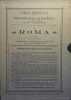
Livre. Monografie illustrate pubblicate sotto la direzione del Dott. Corrado Ricci. Abondamment illustré. Istituto italiano d'Arti grafiche, editore, 1908.
Big! Bad? Modern: Four Megabuildings in Vienna.
, Park Books, 2015 softcover, 334 PAGES, Illustrated. ISBN 9783906027968.
Post-war modernist architecture is a subject of controversial debate. The results of a research project into four significant buildings from this era in Vienna are presented, including looking at the future use and development for these buildings.
sculpture du XVIIe si cle Rome
, 5 Continents, 2005 Couverture rigide, 172 pages, 12 x 24 cm, FR. En bon tat . ISBN 9788874391455.
Lorsqu'on pense la sculpture du XVIIe si cle Rome, il nous vient l'esprit les ?uvres c l bres du Bernin. Le concept m me de baroque romain est indissociable du nom du grand g nie de ce si cle. D'autres grands sculpteurs contribu rent la vari t de l'extraordinaire panorama de la statuaire Rome et cet ouvrage en expose un un les v nements artistiques suivant un d roulement chronologique pr cis [...]
ANGELINI LUIGI (1884-1969)- ANTONICELLI TEMI - LEONARDI CARLO (1892-)- MARTINENGHI GIUSEPPE (1894-1970)
Reference : 103557
(1922)
Ville e casette raccolte di 80 progetti I° volume (signé)
1922 Milan, Giuseppe Martinenghi Editore, 1922, 218x225mm, 84+(6) pp., broché sous couverture illustrée avec vignette collée au centre.Edition originale.
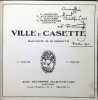
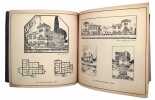
Préface de Giuseppe Martinenghi et 80 projets d’architecture de villas et de palais par ces quatre architectes actifs dans les années 1920-1930, dont plusieurs furent réalisés.Envoi autographe signé et daté de décembre 1922 de Giuseppe Matinenghi à l’architecte viennois Adolf Loos.(103557)
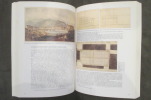
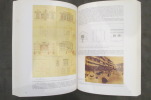
LA CONSTRUCCION DE TOLOSA.
1993 / 426 pages. Broché au format : 25 x 34 cm. Editions COAVN
Très bon état / Very good condition.


Walter Rosenblum Master of Photography
, Silvana, 2025 Hardback, Dimensions 250 x 205 mm, 110 Illustrations col. & bw ill., 216 Pages, Language English ed. ISBN 9788836660940.
This volume brings together all the main stages of the work of one of the most important American photographers of the last century, Walter Rosenblum (1919 - 2006): from his beginnings in the Photo League to the experience of immigrants in New York's Lower East Side, from the Second World War (in which he participated as a photo reporter) to the Spanish Civil War refugees in France, up to the exceptional documentation of life in the Harlem neighbourhood, the Bronx and Haiti.
L'oeuvre Du Maitre Peinture Sculpture Architecture
Hachette & Cie, coll. « Les Classiques de l’Art » 1909 In-4 relié. 169 reproductions. 178 pages. Bon état d’occasion.
Bon état d’occasion
L'abbaye De Moissac
Paris Henri Laurens 1933 Petit In-8 96 pp, Petites monographies des grands édifices de la France, 39 gravures et 1 plan en frontispice. Brochage insolé, coupures sans manque au dos.
Dos usé Broché à raba
Antiquarian Book Trade in Switzerland Sir Thomas Phillipps's Acquisitions in the 1820s and their Later Dispersal
, Brepols, 2026 Hardback, 430 p., 216 x 280 mm, Illustrations:14 b/w, 7 col., 3 tables b/w, .Language(s):English *New . ISBN 9782503616209.
In 1822?1823, the obsessive British collector Sir Thomas Phillipps (1792?1872) spent a year in Switzerland planning to reduce his spending on books. Yet, by the time he returned to England, he had bought some 850 manuscripts and printed volumes. The historical context of these acquisitions offers a unique case study of the workings of the Swiss market in rare books in the first half of the nineteenth century. The Antiquarian Book Trade in Switzerland shows how this market was organised, how booksellers gathered and sold their stock, what kinds of books were available for sale, and the repercussions of Phillipps?s purchases on the formation of libraries in the twentieth century. Combining archival research, the survey of sale and library catalogues, and the material analysis of books, this monograph argues that the Swiss book trade was a thriving business led by professional and amateur dealers who sold rare and modern volumes in shops, private houses, and religious institutions. Phillipps?s motives for obtaining these items (and those of the owners who bought them after his death) also indicate that books were acquired for their aesthetic quality and prestige, historical and literary research, and political purposes. Illustrating the changing values assigned to books, this study demonstrates how many of these volumes became treasures of the world?s cultural heritage.

